The best board games on Amazon this summer for 2026 include Candy Land for preschoolers, Let’s Go Fishin’ for active kids, and SEQUENCE for mixed-age families. Fans of mystery may like Clue Harry Potter Edition, while Qwirkle, Ticket to Ride, 7 Wonders, Labyrinth, and Blokus offer easy strategy and replay value. Betrayal at House on the Hill and Game of Thrones Risk suit older players. More details can help narrow the right pick.
Hasbro Candy Land Board Game for Kids
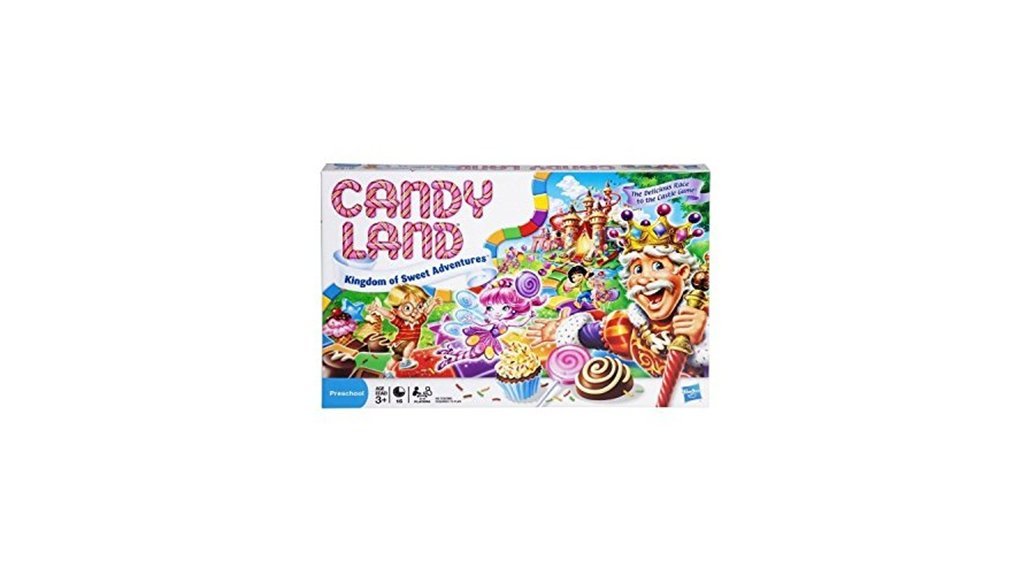
Hasbro Gaming Candy Land Kingdom of Sweet Adventures Board Game is a strong pick for young children ages 3 and up, especially those who are just beginning to explore board games. This classic beginner game requires no reading, making it accessible for preschoolers and early learners. Players guide a gingerbread man pawn along a colorful path toward the castle, encountering cheerful surprises along the way. The multicolor cards and playful illustrations add visual appeal, while simple gameplay supports color recognition and basic counting. As a standard Hasbro toy, it offers familiar, age-appropriate fun with educational value.
Best For: Young children ages 3 and up, especially preschoolers and early learners who want a simple, no-reading-required intro to board games.
Pros:
- Classic Candy Land gameplay is easy for little kids to understand and play.
- No reading required, making it accessible for pre-readers.
- Colorful cards, illustrations, and simple movement help build color recognition and basic counting.
Cons:
- Very simple gameplay may feel repetitive for older kids.
- Limited strategic challenge compared with other board games.
- Mostly suited for young beginners, so long-term replay value may be lower.
SEQUENCE Original Game with Folding Board by Jax
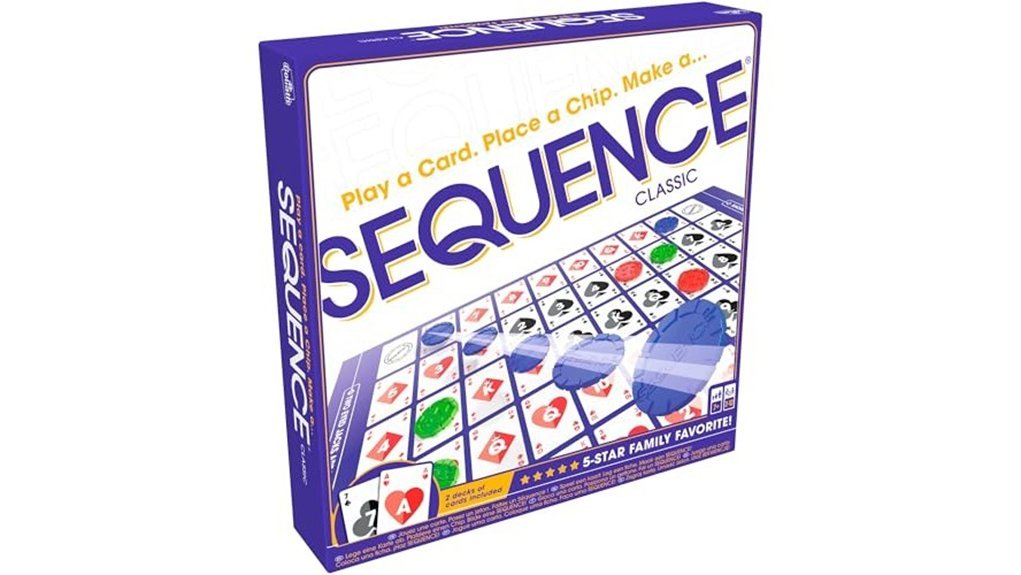
SEQUENCE Original Game with Folding Board by Jax suits families and mixed-age groups seeking strategic play. The Jax title, model 8002, was first published in 1995 and remains a family-friendly choice for ages 7 and up. Designed for 2 to 12 players, it asks participants to play a card and place a chip, aiming for five-card sequences before rivals do. The folding board measures 19.75 by 15.25 inches, and the set includes two decks, 135 chips, and complete instructions. Its gameplay supports strategic thinking and STEM skills.
Best For: Families, kids ages 7 and up, and mixed-age groups looking for a strategic, easy-to-learn board game for 2 to 12 players.
Pros:
- Supports strategic thinking and STEM skill development.
- Includes two decks, 135 chips, and complete instructions for full gameplay.
- Works well for larger groups and family game nights.
Cons:
- Requires several players to be most engaging, so it may feel less exciting with only two.
- Folding board and multiple components can take some setup and cleanup time.
- Gameplay may be less appealing to those who prefer fast-paced or luck-only games.
Hasbro Gaming Clue Harry Potter Board Game
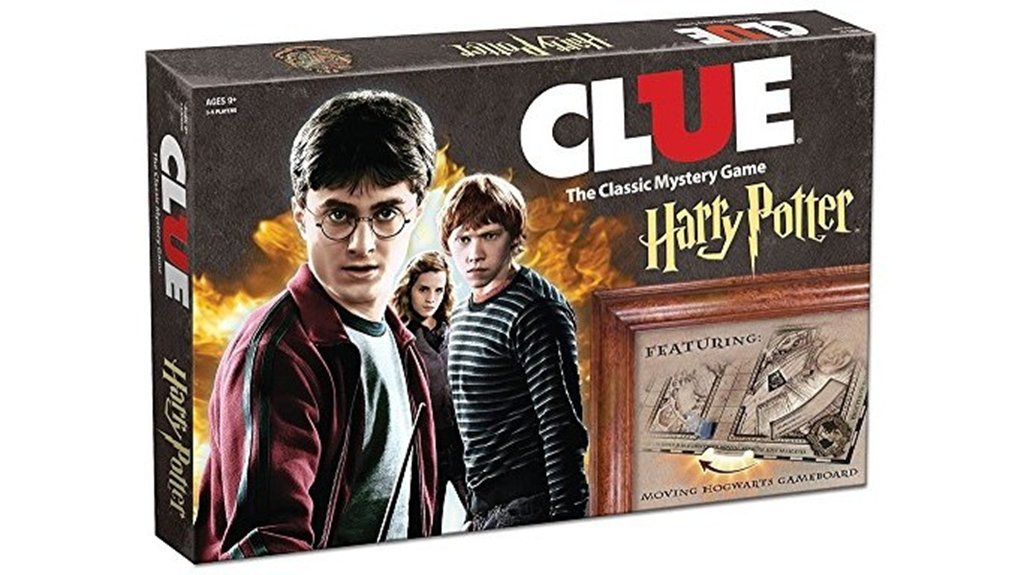
For Harry Potter fans seeking a family-friendly mystery game, this Clue edition stands out. Hasbro Gaming’s Original Edition adapts the classic deduction format into Hogwarts Castle, where players investigate a student’s disappearance. The board uses moving room wheels and secret passages to deepen play. Participants choose Harry, Ron, Hermione, Ginny, Luna, or Neville while exploring familiar locations from the books and films. Designed for 3-5 players ages 8 and up, it runs 30 minutes or more. Compact at 15.8 by 10.5 by 2.5 inches, it suits families and makes a fitting gift.
Best For: Harry Potter fans and families looking for a kid-friendly, 3-5 player mystery board game with a Hogwarts theme.
Pros:
- Fun Harry Potter-themed twist on the classic Clue formula
- Includes favorite characters and familiar Hogwarts locations
- Good gift option for families and fans ages 8+
Cons:
- Only supports 3-5 players
- Playtime may be a bit long for younger kids at 30+ minutes
- Best suited for Harry Potter fans, so the theme may not appeal to everyone
Let’s Go Fishin’ Game by Pressman
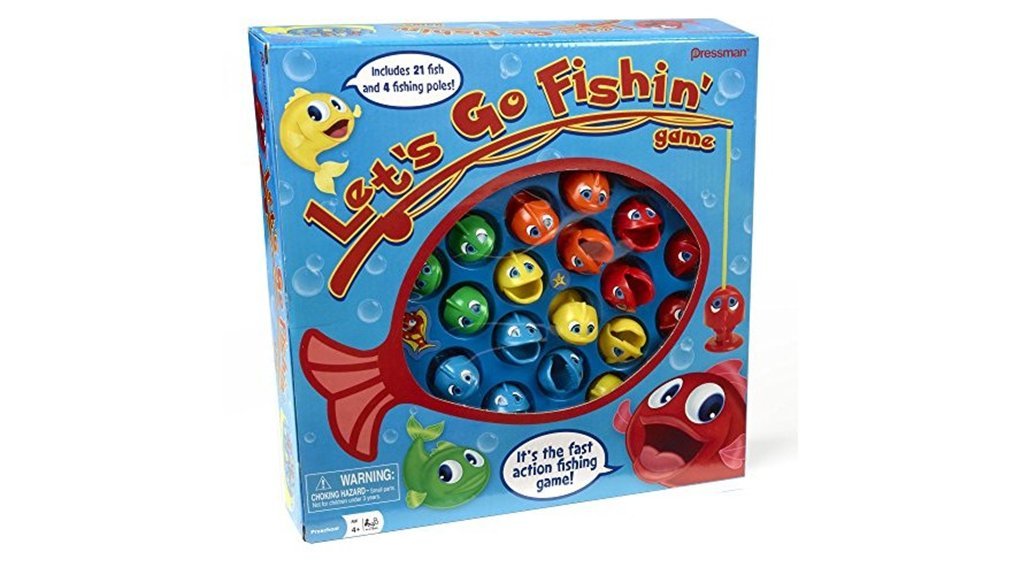
Let’s Go Fishin’ Game by Pressman suits young families seeking simple, active play. This classic edition from Pressman Toys, branded Goliath, uses a rotating pond and 21 colorful fish with opening and closing mouths. Up to four players use mini fishing poles to catch the most fish, making it suitable for ages 4 and up. The deluxe plastic base supports lively, hands-on rounds that help develop hand-eye coordination. Released September 1, 2020, model 0055J keeps the original action-packed style intact, offering interactive fun for children and family game nights alike.
Best For: Young families and children ages 4 and up who want a simple, active, interactive game for family play.
Pros:
- Fun, action-packed gameplay that keeps kids engaged
- Supports 1-4 players, making it good for family game nights
- Helps develop hand-eye coordination through hands-on play
Cons:
- May feel too simple for older kids or adults
- Best suited for short play sessions rather than long strategic games
- Requires space for the rotating pond and active setup
MindWare Qwirkle Board Game
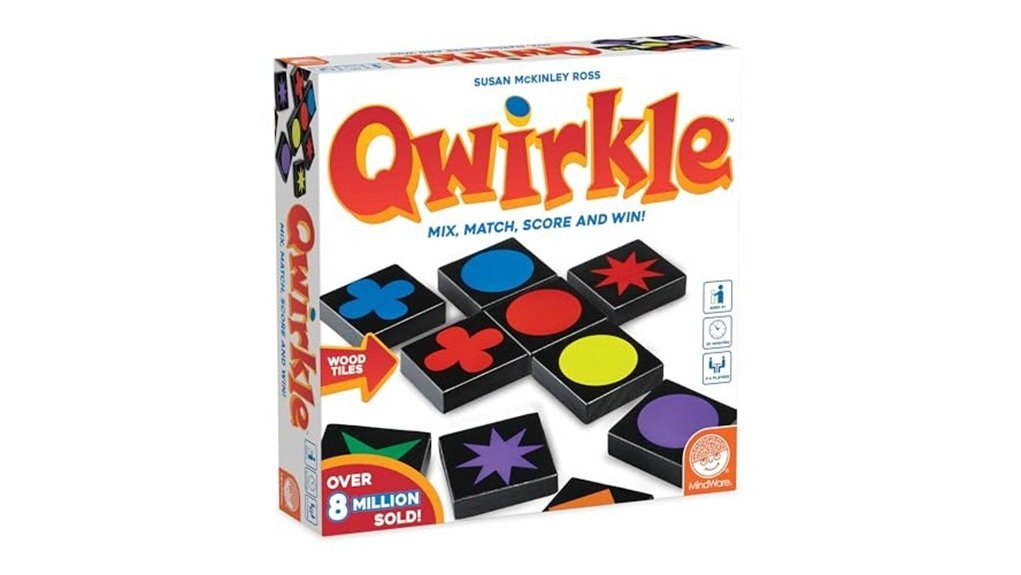
MindWare Qwirkle suits families who want an easy-to-learn strategy game with real depth. The classic edition, model 32016, uses 108 wooden tiles with 36 color-symbol combinations, a drawstring bag, and a rule book. Players place three tiles at a time, building lines by matching color or shape while planning ahead for maximum points. Its 2010 publication did not slow its appeal; the game remains a recognized favorite. Awards from Major Fun, the National Parenting Center, and Parents’ Choice Gold highlight its lasting value for children and adults, supporting spatial recognition, planning, and problem-solving.
Best For: Families, children, and casual-to-strategic players looking for an easy-to-learn, award-winning tile game with enough depth to keep both kids and adults engaged.
Pros:
- Simple rules make it quick to teach and easy for new players to join in.
- Encourages strategic thinking, spatial recognition, planning, and problem-solving.
- Includes quality components like 108 wooden tiles, a drawstring bag, and a rule book, plus strong family appeal and award recognition.
Cons:
- Gameplay may feel repetitive for players who prefer highly complex strategy games.
- Limited to tile-laying mechanics, so it may not appeal to those seeking more variety.
- The need to plan carefully can make it less relaxing for players who want a very casual game.
Betrayal at House on the Hill
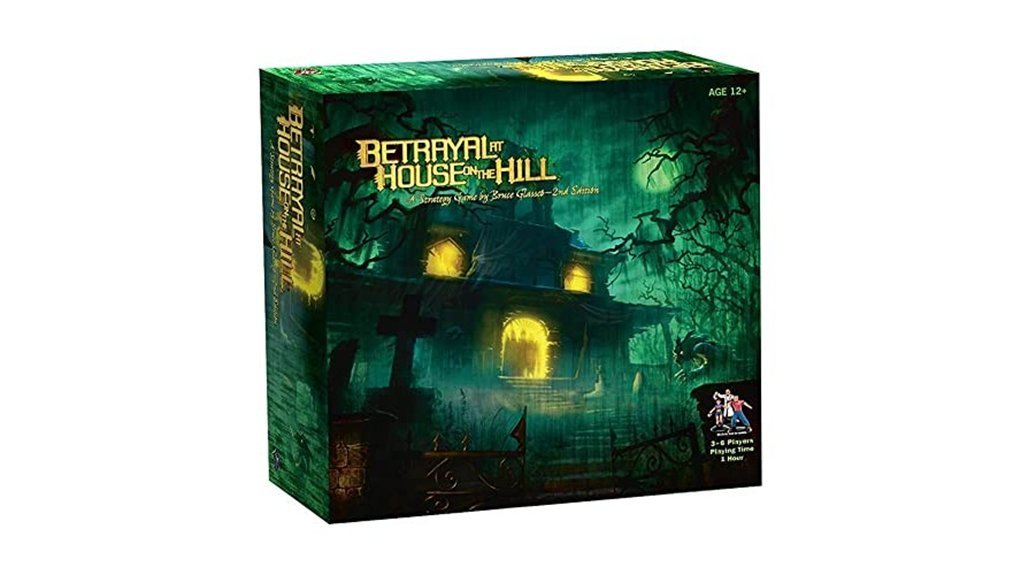
Betrayal at House on the Hill suits players who enjoy suspenseful, cooperative horror with a surprising twist. Hasbro Gaming’s 3rd Edition, model AH26633, builds a haunted mansion tile by tile, creating a shifting setting for 3 to 6 players aged 12 and up. Sessions last about 60 minutes and feature 50 scenarios that can turn cooperative survival into betrayal when one player becomes the traitor. The dynamic tile system and varied encounters help each playthrough feel distinct. Its horror theme and unpredictable structure make it a strong option for groups seeking tense, replayable tabletop experiences.
Best For: Fans of suspenseful cooperative horror games who want a replayable, twist-filled tabletop experience for small groups.
Pros:
- Offers 50 different scenarios for strong replay value
- Builds a haunted mansion tile by tile for a dynamic, unpredictable game board
- Supports 3–6 players and includes a memorable betrayal mechanic
Cons:
- The 60-minute playtime can run longer with new or slow-moving groups
- The horror theme and betrayal element may not suit every player
- Rules and scenario setups can feel complex for first-time players
USAOPOLY Risk Game of Thrones Strategy Board Game
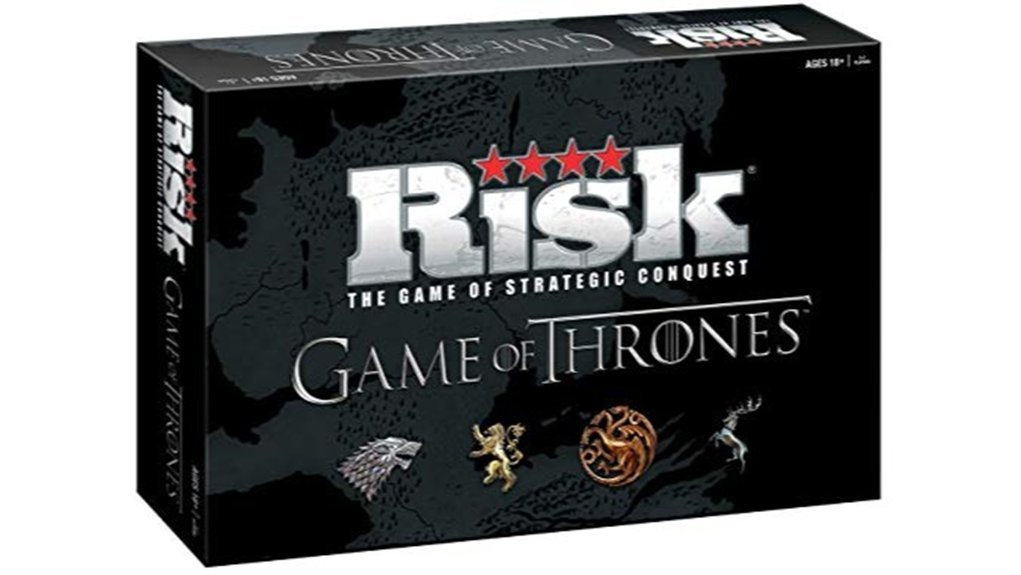
USAOPOLY Risk Game of Thrones Strategy Board Game suits devoted Game of Thrones fans who love strategic conquest. The USAOPOLY Standard Edition, model RI104-375-001500-04, adapts the HBO world into a medium-sized toy with original colors and substantial table presence. It supports 2 to 7 players ages 17 and up, with sessions lasting 60 minutes or more. Seven noble House armies provide 315 finely crafted pieces, while over 600 unique components and two sculpted designs deepen immersion. Three modes, Skirmish, Dominion, and World at War, offer varied paths to domination.
Best For: Dedicated Game of Thrones fans and strategy board game players who want a thematic, large-scale Risk experience for groups of 2 to 7.
Pros:
- Rich Game of Thrones theme based on the HBO series
- High component count with 315 army pieces and over 600 unique game pieces
- Three game modes offer variety and replayability
Cons:
- Best suited for older players, ages 17+
- Play sessions can take 60+ minutes, which may not suit casual gaming
- Complex setup and rules may feel overwhelming for beginners
Ticket to Ride Board Game by Days of Wonder
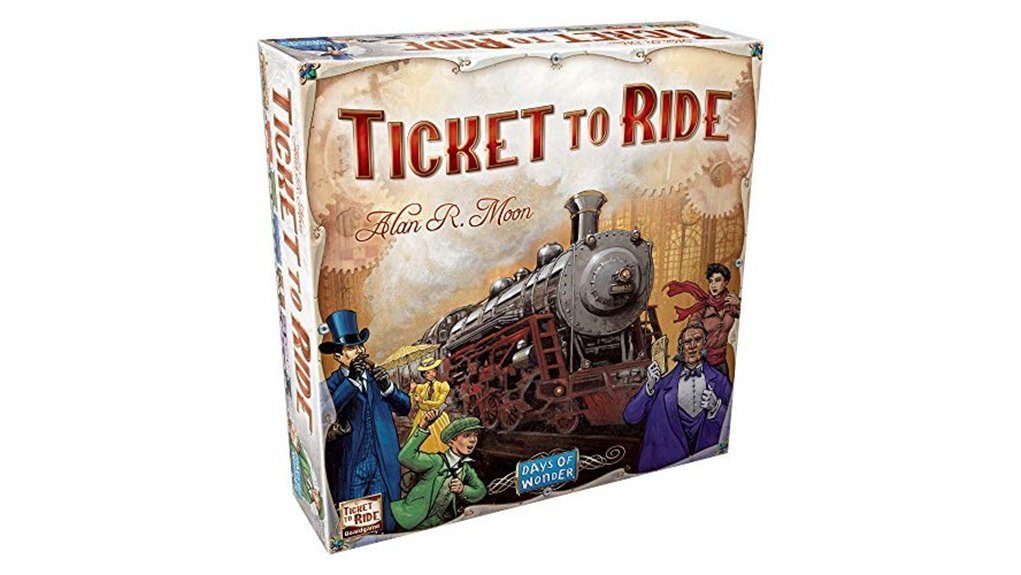
Ticket to Ride suits players who want quick strategy with broad family appeal. Days of Wonder’s award-winning train adventure sends 2 to 5 players across iconic American cities in 30 to 60 minutes. Players collect train cards to claim routes and use ticket cards to plan efficient connections for bonus points. Suitable for ages 8 and up, it blends accessible rules with meaningful decisions. The 2009 Asmodee release offers replayable competition, where every move can matter. Model DO7201 delivers multicolor table appeal and steady tension.
Best For: Families and casual gamers who want a quick, strategic, easy-to-learn board game with replayable competition.
Pros:
- Fast-paced gameplay with a 30 to 60 minute playtime
- Easy for ages 8+ while still offering meaningful strategic choices
- Strong replay value with route-building and ticket-based planning
Cons:
- Limited to 2 to 5 players
- Can feel competitive or tense for very casual players
- Strategy depth may be lighter for experienced hobby gamers
7 Wonders Board Game by Repos Production
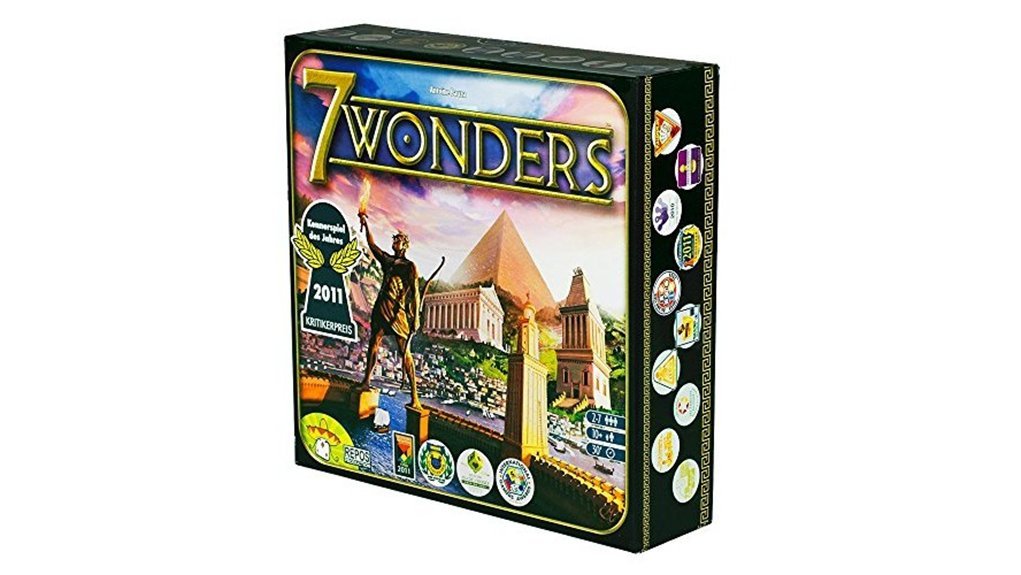
7 Wonders suits players who want a fast, strategic civilization game. Designed for ages 10 and up, it supports 3 to 7 players and typically finishes in about 30 minutes. The objective is straightforward: guide a civilization toward prosperity through careful planning and efficient choices. Published under the Repos Production brand and manufactured by Asmodee, this 2016 Edition is identified by model SEV01. Its small size and standard color presentation make it easy to store. Classified as a toy, it remains a compact option for group play with tactical depth.
Best For: Fans of quick, tactical civilization games who want a 30-minute strategy experience for 3 to 7 players ages 10 and up.
Pros:
- Fast-paced gameplay makes it easy to fit into a short game night
- Supports a wide player count, from 3 to 7
- Strategic depth offers meaningful choices despite the short playtime
Cons:
- Not ideal for players looking for a longer, more immersive game
- Best with a group, so it may not suit solo play
- Strategy-focused gameplay may feel less accessible to casual gamers
Ravensburger Labyrinth Board Game for Family Game Nights
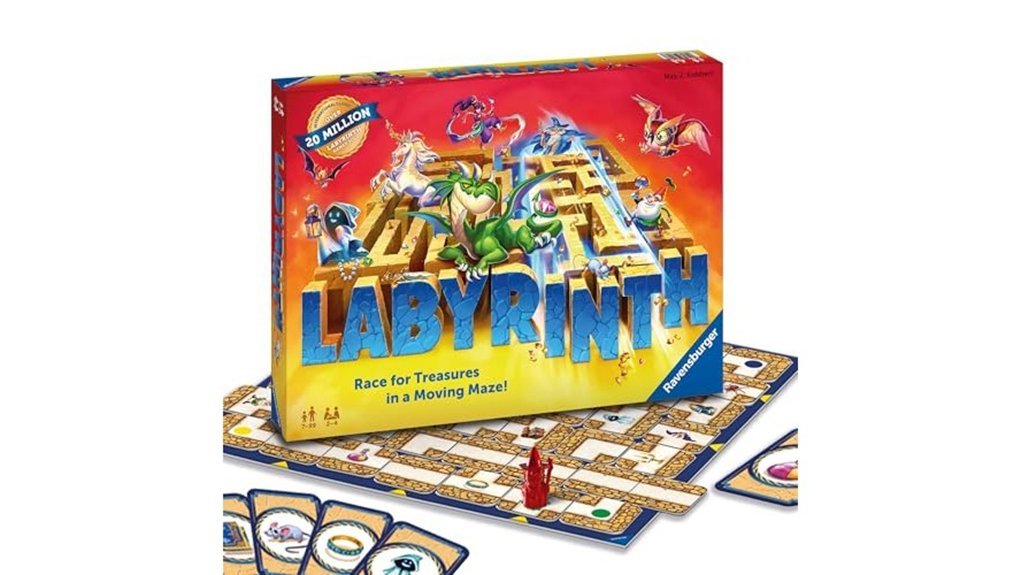
Ravensburger Labyrinth suits families who want a quick strategic game with easy rules. Designed for 2 to 4 players ages 7 and up, this maze challenge lasts about 20 to 30 minutes. Each turn shifts the labyrinth, forcing players to rethink routes, collect hidden treasures, and sometimes block opponents. The game supports critical thinking, planning, and cause-and-effect skills while staying approachable for children and adults. Its 34 maze cards, 24 treasure cards, and 4 pieces create strong replay value. Ravensburger’s model 26448 remains a practical choice for family game nights.
Best For: Families, kids ages 7 and up, and casual players who want a quick, easy-to-learn strategic game with plenty of replay value.
Pros:
- Simple rules make it easy for children and adults to jump in quickly.
- Shifting maze gameplay keeps each round fresh and strategic.
- Strong replay value with 34 maze cards and 24 treasure cards.
Cons:
- Best with a small group, since it only supports 2 to 4 players.
- Playtime may feel short for players looking for a longer game.
- Strategy is accessible, but experienced gamers may find it less complex.
Mattel Blokus Strategy Board Game for Kids & Families
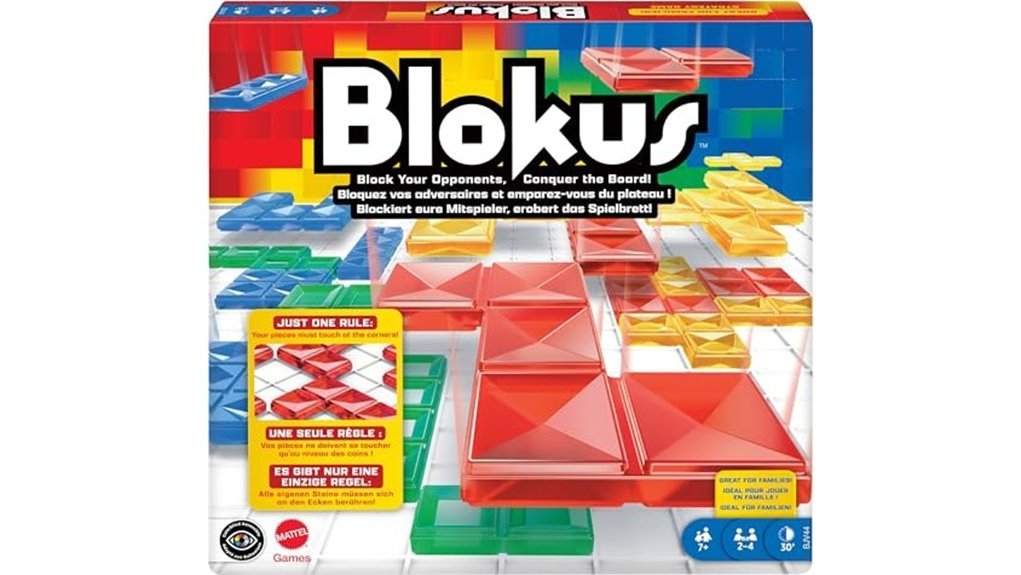
Mattel Blokus is a smart pick for families who want quick, competitive strategy play. The game is easy to grasp in under a minute, yet it still offers meaningful challenge for kids and adults. Players take turns placing 21 pieces, and each new piece must touch the same color only at the corners. The goal is to fit as many pieces as possible while blocking rivals. The game ends when no moves remain, and the player with the fewest pieces left wins. Color-blind-friendly patterns add useful accessibility. It suits ages 7 and up, parties, and game nights.
Best For: Families, kids age 7+, and friends who want a fast, easy-to-learn strategy game for parties and game nights.
Pros:
- Easy to learn in under a minute
- Fun, competitive gameplay for both kids and adults
- Color-blind-friendly patterns improve accessibility
Cons:
- Can be frustrating for players who dislike blocking/competitive play
- Best with 2–4 players, so it may not suit larger groups as well
- Strategy depth may be limited for players seeking a more complex game
Factors to Consider When Choosing 14 of the Most Popular Board Games on Amazon This Summer: Useful Products and Buying Tips
When selecting among 14 of the most popular board games on Amazon this summer, age and skill match should be considered first so the game fits the players at the table. Player count needs, game length preference, and learning curve ease can then narrow the choices to options that suit the group’s time and experience level. Replay value also matters, since the strongest picks usually remain engaging well beyond the first few plays.
Age And Skill Match
Choosing a board game starts with matching the recommended age range to the players’ developmental stage and comprehension level. This simple check helps guarantee that rules, themes, and pacing fit the group. Many titles are built for specific skill levels, so selecting one aligned with the players’ abilities usually improves enjoyment and engagement. Younger children often benefit from games that teach color recognition, counting, and turn taking, especially when reading is not required. Older kids and adults generally prefer games with more complex strategies, planning, and decision making. The best choices balance challenge with accessibility, allowing players to understand the game quickly while still feeling interested. Clear age and skill matching reduces frustration and supports a more satisfying play experience for everyone involved.
Player Count Needs
After age and skill level, player count is the next practical factor to check, since a game works best only if it matches the size of the group. The listed minimum and maximum players should fit the usual gathering, whether that means a tight two-player session or a larger table of friends. Games built for 2-4 players often feel more intimate and focused, while titles for 5 or more can create stronger social interaction and lively competition. Flexible player counts are especially useful because they allow the same game to work across different occasions without losing balance. It also helps to decide between cooperative and competitive play, since teamwork or head-to-head conflict can shape the ideal group size and how smoothly the mechanics scale.
Game Length Preference
Game length can play a major role in how much a board game is enjoyed, because the right playtime should match both the group’s schedule and its level of commitment. Shorter games, usually lasting 20 to 30 minutes, often suit families and casual players who want a quick session without a large time investment. Games that run 60 minutes or more tend to appeal more to dedicated strategy fans who enjoy extended planning and deeper discussion. Many popular titles fall between 30 and 60 minutes, offering a practical balance of depth and convenience. Group size can also matter, since larger tables often extend playtime. Knowing the average duration helps hosts plan game nights and avoid fatigue or rushed endings.
Learning Curve Ease
A board game’s learning curve often determines whether it becomes a quick favorite or stays on the shelf, since the best options can be explained in under five minutes and played almost immediately. That ease matters most when selecting games for mixed groups, because simple mechanics help children, beginners, and casual players join in without confusion. Titles aimed at ages 3 and up usually rely on straightforward actions that support family participation. Visual aids, including color-coded pieces and illustrated instructions, can further reduce friction and speed understanding. Games with accessible rules also tend to encourage conversation and teamwork, making them well suited to gatherings. Even so, a modest layer of strategy can keep the experience engaging, giving players room to improve while keeping setup and play approachable.
Replay Value Appeal
What keeps a board game on the table long after the first play is often its replay value, especially when dynamic mechanics, shifting boards, or evolving strategies create a different experience each time. Games that alter the board, rotate objectives, or reward new tactical choices tend to stay fresh across many sessions. Replayability also improves when titles support different player counts, since two, four, or more participants can change pacing and strategy. Random draws, variable setups, and modular layouts add unpredictability without undermining balance. Many award-winning games also broaden appeal by remaining accessible to mixed ages and skill levels, making them suitable for family game nights. Strong themes and narrative progression further encourage revisits, since players often want to explore the same scenario from another angle.
Frequently Asked Questions
Which Game Is Best for Large Family Gatherings?
Codenames suits large family gatherings best, since it supports many players, encourages teamwork, and stays accessible for mixed ages. Its simple rules and lively guessing create broad participation without long waits or complicated setup.
Which Board Game Has the Shortest Average Playtime?
The shortest average playtime typically belongs to party games like Spot It! or Sushi Go!, which often finish in under 15 minutes. Their quick rounds make them ideal for brief, lively gatherings.
Which Game Is Most Suitable for Beginners?
Ticket to Ride is often considered most suitable for beginners, because its rules are simple, turns are quick, and strategy feels accessible. It offers a welcoming introduction to modern board gaming without overwhelming new players.
Which Game Offers the Highest Replay Value?
Replay value is highest in games with variable setups, so Ticket to Ride and Cascadia often stand out. Their changing map choices and scoring patterns keep each session fresh, even for repeat players.
Which Game Works Best for Travel or Small Spaces?
Travel-friendly and space-efficient choices tend to be compact card games or small-box strategy titles, since they fit easily in bags and play on limited surfaces. A portable option usually proves best for travel or small spaces.
Conclusion
These board games offer a pleasant mix of simple fun, light strategy, and family-friendly competition for summer 2026. Whether choosing a nostalgic classic, a themed mystery, or a puzzle-minded favorite, shoppers can find options suited to different ages and group sizes. A few may be less ideal for those seeking deeply complex play, but they still provide a dependable path to lively gatherings, shared laughs, and an agreeable break from screens.