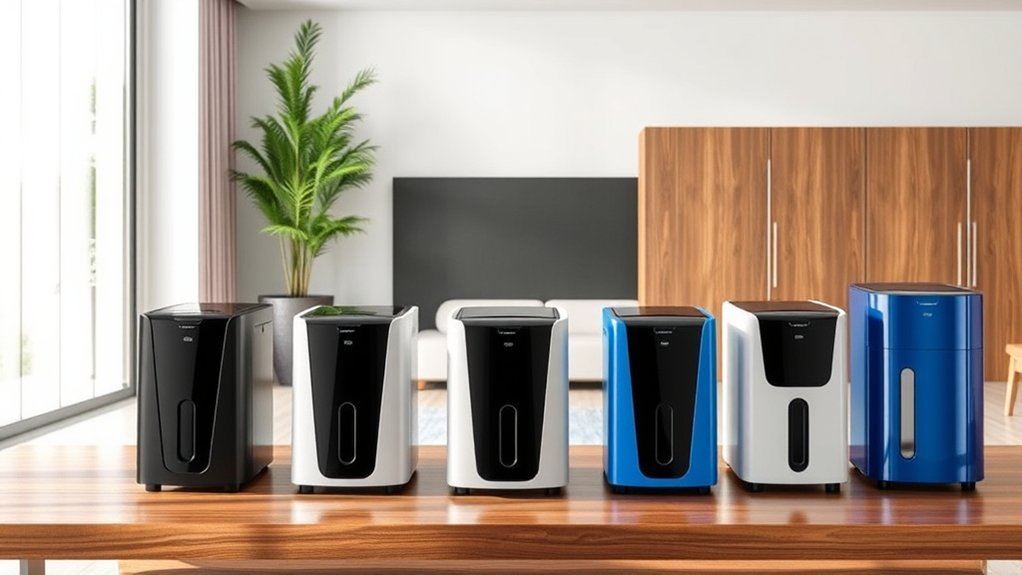
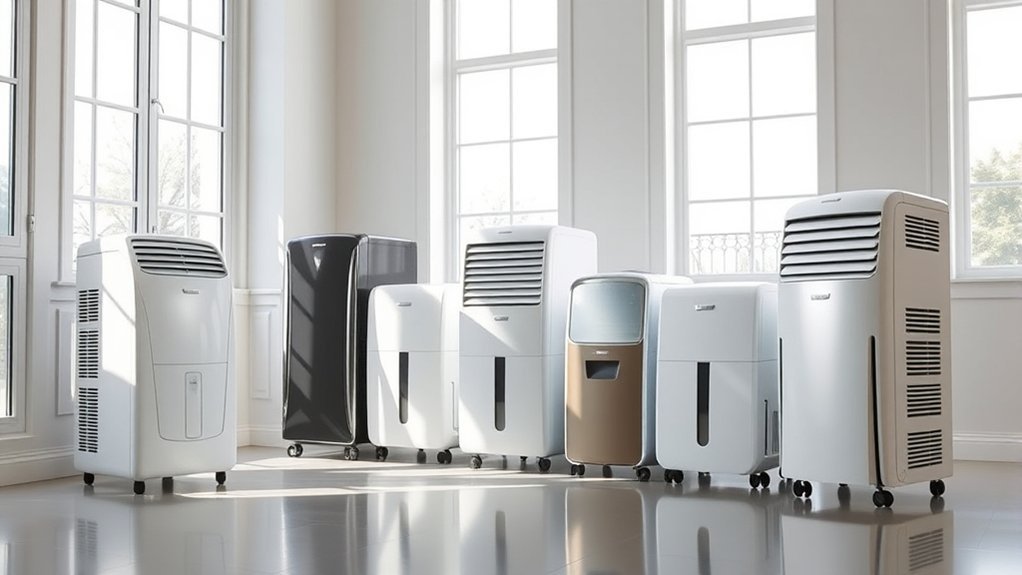
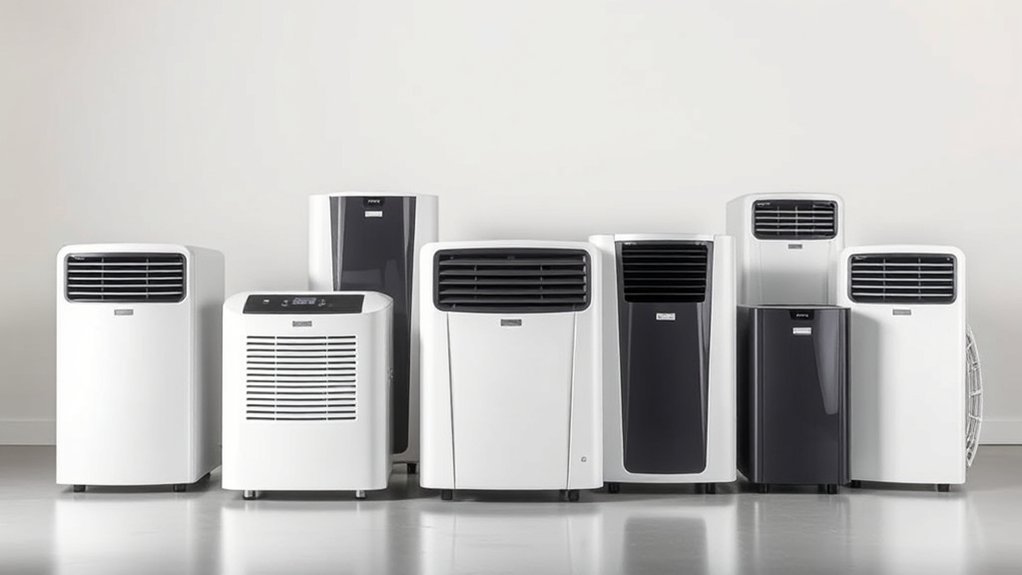
Choosing the best high-capacity dehumidifier or professional moisture extractor starts with one important distinction: commercial restoration units and portable home dehumidifiers are not the same. The ALORAIR Sentinel HD55 and Moiswell Pioneer-XII are the strongest fits for crawl spaces, job sites, warehouses, and demanding continuous drainage. The DREO 711S, Midea Cube, AEOCKY, Yaufey, and Vellgoo are better treated as high-capacity residential options for basements, garages, laundry areas, and large rooms.
Quick verdict
- Best commercial crawl-space pick: ALORAIR Sentinel HD55 for compact, continuous gravity drainage.
- Best for restoration and large job sites: Moiswell Pioneer-XII for higher AHAM capacity, a built-in pump, and large wheels.
- Best smart residential option: DREO 711S for app-based control in large basements and living spaces.
- Best residential model with a pump: Midea Cube 50-Pint for flexible upward or horizontal drainage.
- Best energy-focused home alternatives: AEOCKY, Yaufey, and Vellgoo, provided you compare the exact model’s standardized capacity rather than only its advertised maximum.
Capacity-rating note
Dehumidifier capacity can be advertised under very hot, humid conditions or measured under standardized DOE/AHAM conditions. Those numbers are not interchangeable. For the fairest comparison, use the standardized pints-per-day figure on the exact model label or current ENERGY STAR listing, then consider room conditions, airflow, drainage, and operating temperature.
Quick Comparison
| Product | Unit type | Capacity guidance | Drainage | Best fit | Amazon |
|---|---|---|---|---|---|
| ALORAIR Sentinel HD55 | Commercial crawl-space unit | 53 PPD AHAM; 113 PPD at saturation | Gravity drain hose; no bucket | Crawl spaces, basements, property maintenance | Check Price |
| Moiswell Pioneer-XII | Commercial restoration unit | 90 PPD AHAM; up to 200 PPD in high-humidity conditions | Built-in pump and gravity drain | Warehouses, construction drying, water-damage work | Check Price |
| DREO 711S | Smart portable home unit | Advertised up to 110 PPD; verify standardized rating on the exact label | Bucket or gravity drain hose; no built-in pump | Large basements, laundry rooms, living areas | Check Price |
| Midea Cube 50-Pint | Smart portable home unit | 50 PPD | Built-in pump, gravity drain, or bucket | Large basements where the drain is above the unit | Check Price |
| AEOCKY Max | Portable home unit | Advertised up to 105 PPD; confirm exact-model DOE/ENERGY STAR capacity | Bucket or gravity drain hose | Large residential spaces and routine humidity control | Check Price |
| Yaufey JD025Q-80 | Portable home unit | 24 PPD standardized; up to 80 PPD at 95°F/90% RH | Bucket or gravity drain hose | Basements and garages with moderate moisture loads | Check Price |
| Vellgoo Max 64-Pint | Portable home unit | Advertised up to 64 PPD; verify the exact standardized rating | Bucket or gravity drain hose | Large rooms, garages, and basements | Check Price |
ALORAIR Commercial Dehumidifier 113 Pint (Sentinel HD55)
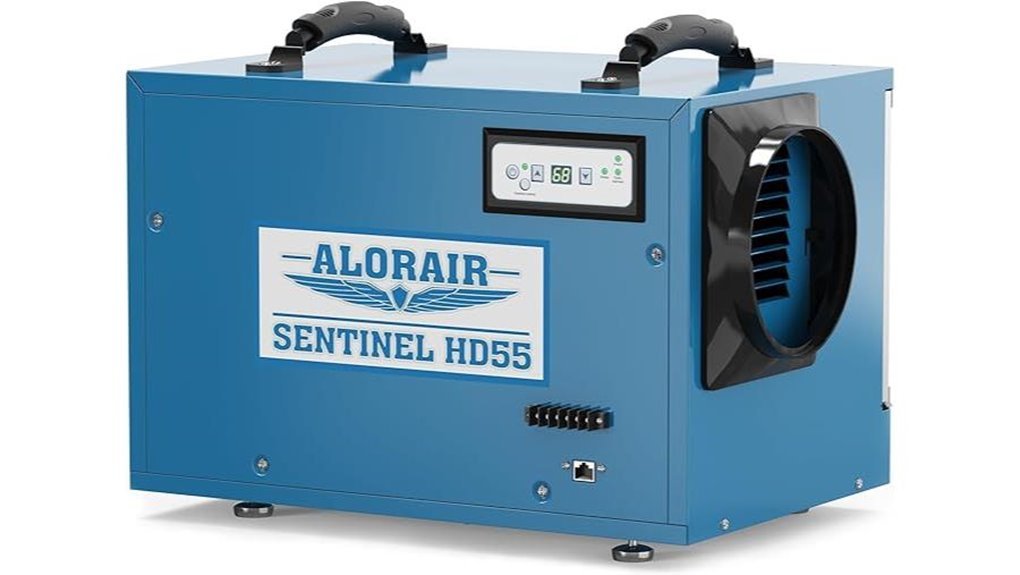
If you need a compact commercial dehumidifier for a crawl space, basement, or property-maintenance application, the ALORAIR Sentinel HD55 is the most direct match in this list. It is rated for 53 pints per day under AHAM conditions and up to 113 pints at saturation, with airflow of 120 CFM and stated coverage up to 1,200 square feet.
The main advantage is low-maintenance continuous operation. It has no collection bucket, so condensate exits through a gravity drain hose. Automatic defrost supports cooler-space operation, while the metal housing and MERV-1 filter suit dusty crawl spaces better than a typical living-room dehumidifier.
Best For: Crawl spaces, basements, property maintenance, and users who already have a suitable low drain point.
Why You’ll Like It: It combines commercial construction with a compact footprint and a realistic AHAM capacity figure.
Who Should Avoid It: Buyers who need a water bucket, upward pumping, or easy room-to-room use.
Pros:
- 53 PPD AHAM rating and 113 PPD saturation rating are clearly separated.
- Automatic defrost, memory restart, gravity drainage, and a washable-access filter support continuous use.
- Metal housing, 120 CFM airflow, and a compact shape suit crawl spaces and utility areas.
Cons:
- No bucket and no built-in pump; the drain hose needs a continuous downward route.
- Coverage claims should still be matched to actual humidity load, temperature, and air movement.
- Less convenient than wheeled residential units for frequent relocation.
Moiswell 200-Pint Commercial Dehumidifier with Pump and Hose
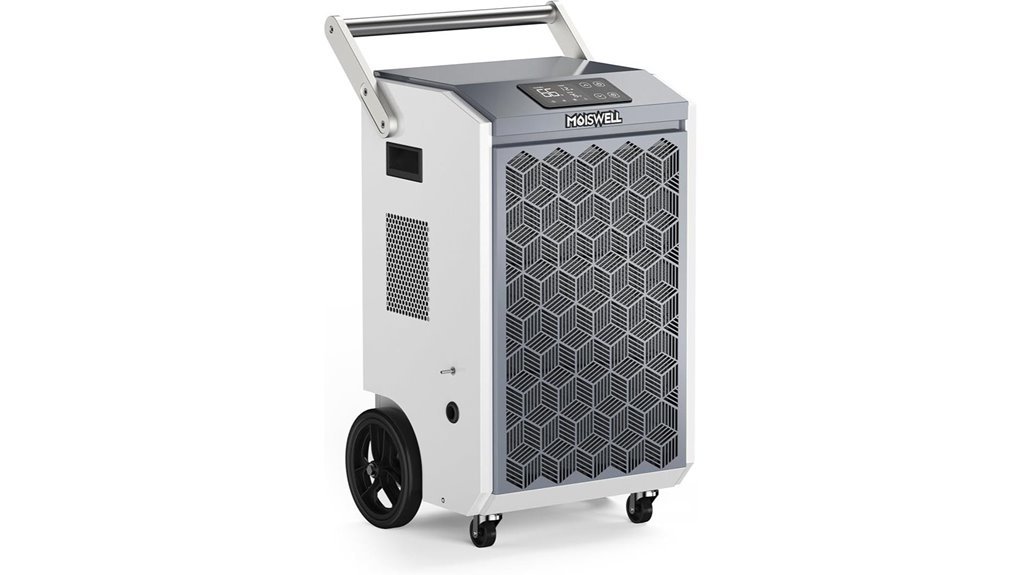
The Moiswell Pioneer-XII is the strongest heavy-duty moisture extractor in this roundup. Its manufacturer separates the ratings as 90 pints per day at AHAM conditions and up to 200 pints per day in hotter, more humid conditions. That makes it easier to compare than listings that show only a peak number.
A built-in condensate pump can move water up to 16.4 feet, while a separate gravity-drain option adds installation flexibility. The 320 CFM airflow, 8-inch rear wheels, detachable handles, automatic defrost, and 78-pound frame are better suited to warehouses, construction drying, flooded basements, and restoration work than normal household use.
Best For: Contractors, restoration crews, warehouses, large garages, and severe basement moisture where pump drainage is needed.
Why You’ll Like It: It offers the highest verified AHAM capacity in this list and is designed to move between demanding work areas.
Who Should Avoid It: Buyers with a small room, mild seasonal humidity, limited storage, or a need for quiet bedroom operation.
Pros:
- 90 PPD AHAM capacity with up to 200 PPD under high-humidity conditions.
- Built-in pump, 16.4-foot pump hose, and gravity drainage support difficult drain locations.
- Large wheels, handles, 320 CFM airflow, and automatic defrost suit job-site use.
Cons:
- Heavy, bulky, and likely louder than residential portable models.
- Higher electrical use is expected because of its commercial airflow and capacity.
- Oversized for normal bedrooms, small apartments, and mild dampness.
DREO 110-Pint Smart Dehumidifier (711S)
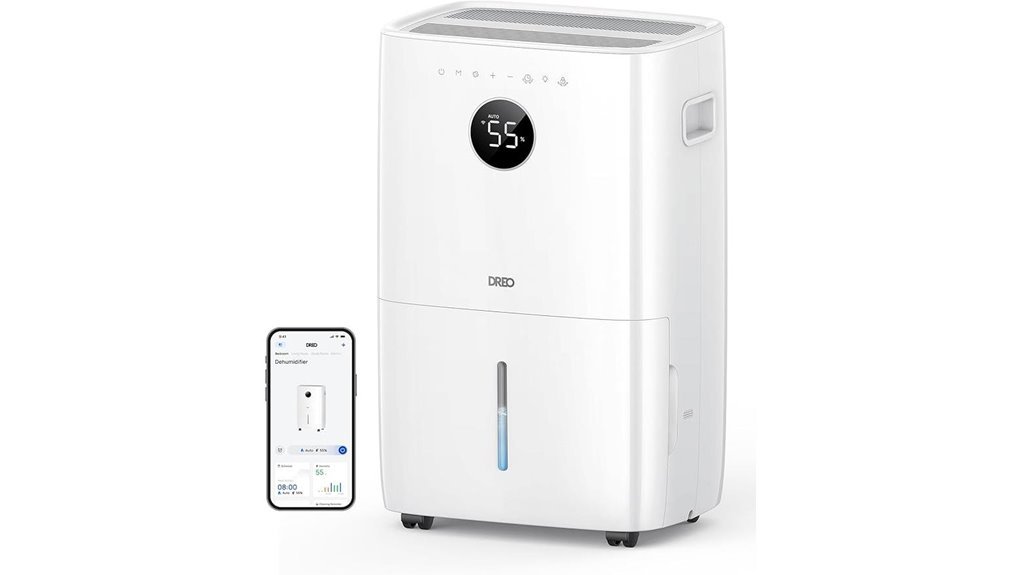
The DREO 711S is a high-capacity portable home dehumidifier rather than a commercial restoration machine. It is marketed for spaces up to 4,500 square feet and for moisture removal up to 110 pints per day, but buyers should check the exact model label for its standardized DOE capacity before comparing it directly with the ALORAIR or Moiswell AHAM figures.
Its strengths are convenience and control. The unit offers automatic, comfort, and continuous modes, app-based smart control, a large 2-gallon bucket, a drain-hose connection, automatic defrost, and stated 46 dB operation. It weighs about 44 pounds, so it is substantial but still easier to manage inside a home than a restoration unit.
Best For: Large residential basements, laundry rooms, open living areas, and buyers who value app control.
Why You’ll Like It: Smart monitoring and a large bucket reduce daily checking when gravity drainage is not available.
Who Should Avoid It: Restoration professionals who need a pump, rugged job-site wheels, or a clearly published AHAM rating.
Pros:
- Smart controls, automatic modes, and broad residential coverage.
- Large 2-gallon tank plus a continuous gravity-drain option.
- Automatic defrost and relatively quiet listed operation for its size.
Cons:
- No built-in condensate pump.
- The advertised 110-pint maximum should not be compared directly with AHAM figures without checking test conditions.
- Large footprint and weight may be excessive for a small room.
Midea Cube 50 Pint Dehumidifier with Built-in Pump
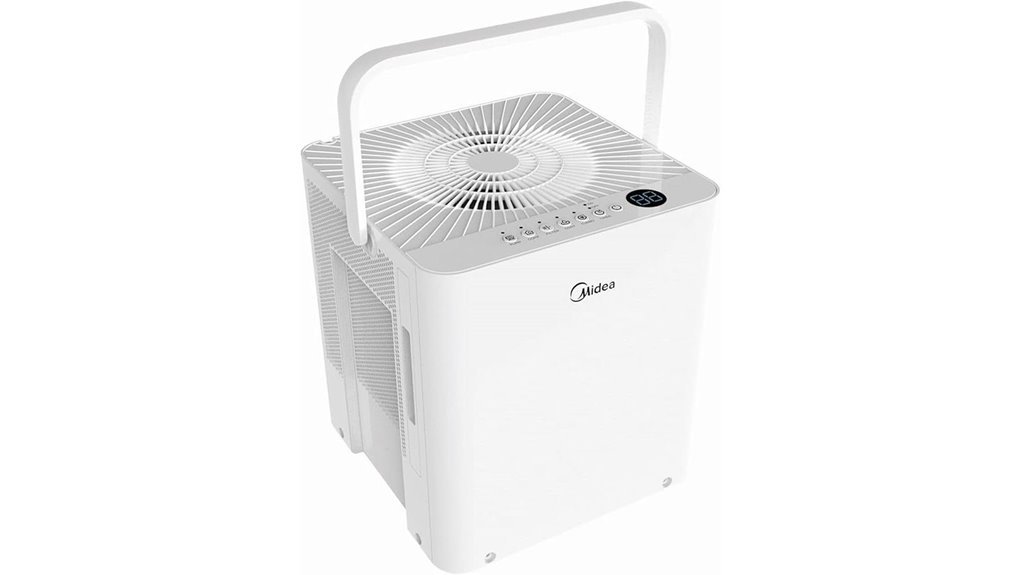
The Midea Cube is the most practical home choice here when the available drain is above the dehumidifier. It is rated at 50 pints per day, covers up to 4,500 square feet according to the manufacturer, and includes a built-in pump as well as gravity-drain and bucket options.
Its lift-and-twist design lets the compressor section nest inside the bucket for storage. The large bucket reduces emptying frequency, while smart controls, auto restart, and auto-defrost improve day-to-day convenience. At about 42 pounds before collected water is added, it is portable on wheels but can become heavy when the tank is full.
Best For: Large home basements, garages, and utility areas where a sink or window is above the unit.
Why You’ll Like It: The built-in pump solves drainage problems that gravity-only home models cannot.
Who Should Avoid It: Buyers who struggle with lifting a large filled bucket or only need a basic small-room dehumidifier.
Pros:
- 50 PPD capacity with built-in pump, gravity drain, and bucket collection.
- Large tank and nested storage design reduce everyday hassle.
- Wi-Fi control, voice-assistant compatibility, auto restart, and auto-defrost.
Cons:
- The full bucket can be heavy to lift and empty.
- Pump and hose setup add more installation steps than a basic gravity drain.
- Residential construction is not intended for rough restoration job sites.
AEOCKY Max Dehumidifier for Large Residential Spaces
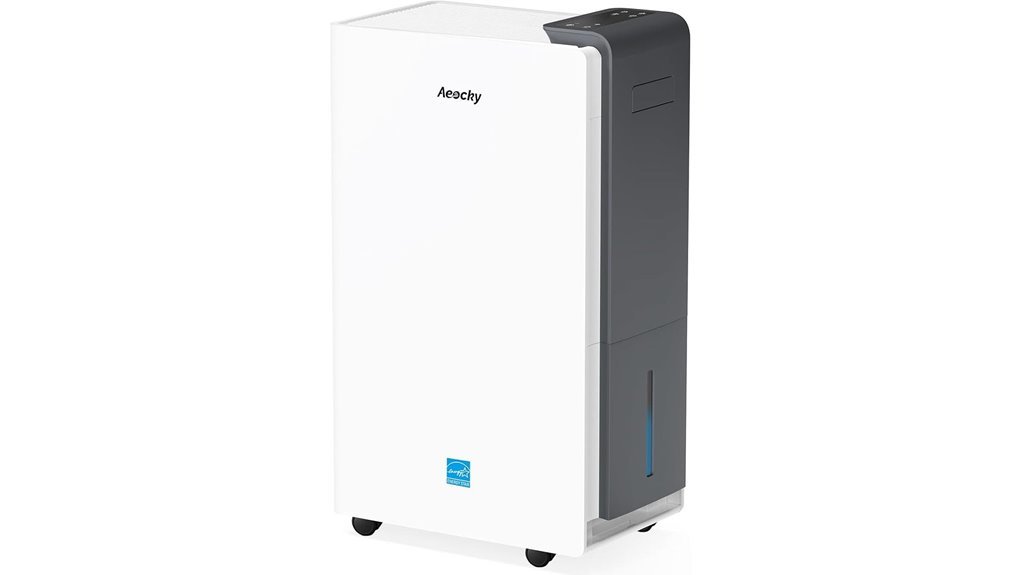
This AEOCKY model is marketed for large residential spaces and for moisture removal up to 105 pints per day in favorable high-temperature, high-humidity conditions. Because the listing also uses historical “ENERGY STAR Most Efficient 2024” language, buyers should confirm the exact model number and current standardized capacity in the ENERGY STAR database rather than assuming the maximum advertised figure is the DOE rating.
The unit includes adjustable humidity control, multiple operating modes, fan-speed settings, a timer, child lock, a drain hose, and a garden-hose adapter. Those features make it useful for routine basement and home humidity control, but it should not be presented as a substitute for a rugged restoration dehumidifier.
Best For: Large residential basements and living spaces where energy use and automatic humidity control are priorities.
Why You’ll Like It: It combines a slim portable design with several control modes and flexible gravity drainage.
Who Should Avoid It: Buyers who need a built-in pump, commercial wheels, or verified restoration-grade performance.
Pros:
- Multiple humidity modes, fan settings, timer, child lock, and continuous drainage.
- Relatively narrow design for a high-capacity residential unit.
- Exact-model ENERGY STAR listings can provide a standardized efficiency comparison.
Cons:
- The 105-pint figure is a peak-condition claim, not automatically the standardized capacity.
- No built-in pump is stated for the linked model.
- Historical certification-year wording should be rechecked before purchase.
Yaufey 80 Pint Energy Star Dehumidifier for Basement
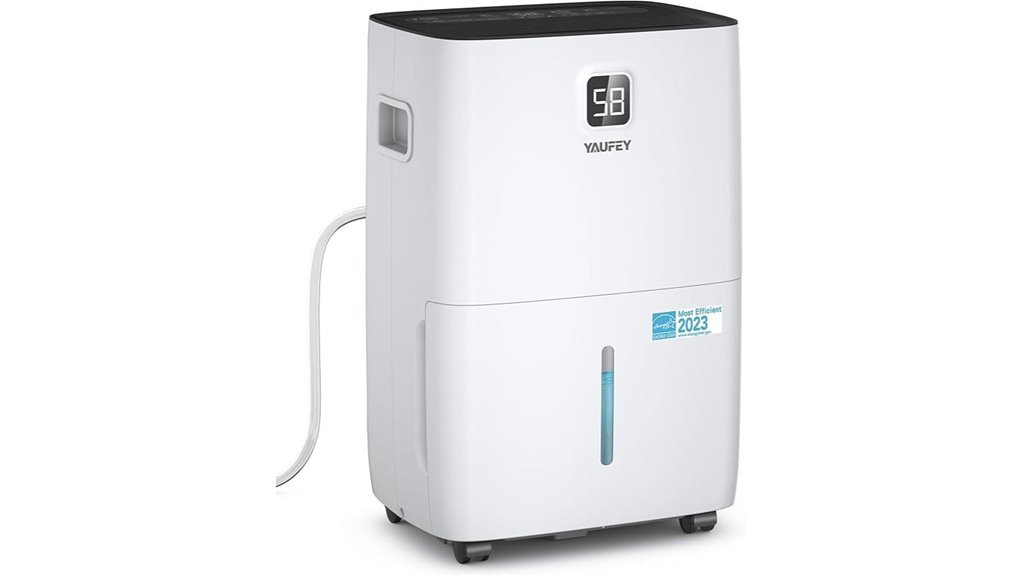
The Yaufey JD025Q-80 clearly shows why test conditions matter. It is advertised at up to 80 pints per day at 95°F and 90% relative humidity, while its manual and ENERGY STAR information place standardized removal at about 24 pints per day. That makes it a moderate-capacity residential unit, not an 80-pint restoration machine.
It offers sleeping, living-area, basement, and continuous modes, a 1.06-gallon tank, automatic shutoff, automatic defrost, memory restart, child lock, a timer, caster wheels, and an included gravity-drain hose. It is a reasonable choice for routine home humidity management when sized using the standardized figure.
Best For: Moderate basement or garage dampness, users who prefer preset humidity modes, and spaces with a nearby low drain.
Why You’ll Like It: The controls are straightforward, and the standardized capacity is available for more honest sizing.
Who Should Avoid It: Buyers expecting true 80-PPD performance under normal basement test conditions or needing pump drainage.
Pros:
- ENERGY STAR certified with a standardized capacity figure for easier comparison.
- Four operating modes, timer, child lock, auto-defrost, and memory restart.
- Bucket and continuous gravity-drain options.
Cons:
- The 80-pint headline applies to extreme heat and humidity, not normal standardized conditions.
- No built-in pump.
- 1.06-gallon tank may fill quickly in wet conditions.
Vellgoo Max 64 Pint Energy Star Dehumidifier
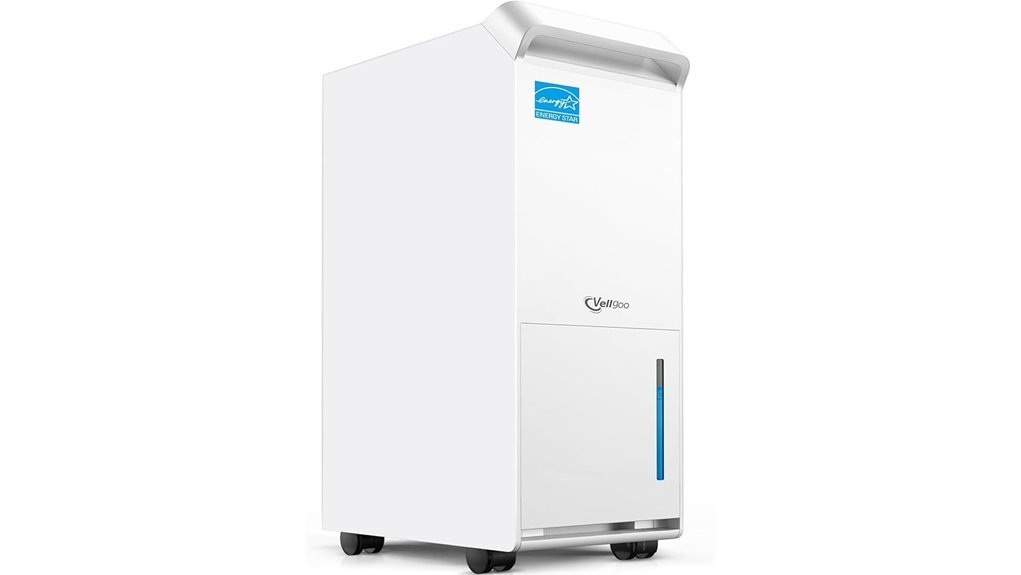
The Vellgoo Max is another large-room residential dehumidifier that should be compared by its exact standardized model rating, not only the advertised 64-pint maximum. Retail listings place it in spaces up to 4,000 square feet and describe flexible drainage, adjustable humidity settings, a washable filter, timer, and child lock.
It can work well for routine basement, garage, or large-room moisture control, especially when you want a simple portable design. However, historical “Most Efficient 2024” wording should be treated as a dated certification claim and checked against the current ENERGY STAR listing for the exact model before purchase.
Best For: Large residential rooms, basements, and garages with a gravity drain or manageable bucket-emptying schedule.
Why You’ll Like It: It focuses on the everyday controls most homeowners use without adding a complicated smart-home setup.
Who Should Avoid It: Buyers who need a pump, job-site construction, or a clearly published commercial AHAM rating.
Pros:
- Adjustable humidity control, operating modes, timer, child lock, and washable filter.
- Bucket and continuous gravity-drain options.
- Designed for large residential areas rather than only one small room.
Cons:
- The advertised maximum requires test-condition context.
- No built-in pump is stated.
- Certification-year claims may be stale and should be verified by exact model number.
Factors to Consider When Choosing a High-Capacity Dehumidifier or Professional Moisture Extractor
The right choice depends on whether you need restoration-grade drying or normal indoor humidity control. Compare standardized moisture-removal capacity, drainage height, airflow, operating temperature, portability, electrical requirements, and the severity of the moisture source before relying on a square-foot claim.
Commercial vs. Residential Use
A commercial crawl-space or restoration dehumidifier is built for longer duty cycles, continuous hose drainage, tougher environments, and easier transport across work areas. A portable residential dehumidifier normally adds a bucket, quieter controls, caster wheels, and home-focused modes. For a leak, flood, or active water-damage project, choose a commercial unit and address the water source first. For seasonal basement humidity, a correctly sized residential model may be more economical and comfortable.
Moisture Removal Capacity
Use the standardized DOE or AHAM pints-per-day number whenever possible. Saturation or high-temperature ratings can be much higher and are useful only when the test conditions are stated. The ALORAIR’s 53 PPD AHAM and Moiswell’s 90 PPD AHAM can be compared directly more easily than an unexplained “up to” claim. Also consider the starting humidity, room temperature, air leakage, wet materials, and whether the unit will run continuously.
Coverage Area and Moisture Load
Square-foot coverage is a rough marketing guide, not a complete sizing method. A cool, wet basement can require more capacity than a larger, warmer room with mild humidity. Measure the space, note standing water or damp materials, and use a hygrometer to track relative humidity. Oversizing slightly can help recovery, but a grossly oversized restoration unit may add noise, heat, and unnecessary energy use in a normal living area.
Drainage System Type
A bucket is flexible but requires manual emptying. Gravity drainage is simple and dependable, but the hose must slope continuously to a lower drain. A built-in pump is worth paying for when water must travel upward to a sink, window, or elevated drain. Check the stated pump lift, included hose length, connection size, and whether the pump operates automatically or only after the internal tank fills.
Energy Efficiency Rating
For portable home units, check the current ENERGY STAR record for the exact model number and compare Integrated Energy Factor rather than relying only on a dated badge in a product title. Higher efficiency can reduce operating cost, but the most efficient machine is still a poor choice if it is undersized and must run constantly. Commercial restoration units may prioritize airflow, ruggedness, and drying speed over household energy labels.
Operating Temperature and Defrost
Basements and crawl spaces can be cool enough for frost to form on the evaporator coil. Choose a unit with automatic defrost and confirm its operating temperature range. Capacity falls as conditions become cooler and drier, so peak summer ratings do not predict winter basement performance.
Portability and Durability
For frequent movement, compare actual weight, wheel size, handle design, and overall dimensions. The Moiswell’s large wheels suit rougher job-site movement, while residential caster wheels work best on smooth floors. Metal housings and serviceable filters are useful in crawl spaces and construction areas, but they can add weight.
Before you buy
- Fix active plumbing leaks, rain entry, or groundwater problems first.
- Confirm the exact model number, standardized capacity, voltage, amperage, and warranty.
- Plan the full drain route before choosing gravity drainage or a pump.
- Allow clearance around the intake and exhaust according to the manual.
- Use a separate hygrometer to confirm whether the room stays near the target humidity.
Frequently Asked Questions
What Is the Difference Between a Professional Moisture Extractor and a Home Dehumidifier?
A professional or restoration dehumidifier usually has tougher construction, higher airflow, continuous drainage, and features designed for crawl spaces, construction drying, or water-damage work. A home dehumidifier normally focuses on quieter operation, a collection bucket, simple controls, and routine humidity maintenance. In this list, ALORAIR and Moiswell are the commercial-style choices; the other five are residential portable units.
Can a Professional Dehumidifier Run Continuously Without Damaging Itself?
Yes, when the manufacturer permits continuous operation and the unit has proper drainage, airflow clearance, and routine maintenance. Clean the filter, inspect the hose, keep the intake and exhaust clear, and follow the manual’s temperature and electrical limits. Continuous operation should not be used as a substitute for repairing an active water source.
How Do I Compare 50-, 80-, 110-, and 200-Pint Claims?
Compare ratings only when they use the same test conditions. A high-temperature saturation figure can be much larger than the DOE or AHAM rating used for normal product comparison. Look for wording such as “AHAM,” “DOE Appendix X1,” or the exact ENERGY STAR capacity, and treat an unexplained “up to” number as a peak-condition claim.
Is a Built-In Pump Better Than Gravity Drainage?
A pump is better when the drain is higher than the unit or the hose cannot maintain a continuous downward slope. Gravity drainage is simpler, quieter, and has fewer moving parts, but it requires a lower drain point. Check the pump’s vertical lift and hose length before installation.
What Humidity Level Is Ideal for Basements and Workshops?
A practical target is generally around 30% to 50% relative humidity, with many basements comfortable near 45% to 50%. Keeping humidity below 60% helps reduce conditions that support mold growth. Avoid setting the unit lower than necessary because that can increase energy use and may overdry wood or stored materials.
Do Professional Dehumidifiers Need Special Electrical Outlets?
Some plug into a normal grounded 115-volt outlet, while larger units may need a dedicated circuit because of their current draw. Check the nameplate and manual for voltage, amperage, breaker, grounding, and extension-cord restrictions. Do not assume every “commercial” unit uses the same electrical setup.
Can a Dehumidifier Remove Existing Mold or Fix a Leak?
No. A dehumidifier can lower airborne moisture and help prevent recurring damp conditions, but it does not repair plumbing, stop water intrusion, dry hidden structural cavities by itself, or remove existing mold contamination. Correct the moisture source and use appropriate cleanup or professional remediation when needed.
Conclusion
Final recommendation
Choose the ALORAIR Sentinel HD55 for a compact commercial crawl-space setup with gravity drainage. Choose the Moiswell Pioneer-XII for restoration work, larger commercial areas, and pump drainage. For a residential basement, the Midea Cube 50-Pint is the clearest pump-equipped choice, while the DREO 711S is the stronger smart-control option.
Whichever model you choose, size it using a standardized capacity figure, plan the drainage route, confirm the electrical requirements, and fix the source of excess water before expecting the dehumidifier to solve the entire moisture problem.