Affiliate disclosure: As an Amazon Associate, I earn from qualifying purchases. This does not affect which products are included or how they are compared.
Updated: August 2026
If you are shopping for a 2-ton mini-split heat pump with a dry or dehumidifying mode, the two strongest verified matches in this guide are the Mitsubishi MSZ-WX24NL/MUZ-WX24NL system and the Senville LETO SENL-24CD-16. Both are single-zone inverter systems that can heat, cool, circulate air, and remove moisture while operating in cooling-related modes.
These are not dedicated dehumidifiers, however. Their moisture removal is connected to the refrigeration cycle, so dry mode may lower the room temperature and may not let you select a precise relative-humidity target. Have an HVAC professional complete a load calculation before buying because “2 ton” describes a nominal capacity class, not guaranteed square-foot coverage.
Quick Verdict
Mitsubishi is the best overall choice in this comparison for buyers prioritizing Smart Dry operation, published moisture-removal data, and refined comfort controls.
Senville LETO is the more straightforward 4-in-1 option for buyers who want 24,000-BTU heating and cooling, dehumidifying mode, and Alexa-compatible control in one package.
Quick Comparison of the Best 2 Ton Mini-Split Heat Pumps With Dry Mode
| Product | Published Capacity | Humidity Feature | Efficiency and Cold-Weather Limit | Best For | Amazon |
|---|---|---|---|---|---|
| Mitsubishi MSZ-WX24NL / MUZ-WX24NL | Nominal 2-ton class; 22,400 BTU/h rated cooling and 26,000 BTU/h rated heating | Smart Dry mode; published moisture-removal rating of 6.1 pints per hour under the listed test condition | 18 SEER2; published heating operation down to approximately 5°F | Humidity-focused comfort and refined airflow control | View Amazon Details |
| Senville LETO SENL-24CD-16 | 24,000 BTU/h cooling and 24,000 BTU/h heating | Dehumidifying mode; published moisture-removal rating of 3 liters per hour | 18.7 SEER2; published heating operation down to approximately 5°F | Straightforward 4-in-1 operation and Alexa-compatible control | Check Amazon Availability |
Selection note: We kept only linked products that clearly match the nominal 2-ton mini-split heat-pump buyer intent and have a stated dry or dehumidifying function. Published moisture-removal figures come from controlled rating conditions and should not be treated as guaranteed results in every building. Insulation, outdoor climate, starting humidity, air leakage, ceiling height, windows, occupancy, and room layout can all change real-world performance.
Which Type Should You Choose?
- Choose Mitsubishi when Smart Dry operation and comfort-focused airflow controls are the main priorities.
- Choose Senville LETO when you prefer a straightforward 4-in-1 system with Alexa-compatible control.
- Choose a dedicated dehumidifier instead when you need temperature-independent moisture control or an adjustable relative-humidity target.
Mitsubishi MSZ-WX24NL / MUZ-WX24NL Mini-Split Heat Pump
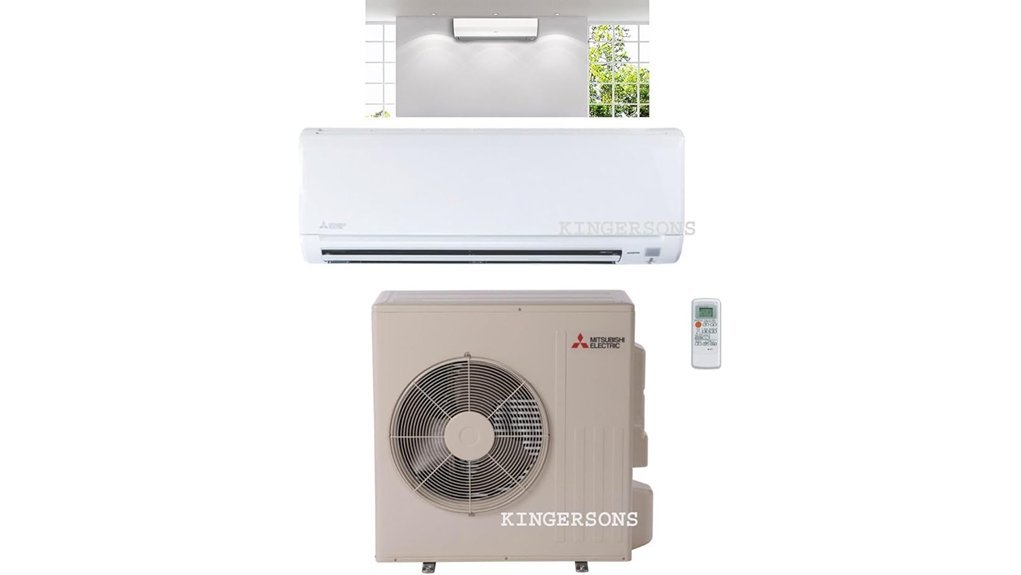
Best Overall for Humidity-Focused Comfort
The Mitsubishi MSZ-WX24NL indoor unit and MUZ-WX24NL outdoor unit form a nominal 2-ton, single-zone ductless heat-pump system. Although the Amazon title markets it as a 24,000-BTU system, the matched-system documentation lists rated capacities of 22,400 BTU/h for cooling and 26,000 BTU/h for heating.
Its Smart Dry mode is designed to improve humidity control while limiting unnecessary overcooling. Mitsubishi also publishes a moisture-removal rating of 6.1 pints per hour under its specified cooling test condition. Actual water removal will change with indoor temperature, starting humidity, airflow, system runtime, installation quality, and building conditions.
Why You’ll Like It: Smart Dry, inverter-driven operation, Econo Cool airflow management, multiple fan speeds, a handheld remote, and a 12-hour timer give buyers several ways to balance moisture removal and room comfort. The outdoor heat exchanger also has an anti-corrosion coating, although placement and maintenance remain important.
Who Should Buy This: Homeowners conditioning one large room or open zone who value documented Smart Dry operation, variable-capacity comfort, and established ductless controls.
Who Should Avoid This: Buyers who need independent humidity control with a selectable relative-humidity target, whole-home distribution through several closed rooms, DIY installation, or primary heating at temperatures below the system’s published operating range without a suitable backup plan.
Pros:
- Smart Dry mode is designed to improve moisture control with limited overcooling.
- Published moisture-removal rating of 6.1 pints per hour under the specified test condition.
- Inverter-driven operation, Econo Cool, multiple fan speeds, remote, and timer.
- Published 18 SEER2 matched-system efficiency.
- Anti-corrosion treatment on the outdoor heat exchanger.
Cons:
- Rated cooling capacity is 22,400 BTU/h rather than a full 24,000 BTU/h.
- Published standard heating operation extends only to approximately 5°F.
- App or third-party control may require compatible accessories or interfaces.
- Professional installation and a dedicated 208/230V electrical supply are required.
- A single indoor head will not distribute conditioned air evenly through several closed rooms.
Senville LETO Mini Split Air Conditioner (24000 BTU)
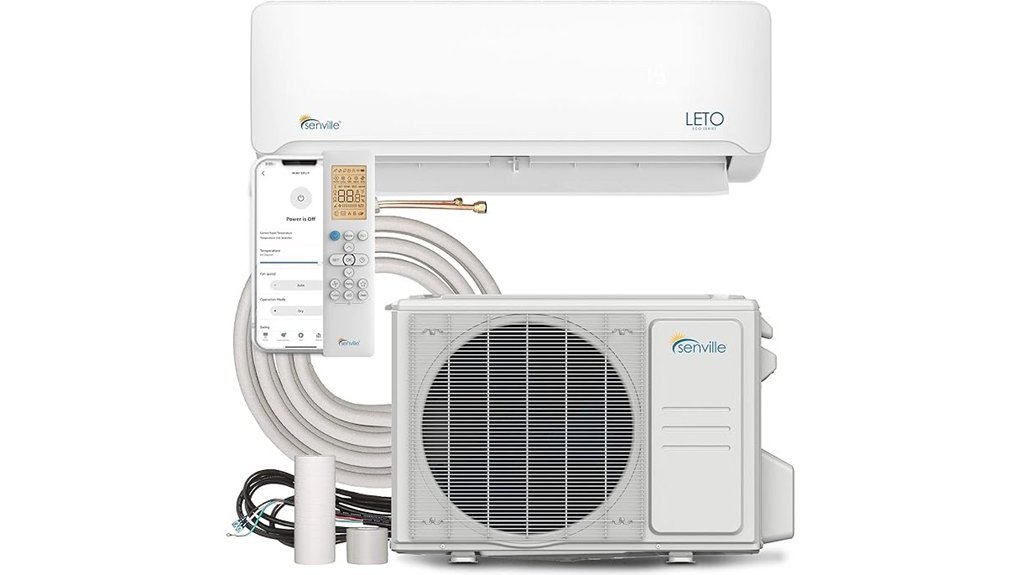
Best 4-in-1 Ductless Option
The Senville LETO SENL-24CD-16 is a nominal 2-ton mini-split system with published cooling and heating capacities of 24,000 BTU/h. It combines air conditioning, heat-pump heating, dehumidifying, and fan operation, with a turbo function available for faster temperature recovery.
The current published specifications list 18.7 SEER2, moisture removal of 3 liters per hour, 208/230V operation, and heating operation down to approximately 5°F. These figures make it a relevant option for buyers who want a conventional large-zone mini split with a clearly stated dehumidifying function.
Why You’ll Like It: The operating modes are straightforward, Alexa-compatible control adds convenience, and the package commonly includes the indoor air handler, outdoor condenser, remote, communication wire, and an installation line set. Confirm the exact bundle before purchase because line-set length and included installation materials can vary.
Who Should Buy This: Homeowners seeking a straightforward 24,000-BTU single-zone heat pump with cooling, heating, dehumidifying, fan operation, and Alexa-compatible controls.
Who Should Avoid This: Buyers who need a precise relative-humidity setpoint, dependable primary heating below approximately 5°F, multi-room airflow from one wall head, or a warranty that automatically covers installation labor and every added project expense.
Pros:
- Published 24,000-BTU cooling and heating capacities.
- Cooling, heat-pump heating, dehumidifying, and fan functions.
- Published moisture-removal rating of 3 liters per hour.
- 18.7 SEER2 efficiency and inverter-driven operation.
- Alexa-compatible control on the linked version.
- Commonly sold with core installation components.
Cons:
- Published standard heating operation extends only to approximately 5°F.
- Professional installation and suitable 208/230V electrical service are required.
- Dry mode is not the same as temperature-independent dehumidification.
- Additional electrical, drainage, mounting, or refrigerant-line materials may be needed.
- One indoor head may not condition several separated rooms evenly.
Factors to Consider When Choosing a 2 Ton Mini-Split Heat Pump With Dry Mode

The best system is not automatically the model with the largest advertised coverage or highest capacity label. Start with correct sizing, then compare dry-mode behavior, published moisture removal, efficiency, low-temperature heating data, sound levels, electrical requirements, service access, warranty conditions, and the exact equipment included in the package.
What “2 Ton” Means
A 2-ton heat pump belongs to a nominal capacity class commonly associated with approximately 24,000 BTU per hour. It does not mean the equipment weighs two tons, and it does not guarantee a particular square-foot coverage. Rated cooling and heating outputs can also differ from the nominal marketing class, as shown by the Mitsubishi system in this comparison.
Dedicated Dry Mode vs. Normal Cooling
Air conditioners naturally remove some water vapor while cooling. A dedicated dry or dehumidifying mode generally changes compressor, fan, or temperature-control behavior to favor moisture removal and reduce unnecessary overcooling. The exact control sequence varies by manufacturer and model.
Dry mode should not be confused with a dedicated dehumidifier. Many mini splits do not let the user choose an exact relative-humidity target, and the refrigeration cycle can still lower the room temperature while removing moisture.
Understanding Published Moisture-Removal Ratings
A published pints-per-hour or liters-per-hour figure is useful for comparing documented performance, but it is not a guaranteed daily water-removal amount. Results change with indoor temperature, starting relative humidity, fan speed, runtime, outdoor conditions, airflow, system sizing, and the test method used.
Do not multiply an hourly laboratory figure by 24 and assume the system will remove that amount every day. The unit will modulate or cycle as temperature and humidity conditions change.
Proper Sizing and Humidity Control
An oversized system may reach its temperature setting quickly and reduce output before completing a long moisture-removal cycle. An undersized system may run for extended periods without maintaining the desired temperature. Ask a qualified contractor to calculate the room or building load instead of relying only on an advertised square-foot range.
Single-Zone Layout and Air Distribution
Both products in this guide use one wall-mounted indoor head. They work best in a large open room or connected zone where air can circulate freely. A single indoor head may leave bedrooms, offices, hallways, or other closed rooms at different temperatures and humidity levels.
If several separated rooms need direct conditioning, discuss a multi-zone system, multiple single-zone systems, transfer-air solutions, or a ducted design with an HVAC professional.
Energy Efficiency Ratings
Compare SEER2 for seasonal cooling efficiency, EER2 for efficiency at a specified cooling test condition, and HSPF2 for seasonal heating efficiency. Use ratings for the exact matched indoor and outdoor combination because changing either component can change certified performance.
A higher efficiency number does not correct poor sizing, refrigerant charging, airflow, drainage, or installation quality. Compare the complete project rather than selecting equipment from one headline rating.
Cold-Climate Performance
Do not assume that every heat pump is a cold-climate system. Both models in this guide publish standard heating operation down to approximately 5°F, but operating at that temperature does not mean they maintain full rated heating capacity there.
Buyers in colder regions should request heating-capacity data at local winter design temperatures and discuss defrost behavior, electrical demand, comfort expectations, and backup heat. Look for a recognized cold-climate designation when severe-weather heating is a priority.
Noise Level Considerations
Indoor and outdoor sound ratings describe different components and may be measured at different fan speeds or test conditions. Check which component the decibel figure covers instead of comparing unrelated numbers.
Wall construction, mounting, refrigerant-line routing, vibration isolation, nearby windows, property boundaries, and distance from sleeping areas can also affect perceived sound.
Electrical and Refrigerant Requirements
These are high-voltage systems rather than ordinary plug-in appliances. Confirm the voltage range, minimum circuit ampacity, maximum overcurrent protection, disconnect requirements, communication wiring, and local electrical code before purchase.
Also verify the refrigerant type and exact model revision shown on the equipment label. Refrigerant rules, installation tools, handling procedures, and replacement components can differ between product generations.
Installation Requirements and Options
A complete installation generally requires an indoor unit, outdoor condenser, refrigerant lines, condensate drainage, communication wiring, mounting hardware, a suitable dedicated circuit, weatherproof penetrations, correct clearances, and secure outdoor-unit support.
Refrigerant piping, flaring or line connections, pressure testing, evacuation, electrical work, condensate routing, start-up checks, and commissioning should be completed by qualified professionals in accordance with the manufacturer’s instructions and local codes.
Condensate Drainage
Moisture removed from indoor air must leave through the condensate drain. The drain needs the correct slope or an approved pump, suitable insulation where required, and a discharge location that will not damage walls, foundations, walkways, or landscaping.
Poor drainage can cause leaks, odors, biological buildup, wall damage, or repeated shutdowns. Drain access should remain available for cleaning and inspection.
Maintenance and Support Services
Clean washable filters when dirty, keep the indoor intake and discharge unobstructed, remove debris around the outdoor coil, and watch for slow drainage or water leakage. Follow the manufacturer’s inspection and maintenance schedule.
Before purchasing, confirm who can diagnose and repair the exact brand in your area. Equipment warranties may exclude labor, refrigerant, shipping, maintenance, unauthorized installation, diagnostic visits, or corrections to an improper installation.
Smart Technology Integration
Smart controls are convenient for changing temperature, mode, schedules, or fan settings remotely, but they should not outweigh sizing, moisture control, serviceability, or winter performance.
Check whether WiFi hardware is built in, included as a separate module, or sold as an accessory. Confirm the supported app, voice platform, network requirements, and whether essential controls continue working without internet access.
Before You Buy Checklist
- Have a qualified professional calculate the heating and cooling load.
- Confirm that one wall-mounted head can serve the intended room layout.
- Verify the exact indoor and outdoor model numbers shown in the listing.
- Check rated cooling and heating outputs rather than relying only on the nominal tonnage.
- Confirm how dry mode operates and whether an adjustable humidity target is available.
- Compare SEER2, EER2, HSPF2, moisture-removal data, and low-temperature heating capacity.
- Confirm voltage, circuit ampacity, breaker or fuse limits, disconnect, and wiring requirements.
- Verify refrigerant type, line-set diameter, included length, maximum length, and allowable elevation difference.
- Plan a safe condensate-drain route before choosing the indoor-unit location.
- Ask which installation materials, permits, labor, and start-up services are excluded.
- Read warranty-registration requirements and confirm local service support.
Frequently Asked Questions
How Do Mini-Split Dry Modes Compare to Traditional Dehumidifiers?
A mini split’s dry mode removes moisture while operating its refrigeration system, so it can also lower the room temperature. A dedicated dehumidifier is designed to manage moisture independently and normally gives the user a direct relative-humidity setting.
A dedicated unit may be more appropriate for basements, shoulder seasons, cool damp rooms, or buildings that need moisture control when additional cooling is unwanted.
Can These Systems Maintain an Exact Humidity Level?
Do not assume so. A dry-mode button confirms that the system has a moisture-focused operating mode, but it does not necessarily provide a selectable relative-humidity target or whole-home humidity sensing. Review the exact controller and operation manual before purchase.
Is a 2 Ton Heat Pump Right for My Space?
Not necessarily. The correct capacity depends on climate, insulation, air leakage, windows, ceiling height, occupancy, sun exposure, internal heat sources, and room layout. Use a professional load calculation rather than selecting equipment from square footage alone.
Can One Indoor Head Condition Several Rooms?
It may influence nearby spaces when doors remain open and air circulates freely, but it will not deliver controlled airflow directly to every closed room. Separate rooms may need additional indoor heads, transfer-air planning, or a ducted system.
Can I Install a Heat Pump Myself?
These are not simple plug-in appliances. Installation involves high-voltage electrical work, condensate drainage, refrigerant piping, pressure testing, evacuation, leak checks, start-up measurements, and system commissioning.
Use a qualified installer and verify licensing, permitting, code, refrigerant-handling, and warranty requirements in your area.
Are These Heat Pumps Suitable for Cold Climates?
They can provide heating in cold weather, but both systems in this comparison publish standard operation down to approximately 5°F. That does not make them equivalent to models specifically designed and certified for extreme-cold performance.
Check heating capacity at your local winter design temperature and discuss backup heat with the installer.
What Maintenance Is Required for a Heat Pump?
Clean filters as directed, keep indoor and outdoor airflow unobstructed, inspect the condensate drain, remove leaves and debris around the outdoor unit, and arrange professional service according to the manufacturer’s schedule.
Address water leakage, unusual ice buildup, weak airflow, abnormal sounds, odors, or repeated error codes promptly.
Does Dry Mode Cool the Room?
Usually, yes. Dry mode still relies on the refrigeration cycle, although the compressor and fan may operate differently from standard cooling mode. The amount of temperature reduction depends on the system controls and current room conditions.
Should I Compare Published Water-Removal Ratings Directly?
They can provide useful context when the figures use comparable test conditions, but they are not guaranteed real-world outputs. Temperature, humidity, airflow, runtime, equipment sizing, and installation conditions can materially change the amount of water removed.
Conclusion
Final Recommendation
Choose the Mitsubishi MSZ-WX24NL/MUZ-WX24NL when Smart Dry operation, documented moisture-removal performance, Econo Cool airflow management, and comfort-focused controls are your priorities. Remember that it is a nominal 2-ton system with a published rated cooling capacity of 22,400 BTU/h.
Choose the Senville LETO SENL-24CD-16 when you want a straightforward system with 24,000-BTU cooling and heating, dehumidifying mode, fan operation, 18.7 SEER2 efficiency, and Alexa-compatible controls.
Neither model should be treated as a direct replacement for a dedicated dehumidifier when you need temperature-independent moisture control or a precise relative-humidity setting.
Whichever system you prefer, confirm the building load, exact model numbers, electrical requirements, cold-weather capacity, drainage route, included installation materials, local service support, and warranty conditions before ordering.