Disclosure: As an Amazon Associate, we earn from qualifying purchases. If you click an affiliate link and make a purchase, we may receive a commission at no extra cost to you.
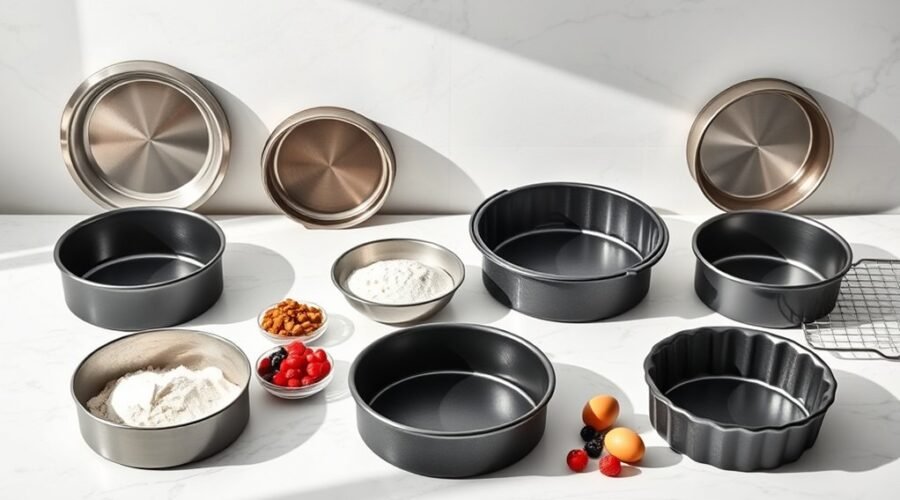
Choosing the best cake pans for 2026 comes down to even heating, easy cake release, and the right size for your recipe. A good pan helps you bake consistent layers, avoid overbrowned edges, and remove delicate cakes without damaging them. But not every cake pan works equally well for every baking style.
For everyday baking, the USA Pan 9-Inch Round Cake Pan is a strong all-around choice. Fat Daddio’s anodized aluminum pan is ideal for taller cakes, while the Wilton Easy Layers set makes thin, stackable layers easier to prepare. Chicago Metallic offers another durable round option, and Cuisinart provides a decorative fluted design. Below, we compare these five cake pans to help you find the right fit for your kitchen.
Quick Verdict: Which Cake Pan Should You Choose?
Best Overall: USA Pan 9-Inch Round Cake Pan for everyday cakes and easy release.
Best for Classic Layer Cakes: Chicago Metallic 9-Inch Round Pan for a sturdy, straight-sided design.
Best for Tall Cakes: Fat Daddio’s PRD-83 for a deeper, uncoated anodized aluminum option.
Best for Thin Layers: Wilton Easy Layers 8-Inch Set for baking four shallow layers separately.
Best for Decorative Cakes: Cuisinart Chef’s Classic Fluted Pan for molded ring cakes.
Best Cake Pans for 2026: Quick Comparison
Compare the main differences before choosing. Pay particular attention to pan depth, coating type, and cake shape.
| Cake Pan | Best For | Size | Material | Amazon |
|---|---|---|---|---|
| USA Pan Round Cake Pan | Everyday baking | 9 x 2 inches | Nonstick aluminized steel | Check Price |
| Chicago Metallic Round Pan | Classic cake layers | 9 x 2 inches | Dual-coated aluminized steel | Check Price |
| Fat Daddio’s PRD-83 | Tall cakes | 8 x 3 inches | Uncoated anodized aluminum | Check Price |
| Wilton Easy Layers Set | Thin stacked layers | Four 8-inch pans, 0.75 inch deep | Nonstick steel | Check Price |
| Cuisinart Fluted Cake Pan | Decorative ring cakes | 9.5-inch fluted design | Nonstick aluminized steel | Check Price |
Note: These recommendations are based on product specifications, materials, design, and intended use. They are not claims of hands-on testing. Check the current Amazon listing for the exact model, seller, price, and availability before purchasing.
USA Pan Bakeware Nonstick Round Cake Pan, 9-Inch, Aluminized Steel
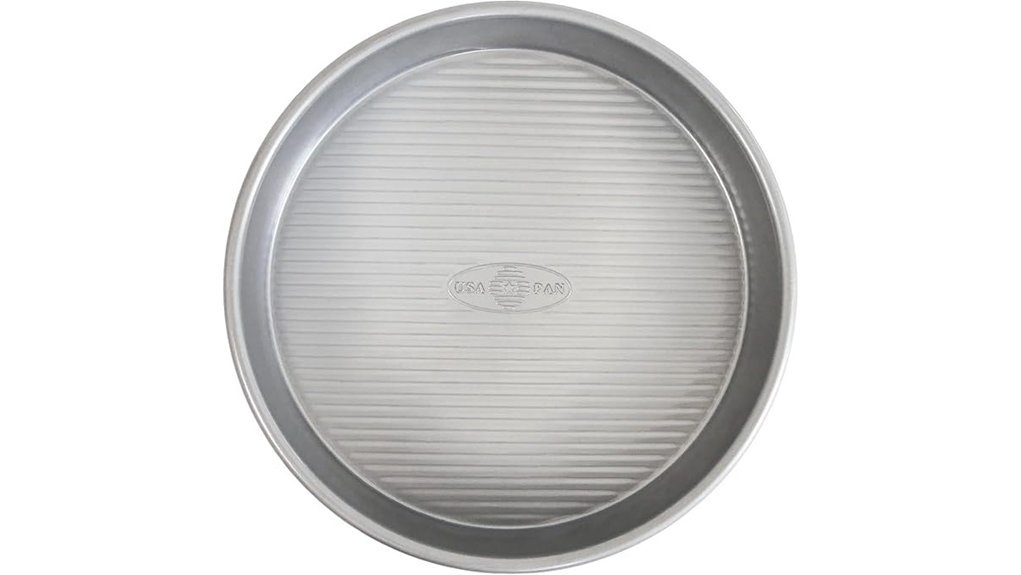
Best Overall Cake Pan
The USA Pan 9-Inch Round Cake Pan is a practical choice when you want reliable everyday bakeware without complicated preparation. Its heavy-gauge aluminized steel construction helps distribute heat evenly, while the AMERICOAT nonstick silicone coating makes cake removal and cleanup easier.
The pan has a 9-inch baking diameter and approximately 2-inch-deep baking surface, making it suitable for standard round cakes, layered desserts, and other recipes requiring a traditional round pan. Its ridged surface is designed to support air circulation, and the reinforced rim adds strength to the pan’s construction.
The coating is described by the manufacturer as free from PTFE, PFOA, and BPA. The pan is oven-safe up to 450°F, but it should not be used in a microwave. Hand washing with mild soap is recommended, and metal utensils should be avoided to protect the coating.
Why You’ll Like It: You get a versatile round cake pan with a nonstick surface that helps preserve delicate cake layers during removal.
Best For: Home bakers who regularly make 9-inch cakes and want a durable, easy-release pan for everyday use.
Pros:
- Heavy-gauge aluminized steel supports even heat distribution.
- AMERICOAT silicone nonstick coating helps cakes release with less sticking.
- Reinforced rim and ridged baking surface support durability and consistent baking.
Cons:
- Hand washing is required for proper care.
- The nonstick surface needs protection from sharp metal utensils and abrasive cleaning.
- The 9-inch diameter may not match recipes developed for smaller pans.
Who Should Avoid This: Bakers who prefer completely uncoated bakeware or need a particularly deep cake pan.
Chicago Metallic 9-Inch Non-Stick Round Cake Pan
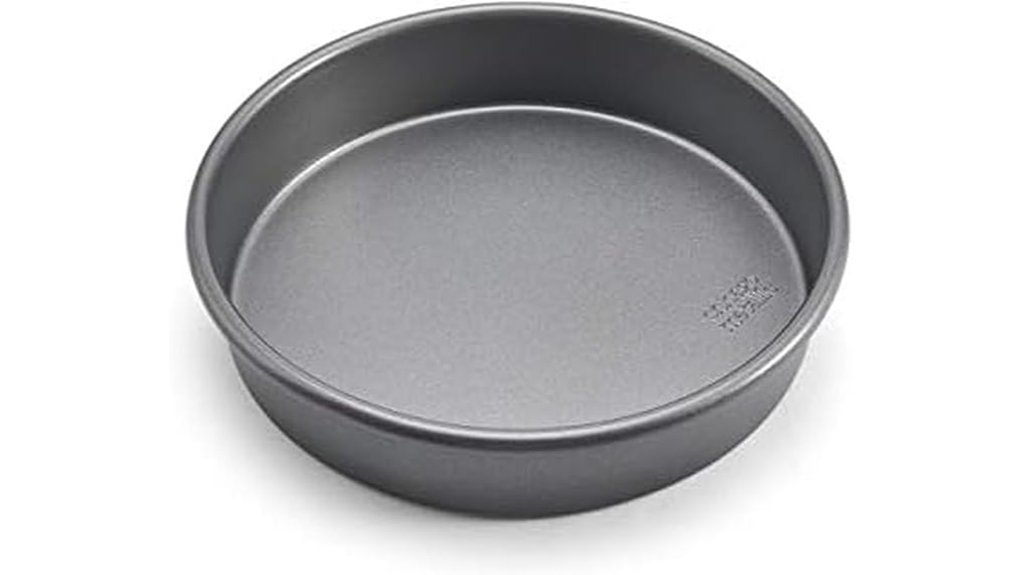
Best for Classic Layer Cakes
The Chicago Metallic Commercial II 9-Inch Round Cake Pan is designed for bakers who want sturdy construction and cleanly shaped cake layers. Measuring 9 inches across and 2 inches deep, it is a useful size for many standard cake recipes.
Its heavy-weight aluminized steel construction helps distribute heat across the baking surface. The dual-layer nonstick coating supports cake release and easier cleanup, while the reinforced rolled rim helps the pan maintain its shape during repeated use.
Straight sides make this pan particularly suitable for cakes that need to be stacked and frosted. It can also be used for compatible baked dishes such as quiches and casseroles, although recipe-specific preparation is still important.
The manufacturer lists this pan as dishwasher safe, but gentle hand washing can help preserve its nonstick finish over time.
Why You’ll Like It: The combination of reinforced construction, straight sides, and a dual nonstick coating makes it a practical option for repeat layer-cake baking.
Best For: Home bakers who make traditional 9-inch round cakes and want a dependable pan with straight sides for stacking.
Pros:
- Dual nonstick coating helps cakes release cleanly.
- Heavy-weight aluminized steel promotes even heating.
- Reinforced rolled rim and straight sides make it useful for regular layer baking.
Cons:
- Its 2-inch depth limits how tall a single layer can be baked.
- The coating requires careful handling to prevent scratches.
- It is sold as an individual pan, so multiple matching layers may require additional pans or batches.
Who Should Avoid This: Bakers who need an uncoated aluminum pan or want several cake pans included in one purchase.
Fat Daddio’s PRD-83 Anodized Aluminum Round Cake Pan, 8 x 3 Inch, Silver
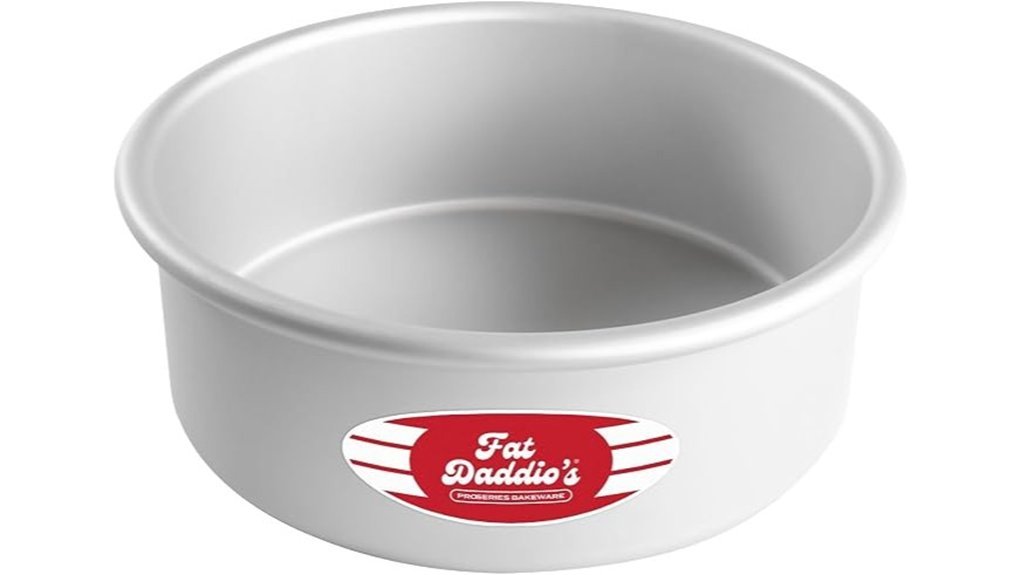
Best for Tall Cakes
The Fat Daddio’s PRD-83 Anodized Aluminum Round Cake Pan is an excellent option when your recipe calls for more depth than a standard shallow cake pan provides. Its 8-inch diameter and 3-inch depth offer space for taller cakes and layered desserts.
Made from 16-gauge anodized aluminum, the pan conducts heat efficiently and has a smooth, non-reactive baking surface. Unlike conventional nonstick bakeware, it has no added nonstick coating. That means there is no applied release layer to peel or flake, but you should still prepare the pan with grease, flour, or parchment as your recipe requires.
The pan has a solid bottom and a manufacturer-listed maximum temperature of 550°F. It can be used in compatible ovens and certain other cooking appliances, provided its exterior dimensions fit safely inside the cooking chamber.
Its anodized surface is also suitable for acidic recipes, including citrus-based cakes. Hand washing helps maintain its appearance, and the manufacturer’s limited lifetime warranty is subject to its published conditions.
Why You’ll Like It: The extra depth and coating-free anodized surface make it appealing for taller cakes and bakers who prefer traditional pan preparation.
Best For: Bakers who need a deeper 8-inch cake pan for tall cakes, tiered designs, or recipes that benefit from an anodized aluminum surface.
Pros:
- Three-inch depth offers more vertical space for tall cakes.
- Anodized aluminum promotes efficient heat transfer and resists rust.
- Coating-free construction tolerates temperatures up to 550°F.
Cons:
- It does not have an applied nonstick coating, so proper pan preparation is essential.
- Deeper cakes may require different baking times than shallow layers.
- Its exterior dimensions may not fit smaller air fryers or compact ovens.
Who Should Avoid This: Bakers who primarily want ready-to-use nonstick bakeware or shallow pans for thin cake layers.
Wilton Easy Layers 8-Inch Steel Cake Pan Set
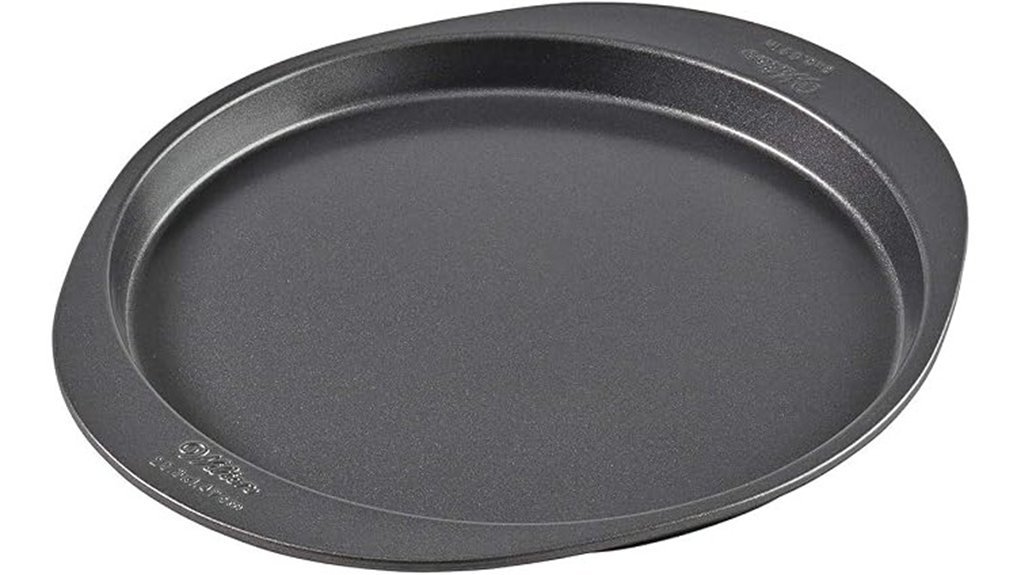
Best for Thin, Even Cake Layers
The Wilton Easy Layers 8-Inch Steel Cake Pan Set makes creating multi-layer cakes more convenient. Instead of baking one thick cake and cutting it into several pieces, you can divide your batter among four separate shallow pans.
Each pan measures 8 inches in diameter and 3/4 inch deep. This design works especially well for rainbow cakes, ombre cakes, and desserts with several thin cake-and-frosting layers.
The steel pans feature a nonstick finish intended to make removal and cleanup easier. A standard cake mix may provide enough batter for all four pans, although the exact amount depends on the mix and desired layer thickness.
The pans are dishwasher safe according to the product information, but washing them by hand with warm, soapy water is recommended to help maintain their condition.
Why You’ll Like It: Four matching shallow pans let you bake separate layers without repeatedly washing and refilling a single pan.
Best For: Beginners, home decorators, and bakers who regularly make colorful cakes with several thin layers.
Pros:
- Four matching pans support consistent thin layers.
- Nonstick surfaces help with cake release and cleanup.
- Convenient for rainbow, ombre, and multi-layer cake designs.
Cons:
- The 3/4-inch depth is unsuitable for baking a thick cake in one pan.
- Four pans require enough oven space for the intended baking arrangement.
- Thin layers need close attention because they can bake faster than thick cakes.
Who Should Avoid This: Bakers who primarily make tall single-layer cakes or prefer deeper standard round pans.
Cuisinart Chef’s Classic Nonstick Fluted Cake Pan
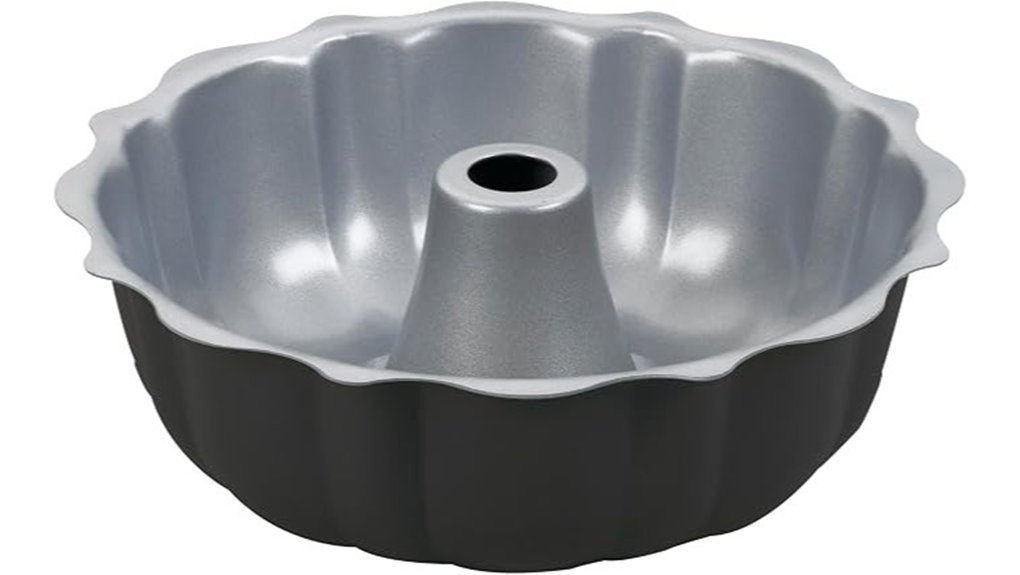
Best for Decorative Ring Cakes
The Cuisinart Chef’s Classic Nonstick Fluted Cake Pan is designed for bakers who want decorative cakes without spending extra time shaping the finished dessert. Its 9.5-inch fluted design creates a molded ring cake with a distinctive exterior.
Constructed from heavy-gauge, 1.0 mm aluminized steel, the pan is designed to distribute heat evenly during baking. Its nonstick interior and exterior help simplify cake release and cleaning, while thick rolled edges support structural strength.
This pan is particularly useful for recipes designed for fluted or ring-shaped bakeware. It is not interchangeable with a standard 9-inch round layer pan because its shape and usable batter capacity differ.
Cuisinart lists the pan as dishwasher safe and provides a limited lifetime warranty. Gentle hand washing remains a sensible option for preserving the nonstick finish.
Why You’ll Like It: You can create an attractive molded cake shape directly during baking, with less need for complicated exterior decorating.
Best For: Home bakers who enjoy decorative ring cakes, molded desserts, and recipes specifically intended for fluted pans.
Pros:
- Fluted design produces decorative cake shapes.
- Heavy-gauge aluminized steel supports even heating.
- Nonstick interior and exterior make cake removal and cleanup easier.
Cons:
- The specialized shape does not suit ordinary flat layer cakes.
- Detailed grooves need careful greasing to help prevent sticking.
- Nonstick surfaces require gentle cleaning to preserve their condition.
Who Should Avoid This: Bakers who mainly prepare traditional round cake layers or need a straight-sided pan for stacking.
How to Choose the Best Cake Pan for Your Baking Needs
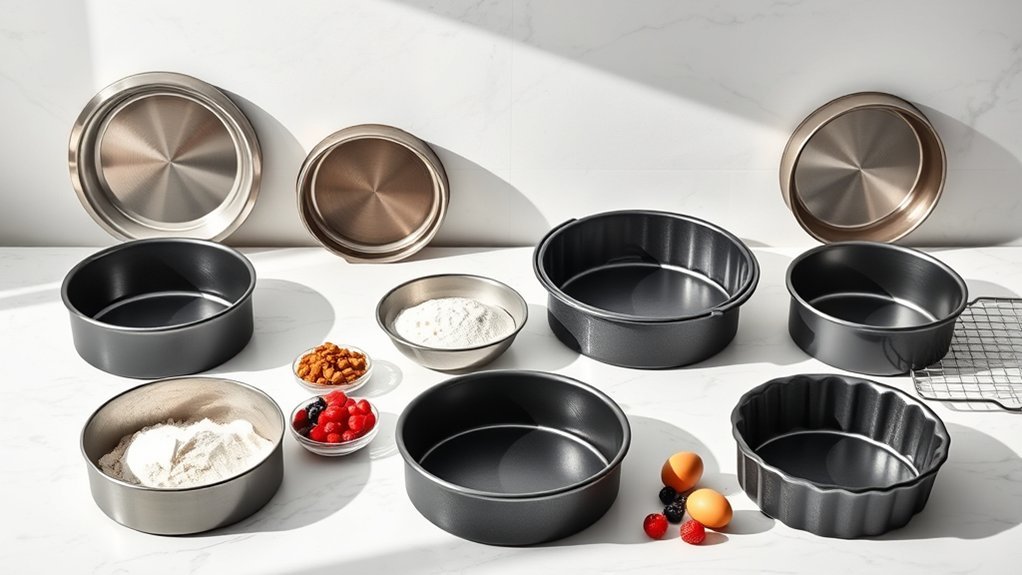
The best cake pan depends on more than its diameter. Pan depth, material, coating, shape, and care requirements all influence how practical it will be for your recipes. Understanding these differences helps you avoid buying a pan that looks suitable but produces a cake with the wrong height or shape.
Pan Size and Depth
Pan size determines how far the batter spreads, while depth affects how much batter the pan can safely contain. Both influence the finished cake’s height and baking time.
8-inch round cake pans are useful for smaller cakes and taller layers when the recipe is designed for them. A 9-inch round pan has approximately 27% more base area than an 8-inch round pan, assuming both are circular. Using the same amount of batter in the larger pan will produce a thinner layer.
Depth is equally important. Shallow pans suit thin layers, while 2-inch-deep pans are common for traditional layer cakes. A 3-inch-deep pan can accommodate taller cakes when the recipe and batter amount are appropriate.
Pro Tip: Follow the recipe’s recommended pan size whenever possible. If you substitute a different size, check batter capacity and adjust baking time as needed. Do not fill a pan to the rim.
Material and Heat Distribution
Material choice affects how quickly a pan heats and how efficiently heat moves through the batter.
Aluminum and anodized aluminum conduct heat efficiently, making them useful for cakes that need relatively uniform heating. Anodized aluminum also offers a smooth, non-reactive surface without requiring an added nonstick coating.
Aluminized steel combines a steel base with an aluminum-containing surface treatment. Heavy-gauge construction and reinforced rims can help the pan retain its shape through repeated baking.
Pan color also matters. Darker finishes generally absorb more radiant heat than lighter surfaces, which can encourage faster browning around a cake’s edges.
Pro Tip: When switching between light and dark pans, watch the cake closely during the first few bakes. Oven behavior, batter composition, and pan construction can all affect the result.
Nonstick Coating Quality
A reliable nonstick cake pan can make delicate cakes easier to remove. This is particularly helpful when a cake needs to retain a smooth surface for decorating or stacking.
However, not all pans use the same release system. Some use silicone-based nonstick coatings, while others use different coating technologies. Anodized aluminum pans can provide a smooth baking surface without an applied nonstick layer.
Coated pans generally benefit from soft utensils, gentle cleaning, and avoiding abrasive scrubbers. Follow each manufacturer’s temperature limits and care instructions.
Even when using a nonstick pan, preparing the surface according to the recipe can improve release. Parchment paper is especially useful when you need to remove a delicate round cake intact.
Cake Shape, Layer Height, and Edge Design
The shape of your cake pan affects the final appearance of the dessert.
Straight-sided round cake pans are useful when baking layers that need to be stacked. Their shape helps create consistent rounds for frosting and assembly.
Shallow layer pans are better suited to cakes built from several thin sections. They let you distribute batter among separate pans rather than bake one thick cake.
Deep cake pans provide additional height for suitable recipes, but thicker batters may need longer baking times. A deeper pan does not automatically produce a taller cake unless the recipe and batter amount support it.
Fluted cake pans serve a different purpose. Their molded interiors shape the finished cake, making them suitable for decorative ring cakes instead of conventional flat layers.
Care and Durability
A durable cake pan should retain its shape, handle repeated heating, and remain easy to clean. Heavy-gauge materials, reinforced rims, and appropriate care can help extend its useful life.
For coated bakeware, hand washing often provides gentler cleaning than dishwashing, even when the manufacturer allows dishwasher use. Avoid cutting directly inside coated pans or scraping them with sharp metal tools.
For anodized aluminum, mild soap and a soft sponge are usually appropriate. Harsh dishwasher detergents may discolor the surface, even when the pan remains functional.
Check the manufacturer’s warranty conditions before buying. A limited lifetime warranty may cover manufacturing defects while excluding normal wear, misuse, or certain types of damage.
Oven Temperature and Appliance Compatibility
Always check the maximum oven temperature specified for the exact cake pan you own. Different materials and coatings can have different limits.
For example, the USA Pan round cake pan is rated up to 450°F, while Fat Daddio’s anodized aluminum bakeware is rated up to 550°F. These are maximum manufacturer ratings, not recommended temperatures for every cake recipe.
Most cakes bake at substantially lower temperatures, depending on the ingredients and recipe instructions.
Important: Metal cake pans should not be placed in a microwave unless the appliance manufacturer specifically approves the exact application. A pan that fits inside an air fryer or pressure cooker is not automatically compatible with that appliance. Always verify dimensions and operating instructions.
Which Cake Pan Should You Buy?
If you are still comparing options, use your most common baking task to guide the decision.
For Everyday Cakes: Choose the USA Pan 9-Inch Round Cake Pan if you want a traditional round shape and a silicone-based nonstick surface.
For Stacked Layer Cakes: Consider the Chicago Metallic 9-Inch Round Pan when you want straight sides and reinforced construction.
For Taller Cakes: Choose Fat Daddio’s PRD-83 if you need a 3-inch-deep pan and prefer anodized aluminum without an applied nonstick coating.
For Rainbow or Ombre Cakes: Choose the Wilton Easy Layers Set if four matching shallow pans would simplify your baking process.
For Decorative Desserts: Choose the Cuisinart Fluted Cake Pan when your recipe calls for a molded ring shape.
Before You Buy: Cake Pan Checklist
Check these details before ordering your next cake pan:
- Recipe size: Does the recipe call for an 8-inch, 9-inch, or another pan diameter?
- Required depth: Do you need shallow layers or enough space for a taller cake?
- Material: Would you prefer anodized aluminum or nonstick-coated steel?
- Pan shape: Do you need straight sides for stacking or a decorative fluted design?
- Number of pans: Will one pan be enough, or would a matching set save baking time?
- Oven compatibility: Does the pan fit your oven and meet the required temperature rating?
- Cleaning: Are you comfortable with hand washing and caring for the finish?
- Warranty and listing: Have you checked the exact model, included components, warranty terms, and seller information?
Buying Tip: If you are unsure which size to choose, start with the dimensions recommended by the cake recipes you bake most often. A well-matched pan is usually more useful than a specialized design you rarely need.
Frequently Asked Questions
Which Cake Pan Material Bakes Most Evenly?
Aluminum and anodized aluminum cake pans are popular for even baking because aluminum conducts heat efficiently. Heavy-gauge aluminized steel can also deliver consistent results. Pan thickness, finish, oven temperature, and batter distribution all affect the final cake.
How Do I Choose the Right Cake Pan Size?
Start with the dimensions specified in your recipe. A 9-inch round pan provides more baking area than an 8-inch pan, so the same batter will spread into a thinner layer. Depth also matters. Choose a pan that safely accommodates the batter without overfilling.
Are Nonstick Cake Pans Safe for High Oven Temperatures?
Nonstick cake pans are intended for oven use within their manufacturer’s specified temperature limits. The exact limit depends on the pan and coating. Avoid exceeding the published rating, and do not assume that every nonstick pan tolerates the same temperature.
Are Deep Cake Pans Better Than Shallow Ones?
Neither is automatically better. Deep pans are useful for taller cakes and recipes requiring greater batter depth. Shallow pans are practical for thin individual layers. The best choice depends on your recipe, baking time, and desired cake structure.
How Do I Prevent Cakes From Sticking to Pans?
Follow the recipe and manufacturer’s preparation instructions. Common methods include greasing the pan, lining the bottom with parchment paper, and lightly dusting with flour or cocoa when appropriate. Let the cake cool for the recommended time before loosening the edges and removing it.
Can I Use an 8-Inch Cake Pan Instead of a 9-Inch Pan?
Sometimes, but you need to account for the difference in area and capacity. An 8-inch round pan has a smaller base area, so the same batter will form a deeper layer. This can increase baking time or cause overflow if the pan is too shallow. Check the recipe before substituting sizes.
Do I Need Two Cake Pans for a Layer Cake?
Two matching pans make it easier to bake two cake layers in the same oven session. However, you can also bake layers separately using one pan. A multi-piece shallow set is another option when you want several thin layers without cutting a thick cake.
How Long Do Nonstick Cake Pans Last?
The lifespan depends on construction, frequency of use, and cleaning habits. Gentle hand washing, avoiding metal utensils, and following temperature limits can help protect the coating. Replace pans when the baking surface becomes seriously damaged or the manufacturer recommends replacement.
Conclusion
The best cake pans for 2026 are the ones that match your recipes, baking habits, and preferred cake shapes. For most everyday round cakes, the USA Pan 9-Inch Round Cake Pan is a practical first choice thanks to its nonstick surface and sturdy aluminized steel construction.
If you regularly bake taller cakes, Fat Daddio’s PRD-83 offers extra depth and an anodized aluminum surface. The Wilton Easy Layers Set is convenient for thin layered cakes, while Chicago Metallic provides another strong option for traditional round cake layers. For decorative ring cakes, the Cuisinart Chef’s Classic Fluted Cake Pan is worth considering.
Before buying, match the pan’s diameter, depth, material, and shape to your recipe. Choosing the right pan makes preparation easier and gives you a better starting point for consistent, beautifully baked cakes.