Affiliate disclosure: As an Amazon Associate I earn from qualifying purchases. This article contains affiliate links to Amazon, so we may earn a commission if you buy through them, at no extra cost to you.
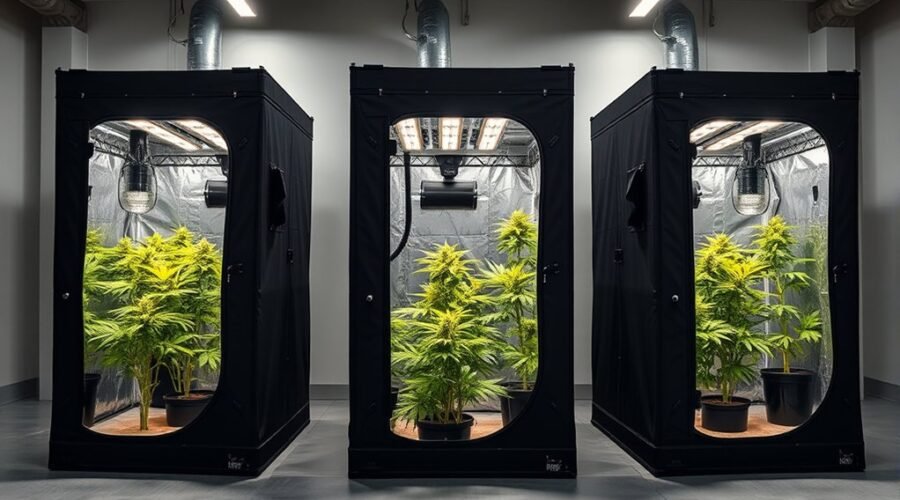
The three best grow tents for 2026 are the VIVOSUN S425 2×4, AC Infinity CLOUDLAB 866, and MARS HYDRO 3×3 Grow Tent Kit. The VIVOSUN fits compact spaces and offers strong lightproofing. The CLOUDLAB 866 stands out for its rugged 5×5 build and heavy-duty poles. The MARS HYDRO kit adds smart controls and included accessories. Each option suits different needs, and more details help narrow the best choice.
VIVOSUN S425 2×4 Grow Tent 48″x24″x60″ High Reflective Mylar Tent
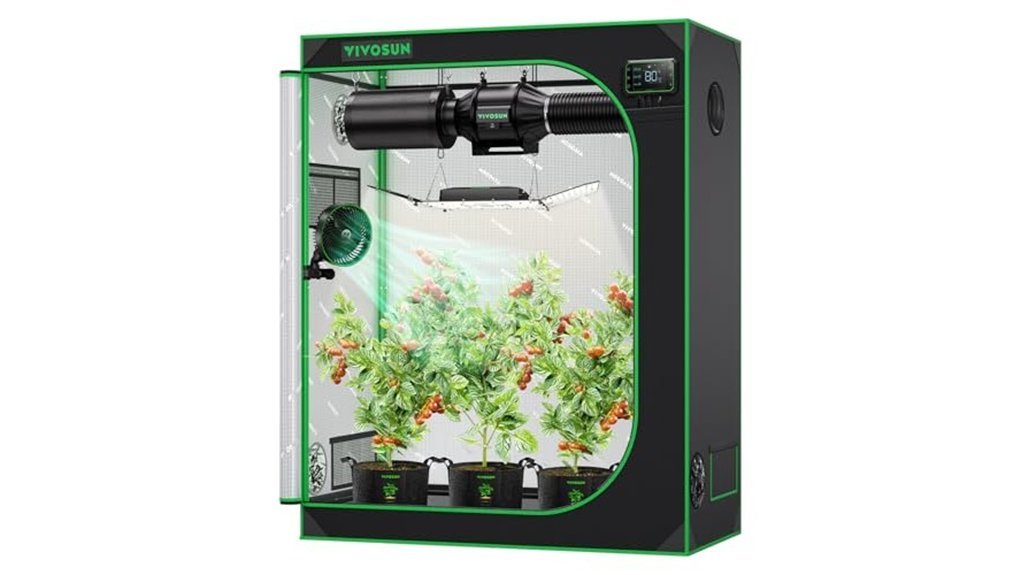
The VIVOSUN S425 2×4 Grow Tent is a strong fit for growers who want a compact, lightproof setup with easy assembly and reliable interior control. Its 600D Oxford canvas, reinforced PE layer, and 100% reflective mylar help block leaks and improve efficiency. Strong metal poles and tool-free connectors support stability, while the upgraded zipper with black lining seals out stray light. Transparent and bottom windows aid monitoring and cooling. Multiple ports, hanging straps, a removable tray, and an inner organizer add practical convenience. It suits garages, closets, balconies, and laundry rooms.
Best For: Growers who want a compact, lightproof 2×4 tent with sturdy construction, easy assembly, and practical features for monitoring and maintenance.
Pros:
- 600D Oxford canvas with reinforced PE layer and 100% reflective mylar for strong light control and efficiency
- Tool-free metal pole setup with stable corner connectors makes assembly straightforward
- Helpful convenience features like viewing windows, multiple ports, hanging straps, and a removable floor tray
Cons:
- 60-inch height may feel limited for taller plants or more advanced vertical setups
- Best suited for small, compact grows rather than larger-scale cultivation
- Requires enough dedicated space to accommodate the 48″ x 24″ footprint
AC Infinity CLOUDLAB 866, Advance Grow Tent 5×5, Thickest Poles & Mylar
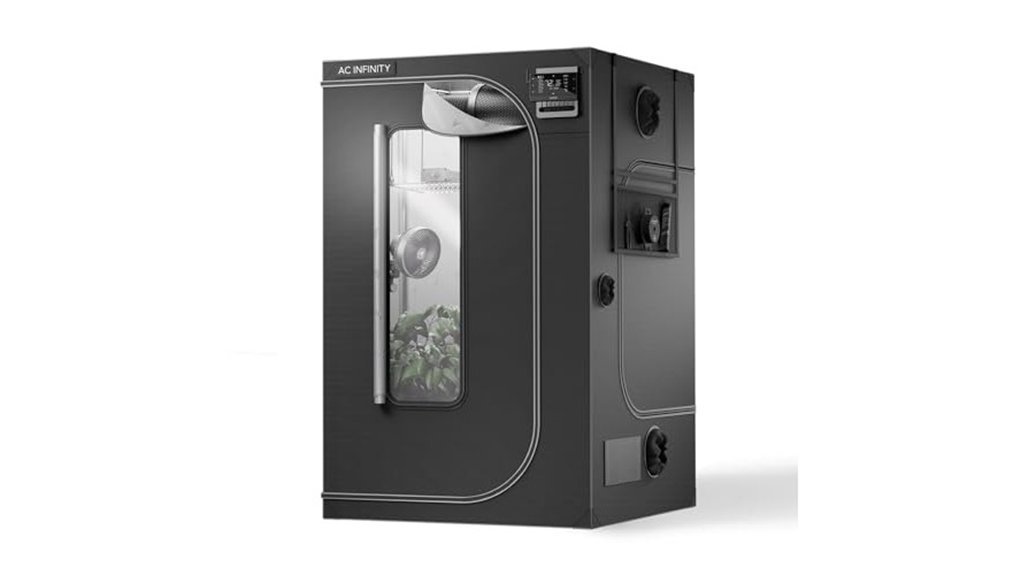
For growers needing a rugged 5×5 tent with superior light control, the AC Infinity CLOUDLAB 866 stands out. This Advance Grow Tent measures 60 x 60 x 80 inches and supports up to six plants in 5-gallon pots. Its 1-inch steel poles, 2000D canvas, and lab-tested Mylar create a durable, highly reflective enclosure. Reinforced corners, SBS zippers, taller viewing windows, and front zipper flaps help limit leaks. Practical extras include dual side doors, four and eight duct ports, three hanging bars plus one, a lightproof controller plate, stain-resistant catch tray, and tool bag.
Best For: Growers who want a rugged, light-tight 5×5 tent with durable construction and convenient climate-control features for up to six plants.
Pros:
- Heavy-duty build with 1-inch steel poles, thick 2000D canvas, and reflective Mylar
- Excellent light control with reinforced corners, SBS zippers, and front zipper flaps
- Handy access and setup features including side doors, multiple duct ports, hanging bars, and a lightproof controller plate
Cons:
- Large 5×5 footprint may be too big for small grow spaces
- Premium construction likely comes at a higher price point
- Best suited for serious indoor growers, so it may be more tent than casual users need
MARS HYDRO 3×3 Grow Tent Kit with TS1000 150W Full Spectrum LED Grow Light
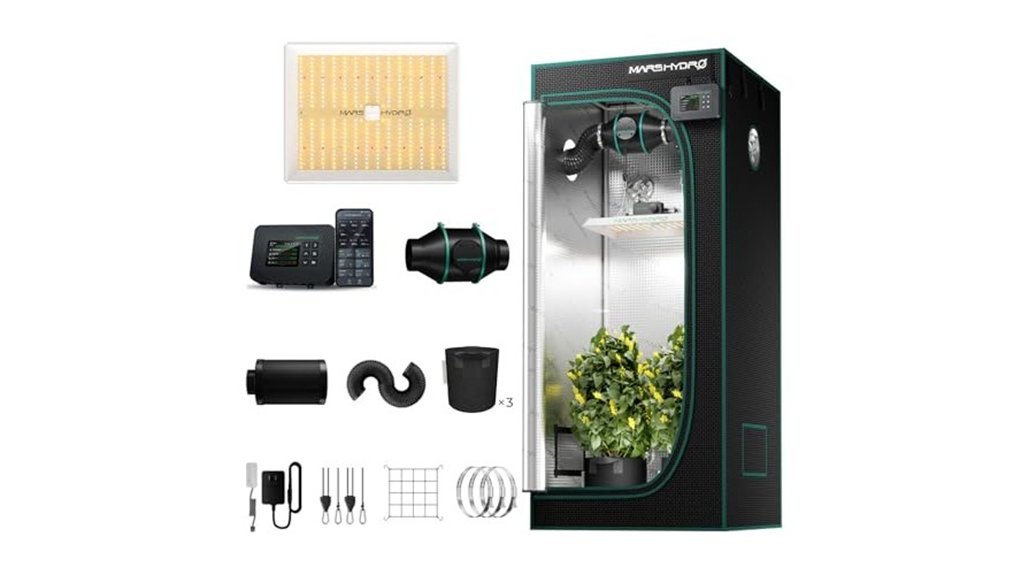
Smart automation makes the MARS HYDRO 3×3 Grow Tent Kit stand out for hands-off growers. Its WiFi controller links the TS1000 light, inline fan, clip fan, and humidifier, tracking temperature, humidity, VPD, and CO2 while adjusting brightness, ventilation, and circulation. The kit includes a 32x32x63 tent, 4-inch 205 CFM fan, carbon filter, ducting, sensor, glasses, trellis netting, clamps, grow bags, and rope hangers. The 150W TS1000 uses 354 LEDs, a 120-degree reflector, and dimming. A 1680D mylar interior, sturdy frame, and quiet airflow complete the setup.
Best For: Growers who want a compact, all-in-one 3×3 tent kit with smart automation, strong light coverage, and controlled ventilation for easier hands-off growing.
Pros:
- WiFi smart controller automates light, fan, humidifier, and circulation settings for convenient remote management.
- Includes a full grow setup with tent, TS1000 150W light, inline fan, carbon filter, ducting, sensor, and useful accessories.
- Durable 1680D reflective tent and efficient 205 CFM ventilation help improve light performance and airflow.
Cons:
- The 32x32x63 tent size may be too small for growers needing more vertical or canopy space.
- Smart features and integrated controls may be more complex than a basic plug-and-play grow kit.
- The 150W light may be limiting for users aiming for larger or higher-yield grows.
Factors to Consider When Choosing Grow Tents 2026: Top Picks and Buying Guide
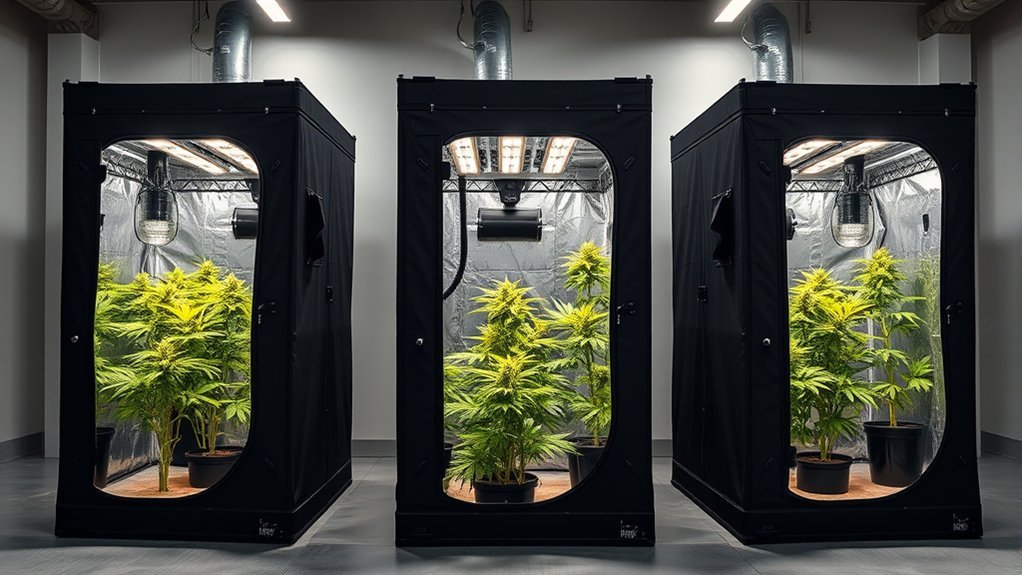
Choosing the right grow tent in 2026 depends first on tent size, since the available space must match the plants and equipment. A lightproof design, durable materials, and well-placed ventilation ports also matter for maintaining stable growing conditions. Strong frame construction provides the support needed for long-term use and heavier setups.
Tent Size
Tent size is one of the first decisions to make, since the right footprint must fit the available space while still leaving room for access and movement. Common options range from 2×4 feet to 5×5 feet, giving growers flexibility in tighter rooms or larger indoor setups. The chosen size should match the intended plant count, with standard tents often supporting one to six plants in 5-gallon pots. Height also matters; a tent around 80 inches tall helps accommodate vertical growth and overhead fixtures. Space for lights, fans, and ducting should be planned before purchase. Marking the dimensions on the floor can clarify whether the tent will fit cleanly without blocking pathways or interfering with other activities in the room.
Lightproof Design
Lightproof design is critical in a grow tent because even minor light leaks can disrupt plant growth cycles and weaken environmental control. A well-sealed tent helps preserve consistent dark periods, which is essential for reliable results. Upgraded zippers with black inner linings improve blackout performance and can remove the need for extra flaps or tape. Smooth zipper action and reinforced seams support dependable closure and limit stray light intrusion. Multiple duct openings should be arranged to keep the interior sealed while still allowing ventilation and equipment access. Many effective designs also use 100%-reflective mylar walls, which help block leakage and improve light efficiency. Together, these features support a controlled growing space that stays dark when needed and performs efficiently.
Material Durability
Material durability is a key indicator of how well a grow tent will hold up over time, with canvas quality playing a major role in tear resistance, waterproofing, and long-term reliability. Grow tents made from 600D or 2000D Oxford fabric generally offer different strength levels, with denser materials providing greater resistance to punctures and moisture. A 340 g high-density fabric can further improve structural integrity and extend service life. Reinforced stitching and double-stitched seams help the tent endure repeated setup and daily use while limiting seam stress. Upgraded zippers also matter, since smoother, stronger mechanisms reduce premature wear. Heavy-duty steel poles add stability, keeping the frame rigid and supportive when accessories and plants increase the load.
Ventilation Ports
Ventilation ports play a central role in keeping a grow tent’s climate stable by supporting steady airflow and reducing heat buildup. In well-designed tents, multiple duct openings allow users to connect inline fans, humidifiers, and air conditioning units without crowding the space. Port placement and diameter affect how efficiently air moves through the tent, which in turn influences temperature and humidity control. Adjustable ports are especially useful because they can be opened or sealed to match changing ventilation needs. Lightproof construction is equally important, since it helps block stray light while still allowing air exchange. Tents with carefully designed ports offer more precise environmental management, making it easier to maintain consistent growing conditions for healthy plant development throughout the cycle.
Frame Strength
A grow tent’s frame must be strong enough to support the combined weight of lights, fans, and carbon filters without sagging or failing, with many quality models rated to hold 88 lbs (40 kg) or more. Steel poles are generally preferred because they resist bending and provide steadier support than weaker materials. Reinforced corners further improve stability, helping the structure stay rigid under heavy loads. The tent’s canvas also matters; thicker fabrics, such as 2000D, add durability and reduce the risk of tearing around stress points. Tool-free assembly can be another indicator of a well-engineered frame, since it often reflects a design built for quick setup without sacrificing strength. A sturdy frame protects equipment and helps maintain the tent’s overall shape over time.
Smart Controls
Smart controls are becoming a major advantage in modern grow tents, especially for growers who want tighter environmental management with less hands-on effort. WiFi connectivity lets users monitor and adjust temperature, humidity, and CO2 from a mobile app, even when they are away. More advanced systems respond to sensor data by automatically changing light intensity, ventilation, and other settings in real time, improving growing efficiency. Precise readings also help maintain ideal VPD levels, which supports healthier plant development. Integrated timers and programmable schedules add another layer of control by automating light cycles for seedlings, vegetative growth, and flowering stages. By reducing constant manual checks and adjustments, smart controls make tent management more convenient, consistent, and accessible for both beginners and experienced growers.
Frequently Asked Questions
Can I Assemble a Grow Tent Alone?
Yes, one person can usually assemble a grow tent alone if the frame is lightweight and instructions are clear. Larger tents are easier and safer with help, especially when fitting poles, fabric, or equipment.
How Often Should I Clean the Tent Interior?
The tent interior should be cleaned after each grow cycle, with spot cleaning weekly if needed. Regular wiping of surfaces, floors, and zippers helps prevent mold, pests, and residue buildup, preserving airflow and plant health.
Do Grow Tents Reduce Odor Effectively?
Yes—when paired with proper filtration, grow tents can curb odor effectively, like a sealed stage curtain hiding a performance. Their fabric alone won’t suffice, but carbon filters and negative pressure usually keep smells contained.
What Humidity Level Suits Seedlings Best?
Seedlings generally thrive at 65% to 75% humidity, since higher moisture helps delicate roots and leaves develop. Excess humidity, however, can invite mold or damping-off, so gentle airflow remains important.
Can I Use a Grow Tent in a Garage?
Certainly; a grow tent can be used in a garage if temperature, humidity, ventilation, and power are managed. In winter, insulation matters; in summer, heat control matters. A space heater or dehumidifier may help.
Conclusion
To summarize, the VIVOSUN S425, AC Infinity CLOUDLAB 866, and MARS HYDRO 3×3 kit stand out as strong grow tent options for 2026, each offering a different balance of size, durability, and value. For buyers, the best choice depends on space, lighting needs, and budget. With the right tent, even a modest indoor setup can feel like a controlled jungle in a box. Careful comparison leads to smarter growing and better results.