Affiliate disclosure: As an Amazon Associate I earn from qualifying purchases. This article contains affiliate links to Amazon, so we may earn a commission if you buy through them, at no extra cost to you.
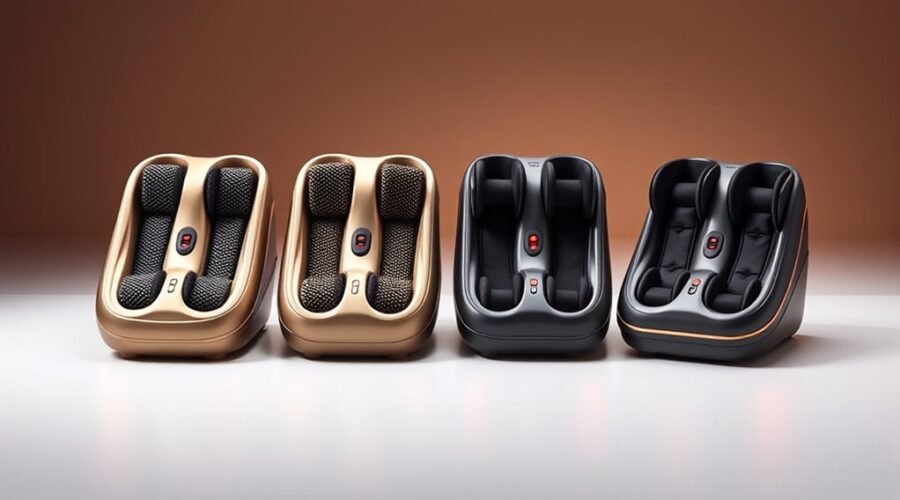
The four best foot massagers for 2026 are the Best Choice Products Shiatsu Foot Massager, MIKO Shiatsu Foot Massager with Heat, MedMassager Foot Massager Plus, and Nekteck Foot Massager with Heat. Each model offers a mix of kneading, rolling, heat, and adjustable intensity for sore feet, plantar fasciitis, neuropathy, and daily tension. Best Choice Products is compact, MIKO is highly customizable, MedMassager is therapeutic, and Nekteck is easy to use. More details follow below.
Best Choice Products Shiatsu Foot Massager for Relief
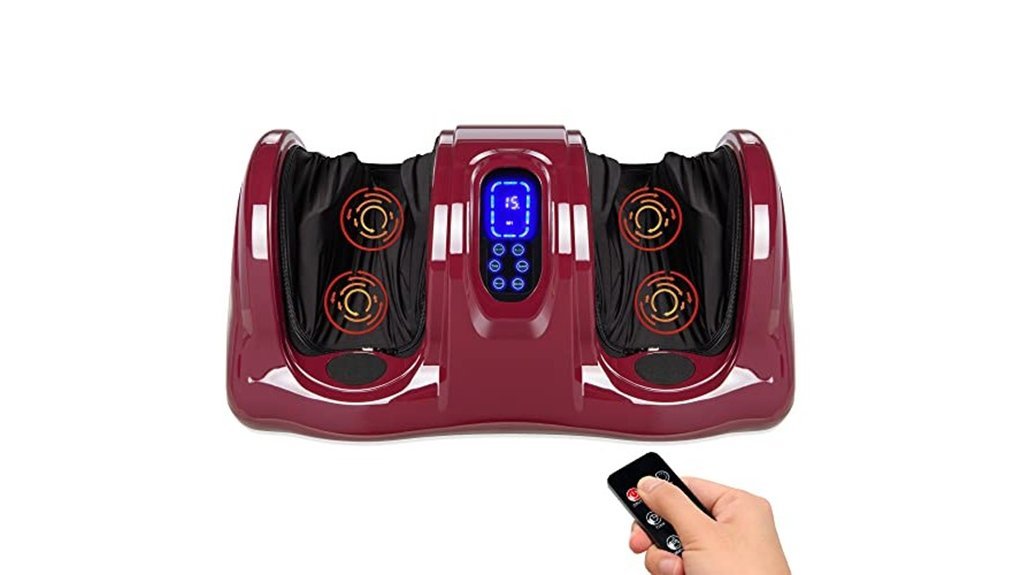
The Best Choice Products Shiatsu Foot Massager is a strong pick for anyone seeking targeted relief from sore, tired feet, especially those dealing with plantar fasciitis or neuropathy. Its remote control adjusts power, speed, massage direction, and mode on an LCD screen, while automatic settings focus on the toe, arch, and sole. Pulsing, kneading, and rolling actions promote circulation and help ease discomfort. The compact Burgundy design includes a built-in handle, removable components for cleaning, and simple storage. As model SKY2095, it suits home use and works well as a practical gift for relaxation and comfort.
Best For: People seeking targeted foot relief from soreness, plantar fasciitis, or neuropathy, and anyone wanting an easy-to-use, space-saving massage device for home relaxation.
Pros:
- Offers adjustable power, speed, massage direction, and modes via remote control with LCD display.
- Uses pulsing, kneading, and rolling actions to target the toe, arch, and sole for relief.
- Compact design with a built-in handle and removable parts makes storage and cleaning easier.
Cons:
- Designed mainly for feet, so it won’t provide full-body massage benefits.
- May not be ideal for users who prefer a very gentle massage, since shiatsu-style pressure can feel intense.
- Requires floor space during use and may not suit those wanting a fully portable travel option.
MIKO Shiatsu Foot Massager with Heat for Neuropathy & Plantar Fasciitis
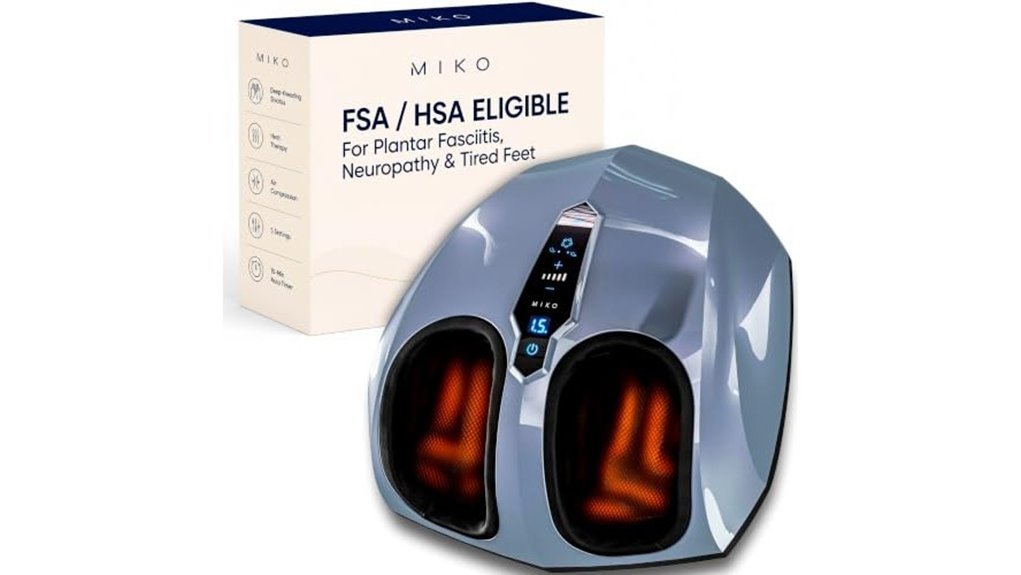
MIKO’s Shiatsu Foot Massager stands out for targeted relief, especially for neuropathy and plantar fasciitis sufferers. Its deep-kneading shiatsu system combines rolling, compression, vibration, and pressure-point focus to address tired feet. Five intensity settings allow adjustment from gentle comfort to firmer tissue work. Consistent heat spreads across the foot to ease tension, support circulation, and relax sore muscles. A wireless remote and built-in foot controls improve convenience, while washable liners and quiet operation support regular use. It is also eligible for FSA or HSA funds, adding practical value for long-term care.
Best For: People seeking targeted relief for neuropathy, plantar fasciitis, or tired sore feet who want a heated, customizable shiatsu massage at home.
Pros:
- Five intensity levels let you choose anything from gentle relaxation to deeper pressure.
- Consistent heat, rolling, compression, vibration, and deep-kneading actions help soothe sore feet and improve comfort.
- Wireless remote, built-in foot controls, washable liners, quiet operation, and FSA/HSA eligibility add convenience and value.
Cons:
- May feel too intense for users who prefer a very light massage, even at lower settings.
- It is designed specifically for feet, so it won’t replace a full-body massage device.
- The larger home-use design may not be ideal for travel or very small spaces.
MedMassager Foot Massager Plus, Deep Tissue, Dual Speed, Portable, MMF07
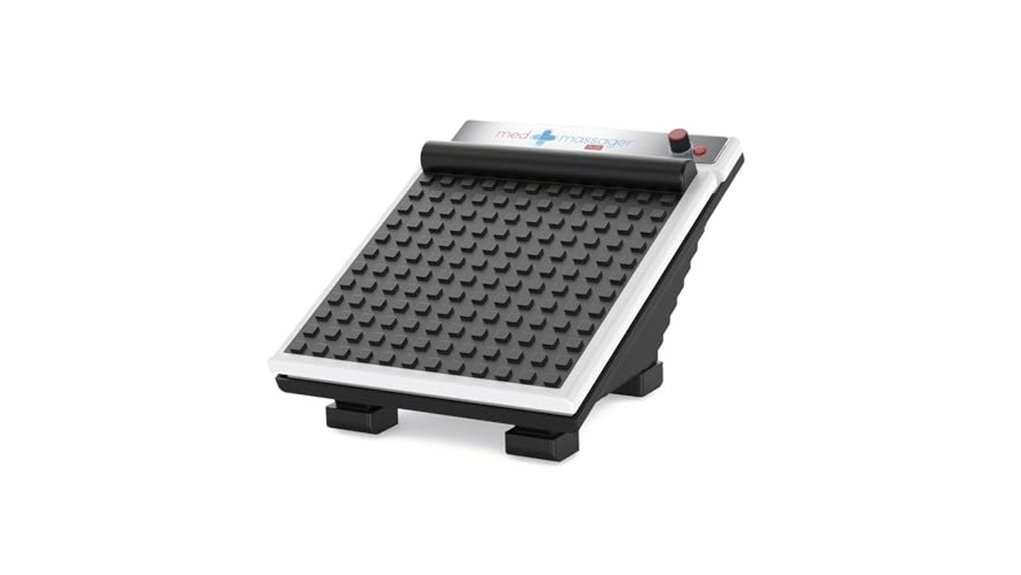
With 11 speed settings and deep-tissue oscillation, MedMassager suits users needing customizable, therapeutic foot relief. Its proprietary oscillating design pairs with vibration on a textured pad, delivering broad coverage for feet, calves, knees, and ankles. The arch bar and soft surface help maintain stable placement while allowing targeted pressure on the heel or arch. Reaching up to 4000 RPM, it supports relaxation, muscle massage, and relief for restless legs. Direct power enables continuous use, making it practical for daily routines. Physical therapists and healthcare professionals often recommend it for at-home care between appointments.
Best For: People seeking an at-home foot massager with customizable deep-tissue relief for feet, calves, knees, ankles, and restless legs.
Pros:
- 11 speed settings let you tailor the intensity to your comfort level.
- Deep-tissue oscillation and vibration provide broad coverage and therapeutic relief.
- Direct power and a stable design make it suitable for regular daily use.
Cons:
- At about 11 lbs, it may be less convenient to move around frequently.
- It is corded, so use is limited by access to a power outlet.
- The strong massage action may be too intense for users who prefer gentle massage.
Nekteck Foot Massager with Heat, HSA Eligible FSA Massage Tools Gifts
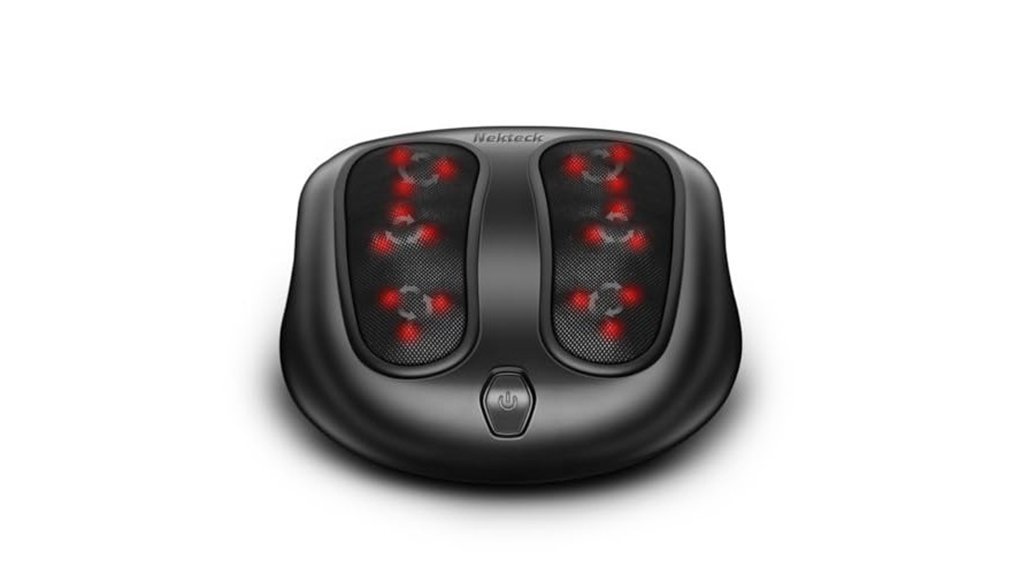
Nekteck’s six massage heads and 54 rotating nodes make it a strong pick for tired feet. The NK-FM-100-BLK uses an ergonomic, user-friendly layout to relax muscles, ease tension, and support blood flow. Its heat function can be switched on or off to help fatigued feet feel better after long days. Toe-touch controls keep operation simple, so there is no need to bend down. HSA/FSA eligibility adds practical value, while the portable design suits home or office use. Users should allow cool-down time, use the original adapter, and keep it clean and dry when stored.
Best For: People with tired, aching feet who want an easy-to-use, heat-enhanced foot massager for home or office relief, especially if they can use HSA/FSA funds.
Pros:
- Six massage heads with 54 rotating nodes provide broad, soothing foot coverage.
- Heat function can be turned on or off to help relax fatigued muscles.
- Toe-touch controls and portable design make it simple and convenient to use.
Cons:
- Must use the original adapter for safe operation.
- Requires cool-down time after extended use.
- Needs to be kept clean and dry, which may limit where it’s stored or used.
Factors to Consider When Choosing Foot Massagers 2026: Top Picks and Buying Guide
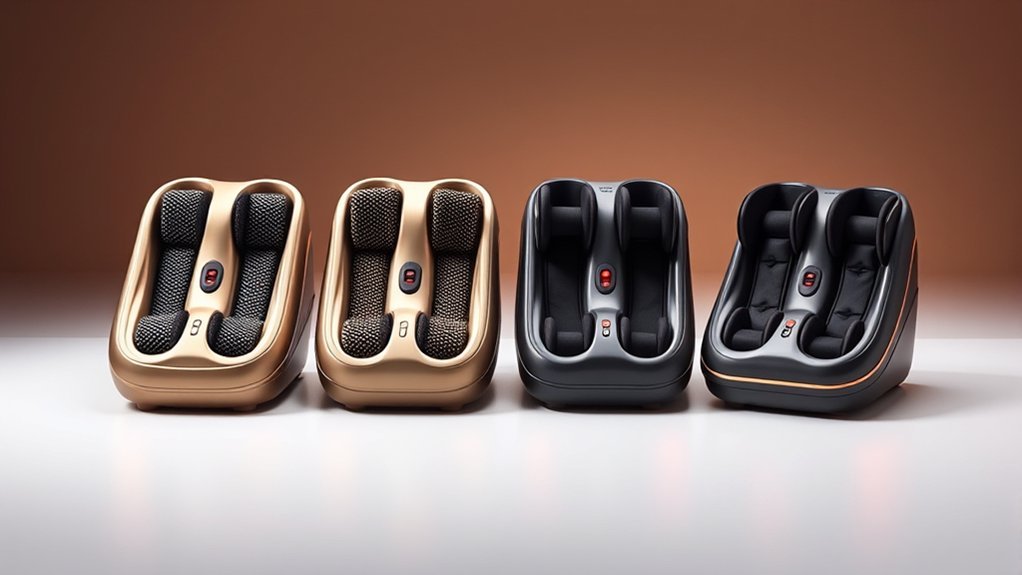
When choosing a foot massager in 2026, attention often centers on massage techniques, heat functionality, and how well pressure can be customized. Portability features can also matter for users who want easy storage or travel use. Health eligibility, including HSA or FSA qualification, may further influence the final choice.
Massage Techniques
Massage techniques are a key factor in choosing a foot massager, since different methods target different needs. Kneading, rolling, and compression can focus on pressure points to ease foot pain and reduce tension. Pulsing and vibration may support circulation, which can be helpful for discomfort linked to neuropathy or plantar fasciitis. Adjustable intensity also matters, as it lets users move from a light massage to a deeper treatment based on sensitivity and preference. Many models provide multiple modes, allowing targeted attention for toes, arches, or soles. This variety helps create a more personalized session and makes the device more versatile for different daily needs. It also improves the overall therapeutic value.
Heat Functionality
Heat functionality can add a soothing layer of warmth that helps ease muscle tension and support relaxation during a foot massage session. In many foot massagers, adjustable heat settings allow users to select a comfortable level of warmth, making the experience more personalized. Steady heat may also encourage better blood circulation, which can be especially helpful for people managing neuropathy or plantar fasciitis. Some devices combine therapeutic heat with massage motions to deepen muscle relief and create a more restorative treatment. When used correctly, this feature can contribute to improved foot comfort and overall wellness. For buyers focused on relaxation and pain relief, heat functionality is a practical feature that can enhance the value of a foot massager.
Pressure Customization
Pressure customization is an important factor in foot massagers because it lets users adjust intensity to match personal comfort and sensitivity levels. Many devices include several pressure settings, from gentle relaxation to deep-tissue stimulation, so the massage can be matched to different needs. This flexibility is especially useful for conditions such as plantar fasciitis or neuropathy, where too much force may feel uncomfortable and too little may offer limited relief. Some models also provide adjustable modes that focus on the toes, arches, and soles, creating a more complete treatment. Advanced systems may even allow pressure to shift during use, which can increase both comfort and effectiveness. Personalized settings generally improve satisfaction and support consistent, long-term use.
Portability Features
Portability features matter when a foot massager needs to move easily between rooms, storage areas, or travel settings. Compact designs with built-in handles simplify lifting and stowing, especially in smaller living spaces. Weight also matters: models under 15 pounds are generally easier to carry and reposition without strain. For added convenience, removable components and washable liners make upkeep simpler during frequent use or trips. Power options influence flexibility as well. Battery-operated units can be placed in more locations than corded models, which depend on a nearby outlet. User-friendly controls are equally important, since accessible buttons or displays allow adjustments without bending or reaching awkwardly. Together, these features support practical, everyday portability without sacrificing ease of use or storage efficiency.
Health Eligibility
Health eligibility is another important consideration when comparing foot massagers, especially for buyers managing plantar fasciitis, neuropathy, or other chronic foot pain. Products that qualify for HSA or FSA spending can reduce the effective cost of treatment-focused devices. Many models are built for therapeutic use, emphasizing circulation support and pain relief rather than simple relaxation. The best options typically offer targeted massage techniques that address specific foot ailments, along with adjustable intensity settings to accommodate sensitivity, swelling, or nerve discomfort. A heating function can also be valuable, since therapeutic warmth may help muscles relax and ease tension. Buyers should review product descriptions carefully and confirm whether the massager’s features align with their condition and reimbursement requirements before purchasing.
Frequently Asked Questions
How Often Should I Use a Foot Massager Safely?
A foot massager is safest when used 10 to 20 minutes per session, once or twice daily. It should be stopped if pain, numbness, swelling, or skin irritation appears, and medical guidance sought for conditions.
Can Foot Massagers Help With Circulation Problems?
They may help, somewhat. Foot massagers can encourage blood flow through gentle compression and movement, but they cannot treat serious circulation problems. If symptoms persist, a clinician should assess the underlying cause promptly.
Are Foot Massagers Suitable for Diabetic Foot Care?
Foot massagers may be suitable for some diabetic foot care, but only with medical approval. They can improve comfort and circulation, yet numbness, poor healing, or ulcers make professional guidance essential before use.
Do Foot Massagers Require Special Cleaning or Maintenance?
Yes. For example, a clinic’s shared massager can develop odors if unchecked. Most foot massagers need regular wiping, drying, and occasional filter or cover cleaning; electrical parts should never be immersed, and instructions should be followed.
Can I Use a Foot Massager While Wearing Socks?
Yes, it can generally be used while wearing socks, though effectiveness may be reduced slightly. A thin, snug pair usually works best, while thick or slippery socks may interfere with massage pressure and grip.
Conclusion
In 2026, the best foot massagers stand out for comfort, heat, pressure options, and ease of use. Best Choice Products, MIKO, MedMassager, and Nekteck each serve different needs, from simple relaxation to targeted relief for plantar fasciitis or neuropathy. For example, a nurse who spends long shifts on her feet may find daily sessions with a heat-equipped model helpful. Choosing the right unit depends on symptoms, features, and routine.