Affiliate disclosure: As an Amazon Associate I earn from qualifying purchases. This article contains affiliate links to Amazon, so we may earn a commission if you buy through them, at no extra cost to you.
The best earplugs for sleeping in 2026 include Hearos Xtreme Protection, 3M E-A-Rsoft Yellow Neons, Flents Protechs Quiet Time, Mack’s Slim Fit, Mack’s Snore Blockers, Mack’s Pillow Soft Silicone, Liberty Glove DuraPlug, and Howard Leight Laser Lite. The top choices balance strong noise reduction, soft materials, and a secure overnight fit. Side sleepers may prefer low-profile designs, while light sleepers often need 30 dB NRR or higher. More details can clarify which option suits each need.
Hearos Ear Plugs Xtreme Protection Series 14 Pairs (Pack of 4)
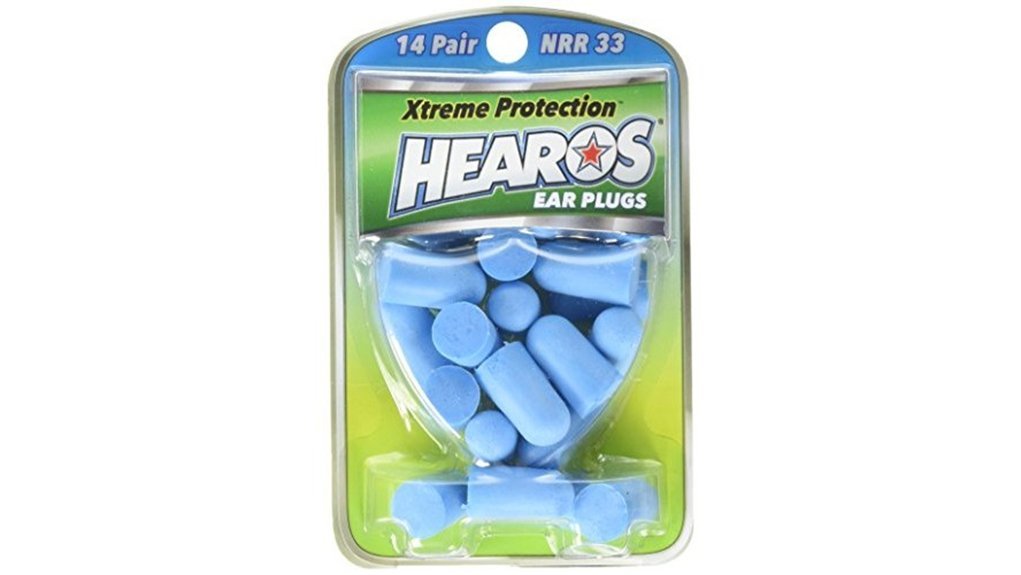
The Hearos Ear Plugs Xtreme Protection Series are a strong choice for sleepers who need reliable noise reduction without sacrificing comfort, thanks to their super soft material and value-oriented 14-pair pack. Built by Hearos and manufactured by DAP WORLD INC., the orange plugs are aimed at hearing protection and general noise reduction. The model 2427 is sold as a pack of 4 totaling 14 pairs, giving it practical bulk for regular use. Its soft construction supports longer wear, while the low cost per pair strengthens its appeal for bedrooms, travel, and other noisy settings.
Best For: People who need affordable, comfortable ear plugs for sleep, travel, and general noise reduction.
Pros:
- Super soft material for added comfort during longer wear
- Good value with 14 pairs in a pack of 4
- Suitable for hearing protection in noisy environments
Cons:
- May not provide enough attenuation for extremely loud settings
- Bulk packaging may be more than occasional users need
- Orange color may be noticeable in some situations
3M Ear Plugs, E-A-Rsoft Yellow Neons 315-1250, Uncorded, NRR 33
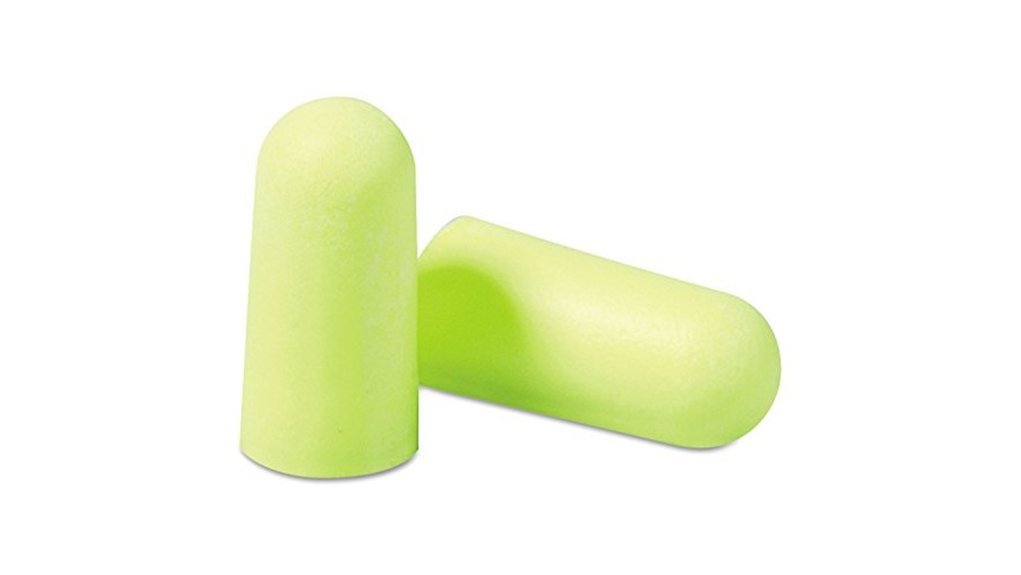
With a 33 dB NRR, these foam plugs suit sleepers needing strong noise blocking and a soft fit. 3M’s E-A-Rsoft Yellow Neons use smooth, soft foam that rolls down easily, then expands to seal the ear canal. The uncorded design and poly bag packaging help keep each pair clean until use. Although intended for industrial and occupational settings, the high attenuation and comfortable texture may also appeal to light sleepers facing persistent household or environmental noise. The 200-pair pack offers long-term value, while the bright yellow color makes them easy to identify and manage.
Best For: Industrial workers or light sleepers who need high noise reduction, a soft foam fit, and a large supply of disposable ear plugs.
Pros:
- 33 dB NRR provides strong noise attenuation for loud environments.
- Soft, smooth foam rolls down easily and expands for a comfortable seal.
- 200-pair pack and poly bag packaging offer good value and help keep plugs clean.
Cons:
- Intended for industrial/occupational use, not consumer sale or general everyday use.
- Uncorded design makes them easier to misplace after use.
- Bright foam plugs may be less discreet for people who prefer a low-profile option.
Flents Protechs Quiet Time Foam Ear Plugs, NRR 33, 50 Pair, Purple
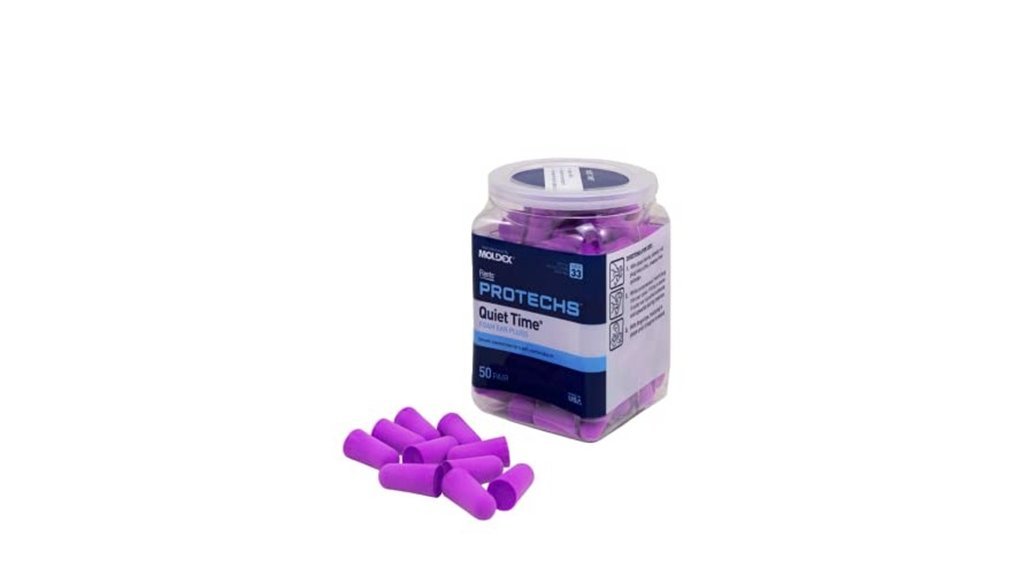
Flents Protechs Quiet Time Foam Ear Plugs suit sleepers needing high noise reduction on a budget. These purple foam plugs carry an NRR 33 rating, offering strong laboratory-tested noise attenuation. Their slow-recovery, latex-free foam is meant to expand in the canal and form a seal. A proper fit is essential; results vary with ear shape and insertion technique. They are better suited to light or moderate noise and occasional sleep use than to active side sleepers. The pack includes 50 pairs, giving frequent users a practical, low-cost supply for travel, studying, and short-term nighttime use.
Best For: People looking for budget-friendly, high-noise-reduction foam ear plugs for sleeping, studying, travel, or short-term quiet in light to moderate noise environments.
Pros:
- High NRR 33 rating provides strong laboratory-tested noise reduction.
- Slow-recovery, latex-free foam is designed to create a comfortable ear seal.
- 50-pair pack offers a practical, low-cost supply for frequent use.
Cons:
- Real-world noise blocking depends heavily on fit and insertion technique.
- May be less comfortable for extended wear or active frequent side sleeping.
- Best for light to moderate noise, not ideal for very loud environments.
Mack’s Slim Fit Soft Foam Earplugs (50 Pair)
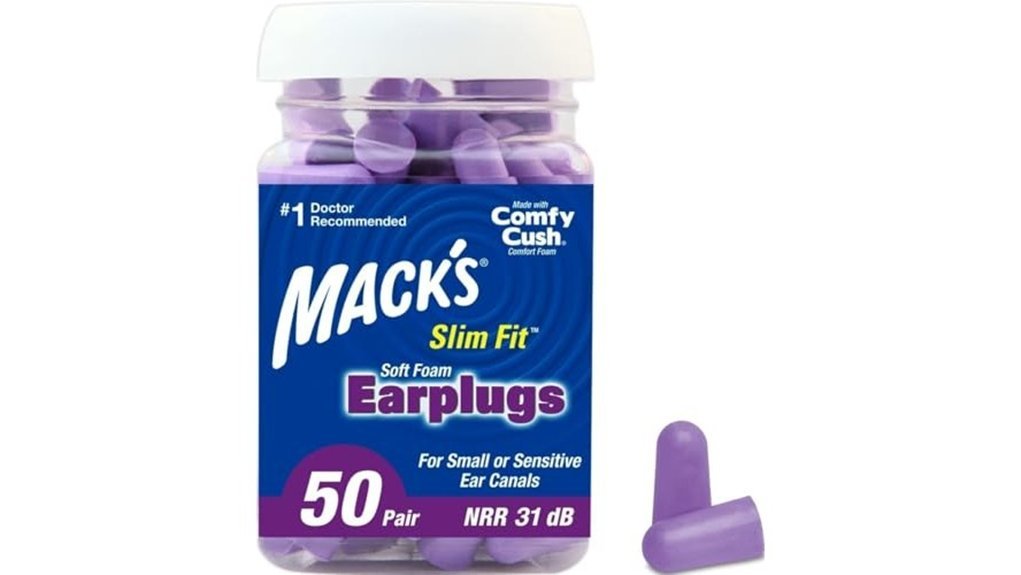
Mack’s Slim Fit Soft Foam Earplugs suit sleepers with small or sensitive ear canals. About 10% smaller than standard foam plugs, they use low-pressure, skinned, tapered foam to improve comfort and hygiene, especially for side sleepers. With an NRR of 31 decibels, they block enough noise for sleeping, snoring, travel, studying, and other loud settings. Mack’s is the number one doctor-recommended earplug brand for hearing protection and hearing-loss prevention. Made in the USA, the 50-pair pack arrives in a safety-sealed plastic jar with a flip-top lid for simple dispensing and satisfaction guaranteed.
Best For: People with small or sensitive ear canals, especially side sleepers who want comfortable, high-noise-reduction foam earplugs for sleep, travel, studying, or other loud environments.
Pros:
- 31 NRR provides strong noise reduction for sleeping, snoring, travel, and loud activities
- About 10% smaller than standard foam earplugs, making them more comfortable for small ear canals
- Low-pressure, skinned, tapered foam and flip-top jar add comfort, hygiene, and convenience
Cons:
- Foam earplugs may need to be replaced regularly after repeated use
- The smaller size may not fit everyone comfortably
- High noise blocking can make it harder to hear alarms or important sounds
Mack’s Snore Blockers Soft Foam Earplugs (12 Pair)
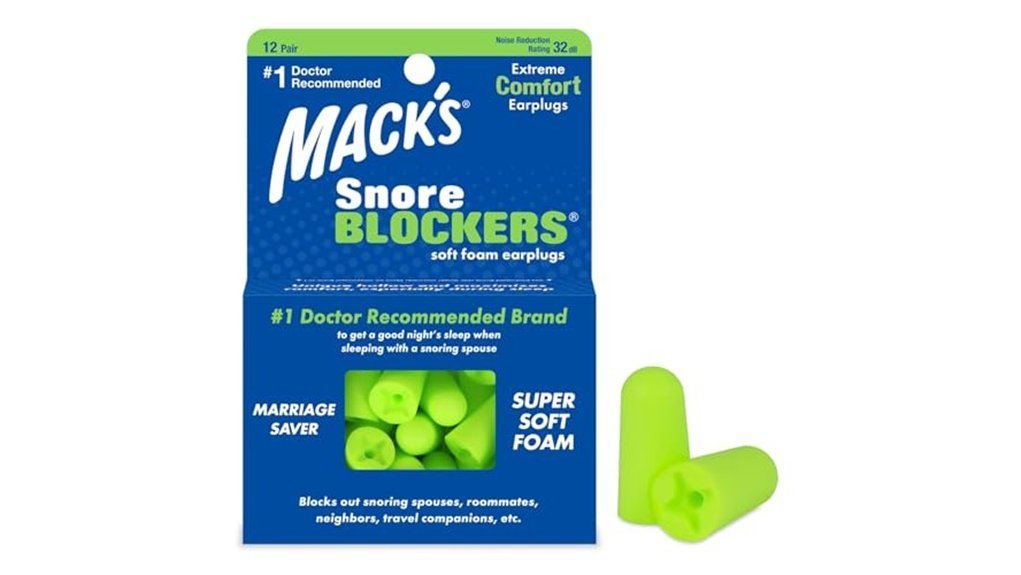
For side sleepers, these soft foam earplugs offer standout comfort all night. Mack’s Snore Blockers Soft Foam Earplugs, model 2810, use super low-pressure, slow-release foam with a hollow-end design that reduces ear contact and pressure. The 32 dB NRR helps block snoring and other disruptive noise, making them suitable for light sleepers in loud settings. Their bright yellow-green color makes them easy to spot on a nightstand or in a travel bag. Backed by McKeon Products, Inc., and recommended by doctors, they are a trusted foam option with a satisfaction guarantee and a 24-count pack.
Best For: Side sleepers, light sleepers, and anyone needing comfortable, effective earplugs for blocking snoring and other nighttime noise.
Pros:
- Soft low-pressure foam with a hollow-end design for improved comfort, especially for side sleeping
- 32 dB NRR provides strong noise reduction for snoring and loud environments
- Bright yellow-green color makes them easy to find in the dark or in travel bags
Cons:
- Foam earplugs may not fit every ear shape perfectly
- Some users may prefer reusable or silicone earplugs over disposable foam
- High noise reduction can make it harder to hear alarms or important sounds
Moldex Pura-Fit Ear Plugs Tapered Single Patient Use Green 6800, 200 Ct
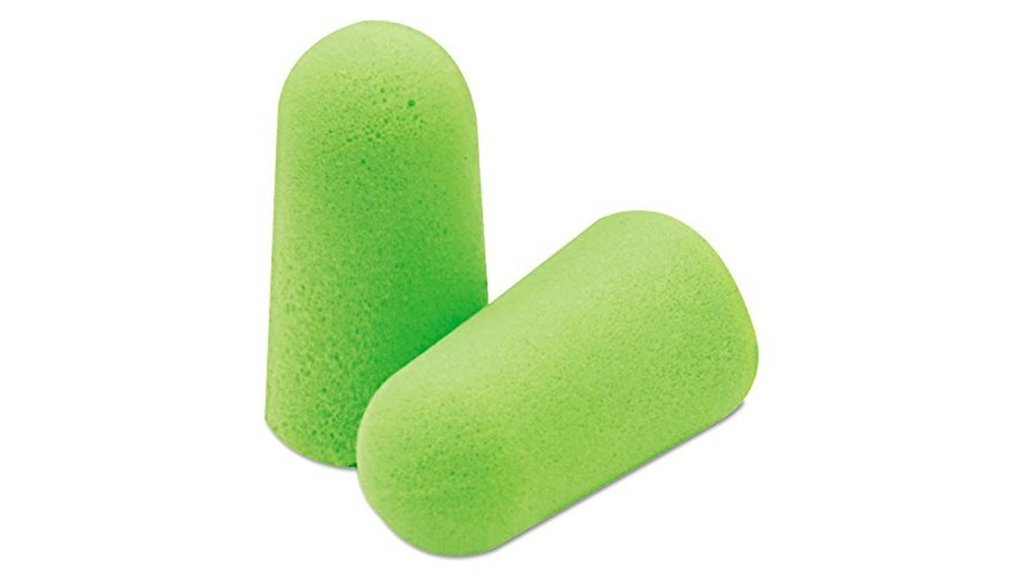
Moldex Pura-Fit earplugs suit sleepers who want tapered, single-use noise reduction. The Moldex M6800 model comes in a 200-count pack, offering a large supply for repeated nightly use. Its green foam design and tapered shape support a comfortable fit while helping reduce ambient noise. Manufactured by Moldex and made in China, the product falls under the BISS group and is categorized as ear plugs. The package measures 12.8 cm long, 17.6 cm wide, and 28.8 cm high, reflecting bulk storage rather than travel convenience.
Best For: Sleepers, shift workers, and others who need a large supply of comfortable, single-use noise-reducing ear plugs for regular use.
Pros:
- Tapered foam design helps provide a comfortable fit and effective noise reduction.
- 200-count pack offers long-lasting value and convenience for repeated use.
- Simple green single-patient-use format suits personal hygiene and everyday sleeping needs.
Cons:
- Bulk packaging is not ideal for travel or carrying on the go.
- Single-use design means ongoing replacement is needed.
- May not be the best choice for users who prefer reusable ear plugs.
Mack’s Ultra Soft Foam Earplugs, 50 Pair – 33dB Highest NRR | Made in USA
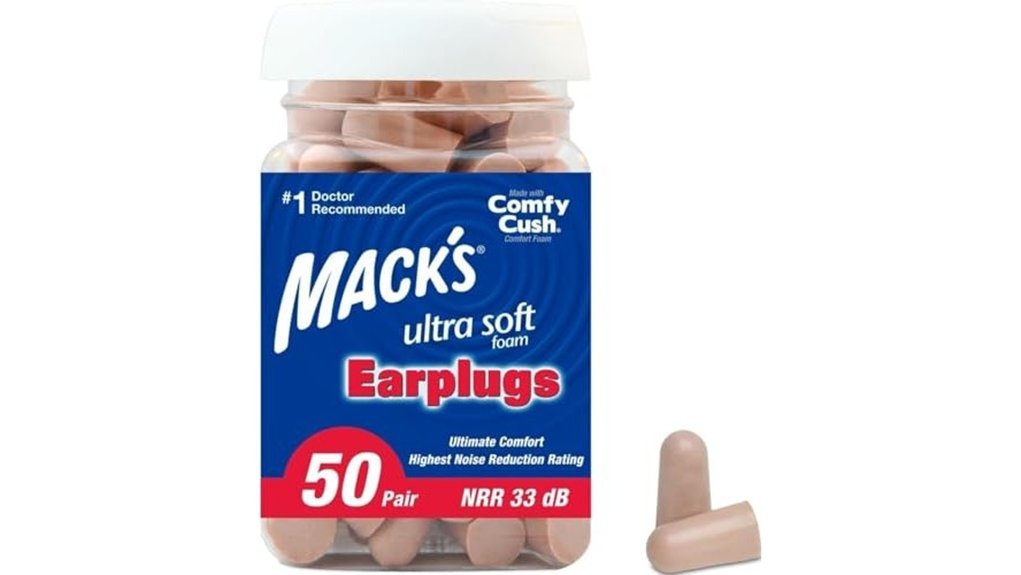
With 33dB NRR, these foam plugs suit sleepers needing strong noise blocking. Mack’s Ultra Soft Foam Earplugs, model 9250, come in a 50-pair beige pack made in the USA. Their super low-pressure, slow-release Comfy Cush Cush comfort foam is designed to sit gently in the ear, supporting extended wear during sleep, study, travel, or concerts. The brand is widely trusted, ranking as a top doctor-recommended choice for snoring and sleep. Packaged in a safety-sealed plastic jar with a flip-open top, they offer easy dispensing and dependable noise reduction for relaxation, work, motorcycling, and other loud settings.
Best For: People who want high-noise-reduction foam earplugs for sleeping, studying, travel, concerts, work, or other loud environments, especially those seeking a comfortable, doctor-recommended option.
Pros:
- 33 dB NRR provides strong noise blocking for sleep and loud settings
- Super low-pressure Comfy Cush foam is designed for comfortable extended wear
- Convenient 50-pair safety-sealed jar with flip-open top made in the USA
Cons:
- Foam earplugs may not fit every ear shape equally well
- Beige color and bulk jar packaging may be less discreet or portable for some users
- Not ideal for people who prefer reusable or high-fidelity hearing protection
Mack’s Pillow Soft Silicone Earplugs (6 Pair)
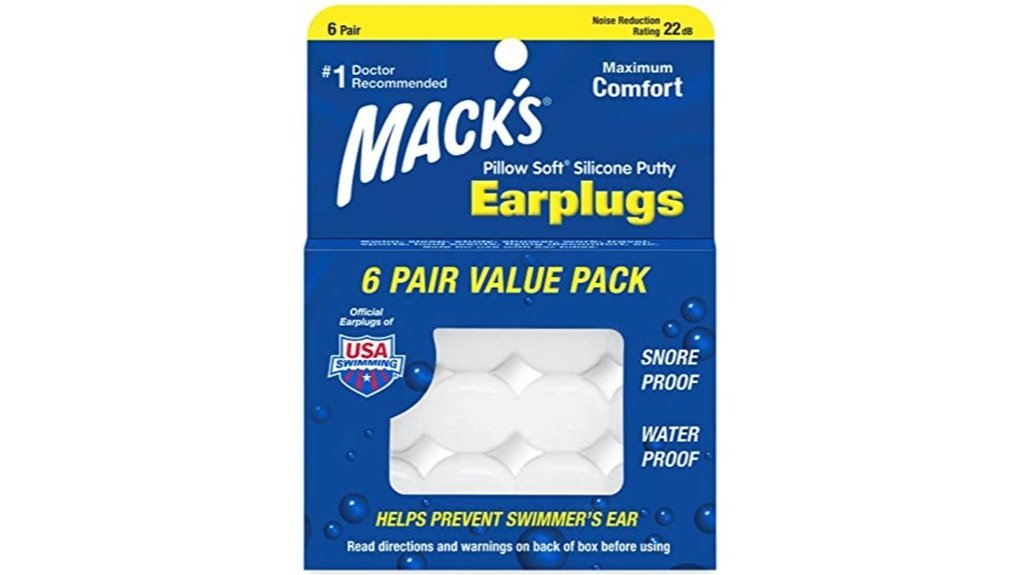
Mack’s Pillow Soft Silicone Earplugs suit sleepers who want a soft, moldable seal. The original silicone putty forms to ear contours, creating a comfortable fit for night use and other settings such as travel, studying, bathing, concerts, swimming, and motorcycle riding. Made in the USA, the six-pair value pack offers practical convenience. The brand is doctor recommended for sleep improvement, especially with snoring partners, and is trusted for personal use. With a 22 dB NRR and 30 dB SNR, it balances protection with a better fit than many custom molded options.
Best For: People who want soft, moldable silicone earplugs for comfortable sleep, travel, swimming, studying, and other everyday noise-reduction needs.
Pros:
- Soft silicone putty molds easily to ear contours for a comfortable fit.
- Versatile for sleeping, swimming, bathing, concerts, travel, and motorcycle riding.
- Made in the USA and comes in a convenient 6-pair value pack.
Cons:
- Not ideal for users who prefer reusable foam or custom-molded earplugs.
- May not provide enough isolation for those needing maximum hearing protection.
- Silicone putty style may feel messy or less secure for some users.
Liberty Glove DuraPlug Disposable Foam Earplugs (200 Pairs)
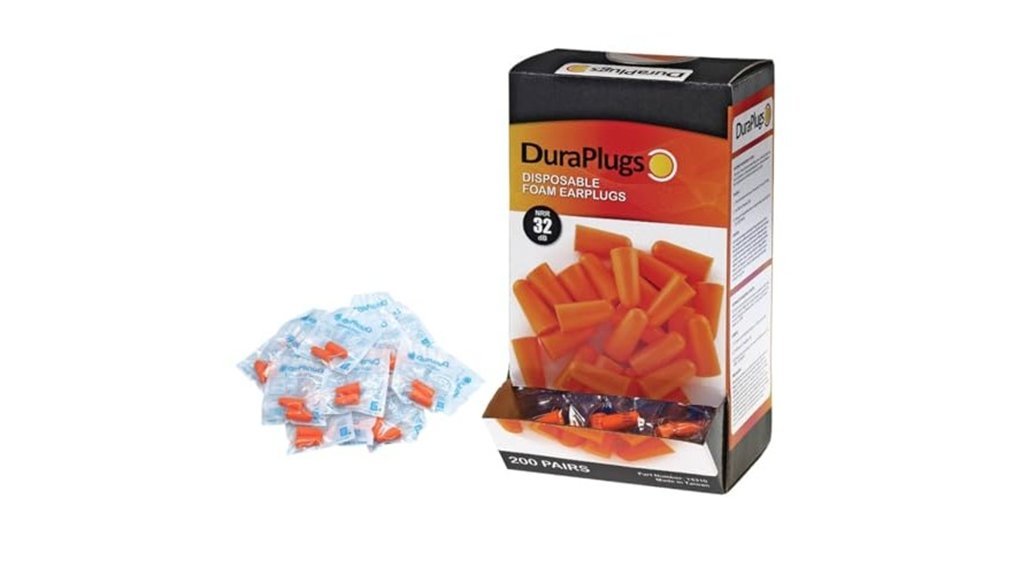
Liberty Glove DuraPlug earplugs suit sleepers who want high noise reduction and a soft, easy-fit foam. The Liberty Safety 14310 model comes in a 200-pair pack, making it a practical bulk option. Its super-soft, slow-recovery tapered foam supports easy insertion and removal, while the low-pressure, self-adjusting design aims to stay comfortable through the night. With a 32 dB NRR and ANSI S3.19 compliance, it offers strong hearing protection. The bright orange color also improves visibility, which helps with quick checks in shared settings.
Best For: Sleepers and light-noise-sensitive users who want a comfortable, high-attenuation foam earplug in a bulk pack for regular use.
Pros:
- 32 dB NRR provides strong noise reduction for sleeping and general hearing protection.
- Super-soft, slow-recovery tapered foam is designed for easy insertion, removal, and comfort.
- 200-pair pack offers excellent value for frequent or shared use.
Cons:
- Disposable foam plugs are not reusable, so ongoing replacement is needed.
- Uncorded design may be less convenient in settings where keeping track of plugs matters.
- Bright orange color improves visibility, but may be too noticeable for users wanting a discreet option.
Howard Leight Laser Lite Foam Earplugs (200-Pairs)
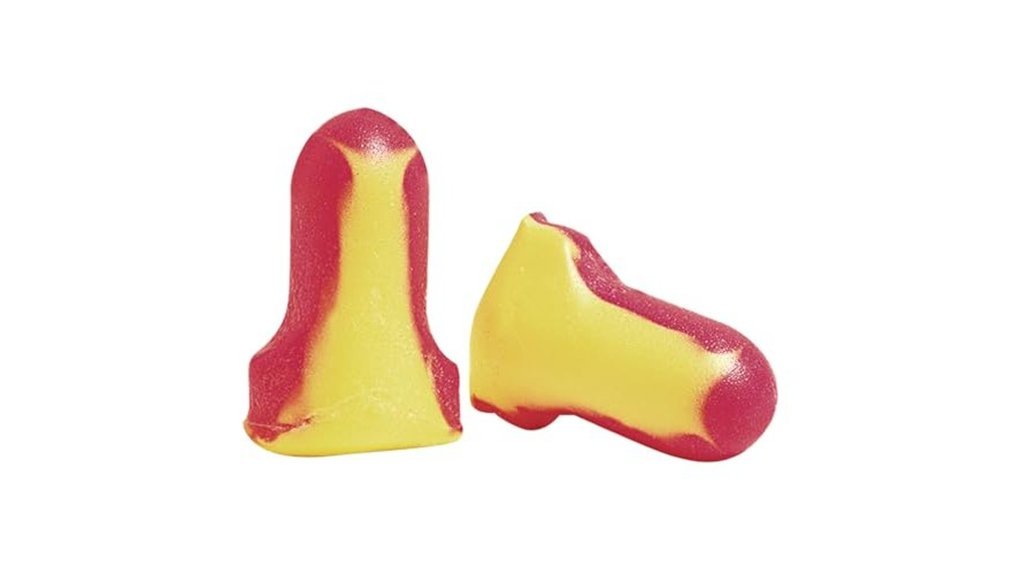
Howard Leight Laser Lite Foam Earplugs suit sleepers needing strong noise blocking at a low cost. The Honeywell-made Laser Lite model 3301105 comes in 200 pairs, with bright yellow and magenta foam that stays easy to spot. Its 32 NRR rating and self-adjusting foam help create a secure seal against loud background noise. The contoured T-shape supports easy insertion and removal, while low-pressure foam fits both smaller and larger ears comfortably. A smooth, closed-cell skin resists dirt buildup, making the design practical for repeated use in demanding settings and useful for sleep.
Best For: People who need affordable, high-visibility earplugs with strong noise blocking for sleeping or use in loud environments.
Pros:
- High 32 NRR provides strong noise reduction.
- Bright yellow and magenta colors are easy to spot, helping with compliance and loss prevention.
- Low-pressure foam and contoured T-shape offer a comfortable, versatile fit for many ear sizes.
Cons:
- Foam earplugs may not be ideal for users who prefer reusable or more durable hearing protection.
- The high-visibility colors may not be preferred for discreet use during sleep.
- As disposable plugs, they require frequent replacement with regular use.
Factors to Consider When Choosing Earplugs for Sleeping 2026: Top Picks and Buying Guide
Choosing earplugs for sleeping in 2026 depends on a few practical factors, starting with the Noise Reduction Rating and how well the design matches the sleeper’s position. Foam and silicone each offer different tradeoffs in fit, while ear canal size can affect both seal and stability. Comfort for overnight wear remains essential, since even effective earplugs are less useful if they cause pressure or irritation.
Noise Reduction Rating
Noise reduction sits at the center of any earplug buying decision, and the key number to check is the Noise Reduction Rating (NRR), which shows how much sound the plugs are designed to block in decibels. Higher NRR values indicate stronger noise blocking, and for sleeping in loud settings, 30 dB or more is generally the target. Even so, the rating is only a guide. Real-world performance can change with ear anatomy, insertion quality, and how well the plug seals the ear canal. For that reason, sleep-specific earplugs are often the better choice, since they balance comfort with sustained attenuation. The NRR should also match the noise level in the environment, because a quiet apartment and a busy street call for different levels of protection.
Sleep Position Fit
Sleep position should guide earplug selection, especially for side sleepers who need softer, lower-profile designs that won’t press uncomfortably against the pillow or ear. A slim profile helps reduce pressure on the outer ear, while a secure fit keeps the plugs in place through the night. Size matters as well; smaller or tapered styles often suit narrower ear canals better and create a steadier seal. Materials that mold gently to the ear canal can improve comfort when lying down and support consistent noise blocking. The best choice balances fit, comfort, and the needed noise reduction rating for the sleeping environment. Because ear anatomy and sleeping habits vary, testing several shapes and sizes is often the most reliable way to find a comfortable, effective option.
Foam Versus Silicone
Foam and silicone earplugs each serve different sleeping needs, so the best option depends on comfort, fit, and how much sound blocking is required. Foam models usually offer a higher Noise Reduction Rating, so they tend to block more ambient noise during sleep. Their expanding design creates a tight seal inside the ear canal, which improves isolation but can feel bulkier. Silicone options work differently: they are molded to the ear’s contours, allowing a customizable fit that many side sleepers find more comfortable. They are also reusable and easy to clean, which makes them a lower-waste choice than disposable foam plugs. The better material depends on individual sensitivity, comfort preferences, and the balance between maximum noise reduction and everyday practicality.
Ear Canal Size
Ear canal size plays a major role in how well sleeping earplugs fit, feel, and block sound. Because ear canals vary widely, one person’s ideal plug may be ineffective for another. Smaller canals often need compact or specially shaped earplugs that create a secure seal without forcing the canal open. Canal shape and anatomy also matter, since an uneven fit can weaken noise reduction and let sound pass through. For those with unusual canal contours, custom-fitted earplugs may offer the best seal and reduce slippage during sleep. Trying different sizes and materials helps identify the option that matches the ear canal closely. A proper fit improves noise blocking, while a poor match can limit performance and reliability overnight.
Comfort For Overnight Wear
Comfort is the deciding factor for earplugs intended for overnight use, since even a strong noise-blocking design can become impractical if it causes pressure or irritation. Soft, slow-recovery foam and silicone putty are often preferred because they conform to the ear’s contours and reduce friction during long sleep periods. A low-pressure construction helps prevent soreness when the sleeper changes position. Fit also matters: tapered or smaller shapes can suit sensitive or narrow ear canals and stay seated through the night. Some models include limited airflow to lessen moisture buildup and improve comfort over many hours. Short trial periods are useful for comparing feel, stability, and noise reduction before committing to regular use. The most comfortable choice balances gentle support with reliable overnight performance.
Visibility And Color
Visibility and color can be practical considerations once fit and comfort are settled, especially for earplugs used in bedrooms, travel bags, or shared spaces. Bright colors make them easier to spot on a nightstand or in a dim suitcase, reducing time spent searching before bed. Yellow and orange options are especially useful when quick identification matters, including workplace checks or emergency retrieval. A distinct, high-contrast shade also improves awareness, which can encourage regular use and more consistent noise protection. In shared living spaces, noticeable colors help users recognize their own pair at a glance and avoid confusion with someone else’s items. While color does not affect noise reduction directly, it can improve convenience, organization, and the likelihood that earplugs are found and used when needed.
Pack Size Value
Pack size can play a major role in overall value, especially for people who use earplugs regularly. Larger packs usually lower the cost per pair, which can make them more economical over time. For frequent users, bulk purchases also cut down on repeat ordering and help keep a backup pair available when needed. Some brands offer multi-packs with different styles or materials, letting buyers match earplugs to sleep, travel, or higher noise sensitivity. The total pair count should be weighed against budget, since higher upfront costs may deliver better long-term savings. Reuse matters too: single-use designs require more replacements, while reusable options can stretch value further. Evaluating these factors helps buyers choose pack sizes that fit usage habits and spending limits.
Frequently Asked Questions
Are Sleeping Earplugs Safe to Use Every Night?
Yes, sleeping earplugs are generally safe nightly if they fit properly, stay clean, and are replaced regularly. Prolonged use may cause irritation, wax buildup, or infection, so occasional breaks and medical advice help when problems arise.
How Do I Clean Reusable Sleeping Earplugs Properly?
After a night shift, a nurse rinsed silicone earplugs with warm water, then washed them with mild soap, air-dried them fully, and stored them in a clean case. Regular gentle cleaning preserves hygiene and fit.
Can Earplugs Help With Snoring and Tinnitus?
Yes, earplugs can reduce snoring noise and may lessen tinnitus awareness by lowering surrounding sound. They do not treat either condition, but they often improve sleep and comfort when used correctly.
What Size Earplugs Fit Small Ear Canals Best?
About 40% of adults report discomfort from oversized earplugs; small ear canals fit best with extra-small foam or low-profile silicone tips. A snug, gentle seal matters more than depth, especially for sleepers.
When Should I Replace Foam Earplugs for Sleeping?
Foam earplugs should be replaced after each use, or sooner if they become dirty, cracked, stiff, or no longer expand well. Reusing them reduces comfort, fit, and noise protection, increasing irritation and hygiene risks.
Conclusion
Choosing the right sleep earplugs can make a real difference in rest quality, especially for light sleepers and shift workers. For example, a hypothetical hotel guest near a busy highway may sleep through the night after switching to Mack’s Pillow Soft Silicone Earplugs. The best option depends on comfort, noise reduction, and fit, but any of these top picks can help create a quieter, more restorative sleep environment.