Affiliate disclosure: As an Amazon Associate I earn from qualifying purchases. This article contains affiliate links to Amazon, so we may earn a commission if you buy through them, at no extra cost to you.
The 5 best kayak accessories for 2026 include the Extreme Max BoatTector Grapnel Anchor Kit, NRS Drylander Shock Cord Sprayskirt, RAILBLAZA Rod Holder R with MiniPort Track Mount, StoreYourBoard Kayak Ceiling Rack, and RICANK Portable Fish Finder. Each option improves stability, storage, fishing, or protection in different ways. Durable materials, easy installation, and portability matter most when choosing gear. A closer look shows which accessory fits each paddler’s needs best.
Extreme Max BoatTector Grapnel Anchor Kit (3.5 lbs)
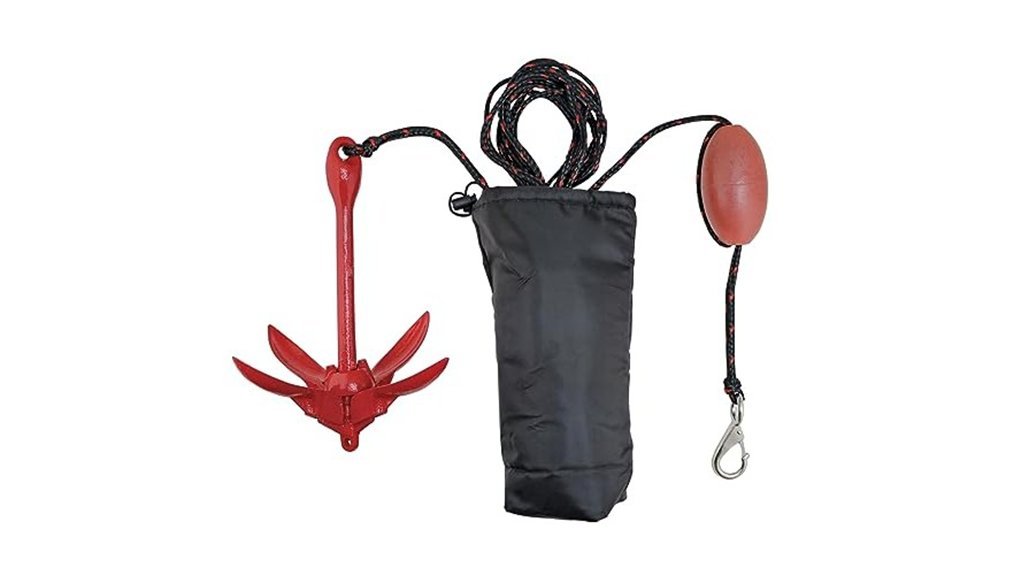
The Extreme Max BoatTector Grapnel Anchor Kit is a practical choice for kayakers and other small-craft users who need reliable holding power on rocky, coral, or weed-heavy bottoms. The 3.5-pound folding grapnel anchor is suited to kayaks, paddle boards, PWCs, jet skis, and small boats. A 25-foot hollow braid polythene rope with steel snap hook supports quick deployment, while the marine-grade foam marker buoy improves visibility. The padded nylon storage bag keeps the kit compact and protected. For recreational users seeking a portable, complete anchoring solution, it offers useful versatility and convenience.
Best For: Recreational kayakers, paddle boarders, jet ski and PWC users, and owners of small boats who need a portable anchor kit for rocky, coral, or weed-heavy bottoms.
Pros:
- Complete kit includes a folding grapnel anchor, rope, buoy, and storage bag
- Compact and portable, making it easy to store and transport
- Good fit for small craft in challenging bottom conditions
Cons:
- 3.5 lb anchor may be too light for larger boats or stronger currents
- 25 ft rope may be limiting in deeper water
- Best suited to specific bottom types, not all anchoring environments
NRS Drylander Shock Cord Sprayskirt-LDeck-L/Tunnel
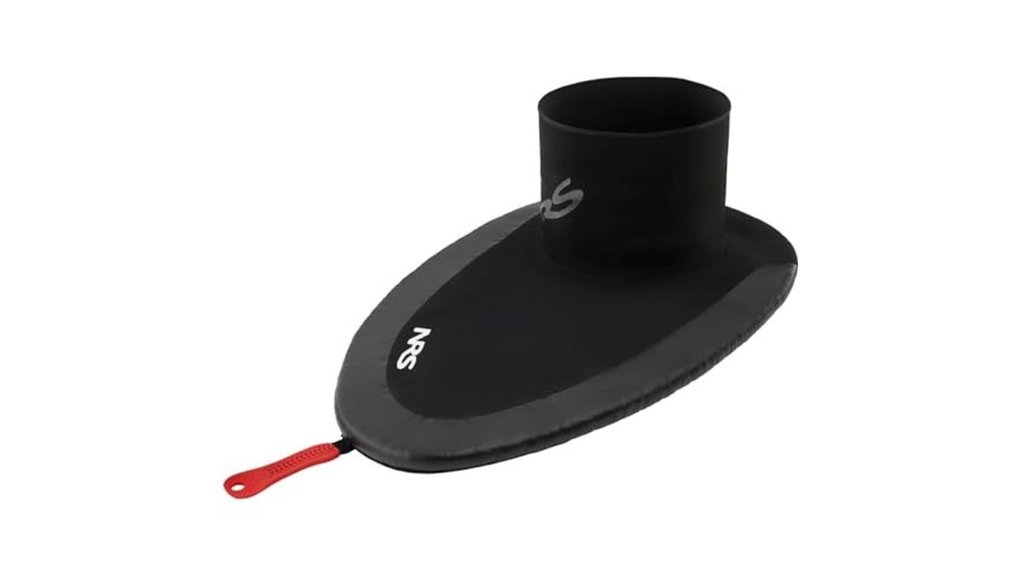
Built for paddlers needing a drum-tight seal, the NRS Drylander Shock Cord Sprayskirt suits demanding kayak conditions. It uses 4mm Terraprene neoprene across the deck and tunnel, with a 2mm Extend tunnel featuring 4-way stretch Superspan for improved comfort. The integrated shock cord rand helps maintain a secure fit, while the fixed tunnel adjustment supports customization. Infinity coating reinforces the front and side deck edges, and the rubberized inner deck coating adds durability. A nylon webbing grab loop with a rubber handle aids removal. The pre-curved deck also enhances performance during kayaking.
Best For: Paddlers who want a drum-tight, secure-fitting sprayskirt for demanding kayaking conditions.
Pros:
- 4mm Terraprene neoprene deck and tunnel offer durability and solid water protection.
- Integrated shock cord rand and fixed tunnel adjustment help create a secure, customized fit.
- Pre-curved deck plus rubberized grab loop improve comfort and ease of use.
Cons:
- Best suited for specific kayak cockpit sizes, so fit may be limited.
- The snug, performance-focused design may feel less casual or forgiving for some users.
- Neoprene construction can be warmer and less breathable than lighter sprayskirt materials.
RAILBLAZA Rod Holder R with MiniPort Track Mount
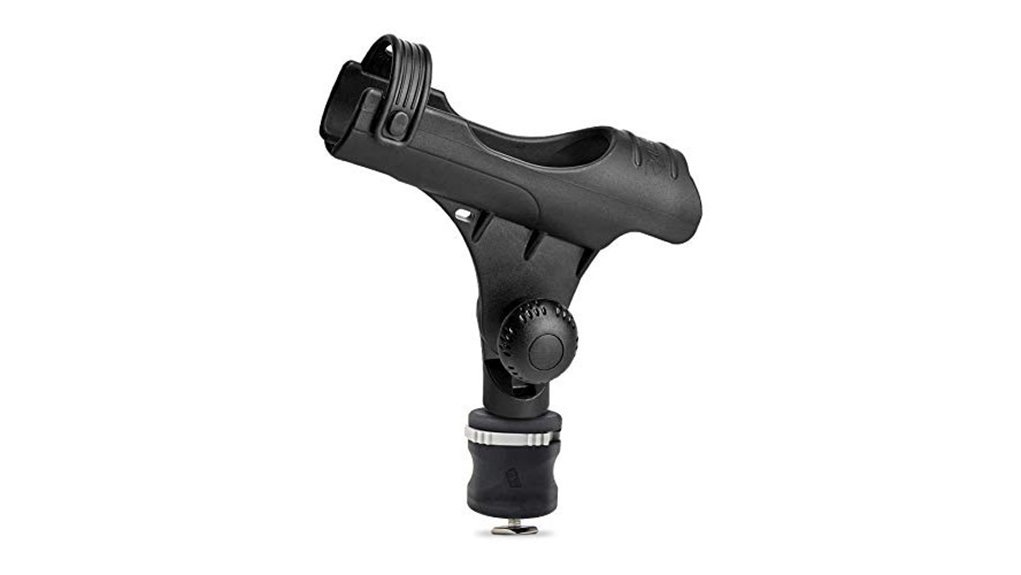
RAILBLAZA’s Rod Holder R with MiniPort Track Mount suits anglers who want quick, tool-free setup. The black Rod Holder R, model 08-0086-11, uses a MiniPort track mount that can be repositioned by hand, then tightened without tools. Its lightweight build works with many kayak systems, including Wilderness Systems, Native Watercraft, and Jackson Kayak. The adjustable strap helps secure fishing rods quickly, while compatibility with other RAILBLAZA rail accessories adds flexibility. For kayak anglers seeking a compact, adaptable sports accessory, this holder balances convenience, mounting speed, and broad platform support.
Best For: Kayak anglers who want a lightweight, tool-free rod holder that’s easy to reposition and compatible with multiple rail systems.
Pros:
- Tool-free MiniPort track mount makes installation and adjustment fast and convenient.
- Compatible with popular kayak brands like Wilderness Systems, Native Watercraft, and Jackson Kayak.
- Adjustable strap and RAILBLAZA accessory compatibility add flexibility for different setups.
Cons:
- Best suited for kayak track/rail systems, so it may not fit every watercraft or mounting style.
- Single-rod holder design may not be enough for anglers needing multiple rod mounts.
- Dependence on a specific mounting ecosystem can limit use outside RAILBLAZA-compatible accessories.
StoreYourBoard Kayak Ceiling Rack, Adjustable Hi Port, Holds 2 Kayaks
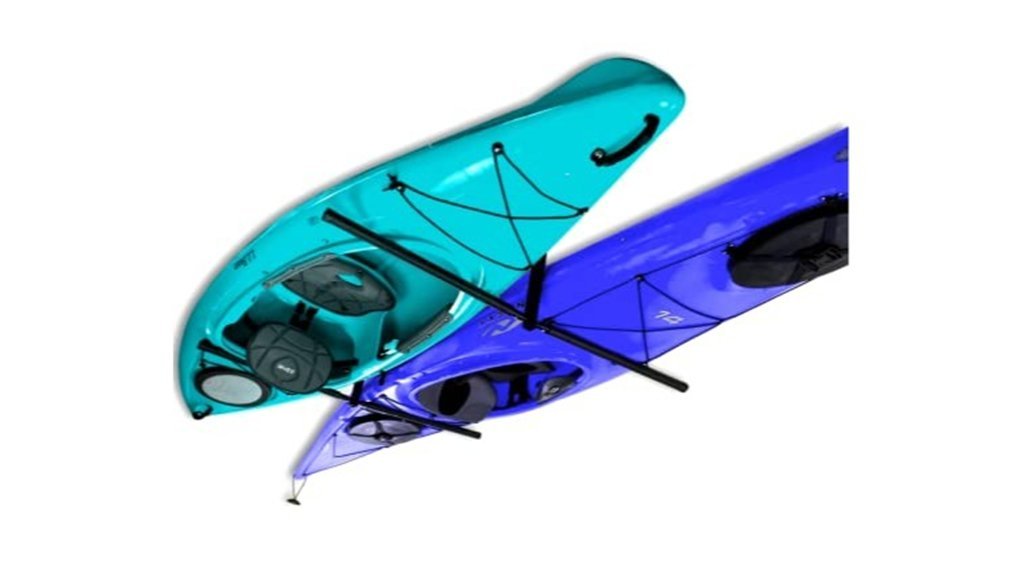
For paddlers short on floor space, the StoreYourBoard Kayak Ceiling Rack is a practical double-kayak solution. This black, X-large ceiling mount uses solid steel components and closed-cell foam padding to support and protect two boats. Its adjustable design fits most kayaks, including whitewater, recreational, ocean, and fishing models, with height ranging from 10 to 18 inches and width at 30 inches. The rack holds up to 150 pounds total, or 75 pounds per side. A rotating 90-degree bracket helps align with joists, and included hardware supports secure installation. Designed in the USA, it is built for lasting reliability.
Best For: Paddlers who need a sturdy ceiling-mounted storage solution for two kayaks and want to save floor space.
Pros:
- Holds up to 2 kayaks with a strong 150 lb total capacity.
- Adjustable design fits a wide range of kayak sizes and styles.
- Solid steel construction with foam padding helps protect boats.
Cons:
- Requires ceiling installation, so it’s not ideal for renters or those avoiding drilling.
- Only supports up to 75 lbs per side, which may limit heavier kayaks.
- Best suited for spaces with accessible joists and adequate ceiling height.
RICANK Portable Fish Finder
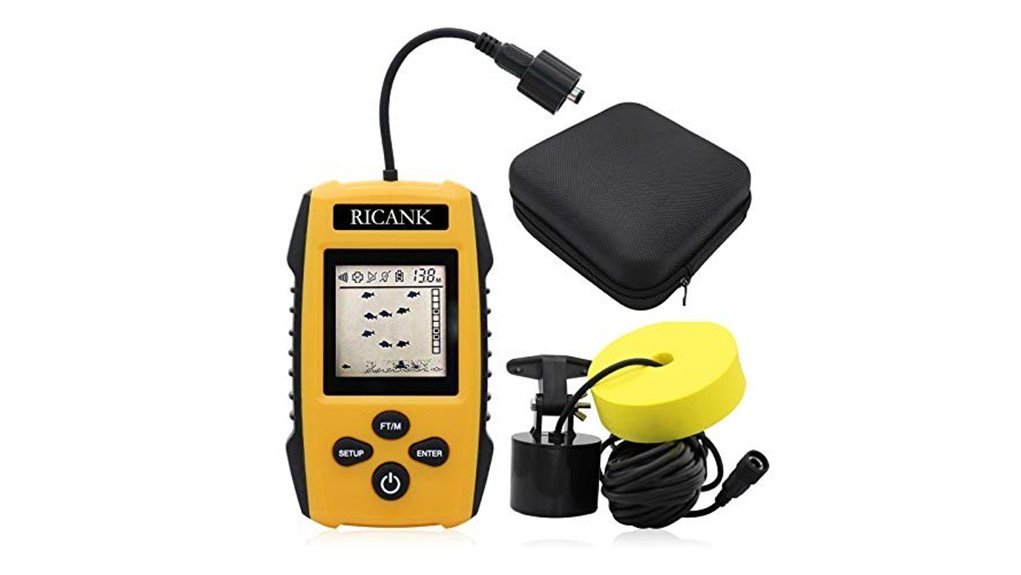
The RICANK Portable Fish Finder suits anglers who want a compact, easy-to-carry way to locate fish. Model ECTL88EH, this small yellow electronics device from RICANK is designed for wireless use and fits a range of fishing environments. Its portable build supports quick transport and simple setup, making it practical for kayak trips and shoreline outings. By helping identify fish underwater, it can improve efficiency for both novice and experienced anglers. The lightweight format keeps gear streamlined without sacrificing utility, adding targeted value to a fishing setup.
Best For: Anglers who want a compact, portable, wireless fish finder for use on kayak trips, shoreline outings, and other fishing environments, especially those looking to improve fish detection with minimal gear.
Pros:
- Portable, lightweight design makes it easy to carry and transport
- Suitable for a variety of fishing environments
- Useful for both novice and experienced anglers
Cons:
- Small form factor may limit advanced features compared with larger units
- Wireless operation may depend on conditions and setup
- Best suited for fish locating, not as a full-featured fishing electronics system
Factors to Consider When Choosing Kayak Accessories 2026: Top Picks and Buying Guide
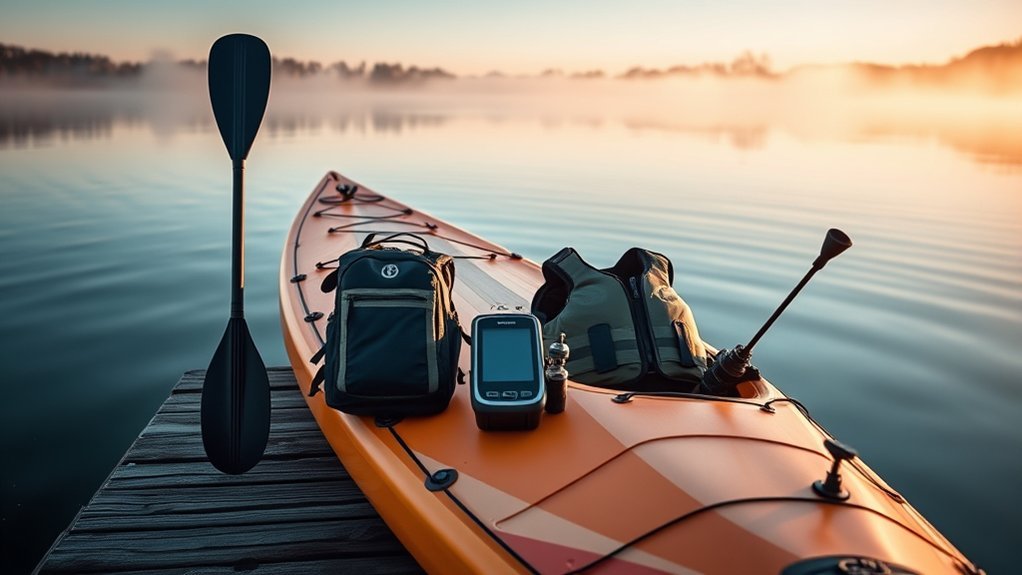
Selecting kayak accessories in 2026 starts with checking compatibility with the specific kayak model, since fit affects both function and safety. Durability, storage efficiency, and ease of installation also matter because they influence how well the gear performs over time and how practical it is on the water. Weight and portability should not be overlooked, especially for paddlers who need equipment that is simple to carry and quick to manage.
Kayak Compatibility
Compatibility is the starting point when choosing kayak accessories, since each kayak model may use different mounting systems, dimensions, and load limits. A careful check of the kayak’s width, height, and deck layout helps guarantee that racks, mounts, and holders fit securely without interfering with paddling. Weight capacity also matters, because accessories must support the kayak and any added gear without exceeding safe limits. Adjustable components can improve fit across recreational, touring, and fishing kayaks, making them more versatile for different setups. Materials should suit marine use, helping reduce corrosion during regular exposure to water. By matching accessories to the kayak’s specific design, owners can improve function, preserve safety, and avoid costly incompatibility issues.
Durability Matters
After fit and mounting have been matched to the kayak, durability becomes the next priority. Accessories built from solid steel or high-quality neoprene tend to resist wear better than cheaper alternatives, making them stronger choices for regular use. Protective padding, such as closed-cell foam, helps prevent scratches and impact damage during handling or transport. Weather resistance also matters; items exposed to water, UV rays, and changing temperatures should maintain strength without cracking, fading, or corroding. Adjustable features can extend service life by reducing strain and allowing a better fit across different setups. User reviews add practical evidence, revealing whether an accessory keeps performing after repeated outings. Together, these factors help identify gear that lasts longer and remains dependable.
Storage Efficiency
Smart storage choices can quickly declutter a kayak setup, making gear easier to organize and access when needed. Accessories that maximize storage efficiency help reduce clutter and keep essential items arranged in a predictable way. Adjustable solutions, such as wall mounts or ceiling racks, suit different kayak sizes while preserving valuable floor space. Multi-functional gear adds further value; for example, rod holders that reposition without tools can expand storage options and improve overall utility. Lightweight yet durable materials, including solid steel or high-quality foam, support long-term use without adding unnecessary bulk. Protective details also matter, especially padding that shields the kayak from scratches or pressure marks. Well-designed storage accessories balance organization, space savings, and protection in one practical system.
Ease Of Installation
Ease of installation can make a significant difference when choosing kayak accessories, especially for users who want a fast, low-stress setup before heading out. Tool-free designs are often preferred because they reduce assembly time and simplify on-water adjustments. Adjustable mounting systems are also valuable, since they let accessories be aligned with existing kayak structures without repeated trial and error. Complete installation hardware can further improve the process by supporting a secure fit and lowering the chance of loose connections or damage. Clear instructions or step-by-step guides are especially useful for beginners, helping them avoid mistakes during setup. Lightweight designs may also be easier to handle during installation, while still delivering the needed function and dependable performance.
Weight And Portability
Once installation is sorted, weight and portability become the next practical considerations for kayak accessories. Heavier items can complicate transport, reduce storage efficiency, and add unnecessary strain during launch or recovery. Lightweight options, such as portable anchors and compact fish finders, support easier movement while helping keep the kayak’s load manageable. Portability also matters for quick setup and takedown, particularly on small vessels or during trips that combine fishing, touring, or other activities. Accessories with compact profiles or built-in storage solutions fit better in limited space and simplify packing. Choosing products that balance low weight with useful performance allows a paddler to conserve energy, organize gear more effectively, and make better use of every available inch aboard.
Material Quality
Material quality is a key determinant of how well kayak accessories hold up over time, especially in wet, abrasive, and sun-exposed conditions. Durable choices such as neoprene, solid steel, and marine-grade foam typically resist wear better than cheaper alternatives. In sprayskirts, 4mm Terraprene neoprene can provide stretch, comfort, and a secure fit without feeling restrictive. For racks and contact points, closed-cell foam padding helps reduce scratches and surface damage to the kayak. Durable synthetics also offer dependable performance while remaining lightweight enough for easy handling. Selecting robust materials can improve comfort, extend service life, and reduce replacement costs. Overall, material selection should balance toughness, fit, and usability, since accessories perform best when they combine strength with practical everyday convenience.
Weather Resistance
Weather resistance is a major factor in kayak accessories because rain, sunlight, and humidity can quickly reduce performance and shorten service life. Durable options typically use neoprene or marine-grade foam, which help block water intrusion and limit UV damage. Protective finishes, including rubberized or infinity coatings, add another layer of defense against wear from repeated exposure. Construction details matter as well: sealed seams and waterproof zippers reduce the chance of water entering storage compartments or padded sections. These features help accessories stay functional in harsh conditions. Regular cleaning, drying, and correct storage further improve long-term resistance to weather. Well-chosen accessories maintain their condition longer and perform more reliably after exposure to changing outdoor elements during kayaking season.
Accessory Versatility
Beyond weather resistance, accessory versatility is another key factor when choosing kayak gear for 2026. Accessories that work with multiple kayak systems offer broader use across recreational activities, from fishing to touring. Adjustable features, such as height and width settings, help gear fit different kayak sizes and designs without constant replacements. Multifunctional tools also improve value; a rod holder, for example, can support several fishing setups instead of serving a single purpose. Portable designs are equally useful because they simplify transport and storage, allowing the same accessory to move between launch sites with ease. Durable materials remain essential, as versatile gear must still endure rough conditions. Together, these qualities create accessories that are practical, flexible, and reliable for varied outdoor adventures.
Frequently Asked Questions
How Do I Clean Kayak Accessories After Saltwater Use?
They should rinse kayak accessories with fresh water immediately after saltwater use, then wash with mild soap, dry thoroughly, and inspect for corrosion or residue. Metal parts benefit from light lubrication before storage.
Can Kayak Accessories Fit Inflatable Kayaks?
Yes, many kayak accessories fit inflatable kayaks, provided they are compatible with the craft’s mounting points, width, and weight limits. Adjustable straps, universal racks, and clamp-on holders often work well, while rigid fittings may not.
What Accessories Improve Kayak Safety at Night?
Bright beacons, bow lights, and reflective rigging greatly improve kayak safety at night. A whistle, waterproof flashlight, and strobe add further security. Properly fitted personal flotation devices remain essential for visibility, signaling, and survival.
How Often Should Kayak Hardware Be Inspected?
Kayak hardware should be inspected before every outing, with a more thorough check after rough trips, impacts, or storage periods. Bolts, straps, rivets, and mounts can loosen or corrode, making regular inspection essential for safety.
Are Universal Mounts Compatible With Most Kayaks?
Like a key seeking many locks, universal mounts fit most kayaks, though not all. Hull shape, track systems, and mounting points can limit compatibility, so checking dimensions and manufacturer specifications remains essential before purchase.
Conclusion
Ultimately, the best kayak accessory depends on how and where each paddler ventures, yet these five stand out for very different reasons. An anchor may hold the line, a sprayskirt may keep the cockpit dry, a rod holder may sharpen the catch, a ceiling rack may guard precious space, and a fish finder may reveal what lies below. But one choice could change everything on the water—if it is the right one.