
Affiliate disclosure: As an Amazon Associate I earn from qualifying purchases. This article contains affiliate links to Amazon, so we may earn a commission if you buy through them, at no extra cost to you.
For 2026, five strong interactive dog toy picks stand out for mental challenge, durability, and safer play. The Outward Hound Nina Ottosson Dog Twister suits advanced puzzle fans, while the ZippyPaws Burrow Bunny n’ Carrot adds hide-and-seek fun. The KONG Wobbler slows mealtime and boosts problem-solving. An Interactive Flirt Pole supports active outdoor play. The Pet Craft Supply Jiggle Giggle Plush Toy offers gentle squeaky engagement, and each option has details worth exploring further.
Outward Hound Nina Ottosson Dog Twister Dog Toy Treat Puzzle, 11.8″
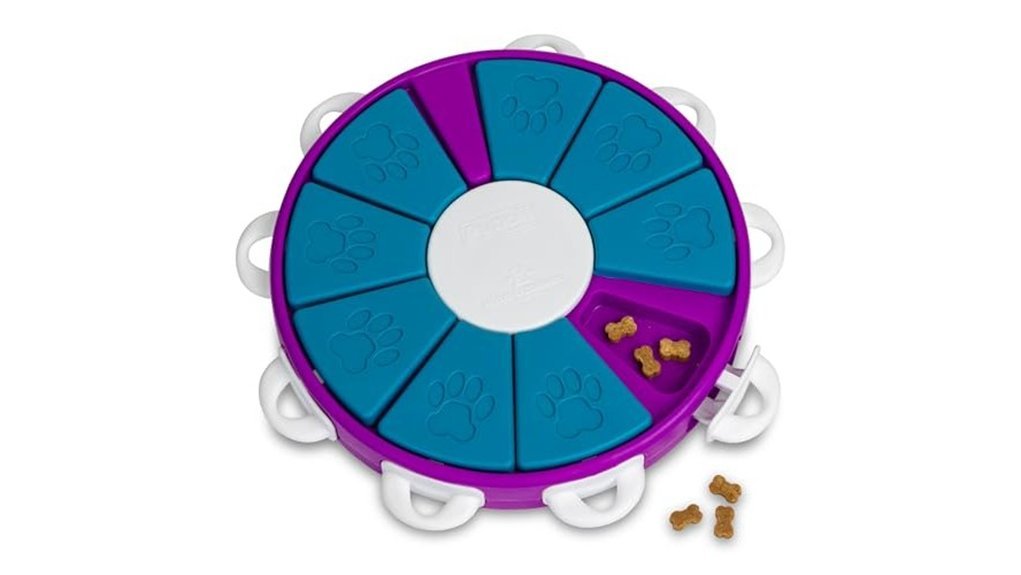
The Outward Hound Nina Ottosson Dog Twister Dog Toy Treat Puzzle, 11.8″, is a strong choice for dogs that need a greater challenge, especially those ready for Level 3 advanced play. Its multi-step design uses pull tabs and sliding blocks to hide treats, requiring careful problem-solving before rewards appear. The puzzle holds up to 1 cup of kibble or treats and can slow fast eaters during mealtime. It also supports interactive play, with 15 minutes of use offering benefits comparable to 30 minutes of physical activity. Included tips help adjust difficulty for different skill levels.
Best For: Dogs that have already mastered easier puzzles and need a Level 3 advanced challenge for mental stimulation, interactive play, and slower mealtime feeding.
Pros:
- Multi-step puzzle with pull tabs and sliding blocks keeps dogs engaged and encourages problem-solving.
- Holds up to 1 cup of kibble or treats and can function as a slow feeder.
- Includes tips to adjust difficulty, making it adaptable for different skill levels.
Cons:
- May be too challenging for dogs new to puzzle toys or those still learning Level 2.
- Requires supervision and guidance to help dogs understand the mechanics.
- Best results depend on the dog’s interest in puzzle-style play, so it may not suit every dog.
ZippyPaws Burrow Interactive Dog & Puppy Toys for Boredom – Bunny n’ Carrot
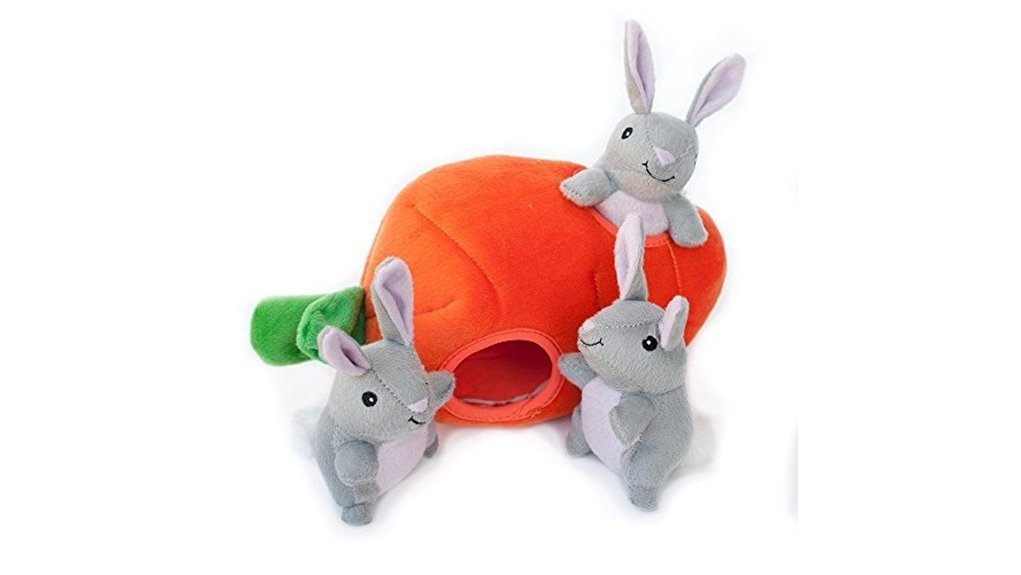
ZippyPaws Burrow Bunny n’ Carrot suits dogs that need mental stimulation and playful enrichment. The ZP01230-KW Burrow set includes a soft carrot hideout and three squeaky bunny Miniz, creating a hide-and-seek puzzle that encourages problem solving and active engagement. Its machine-washable design adds convenience, while the plush fabric offers comfort for puppies and senior dogs alike. The toy is refillable with any ZippyPaws Miniz, extending use over time. It works well for most breeds and sizes, but it is not intended for extra tough chewers, so supervision remains important during play.
Best For: Dogs and puppies of all ages that enjoy interactive puzzle play, squeaky toys, and mental stimulation.
Pros:
- Includes a soft carrot burrow plus three squeaky bunny Miniz for engaging hide-and-seek fun.
- Machine-washable and refillable with any ZippyPaws Miniz for easy maintenance and extended use.
- Soft plush design is comfortable for puppies and senior dogs while providing enrichment.
Cons:
- Not suitable for extra tough chewers and may not hold up to rough play.
- Requires supervision during use to help prevent damage or swallowing of parts.
- Best for dogs that enjoy puzzle-style toys; less appealing to dogs that prefer chewing or fetch.
KONG Wobbler, Interactive Treat-Dispensing Dog Toy, for Medium/Large Dogs
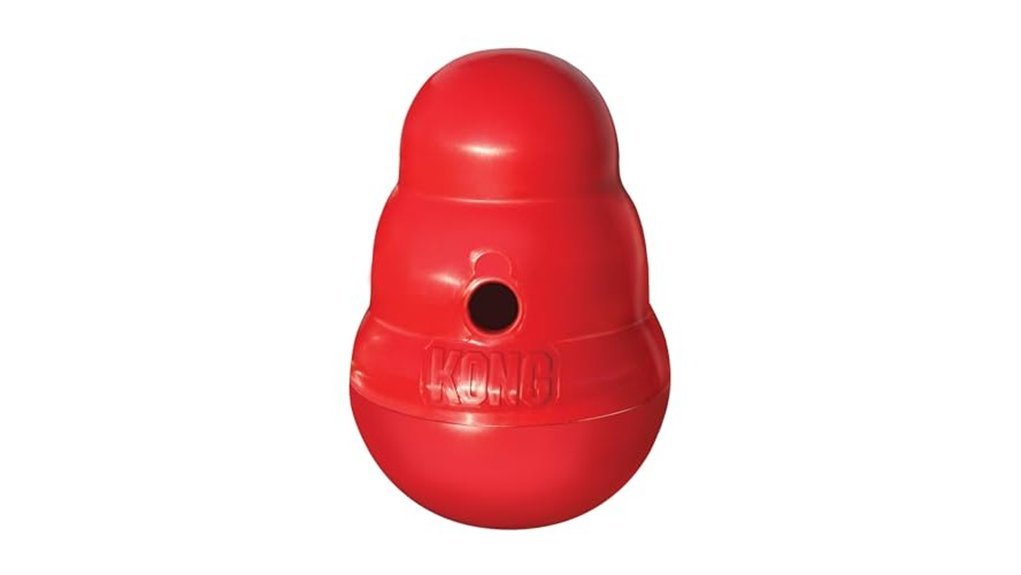
Designed for medium to large dogs, the KONG Wobbler turns mealtime into active mental exercise. The red, model PW1E toy works as an interactive treat dispenser, prompting dogs to nudge, chase, and problem-solve to release kibble or treats. That design encourages natural instincts while slowing eating, which can support healthier portions and weight management. It unscrews for easy filling and is dishwasher safe for simple cleanup. Designed and tested in Golden, Colorado, KONG backs the Wobbler with a Satisfaction Guarantee, reflecting the brand’s long history of making durable enrichment toys since 1976.
Best For: Medium to large dogs that need a fun treat dispenser for mental stimulation, slower mealtime, and interactive play.
Pros:
- Encourages active problem-solving and natural instincts
- Helps slow eating and may support weight management
- Easy to fill, unscrews for convenience, and is dishwasher safe
Cons:
- Best suited for medium to large dogs, not small breeds
- Can be noisy or roll around during use
- Requires supervision for dogs that are heavy chewers or overly rough with toys
Interactive Flirt Pole Toy for Dogs Chase,Outdoor Exercise,Agility Training

Built for energetic dogs, this flirt pole channels prey drive into sprinting, jumping, and sharp directional changes. It suits small to large pets and can deliver a solid workout in 10 to 20 minutes, making it useful for outdoor exercise and agility practice. The rod uses 304 stainless steel, a two-section build for transport, and a non-slip rubber handle. A nylon cord with reinforced seams resists heavy pulling, while the non-bungee design helps prevent snap-back injuries. The fleece lure is soft, washable, replaceable, and ideal for teaching drop-it, leave-it, and controlled walking.
Best For: Energetic dog owners looking for an interactive training toy that supports exercise, agility, and obedience practice for small to large dogs.
Pros:
- Helps burn energy quickly by encouraging sprinting, jumping, and directional changes.
- Durable stainless steel rod, strong nylon cord, and non-bungee design improve safety and longevity.
- Replaceable, washable fleece lure makes it versatile for training commands like drop-it and leave-it.
Cons:
- Best suited for active play sessions, so it may not appeal to low-energy or older dogs.
- Requires owner participation, so it is not a hands-off toy.
- Strong chewers may eventually wear out the lure and need replacements.
Pet Craft Supply Jiggle Giggle Plush Dog Toy Multipack
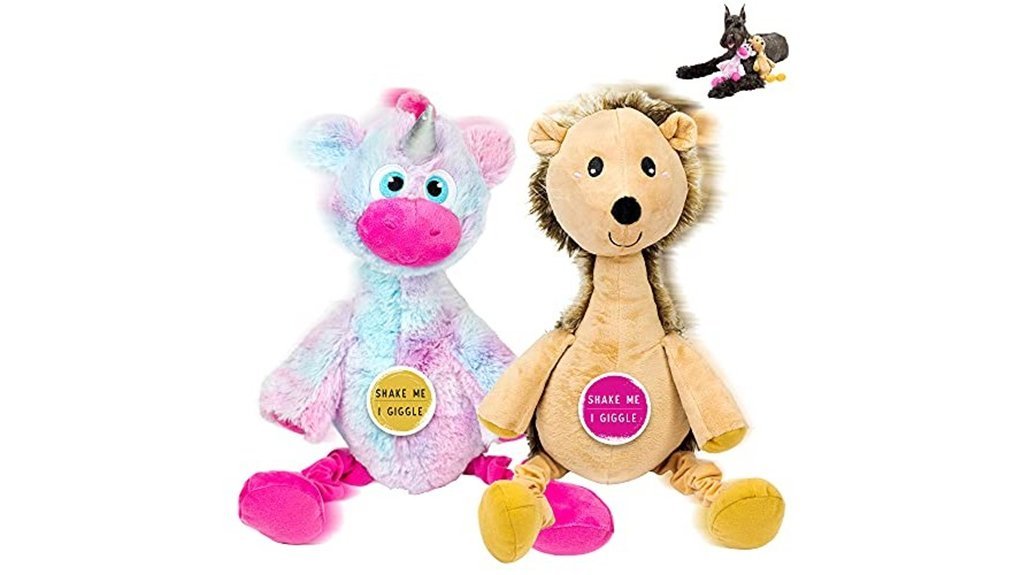
Pet Craft Supply’s Jiggle Giggle Plush Dog Toy Multipack suits medium to large dogs that enjoy gentle, playful engagement. Each 1.5-foot plush, shaped as a unicorn and hedgehog, uses a giggle stick to create a soft, amusing sound instead of a squeak. The whimsical design and wiggly extremities help sustain interest during shaking, fetching, or cuddle time. Made from ultra-soft, non-toxic materials, it fits adult and senior dogs best. Supervision is advised, especially since it is not intended for puppies or strong chewers. Its playful look also makes it photo-friendly.
Best For: Medium to large adult and senior dogs that enjoy gentle shaking, fetching, and cuddling with a soft, whimsical plush toy.
Pros:
- Giggle stick offers a fun, softer alternative to squeaky toys.
- Ultra-soft, non-toxic materials make it comfortable and dog-friendly.
- Whimsical unicorn and hedgehog design is engaging and photo-friendly.
Cons:
- Not suitable for puppies.
- Not intended for aggressive or strong chewers.
- Supervision is recommended during playtime.
Factors to Consider When Choosing Interactive Dog Toys 2026: Top Picks and Buying Guide
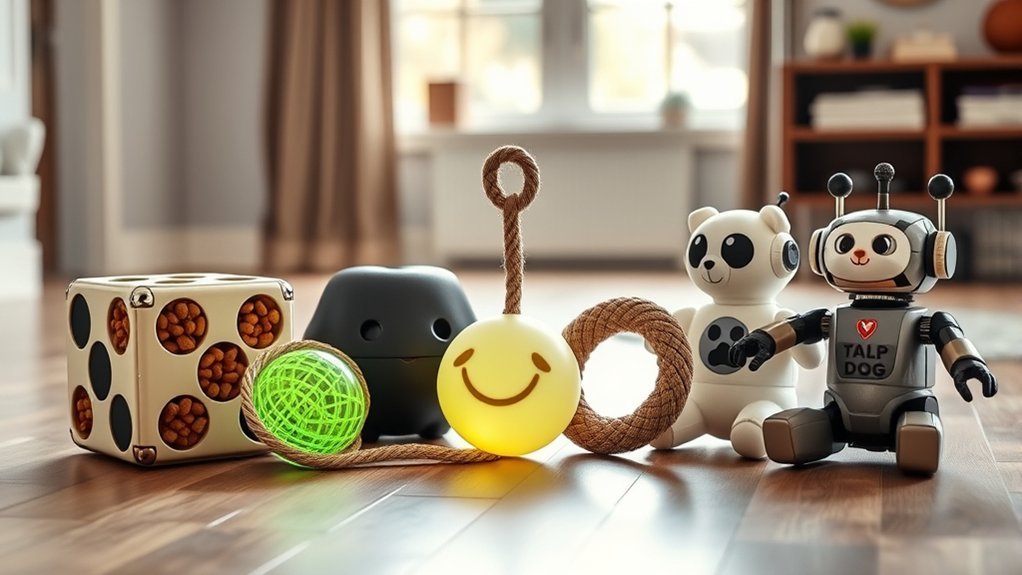
Choosing interactive dog toys in 2026 begins with a clear match between the toy and the dog’s size, skill level, and play style. Durability also matters, since stronger materials help the toy last longer and stay safer during repeated use. The best options are those that provide mental stimulation while offering enough variety to keep play engaging over time.
Dog Size Fit
Dog size is a key factor when selecting interactive toys, since the right fit supports safer play and better engagement. Toys should match a dog’s body proportions, with larger options generally better for medium and large breeds and compact designs more suitable for smaller dogs. Size also affects weight, grip, and how easily a dog can move the toy during play. For bigger dogs, durable materials are important because stronger jaws can wear down flimsy products quickly. Smaller breeds may need lighter toys that reduce strain and lower choking risk. Models with adjustable difficulty can help a toy remain useful as a dog develops. Supervision remains important, particularly when toy dimensions and chewing behavior do not align perfectly with the dog’s physical capabilities.
Skill Level Match
Skill level matters just as much as size when selecting interactive dog toys, since the best option challenges a dog without causing frustration. Simpler designs suit beginners who are learning how to nudge, lift, or slide parts to reach a reward, while more advanced puzzles demand stronger problem-solving and patience. Previous success with entry-level toys can guide the next step, helping dogs progress to more complex mechanics with multiple actions required to reveal treats. Many toys offer adjustable difficulty, which allows the challenge to increase as abilities improve. Rotating different toys also helps preserve interest, because new tasks prevent boredom and keep engagement high. Matching difficulty to experience supports steady mental stimulation and makes interactive play more rewarding over time.
Toy Durability
Durability should be a top priority when selecting interactive dog toys, especially for dogs that chew, tug, or play hard. Material choice matters, and reinforced nylon or heavy-duty fabric often lasts longer under repeated pressure than lighter alternatives. Strong seams and solid construction help prevent tearing when dogs pull or bite aggressively. Toys made for larger or more powerful breeds usually include added reinforcement to match their strength and play style. Manufacturer guidance is also useful, since labels for aggressive chewers can indicate whether a toy is built for extended use. Even durable toys need routine checks. Inspecting for fraying, splits, or loose stitching helps reduce safety risks and supports continued play before the toy fails and becomes unsafe.
Mental Stimulation
Mental engagement matters as much as physical activity when choosing interactive dog toys, because the right toy can reduce boredom and help curb destructive behavior. Toys built for mental stimulation challenge dogs to solve problems, whether by sliding blocks, lifting lids, or pulling tabs. These puzzle-like tasks can make 15 minutes of focused play feel like 30 minutes of exercise, helping maintain activity without constant motion. Such toys also support cognitive development by encouraging critical thinking and reward-seeking behavior. By tapping into natural instincts, they give dogs a productive outlet for their senses and curiosity. Regular use can improve focus and obedience, since dogs learn to work for rewards and stay engaged during play.
Play Style Variety
Play style variety shapes how well an interactive dog toy fits a dog’s habits and energy level. Puzzle toys suit dogs that enjoy problem-solving, offering mental challenge and sustained engagement. Toys with squeaky sounds or other noises can tap into hunting instincts, making play feel more rewarding and encouraging active participation. Feeding toys add another layer by slowing eating and turning mealtime into a task that supports healthier pacing. Chase and tug toys serve active dogs well, channeling prey drive into exercise while supporting owner interaction. Versatile options that work for solo play, fetch, or shared sessions broaden their appeal. Matching toy style to a dog’s preferences helps maintain interest, reduce boredom, and create more satisfying daily activity.
Safety Features
Safety features matter just as much as entertainment value when choosing an interactive dog toy, since safe play depends on non-toxic materials, sturdy construction, and the right size for the dog. Materials should be dog-friendly and free of harmful chemicals, especially when toys are likely to be mouthed for long periods. Durability also matters: a toy should match the dog’s chewing strength, because softer designs can break apart in the jaws of strong chewers and create ingestion risks. Size must fit the dog well to reduce choking hazards and prevent accidental swallowing. Supervision remains wise whenever a toy has detachable parts. Age and play style should also guide selection, since puppies and senior dogs often need different levels of resistance and challenge.
Cleaning Ease
Cleanliness is a practical priority when choosing interactive dog toys, especially for items used daily or exposed to saliva, dirt, and treats. Dishwasher-safe designs can reduce maintenance time and help keep toys sanitary with less effort. Models with removable parts offer another advantage, since components can be cleaned separately and inspected more thoroughly. Non-toxic materials that are also machine-washable support both safety and convenience for pet owners. Smooth surfaces are preferable because they limit places where dirt and bacteria can collect, making wipe-downs faster and more effective. Toys with fewer crevices generally stay cleaner between washes. Regular inspection and cleaning remain important, as consistent care helps guarantee the toy stays safe, hygienic, and ready for reliable playtime.
Treat Capacity
Treat capacity acts as a quiet driver of engagement in interactive dog toys, since larger treat reservoirs can keep dogs occupied longer and support more sustained mental stimulation. Toys are commonly built to hold a set amount of kibble or treats, and models that accommodate up to one cup often extend play sessions noticeably. This capacity can also affect feeding routines, because bigger chambers may function as slow feeders for dogs that eat too quickly. The best choice depends on the dog’s size, appetite, and chewing style, since too much capacity may encourage overconsumption while too little can frustrate. Adjustable treat compartments add flexibility, allowing the difficulty to increase over time and keeping the challenge suitable for different skill levels.
Frequently Asked Questions
How Do I Introduce a New Interactive Toy to a Nervous Dog?
Introduce it slowly, letting the dog see and smell it first. Leave it nearby, reward calm curiosity, and start with brief, easy interactions. The toy should remain optional, never forced, to build trust gradually.
Which Interactive Toys Are Safest for Aggressive Chewers?
Safest options for aggressive chewers are heavy-duty rubber toys, reinforced nylon chew puzzles, and solid treat-dispensing balls. A detached observer would note that oversized, one-piece designs with no small parts reduce choking and breakage risks.
How Often Should I Replace Worn Interactive Dog Toys?
Interactive dog toys should be replaced as soon as wear appears, as soon as seams loosen, as soon as pieces detach; safety, durability, and supervision dictate the timing. Aggressive chewers may need frequent replacement.
Can Interactive Toys Help Reduce Separation Anxiety?
Yes, interactive toys can help reduce separation anxiety by keeping a dog occupied and mentally engaged, but they are not a complete treatment. Consistent training, gradual departures, and veterinary guidance often remain necessary.
Are Interactive Dog Toys Suitable for Puppies Under Six Months?
Yes, but cautiously: interactive dog toys can suit puppies under six months if soft, simple, and supervised. The real issue emerges later—chewing strength, swallowed parts, and frustration can quickly turn harmless play into trouble.
Conclusion
In the end, the best interactive dog toys do more than entertain—they quietly challenge, reward, and keep a dog’s mind busy in ways that can shape daily behavior. From puzzle toys to motion-based play, each pick offers something different, but one choice may stand out as the real game-changer for 2026. Which toy will keep tails wagging longest, and which will unexpectedly become the household favorite? The answer may surprise even seasoned dog owners.