Affiliate disclosure: As an Amazon Associate I earn from qualifying purchases. This article contains affiliate links to Amazon, so we may earn a commission if you buy through them, at no extra cost to you.
The four best home gyms for 2026 are the BowFlex PR1000 Home Gym, Marcy Smith Cage Home Gym Workout Bench, Body-Solid Multi-Station Home Gym Machine (F500/2), and Marcy 200 lbs. Stack Home Gym (MKM-81010). Each offers solid resistance, useful exercise variety, and durable construction for different spaces and training goals. Compact designs and adjustable features make them practical choices for many users. More details on their strengths and fit can help narrow the right option.
BowFlex PR1000 Home Gym
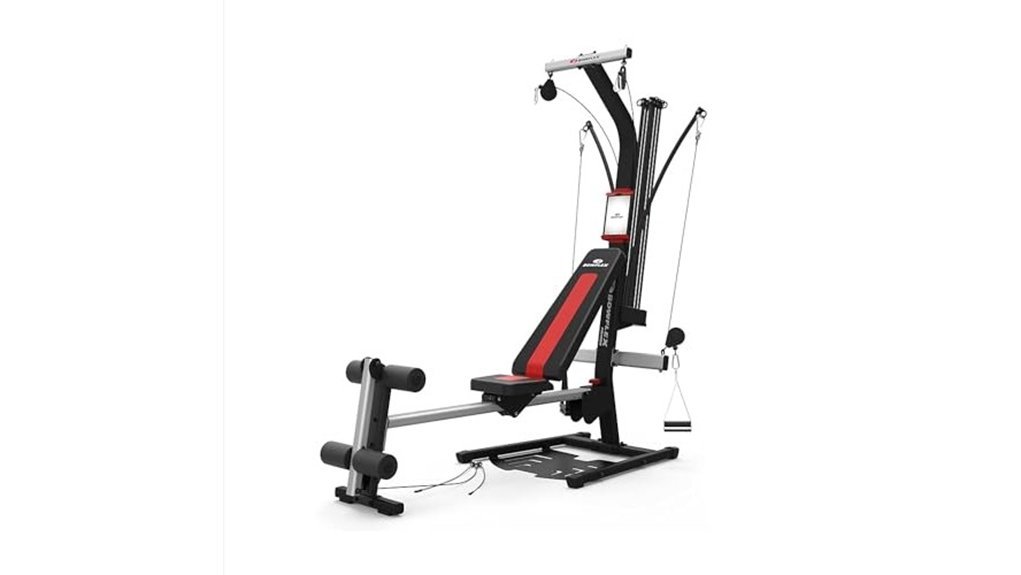
The BowFlex PR1000 Home Gym is a strong fit for users who want a compact, versatile setup for full-body training at home. It supports more than 25 exercises, covering major muscle groups with over 200 lb. of Power Rod resistance. Multiple cable pulley positions broaden movement angles and improve exercise variety. The vertical bench press adjusts between incline and flat settings, then converts into a rolling seat for aerobic rowing. An integrated device holder adds convenience during sessions. Built by Johnson Health Tech Trading, this black, one-size model balances practicality and workout range in a space-efficient design.
Best For: Home users looking for a compact, versatile strength-training machine that supports full-body workouts and a range of exercise options.
Pros:
- Offers 25+ exercises for comprehensive full-body training
- Provides over 200 lb. of Power Rod resistance for varied workouts
- Includes multiple pulley positions and a convertible bench for added versatility
Cons:
- May not be ideal for users wanting very heavy commercial-gym-level resistance
- Takes up more room than simple free-weight or compact resistance-band setups
- Assembly and setup may be more involved than basic home fitness equipment
Marcy Smith Cage Home Gym Workout Bench
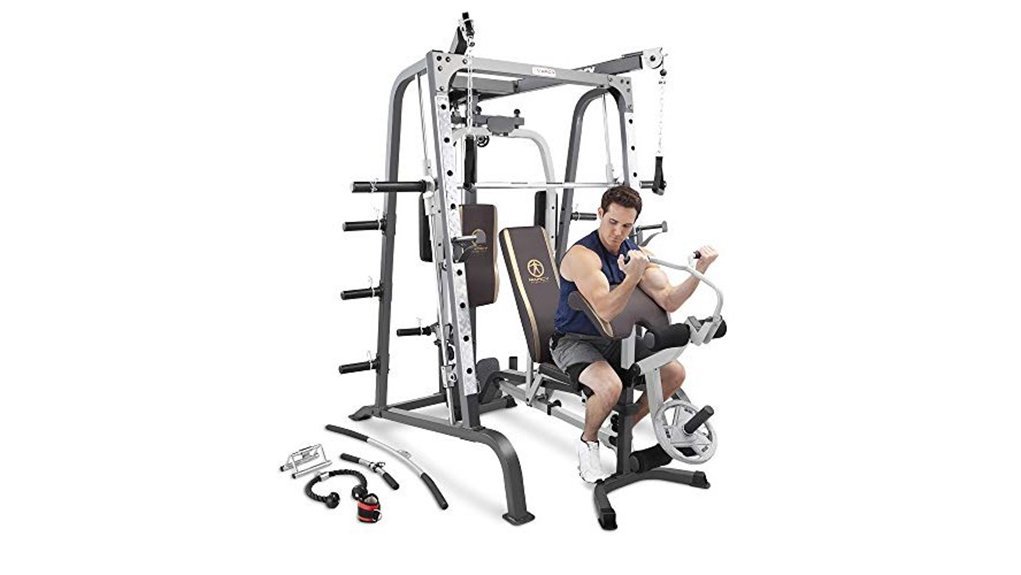
Built for compact strength training, the Marcy Smith Cage Workout Machine suits home lifters with limited space. The MD-9010G uses a heavy-duty steel frame for durability and includes safety catches and adjustable positions for added stability. Measuring 70 inches long, 79 inches wide, and 85 inches tall, it fits small indoor or outdoor areas better than larger commercial setups. This all-in-one system supports squats, bench presses, and other weight training movements. With weight plate storage, adjustable components, and a 300-pound user limit, it serves beginners through advanced users seeking a versatile bench-based home gym.
Best For: Home lifters with limited space who want a versatile all-in-one strength training setup for squats, bench presses, and other exercises.
Pros:
- Compact footprint makes it a good fit for small indoor or outdoor spaces.
- Heavy-duty steel frame with safety catches and adjustable positions adds stability and durability.
- Includes weight plate storage and adjustable components for personalized workouts.
Cons:
- 300-pound user limit may not suit heavier lifters or more advanced strength goals.
- Large for a home machine, so it still requires a dedicated amount of floor space.
- Assembly and setup can be more involved than simpler workout benches.
Body-Solid Multi-Station Home Gym Machine (F500/2)
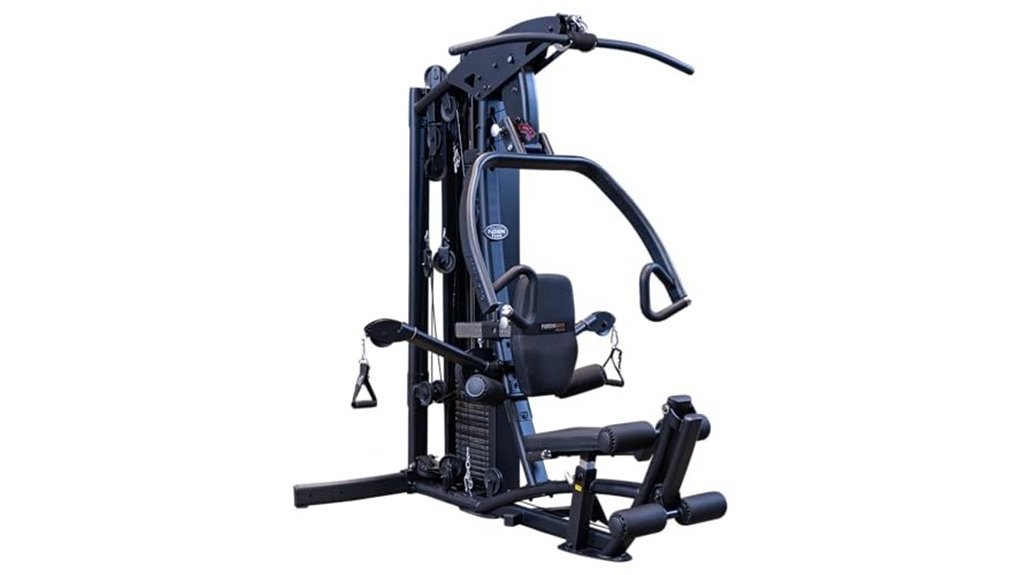
Body-Solid’s F500/2 suits serious home users who want a compact, full-body training station. It combines five workout areas, including multi-press, lat pulldown, chest press, incline and decline press, leg extension, bicep curl, tricep extension, and shoulder press. The 210-pound weight stack and nylon bushings support smooth, quiet reps. Built from 11-gauge oval tubing, sealed bearings, and reinforced plates, it measures 83 by 48 by 76 inches and weighs 526 pounds. With more than 60 exercise options and a lifetime warranty on key parts, it delivers durable versatility.
Best For: Serious home fitness users who want a compact, durable, full-body multi-station gym with a wide range of exercise options.
Pros:
- Offers 60+ exercises across five workout stations for versatile full-body training.
- Heavy-duty construction with 11-gauge oval tubing, sealed bearings, and reinforced plates for durability.
- 210 lb weight stack with nylon bushings provides smooth, quiet operation.
Cons:
- Large and heavy footprint may be difficult to move or fit in smaller spaces.
- Lower resistance ceiling may not suit advanced lifters looking for heavier loads.
- Assembly and setup are likely time-consuming due to the machine’s size and complexity.
Marcy 200 lbs. Stack Home Gym (MKM-81010)
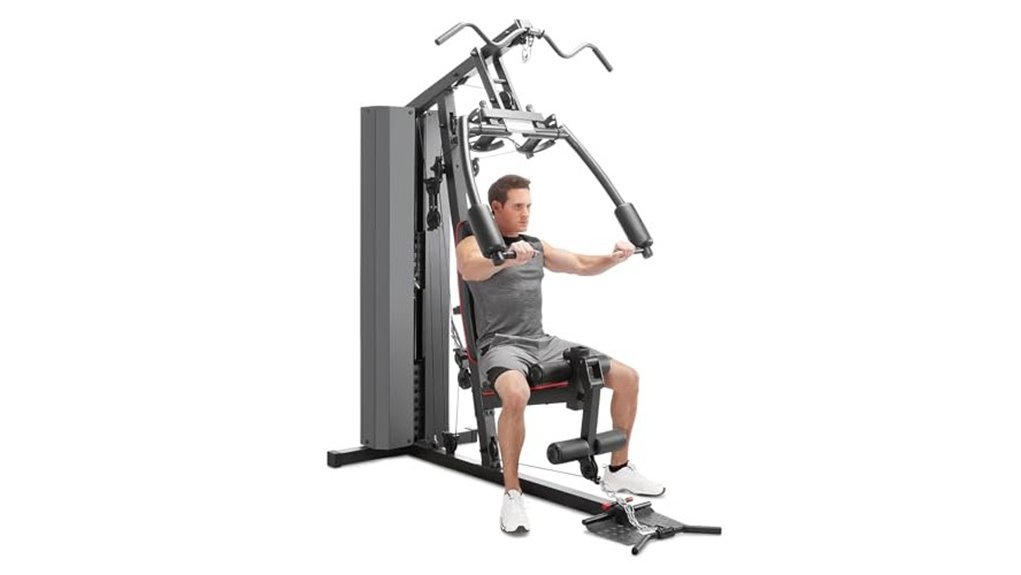
Marcy’s MKM-81010 suits lifters who want a compact, all-in-one strength station. Its 200-pound selectorized stack provides smooth resistance for steady progression, making it suitable for full-body training at home. Dual-function press arms support chest press, butterfly, and rowing movements, while the high and low pulley system expands options for lat pulldowns, triceps pushdowns, curls, and core work. An integrated leg developer with padded rollers targets quads, hamstrings, and glutes. Heavy-duty steel construction, ergonomic padding, and an adjustable preacher curl pad add stability, comfort, and durability overall.
Best For: Home exercisers who want a compact, all-in-one strength machine for full-body workouts with progressive resistance.
Pros:
- 200 lb selectorized weight stack offers smooth, convenient resistance progression
- Dual-function press arms and high/low pulleys support a wide variety of exercises
- Durable steel frame with padded support and an adjustable preacher curl pad
Cons:
- 200 lb stack may feel limiting for advanced lifters over time
- Takes up more space than simpler home workout setups
- Fixed-machine design offers less freedom than free weights
Factors to Consider When Choosing Home Gyms 2026: Top Picks and Buying Guide
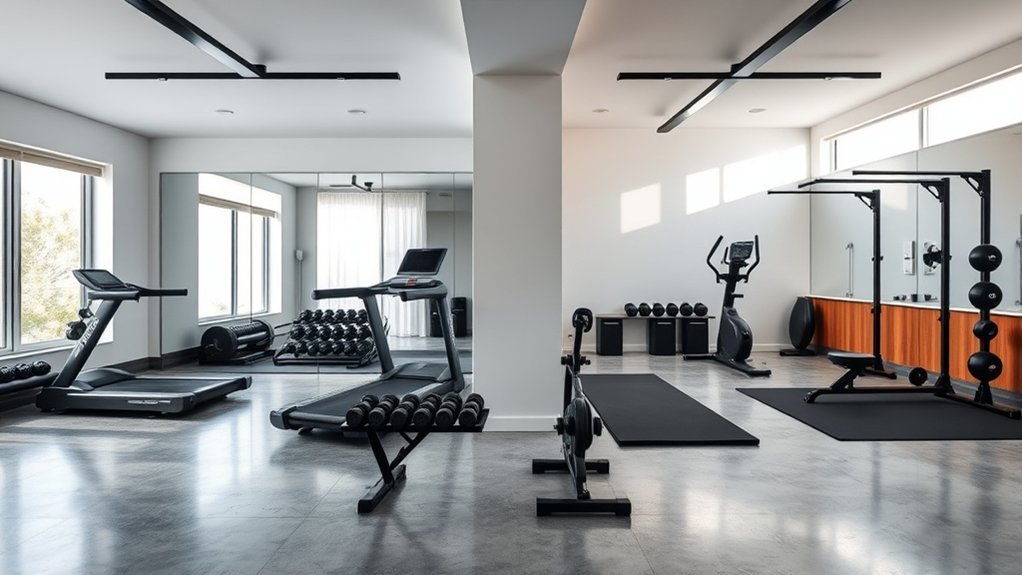
Selecting a home gym begins with practical limits such as available space, resistance type, exercise variety, weight capacity, and frame durability. Compact designs suit smaller rooms, while larger systems may offer broader training options and heavier load support. A strong frame and dependable resistance mechanism help guarantee long-term performance and safety.
Space Requirements
Space is one of the first practical considerations when choosing a home gym, since models can range from compact units that fit in about 70 inches by 48 inches to larger systems that require more floor area and up to 85 inches of height. Buyers should measure the intended location carefully, including ceiling height, wall clearance, and room for entry and exit. The equipment footprint should allow safe movement during exercises, not just storage of the machine itself. Compact designs can suit smaller indoor areas or covered outdoor setups without losing usefulness. Adjustable components may also help a unit fit a specific layout more efficiently. For movements that demand a full range of motion, such as squats or overhead presses, extra clearance around the frame is especially important.
Resistance Type
Resistance type is one of the most important factors in a home gym’s performance, because it shapes how the machine feels, how smoothly it operates, and how easily workouts can progress over time. Free weights, resistance bands, and weight stacks each affect strength training differently. Power Rod systems provide smooth, consistent resistance that feels natural and is generally gentler on joints, which appeals to users who want a more traditional lifting experience without loose plates. Selectorized weight stacks suit those who value fast adjustments and clear progression, since resistance can be increased in small steps. Resistance bands add portability and variable tension through the movement. The best choice depends on whether the user prioritizes familiar weight feel, convenience, safety, or simple progression.
Exercise Variety
Exercise variety is a key measure of how well a home gym can support long-term progress, since the best systems offer more than 25 distinct movements to train the full body effectively. A versatile design should cover pressing, pulling, leg work, and core training without forcing constant equipment changes. Multi-functional stations can add bench presses, lat pulldowns, leg extensions, and similar movements, helping one machine serve many roles. Cable pulley systems further expand options by supplying resistance from multiple angles, which improves muscle engagement and exercise selection. Selectorized weight stacks also support a broad range of users by allowing simple resistance adjustments. Features such as dual-function press arms and integrated leg developers make shifts between upper- and lower-body work smoother and more efficient.
Weight Capacity
Weight capacity is a critical factor because a home gym must safely support the user’s body weight plus any added load during training. Most models support users between 250 and 300 pounds, so the listed limit should meet or exceed the heaviest intended user. If the system uses a selectorized stack, its stack capacity deserves equal attention because it determines the maximum resistance available for strength work. A higher rating often suggests a more secure setup during demanding sessions and can help reduce the chance of equipment failure. Manufacturer specifications should be checked carefully for both user limits and stack limits before purchase. Matching these figures to current and future training needs helps guarantee safer, more effective workouts and avoids choosing a machine that feels underpowered too soon.
Frame Durability
Frame durability is a key measure of how well a home gym will hold up under repeated use and impact. A sturdy frame helps equipment resist bending, shaking, and wear during demanding workouts. Heavy-duty steel construction is often the best sign of long-term strength, since steel handles stress better than lighter materials. Steel gauge also matters; thicker gauges, usually shown in millimeters, generally provide greater resilience and stability. Buyers should also examine the warranty, because coverage for the frame and related components can signal manufacturer confidence in durability. Proper assembly is equally important, as loose connections can weaken performance. Routine maintenance, including tightening hardware and checking for wear, helps preserve stability and extend the life of the machine.
Adjustment Options
A well-designed home gym should offer enough adjustment to fit different users and training styles. Seat height, backrest angle, and similar settings help match different body types, improving alignment and comfort during lifts. Multiple pulley positions add variety by changing resistance angles and movement patterns, which broadens exercise options without requiring extra equipment. Adjustable weight stacks or resistance levels are equally important, since they let users increase intensity gradually as strength improves. Quick, intuitive changes to arm positions, leg developers, and other moving parts support smoother shifts between exercises. Ergonomic padding and supports should also be considered, because they can reduce strain and improve stability throughout a session. Overall, flexible adjustment features make a home gym more adaptable, comfortable, and effective for long-term training.
Storage Features
Beyond adjustability, storage features play a major role in how well a home gym fits into everyday use. Models with built-in storage for weights and accessories help optimize space and keep equipment organized. In smaller living areas, compact designs are especially valuable because they use available room efficiently without reducing workout capability. Adjustable components that can be stored away when not needed further improve space management and make the setup easier to maintain. Weight plate storage is another useful detail, since it keeps items accessible while preventing clutter. Integrated storage also supports safety by reducing obstacles around the training area. For buyers comparing home gyms, these practical features often determine whether a machine feels convenient, orderly, and suitable for long-term use.
Warranty Coverage
Warranty coverage is a key indicator of both product protection and manufacturer confidence when comparing home gyms. Coverage terms vary widely across brands, and some systems include lifetime protection for frames, pulleys, and bearings, which can strengthen long-term value. A longer warranty often suggests that the manufacturer expects solid durability and reliable performance. Buyers should review the fine print carefully, since protection may differ by part and usually excludes normal wear and tear. Additional coverage for items such as weight stacks or cables can also improve the overall package. Beyond the written terms, the manufacturer’s service reputation matters; responsive support and efficient claims handling can make ownership far smoother and reduce frustration over time.
Frequently Asked Questions
How Much Ceiling Height Do I Need for a Home Gym?
A home gym usually needs at least 7 feet of ceiling height, though 8 to 9 feet is better for overhead presses, pull-ups, and equipment clearance. Taller users or Olympic lifts may require more space.
Can Home Gyms Be Assembled by One Person Safely?
Like a solo climber on a steep wall, one person can assemble some home gyms safely, but large, heavy, or complex systems usually require a second pair of hands, proper tools, and careful instructions.
What Flooring Is Best Under a Home Gym Machine?
Rubber flooring, preferably dense interlocking tiles or a thick mat, is best under a home gym machine because it absorbs impact, reduces vibration, protects subfloors, and helps stabilize heavy equipment during use.
How Often Should Home Gym Cables Be Replaced?
About 80% of cable failures show visible fraying before snapping; home gym cables should be inspected monthly and replaced every 1–3 years, sooner with heavy use, corrosion, or any damage.
Are Home Gyms Suitable for Apartment Use?
Yes, many home gyms suit apartment use if chosen carefully. Compact, quiet, and foldable designs help limit noise and space issues, though weight, floor protection, and building rules should still be considered.
Conclusion
In the end, the right home gym can feel like a quiet corner of strength waiting to be used. The BowFlex PR1000, Marcy Smith Cage, Body-Solid F500/2, and Marcy 200 lb. Stack each offer a different path to progress, much like four doors opening into the same room of possibility. With space, goals, and budget in mind, a well-chosen machine can turn a spare room into a steady place of motion, discipline, and growth.