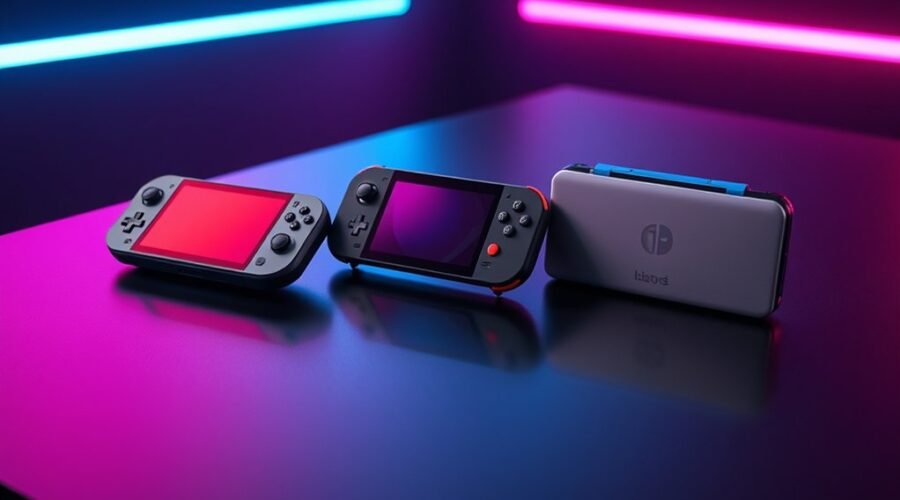
The three best gaming handhelds for 2026 are the Nintendo Switch Lite in Turquoise, the Retroid Pocket 2S Retro Handheld Console, and the SABRENT Rocket 2230 1TB NVMe SSD for compatible devices. The Switch Lite offers a simple, portable Nintendo experience. The Retroid Pocket 2S stands out for Android versatility and retro gaming. The SABRENT drive boosts storage and speed for handhelds. Each option fits different needs, and the details ahead show why.
Nintendo Switch Lite – Turquoise
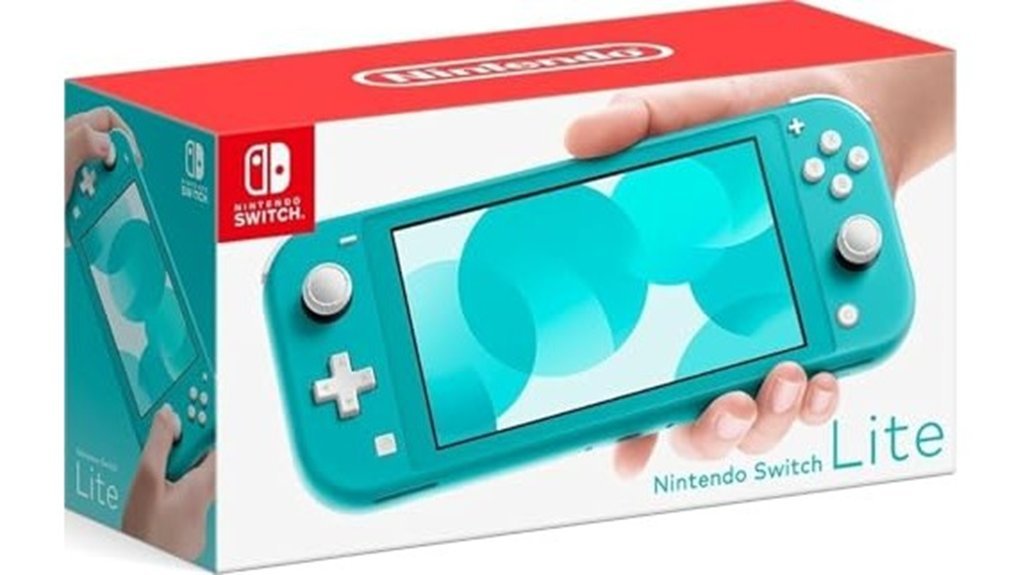
The Nintendo Switch Lite – Turquoise is a strong choice for players who want a compact, lightweight handheld focused on portable gaming. Nintendo’s turquoise model, HDHSBAZAA, keeps the design simple and portable, making it easy to carry and use on the go. As a dedicated video game system, it fits players seeking a streamlined handheld rather than a docked console. The device supports online and local wireless multiplayer, adding flexibility for social play. With Mario and friends at its core, it delivers a familiar Nintendo experience in a colorful, travel-friendly form.
Best For: Players who want a compact, lightweight handheld console for portable gaming, especially fans of Nintendo titles and on-the-go multiplayer.
Pros:
- Lightweight, portable design makes it easy to carry and play anywhere
- Supports online and local wireless multiplayer for flexible social gaming
- Familiar Nintendo experience with Mario and friends, in a fun turquoise color
Cons:
- Handheld-only design may not suit players who want docked TV play
- Smaller form factor can be less comfortable for extended sessions
- Limited to the features of the Switch Lite rather than the full Nintendo Switch model
Retroid Pocket 2S Retro Handheld Console (Indigo, 4+128GB)
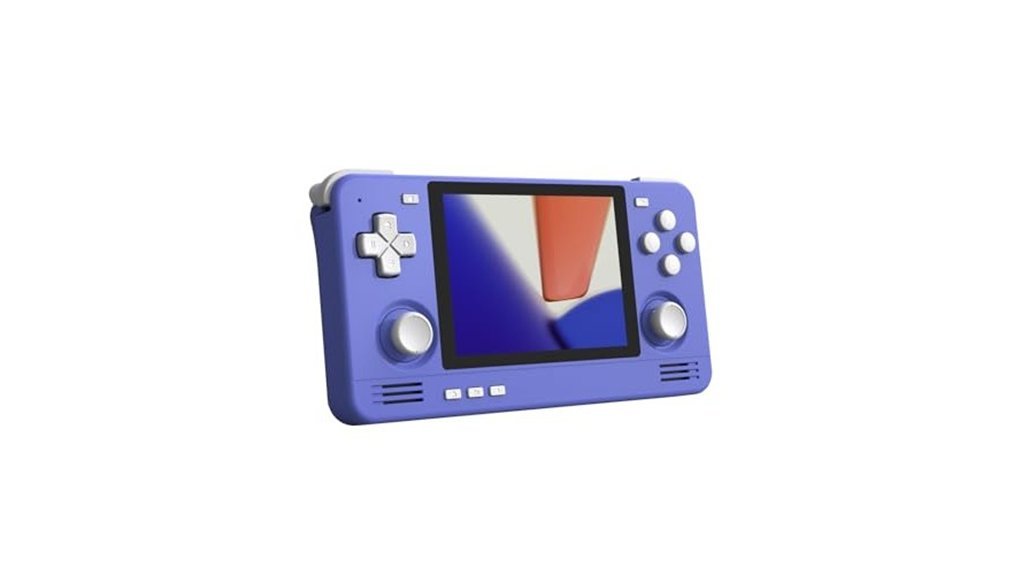
For retro gamers craving pocketable Android versatility, the Retroid Pocket 2S stands out immediately. The Indigo model pairs Android 11 and Google Play access with 4GB RAM, 128GB storage, and a 3.5-inch 640×480 4:3 touch display tuned for classic systems. Its UNISOC T610 chip and Mali G52MC2 GPU handle numerous emulators well, while the 4000mAh battery supports long sessions. Ergonomic controls, hall effect sticks, Wi-Fi, Bluetooth 5.0, and micro HDMI add flexibility. Frequent OTA updates and multiple color options strengthen its appeal.
Best For: Retro gamers who want a pocketable Android handheld with strong emulation support, responsive controls, and a classic 4:3 display for old-school titles.
Pros:
- Android 11 with Google Play access makes it versatile beyond gaming.
- 3.5-inch 640×480 4:3 screen is ideal for retro emulation.
- Hall effect sticks, Wi‑Fi, Bluetooth 5.0, and micro HDMI add great flexibility.
Cons:
- 3.5-inch screen may feel small for some users.
- Not designed for demanding modern Android games or high-end emulation.
- Micro HDMI output is limited to 480p, which is modest by current standards.
SABRENT Rocket 2230 1TB NVMe SSD (SB-2130-1TB)
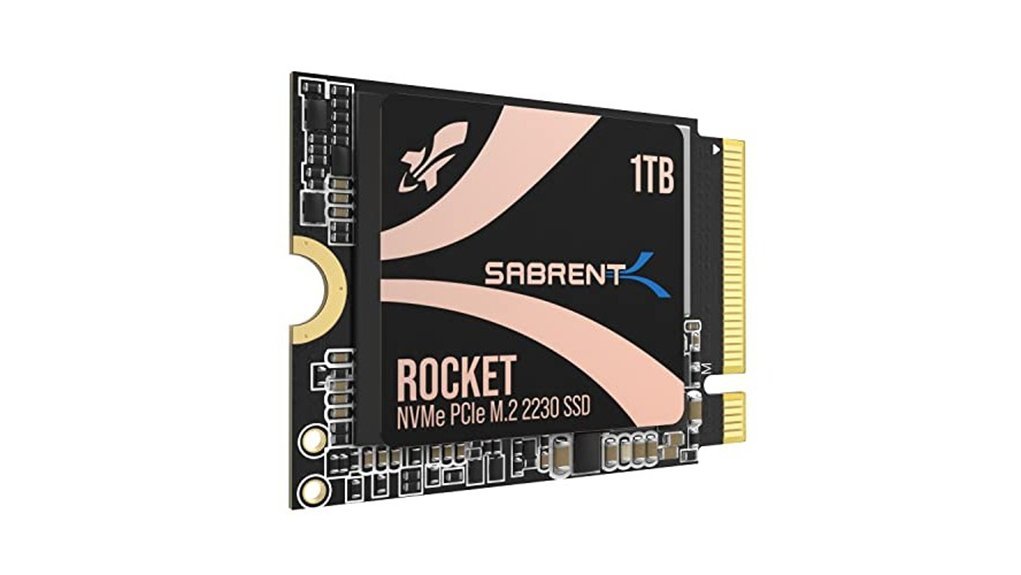
SABRENT’s Rocket 2230 1TB suits handheld owners needing fast, efficient storage expansion. Built in the M.2 2230 format, it fits devices such as the Steam Deck, Surface Pro 8/9, and ROG Ally, though not PS5 or 2280 slots. Its Gen4 controller delivers up to 5,000 MB/s read and 4,300 MB/s write, with 800K IOPS for quick launches and boots. A DRAM-less design with Host Memory Buffer helps reduce power draw and heat. 3D TLC NAND supports durability, while included Acronis True Image and warranty backing simplify upgrades.
Best For: Handheld and compact-device users who need a fast, power-efficient 1TB NVMe upgrade for M.2 2230 slots like the Steam Deck, Surface Pro 8/9, or ROG Ally.
Pros:
- Up to 5,000 MB/s read and 4,300 MB/s write speeds for quick game loads and boot times
- DRAM-less design with Host Memory Buffer helps lower power use and heat
- Includes Acronis True Image software plus warranty support for easier migration and peace of mind
Cons:
- Only fits M.2 2230 devices, so it won’t work in standard 2280 slots
- Not compatible with PS5
- 1TB capacity may be limiting for users with very large game libraries
Factors to Consider When Choosing Go Beyond the Nintendo Switch With Our Favorite Gaming Handhelds
Choosing a gaming handheld beyond the Nintendo Switch starts with game library compatibility, since not every device supports the same titles or storefronts. Performance and emulation, display and controls, battery life, and storage expansion options also shape how well the system fits different play styles. A balanced review of these factors helps narrow the field to the most capable handhelds for 2026.
Game Library Compatibility
Game library compatibility is one of the most important factors in a handheld’s appeal, since the best device is only as good as the games it can actually run. Buyers should examine how broad a device’s supported library is, especially if they want access to classic titles through emulators. Models such as the Retroid Pocket 2S illustrate how multiple emulator options can open a large retro catalog beyond mainstream console offerings. The operating system also matters: Android-based handhelds can tap into the Google Play Store, bringing modern games and useful apps into reach. Multiplayer support is another variable, with some systems offering local and online play. Just as important, the handheld must support the specific game formats the user cares about most.
Performance And Emulation
Raw horsepower is the foundation of a capable gaming handheld, with stronger CPU and GPU performance translating into smoother gameplay, quicker load times, and better overall responsiveness. Higher clock speeds and more cores help modern games run more consistently, while also improving the speed of menus, installs, and background tasks. Emulation depends on the same strengths: classic systems and more demanding retro platforms perform best when processing power and memory are ample. A handheld with at least 4GB of RAM is better suited to running several emulators without slowdown. Storage also matters, and 128GB or more gives room for large libraries of games and applications. Efficient battery design and thermal management preserve performance during long sessions, reducing throttling and overheating.
Display And Controls
Beyond processing power, display quality and control layout strongly shape how a handheld feels in daily use. The Retroid Pocket 2S uses a 3.5-inch touchscreen with a 4:3 aspect ratio and 640×480 resolution, a compact format that suits retro games well while keeping visuals sharp enough for classic libraries. Its ergonomic D-pad and dual 3D hall effect sticks provide accurate input, and the customizable button layout helps tailor the device to different play styles. The Nintendo Switch Lite takes a different approach, emphasizing a lightweight, compact body that is easy to hold for long sessions. Both systems prioritize comfort, but one leans toward precise, emulator-friendly controls, while the other favors straightforward, approachable handheld play.
Battery Life Matters
Battery life is one of the most important factors in a handheld, especially for players who want long sessions without constant charging. In practice, it determines how long a device can stay useful away from an outlet, whether during travel, commutes, or extended play at home. Many models include sizable 4000mAh batteries or similar capacities to support longer gaming sessions. Efficient battery management helps preserve power by tuning performance to the task at hand. That balance matters because high-resolution screens and fast processors can drain energy quickly. Some devices improve efficiency through DRAM-less designs, which reduce power use and heat. Strong battery life keeps gameplay consistent and prevents interruptions that can cut a session short.
Storage Expansion Options
Storage expansion can make a handheld far more practical, especially when modern games quickly consume limited built-in space. Internal capacity varies widely, so a model with 128GB eMMC may suit a modest library, while larger collections benefit from more. Expandable options such as microSD or M.2 slots add flexibility for games, updates, screenshots, and video. Storage speed also matters: faster drives, including those reaching 5000 MB/s read, can shorten load times and improve responsiveness. Compatibility deserves close attention, since some handhelds accept only specific formats, narrowing upgrade paths. Durability is equally important, and storage built on 3D TLC NAND can improve longevity under frequent writing and heavy use. Together, these factors determine whether a handheld remains useful as game sizes grow.
Portability And Ergonomics
A good gaming handheld should feel easy to carry and comfortable to use, not just powerful on paper. Compact, lightweight builds matter because they slip into bags or even pockets more easily during travel. Ergonomic controls are equally important, since well-shaped buttons, sticks, and grips help reduce strain during long sessions. Some devices add touch screens, which can make navigation and menu use more intuitive. Battery life also affects portability; capacities around 4000mAh or higher support longer play without constant charging. A handheld’s look can matter too. Multiple color options and customizable finishes give users a more personal device, which can increase satisfaction on the move. In practice, portability and comfort determine whether a handheld feels practical every day.
Frequently Asked Questions
Which Handheld Offers the Best Battery Life for Long Travel Sessions?
The Steam Deck OLED generally offers the best battery life for long travel sessions, thanks to its efficient hardware and larger battery. Devices with lower-power chips or smaller screens may also last longer, depending on settings.
Can These Handhelds Stream Games From a PC Seamlessly?
Yes, many can stream PC games smoothly if the Wi-Fi is strong and latency is low. Performance depends on the handheld’s display, controls, and network stability, so seamless play is possible but not guaranteed.
Which Device Has the Most Comfortable Controls for Large Hands?
The Steam Deck OLED likely offers the most comfortable controls for large hands, thanks to its wider grips and well-spaced buttons. The ASUS ROG Ally is smaller, making it less accommodating for bigger hands.
Are Any of These Handhelds Suitable for Cloud Gaming Services?
Yes—ironic, given their tiny screens and dubious batteries, several handhelds suit cloud gaming nicely. Devices with strong Wi‑Fi, low-latency controls, and bright displays can stream Xbox Cloud Gaming or GeForce Now effectively, especially indoors.
Which Handheld Supports the Widest Range of Emulators?
The widest emulator support typically comes from Windows-based handhelds, since they run nearly any emulator and many front ends. Android handhelds follow closely, while closed systems usually support fewer platforms and configurations overall.
Conclusion
In the end, the best handheld often seems to arrive just when it is needed. The Nintendo Switch Lite offers familiar ease, the Retroid Pocket 2S invites retro adventures, and the SABRENT Rocket 2230 brings rare storage power in a tiny form. By coincidence, each fits a different kind of player, yet all point toward the same thing: portable gaming keeps evolving, and the right choice is usually the one that matches the moment.