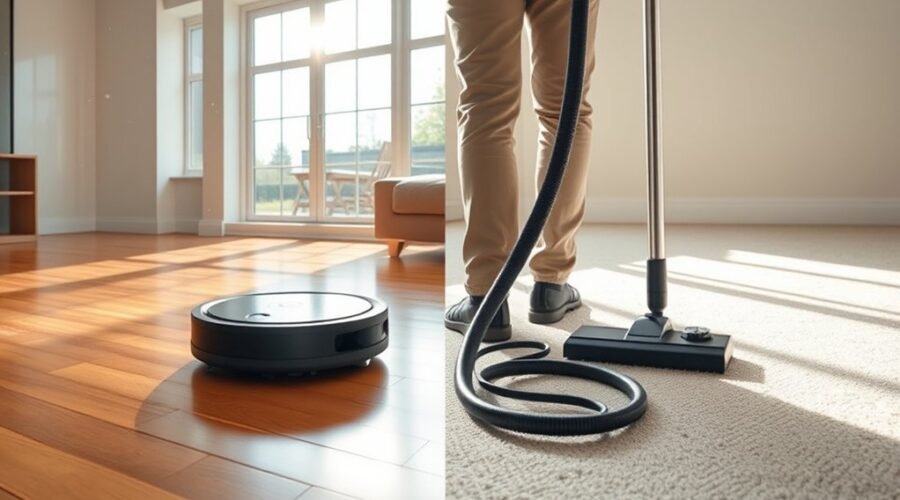
Choosing between a robot vacuum and a traditional vacuum is about more than suction power. The robot vacuum vs traditional vacuum debate comes down to cleaning performance, convenience, floor types, and maintenance. Both can keep your home clean, but they handle different jobs better.
Quick Answer
A robot vacuum is better for automated daily cleaning, especially on hard floors and low-pile carpets. A traditional vacuum is better for deep cleaning, thick carpets, stairs, upholstery, and larger messes. If you want one machine for every cleaning task, choose a traditional vacuum. For easier daily floor maintenance, a robot vacuum offers greater convenience.
Key Takeaways
- Higher advertised suction numbers do not always mean better cleaning. Brush design, airflow, and floor coverage also matter.
- Robot vacuums work best when floors are relatively clear of cords, toys, and other small obstacles.
- Traditional vacuums offer more control over stubborn dirt, furniture, corners, and above-floor surfaces.
- Self-emptying robot docks reduce daily work but can add maintenance and replacement costs.
- Keeping both types can reduce manual floor cleaning without giving up deep-cleaning ability.
What Is a Robot Vacuum?
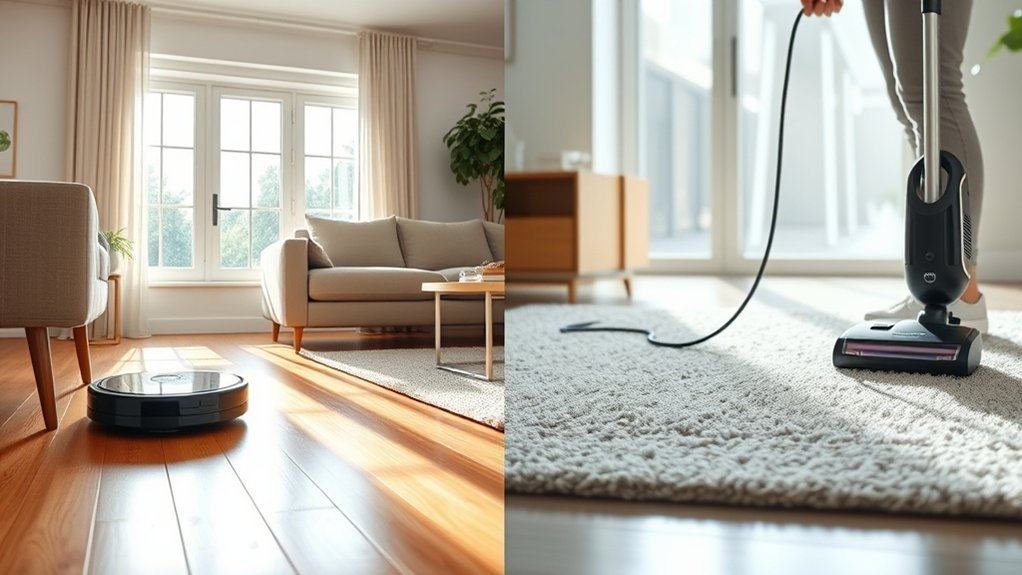
A robot vacuum is a self-moving cleaning device that collects dust, crumbs, and debris without constant manual control. It uses sensors and navigation technology to move around furniture and clean accessible floor areas.
Most robot vacuums have a low-profile body, rotating brushes, a suction motor, a dustbin, and a rechargeable battery. Many return to a docking station when cleaning finishes or the battery runs low.
Robot vacuum suction is commonly advertised in pascals (Pa), which measure pressure. The original comparison used 2,000 to 8,000 Pa, but that is not an upper limit for modern models. For example, official robot vacuum specifications include models advertised at up to 36,000 Pa.
However, a higher pressure rating does not guarantee better dirt pickup. Brush design, airflow, navigation, and the surface being cleaned also affect performance.
Many robot vacuums connect to smartphone apps. Depending on the model, you can schedule cleaning, select rooms, adjust suction, and create areas the robot should avoid.
Some models also include automatic dustbin emptying or mopping. These features reduce routine work, although you still need to maintain the machine.
Best use: A robot vacuum suits daily floor care in homes with hard flooring, low-pile rugs, and reasonably open layouts. It is especially useful if you want cleaner floors without manually vacuuming every day.
What Is a Traditional Vacuum Cleaner?
A traditional vacuum cleaner is a manually operated appliance that removes dirt through suction and, on many models, a rotating brush. You guide it across floors or use attachments to clean specific areas.
Traditional vacuums are generally more versatile because they can reach carpets, stairs, upholstery, corners, and other surfaces. Full-sized upright and canister models are particularly useful for deep cleaning.
Unlike a robot vacuum, a conventional cleaner allows you to focus immediately on a dirty area. You can adjust your cleaning method, move furniture, and repeat passes where needed.
Vacuum Cleaner Types
Traditional vacuum cleaners come in several designs. Each offers a different balance of cleaning power, mobility, and convenience.
- Upright vacuums: Often well suited to carpeted rooms and larger floor areas. Many include rotating brush rolls that help loosen embedded dirt.
- Canister vacuums: Use a separate body, hose, and cleaning head. They offer flexibility for stairs, upholstery, and mixed flooring.
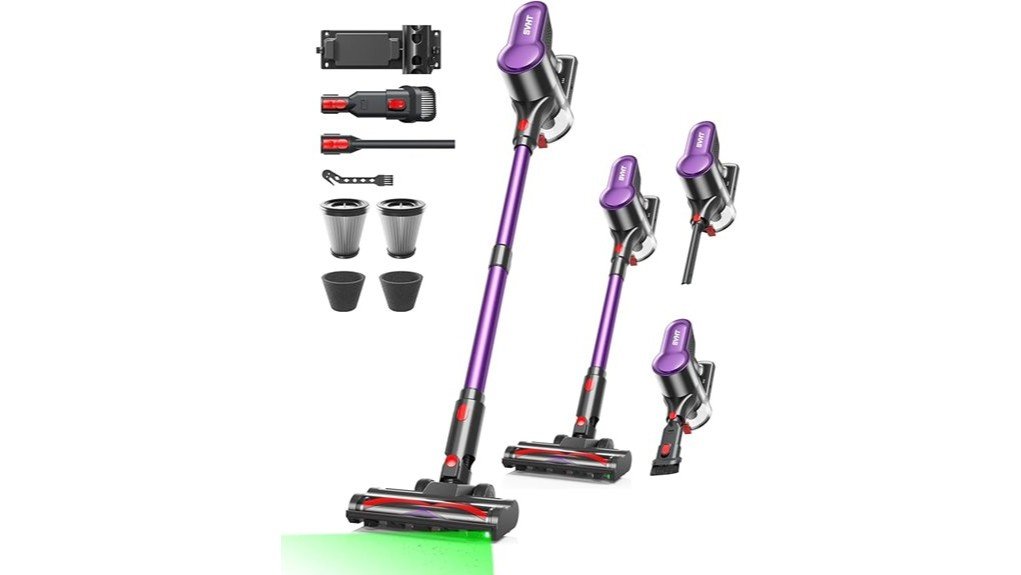
- Stick vacuums: Usually lightweight and easy to store. Cordless versions are convenient for quick cleaning, although battery life and dustbin capacity vary.
- Handheld vacuums: Designed for small messes, furniture, car interiors, and tight spaces rather than full-room floor cleaning.
A full-sized vacuum is generally a stronger choice for intensive carpet cleaning. A lightweight cordless or handheld model may be better when portability is your main concern.
Manual Cleaning Basics
Manual cleaning gives you direct control over where and how you vacuum. You can make several passes over heavy dirt, clean along baseboards, or use attachments for difficult spaces.
Useful cleaning features include:
- Motorized brush rolls: Agitate carpet fibers and help remove embedded dirt and pet hair.
- Adjustable suction: Helps you clean different surfaces without pulling lightweight rugs into the cleaning head.
- Crevice and upholstery tools: Reach corners, furniture, stairs, and narrow gaps.
- Filtration systems: Capture dust from the airflow. A sealed filtration system can help reduce the release of collected particles.
Corded models can run continuously while connected to power. Cordless models offer greater mobility but require battery charging.
Regular maintenance involves emptying the dust container or replacing bags, cleaning filters, removing tangled hair, and checking for blockages.
Robot Vacuum vs Traditional Vacuum: Cleaning Power
Traditional vacuums generally perform better at deep cleaning, while robot vacuums excel at frequent maintenance cleaning. The difference becomes most noticeable on thick carpet, stairs, and heavily soiled surfaces.
However, cleaning performance varies by model. A capable robot can remove everyday debris from hard floors effectively, while a poorly designed traditional vacuum may struggle with certain surfaces.
| Feature | Robot Vacuum | Traditional Vacuum |
|---|---|---|
| Hard floors | Excellent for routine dust and debris | Effective with a suitable floor head |
| Low-pile carpets | Good for surface-level maintenance | Better control for thorough cleaning |
| Thick carpets | More limited and model dependent | Usually better for embedded dirt |
| Stairs and upholstery | Cannot clean these directly | Suitable with the right attachments |
| Pet hair | Useful for frequent floor pickup | Better for embedded hair and furniture |
| Manual effort | Low during normal cleaning | Requires direct operation |
Cleaning Efficiency
A robot vacuum provides efficient routine cleaning by moving around your home automatically. Models with reliable mapping can follow organized paths and cover accessible rooms with limited supervision.
Its biggest advantage is cleaning frequency. You can schedule repeated runs to remove dust, crumbs, and pet hair before they build up.
However, the robot must actually reach the dirty areas. Furniture placement, loose cables, thresholds, and rugs can interrupt cleaning.
According to independent robot vacuum navigation testing, strong navigation can matter as much as suction. A machine that misses large areas will leave more dirt behind, regardless of its advertised suction rating.
A traditional vacuum requires your time and effort, but it allows more precise cleaning. You can target visible dirt immediately without waiting for an automated cleaning cycle.
Practical difference: A robot vacuum reduces how often you need to clean manually. A traditional vacuum gives you more control over individual cleaning sessions.
Deep Cleaning Strength
Traditional vacuums generally have the advantage when removing dirt trapped deep inside carpet fibers. Full-sized models can combine substantial airflow with brush agitation and repeated manual passes.
Robot vacuums can clean carpet surfaces, but their smaller cleaning heads and limited movement can make heavy-duty cleaning more difficult.
Consumer Reports’ vacuum cleaning tests have demonstrated this difference. In one comparison using embedded sand and talc, an upright vacuum collected substantially more debris than the tested robot vacuum.
That result does not mean every traditional model outperforms every robot. It shows why deep-carpet pickup should be evaluated through cleaning tests rather than suction claims alone.
How to compare suction correctly: Pascals measure pressure. Air watts measure air power using pressure and airflow. Motor wattage generally describes electrical power use, not the amount of dirt collected.
These measurements are not interchangeable. A manufacturer’s guide to suction measurements explains why a high Pa rating alone cannot establish stronger overall cleaning performance.
If thick carpets or embedded debris are your main problem, prioritize verified carpet-cleaning results and a suitable brush system.
Surface Performance
Floor type can determine which vacuum performs best in your home. Robot vacuums work well on accessible, relatively flat surfaces, while traditional vacuums handle a broader range of cleaning conditions.
- Hardwood, tile, and laminate: Robot vacuums can collect dust, crumbs, and light debris regularly. Traditional vacuums also work well with appropriate settings and floor heads.
- Low-pile carpets: Both can clean these surfaces, although a traditional model may remove more embedded dirt.
- High-pile carpets: Thick fibers can restrict robot movement and reduce cleaning efficiency. A suitable traditional vacuum is generally the safer choice for thorough cleaning.
- Uneven floors and thresholds: Robot performance depends on wheel design, ground clearance, and obstacle-climbing ability. Traditional vacuums let you handle these transitions directly.
- Stairs and upholstery: Traditional vacuums with attachments are better because robot vacuums cannot independently climb and clean stairs or furniture.
Pet hair creates another useful distinction. A robot can collect loose fur from the floor each day, while a traditional vacuum is usually more effective on upholstered furniture and deeply embedded carpet hair.
Also consider room corners and edges. Robot side brushes help collect nearby debris, but a crevice attachment gives you better control in narrow spaces.
Robot Vacuum vs Traditional Vacuum: Ease of Use
Robot vacuums offer greater hands-free convenience because they can follow schedules and clean while you do other activities. Traditional vacuums require active operation but make spot cleaning and above-floor cleaning easier.
For a robot vacuum, the main advantages are automation, compact size, and remote control.
- Scheduled cleaning: Compatible models can clean automatically at times you choose.
- Room selection: Models with smart mapping may let you clean one room or selected areas.
- Obstacle detection: Sensors help identify furniture and other barriers, although thin cords and small objects can still cause problems.
- Under-furniture access: Low-profile robots can clean beneath beds and sofas when enough clearance exists.
- Automatic docking: Many robots return to their charging station after cleaning or when battery power runs low.
Some advanced robots can recharge and resume an unfinished cleaning session. However, this feature is not available on every model.
Smart navigation also differs between models. Some robots use basic sensors and reactive movement, while others build detailed maps with laser-based or camera-based technology.
Manufacturer smart mapping guidance confirms that room scheduling, restricted zones, and directed cleaning depend on model compatibility.
A robot vacuum also has limits in multistory homes. It cannot independently travel up and down a normal staircase. You may need to carry it between floors or use separate cleaning equipment.
Pro Tip: Before starting an unattended robot cleaning session, secure charging cables, shoelaces, and other loose items. Keep the docking station accessible and avoid moving it after mapping. This reduces the chance of interrupted cleaning or navigation problems.
Traditional vacuums are often better for unexpected messes. You can take one directly to a spill of dry debris, clean the affected area, and put the machine away.
Cordless stick models reduce the inconvenience of moving power cords. Corded vacuums avoid battery interruptions but require access to electrical outlets.
Which is easier? Choose a robot to reduce repetitive floor-cleaning effort. Choose a traditional vacuum if you prefer immediate control and frequently clean furniture, stairs, or scattered messes.
Robot Vacuum vs Traditional Vacuum: Maintenance and Noise
Robot vacuums generally require more frequent small maintenance tasks, while traditional vacuums often need simpler but less frequent attention. Noise also differs, although the exact sound level depends on the machine and cleaning mode.
A robot vacuum has several parts that need regular inspection:
- Main and side brushes: Remove tangled hair, thread, and debris.
- Sensors: Wipe away dust so the robot can detect obstacles and navigate correctly.
- Dustbin and filters: Empty or clean them according to the manufacturer’s instructions.
- Wheels and charging contacts: Check for dirt or buildup that could interfere with movement and charging.
- Self-emptying dock: Replace collection bags or empty the container when required.
Maintenance frequency varies by model and household conditions. For example, one official robot vacuum maintenance schedule recommends weekly filter cleaning, with more frequent attention in homes with pets.
A traditional vacuum also needs regular filter care, dustbin emptying or bag replacement, and brush inspection. However, it generally has fewer navigation-related components to maintain.
How Loud Are Robot Vacuums Compared With Traditional Vacuums?
Robot vacuums are often quieter during normal floor cleaning, although this is not true for every model. Some operate around 55–65 dB, while traditional vacuums may operate around 70–80 dB.
These ranges are only general examples. Independent robot vacuum noise testing recorded approximately 58.1 dBA in a quiet mode and up to 68.8 dBA in a stronger cleaning mode on one model.
For comparison, testing of a conventional upright vacuum recorded approximately 75 dBA on hard floors and low-pile carpet.
Robot vacuum noise also changes during operation. Higher suction settings, carpet cleaning, and automatic dustbin emptying can produce noticeably louder sounds.
If you work from home, have children, or prefer a quieter environment, compare measured noise levels rather than assuming every robot is silent.
Which Vacuum Costs More to Maintain?
Robot vacuums may have more ongoing costs because they use batteries, brushes, filters, and electronic navigation components. Self-emptying systems can also require replacement collection bags.
Traditional vacuums need replacement filters, dust bags on bagged models, and occasional brushes or belts. Cordless models may also need replacement batteries over time.
Upfront prices vary widely. A basic traditional vacuum is often less expensive than a feature-rich robot with mapping and an automatic dock. However, premium traditional vacuums can also cost more than entry-level robots.
Before buying, consider the machine’s purchase price, replacement-part availability, filter costs, battery replacement options, and the amount of maintenance you are comfortable handling.
Which Vacuum Fits Your Home Best?
The best vacuum depends on your flooring, household routine, available budget, and cleaning expectations. A robot vacuum is a strong choice for repeated maintenance, while a traditional vacuum offers greater versatility.
Use this comparison to match the machine to your most common cleaning needs.
| Home Need | Better Choice | Reason |
|---|---|---|
| Hard floors | Robot Vacuum | Efficient automated cleaning of routine debris |
| Thick carpets | Traditional Vacuum | Better deep-cleaning ability with suitable brushes |
| Homes with children | Robot Vacuum | Convenient routine upkeep, provided toys and cords are cleared |
| Deep cleaning | Traditional Vacuum | Greater control over carpets, upholstery, and stubborn debris |
| Budget considerations | Traditional Vacuum | Basic models often have a lower initial cost |
Choose a Robot Vacuum If You Want Less Daily Cleaning
A robot vacuum makes sense if most of your home has hard floors or low-pile carpets. It is also useful when you want to schedule cleaning during work or other activities.
You will benefit most if your layout is relatively open and you are comfortable maintaining the robot’s brushes, filters, and sensors.
Choose a Traditional Vacuum If You Need More Versatility
A traditional vacuum is the stronger choice if you have thick carpets, several staircases, or furniture that needs frequent cleaning.
It is also a practical option if you want one appliance for floors, upholstery, curtains, corners, and vehicle interiors, provided it includes suitable attachments.
For a smaller budget, choosing a versatile traditional model first can cover more cleaning tasks without requiring a second appliance.
Should You Own Both Types of Vacuum?
Owning both can be useful when you want automated daily cleaning without losing the ability to clean carpets and furniture thoroughly.
The robot can handle loose dust and pet hair on accessible floors. You can then use the traditional vacuum for stairs, upholstery, corners, and deeper cleaning when needed.
This setup may reduce your manual workload, but it also increases the total purchase cost and the number of parts you need to maintain.
If you already own a good traditional vacuum, adding a robot is mainly a convenience upgrade. If you own neither and need just one machine, a traditional vacuum is usually the more flexible starting point.
Frequently Asked Questions
What Are the Key Differences Between a Regular Vacuum and a Robot Vacuum?
A regular vacuum requires manual operation but offers more versatile cleaning for carpets, stairs, and furniture. A robot vacuum cleans accessible floors automatically and can follow scheduled routines. Regular vacuums generally provide better deep-cleaning performance, while robots reduce daily cleaning effort.
What Are the Downsides of Using a Robotic Vacuum Cleaner?
The main disadvantages are limited deep cleaning, navigation problems, battery dependence, and frequent brush or sensor maintenance. Robot vacuums cannot clean stairs or upholstery directly. Some also struggle with thick carpets, loose cords, high thresholds, and cluttered rooms. Advanced models and replacement parts can be expensive.
What Are the Key Differences Between a Robot Mop and a Robot Vacuum?
A robot vacuum uses suction and brushes to collect dry dirt, while a robot mop uses water and cleaning pads to wipe compatible hard floors. Some combination models perform both tasks. Mopping performance depends on pad design, water control, navigation, and maintenance. Neither function replaces every type of deep cleaning.
What Are the Key Features to Look for When Buying a Robot Vacuum?
Look for reliable navigation, good debris pickup, suitable brush design, battery life, and easy maintenance. Also consider dustbin capacity, filtration, cleaning modes, scheduling, app compatibility, and price. Check the robot’s height and threshold clearance against your home’s layout. Self-emptying is useful if you prefer less frequent bin handling.
Can a Robot Vacuum Completely Replace a Traditional Vacuum?
A robot vacuum can handle much of the routine floor cleaning in a home with accessible hard floors and low-pile carpets. However, it cannot clean normal staircases, upholstery, or above-floor surfaces. Many households still benefit from a traditional or handheld vacuum for these tasks and occasional deep cleaning.
Is a Robot Vacuum Worth It for Pet Hair?
A robot vacuum can be worth buying for pet hair because frequent cleaning removes loose fur before it builds up. Models with effective brush rolls and good navigation are especially useful. However, a traditional vacuum remains helpful for embedded carpet hair, pet beds, furniture, and larger amounts of shedding.
Conclusion
The robot vacuum vs traditional vacuum choice depends on what you need cleaned and how much work you want to do yourself.
Choose a robot vacuum for convenient daily upkeep on accessible floors. Choose a traditional vacuum for deeper carpet cleaning, stairs, furniture, and more demanding messes.
If your budget allows, using both can provide automated maintenance and thorough cleaning. Otherwise, start with the vacuum that handles your home’s most important cleaning tasks.
Sources
- Roborock Official Robot Vacuum Specifications: Published suction ratings and available robot cleaning features.
- Dyson: How to Choose a Robot Vacuum Cleaner: Explanation of suction pressure, airflow, and air watts.
- Consumer Reports: Can a Robotic Vacuum Replace Your Upright Vacuum?: Laboratory comparisons of robot and traditional vacuum cleaning performance.
- Good Housekeeping Institute: Robot Vacuum Navigation and Suction: Independent testing of navigation, cleaning coverage, and debris pickup.
- iRobot: Guide to Smart Maps: Mapping functions, cleaning zones, obstacle preparation, and model compatibility.
- iRobot: Essential Care Frequency Chart: Recommended maintenance for brushes, filters, sensors, and charging contacts.
- RTINGS: Dreame L10s Ultra Robot Vacuum Review: Independently measured robot vacuum operating noise.
- RTINGS: Shark APEX Upright Vacuum Review: Independently measured conventional upright vacuum noise.