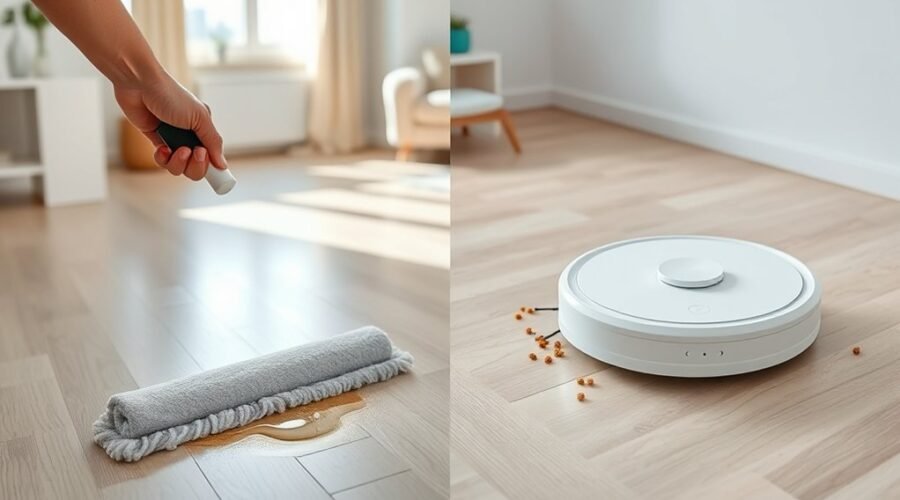
Choosing between a roller mop vs spinning mop robot vacuum depends on the messes you clean most often. Roller systems are useful for wet spills and dirty-water removal. Spinning pads provide active scrubbing for everyday dirt and dried marks. Both can clean hard floors well, but their water handling, carpet protection, and maintenance needs differ.
Quick Answer
Choose a roller-mop robot when wet food spills, muddy tracks, and dirty-water pickup are your main problems. Choose spinning pads for reliable daily scrubbing and simpler pad care. Neither type always wins on dried stains, edge cleaning, or carpet protection. Those results depend on the robot’s design, water control, and cleaning settings.
Key Takeaways
- Self-washing rollers can collect dirty water during cleaning, reducing the chance of spreading residue.
- Dual spinning pads provide active scrubbing and can remove dried stains effectively, especially with repeated passes.
- Extendable mop heads improve edge cleaning in both designs.
- Carpet protection depends on mop lifting, shielding, removal, or avoidance settings.
- Both systems require regular maintenance, even when the dock washes and dries the mop automatically.
Roller Mop vs Spinning Mop: What’s the Difference?
)
The main difference is how each robot scrubs the floor and handles dirty water. A roller mop uses a rotating fabric-covered cylinder. A spinning mop usually uses two circular microfiber pads that rotate against the floor.
Many roller systems add clean water and remove dirty water while mopping. Spinning systems typically dampen their pads during cleaning and wash them at the docking station.
Roller mops focus on continuous surface refreshing and dirty-water recovery. Spinning mops use rotating pads for active scrubbing and regular floor maintenance.
| Feature | Roller Mop | Spinning Mop |
|---|---|---|
| Cleaning method | Rotating cylindrical roller | Two rotating microfiber pads |
| Wet spills | Often better for moderate liquid residue when equipped with water recovery | Pads absorb liquid but can become saturated |
| Dried stains | Strong scrubbing on capable models | Strong scrubbing on capable models |
| Mop cleaning | Can rinse continuously while moving | Usually washed at the dock or manually |
| Edge cleaning | Depends on roller placement and extension | Extendable pads can reach near walls |
| Carpet handling | May lift, shield, or avoid carpets | May lift, detach, or avoid carpets |
| Maintenance | Roller, scraper, wastewater tank, and channels | Pads, wash tray, water tanks, and dock |
| Best suited to | Frequent wet and sticky messes | Routine cleaning and mixed floor layouts |
Neither mop design guarantees better results in every home. Water delivery, downward pressure, cleaning speed, repeated passes, and dock features also affect performance.
How Roller Mop Robot Vacuums Work
A roller mop robot vacuum uses a fabric-covered cylindrical roller that rotates while pressing against the floor. The movement loosens dirt and lifts residue from tile, vinyl, and other compatible hard surfaces.
Many advanced roller systems clean the mop surface during operation through a continuous process:
- Clean water delivery: Water flows through nozzles onto the rotating roller.
- Floor scrubbing: The damp roller presses against the surface and loosens dirt.
- Dirty-water removal: A scraper or squeegee removes used water and grime from the roller.
- Waste collection: An internal system moves dirty water into a separate wastewater container.
- Roller refreshing: The roller continues turning, bringing a cleaner section into contact with the floor.
This design helps prevent the same dirty water from being spread repeatedly across the cleaning path.
The manufacturer’s explanation of an instant self-washing roller system confirms the use of clean-water nozzles, scrapers, and wastewater collection.
Some roller robots also detect dirt and automatically adjust their cleaning behavior. However, dirt detection depends on sensors and software, not simply on how fast the roller rotates.
For repeated sticky messes, a robot that refreshes its roller during cleaning may reduce the need to stop and wash the mop manually.
How Spinning Mop Robot Vacuums Work
Spinning mop robot vacuums generally use two rotating microfiber pads. The pads press against the floor while turning, loosening dust, footprints, dried marks, and other everyday dirt.
Water from an onboard tank keeps the pads damp. Some robots also adjust water flow for different rooms or flooring types.
Unlike most self-washing rollers, spinning pads usually retain collected moisture and dirt until the robot returns to its docking station or you wash them manually.
Dual Pad Scrubbing Action
The two spinning pads create active friction against the floor. Their rotating movement helps loosen grime that a simple flat drag mop might leave behind.
Some pads rotate inward, creating a coordinated scrubbing pattern. For example, an official spinning mop specification confirms inward rotation at 200 revolutions per minute.
Spinning pads work well for:
- Daily dust and light dirt on hard floors.
- Footprints and tracked-in grime.
- Small dried food marks and splashes.
- Regular cleaning across open rooms.
Rotating pads can also remove stubborn stains when a robot applies enough pressure, uses suitable moisture, and makes repeated passes.
However, round pads do not automatically reach every corner. Edge cleaning depends on whether the robot can extend a pad beyond its main body.
Moisture and Dirt Pickup
Microfiber pads absorb moisture while their rotating movement helps loosen dirt. They perform best when the pads remain damp enough to scrub without leaving excessive water behind.
Several factors affect how well spinning pads clean:
- Water flow: Too little water can reduce stain removal. Too much can leave wet streaks.
- Pad condition: Dirty or worn microfiber collects less soil and may spread residue.
- Cleaning pressure: Consistent contact improves scrubbing.
- Washing frequency: More frequent dock washing can help when floors are particularly dirty.
Spinning pads are useful for routine maintenance, but larger liquid messes can overwhelm their absorption capacity.
Once the pads become saturated, they may move moisture around instead of removing it effectively.
Which Mop Handles Wet Spills Better?
Roller mop systems with dirty-water recovery generally handle moderate wet spills better than spinning pads. The advantage comes from their ability to collect used liquid rather than relying only on fabric absorption.
For example, imagine muddy footprints across a tiled entryway. A self-washing roller can loosen the mud and remove some of the dirty water as it moves.
A spinning mop may also clean the marks, but its pads can become dirty quickly. Unless the robot returns to wash them, residue may spread into cleaner areas.
This difference matters most for:
- Damp mud tracked in from outdoors.
- Sticky drink residue on tile.
- Food spills that leave a wet film.
- High-traffic floors that frequently collect wet dirt.
However, even a roller robot has limits. Its wastewater tank, suction pathway, and liquid collection system can become overloaded.
Warning: Do not use a robot mop to collect large puddles, unknown chemicals, or hazardous liquids unless its manufacturer explicitly allows it. Excess water can enter internal components, cause leaks, or damage flooring. Wipe up major spills manually first.
Manufacturer roller mop water-leak troubleshooting guidance identifies clogged filters, debris buildup, and excessive liquid as possible causes of leakage.
Roller mops can also provide better moisture control when the extraction system works properly. Still, they do not guarantee faster drying on every floor.
Which Mop Removes Dried Stains Better?
Both roller and spinning mop robot vacuums can remove dried stains effectively. Neither design consistently wins across every model and floor condition.
Roller systems maintain contact through a rotating cylinder. When paired with fresh-water delivery, this can help loosen dried food residue and sticky marks.
Spinning systems use rotating microfiber pads that actively scrub the same area. Well-designed models can remove dried stains with comparable effectiveness.
The cleaning result depends on several factors:
- Downward pressure: Firm contact can help loosen dirt, but pressure alone does not guarantee stronger cleaning.
- Water delivery: Moisture helps soften dried residue before scrubbing.
- Repeated passes: Additional passes give the mop more time to work on stubborn marks.
- Cleaning surface: Dirty or worn pads and rollers reduce effectiveness.
- Floor texture: Rough tile and grout lines can hold residue that is difficult to reach.
For a dried coffee stain, a capable spinning-pad robot may perform as well as a roller model. For a wider area of sticky residue mixed with moisture, the roller’s self-cleaning system may become more useful.
Therefore, choose based on verified cleaning performance rather than assuming the cylindrical design always removes stains better.
Pro Tip: For stubborn dried marks, use your robot’s approved deep-cleaning or repeated-pass option before increasing water flow. Extra scrubbing time may help remove residue without leaving unnecessary moisture on the floor.
Why Roller Mops Stay Cleaner
Many roller mop systems keep their cleaning surface fresher by adding clean water and removing used water during operation. This helps reduce the amount of dirt carried from one section of the floor to another.
Spinning mops can also stay clean when their docking stations wash the pads frequently. The difference is mainly when and how the mop surface gets refreshed.
Clean Water Delivery
A self-washing roller receives clean water directly while rotating. This moisture helps loosen soil and rinse dirt from the cleaning surface.
The water supply has two practical benefits:
- It keeps the roller damp during cleaning.
- It helps replace dirty moisture with cleaner water.
- It supports repeated scrubbing without relying entirely on a saturated pad.
Spinning mop robots often use onboard tanks to control moisture. They may deliver water continuously, but their pads usually remain in contact with collected dirt until washing occurs.
Both systems need clean water and compatible cleaning products to work properly.
Dirty Water Removal
Dirty-water removal is one of the strongest advantages of a self-washing roller. A scraper separates moisture and grime from the fabric before the robot stores the wastewater.
This reduces the chance that collected dirt will return to the floor during the same cleaning cycle.
Spinning mop pads generally retain dirty moisture until they are rinsed. Their effectiveness can decrease as the pads become saturated.
Still, wastewater extraction is not perfect. Blocked channels, dirty filters, and worn rollers can cause streaks or reduce collection performance.
Continuous Mop Refresh
Continuous mop refreshing lets a roller present a cleaner fabric surface to the floor throughout the cleaning run.
This is especially helpful when cleaning larger kitchens, entryways, or rooms with repeated muddy footprints.
However, continuous rinsing does not eliminate maintenance. Dirt can still collect inside the scraper, wastewater tank, and other internal channels.
Spinning-pad systems take a different approach. Some automatically return to the dock during a cleaning job, wash their pads, and resume where they stopped.
The better choice depends on whether you prefer continuous onboard cleaning or periodic dock-assisted washing.
How Carpet Detection and Edge Cleaning Compare
Carpet detection and edge cleaning depend more on the robot’s hardware and software than on the mop shape. Both roller and spinning mop models can include features that protect rugs and improve cleaning near walls.
Carpet Detection and Mop Lifting
Many advanced robots use sensors to identify carpet and adjust their cleaning behavior. Depending on the model, they may lift the mop, cover it, detach the pads, or avoid carpeted areas.
These approaches have different limitations:
- Mop lifting: Raises the mop above the floor but may not clear thick rugs.
- Mop shielding: Places a protective cover between the wet mop and carpet.
- Mop removal: Keeps damp pads at the docking station during carpet cleaning.
- Carpet avoidance: Prevents the robot from entering selected carpeted areas while mopping.
For example, some spinning-pad robots use automatic lifting, while certain roller models use lifting or protective shields.
Always compare the model’s actual mop clearance with your carpet thickness. A robot that safely crosses a low-pile rug may still touch a thicker carpet.
Edge and Corner Cleaning
Neither roller nor spinning mops automatically provide perfect edge coverage. The result depends on how far the cleaning surface reaches beyond the robot’s body.
Some rollers extend sideways to clean along baseboards. Others remain closer to the center of the robot and leave a narrow untreated strip.
Spinning systems may use an extendable right-side pad that moves toward walls, furniture legs, and corners.
An official edge-cleaning and mop-lifting specification describes extendable spinning pads, 200 RPM rotation, and up to 10 mm of mop lifting on a supported series.
These features show why spinning systems should not automatically be considered worse at perimeter cleaning.
Before choosing either type, consider whether the robot can clean around table legs, kitchen cabinets, and furniture without leaving visible gaps.
What Maintenance Each Robot Mop Needs
Both roller and spinning mop robot vacuums need regular cleaning. Roller systems have additional wastewater pathways, while spinning systems rely heavily on clean pads and working docking stations.
Automatic mop washing reduces daily effort, but it does not eliminate the need to clean tanks, remove debris, and inspect the cleaning parts.
Roller Mop Maintenance
Roller systems require attention to the cylinder, scraper, wastewater container, and internal collection channels.
Typical maintenance includes:
- Inspecting the roller for hair, grit, and trapped debris.
- Cleaning the scraper and wastewater pathway when residue collects.
- Emptying or servicing dirty-water tanks according to the model’s instructions.
- Checking filters for blockages.
- Allowing the roller to dry properly after washing.
- Replacing the roller when worn or when the manufacturer recommends it.
Heavy spills may require extra cleaning even when the robot normally washes itself.
For comparison, an official roller-system maintenance schedule recommends cleaning the robot’s dirty-water tank every two weeks and the station’s dirty-water tank every three days, or when prompted. These intervals apply to that specific system, not every roller robot.
Spinning Mop Maintenance
Spinning systems generally require pad washing, tank cleaning, and occasional attention to the docking station.
For models without automatic washing, clean the pads after use and let them dry before storage.
Self-washing models can rinse their pads at the station during cleaning. For example, one manufacturer support guide lists a default washing interval of 15 minutes, with adjustments available.
Regular care includes:
- Removing embedded dirt from microfiber pads.
- Inspecting pads for thinning, wear, or damage.
- Cleaning the docking station wash tray.
- Emptying dirty-water tanks before they develop odors.
- Checking water outlets and moving parts for blockages.
Do not rely on washing spinning mop pads only every four to six weeks. Washing frequency should reflect how often you clean and whether the dock automatically rinses the pads.
Which System Is Easier to Maintain?
Spinning-pad systems often have simpler removable cleaning parts. Their pads can usually be detached and washed without opening a complicated wastewater mechanism.
Roller systems may reduce interruptions during cleaning, but their scrapers and water-recovery parts can add maintenance work.
For either design, a reliable self-washing and drying dock may matter more to daily convenience than the mop style itself.
Which Robot Mop Fits Your Home?
Choose a roller mop if you frequently deal with wet, sticky messes. Choose spinning pads if you mainly want dependable daily cleaning with effective scrubbing and manageable maintenance.
Your flooring and room layout should also influence the decision.
| Home need | Better fit |
|---|---|
| High-traffic messes, spills, stains | Roller mop systems with dirty-water recovery |
| Light daily cleaning, routine upkeep | Spinning mop systems |
| Large tiled kitchens and entryways | Self-washing roller systems |
| Rooms with furniture legs and tight edges | Either system with extendable edge cleaning |
| Hard floors mixed with carpets | Either system with reliable carpet protection |
| Simple removable mop parts | Often spinning mop systems |
| Frequent muddy pet footprints | Roller mop systems with continuous rinsing |
Which Is Better for Tile and Vinyl Floors?
Both systems can clean compatible tile and vinyl floors effectively. A roller may be more useful where liquid and sticky residue frequently collect.
Spinning pads can handle routine footprints and dried marks well. Pay attention to water settings, especially on floors with seams.
For textured tile, grout lines, and stubborn residue, actual scrubbing performance matters more than the cleaning mechanism alone.
Which Is Better for Hardwood and Laminate?
Moisture control is more important than mop shape on wood and laminate. Excess water can enter joints or damage sensitive finishes.
According to the National Wood Flooring Association’s maintenance guidance, spills should be cleaned immediately, and wet or steam mops should be avoided on wood flooring.
Note: Use a robot mop on wood or laminate only when the flooring manufacturer approves damp robotic cleaning. Avoid wet mopping on unsealed, damaged, or moisture-sensitive surfaces. Start with an approved low-water setting and stop if moisture remains near seams.
Which Is Better for Homes With Pets?
Roller mop systems can be helpful in homes with muddy paws, damp dirt, and frequent sticky messes. Their continuous rinsing may reduce how much dirty residue moves across the floor.
Spinning systems remain effective for routine paw prints and light stains, especially with frequent pad washing.
However, pet-hair pickup depends mainly on the vacuum’s suction, brush design, airflow, and navigation. Mop type alone does not determine how well the robot collects hair.
What Should You Check Before Buying?
Before choosing a robot mop, compare the complete machine rather than focusing only on the roller or spinning pads.
- Cleaning performance: Look for results on dried stains and wet residue.
- Water control: Check for adjustable moisture and dirty-water recovery.
- Carpet protection: Confirm mop lifting, shielding, removal, or no-mop zones.
- Edge reach: Look for extendable cleaning heads if you have many cabinets and furniture legs.
- Dock automation: Compare washing, drying, refilling, and wastewater handling.
- Replacement parts: Check the availability of compatible rollers, pads, and filters.
- Maintenance access: Make sure you can remove and clean the parts that collect dirt.
- Floor compatibility: Confirm that the robot’s moisture settings suit your flooring.
A premium roller robot may be unnecessary if your floors rarely collect wet messes. Likewise, a spinning-pad robot may require more washing interruptions if you regularly clean muddy or sticky areas.
The best choice is the one that handles your most common mess without creating more maintenance than you want.
Frequently Asked Questions
What Is the Best Robot Vacuum and Mop With a Roller Mop?
There is no single best roller-mop robot for every home. The 3i S10 Ultra is one option with continuous roller washing, dirty-water recovery, and extendable edge cleaning. Compare its features, maintenance needs, carpet handling, and independently measured performance with other models before choosing.
What Are the Disadvantages of Spin Mops?
The main disadvantage of spinning robot mops is that their pads can retain dirty moisture until washing. Saturated pads may smear larger wet messes. Some models also miss edges without an extension feature. However, spinning pads can scrub dried stains effectively and offer convenient daily cleaning.
What Type of Mop Is Best for Mopping Floors?
A self-washing roller mop is often a good choice for wet residue and frequent sticky messes. Dual spinning pads are effective for general maintenance and dried marks. For delicate flooring, choose a system with suitable water control and follow the flooring manufacturer’s cleaning instructions.
Which Robot Vacuum Has the Best Mopping Function?
The best mopping function combines effective scrubbing, controlled water delivery, clean mop surfaces, and reliable navigation. Roller systems often provide stronger dirty-water management, while advanced spinning-pad systems can match their dried-stain performance. Compare complete models using independent cleaning results rather than relying only on mop type.
Can a Roller Mop Replace a Wet Vacuum?
A roller-mop robot cannot automatically replace a dedicated wet vacuum. Some models recover small or moderate amounts of dirty water during mopping, but liquid capacity and supported spill types vary. Large puddles, hazardous liquids, and major spills may require separate manual cleaning equipment.
Conclusion
In the roller mop vs spinning mop robot vacuum comparison, the best choice depends on your floors and cleaning habits. Roller mops are especially useful for wet residue, sticky messes, and continuous dirty-water removal. Spinning mops offer effective everyday scrubbing and can handle dried stains well.
Before choosing, compare water control, carpet protection, edge cleaning, and maintenance. A robot that matches your flooring and common messes will usually be more useful than one chosen only for its mop design.
Sources
- ECOVACS: OZMO Roller Collection: Continuous clean-water delivery, roller scrubbing, scraper cleaning, and wastewater recovery.
- Roborock Support: Q Revo Mopping System: Dual spinning mop operation and rotation speed.
- eufy Support: Roller Mop Water Leakage: Causes of dirty-water leakage, clogged filters, and excessive liquid collection.
- Roborock: Qrevo Edge Series: Extendable spinning mop technology, mop rotation, and lifting specifications.
- 3i: S10 Ultra Official Specifications: Continuous roller washing, wastewater collection, edge extension, and carpet handling.
- Roborock Support: Automatic Mop Washing Frequency: Dock washing intervals and adjustable washing settings.
- eufy Support: S1 Pro Maintenance Schedule: Roller-system accessory cleaning, dirty-water tank care, and replacement guidance.
- National Wood Flooring Association: Maintenance: Safe wood floor cleaning and precautions against excess moisture.