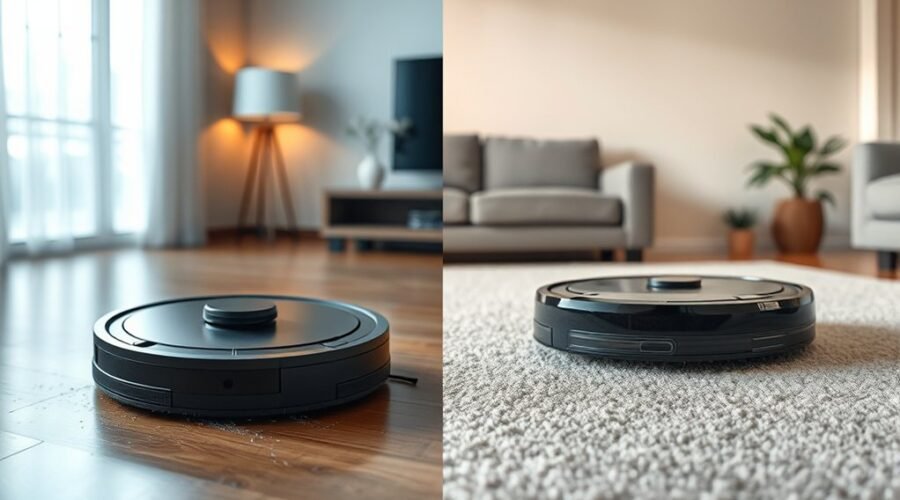
Choosing a single vs dual roller robot vacuum comes down to more than the number of brushes. Both designs can clean hard floors and carpets, but they handle embedded dirt, pet hair, and maintenance differently. Understanding how each system works helps you choose a robot vacuum that fits your flooring, daily messes, and budget.
Quick Answer
Dual roller robot vacuums use two rotating brushes to loosen and collect debris, often improving carpet cleaning and pet-hair pickup. Single roller models use one main brush and can work just as well for everyday hard-floor cleaning. However, brush material, suction, anti-tangle features, and overall design matter more than roller count alone.
Key Takeaways
- Counter-rotating brushes can improve debris feeding, but results depend on the cleaning head.
- Rubber rollers and specialized anti-tangle brushes can reduce hair wrapping in either design.
- Carpet pickup depends on brush agitation and airflow, not just advertised suction power.
- Two rollers mean more brush components to inspect and potentially replace.
- Independent cleaning tests provide a better comparison than brush count alone.
What Is a Dual Roller Robot Vacuum?
)
A dual roller robot vacuum uses two powered main brushes beneath its cleaning head. These rollers usually turn in opposite directions, working together to loosen dirt and move it toward the suction inlet. A single roller vacuum performs these tasks with one main brush.
In many dual roller systems, the first brush agitates debris while the second helps lift and guide it into the vacuum. The paired design can maintain useful contact with carpet fibers and improve pickup.
An official explanation of counter-rotating rubber brushes describes how one roller loosens dirt while the other rotates in the opposite direction to extract it.
Single roller models use one rotating brush, often made from rubber, bristles, or a combination of both. The brush loosens dirt so airflow can carry it into the dustbin.
The main differences become clearer when you compare their everyday performance.
| Feature | Dual Roller | Single Roller |
|---|---|---|
| Brush design | Two powered main rollers | One powered main roller |
| Inlet feeding | Paired brushes help guide debris inward | One brush feeds debris toward suction |
| Carpet pickup | Often strong, depending on brush design | Can perform well with effective agitation |
| Pet hair handling | Can improve embedded hair pickup | Varies with bristles and anti-tangle features |
| Routine upkeep | Two rollers to inspect and maintain | One main roller to maintain |
Neither design guarantees better cleaning. A well-engineered single roller vacuum can outperform a poorly designed dual roller model.
Modern robot vacuum brush systems include both single all-rubber rollers and dual roller arrangements. Their cleaning performance also depends on airflow, brush contact, and navigation.
Where Dual Roller Brushes Work Best
Dual roller brushes are particularly useful when carpets, pet hair, and mixed debris create demanding cleaning conditions. Their paired action can improve how dirt moves from the floor into the suction opening.
However, the advantage varies by model. Brush materials, floor contact, suction strength, and roller speed all affect the result.
Pet Hair and Carpets
Carpet fibers trap hair and dust, making them harder to clean than smooth floors. Dual roller systems can provide additional agitation and help pull loosened material into the dustbin.
This can be useful if you have:
- Dogs or cats that shed throughout the day.
- Low-pile or medium-pile carpets.
- Area rugs that collect hair and fine debris.
- A combination of carpeted rooms and hard floors.
Rubber rollers can also make hair removal easier because they have fewer bristles for strands to catch around.
Still, dual rollers are not automatically better at removing pet hair. Some single-brush models use effective bristles or anti-tangle systems that perform extremely well.
Independent pet-hair cleaning tests show that brush agitation and tangle resistance vary substantially between robot vacuums.
Bigger Crumbs and Debris
Dual roller systems can handle larger crumbs and mixed debris effectively when their brush housing allows particles to enter without being pushed forward.
Typical household messes include:
- Cereal pieces and bread crumbs.
- Tracked-in dirt and small particles.
- Pet food scattered around feeding areas.
- Dust and hair mixed together on rugs.
The extra roller can help guide loose material toward suction instead of leaving it behind.
However, large debris pickup also depends on the height and shape of the cleaning head opening. If the opening is too narrow, even a dual roller vacuum may push larger particles away.
A well-designed single roller with suitable clearance can collect the same types of debris effectively.
Stronger Feed Into Inlet
One benefit of dual rollers is their ability to move debris toward the vacuum’s inlet through coordinated brush movement. This can improve how consistently material reaches the suction path.
Both rollers interact with the floor, loosening dirt and directing it toward the center of the cleaning head.
This is particularly helpful when hair and grit are mixed into carpet fibers. The brushes can work together to lift debris that ordinary suction may struggle to remove.
However, stronger brush feeding is not the same as stronger suction. The suction motor determines airflow performance, while the rollers help release and collect debris.
For the best results, these systems must work together.
When a Single Roller Brush Is Enough
A single roller robot vacuum is often enough if your home has mostly hardwood, tile, laminate, or other smooth floors. These surfaces usually require less brush agitation than carpets because dust and crumbs remain on top.
One well-designed roller can loosen dirt while the vacuum’s airflow collects it.
Single roller models make sense when you have:
- Mostly hard flooring with few area rugs.
- Light daily dust, crumbs, and grit.
- Little pet hair or long human hair.
- A preference for simpler brush maintenance.
- A limited budget for replacement parts.
The main maintenance advantage is straightforward. You have one main roller to remove, inspect, and clean instead of two.
That does not always mean a lower purchase price. Navigation systems, battery capacity, docking stations, and other features can make a single roller vacuum more expensive than a basic dual roller model.
Single roller models are also not automatically quieter. Operating noise depends on motor speed, suction settings, brush construction, and floor surface.
For routine hard-floor cleaning, prioritize effective debris pickup and reliable navigation over the number of rollers.
Which Handles Hair Better?
Dual roller robot vacuums can offer excellent hair pickup, especially with rubber brushes designed to lift strands from carpets. However, tangle resistance depends more on brush construction than roller count.
Some single roller systems also use combs, specialized bristles, or other mechanisms to prevent hair from wrapping around the brush.
Hair Pickup Power
Hair pickup depends on how effectively the brush loosens strands from the floor and transfers them into the dustbin.
On hard floors, most capable robot vacuums can collect loose pet hair without needing aggressive brushing.
Carpets are more demanding because hair becomes trapped between fibers. A brush must make enough contact to release the strands before the suction system can collect them.
Dual rubber rollers can work particularly well in these conditions. However, a single roller with suitable bristles may provide better carpet agitation than some rubber-only systems.
Pay attention to four performance factors:
- Brush contact: Does the roller reach hair within the carpet fibers?
- Hair extraction: Does the vacuum move loosened strands into the dustbin?
- Tangle resistance: Does hair stay wrapped around the brush?
- Repeated cleaning: Does performance remain consistent as hair accumulates?
The best brush system balances hair pickup with easy maintenance.
Tangle Resistance Differences
Both single and dual roller vacuums can suffer from tangled hair. Long strands may wrap around brush ends, bearings, or bristles, even when the main roller surface stays relatively clean.
The material and anti-tangle mechanism make the biggest difference.
| Model | Tangle Resistance |
|---|---|
| Dual rubber roller | Often resists wrapping, but hair can collect at the ends |
| Single bristled roller | May trap long hair around densely packed bristles |
| Dual roller with anti-tangle design | Can reduce wrapping through roller shape and hair guidance |
| Single anti-tangle roller | Can reduce wrapping through combs or specialized brush geometry |
For example, an official anti-tangle brush description explains how a specially shaped main roller and side brush help reduce hair wrapping. The manufacturer’s zero-tangle claim applies to specified laboratory test conditions, not every home.
This shows why brush count alone cannot predict maintenance needs.
If your household has long-haired pets or people with long hair, look closely at the roller’s anti-tangle features before choosing.
Which Works Better on Carpets?
Dual roller robot vacuums often have an advantage on carpets because their brushes can work together to loosen embedded dirt and move it toward suction. However, some single roller models also deliver strong carpet cleaning.
The most important factors are brush agitation, airflow, and how well the cleaning head stays in contact with carpet fibers.
Carpet type also changes the results.
- Low-pile carpet: Both designs can perform well when brush contact and suction are effective.
- Medium-pile carpet: Strong brush agitation becomes more important as debris settles between fibers.
- High-pile carpet: Performance depends on clearance, wheel traction, and whether the brush can rotate freely.
- Area rugs: Lightweight rugs and loose fringes may create problems regardless of roller count.
Independent robot vacuum carpet tests demonstrate these differences. Some dual roller machines handle larger debris well but struggle with fine dirt or embedded pet hair.
Therefore, choosing a dual roller model does not guarantee deeper carpet cleaning.
For heavily carpeted homes, compare independent results for your carpet type rather than relying on the manufacturer’s brush description.
Also remember that robot vacuums are primarily designed for regular upkeep, not necessarily for replacing a full-size vacuum.
Independent consumer laboratory testing found an average hard-floor cleaning score of 88% and a carpet cleaning score of 26% among the models included in that testing.
Those figures describe the tested products, not every robot vacuum. They illustrate why carpet performance deserves careful attention.
Brush Maintenance and Costs
Both single and dual roller robot vacuums need regular maintenance to keep their cleaning performance consistent. Hair, dust, and debris can accumulate around brushes, end caps, and the cleaning head.
Dual roller models have two main brush components to inspect, while single roller models have one. Actual maintenance costs depend on replacement prices, durability, and how often each part wears out.
Follow these basic maintenance steps:
- Remove loose hair: Inspect the main roller and clear wrapped strands.
- Check the end caps: Remove trapped hair and debris from accessible bearings.
- Inspect the brush surface: Look for damaged rubber fins, worn bristles, or cracks.
- Clear the suction opening: Remove debris that blocks airflow into the dustbin.
- Check the filter: Clean or replace it according to your model’s instructions.
- Replace worn rollers: Use compatible parts when brushes no longer clean effectively.
According to official robot vacuum maintenance guidance, some models recommend weekly roller cleaning and replacement every 6–12 months. These intervals are model-specific, so your manufacturer’s schedule should take priority.
Homes with shedding pets may need more frequent brush cleaning.
Pro Tip: Before buying, compare the replacement roller prices and check whether the brush ends can be removed for cleaning. Easy access to trapped hair can save more maintenance time than an extra roller.
Also consider the total ownership cost. Replacement filters, side brushes, batteries, and automatic-emptying dust bags can all add expenses over time.
Brush count affects some of these costs, but the overall robot design has a greater influence on long-term value.
Which Brush Setup Fits Your Home?
The best brush setup depends on your flooring, the type of debris you clean, and your tolerance for maintenance. Start with your home’s hardest cleaning task, then choose a vacuum that performs well under those conditions.
Use this checklist to narrow your choice:
- Mostly hard floors: Start with a capable single roller model. It can handle everyday dust and crumbs without needing a more complicated brush system.
- Several carpeted rooms: Consider dual rollers, especially models with strong independent carpet-cleaning results.
- Heavy pet shedding: Prioritize proven pet-hair pickup and anti-tangle performance. Either roller design can work.
- Long human hair: Look for brushes that guide strands into the dustbin instead of allowing them to wrap around bearings.
- Mixed debris and larger crumbs: Check how well the cleaning head admits particles without scattering them.
- Lower maintenance: Compare brush removal, cleaning access, replacement prices, and automatic-emptying features.
Beyond the brushes, consider navigation, obstacle avoidance, battery life, and dustbin capacity.
Good mapping helps the robot clean rooms systematically. Obstacle detection can reduce problems with furniture and everyday clutter, while sufficient battery capacity helps the vacuum finish larger cleaning areas.
For homes with pets, a self-emptying dock may also reduce how often you handle collected hair.
A practical buying approach is to compare robots based on four tasks: hard-floor debris pickup, carpet pickup, pet-hair removal, and brush maintenance.
If a model performs well in the tasks your home needs most, its roller count becomes a secondary consideration.
Frequently Asked Questions
What Are the Differences Between a Single Brush and a Dual Brush Robot Vacuum?
A single brush robot vacuum uses one powered roller, while a dual brush vacuum uses two. Dual rollers can improve carpet agitation and debris feeding, but cleaning results depend on brush material and suction. Single roller models are often simpler to maintain because they have fewer main brush components.
Which Roller Robot Vacuum Is Best?
The best roller design depends on your floors and cleaning needs. Dual rollers are worth considering for carpeted homes and heavy debris, while single rollers can be excellent for hard floors and everyday cleaning. Compare independent pickup tests, hair tangling, maintenance requirements, and navigation before deciding.
What Is the Average Lifespan of a Robot Vacuum?
A robot vacuum typically lasts around 4–6 years, although its actual lifespan depends on usage, maintenance, and component quality. Battery performance may decline earlier and require replacement. Regular brush cleaning, timely filter changes, and access to replacement parts can help extend the machine’s useful life.
What Features Should I Look for When Buying a Robot Vacuum?
Look for strong real-world cleaning performance, reliable navigation, suitable battery life, and easy brush maintenance. If you have pets, prioritize hair pickup and tangle resistance. For carpeted homes, check carpet-specific cleaning tests. Automatic-emptying docks and obstacle detection can also make everyday cleaning easier.
Do Dual Roller Robot Vacuums Have More Suction Power?
No, having two rollers does not automatically increase suction power. Suction depends mainly on the vacuum’s motor and airflow system. Dual rollers can improve how debris enters the suction path, but they do not guarantee stronger airflow or better cleaning than a well-designed single roller vacuum.
Are Dual Roller Robot Vacuums Louder Than Single Roller Models?
Dual roller robot vacuums are not necessarily louder than single roller models. Noise levels depend on suction settings, motor design, brush construction, and floor type. A single roller vacuum running at maximum suction may be louder than a dual roller model operating in a quieter cleaning mode.
Conclusion
Single and dual roller robot vacuums can both deliver dependable daily cleaning. A single roller is often sufficient for hard floors and lighter messes, while dual rollers can offer advantages on carpets and mixed debris.
For homes with pets, pay special attention to hair pickup and tangle resistance rather than assuming two brushes are always better. Choose the model that performs best on your flooring, fits your maintenance preferences, and offers affordable replacement parts.
Sources
- Official Dual Multi-Surface Rubber Brush Documentation: Explains how counter-rotating main brushes loosen dirt and transfer debris into the suction path.
- Official Robot Vacuum Brush System Specifications: Documents single all-rubber brushes and dual roller designs across robot vacuum models.
- Independent Robot Vacuum Pet-Hair Tests: Supports comparisons of brush agitation, pet-hair pickup, and tangle resistance.
- Official Anti-Tangle Brush Technology: Describes specialized main brush geometry and the conditions behind laboratory anti-tangle claims.
- Independent Robot Vacuum Carpet Tests: Supports the differences in carpet pickup, larger debris handling, and embedded pet-hair performance.
- Independent Consumer Robot Vacuum Testing: Provides laboratory cleaning results for hard floors and carpets and explains robot vacuum limitations.
- Official Robot Vacuum Maintenance and Replacement Guidance: Supports roller cleaning intervals and recommended replacement schedules for specified models.
- Manufacturer Guide to Robot Vacuum Lifespan: Supports the typical 4–6-year lifespan estimate and explains battery wear and maintenance factors.