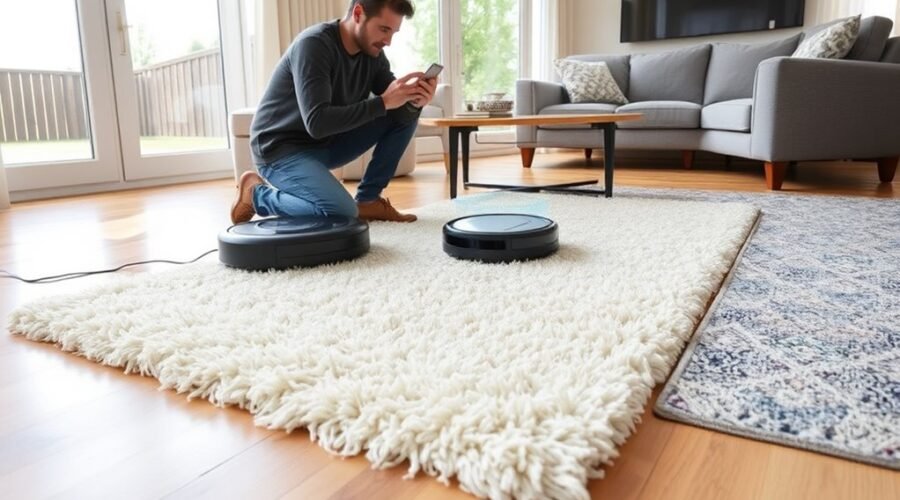
Using a robot vacuum with area rugs works best when the rug is compatible, the space is cleared, and the right cleaning mode is selected. Fringe, cords, and loose items can cause trouble, while edge height and rug texture may affect movement. Carpet boost, no-go zones, and regular maintenance also play a role. The next steps show how to avoid common problems and improve results on different rug types.
Check If Your Rug Works With a Robot Vacuum
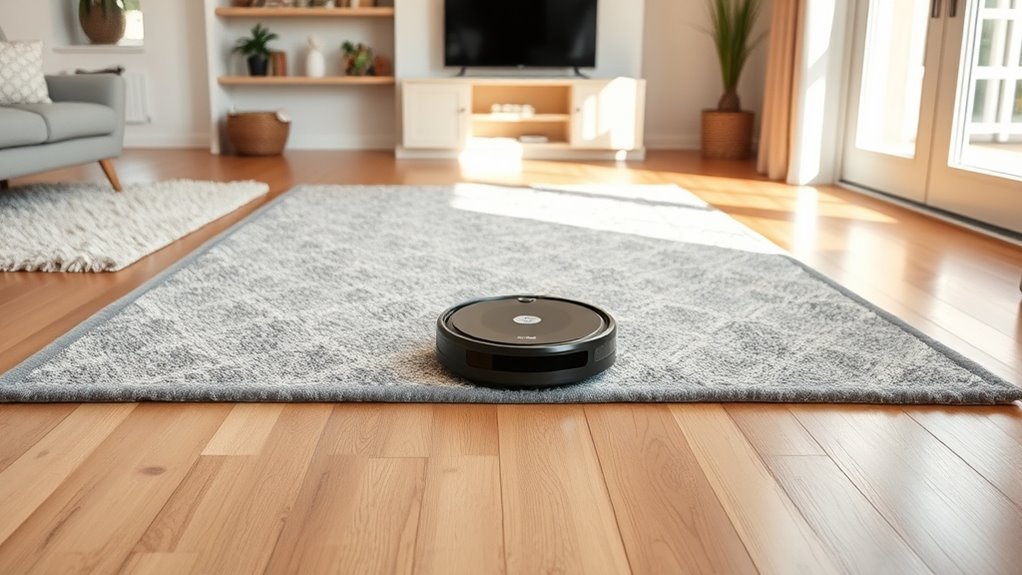
Before setting a robot vacuum loose on an area rug, it helps to confirm that the rug is compatible with the machine. The first check is rug type. Low pile rugs are usually the easiest match, while high pile rugs or shag styles may need strong suction and larger wheels to move freely.
The next step is reviewing vacuum specifications, especially suction power and anti-tangle technology, because these features help a robot vacuum handle fibers without getting stalled. Area rugs with dark patterns can also affect cliff sensors, so models with better navigation systems are more reliable across varied colors.
Edge height matters too; if the rug sits too high, the vacuum may hesitate at the threshold. A well-matched setup gives the machine room to work and gives the user more control over cleaning.
Choosing wisely supports smoother movement, steadier coverage, and a more liberated routine.
Clear Cords, Fringe, and Loose Items First
Before a robot vacuum starts, cords and cables should be removed from the floor so they do not snag or block its path.
Fringes, tassels, and loose threads on rugs can be tucked under or secured with tape to reduce the risk of tangling in the brushes.
Small items such as toys, debris, and other obstacles should also be cleared away to help the vacuum clean smoothly and efficiently.
Remove Cords And Cables
A quick sweep of the area around the rug helps prevent avoidable problems for a robot vacuum. Before starting, remove cords and cables from the floor so they cannot wrap around the brush or be dragged beneath the machine. This simple tidying up step protects both the cords and the vacuum while improving cleaning efficiency.
Loose items near rugs should also be moved aside to keep a clear path and reduce obstacles. Entry points with raised edges deserve attention, since some models handle changes in elevation better than others; the vacuum model should match the space.
Regular inspection of the room supports steady performance and fewer maintenance issues. With the floor cleared, the robot can move freely, work with less interruption, and clean the rug area more effectively.
Tuck Fringes Under
With cords and cables cleared from the floor, attention can turn to the rug itself. To help a robot vacuum move freely across area rugs, tuck fringes under before cleaning begins. This simple step reduces the chance that tassels will wrap around the brushroll or create cleaning errors.
It also limits obstacles that can interrupt a run and keeps the machine on a cleaner path. For rugs with delicate edges, virtual barriers can block access to problem zones. Low-pile rugs usually offer the best results, while high-pile rugs may need extra care or adjusted suction.
These cleaning tips support ideal performance and protect the rug from snagging, so the robot vacuum can work with less resistance and more ease.
Clear Loose Floor Items
Loose cords, toys, and other small items should be cleared from the floor so a robot vacuum can move across area rugs without interruption. This simple reset helps clear loose items that might obstruct path and keeps the robot vacuum focused on area rugs instead of getting stuck.
Fringes and tassels should be tucked under the rug to reduce snagging and prevent malfunctions. Lightweight rugs should be removed or secured, since they can slide rather than be cleaned. Large obstacles, thresholds, and scattered debris can limit navigation and weaken cleaning efficiency.
A quick floor check before each run supports smoother movement, steadier coverage, and a freer, more reliable cleaning routine. Regular inspection also helps capture pet hair before it builds up and interferes with performance.
Choose the Best Robot Vacuum Mode for Rugs
Selecting the right robot vacuum mode for rugs can make a noticeable difference in cleaning results. A robot vacuum with carpet boost mode raises suction power automatically on area rugs, helping lift dust from thick fibers without constant manual changes.
For homes with mixed flooring, smart mapping lets the machine assign settings by room, so rugs and hard surfaces receive the right treatment. Models with adjustable brush types, especially rubberized or anti-tangle brushes, tend to handle fringed rugs more safely and with less snagging.
Virtual barriers and no-go zones can be set around delicate textiles or tassels, giving the user more control without extra effort. Navigation sensors should be kept clean, because dirt buildup can weaken detection and routing.
- Check mode settings before each run.
- Match brush style to rug texture.
- Refresh sensors for steady, reliable cleaning.
Help the Vacuum Cross Rug Edges and Thresholds
A robot vacuum should be able to enter rug edges and thresholds smoothly, ideally with enough clearance to handle changes up to 0.78 inches.
Models with larger wheels and flexible suspension often gain better traction and move more reliably over uneven edges.
If a rug is too difficult to cross, virtual barriers can keep the vacuum away from trouble spots while settings are adjusted and tested.
Smooth Threshold Entry
Smooth threshold entry depends on giving the robot vacuum a stable path across rug edges and floor changes. Strong suction, large wheels, and advanced navigation with LiDAR help it move confidently over mixed flooring. Low-profile rug pads reduce abrupt steps that can confuse cliff sensors and stall progress.
- Place virtual barriers or no-go zones near troublesome rug edges.
- Keep cliff sensors clean so false drops do not interrupt cleaning.
- Test each crossing after setup to confirm the vacuum clears thresholds.
These steps support smooth threshold entry without constant supervision, letting the vacuum travel where it is needed and avoiding trapped moments at borders. With the right setup, the machine can cross between surfaces more freely and keep area rugs included in the cleaning route.
Boost Wheel Traction
Larger wheels and a flexible suspension system can help a robot vacuum gain better traction on area rugs, making it easier to cross edges and thresholds without stalling. To boost wheel traction, choose models with larger wheels and flexible suspension, then use carpet boost when moving from hard floors to rugs.
| Check | Purpose |
|---|---|
| Rug pads | Keep rugs steady |
| Maintain wheels | Remove debris and improve grip |
| Thresholds | Reduce stopping and lifting |
| Ideal configuration | Match settings to rug types |
Testing different rugs helps reveal the ideal configuration for each room. Clean wheels regularly so the robot vacuum can climb edges with confidence. Stable rug pads, stronger traction, and carpet boost support freer cleaning across hard floors and rugs.
Fix Problems With Tassels, Fringe, and Dark Rugs
Tassels and fringe can quickly snag a robot vacuum, so it helps to fold them under the rug or secure them with tape during cleaning sessions. This simple step keeps tassels from trapping the machine and reduces interruptions during rug cleaning.
Dark rugs can also confuse infrared sensors, which may treat the surface like a drop-off. Models with advanced navigation handle this better and move with more confidence. For high-pile rugs, stronger suction power and anti-tangle brushrolls improve pickup while lowering the chance of jams.
Routine maintenance still matters, especially after fringe-heavy runs, because hair and thread can collect around the brushroll.
- Use virtual barriers to keep the vacuum away from troublesome edges.
- Watch how dark rugs affect movement before leaving the robot unattended.
- Check brushrolls after each session to keep performance steady.
With these adjustments, the floor stays freer, and the machine works with less frustration.
Set Carpet Boost, No-Go Zones, and Rug Rules
After addressing tassels, fringe, and dark rugs, the next step is to fine-tune the robot vacuum’s settings for area rug care.
Set carpet boost so suction power rises when the machine moves from hard floors to rugs, improving cleaning performance on medium and high-pile surfaces.
For fragile or tricky pieces, create no-go zones in the app and use virtual barriers to keep the robot away from delicate fibers or special rug types that should not be disturbed.
Where needed, adjust brush settings to reduce tangling and help the vacuum glide with less resistance.
A short test navigation run can reveal where the robot hesitates, misses edges, or climbs too aggressively, making real-time changes easier.
Regular maintenance supports these settings by keeping sensors responsive and brushes clear, so the vacuum can move freely between surfaces.
With the right rug rules, the system works with the home, not against it, and preserves control.
Keep Brushes, Sensors, and Wheels in Shape
Routine upkeep keeps a robot vacuum working well on area rugs. To keep brushes, remove hair and debris after each run, especially near fringes, so tangling does not slow peak performance.
Sensors should stay clear of dust and dirt; clean them often to preserve navigation and obstacle detection across room edges and rug changes.
Wheels also deserve attention. Inspect tread and wear, since sturdy wheels improve traction on thicker piles and help the machine glide without strain.
- Check brushes before they bind.
- Wipe sensors for steady navigation.
- Examine wheels for smooth movement.
Maintenance should continue through filter cleaning and timely brush replacement, which protects suction and cleaning efficiency.
App settings can adjust suction levels and brush types to match pile height, preventing damage to delicate fibers while still lifting debris.
With these simple habits, the vacuum remains freer to move, clean, and serve area rugs well.
Frequently Asked Questions
Can Robot Vacuums Go Over Thick Rugs?
Yes, many can, though robot vacuum compatibility depends on rug thickness considerations and rug material impact. Cleaning efficiency improves with strong suction power, sensor technology, and better surface change handling, despite navigation challenges and maintenance tips from user experiences.
How Do You Vacuum Area Rugs?
Like a steady breeze, he vacuumed area rugs by matching rug material types to robot vacuum settings, using rug cleaning tips and vacuuming techniques, checking robot vacuum features, area rug care, vacuuming frequency, rug placement strategies, and robot vacuum benefits.
What Type of Rug Is Best for a Robot Vacuum?
Low-pile rugs are best for robot compatibility, offering high cleaning efficiency, easier vacuum sensors navigation, and less suction power demand. Durable, lighter rug materials handle pet hair well; maintenance tips include avoiding fringe and limiting carpet height.
Can Robot Vacuums Go Over Rugs With Fringe?
Usually no; fringe types often tangle, reflecting robot limitations. Good robot design, proper vacuum settings, stronger suction power, and careful rug maintenance help. Rug materials, durability, cleaning frequency, and user experiences also determine success.
Conclusion
To summarize, using a robot vacuum with area rugs works best when the rug is compatible, the area is clear, and the right settings are enabled. One useful statistic is that regular brush cleaning can improve cleaning efficiency by as much as 50% on carpeted surfaces. That makes maintenance just as important as setup. With a few simple adjustments and a consistent routine, a robot vacuum can clean rugs more reliably, safely, and effectively every day.