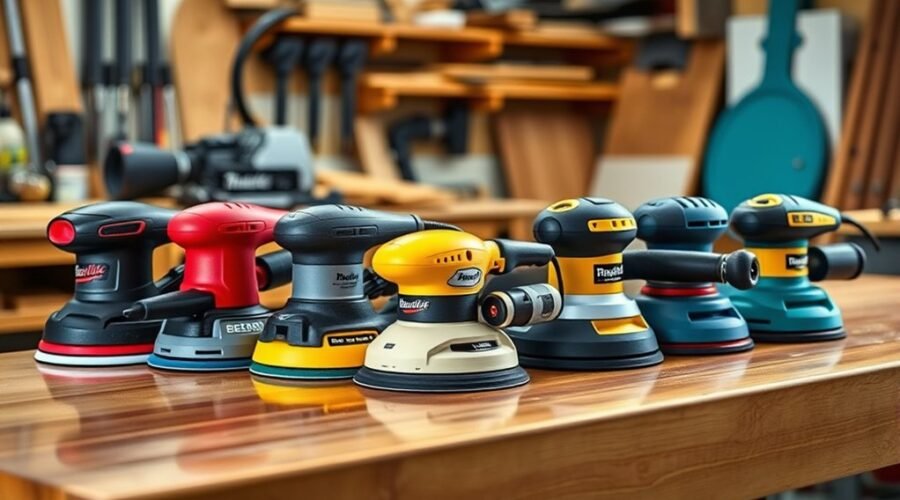
Swirl marks, clouds of fine dust, and numb hands after twenty minutes of sanding are the three things that ruin an otherwise good finishing job. A random orbital sander solves all three, but only if you pick one with the right motor, the right speed control, and dust collection that actually keeps the workshop breathable. For 2026, six 5-inch corded models stand out: the BOSCH ROS20VSC, DEWALT DWE6421K, Makita BO5041K, SKIL 5″ Random Orbital Sander, CRAFTSMAN CMEW231, and the PORTER-CABLE 382. Below you’ll find what each one is genuinely best at, who should skip it, and how to match a sander to the work you actually do.
Quick Comparison: 2026 Random Orbital Sander Picks
All six models below take standard 5-inch, 8-hole hook-and-loop sanding discs, so replacement paper is easy to find for any of them. The real differences are motor power, speed control, and how dust is captured.
| Model | Best For | Motor | Speed | Speed Control | Dust Collection | Link |
|---|---|---|---|---|---|---|
| BOSCH ROS20VSC | Best Overall | 2.5 amp | 7,500–12,000 OPM | Variable | Twist-off canister with microfilter | Check Price |
| DEWALT DWE6421K | Best Everyday Kit | 3.0 amp | 12,000 OPM | Single speed | One-handed locking bag, vac-ready | Check Price |
| Makita BO5041K | Best Speed Range | 3.0 amp | 4,000–12,000 OPM | Variable | Dust bag, vac-ready | Check Price |
| SKIL 5″ Sander | Best Budget Pick | 2.8 amp | Up to 13,000 OPM | Variable | Clear X-flow dust box | Check Price |
| CRAFTSMAN CMEW231 | Best Simple Corded Pick | 3.0 amp | 12,000 OPM | Single speed | Dust bag, 1-3/4 in. hose port | Check Price |
| PORTER-CABLE 382 | Best Basic Single-Speed | 1.9 amp | 12,000 OPM | Single speed | Dust bag | Check Price |
BOSCH ROS20VSC Palm Sander with Dust Collector — Best Overall
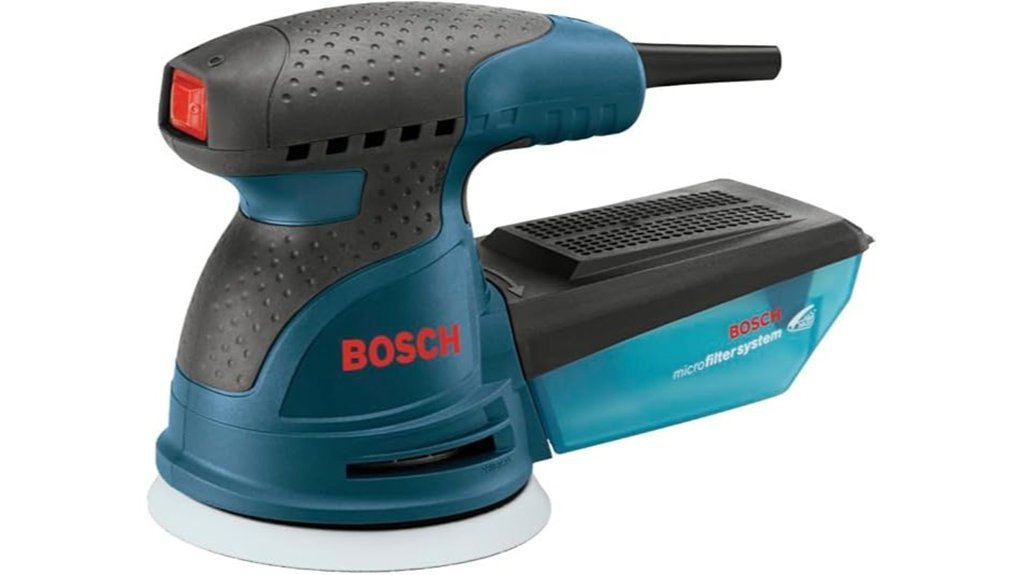
If you want one sander that handles both aggressive stock removal and delicate final passes, the BOSCH ROS20VSC is the easiest recommendation in this lineup. Its 2.5 amp motor runs from 7,500 to 12,000 OPM through a variable-speed dial, so you can slow down for veneer and thin stock instead of burning through it. The pad dampening system is designed to reduce swirl marks when the pad first touches the workpiece — the exact moment most finishes get ruined. Its twist-off dust canister uses a microfilter that Bosch advertises as capturing particles down to 1/2 micron, and it detaches cleanly enough to empty without covering yourself in dust.
Why You’ll Like It: It solves the two problems that make people give up on sanding — swirl marks and a dust-filled workshop — without needing a shop vac attached.
Who Should Buy This: Anyone finishing furniture, cabinets, or trim who wants clean results and a tidy bench with minimal setup.
Who Should Avoid This: If you only ever sand rough construction lumber, the extra speed control isn’t worth paying for — a fixed-speed model will do.
Pros:
- Variable speed control allows for versatile sanding across different materials and tasks.
- Integrated dust canister with microfilter captures fine particles for a cleaner workspace.
- Easy disc attachment with a hook-and-loop system ensures secure and quick pad changes.
Cons:
- Corded design may limit mobility compared to battery-operated models.
- Dust canister may require frequent emptying during larger projects.
- Like most corded sanders in this class, it is noticeably loud — hearing protection is worth wearing.
DEWALT Orbital Sander Kit, 5 inch, 3 amp, Corded, 12,000 OPM (DWE6421K) — Best Everyday Kit
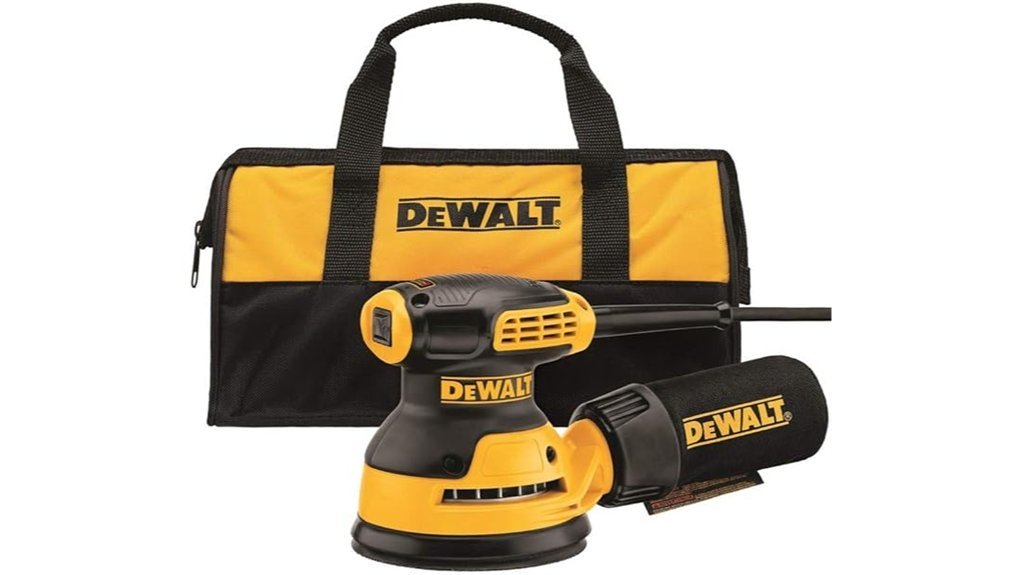
The DEWALT DWE6421K is built around one idea: get the job done fast without fuss. Its 3.0 amp motor runs at a fixed 12,000 OPM, and the low-profile body sits closer to the workpiece, which gives you better control on doors, panels, and cabinet faces. A separate counterweight cuts vibration, and rubber over-molding at the contact points keeps your hand from going numb on long sessions. The one-handed locking dust bag is genuinely convenient, and the port accepts common vacuum adapters when you want stronger extraction.
Why You’ll Like It: There is nothing to set up and nothing to adjust — it starts fast and removes material quickly, which is what most weekend projects actually need.
Who Should Buy This: DIYers and tradespeople doing regular surface prep, paint removal, and general woodworking.
Who Should Avoid This: It runs at a single speed, so skip it if you regularly work on veneer, plastics, or soft woods that need a slower pass.
Pros:
- Powerful 3.0 amp motor with 12,000 OPM for quick and effective sanding.
- Enhanced dust collection system with a one-handed locking dust bag for convenience.
- Compact design with reduced vibration and improved comfort for extended use.
Cons:
- Corded design limits mobility and requires a nearby power source.
- Single fixed speed — no dial for delicate materials.
- The dust collection bag needs emptying fairly often on bigger jobs.
Makita BO5041K 5″ Random Orbit Sander — Best Speed Range
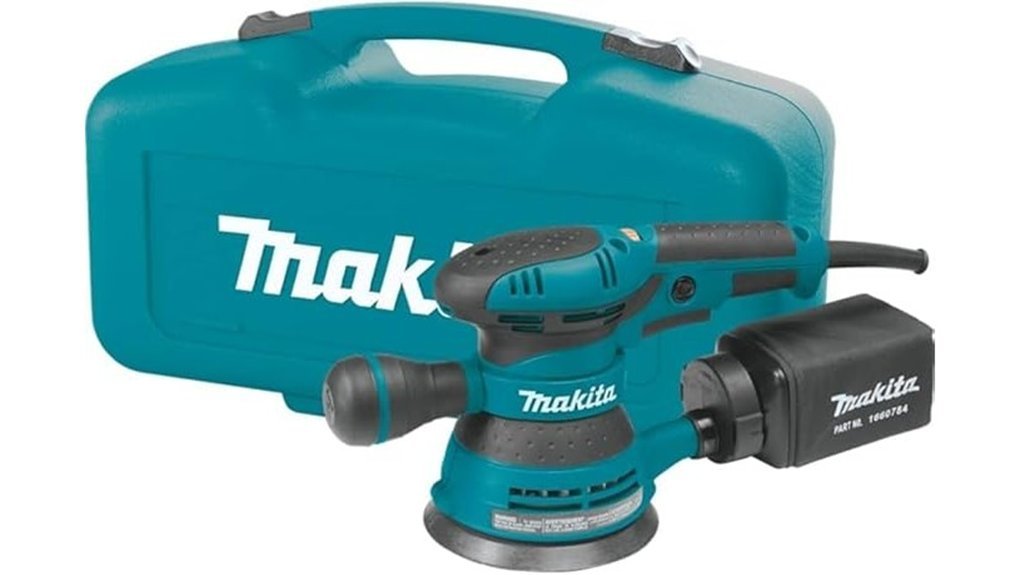
The Makita BO5041K pairs a 3.0 AMP motor with a variable speed dial spanning 4,000 to 12,000 OPM — a lower floor than anything else here. That matters when you’re working with heat-sensitive finishes, soft timber, or fillers that gum up at high speed. The rubberized palm grip and separate front handle let you switch between one-handed detail work and two-handed pressure on larger panels, which cuts fatigue on long sessions. It is the most flexible tool in the lineup for someone who works across mixed materials.
Why You’ll Like It: The 4,000 OPM low end gives you genuine control on materials that other sanders will scorch or dig into.
Who Should Buy This: Woodworkers and refinishers who move between hardwood, softwood, painted surfaces, and delicate stock in the same project.
Who Should Avoid This: If you want the lightest, most compact tool for overhead or one-handed work, this one has more heft than the SKIL or PORTER-CABLE.
Pros:
- Powerful 3.0 AMP motor ensures efficient and smooth sanding performance.
- Widest variable speed range here (4,000–12,000 OPM) for mixed materials.
- Ergonomic design with rubberized grips enhances comfort, reducing fatigue during extended use.
Cons:
- Heavier than the compact models in this list during prolonged overhead use.
- The bag-based dust collection is less contained than a sealed canister system.
- Positioned as a professional-grade tool rather than an entry-level one.
SKIL 5” Random Orbital Sander with Dust Box — Best Budget Pick
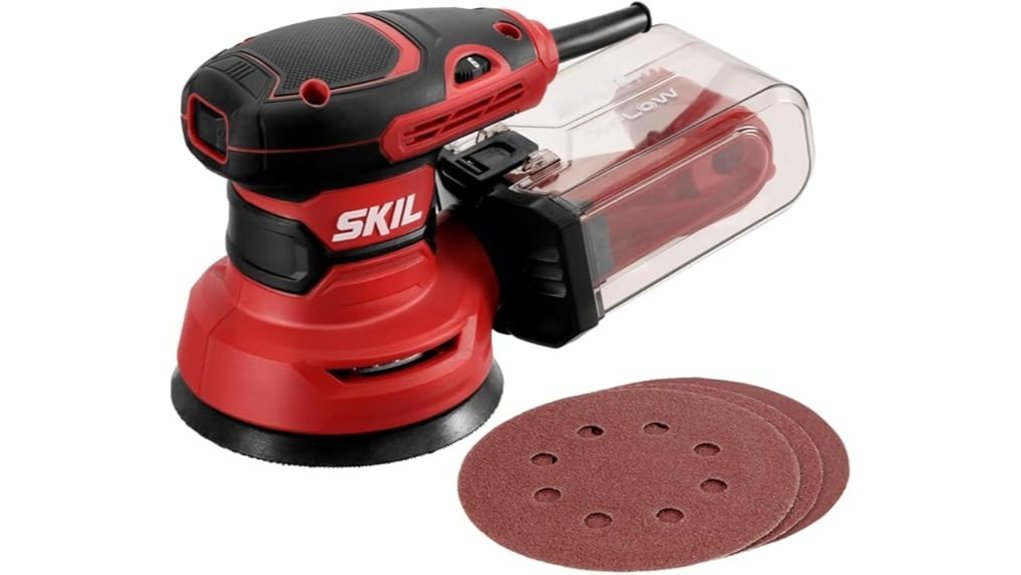
The SKIL 5” Random Orbital Sander is the value pick that doesn’t feel stripped down. Its 2.8 amp motor reaches up to 13,000 orbits per minute — the highest top speed in this group — and it still includes variable speed control, which two of the pricier sanders here don’t. The X-flow dust collector uses cyclonic airflow to pack dust into a transparent container, so you can see when it needs emptying instead of guessing. A soft rubber grip and counterweight balance keep hand fatigue down, and the compact body gets into corners and tight cabinet interiors that bulkier sanders can’t reach.
Why You’ll Like It: You get the speed dial that actually matters for finish work without paying professional-tier money for it.
Who Should Buy This: First-time buyers, occasional DIYers, and anyone who needs a compact sander for tight spaces.
Who Should Avoid This: If you sand large surfaces for hours at a time, a heavier 3 amp tool will hold speed better under sustained load.
Pros:
- Powerful 2.8 amp motor delivers high performance with up to 13,000 orbits per minute.
- Effective dust collection system keeps workspace clean with an easy-to-empty transparent container.
- Ergonomic design with soft rubber grip and variable speed control enhances user comfort and reduces fatigue.
Cons:
- Compact size may limit the ability to sand larger surfaces efficiently.
- Dust collection effectiveness can vary based on material being sanded.
- Variable speed control may require some adjustment for optimal performance on different projects.
CRAFTSMAN Orbital Sander, 5 inch, 12,000 OPM, 3 Amp, Corded (CMEW231) — Best Simple Corded Pick
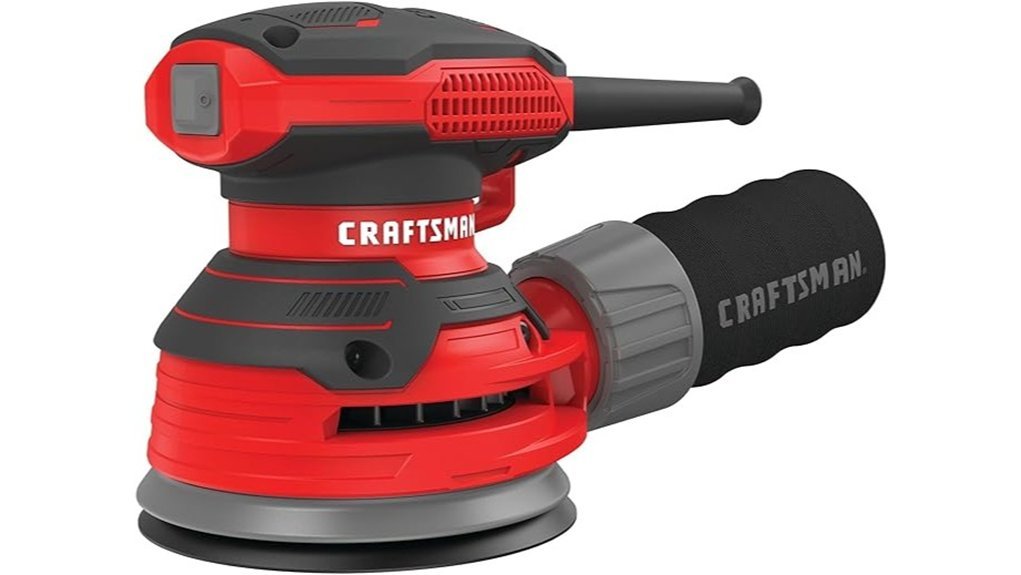
The CRAFTSMAN CMEW231 keeps things simple: a 3.0 Amp motor, a fixed 12,000 OPM, and no settings to think about. What sets it apart is that CRAFTSMAN states the port size outright — it takes a 1-3/4 inch vacuum hose, so you know before buying whether your shop vac will connect without hunting for adapters. The onboard dust bag handles smaller jobs, and the dust-sealed switch protects the internals from the grit that kills cheaper sanders. It comes with a limited warranty; confirm the current terms on the product page, as coverage varies by region and retailer.
Why You’ll Like It: Clear vacuum compatibility removes the most common frustration people hit when trying to hook a sander to dust extraction.
Who Should Buy This: Homeowners tackling furniture, decks, and paint prep who want reliable power and no learning curve.
Who Should Avoid This: No speed dial, so it’s the wrong choice for veneer, plastics, or automotive finishes.
Pros:
- High speed: Operates at 12,000 OPM for fast and effective sanding.
- Dust collection: Includes an on-board dust bag and connects to a 1-3/4 in. vacuum hose for cleaner workspaces.
- Durable design: Features a dust-sealed switch that helps extend switch life.
Cons:
- Corded: Limited mobility due to the need for a power outlet.
- Fixed speed: No variable-speed dial for delicate materials.
- Noise level: Can be louder than some users might prefer, especially during extended use.
PORTER-CABLE Random Orbit Sander, 5-Inch (382) — Best Basic Single-Speed
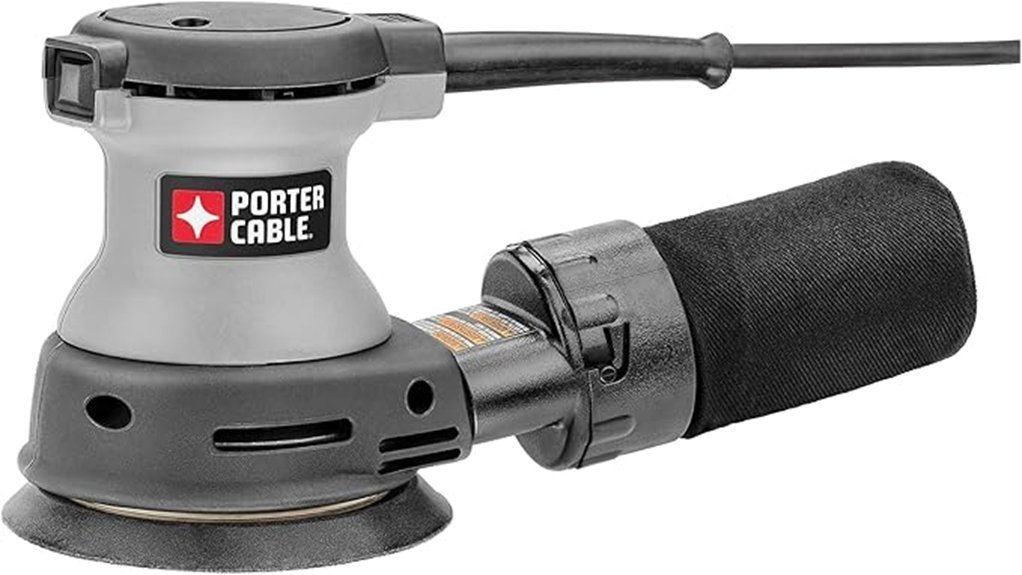
The PORTER-CABLE 382 has been a shop staple for years, and it earns its place on basics rather than features. It runs a 1.9 amp motor at a fixed 12,000 OPM — there is no variable-speed dial, so it is a finish sander first and a stock-removal tool second. Its sealed 100% ball-bearing construction and dust-sealed switch are the reasons these hold up over the long term, and the Controlled Finishing System keeps pad speed steady at startup to minimise gouging when the pad first lands. The dual-plane counter-balanced fan keeps vibration low, and it accepts standard 5-inch, 8-hole hook-and-loop discs.
Why You’ll Like It: It is light, uncomplicated, and built around durability rather than a spec sheet — a good second sander to keep loaded with fine grit.
Who Should Buy This: Anyone who wants a simple, durable finish sander for light-to-moderate work and doesn’t need speed control.
Who Should Avoid This: Skip it if you need variable speed or the strongest motor for heavy stock removal — the 3 amp models above will work faster.
Pros:
- Durable sealed 100% ball-bearing construction supports long service life.
- Dust-sealed switch helps prevent dust ingress.
- Ergonomic design and counter-balanced fan reduce user fatigue during extended use.
Cons:
- Single speed only — no dial for delicate or heat-sensitive materials.
- Lowest amperage in this lineup, so it is slower on heavy stock removal.
- Basic bag-based dust collection rather than a sealed canister.
How to Choose a Random Orbital Sander
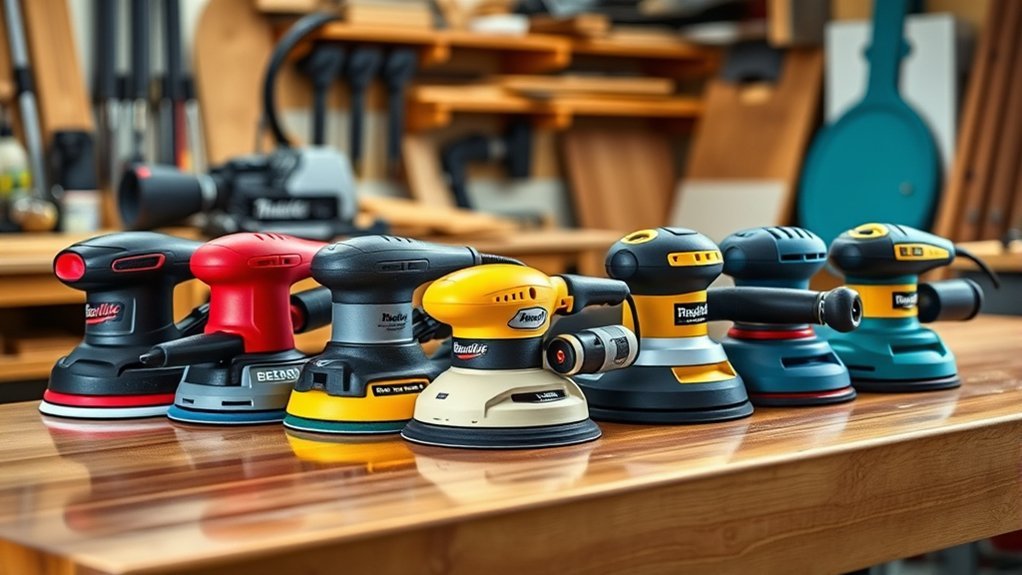
When selecting a random orbital sander, a handful of factors decide whether you’ll enjoy using it or fight it. Motor power, dust collection efficiency, and variable speed control drive the sanding results. Ergonomic design and the size and weight of the tool decide how long you can keep going before your hands give out.
Before You Buy — Quick Checklist
- Do you need variable speed? Essential for veneer, plastics, and finishes; optional for rough lumber.
- Will you connect a shop vac? Check the dust port size against your hose before ordering.
- How long are your sessions? Longer work favours lower vibration and a comfortable grip over raw power.
- Are you sanding tight spaces? A compact, low-profile body matters more than motor size.
- Do you already own 5-inch, 8-hole discs? All the models here take the same standard pattern.
Motor Power Considerations
Motor power directly affects how quickly a sander removes material and how well it holds speed under pressure. Corded 5-inch models generally run between roughly 2 and 3 amps, and higher amp ratings usually mean the tool bogs down less on tougher material and during longer sessions. Speed, measured in orbits per minute (OPM), typically falls between 4,000 and 13,000 OPM across the models covered here, and it influences the smoothness of the finish. Variable speed control adds versatility, letting you match the speed to the material rather than forcing every job through one setting. Power and speed control together are what allow one sander to handle both light finishing and heavier stock removal.
Dust Collection Efficiency
Dust collection affects both the quality of your finish and the air you’re breathing, so it deserves more attention than it usually gets. Some sanders use a simple bag; others use a sealed canister. Bosch advertises a microfilter on the ROS20VSC canister as capturing particles down to 1/2 micron — a manufacturer specification rather than an independently tested figure, so treat it as a design goal rather than a guarantee. Practical details matter more day to day: twist-off canisters and one-handed locking bags make emptying far less messy. Connecting to a shop vac almost always beats onboard collection, giving continuous suction and no bag to empty — just confirm the port and hose sizes match. A dust-sealed switch is worth looking for too, since dust getting into the switch is a common failure point.
Variable Speed Control
Variable speed control is the feature that most often separates a sander you keep from one you replace. It lets you adjust sanding speed — roughly 4,000 to 13,000 OPM depending on the model — to suit the material in front of you. Slower speeds suit veneer, thin stock, plastics, and heat-sensitive finishes that faster speeds will burn or dig into; higher speeds handle bare hardwood and paint removal. Most models use a simple dial. Note that not every sander has it: the DEWALT, CRAFTSMAN, and PORTER-CABLE models here are all fixed-speed, which is fine for general woodworking but limiting for delicate work.
Ergonomic Design Features
Ergonomics decide how long you last, not how fast you sand. Many models use rubberized grips and over-molded handles that reduce hand fatigue over extended use. Counterweight designs are common and cut vibration, which improves both control and comfort. A lower profile height puts your hand closer to the workpiece and makes it easier to feel what the pad is doing. Some sanders, like the Makita, add a front handle for two-handed work on larger panels. If you sand for hours, prioritise soft grips and low vibration over an extra half-amp of motor.
Size and Weight
The size and weight of a random orbital sander affect both performance and user comfort. Nearly all general-purpose models use a 5-inch pad, which balances coverage against control. Lighter models improve maneuverability and reduce fatigue during prolonged or overhead use, while heavier ones tend to sit more steadily on flat panels. Compact designs reach into corners and cabinet interiors that larger sanders can’t. Height matters too — shorter bodies let you keep your hand near the work for more accurate sanding on detailed pieces.
Build Quality and Durability
Build quality is what separates a sander that lasts a decade from one that fails in a season. Models with ball-bearing construction generally run smoother and last longer than bushing-based designs. A dust-sealed switch protects against dust ingestion, one of the most common causes of failure in sanders. Sealed construction helps reduce maintenance needs over the life of the tool. Dual-plane counter-balanced designs reduce vibration, which is easier on both your hands and the tool’s internals. None of these features guarantee longevity, but their absence is usually a warning sign.
Accessory Compatibility
Accessory compatibility affects both cost and convenience over the life of the tool. A dust port that fits standard vacuum hoses makes a big difference — check the stated port size, since a mismatch means buying an adapter. Sanders with a hook-and-loop attachment system allow quick, secure disc changes; all the models covered here use standard 5-inch, 8-hole discs, so replacement paper is easy to find and interchangeable between them. Some models include adapters for external dust extraction in the box, others don’t, so check the included accessories before ordering.
Warranty and Support Options
Warranty terms vary by brand, region, and retailer, and they do change — always read the current terms on the product page rather than relying on a figure quoted elsewhere. A warranty covering both parts and labor offers more meaningful protection than one covering parts alone. Note that improper use, commercial use, or unauthorised repairs can void coverage on most power tools. Accessible customer support and easy access to replacement pads and brushes matter just as much as the warranty length, particularly if you plan to keep the tool for years.
Safety Note — Read Before Sanding
- Wear eye protection and hearing protection. Corded sanders in this class are loud enough to matter over long sessions.
- Fine wood dust is a respiratory hazard. Use a properly fitted N95 or P100 respirator, not a loose cloth mask, and work in a ventilated space.
- If you are sanding a home built before 1978, the paint may contain lead. Do not power-sand it. Have the surface tested and follow lead-safe procedures.
- Never sand pressure-treated lumber, composites, or unknown coatings without checking what’s in them first.
- Unplug the tool before changing discs or pads.
Frequently Asked Questions
How Do Random Orbital Sanders Differ From Regular Sanders?
Random orbital sanders spin the disc while also moving it in small ellipses, so no part of the abrasive travels the same path twice. That randomised action is what avoids swirl marks and makes the tool insensitive to grain direction. Standard sheet or orbital finishing sanders move in a fixed pattern, which can leave visible repeating scratches, particularly under a stain or clear finish.
What Types of Projects Are Best Suited for Random Orbital Sanders?
They’re at their best on furniture refinishing, cabinet and trim work, deck restoration, and general paint or coating removal on flat and gently curved surfaces. They also work on metal with the right abrasive. They are less suited to drywall — joint compound clogs discs quickly and a 5-inch pad is slow going on walls, so a dedicated drywall sander is a better tool for that job.
What Grit Sequence Should I Use?
For bare wood, a common progression is 80 grit for shaping and heavy removal, 120 for smoothing, then 180 or 220 before finishing. Skipping more than one grit step usually leaves scratches the next grit can’t fully erase. For paint removal, start coarser at 60 or 80 and work up. Always let the sander’s weight do the work — pressing down slows the pad and causes swirls rather than speeding things up.
Do I Need to Connect a Shop Vac?
You don’t need one, but it makes a noticeable difference. Onboard bags and canisters catch a good portion of the dust, while a shop vac gives continuous suction, keeps the surface clearer so you can see your progress, and means no bag to empty mid-job. Before buying, check the sander’s dust port size against your hose — the CRAFTSMAN CMEW231 takes a 1-3/4 inch hose, and other models may need a universal adapter.
How Often Should I Replace the Sanding Discs?
Replace a disc once it stops cutting efficiently, feels glazed, or shows clogging with resin or paint residue. A worn disc generates heat and burnishes the surface instead of cutting it, which makes finishes adhere poorly. Discs are inexpensive relative to your time — changing them often is cheaper than sanding twice.
Are There Any Safety Precautions for Using Random Orbital Sanders?
Wear eye protection, hearing protection, and a properly fitted N95 or P100 respirator. Work in a ventilated area, keep your hands clear of the pad, secure the workpiece, and unplug the tool before changing discs. Do not power-sand paint in homes built before 1978 without testing for lead first.
Can I Use a Random Orbital Sander for Polishing Surfaces?
Only with caution. Most sanders in this class run far faster than polishing compounds are designed for, and on automotive paint that can burn the clear coat. If you try it, use a variable-speed model set to its lowest setting with a proper polishing pad and check the manufacturer’s guidance first. For serious paint correction, a dedicated dual-action polisher is the right tool.
Final Recommendation
If you want one sander that handles everything from rough prep to final finish while keeping your workshop breathable, the BOSCH ROS20VSC is the pick — variable speed plus the best onboard dust capture in this group.
If you sand often and just want to grab the tool and go, the DEWALT DWE6421K gives you a full 3 amps and a dust bag that actually stays put, with nothing to adjust.
On a tighter budget, the SKIL 5” Random Orbital Sander still includes the variable-speed dial that two pricier sanders here leave out, which makes it the best value of the six.
Whichever you choose, buy a good stock of 5-inch, 8-hole discs at the same time — every model here takes the same pattern, and running fresh abrasive does more for your finish than any single feature on the tool.