
Choosing the right circular saw matters because blade size, power source, cutting capacity, visibility, weight, and battery compatibility can all affect how comfortably and accurately you work. A cordless saw can be easier to carry around a jobsite or home project, while a corded 7-1/4-inch model can provide continuous power without battery-runtime limits.
This guide compares four circular saws that suit different buyers: a versatile DEWALT cordless model, a Bosch blade-left saw with a clear cut-line view, a compact BLACK+DECKER option for lighter DIY work, and a 15-amp Makita corded saw for frequent framing and ripping.
Last updated: September 19, 2026. Core specifications were rechecked against current manufacturer information. Marketplace prices, ratings, review totals, and availability can change.
Affiliate disclosure: This roundup is reader-supported. When you click through qualifying Amazon links, we may earn a referral commission at no additional cost to you.
Quick Verdict
- DEWALT DCS391B: Best fit here for buyers already using DEWALT 20V MAX batteries who want a portable 6-1/2-inch saw.
- Bosch CCS180B: Best fit for buyers who prefer a blade-left design and strong visibility of the cut line.
- BLACK+DECKER BDCCS20B: Best fit for lighter DIY projects where compact size and simple adjustments matter most.
- Makita 5007MGA: Best fit for frequent corded cutting, framing, and ripping where continuous power and a 7-1/4-inch blade are priorities.
Top Picks
|
Category |
Product |
Best For |
|---|---|---|
|
🏆 Best Cordless |
DEWALT 20V MAX owners and mobile cutting |
|
|
👁 Best Blade-Left Visibility |
Clear cut-line viewing and Bosch 18V users |
|
|
💰 Best for Light DIY |
Occasional home projects and compact handling |
|
|
⚡ Best Corded |
Framing, ripping, and frequent cutting |
How We Chose These Saws
We focused on features that directly affect circular-saw buying decisions: blade diameter, maximum cutting capacity, no-load speed, bevel range, corded or cordless operation, weight, sightline, adjustment design, and compatibility with existing battery platforms.
We also considered practical ownership questions. A bare cordless saw can make excellent sense when you already own compatible batteries, but it may be less attractive when you need to buy a battery and charger separately. A corded saw avoids battery-runtime concerns but requires outlet access and cord management.
No hands-on testing claim is being made here. Recommendations are based on the listed product specifications, practical use cases, and the relative strengths and limitations of these four models.
DEWALT 6.5in

The DEWALT DCS391B is a 20V MAX cordless circular saw built around a 6-1/2-inch blade and a 5,150 RPM no-load speed. Its 0–50° bevel capacity and magnesium shoe make it a practical choice for common carpentry, sheet-goods work, framing cuts, and jobs where dragging an extension cord would be inconvenient.
This exact DCS391B listing is a tool-only model, so plan on supplying a compatible DEWALT 20V MAX battery and charger. That makes it especially attractive if you already use the same battery platform.
Best for: Existing DEWALT 20V MAX users who want a portable general-purpose circular saw.
Think twice if: You need a battery and charger included or regularly make long, continuous cuts where a corded saw would eliminate charging interruptions.
What People Say
The source roundup’s buyer-feedback summary emphasizes portability, familiar DEWALT battery compatibility, and adequate cutting performance for common lumber and sheet goods. Some feedback also points to cut-line visibility and adjustment feel as areas buyers may want to evaluate personally.
Because marketplace reviews and ratings change over time, the chart below should be treated as supplementary historical sentiment information rather than a live Amazon rating or current review count.

Situational Benefits
|
Situation |
How It Helps |
|---|---|
|
Breaking Down Plywood |
The cordless design keeps an extension cord from dragging across a large sheet while you make guided cuts. |
|
Framing and Stud Work |
A 6-1/2-inch blade provides useful capacity for common dimensional-lumber cuts while keeping the saw more compact than many 7-1/4-inch models. |
|
Tight Jobsite Cuts |
Cordless operation makes it easier to reposition the tool in locations where outlet access is inconvenient. |
|
Existing DEWALT Tool Collection |
Using an existing compatible 20V MAX battery can reduce the extra equipment needed to put a bare tool into service. |
DIY Tips
Remove the battery before changing the blade or making adjustments. The DCS391 uses a blade-lock system and blade wrench rather than a tool-free blade-change mechanism.
Support and clamp the workpiece, use eye and hearing protection, set the blade only slightly below the material where appropriate, keep both hands positioned safely, and allow the blade to reach operating speed before entering the cut. Do not force the saw if feed resistance increases.
Ease Of Use
|
Feature |
Ease Level |
|---|---|
|
Cordless Mobility |
Easy |
|
Blade Change |
Moderate — blade wrench required |
|
Depth / Bevel Adjustment |
Moderate |
|
Battery Swap |
Easy |
|
Getting Started From Scratch |
Moderate — battery and charger sold separately |
Versatility
The 6-1/2-inch format works well for plywood, dimensional lumber, remodeling tasks, and many general carpentry cuts. The 0–50° bevel range also gives you useful flexibility for angled cuts.
For extended production ripping or applications that demand the deeper capacity of a full-size 7-1/4-inch saw, a larger corded or higher-capacity cordless model may be more appropriate.
Durability
The magnesium shoe is designed to combine lower weight with jobsite durability. DEWALT currently lists a 3-year limited warranty for the DCS391B, along with additional service and satisfaction provisions subject to the manufacturer’s warranty terms.
Problem Solving
The main problem this saw solves is mobility. It provides useful circular-saw capacity without requiring an extension cord, while allowing existing DEWALT 20V MAX owners to use batteries they may already have.
If runtime is your main concern, battery capacity and the number of charged packs you have available will matter as much as the saw itself.
Key Benefits
- 6-1/2-inch cordless design for portable cutting
- 5,150 RPM no-load speed
- 0–50° bevel capacity
- Magnesium shoe for a durable cutting base
- Compatible with the DEWALT 20V MAX battery platform
Bosch 6.5in

The Bosch CCS180B is an 18V 6-1/2-inch blade-left circular saw designed around cut-line visibility and maneuverability. Bosch lists a 3,900 RPM no-load speed, 50° maximum bevel, 2-inch cutting depth at 90°, electronic motor brake, dust blower, and approximately 6.7-lb tool weight.
The blade-left configuration can give a strong view of the cut line when the main handle is held in the right hand, so it is better described as a visibility-focused layout rather than simply a “left-handed” saw.
The CCS180B is also a bare tool. A compatible Bosch 18V battery and charger are required separately unless you already own them.
Best for: Buyers who prioritize a blade-left sightline, manageable weight, and Bosch 18V battery compatibility.
Think twice if: You need a battery included or want the deeper cutting capacity of a 7-1/4-inch saw.
What People Say
The existing feedback summary emphasizes the saw’s manageable size, portability, and sightline. It also notes the normal limitation of a bare-tool purchase: buyers without Bosch 18V batteries must budget for the battery and charger separately.
The chart below comes from the original roundup’s sentiment material and should not be interpreted as a live marketplace score or current review total.

Situational Benefits
|
Situation |
How It Helps |
|---|---|
|
Following a Marked Cut Line |
The blade-left configuration can provide a direct view of the blade and cut line when used from the appropriate operating position. |
|
Panel Breakdown |
Cordless operation helps prevent a power cord from dragging across sheet goods. |
|
Jobsite Mobility |
Its compact 6-1/2-inch format is convenient for moving between work areas and handling routine cutting jobs. |
|
Existing Bosch 18V Setup |
Owners of compatible batteries can add the bare saw without starting another battery platform. |
DIY Tips
Remove the battery before blade changes or adjustments. Use a sharp blade intended for the material, support the workpiece properly, and confirm that the depth and bevel controls are securely locked before starting the saw.
The dust blower helps maintain cut-line visibility, but eye protection remains essential. Never place your hands in the blade path or rely on the electronic brake as a substitute for the blade guard and proper technique.
Ease Of Use
|
Feature |
Ease Level |
|---|---|
|
Weight & Balance |
Easy |
|
Cut-Line Visibility |
Easy |
|
Bevel Adjustment |
Moderate |
|
Blade Change |
Moderate |
|
Getting Started From Scratch |
Moderate — battery and charger sold separately |
Versatility
The CCS180B is well suited to common wood-cutting applications such as plywood, dimensional lumber, remodeling tasks, and general carpentry. Its 50° bevel range supports angled cuts, while the 2-inch maximum depth at 90° covers many routine applications.
Durability
Bosch specifies an aluminum foot and upper guard along with electronic protection features intended to help protect the tool and battery from overload. As with any circular saw, durability will also depend on correct blades, proper feed rate, clean ventilation openings, and storage conditions.
Problem Solving
This model is most compelling when cut-line visibility and cordless mobility matter together. The blade-left design, dust blower, and relatively compact dimensions help address situations where following a marked line is a higher priority than maximum cutting depth.
Key Benefits
- Blade-left design for a clear cut-line view from the appropriate operating position
- 6-1/2-inch blade with 2-inch maximum cutting depth at 90°
- 3,900 RPM no-load speed
- 50° bevel range
- Electronic motor brake and dust blower
BLACK+DECKER 5.5in
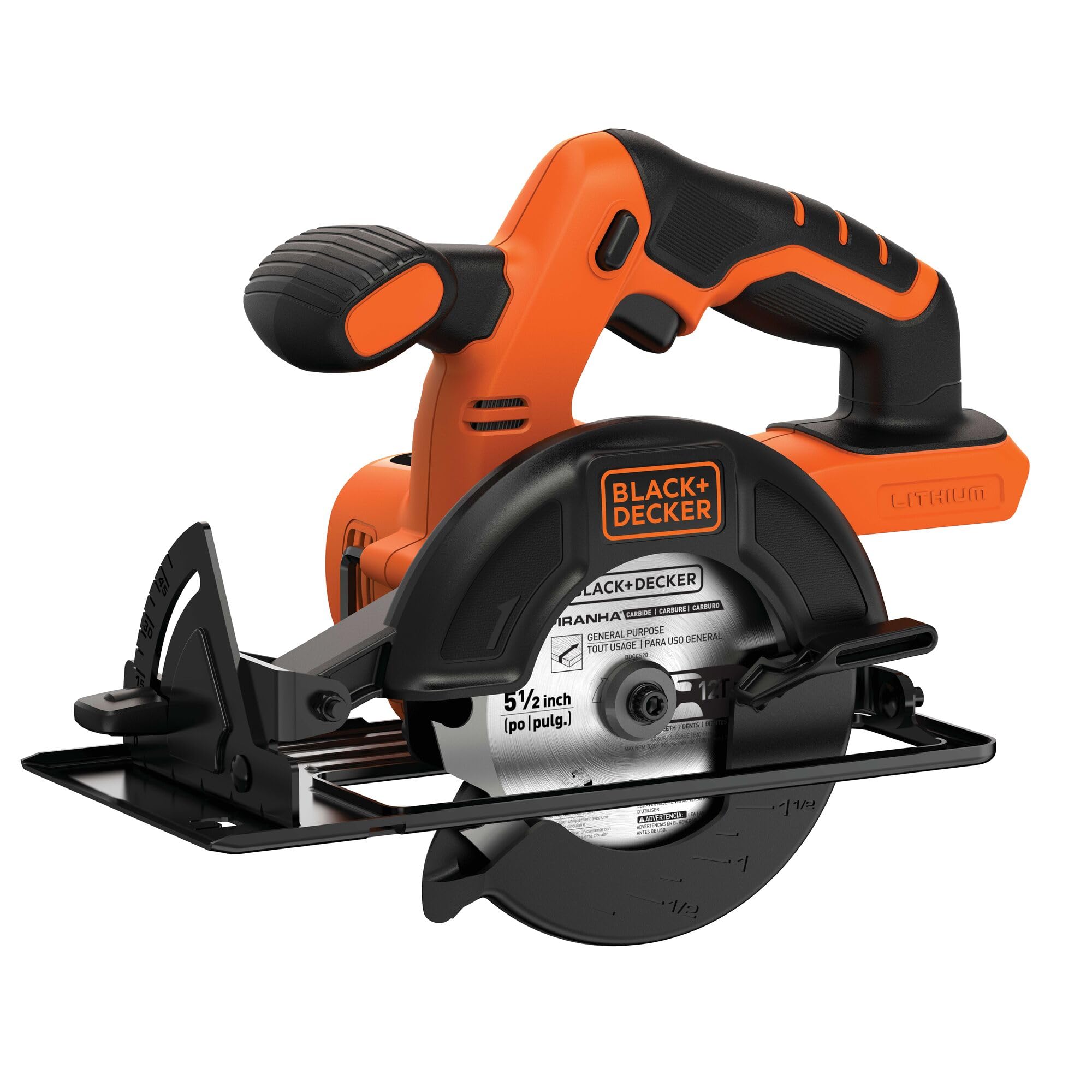
The BLACK+DECKER BDCCS20B is a compact 20V MAX POWERCONNECT circular saw aimed primarily at home and DIY projects. It uses a 5-1/2-inch blade, runs at up to 3,700 RPM, weighs about 6.0 lb, and includes tool-free blade and depth adjustments.
The smaller blade makes the saw easier to handle than many full-size models, but it also means less cutting capacity. It is better suited to occasional panel cutting, small builds, repairs, and light carpentry than continuous heavy framing or deep ripping.
This exact model is sold as a bare tool, so a compatible POWERCONNECT battery and charger are required separately.
Best for: Homeowners and DIYers who prioritize manageable size, simple adjustments, and light-duty cordless convenience.
Think twice if: You regularly cut thick stock, perform production framing, or need the capacity of a 7-1/4-inch circular saw.
What People Say
The source roundup’s feedback summary focuses on manageable handling and suitability for smaller home projects. That matches the tool’s compact 5-1/2-inch format and DIY-oriented feature set.
The existing chart is retained as part of the original product section, but marketplace sentiment and review totals can change and should be checked on the retailer page if they matter to your decision.

Situational Benefits
|
Situation |
How It Helps |
|---|---|
|
Small DIY Projects |
The compact 5-1/2-inch format is easier to handle for repairs, shelves, small builds, and other occasional cutting tasks. |
|
Panel Cutting |
Cordless operation eliminates a trailing extension cord when working across larger sheets. |
|
Limited Storage Space |
The smaller tool footprint is convenient for a home workshop, garage shelf, or mobile DIY kit. |
|
First Circular Saw |
Tool-free depth and blade adjustments reduce the number of separate tools required for routine setup. |
DIY Tips
Remove the battery before adjusting the saw or changing the blade. Confirm that the blade is suitable for the material and properly installed before reconnecting the battery.
Support the workpiece so the offcut cannot pinch the blade, keep the shoe flat on the material, and use a straightedge when a long, straight rip matters. Do not force the saw through material that exceeds its practical capacity.
Ease Of Use
|
Feature |
Ease Level |
|---|---|
|
Weight & Handling |
Easy |
|
Blade Change |
Easy — tool-free design |
|
Depth Adjustment |
Easy — tool-free design |
|
Bevel Setup |
Easy to Moderate |
|
Getting Started From Scratch |
Moderate — battery and charger sold separately |
Versatility
This saw makes the most sense for light wood-cutting jobs, small home projects, plywood, trim, and occasional dimensional-lumber work. Its compact size is the advantage; maximum cutting capacity is not.
Durability
BLACK+DECKER currently lists a 2-year limited warranty for the BDCCS20B. Keeping the vents clear, using sharp blades, and avoiding sustained cuts beyond the saw’s intended workload will help reduce unnecessary strain.
Problem Solving
This model addresses the buyer who wants a simple cordless circular saw without the bulk of a larger jobsite model. Its tool-free adjustments are particularly convenient when quick setup matters more than maximum cutting depth.
Key Benefits
- Compact 5-1/2-inch blade format
- 3,700 RPM maximum no-load speed
- Approximately 6.0-lb tool weight
- Tool-free blade and depth adjustments
- Compatible with the POWERCONNECT 20V MAX battery system
Makita 7.25in
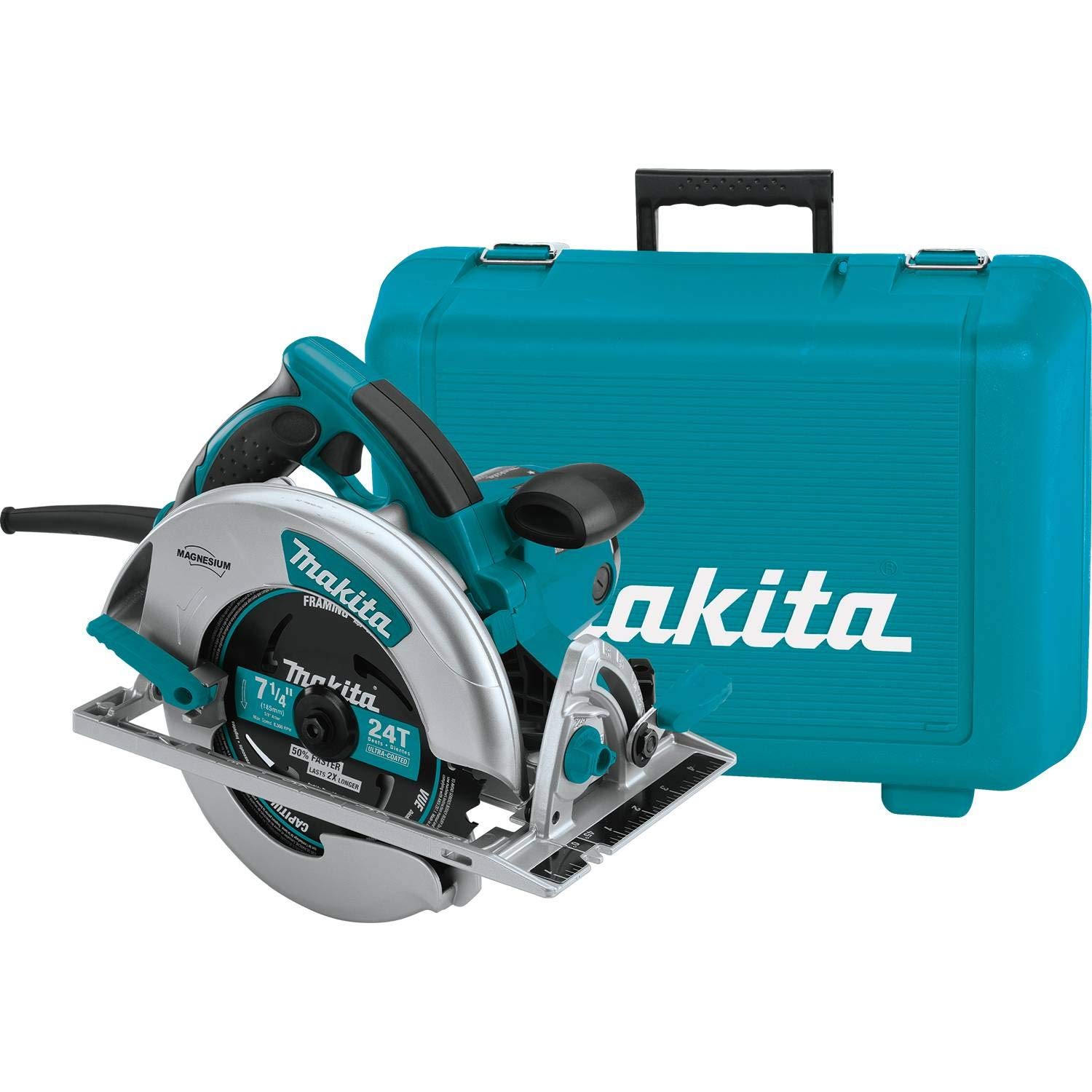
The Makita 5007MGA is the full-size corded option in this roundup. Its 15-amp motor runs at 5,800 RPM, the 7-1/4-inch blade provides up to 2-1/2 inches of cutting capacity at 90°, and the saw bevels from 0–56°.
Makita also equips it with an electric brake, two LED cut-line lights, a built-in dust blower, magnesium components, and large adjustment levers. Unlike the cordless models above, you do not need to manage batteries or charging, making it a better fit for long sessions near reliable AC power.
Best for: Frequent framing, ripping, decking, and workshop or jobsite cutting where continuous corded power is practical.
Think twice if: Your work regularly takes you away from outlets or you prioritize the lightest, most compact saw possible.
What People Say
The existing feedback summary emphasizes strong cutting performance, solid construction, the electric brake, and useful cut-line lighting. Those themes align with Makita’s verified specification set for the 5007MGA.
The chart below is retained from the original roundup, but it should not be read as a live Amazon rating or current marketplace review measurement.

Situational Benefits
|
Situation |
How It Helps |
|---|---|
|
Ripping Thick Lumber |
The 15-amp motor and 7-1/4-inch blade provide the capacity expected from a full-size corded circular saw. |
|
Following a Cut Line |
Two built-in LED lights and the dust blower help keep the cutting area easier to see. |
|
Repeated Jobsite Cuts |
Corded operation avoids battery depletion during long cutting sessions when AC power is available. |
|
Bevel Work |
The 0–56° bevel range with positive stops supports a broad range of common angled cuts. |
DIY Tips
Unplug the saw before changing the blade or making adjustments. Support the work securely, check that depth and bevel levers are locked, and keep the power cord safely behind the cutting path.
Allow the blade to reach speed before entering the material and use a steady feed rather than forcing the motor. The electric brake reduces blade coast after trigger release, but you should still wait for the blade to stop and maintain full control before setting the saw down.
Ease Of Use
|
Feature |
Ease Level |
|---|---|
|
Weight & Balance |
Moderate |
|
Electric Brake |
Easy |
|
LED / Cut-Line Visibility |
Easy |
|
Depth / Bevel Adjustment |
Easy to Moderate |
|
Continuous Runtime |
Easy when AC power is available |
Versatility
The 5007MGA is suited to framing, decking, sheet goods, dimensional lumber, ripping, crosscuts, and bevel work. Its main trade-off is cord management rather than battery runtime.
Durability
Makita uses magnesium components to reduce weight while maintaining a jobsite-oriented construction. The reinforced power cord and attached blade-wrench storage are practical details for frequent use.
Problem Solving
This saw is the straightforward choice in this lineup when you want full-size 7-1/4-inch capacity and uninterrupted operation without buying or rotating batteries. The LED lights, dust blower, and electric brake also address visibility and workflow concerns during repetitive cutting.
Key Benefits
- 15-amp corded motor with 5,800 RPM no-load speed
- 7-1/4-inch blade with 2-1/2-inch maximum cutting depth at 90°
- 0–56° bevel capacity
- Electric brake to reduce blade coast after trigger release
- Two LED lights and built-in dust blower for cut-line visibility
- Includes blade, rip fence, wrench, and case
Before You Buy a Circular Saw
- Check blade size: 7-1/4-inch saws generally provide more depth, while 5-1/2- and 6-1/2-inch cordless saws can be easier to carry and maneuver.
- Check what is included: All three cordless saws in this roundup are bare-tool listings, so battery and charger costs may matter.
- Match the battery platform: A bare cordless saw makes the most sense when you already own compatible batteries or plan to build around that platform.
- Consider cut-line visibility: Blade orientation, dust management, lighting, and the shoe’s sight marks can affect how easily you follow a line.
- Check depth and bevel capacity: Make sure the saw can cut the lumber thickness and angles required by your projects.
- Use the correct blade: Blade tooth count and design should match the material and the finish quality you need.
FAQ
Corded Or Cordless Circular Saw?
Choose based on where you work and how long you normally cut. Cordless circular saws are convenient when mobility, quick setup, and freedom from extension cords matter. A corded circular saw is often easier for long work sessions because its runtime is not limited by battery capacity, although you need reliable outlet access and safe cord management.
Which Circular Saw Blade Size Should You Pick?
A 7-1/4-inch blade is the standard full-size choice for framing and projects that need greater depth of cut. A 6-1/2-inch saw can balance useful cutting capacity with easier cordless handling. A 5-1/2-inch saw is more compact and works well for lighter DIY jobs but provides less maximum cutting depth.
Blade diameter is only part of the decision. Also match the blade’s arbor, tooth count, maximum RPM rating, and intended material to the saw and the work you are doing.
Do These Cordless Circular Saws Include Batteries?
The exact DEWALT DCS391B, Bosch CCS180B, and BLACK+DECKER BDCCS20B versions covered in this roundup are bare-tool models. Their compatible batteries and chargers are sold separately, so include those costs when comparing them with a corded saw.
Is A Blade-Left Circular Saw Better For Left-Handed Users?
Not automatically. Blade orientation mainly changes sightline, balance, motor position, and where debris may travel. Bosch specifically describes the CCS180B blade-left design as providing a strong view of the cut line when the main handle is held in the right hand. Choose the layout that feels natural while still allowing correct two-handed control and safe positioning.
Does An Electric Brake Make A Circular Saw Safer?
An electric brake can reduce how long the blade coasts after you release the trigger, which is useful between cuts. It does not replace the lower blade guard, eye protection, correct hand placement, workpiece support, or other safe operating practices.
How Do You Improve Circular Saw Accuracy?
Use a sharp blade appropriate for the material, mark the cut clearly, support the workpiece so the blade cannot bind, and use a straightedge or compatible guide for longer rips. Keep the saw’s shoe flat on the work, maintain a steady feed rate, and avoid twisting the saw while the blade is engaged.
What Should You Check Before Changing A Blade?
Remove the battery from a cordless saw or unplug a corded saw before touching the blade. Confirm the replacement blade has the correct diameter, arbor, rotation direction, application, and maximum RPM rating for the tool. Follow the manufacturer’s blade-installation procedure and verify that the lower guard operates correctly before cutting.
Wrapping Up
If you already use DEWALT 20V MAX batteries and want a portable general-purpose saw, the DEWALT DCS391B combines a 6-1/2-inch blade, 5,150 RPM, and a 50° bevel range in a cordless format.
The Bosch CCS180B stands out when you prefer a blade-left design and clear sightline, while the BLACK+DECKER BDCCS20B is the more compact choice for lighter home and DIY projects. For frequent cutting near reliable AC power, the Makita 5007MGA delivers a full-size 7-1/4-inch blade, 15-amp motor, 5,800 RPM, deeper cutting capacity, electric brake, and useful visibility features.
The most important step is to match the saw to your actual work. Consider cutting depth, blade size, battery ownership, expected runtime, weight, bevel requirements, and outlet access before choosing.
| Product Name | Image | Best For | Power Source | Blade Diameter | No-Load Speed | Tool Weight |
|---|---|---|---|---|---|---|
| DEWALT DCS391B 20V MAX Circular Saw |
|
Portable general cutting for existing DEWALT 20V MAX users | 20V MAX battery, tool only | 6-1/2 inches | 5,150 RPM | Not specified on the current manufacturer product page |
| Bosch CCS180B 18V Circular Saw |
|
Blade-left cut-line visibility | 18V battery, bare tool | 6-1/2 inches | 3,900 RPM | About 6.7 lb |
| BLACK+DECKER BDCCS20B Circular Saw |
|
Light DIY and compact handling | 20V MAX battery, tool only | 5-1/2 inches | 3,700 RPM | 6.0 lb |
| Makita 5007MGA Circular Saw |
|
Frequent framing, ripping, and continuous cutting | Corded, 15 amp | 7-1/4 inches | 5,800 RPM | 10.6 lb |
This roundup is reader-supported. When you click through qualifying Amazon links, we may earn a referral commission at no additional cost to you.