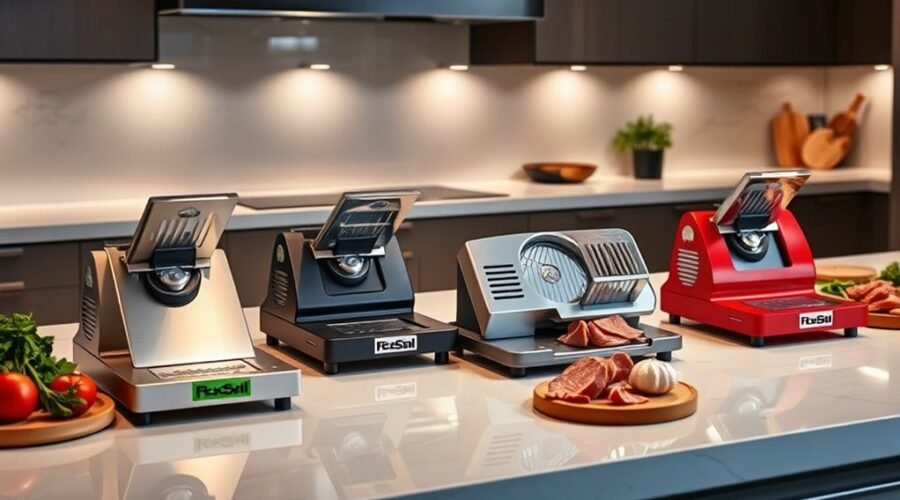
Deli-thin prosciutto, even roast beef for sandwiches, uniform cheese for a charcuterie board — a chef’s knife will get you close, but never consistent. A countertop meat slicer solves that in seconds, and it pays for itself fast if your household buys sliced deli meat every week. Below are four meat slicers worth considering in 2026, chosen to cover four different budgets and workloads: a versatile 200W all-rounder, a familiar brand-name machine, a genuinely heavy-duty 10-inch model, and a compact budget slicer with the strongest child-lock protection of the group. Each entry lists verified specifications, who it suits, and — just as importantly — who should skip it.
Quick Verdict: Which Slicer Fits You?
- Best Overall: Anescra 200W Electric Deli Food Slicer — most power and versatility for the money, and it ships with two blade types.
- Best Brand-Name Pick: Cuisinart Kitchen Pro FS-75 — the finest thickness control here (down to 1/32″) from a support-backed brand.
- Best Heavy-Duty: KWS 10″ 320W Electric Meat Slicer — for hunters, jerky makers and bulk batches. Big, heavy, and built for it.
- Best Budget & Safety Pick: OSTBA 150W Electric Meat Slicer — lightest and smallest, with a dual-button child lock.
Quick Comparison of the Best Meat Slicers
| Slicer | Motor | Blade | Thickness | Weight | Best For | Link |
|---|---|---|---|---|---|---|
| Anescra 200W Best Overall |
200W | Two 7.5″ (serrated + non-serrated) | 0–15 mm | About 10 lb | Weekly deli meat, bread and cheese | Check Price |
| Cuisinart FS-75 Best Brand-Name |
130W | 7.5″ undulated | 1/32″–1/2″ | About 11 lb | Paper-thin cuts and brand support | Check Price |
| KWS 10″ Best Heavy-Duty |
320W | 10″ stainless, built-in sharpener | 0–14 mm | About 39 lb | Hunters, jerky, bulk batches | Check Price |
| OSTBA 150W Best Budget & Safety |
150W | 7.5″ serrated | 0–15 mm | About 8.6 lb | Small kitchens, homes with kids | Check Price |
Anescra Electric Deli Food Slicer with Adjustable Thickness
BEST OVERALL
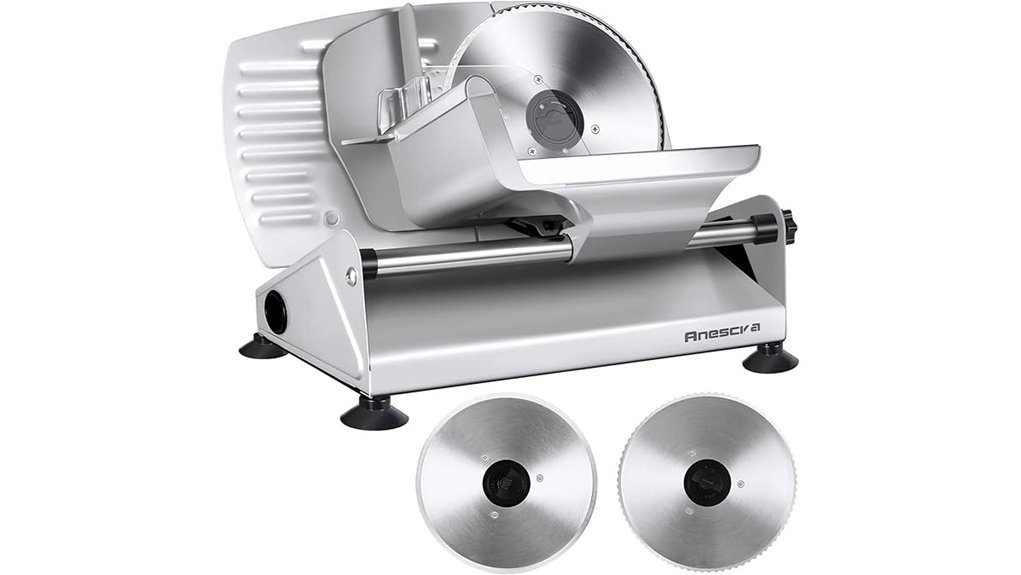
If you want one machine that handles everything the average household throws at it, the Anescra Electric Deli Food Slicer is the most complete package here. Its 200W motor is the strongest of the three compact models, which shows up when you are working through a dense cured sausage or a firm block of cheese rather than soft sandwich meat. The unit ships with two removable 7.5-inch stainless steel blades — a serrated blade fitted at the factory and a non-serrated blade in the box — so you can match the edge to the food instead of forcing one blade to do everything. A thickness dial covering 0–15mm handles both shaved deli slices and thick-cut steak fries of bread. The metal-bodied build weighs about 10 lb, so it stays put on the counter but is still liftable for storage, and the removable carriage, blade and ring-guard cover come off for cleaning. Note that it is hand wash only.
Why you’ll like it: the second blade is the quiet win. Crusty sourdough and soft mozzarella want completely different edges, and you can also dedicate one blade to raw meat to keep raw and ready-to-eat foods apart.
Best For: Home cooks who slice deli meat, cheese and bread regularly and want one machine that covers all three without upgrading later.
Who should skip it: anyone slicing large roasts or semi-frozen game — a 7.5-inch blade limits the diameter of what you can cut, and a compact machine will need rest breaks during long sessions.
Pros:
- 200W motor — the most power available in the compact 7.5-inch class here.
- Two blade types included, so you are not buying accessories on day one.
- 0–15mm dial covers shaved to thick-cut in one machine.
- Removable carriage, blade and ring-guard cover for straightforward cleaning.
Cons:
- The 7.5-inch blade limits how large a cut of meat you can slice.
- Compact machines are best worked in batches with cool-down breaks, not run continuously.
- Hand wash only — no dishwasher shortcut.
Cuisinart Kitchen Pro Meat Slicer (FS-75)
BEST BRAND-NAME PICK
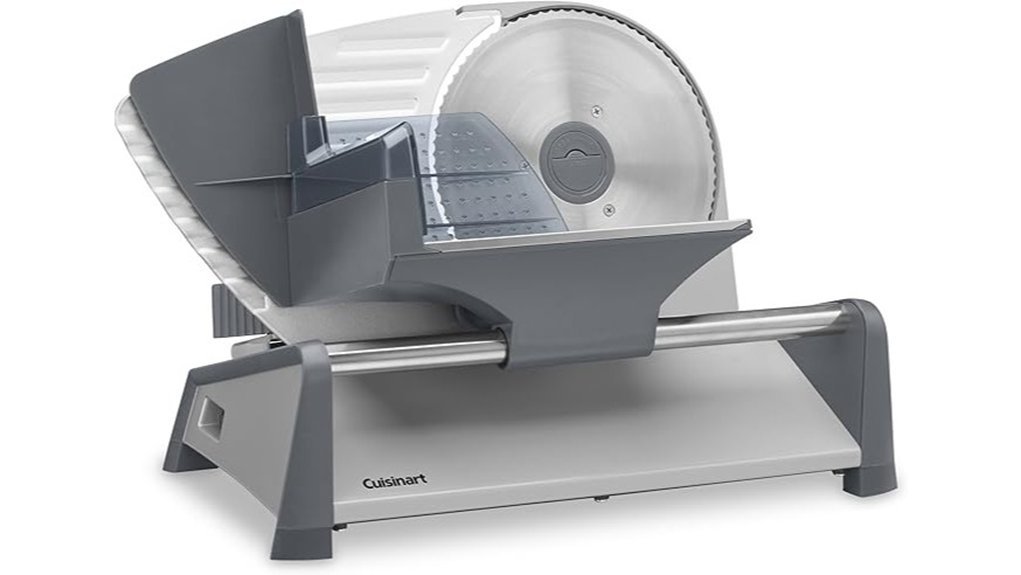
The Cuisinart Kitchen Pro Meat Slicer (FS-75) is the pick for buyers who would rather have a known brand with a parts and support network behind it. Its headline advantage is precision: the slice control knob adjusts from 1/32″ to 1/2″, the finest low-end setting in this group, which is what you need for genuinely translucent prosciutto. The removable 7.5-inch undulated stainless steel blade — scalloped rather than plain-edged — bites into crusty bread and firm cheese without tearing. A 130-watt motor drives it, which is the lowest wattage here but adequate for the fresh meat, firm cheeses, bread and roasts Cuisinart designs it around. Premium-coated steel and die-cast aluminium housing plus non-slip feet keep it stable, and the blade, food guide and stainless carriage all detach for cleaning. It measures roughly 18.25″ × 10.88″ × 11.13″ and weighs about 11 lb, so budget real counter space. Cuisinart backs the motor with a multi-year limited warranty — confirm the current term on the listing, as published figures vary between three and five years.
Why you’ll like it: that 1/32″ floor. If the reason you want a slicer is charcuterie rather than sandwich meat, this is the machine that reaches the thickness you are picturing.
Best For: Home cooks who prioritise very thin, precise slices and want a mainstream brand with accessible replacement parts.
Who should skip it: anyone planning to slice soft cheeses, very soft breads or work through large batches — 130W is the least power here, and Cuisinart positions this as a home-use machine, not a workhorse.
Pros:
- Finest Thickness Control: Adjusts from 1/32″ to 1/2″ for genuinely paper-thin slices.
- Undulated Blade: The scalloped edge handles crusty bread and firm cheese cleanly.
- Brand Support: Cuisinart sells replacement parts and backs the motor with a multi-year limited warranty.
- Easy Maintenance: Blade, food guide and carriage are all removable.
Cons:
- Lowest Wattage Here: 130W is fine for its intended foods but is the least powerful option in this roundup.
- Size Consideration: The 7.5-inch blade limits larger cuts, and the footprint is the largest of the three compact units.
- Hand Wash Only: Parts are not dishwasher rated.
- Warranty Wording Varies: Published motor warranty terms differ by retailer — verify before buying.
KWS 10″ Electric Meat Slicer (Commercial Model)
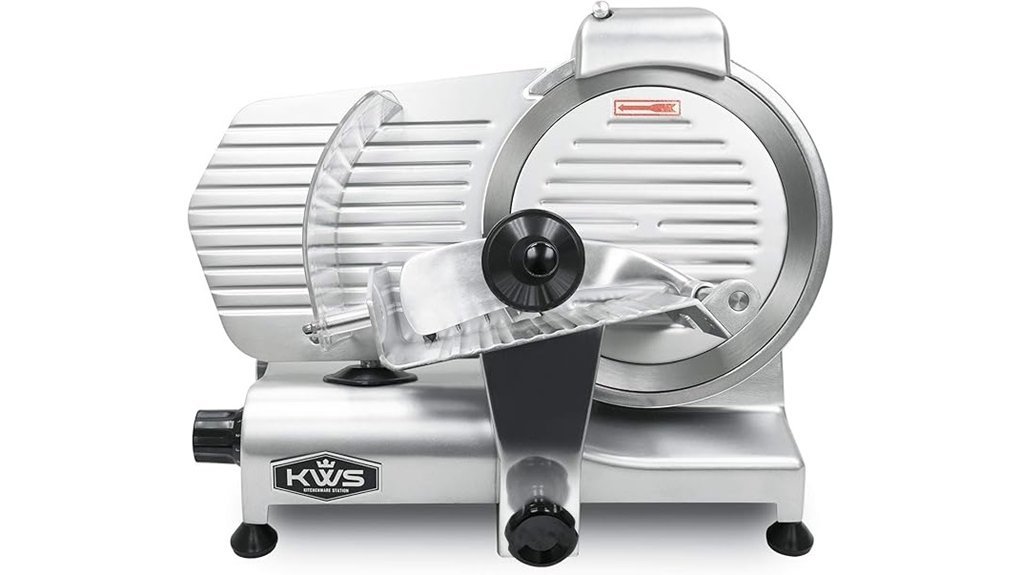
BEST HEAVY-DUTY
This is the machine for people whose slicing is measured in pounds, not sandwiches. The KWS 10″ Electric Meat Slicer runs a 320W high-torque motor (about 0.4 HP) against a 10-inch stainless steel blade, which is where it separates from everything else here: the larger blade diameter means whole roasts, briskets and large muscle cuts actually fit. It is rated for meat, cheese and semi-frozen products, so hunters processing game and anyone making jerky can work with firm, chilled meat rather than fighting soft cuts. The thickness dial covers 0 to about 14mm, and a built-in sharpener lets you touch up the blade rather than replace it — the only model here with that feature. The aluminium alloy body and skid-proof feet keep a heavy machine planted, and KWS lists this line as ETL and NSF certified, with a downloadable manual and replacement parts (belts, whetstones, base plates) available for the model family.
Why you’ll like it: it is the only slicer here that will not slow you down. Where a compact 150W unit wants a rest after a few pounds, this one keeps going — and the built-in sharpener means performance does not degrade over a season of use.
Best For: Hunters, jerky and charcuterie makers, large households, caterers, and anyone slicing in bulk rather than by the sandwich.
Who should skip it: almost everyone slicing a few times a month. At roughly 20″ × 18.5″ × 15.5″ and about 39 lb, this lives permanently on a counter or shelf — it is not a machine you lift in and out of a cupboard. It also has no child lock, so it is the wrong choice for a kitchen where children are around unsupervised.
Pros:
- 320W motor handles dense, semi-frozen and bulk work without stalling.
- 10-inch blade fits larger roasts and whole muscle cuts that 7.5-inch models cannot.
- Built-in sharpener maintains the blade edge over time.
- Listed by KWS as ETL and NSF certified, with parts and a manual available.
Cons:
- Large and heavy (about 39 lb) — it needs dedicated, permanent counter or shelf space.
- No child lock; the blade is fully exposed in normal use, so it demands respect.
- Significantly more machine — and more money — than a household slicing sandwich meat needs.
- Learning curve on thickness settings and technique before you get consistent results.
OSTBA Electric Meat Slicer with Adjustable Thickness
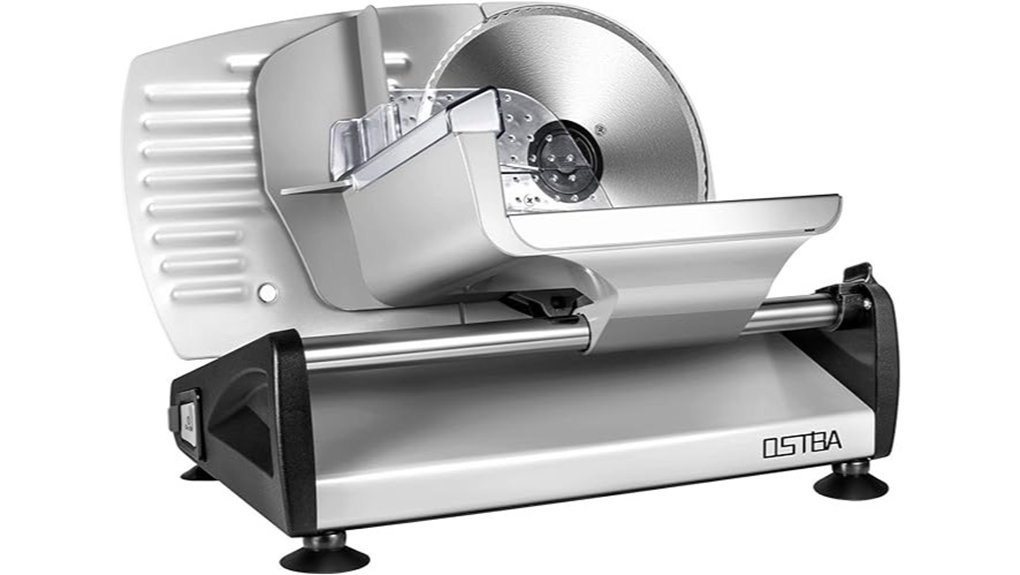
BEST BUDGET & SAFETY PICK
The OSTBA Electric Meat Slicer is the entry point to this category and the easiest one to live with in a small kitchen. It pairs a 150W motor with a 7.5-inch serrated stainless steel blade and a 0–15mm thickness range, which covers everything from shaved deli meat to thick-cut cheese. Its real differentiator is safety: a dual-button child lock requires you to press a safety lock and the power button together before the blade turns, and non-slip suction feet anchor it to the counter. At about 8.6 lb and roughly 14.2″ × 9.7″ × 10.2″, it is the lightest and smallest machine here — genuinely easy to lift into a cupboard between uses. The blade, carriage and ring-guard cover come off for cleaning, and OSTBA lists the removable parts as dishwasher safe, though hand-washing the blade is the safer habit.
Why you’ll like it: it removes the two things that stop people buying a slicer at all — the price and the fear of leaving a blade accessible in a house with kids.
Best For: First-time slicer buyers, small kitchens with limited counter and cupboard space, and households with children.
Who should skip it: anyone slicing in volume or working with dense, semi-frozen meat. 150W is the second-lowest wattage here, one blade comes in the box, and extra blades or pushers are sold separately with availability that varies.
Pros:
- Dual-button child lock — the strongest safety mechanism in this roundup.
- Lightest and most compact machine here, at about 8.6 lb.
- 0–15mm thickness range despite the entry-level positioning.
- Removable parts listed as dishwasher safe for faster cleanup.
Cons:
- 150W suits light and moderate use, not heavy-duty or bulk slicing.
- The 7.5-inch blade limits the size of what you can slice.
- Only one blade included; additional blades and pushers cost extra and are not always in stock.
Factors to Consider When Choosing Meat Slicers: 2026 Top Picks and Buying Guide
Choosing the right meat slicer comes down to a handful of decisions: how much motor power you actually need, what blade size and type suits your food, how fine the thickness adjustment goes, and how much counter space and cleaning time you are willing to give up. Get those four right and the rest follows.
Motor Power Considerations
Home and light-commercial slicers in this roundup span 130W to 320W, and the difference is less about raw speed than about sustained slicing without the motor bogging down. A 130W to 150W machine is well suited to sandwich meat, bread and firm cheese in normal household quantities. Around 200W you get more comfortable margin on dense cured sausage and larger blocks of cheese. Above 300W you are into commercial-grade territory, where the motor is designed to run through pounds of product and handle semi-frozen meat in a single session. The honest guidance: buy for your heaviest realistic job, not your average one, but do not pay for 320W if you slice turkey twice a week.
Blade Size and Type
Blade diameter determines the largest thing you can slice, and it is the specification most buyers underestimate. A 7.5-inch blade covers deli meat, cheese blocks and standard loaves; a 10-inch blade is what you need for whole roasts, briskets and large game cuts. Stainless steel blades resist rust and pitting and are the standard here. On edge type, serrated (or undulated) blades grip crusty bread, cured sausage and aged cheese without tearing, while non-serrated blades give a cleaner face on softer, moister foods — which is exactly why a machine that ships with both, or one with a built-in sharpener, holds its value over years of use.
Adjustable Thickness Features
Adjustable thickness is what turns a slicer from a novelty into a tool. The models here run from as fine as 1/32 inch up to 15mm (roughly 5/8 inch), controlled by a thickness dial. The low end matters for charcuterie — prosciutto, bresaola, aged cheese — where you want a slice you can see light through. The high end matters for steak sandwiches, thick-cut bacon and bread. A practical technique used across all of these machines: chill or briefly part-freeze meat for 30 to 60 minutes before slicing. Firmer meat holds its shape against the blade, so thin settings actually produce thin slices instead of shredding. Precise thickness control also means better portion control and less waste from ragged offcuts.
Cleaning and Maintenance Ease
This is the factor that decides whether your slicer gets used or ends up in a cupboard. Look for a removable blade, food carriage and ring-guard cover, because those are the three surfaces that trap fat and protein and cause cross-contamination if left. Realistically, expect five to ten minutes of cleaning after each session on any of these machines. A few models list removable parts as dishwasher safe; others are strictly hand wash, so check before you buy if that matters to you. Regardless of what the manual permits, hand-washing the blade is the safer habit — it keeps the edge sharper and keeps your hands away from a blade tumbling loose in a dishwasher basket. Always unplug before disassembly, dry components fully before reassembly, and never leave residue on the blade overnight.
Counter Space, Weight and Storage
The most common regret with a meat slicer is not performance — it is footprint. The compact models here weigh roughly 8.6 to 11 lb and occupy something close to the space of a large toaster oven, which means most people can store them between uses. The 10-inch commercial model is a different proposition entirely at about 39 lb and roughly 20″ × 18.5″ × 15.5″; that machine lives where you put it. Before ordering, measure the counter and the cupboard, and check the clearance you need behind the machine for the carriage to travel through its full stroke.
Safety Mechanisms Available
A slicer blade is the most dangerous thing on a home counter, and safety features vary more than the marketing suggests. Child lock or dual-button systems require a safety lock and the power button to be pressed together, which prevents accidental starts — a meaningful feature in a household with children, and one the commercial-grade model here does not have. Non-slip suction or skid-proof feet stop the machine walking across the counter under load. A ring-guard cover limits direct contact with the exposed section of blade. ETL Listed and NSF Certified markings indicate the model has been assessed against North American electrical safety and food-contact sanitation standards; where a manufacturer lists these, it is worth confirming on the current product page rather than assuming it applies across a whole brand.
Durability and Build Quality
Solid construction materials — cast or die-cast aluminium, coated steel, aluminium alloy bases — are what keep a slicer stable while a blade spins at speed, and stability is what produces even slices. Stainless steel blades resist rust and pitting and stay serviceable for years with basic care. On motors, higher wattage generally means more headroom for continuous work rather than better slices; a lower-wattage machine used within its intended workload can last just as long as a bigger one that is constantly pushed. What actually shortens a slicer’s life is neglect: food debris left in the housing, running long sessions with no cool-down, and forcing frozen or bone-in product through the blade.
Before You Buy: Quick Checklist
- Measure your counter and your storage cupboard — including clearance behind the carriage.
- Decide your largest realistic cut. Bigger than a deli block? You need a 10-inch blade.
- Check whether one blade or two comes in the box, and what spares cost.
- If children are in the house, prioritise a model with a child lock or dual-button start.
- Confirm whether removable parts are hand wash or dishwasher rated.
- Verify the current warranty term on the listing — published figures vary by retailer.
- Budget for a cut-resistant glove. It is the cheapest accessory you will buy.
Safety Note
Always unplug the slicer before removing the blade or cleaning any part of it. Use the food pusher or carriage handle for every cut — never guide food with your fingers, especially at the end of a piece, which is when most injuries happen. Never slice bone-in cuts on any of these machines. Cut-resistant gloves are strongly recommended during both slicing and cleaning, and the blade should be stored where children cannot reach it.
Frequently Asked Questions
How Do I Clean My Meat Slicer Properly?
Unplug the machine first, then remove the blade, food carriage and ring-guard cover. Wash the removable parts in warm soapy water, sanitise the food-contact surfaces, and wipe the housing with a damp cloth — never submerge the motor housing. Dry every component completely before reassembling. Some models list removable parts as dishwasher safe, but hand-washing the blade is safer for both the edge and your hands. Plan on five to ten minutes after each session; cleaning immediately, before fat and protein set, takes half the time.
Can I Slice Frozen Meat With These Slicers?
Partially frozen, yes. Rock-solid frozen, no. Chilling meat or part-freezing it for 30 to 60 minutes is standard technique — firm meat holds its shape and gives you genuinely thin slices. The KWS 10″ model is specifically rated for semi-frozen product thanks to its 320W motor. Fully frozen meat is a different matter and can damage blades and burn out motors on home-use machines; Cuisinart, for example, positions the FS-75 for home use with no bones and no frozen meat. When in doubt, let the meat sit until a knife tip presses in with firm resistance rather than bouncing off.
What Safety Features Should I Look For?
Prioritise a child lock or dual-button start that prevents accidental activation, non-slip suction or skid-proof feet that stop the machine sliding under load, a ring-guard cover limiting exposure to the blade, and a removable food carriage with a pusher so your hands never approach the edge. ETL and NSF listings, where a manufacturer publishes them, indicate the model has been assessed against North American electrical safety and food-contact standards. Note that automatic shut-off is not a standard feature on home slicers, including the models here, so do not shop for it.
Is a 130W or 150W Motor Powerful Enough?
For most households, yes. A 130W to 150W slicer handles deli meat, bread, and firm cheese in normal quantities without complaint. Where lower wattage shows its limits is sustained work — slicing several pounds in one go, or pushing through dense cured sausage and semi-frozen meat. If that describes your kitchen, step up to 200W or, for genuine bulk work, 320W. Working in batches with short cool-down breaks extends the life of any compact motor.
Which Slicer Is Best for Jerky or Wild Game?
The KWS 10″ model, without much competition. Jerky and game processing mean slicing partially frozen meat in volume, which is precisely the workload a 320W motor and 10-inch blade are built for, and the built-in sharpener keeps the edge usable through long sessions. A compact 7.5-inch home slicer will do a small batch, but the blade diameter limits your cut size and the motor will want frequent rests.
Are Meat Slicers Suitable for Home Use?
Yes — every model here is sold for home kitchens, and for households that buy sliced deli meat weekly, the machine typically pays for itself over a season. The two honest caveats are space and cleaning. A slicer occupies real counter or cupboard room, and it needs disassembly and washing after each use. If you are willing to accept both, it is one of the more genuinely useful specialty appliances you can own.
How Long Do Meat Slicers Typically Last?
There is no published average lifespan, and it depends far more on how the machine is treated than on what it cost. Cleaning thoroughly after each use, keeping food debris out of the housing, working in batches rather than running the motor continuously, and never forcing frozen or bone-in product through the blade are what determine whether a slicer lasts years or fails early. Choosing a brand that sells replacement parts — blades, belts, whetstones — also makes a long service life realistic rather than theoretical.
Conclusion
A good meat slicer turns a slow, uneven job into a thirty-second one, and the right choice depends almost entirely on volume. The Anescra 200W is the best all-round pick for most households, with the most power in the compact class and two blade types in the box. The Cuisinart FS-75 earns its place on precision, reaching 1/32″ for genuine charcuterie work, backed by a brand that sells spare parts. The KWS 10″ is the machine to buy if you are processing game, making jerky, or slicing in bulk — and the one to avoid if you are not, given its size and weight. The OSTBA 150W is the easiest entry point: lightest, smallest, and the only one here with a dual-button child lock. Match the machine to your heaviest realistic job, measure your counter before you order, and buy a cut-resistant glove with it.
Final Recommendation
If you want one recommendation and no further reading: the Anescra 200W Electric Deli Food Slicer suits the widest range of households here — enough power for dense foods, two blade types included, a full 0–15mm range, and a footprint you can still store. Step up to the KWS 10″ only if you slice in bulk, and down to the OSTBA if space, budget or a child lock is your deciding factor.