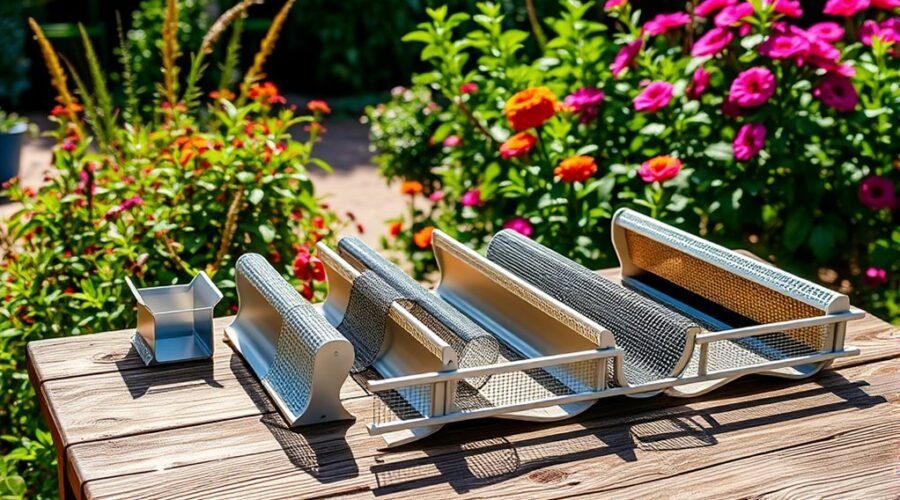
If you are comparing the best gutter guards for 2026, the right choice depends on your gutter size, surrounding trees, debris type, installation preference, and budget. The Frost King VX620 is a simple cut-to-fit plastic mesh option, while the A-M Gutter Guard, FlexxPoint FlowGuard, and LeafTEK use aluminum designs aimed at durable DIY protection. Superior Gutter Guards and the RAPTOR Gutter Guard use stainless-steel screen or micro-mesh designs for finer debris control. Below, you can compare all six options by fit, construction, coverage, and ideal use before choosing the best gutter protection for your home.
Disclosure: As an Amazon Associate, we may earn from qualifying purchases at no extra cost to you.
Quick Comparison of the Best Gutter Guards for 2026
| Gutter Guard | Best For | Main Material | Fit / Coverage |
|---|---|---|---|
| Frost King VX620 | Simple, budget-friendly DIY protection | Flexible plastic mesh | 6 in. × 20 ft. roll |
| A-M Gutter Guard | Long runs of 5-inch gutters | .018-in. aluminum | 5 in. / 100 ft. |
| FlexxPoint FlowGuard | Large DIY gutter projects | Coated aluminum | 5 in. / 204 ft. |
| Superior Gutter Guards | Fine debris and 5-inch gutters | Stainless-steel screen with aluminum rails | 5 in. / 48 ft. |
| LeafTEK | Perforated aluminum protection | .019-in. aluminum | 5 in. / 100 ft. |
| RAPTOR | Micro-mesh debris filtration | Stainless-steel micro-mesh | 5 in. and smaller / 48 ft. |
How these picks were compared: We focused on gutter compatibility, construction material, debris-control design, coverage, DIY installation requirements, warranty information, and practical limitations. No product is completely maintenance-free, so periodic inspection remains important regardless of the guard style you choose.
Frost King VX620 6″x20′ Plastic Gutter Guard
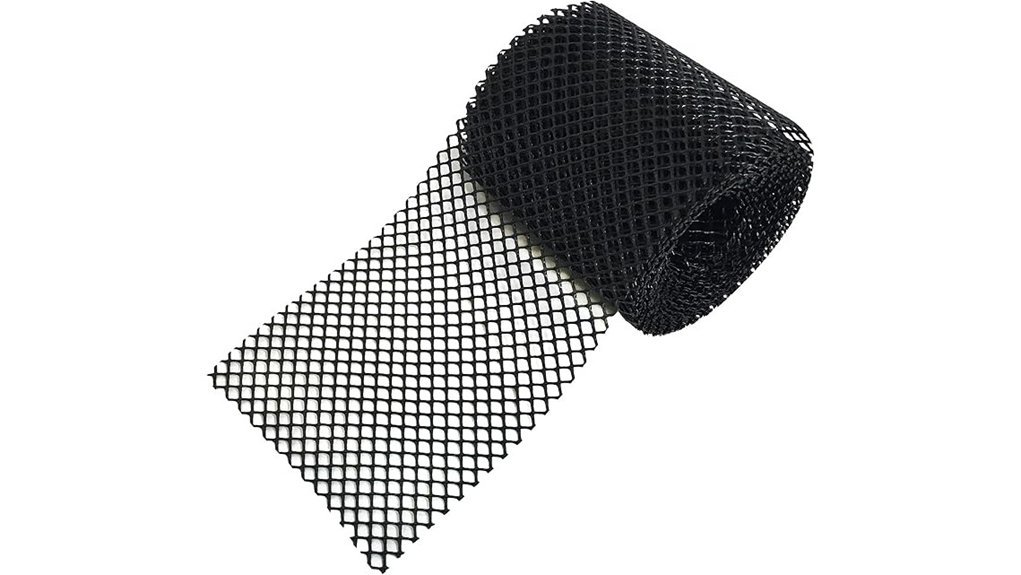
The Frost King VX620 is a straightforward option for homeowners who want basic gutter protection without installing rigid metal panels. The flexible black plastic mesh measures 6 inches wide by 20 feet long and can be unrolled, trimmed with ordinary scissors, and shaped to suit the gutter. Its plastic construction will not rust or corrode, while the open mesh helps keep larger leaves and debris from entering the gutter.
Best For: Homeowners who want an inexpensive, easy-to-trim gutter guard for straightforward DIY installations.
Why You’ll Like It: The roll format is easy to cut around corners and irregular sections, making it useful when rigid panels would require more measuring and fastening.
Pros:
- Simple installation: Flexible mesh can be cut with ordinary scissors.
- Rust-free material: Plastic will not corrode like untreated metal.
- Useful for large debris: Helps reduce leaves and similar material entering the gutter.
Cons:
- Plastic mesh is less rigid than aluminum or stainless-steel gutter guards.
- Fine debris may still require periodic inspection and cleaning.
- A 20-foot roll provides less coverage than many multi-panel kits.
A-M Gutter Guard 5 Inch Aluminum Leaf Protection
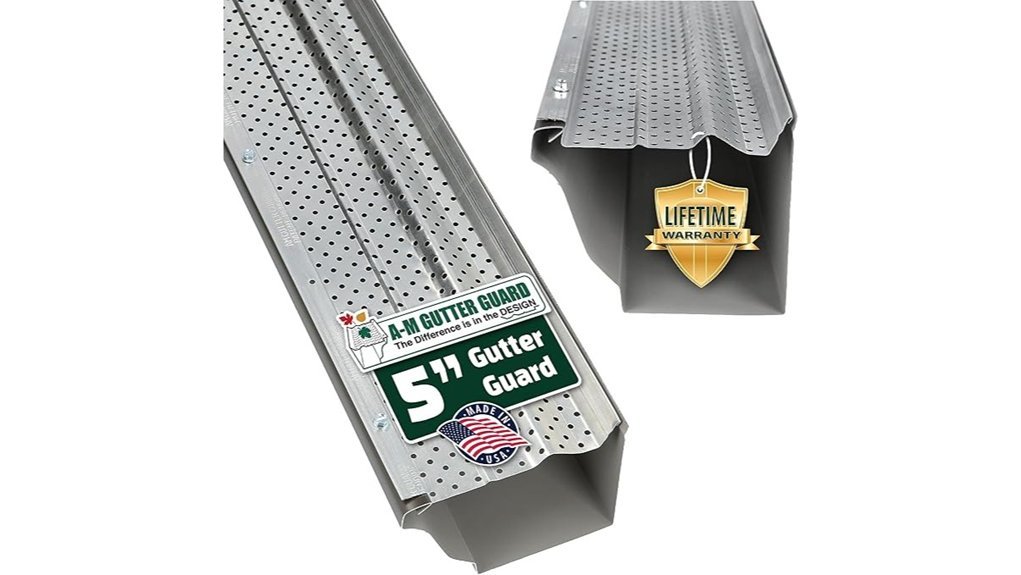
The A-M Gutter Guard is designed for homeowners who want long-run aluminum coverage for standard 5-inch gutters. It uses heavy-gauge .018-inch aluminum that will not rust and incorporates a ridged, perforated design with 380 holes per linear foot to accept rainwater while helping keep leaves and debris above the gutter. The low-profile panels are intended to remain unobtrusive from ground level.
The system is designed primarily around hidden hangers but can work with other common hanger arrangements. Panels overlap at their ends for continuous coverage. Installation requires appropriate fasteners, so confirm the current package contents and installation instructions before beginning.
Best For: Homeowners covering long runs of 5-inch gutters who prefer a rigid aluminum guard.
Why You’ll Like It: Its 100-foot coverage and corrosion-resistant aluminum construction make it practical for larger DIY projects.
Pros:
- Rust-resistant construction: Made from .018-inch aluminum.
- High drainage-hole count: Designed with 380 holes per linear foot.
- Low-profile installation: Designed to be difficult to see from ground level.
Cons:
- Designed around 5-inch gutters, so homeowners with other sizes must verify compatibility.
- Cutting and fastening rigid aluminum requires more effort than installing flexible mesh.
- The lifetime warranty has specific terms and should not be interpreted as a guarantee against every type of clog or installation problem.
FlexxPoint FlowGuard Gutter Guard Leaf Protection System
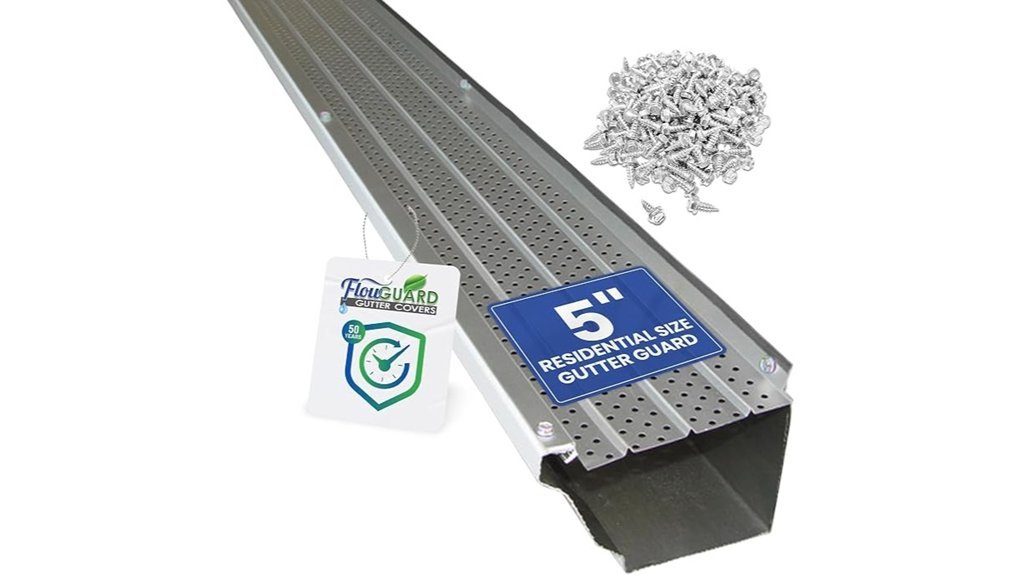
The FlexxPoint FlowGuard is a strong choice when you need extensive coverage from an aluminum gutter guard. This 5-inch system is made in the USA from coated .018-inch aluminum and is designed to block leaves and larger debris while directing rainwater into the gutter. The 204-foot configuration is especially useful for homes with long gutter runs.
Sections can be cut to length and secured using the supplied hardware according to the manufacturer’s installation instructions. Because the guard attaches to the gutter rather than relying on a flexible roll, careful measuring around corners and downspout areas will produce the cleanest result.
Best For: Homeowners who need a large amount of durable 5-inch aluminum gutter protection.
Why You’ll Like It: The 204-foot package can reduce the need to combine several smaller kits on a larger house.
Pros:
- Made from corrosion-resistant .018-inch coated aluminum.
- 204-foot configuration works well for larger gutter projects.
- Includes stainless-steel screws for secure DIY installation.
Cons:
- The 5-inch configuration will not fit every gutter size.
- Rigid panels require measuring and cutting around corners and unusual rooflines.
- Surface debris can still require occasional brushing or cleaning.
Superior Gutter Guards with Stainless-Steel Screen Technology
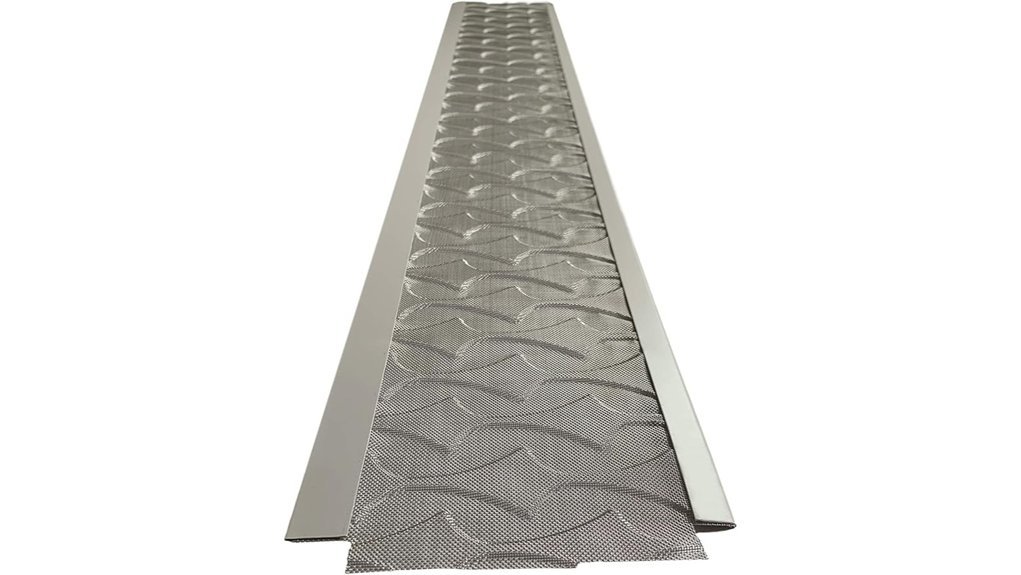
Superior Gutter Guards combine a raised stainless-steel screen with aluminum rails to help manage both rainwater and debris. The 48-foot kit is designed for traditional 5-inch gutters and uses a raised-screen profile intended to direct water downward while keeping leaves and other debris above the gutter opening.
The kit is aimed at DIY installation and includes the components specified by the manufacturer for its 48-foot package. Superior also provides a 20-year limited product warranty, subject to its installation requirements and warranty terms.
Best For: Homeowners with 5-inch gutters who want a stainless-steel screen rather than a simple perforated aluminum panel.
Why You’ll Like It: The raised screen adds another layer of filtration for homes where smaller debris is a concern.
Pros:
- Mixed-metal construction: Stainless-steel screen is paired with aluminum support rails.
- DIY-oriented kit: Designed for installation on common 5-inch gutter styles.
- 20-year limited warranty: Provides longer-term manufacturer coverage subject to warranty conditions.
Cons:
- The 48-foot kit covers less gutter length than 100- or 204-foot alternatives.
- Designed for 5-inch gutters, so other gutter widths require a different solution.
- Fine surface debris may occasionally need to be brushed or rinsed away.
LeafTEK Heavy-Duty Aluminum Gutter Guard System
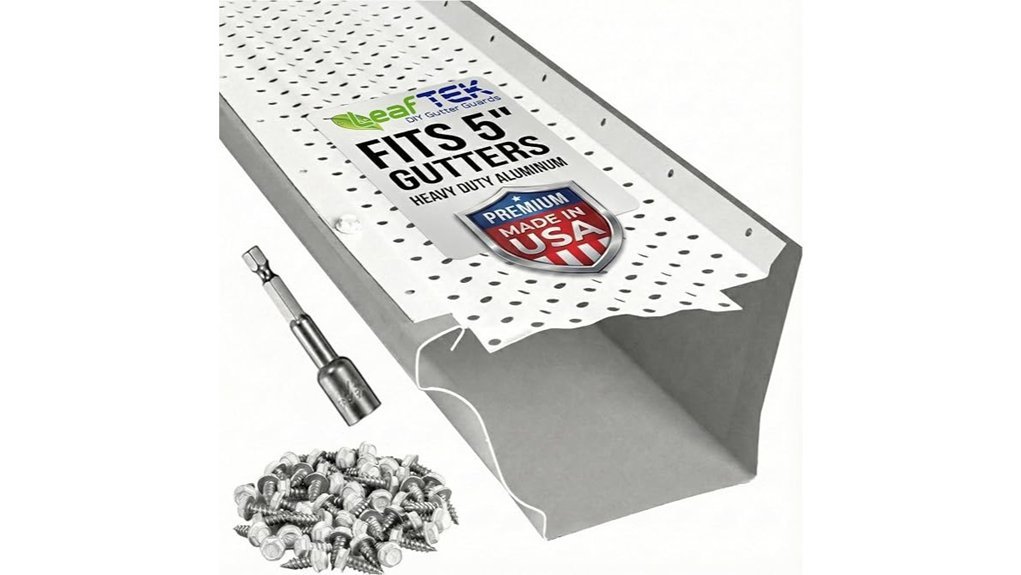
The LeafTEK Heavy-Duty Aluminum Gutter Guard System is designed for homeowners who want a rigid perforated guard with extensive coverage. This 5-inch, 100-foot configuration uses heavy-duty .019-inch American aluminum and a raised vented-ridge design. Its 404 precision-drilled holes per square foot are intended to let rainwater enter while keeping leaves and larger debris out of the gutter.
The panels come pre-drilled for DIY installation and the manufacturer includes matching screws and a magnetic driver in its kits. LeafTEK attaches to the gutter rather than sliding under the roof shingles, which can simplify installation while avoiding unnecessary disturbance of the roofing material.
Best For: Homeowners who want 100 feet of rigid aluminum gutter coverage with pre-drilled installation points.
Why You’ll Like It: The combination of .019-inch aluminum, 404 holes per square foot, included hardware, and a lifetime manufacturer warranty makes it a strong long-term DIY option.
Pros:
- Durable construction: Made from .019-inch American aluminum.
- High hole count: Uses 404 precision-drilled holes per square foot.
- DIY installation: Pre-drilled panels and installation hardware simplify fastening.
- Lifetime warranty: Backed by the manufacturer’s lifetime warranty, subject to its terms.
Cons:
- This particular configuration is intended for 5-inch gutters.
- Rigid aluminum panels require accurate measuring and cutting at corners.
- Debris sitting on top of the panels may still need occasional removal.
RAPTOR Gutter Guard Stainless Steel Micro-Mesh Kit
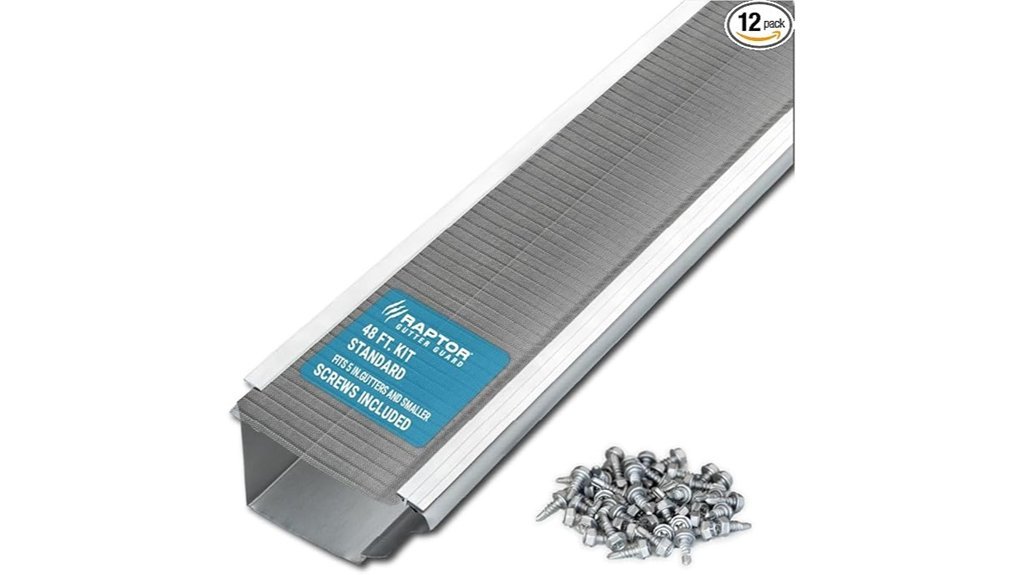
Homeowners dealing with pine needles, roof grit, and other small debris may prefer the RAPTOR Stainless Steel Micro-Mesh Gutter Guard. This 48-foot contractor-grade kit is designed for 5-inch gutters and smaller. Its stainless-steel micro-mesh resists rust and uses V-Bend & Trough Technology to add rigidity, improve filtration, and encourage water to enter the gutter.
The kit includes self-tapping screws for DIY installation. Product documentation also lists WUI compliance and approvals related to rainwater collection. If those classifications are important for wildfire regulations, rainwater harvesting, or local building requirements, confirm the current certification details and local code requirements before purchasing.
Best For: Homeowners who want fine micro-mesh filtration for leaves, pine needles, pests, and roof grit.
Why You’ll Like It: Fine stainless-steel mesh can block smaller debris that may pass through wider perforations or basic plastic screens.
Pros:
- Fine debris control: Stainless-steel micro-mesh targets smaller material such as pine needles and roof grit.
- Rust-resistant construction: Stainless steel is well suited to long-term exterior exposure.
- DIY-friendly kit: Self-tapping installation screws are included.
Cons:
- The standard kit is designed for 5-inch gutters and smaller.
- Micro-mesh surfaces can still collect pollen, roof grit, or organic residue over time.
- A 48-foot kit may require multiple packages for a larger house.
Factors to Consider When Choosing Gutter Guards in 2026
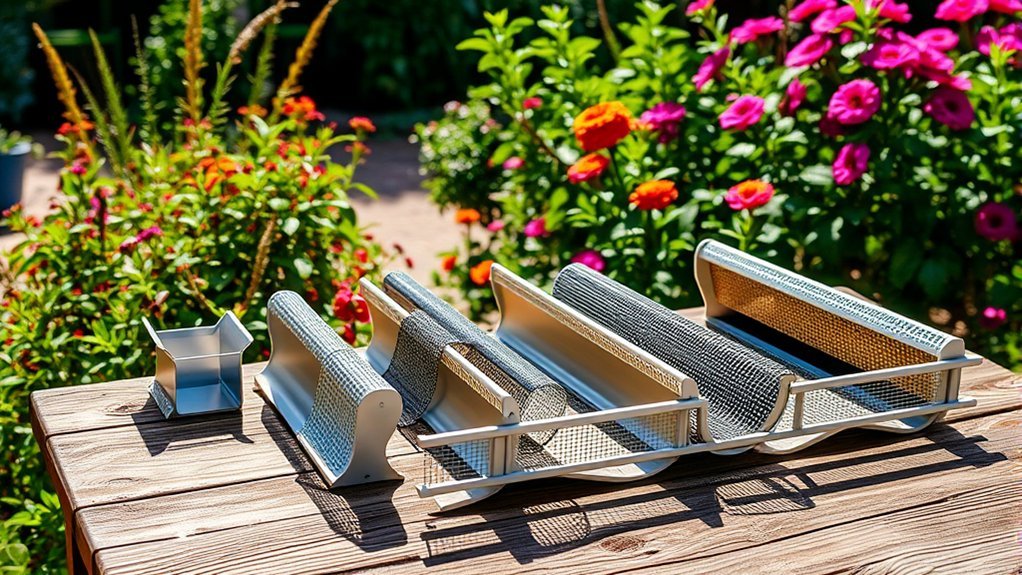
Choosing a gutter guard involves more than deciding between mesh and metal. Material durability, gutter width, debris type, water-flow design, installation method, roof configuration, warranty terms, and ongoing maintenance all affect whether a system will work well for your home.
Material Durability and Resistance
Material is one of the clearest differences between gutter guards. Stainless-steel micro-mesh provides fine filtration and good corrosion resistance. Aluminum guards combine light weight with rust resistance and greater rigidity than flexible plastic. Plastic mesh can be inexpensive and easy to shape but does not have the same rigid structure as metal panels.
Also pay attention to actual thickness rather than vague terms such as “heavy duty.” For example, several aluminum products in this guide use approximately .018- to .019-inch material. Coatings, panel shape, fastening method, and support ridges can also influence how well a guard holds its form.
Installation Ease and Process
A DIY gutter guard should come with clear instructions and a mounting method appropriate for your gutter system. Flexible mesh is generally easy to cut, while rigid aluminum and stainless-steel panels often require more careful measuring, trimming, and fastening.
Before installation, clean the gutter and downspout, repair loose hangers, measure the gutter width, and confirm how the guard attaches. If a system requires lifting or disturbing shingles, review the roofing manufacturer’s requirements before proceeding. Working from a ladder also introduces fall risk, so professional installation can be the safer choice on tall, steep, or difficult-to-access rooflines.
Design and Filtration Efficiency
Your local debris should influence the design you choose. Wider plastic or perforated screens can work well for large leaves, while fine micro-mesh gutter guards are designed to block smaller material such as pine needles and roof grit.
Water handling matters just as much as debris filtration. Look for sufficient openings, channels, ridges, or mesh area to admit rainwater. Even a well-designed guard can overflow when its surface is covered with debris, so no design should be treated as completely maintenance-free.
Compatibility With Existing Gutters
Measure the gutter before ordering. Many residential gutters are 5 or 6 inches wide, but the products in this guide do not all fit both sizes. A 5-inch-specific panel should not be assumed to fit a 6-inch gutter simply because both are residential systems.
Also check hanger style, fascia configuration, roof edge, drip edge, gutter condition, and available fastening points. If your gutters are bent, loose, or incorrectly pitched, repair those problems before adding gutter protection.
Warranty and Long-Term Value
A long warranty can add value, but the number of years alone does not tell the full story. Read what the warranty actually covers. Some warranties focus on defects, corrosion, rust, or product deterioration rather than helping ensure that a gutter will never clog.
Installation requirements also matter because an incorrectly installed product may fall outside warranty coverage. Keep proof of purchase and follow the manufacturer’s fastening and maintenance instructions.
Aesthetic Appeal and Visibility
Gutter guards sit along the roof edge, so color, finish, and profile can affect curb appeal. Low-profile designs and finishes that coordinate with existing gutters are less noticeable from the ground. Black or mill-finished products may blend differently depending on the roof, fascia, and gutter color.
Appearance should remain secondary to fit and drainage performance, but it is still worth considering on highly visible rooflines.
Which Gutter Guard Should You Choose?
If you want the simplest cut-to-fit option, the Frost King VX620 offers flexible plastic mesh with minimal installation complexity. For long runs of rigid aluminum protection, the A-M Gutter Guard, FlexxPoint FlowGuard, and LeafTEK provide substantially more coverage per package.
If your main concern is smaller debris such as pine needles or roof grit, the stainless-steel screen designs from Superior and RAPTOR deserve closer consideration. RAPTOR uses a particularly fine micro-mesh surface, while Superior combines a raised stainless-steel screen with aluminum rails.
The best choice is ultimately the guard that fits your gutter correctly and addresses the debris around your home without creating unnecessary installation difficulty.
Frequently Asked Questions
How Do Gutter Guards Affect Roof Warranties?
A gutter guard does not automatically void a roof warranty, but installation methods can matter. Systems that disturb, lift, penetrate, or alter roofing materials may conflict with certain warranty terms. Review both the gutter-guard instructions and your roofing warranty before installation, particularly if the guard interacts with shingles or roof-edge components.
Can Gutter Guards Prevent Ice Damming in Winter?
No gutter guard should be treated as an ice-dam prevention system. Guards can help keep leaves and debris out of the drainage path, but ice dams are primarily associated with snow melting on warmer portions of a roof and refreezing near colder eaves. Improving attic air sealing, insulation, and appropriate ventilation is generally more important for addressing the underlying cause. Ice can still form on or around gutter guards.
Are Gutter Guards Suitable for All Types of Roofs?
Gutter guards can work with many roof and gutter configurations, but compatibility is product-specific. Check gutter width, hanger type, roof edge, drip edge, fascia condition, and the manufacturer’s approved installation method before purchasing. Complex or unusually steep roofs may also be better suited to professional installation.
How Often Should Gutter Guards Be Cleaned?
There is no single cleaning schedule that fits every home. Inspect gutter guards in spring and fall and after major storms, then clean them whenever leaves, pine needles, pollen, roof grit, or other debris begins restricting water flow. Homes surrounded by trees may need more frequent attention.
What Is the Lifespan of Gutter Guards?
Lifespan depends on the material, fastening method, weather exposure, maintenance, and product quality. Stainless steel and aluminum generally offer better long-term rigidity and corrosion resistance than basic plastic mesh. Instead of relying on a universal lifespan estimate, compare the manufacturer’s warranty, material specifications, and maintenance requirements for the exact product you are considering.
Do Gutter Guards Eliminate Gutter Cleaning?
No. A good gutter guard can significantly reduce the amount of debris entering the gutter, but leaves, pollen, seeds, roof grit, and organic residue can still collect on top of the guard or around valleys and downspouts. Periodic inspection remains important.
Are Micro-Mesh Gutter Guards Better for Pine Needles?
Micro-mesh is generally better suited to small debris such as pine needles than wide-open screens because its openings are much finer. However, very fine surfaces can also accumulate pollen and roof grit, so occasional surface cleaning may still be necessary.
Conclusion
The best gutter guard for 2026 depends on what you need to keep out and how much gutter you need to cover. The Frost King VX620 offers a simple flexible-mesh approach, while A-M, FlexxPoint, and LeafTEK provide rigid aluminum alternatives for homeowners who prefer metal construction. Superior and RAPTOR add stainless-steel filtration for finer debris.
Before ordering, measure your gutters, calculate the required linear footage, identify your most common debris, and review the installation method. A properly fitted guard can reduce clogs and routine gutter cleaning, but regular inspection is still part of responsible gutter maintenance.