Disclosure: This article contains affiliate links. If you buy through them, we may earn a commission at no extra cost to you. This does not affect which products we recommend.
If you have ADHD, you already know the pattern: you buy a planner, use it beautifully for nine days, miss a week, and then never open it again because those blank pages feel like evidence against you. The planner itself is usually the problem — most are built for people who plan consistently, not for people who need the planner to survive an inconsistent week.
This guide covers four planners that hold up better for ADHD brains in 2026. Three are undated, so a skipped week costs you nothing and you can start on any random Tuesday. One is dated, for people who genuinely need the external deadline structure. They were selected on four practical criteria: flexible or undated formatting, visual clarity without clutter, paper that survives real handwriting, and a size you will actually carry.
Quick Verdict
- Best Overall: Panda Planner Classic A5 Undated — the most ADHD-specific structure, with hourly blocks and habit tracking built in.
- Best for Custom Structure: LEUCHTTURM1917 Bullet Journal Edition 2 — a blank canvas with excellent paper.
- Best Value: Papercode A5 Daily Planner — thick no-bleed pages and undated layouts at a lower cost.
- Best Dated Option: Happy Planner Classic 2026-2027 — pre-printed dates and a customizable disc-bound system.
Quick Comparison
| Planner | Dated? | Size | Best For | Link |
|---|---|---|---|---|
| Panda Planner Classic | Undated | A5 | Hourly structure + habit tracking | Check Price |
| LEUCHTTURM1917 Edition 2 | Undated | A5 | Building your own system | Check Price |
| Papercode A5 Daily | Undated | A5 | Value + heavy pen use | Check Price |
| Happy Planner Classic | Dated (2026-2027) | 7″ x 9.25″ | Pre-printed dates + customizing | Check Price |
Panda Planner Classic A5 Undated Daily Planner — Best Overall
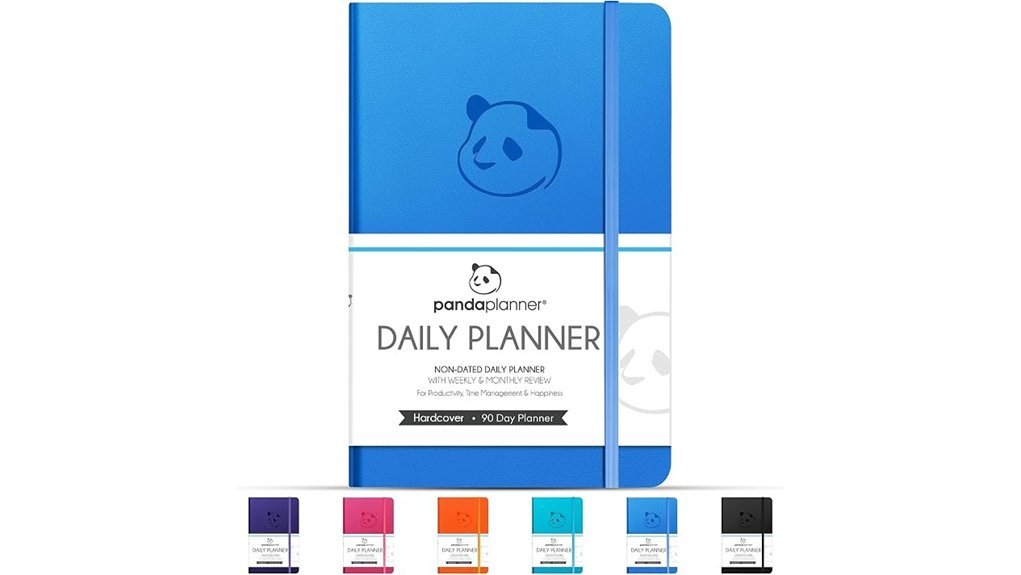
The problem it solves: Time blindness. If a whole day reads as one undifferentiated block until it is suddenly 6pm, an hourly grid gives you something concrete to push against.
The Panda Planner Classic measures roughly 8.25 x 5.75 inches and pairs an hourly schedule with a to-do list, habit tracker, and gratitude prompts on the same spread. Because it is undated, nothing is wasted if you stop for three weeks and pick it back up — you simply write the next date and continue. That single feature removes the guilt cycle that ends most planner attempts.
Why you’ll like it: It does the structuring for you. You are not designing a layout at 9am, you are filling in boxes that already exist.
Best For: People who want a ready-made structure and don’t want to build their own system from scratch.
Who should skip it: Anyone who wants a full year in one book, or who finds prompts like gratitude sections intrusive rather than helpful.
Pros:
- Undated design means you can start any day and lose nothing to gaps.
- Hourly blocks, habit tracker, and to-do list are built in — no setup required.
- Compact A5 size is easy to carry daily.
Cons:
- The Classic edition typically covers a few months rather than a full year, so you will need to rebuy — check the listing for the current page count.
- Limited open space for long-form notes.
- Costs more than a basic paper planner.
LEUCHTTURM1917 Bullet Journal Edition 2 Notebook (Black) — Best for Custom Structure
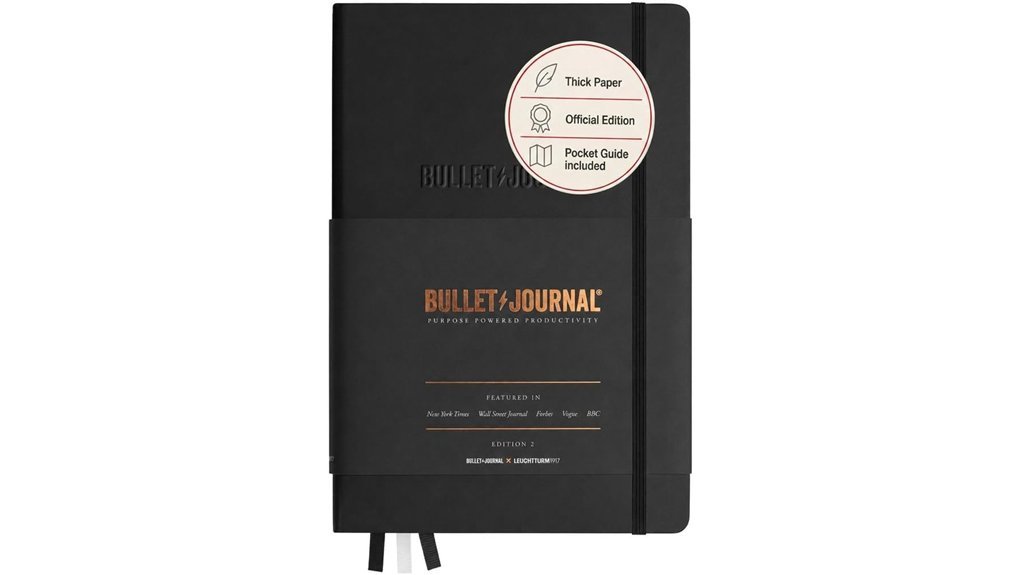
The problem it solves: Pre-printed planners that don’t match how your week actually runs. If every planner you’ve bought had the wrong boxes in the wrong places, a dot grid lets you build only what you need.
The Bullet Journal Edition 2 gives you over 200 numbered pages of 120gsm paper in a dot-grid format, with a built-in index so you can actually find what you wrote three months ago. It ships with a pocket guide containing visual layout examples — which matters, because a blank notebook with no starting point is exactly the kind of open-ended task that stalls. Stickers for monthly logs are included.
Why you’ll like it: The paper is heavy enough for fountain pens and markers without ghosting, and the numbered pages plus index turn a notebook into something searchable.
Best For: People who enjoy designing their own layouts and want a system that adapts as their needs change.
Who should skip it: Anyone who wants to open a planner and start writing immediately. A bullet journal requires ongoing setup, and that setup is itself a task that can get avoided.
Pros:
- Heavy 120gsm paper handles most pens with minimal bleed-through.
- Dot grid supports any layout you want to build — calendars, trackers, brain dumps.
- Numbered pages and an index make past entries findable.
Cons:
- Costs more than a standard notebook.
- Requires you to build and maintain your own system, which is a real ongoing commitment.
- This particular listing is the black cover; other colors are sold separately.
Papercode A5 Daily Planner with Thick Pages — Best Value
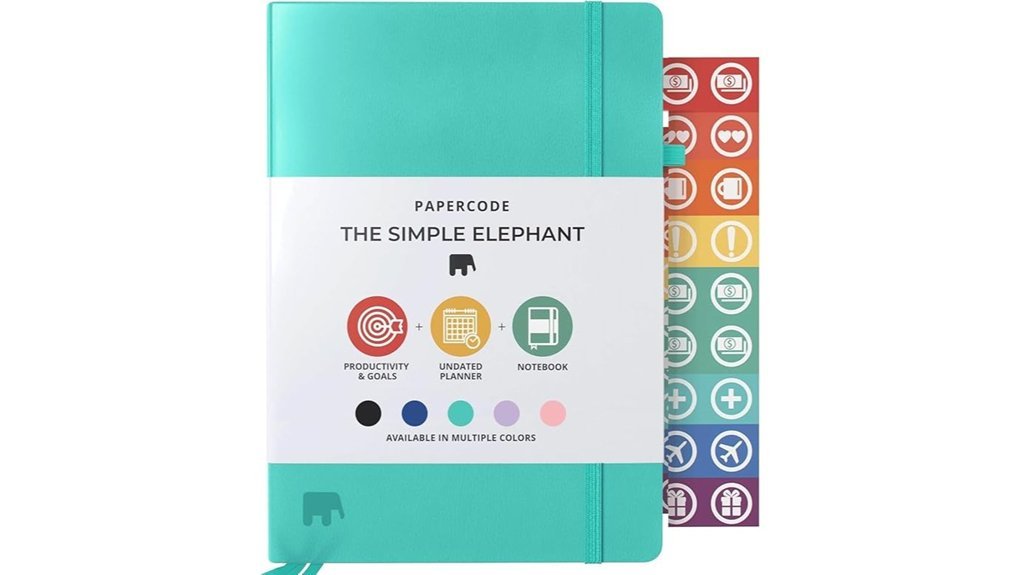
The problem it solves: Wanting undated flexibility without paying premium-planner prices — and not wanting your highlighters to wreck the next page.
This leatherette A5 planner uses 110gsm no-bleed pages and offers undated monthly and weekly layouts, so it works whether you start in January or in the middle of October. It includes an inner pocket, a pen loop, and three ribbon bookmarks — small things that matter when the alternative is losing your pen and abandoning the whole system. Goal-setting and mind-mapping pages are included, along with stickers for flagging priorities.
Why you’ll like it: It gives you the undated freedom of a premium planner in a package that costs less, with paper thick enough for markers and highlighters.
Best For: Students, teachers, and anyone who wants undated flexibility on a smaller budget.
Who should skip it: People who need pre-printed dates to feel accountable, or who want a larger writing surface.
Pros:
- Thick pages reduce bleed-through with markers and highlighters.
- Undated monthly and weekly layouts let you start any time.
- Pen loop, inner pocket, and three bookmarks keep everything in one place.
Cons:
- A5 size may feel cramped if you write large or plan in detail.
- Leatherette cover is synthetic, not genuine leather.
- No pre-printed dates, which some people need for external accountability.
Happy Planner Classic Disc-Bound Planner 2026-2027 — Best Dated Option
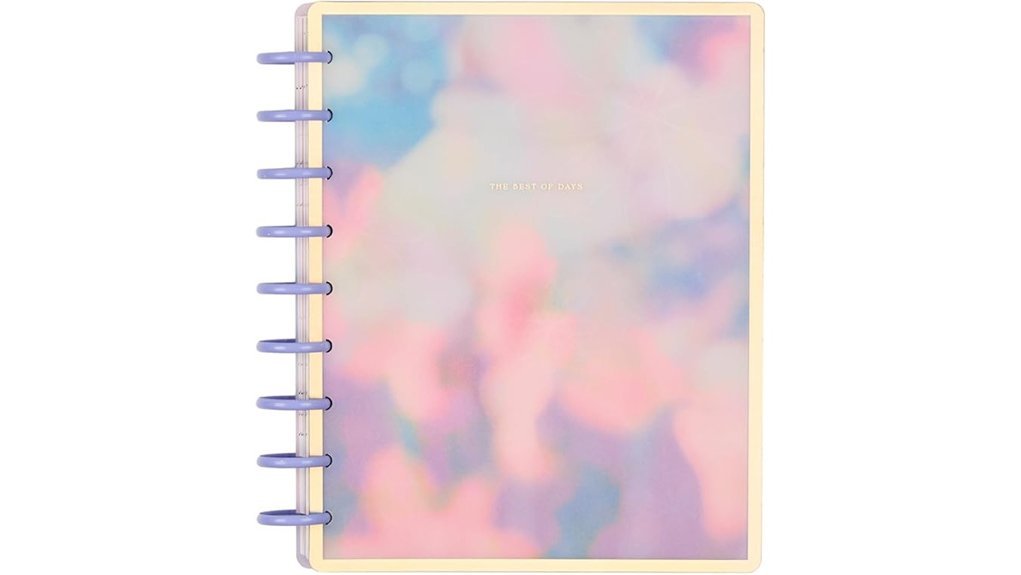
The problem it solves: Undated planners can drift. If you need the date already printed so that “Thursday” is a fact rather than a decision, this is the one on this list built that way.
The Happy Planner Classic runs July 2026 to June 2026 in a 7″ x 9.25″ format with a dashboard-style layout and lined daily boxes for plans, priorities, and reminders. Three extra months (April–June) are included, along with two sticker sheets. The disc-bound system is the real advantage here: you can pull pages out, add pages in, and rearrange sections without destroying the binding — so if a section isn’t working for you, you remove it instead of abandoning the planner.
Why you’ll like it: It combines the accountability of printed dates with the ability to physically restructure the book when your needs change.
Best For: People who want pre-printed dates but still want to customize the layout.
Who should skip it: Anyone who has abandoned dated planners before because of guilt over blank weeks — an undated option on this list will serve you better.
Pros:
- Dashboard layout makes daily priorities easy to see at a glance.
- Disc-bound spine lets you add, remove, and rearrange pages freely.
- Sturdy frosted covers hold up to daily handling.
Cons:
- Larger than A5, so less pocketable.
- Dated format means unused weeks sit there as blank pages.
- Theme and cover design are fixed to whatever is currently stocked.
How to Choose an ADHD Planner in 2026
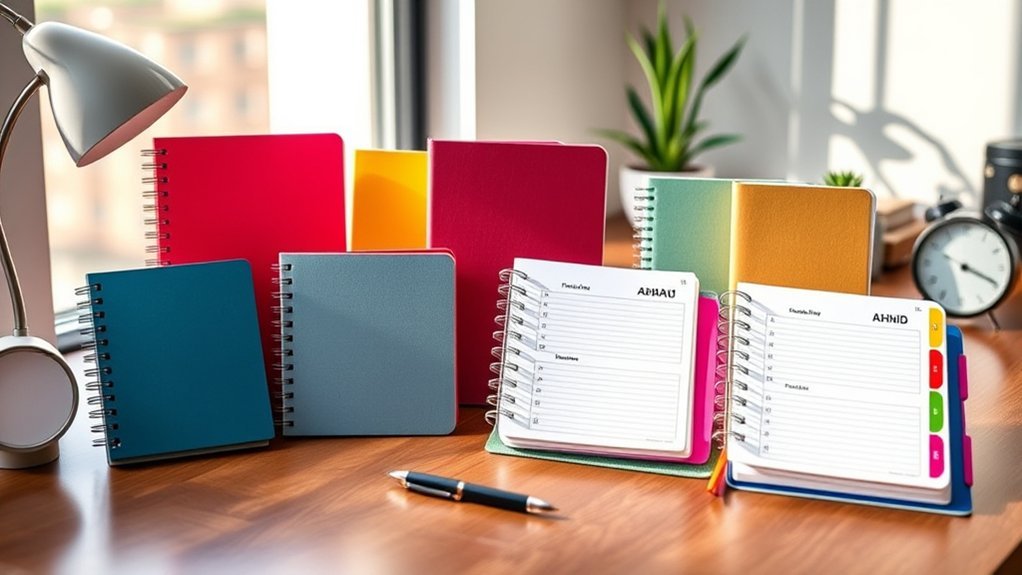
Most planner advice assumes you will use it every day. That assumption is exactly what breaks down. The factors below are weighted toward what keeps a planner in use after the first enthusiastic fortnight.
Dated vs. Undated: The First Decision
This matters more than layout, paper, or price. Undated planners let you skip a week and resume without a row of accusing blank pages. If you have abandoned planners before because falling behind felt like failure, undated is almost certainly the right call. Dated planners provide external structure you don’t have to generate yourself, which helps if your problem is drift rather than guilt. Be honest about which failure mode is actually yours — that answer narrows this list from four options to one or two.
Layout And Visual Clarity
A clear layout makes it easier to see what today actually contains. Distinct sections for daily tasks stop a page from reading as one wall of text. Colour-coded boxes and dividers help you locate the right spread quickly rather than flipping past it three times. At the same time, an over-designed page with a dozen small boxes can be its own kind of noise — if a layout looks busy on the product photos, it will look busier in use. Space for open notes and reminders matters as much as the printed structure.
Flexibility And Usability
Undated layouts let you begin at any time without wasting pages. Hourly scheduling and to-do lists break the day into segments small enough to start. Habit trackers make streaks visible, which helps when internal motivation is inconsistent. The ability to add, remove, or rearrange pages means a planner can evolve instead of being discarded when one section stops working. Compact, portable designs matter for a simple reason: a planner you left at home is a planner you didn’t use.
Paper Quality And Durability
Paper weight, measured in GSM, determines whether your pens bleed through. Anything around 100gsm or above generally handles gel pens and most markers cleanly — worth checking if you colour-code with highlighters. Durable or laminated covers protect pages from daily wear, and a planner carried in a bag every day takes real abuse. Inner pockets and pen loops keep the necessary parts together. Binding matters too: disc-bound and spiral formats let you rearrange pages without damaging the book, while a sewn binding lies flatter but is fixed.
Portability And Size
A5 and classic sizes fit in most bags without becoming a burden. Lightweight materials help. Flexible bindings make one-handed page flipping realistic. Weigh this against writing space — a larger planner you leave on your desk is less useful than a smaller one that travels with you.
Goal Setting And Tracking
Breaking large goals into small, concrete tasks makes them easier to start, which is often the actual bottleneck. Monthly or quarterly tracking sections let you see progress you would otherwise forget you made. Habit trackers support consistency on daily routines. Sections for reviewing and adjusting goals keep the planner current instead of becoming a record of intentions you have already outgrown.
Pro Tips Before You Commit
- Plan for the gap, not the streak. Assume you will stop for a week or two. Choose the planner that survives that, not the one that looks best when used perfectly.
- Keep it visible. A planner in a drawer is a planner you forget. Leave it open on a surface you pass every day.
- Start smaller than feels right. Three tasks a day is a system you can maintain. Fifteen is a system you will quit by Thursday.
- Don’t rebuild from scratch after a lapse. Turn to the next clean page and carry on. Restarting the whole system is usually what ends it for good.
Frequently Asked Questions
How Can a Planner Help if You Have ADHD?
A planner moves tasks out of your head and onto a page where you can see them. That external structure can make it easier to prioritise, to notice how much time something actually takes, and to keep track of what you have already finished. It is an organizational tool, not a treatment — many people find it works best alongside whatever support and strategies they already use.
Should I Get an Undated or Dated Planner?
If you have quit planners before because missed weeks made you feel behind, choose undated — you can skip time without wasting pages or facing blank spreads. If your difficulty is drift rather than guilt, and printed dates give you something to work against, a dated planner may suit you better.
Are Digital Planners Better Than Paper?
Neither is universally better. Digital planners offer reminders, alarms, and syncing, which paper cannot do. Paper avoids the notification-heavy device that may be the source of the distraction in the first place, and writing by hand helps some people remember. Plenty of people use both — a phone calendar for time-bound appointments, paper for daily tasks.
What Features Should I Avoid?
Be cautious with overly busy designs, rigid formats that punish a missed day, and layouts requiring extensive writing to fill a single page. Anything that makes opening the planner feel like a chore will eventually stop the planner from being opened.
How Often Should I Update My Planner?
A short daily check keeps today’s tasks in view, and a weekly review keeps the list relevant. Monthly reviews are useful for adjusting longer-term goals. If daily updating feels like too much, a weekly rhythm is far better than nothing.
What If I Stop Using It After a Few Weeks?
That is extremely common and not a reason to give up on planners. Open it to the next clean page and start there. This is the main practical argument for undated formats — the pages you skipped are simply still available, so there is no penalty for resuming.
Final Recommendation
The right planner is the one that survives your worst week, not your best one.
If you want structure handed to you, go with the Panda Planner Classic — hourly blocks and habit tracking already built in, and undated so a lapse costs nothing. If you’d rather build your own system and enjoy the process, the LEUCHTTURM1917 Edition 2 gives you excellent paper and complete freedom. On a tighter budget, the Papercode A5 delivers undated flexibility and thick no-bleed pages for less. And if printed dates are what actually keeps you accountable, the Happy Planner Classic 2026-2027 pairs them with a disc-bound system you can rearrange as you go.