
Disclosure: As an Amazon Associate, we may earn from qualifying purchases made through the links in this article, at no extra cost to you.
In 2026, the best ergonomic computer mice cater to all abilities, including the Welspo Wireless USB Handheld Trackball Mouse known for its comfort and compatibility. The Anker Wireless Ergonomic Vertical Mouse promotes a neutral wrist position, the AbleNet BIGtrack 2 is adaptive for users with mobility impairments, and the TECKNET Wireless Ergonomic Mouse offers adjustable DPI settings. Additional insights into these top picks await exploration.
Our picks below were compared on ergonomic design, connectivity, adjustable DPI, and accessibility features using each product’s official listed specifications.
| Mouse | Type | Connectivity | DPI | Best For | |
|---|---|---|---|---|---|
| Welspo Handheld Trackball | Handheld trackball | Wireless USB (1 AAA battery) | Adjustable via DPI switch | Left- or right-hand comfort | Check Price |
| Anker Ergonomic Vertical | Vertical mouse | Wireless 2.4G (2 AAA, not included) | 800 / 1200 / 1600 | Neutral, right-hand wrist position | Check Price |
| AbleNet BIGtrack 2 | Large adaptive trackball | Wired USB | Not DPI-based | Limited dexterity / accessibility | Check Price |
| TECKNET Wireless Ergonomic | Standard ergonomic mouse | Wireless 2.4G (AAA, not included) | 800–2600 (5 levels) | Portable, budget-friendly daily use | Check Price |
Welspo Wireless USB Handheld Trackball Mouse
BEST OVERALL FOR ALL-DAY COMFORT
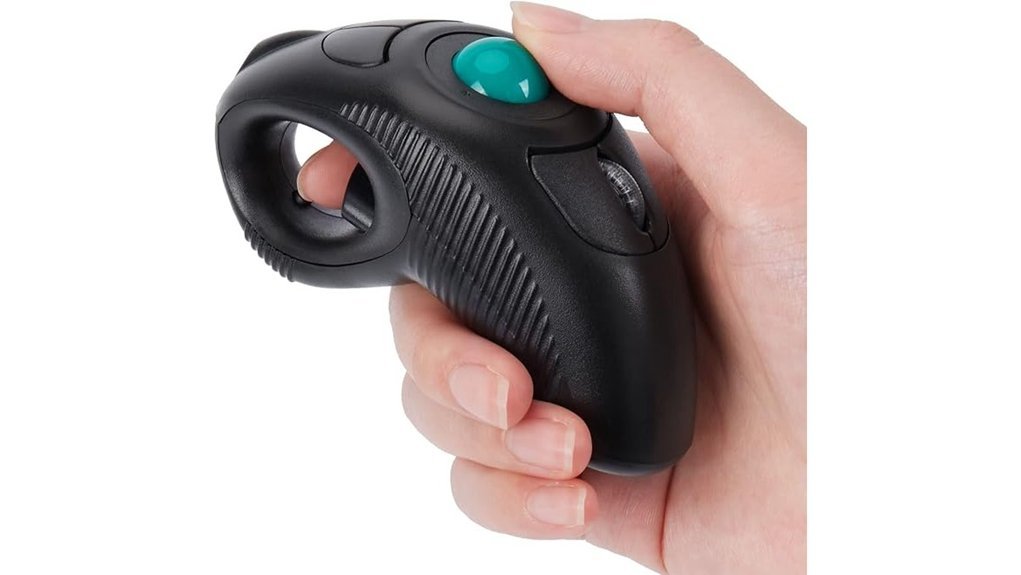
The Welspo Wireless USB Handheld Trackball Mouse stands out as an ideal choice for users seeking ergonomic comfort during prolonged computer use. Its design minimizes wrist and muscle strain, greatly reducing the risk of conditions like arthritis and carpal tunnel syndrome. Compatible with both Mac and Windows systems, this mouse accommodates left- and right-handed users alike. The wireless functionality, powered by a single user-supplied AAA battery, guarantees a hassle-free experience with simple plug-and-play installation. Its thumb-controlled scrolling enhances usability, making it an excellent option for those who prioritize both comfort and efficiency in their computing tasks.
Best For: Users seeking ergonomic comfort and reduced strain during prolonged computer use, particularly those who switch between left and right-handed operation.
Pros:
- Ergonomic design minimizes wrist and muscle strain, helping to prevent conditions like arthritis and carpal tunnel syndrome.
- Wireless functionality offers convenience and freedom of movement without the clutter of cables.
- Thumb-controlled scrolling enhances usability, making navigation smoother and more efficient.
Cons:
- Requires a single user-supplied AAA battery, which may need replacement over time.
- Limited customization options as it operates without additional software.
- Potential learning curve for users unfamiliar with trackball mice compared to traditional mice.
Anker Wireless Ergonomic Vertical Mouse (Black)
BEST FOR A NEUTRAL, RIGHT-HAND GRIP
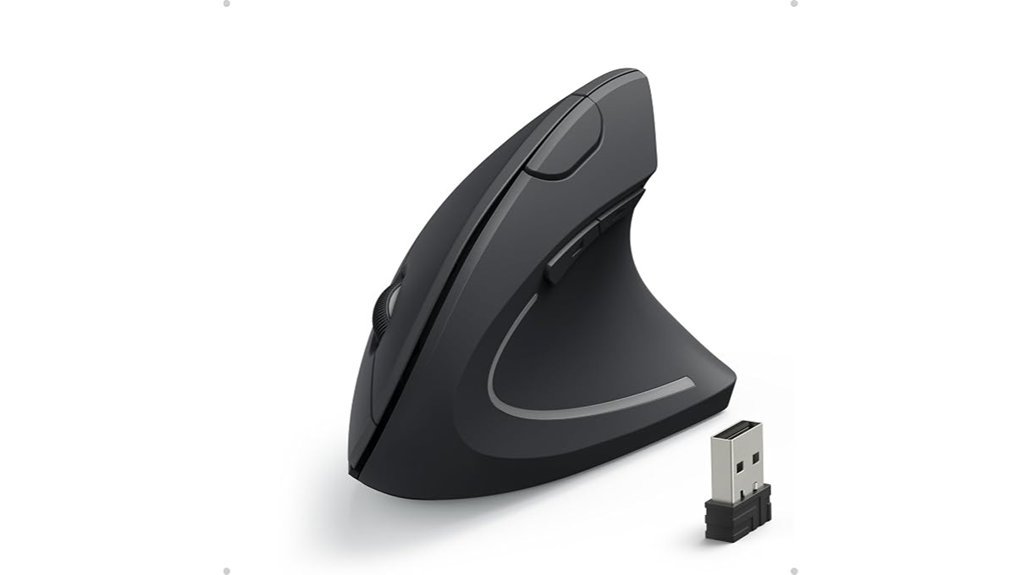
Perfect for right-handed users, the Anker Wireless Ergonomic Vertical Mouse (Black) prioritizes comfort and reduces strain during extended computer sessions. Its unique design promotes a neutral handshake wrist position, enhancing user productivity. Weighing only 3.4 oz and measuring 120 x 62.8 x 74.8 mm, it is easy to handle. The mouse operates via a 2.4 GHz wireless connection using a USB receiver, ensuring compatibility with laptops, desktops, and PCs. With adjustable DPI settings of 800, 1200, and 1600, it offers precise tracking. Additionally, its power-saving mode activates after inactivity, making it energy-efficient for everyday use.
Best For: Users seeking a comfortable, ergonomic mouse to reduce strain during prolonged computer use.
Pros:
- Promotes a neutral wrist position, enhancing comfort and reducing strain.
- Adjustable DPI settings (800/1200/1600) for precise tracking.
- Includes an 18-month warranty and power-saving mode for energy efficiency.
Cons:
- Limited to right-handed users only.
- Requires 2 AAA batteries which are not included.
- Not compatible with Bluetooth devices; relies on a USB receiver.
AbleNet BIGtrack 2 Adaptive Trackball Mouse
BEST FOR ACCESSIBILITY & LIMITED DEXTERITY
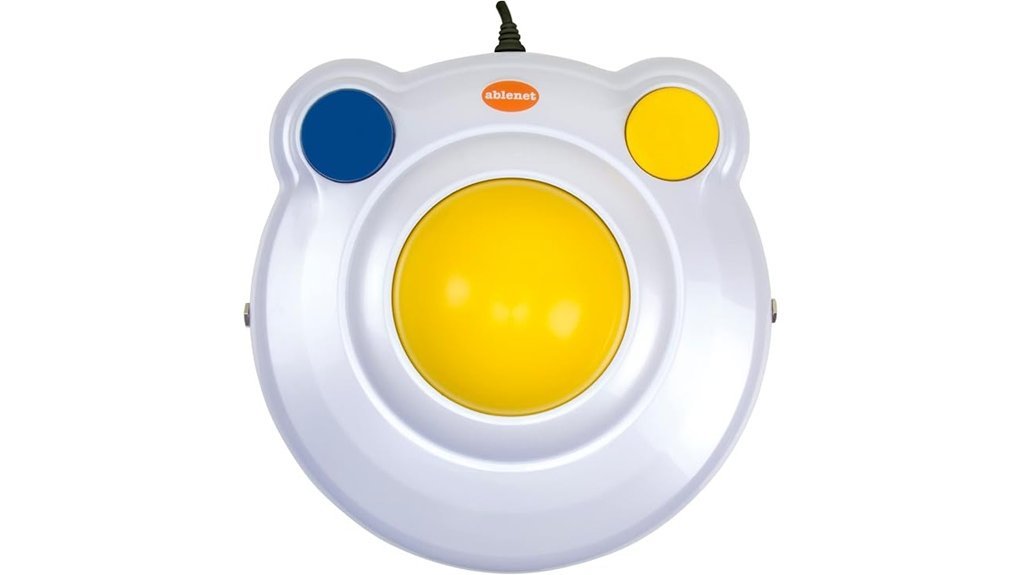
Designed specifically for users with limited fine motor skills, the AbleNet BIGtrack 2 Adaptive Trackball Mouse stands out in the domain of ergonomic computer mice. This adaptive mouse features a large trackball that allows for easy and precise cursor control, making it ideal for those who struggle with traditional mice. Its two large buttons are strategically placed for effortless access, promoting a simplified interface. It connects via a simple wired USB connection — no batteries or wireless pairing required — and includes two accessibility switch jacks, allowing it to be paired with external switches (sold separately) for users who need an alternative to the built-in buttons. Emphasizing inclusivity, the design caters to individuals with disabilities and mobility impairments. Constructed from robust materials, the BIGtrack 2 guarantees durability and reliability, making it a dependable choice for enhancing computer accessibility.
Best For: Individuals with limited fine motor skills and mobility impairments seeking an adaptive and ergonomic mouse solution.
Pros:
- Large trackball allows for easy and precise cursor control, enhancing usability.
- Two large buttons provide a simplified interface, making navigation straightforward.
- Durable construction ensures long-lasting performance, suitable for regular use.
Cons:
- May require a learning curve for users transitioning from traditional mice.
- Size may be cumbersome for users with smaller hands or limited desk space.
- Limited customization options compared to standard mice.
- Wired USB connection only; no wireless or Bluetooth option.
TECKNET Wireless Ergonomic Mouse (2600 DPI, Purple)
BEST VALUE / BEST FOR TRAVEL
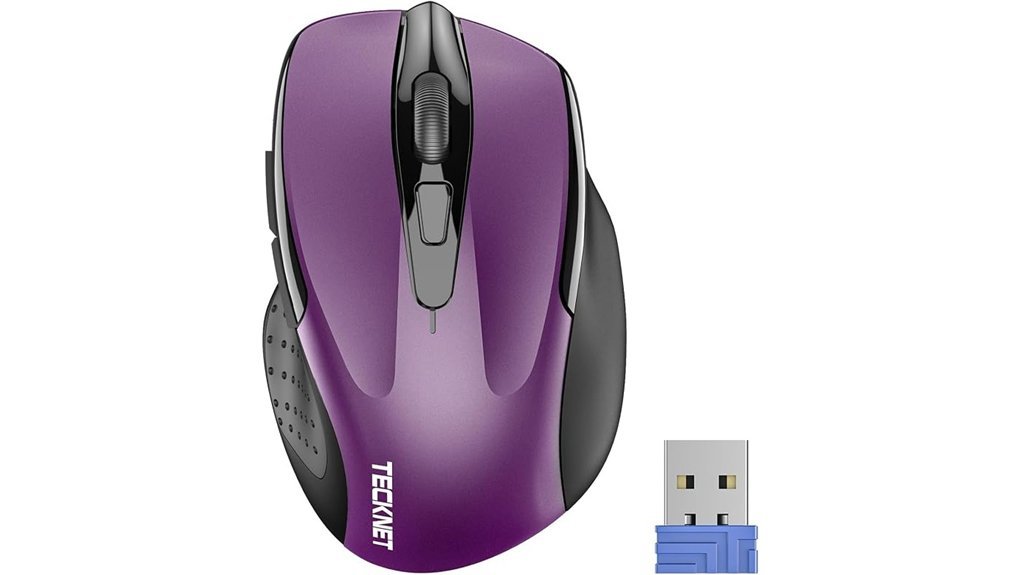
The TECKNET Wireless Ergonomic Mouse is an ideal choice for users seeking comfort during extended computer sessions. Its contoured shape and rubber side grips promote a natural hand position, enhancing ergonomics. Featuring 2.4G technology, this compact mouse measures 4.09*2.68*1.49 inches, making it travel-friendly and compatible with USB-A port devices. Performance-wise, it offers advanced optical tracking with adjustable DPI settings up to 2600, ensuring precision on various surfaces, though it is not suitable for glass. With up to 24 months of battery life and a plug-and-play setup, this mouse balances convenience and functionality for diverse users.
Best For: Users seeking a comfortable and portable mouse for extended computer use.
Pros:
- Ergonomic design with contoured shape and rubber side grips for enhanced comfort.
- Adjustable DPI settings (up to 2600) for high precision on various surfaces.
- Long battery life of up to 24 months with power-saving features.
Cons:
- Not compatible with glass surfaces, limiting usability in some environments.
- Side button functionality is not compatible with Mac devices.
- Limited to USB-A port, which may not suit all modern laptops and devices.
Buying Guide: How to Choose an Ergonomic Computer Mouse

When selecting an ergonomic computer mouse, several key factors come into play. These include the design features that enhance comfort, compatibility with various devices, and battery life considerations. Additionally, usability for left-handed users and performance sensitivity are vital aspects to guarantee a suitable choice for all abilities.
Before You Buy — Quick Checklist:
- Does it support your grip style (palm, claw, or fingertip)?
- Is it compatible with your operating system (Windows, Mac, Linux, Chromebook)?
- Does the connection type suit you — wireless USB receiver, Bluetooth, or wired?
- Do you need adjustable DPI for precision work, everyday browsing, or gaming?
- Will you need accessibility features like a large trackball or external switch access?
- How long does the battery last, and are batteries included in the box?
Ergonomic Design Features
Ergonomic design features play an essential role in enhancing user comfort and efficiency during computer use. These designs promote natural hand and wrist positioning, greatly reducing strain during prolonged use. Contoured shapes and side grips are crucial for providing support, ensuring a comfortable hold. Adjustable DPI settings cater to individual preferences, enhancing precision and sensitivity tailored to each user’s needs. Lightweight construction and travel-friendly designs facilitate portability, allowing users to carry their mice without compromising comfort. Additionally, specialized designs, such as vertical or adaptive mice, address the needs of users with mobility impairments or difficulties with fine motor skills, promoting inclusivity and accessibility in ergonomic computing solutions.
2. Compatibility With Devices
Selecting an ergonomic mouse requires careful consideration of compatibility with various devices. First, it is essential to ascertain the mouse is compatible with the user’s operating system, as some models are tailored for specific versions of Windows or have limited support for Mac systems. Connectivity options also play a significant role; users should check if the mouse uses USB receivers, Bluetooth, or supports multi-device connectivity. Additionally, compatibility with both laptops and desktops is important, given that some designs are optimized for one type. A range of DPI settings enhances compatibility with various display resolutions, while verifying the power source—whether rechargeable, disposable, or wired—guarantees it meets convenience needs.
3. Battery Life Considerations
Battery life is a critical factor that can greatly influence the overall experience of using an ergonomic mouse. Some models boast impressive longevity, offering up to 24 months on a single set of batteries, considerably reducing the need for replacements. Additionally, mice equipped with power-saving modes automatically enter a low-energy state after periods of inactivity, further extending battery life. The type of batteries required varies; some ergonomic mice utilize user-supplied AAA batteries while others feature built-in rechargeable options, and wired models avoid the battery question entirely. The choice of wireless technology, like 2.4 GHz, also impacts battery efficiency and performance. Regular battery life checks and features such as on/off switches enhance user experience, ensuring the device is ready for use when needed.
4. Usability For Left-Handed Users
How can left-handed users find comfort and efficiency in their computer mouse choices? Ergonomic mice specifically designed for left-handed users provide shapes and button layouts that align with the natural grip of the left hand, enhancing usability. Many options feature ambidextrous designs, promoting inclusivity for both left- and right-handed users. Adjustable DPI settings allow left-handed users to customize sensitivity, catering to personal preferences. Additionally, certain ergonomic mice come equipped with programmable buttons, enabling quick access to frequently used functions, thereby improving productivity. The weight and grip of the mouse also play an essential role in comfort, with various designs available to minimize strain during extended use, ultimately fostering a more ergonomic computing experience for left-handed individuals.
5. Performance And Sensitivity
Performance and sensitivity are essential when evaluating ergonomic computer mice, as they directly influence cursor control and overall user experience. DPI settings typically range from 800 to 2600, catering to various preferences and tasks. Higher DPI settings enable quicker, more responsive movements, making them particularly suitable for gaming or graphic design. Optical tracking technology further enhances accuracy across different surfaces, ensuring smooth performance. Additionally, many ergonomic mice come equipped with customizable buttons, allowing users to execute complex commands or macros efficiently, thereby boosting productivity. Battery life also plays a vital role, with some models offering up to 24 months of use before needing replacement. This longevity is important for uninterrupted performance, making it a critical consideration for users.
6. Size And Portability
When selecting an ergonomic computer mouse, size and portability play essential roles in helping ensure comfort and functionality. The dimensions of an ergonomic mouse can greatly affect user comfort, particularly for those with larger hands, as larger models often provide better support. For frequent travelers, compact and lightweight designs are preferable, aiding in ease of transport. Additionally, a mouse should accommodate various grip styles—palm, claw, or fingertip—to promote ideal comfort during prolonged use. Weight is another factor; while lighter models may be easier to maneuver, they can lack the stability needed for precision tasks. Ergonomic mice featuring contoured shapes promote a natural hand position, reducing strain regardless of size or portability considerations.
7. Accessibility For Special Needs
Accessibility for special needs is an essential consideration in the selection of ergonomic computer mice, as it directly impacts user experience and comfort. Adaptive mice, featuring large trackballs and simplified button interfaces, are designed to assist users with fine motor skill difficulties, enhancing navigation. Ergonomic designs that promote natural hand positioning considerably reduce strain, allowing for extended use without discomfort. Accessibility features, such as large buttons and intuitive layouts, cater to individuals with limited dexterity, fostering inclusivity in technology. Many adaptive mice are built from durable materials to guarantee longevity, while enhanced cursor control through larger trackballs or specialized grips offers a smoother computing experience for those struggling with traditional designs.
Frequently Asked Questions
How Do I Clean and Maintain My Ergonomic Mouse?
To clean and maintain an ergonomic mouse, regularly wipe it with a damp cloth, use compressed air for crevices, and guarantee the sensor remains free of dust. Replace batteries as needed for peak performance.
Are Ergonomic Mice Compatible With All Operating Systems?
Ergonomic mice typically offer broad compatibility across various operating systems, including Windows, macOS, and Linux. Coincidentally, many users find seamless functionality, enhancing their comfort and productivity regardless of the platform they choose for work or play.
Can Ergonomic Mice Help Reduce Wrist Pain?
Ergonomic mice can help reduce wrist pain by promoting a natural hand position, minimizing strain on muscles and tendons. Their design encourages healthier posture, potentially alleviating discomfort associated with prolonged computer use for many individuals.
Which Ergonomic Mouse Works Best for Limited Hand Mobility or Dexterity?
For users with limited fine motor skills, adaptive trackball mice with a large ball and oversized buttons tend to be easier to control than a standard mouse, since they reduce the precision needed to move the cursor. Handheld trackball designs can also help those who find it difficult to grip or slide a traditional mouse across a desk.
What Is the Lifespan of an Ergonomic Mouse?
The lifespan of an ergonomic mouse typically ranges from three to five years, depending on usage, build quality, and maintenance. Regular care can extend its functionality, while heavy daily use may shorten its longevity.
Are There Budget-Friendly Options for Ergonomic Mice?
Research indicates that 70% of users seek affordable ergonomic solutions. Budget-friendly ergonomic mice are available, often featuring essential comfort designs. These options cater to various needs without compromising on quality or support for users.
Conclusion
To sum up, selecting the right ergonomic mouse can greatly enhance comfort and productivity for users of all abilities. Notably, studies show that 60% of office workers experience discomfort due to poor ergonomic practices, underscoring the importance of investing in appropriate devices. By considering options like the Welspo Wireless USB Handheld Trackball Mouse, the Anker Wireless Ergonomic Vertical Mouse, the AbleNet BIGtrack 2, and the TECKNET Wireless Ergonomic Mouse, individuals can tailor their setup for better health and efficiency, ultimately making work more enjoyable and sustainable.