The best torque wrench for you depends mainly on the torque range and drive size your fasteners require. For 2026, these three click-style options cover distinctly different jobs: the EPAuto 1/2-inch Drive Click Torque Wrench handles higher-torque work with a 10-150 ft-lb range, the LEXIVON LX-181 provides a 20-200 in-lb range for smaller fasteners, and the Amazon Basics 1/4-inch Drive Click Torque Wrench covers household low-torque work from 20-150 in-lb. Comparing the ranges first will help you avoid buying a wrench that cannot reach the specification your project requires.
Disclosure: This article contains Amazon affiliate links. We may earn a commission if you buy through them, at no extra cost to you.
Quick Verdict
- Best for higher-torque automotive work: EPAuto 1/2-inch Drive Click Torque Wrench.
- Best for a wider low-torque range: LEXIVON LX-181 1/4-inch Drive Torque Wrench.
- Best for household low-torque tasks: Amazon Basics 1/4-inch Drive Click Torque Wrench.
| Torque Wrench | Drive Size | Torque Range | Best For |
|---|---|---|---|
| EPAuto Click Torque Wrench | 1/2 inch | 10-150 ft-lb | Automotive and other higher-torque fasteners within its rated range |
| LEXIVON LX-181 | 1/4 inch | 20-200 in-lb | Smaller fasteners that require controlled inch-pound torque |
| Amazon Basics Click Torque Wrench | 1/4 inch | 20-150 in-lb | Household and DIY low-torque applications |
EPAuto 1/2-inch Drive Click Torque Wrench, 10-150 ft/lb, 13.6-203.5 N·m
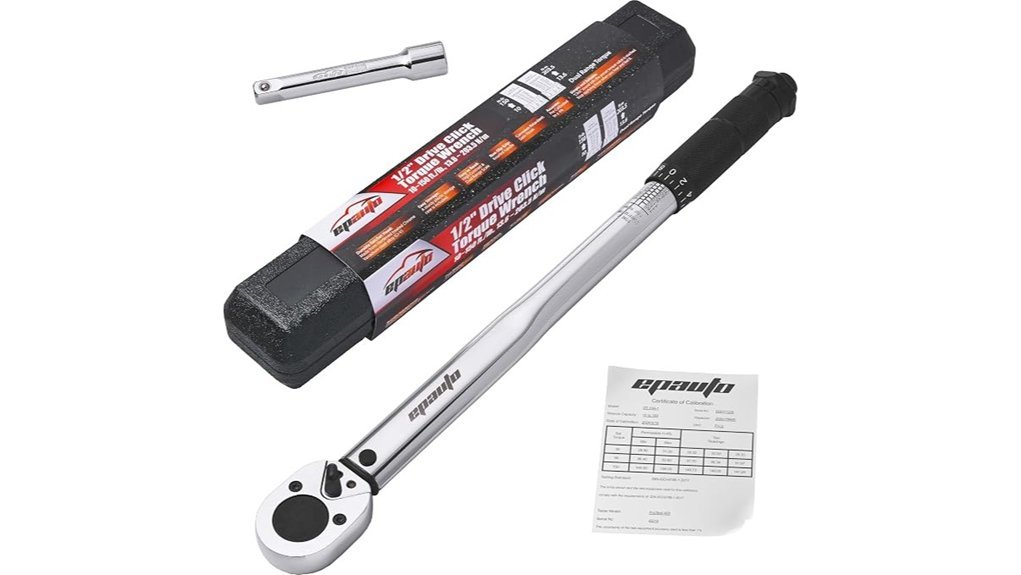
The EPAuto 1/2-inch Drive Click Torque Wrench is the strongest fit here for buyers who need a foot-pound wrench for automotive and other moderate-to-higher-torque fasteners. Its 10-150 ft-lb (13.6-203.5 N·m) torque range covers many common jobs while remaining clearly different from the two smaller 1/4-inch inch-pound models in this guide.
Its ratchet head uses hardened Chrome Vanadium steel with a corrosion-retardant satin finish. A non-slip knurled handle helps with grip, while the high-contrast dual-range scale makes settings easier to read. The wrench is specified as pre-calibrated to ±4% accuracy and gives an audible and tactile click when the selected torque is reached.
Best For: DIYers and mechanics who need a 1/2-inch-drive click torque wrench for fasteners within the 10-150 ft-lb range.
Why You’ll Like It: Its broad foot-pound range and easy-to-read scale make it a practical choice when your work requires substantially more torque than an inch-pound wrench can provide.
Pros:
- 10-150 ft-lb range suits many automotive and mechanical applications.
- Hardened Cr-V ratchet head and corrosion-retardant satin finish support durability.
- Pre-calibrated to a stated ±4% accuracy.
- High-contrast dual-range scale and knurled handle improve usability.
Cons:
- Too large and too high in range for many delicate inch-pound fasteners.
- Not intended to replace a dedicated high-capacity wrench when a specification exceeds 150 ft-lb.
- Like any precision torque tool, calibration should be checked according to the manufacturer’s guidance and after suspected damage.
LEXIVON Inch Pound Torque Wrench (LX-181)
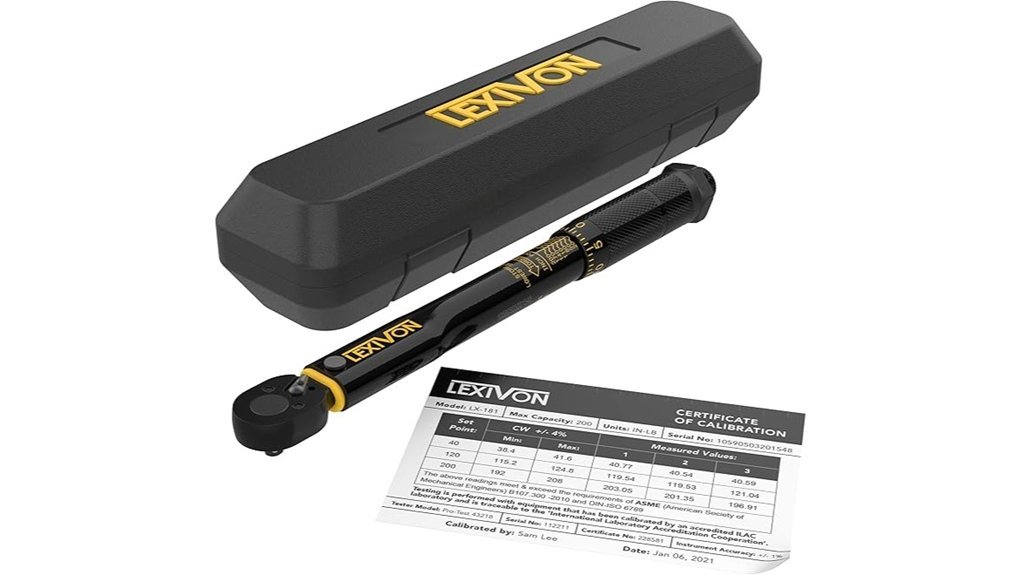
The LEXIVON Inch Pound Torque Wrench LX-181 is a better match for smaller fasteners that call for controlled inch-pound torque. This 1/4-inch-drive model has a 20-200 in-lb (2.26-22.6 N·m) torque range, giving it a wider upper range than the Amazon Basics model below.
The LX-181 is specified at ±4% accuracy and uses a reinforced ratchet gear head made from heat-treated Chrome Vanadium alloy steel. Its Electro-Black finish is designed to resist rust and corrosion, while high-contrast dual-range markings and a knurled handle help with setting and controlling the wrench. The ratchet mechanism is reversible, but calibrated torque measurement for this model is specified in the clockwise direction.
Best For: Buyers who need a compact 1/4-inch-drive torque wrench for fasteners requiring roughly 20-200 in-lb.
Why You’ll Like It: The 200 in-lb upper limit gives you more low-torque working range than the 20-150 in-lb Amazon Basics option while remaining suited to smaller fasteners.
Pros:
- 20-200 in-lb range covers a useful span of low-torque applications.
- Specified at ±4% accuracy.
- Heat-treated Cr-V ratchet head and Electro-Black finish support durability.
- High-contrast scale improves visibility when setting torque.
Cons:
- Not suitable for higher-torque jobs that require a 3/8-inch or 1/2-inch foot-pound wrench.
- Calibrated torque measurement is specified for clockwise operation.
- The click or impulse can be less obvious at low torque settings, so slow, steady operation is important.
Amazon Basics Click Torque Wrench (20-150 Inch-lb)
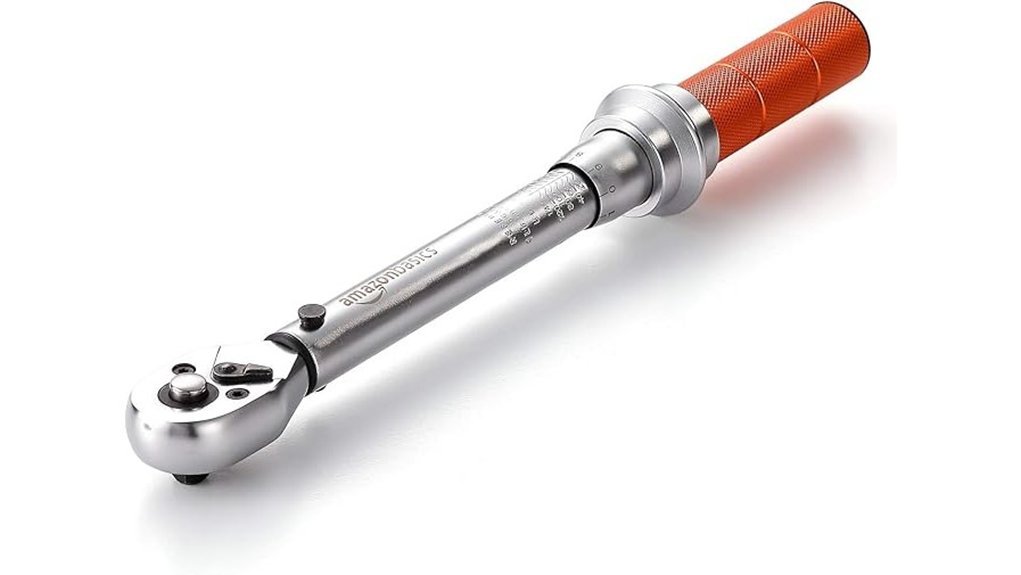
The Amazon Basics Click Torque Wrench is a 1/4-inch-drive model aimed at household and DIY applications that call for relatively low torque. Its 20-150 in-lb torque range makes it useful for smaller fasteners, but it should not be treated as a replacement for a foot-pound automotive torque wrench.
The ratchet head is made from treated Cr-V steel alloy, and the wrench includes a high-contrast dual-range scale, an adjustable locking mechanism, and a plastic storage case. The product manual specifies ±3% accuracy. Buyers doing work where a particular calibration tolerance is critical should confirm the specification in the current documentation supplied with the tool.
Best For: DIY and household users who need a straightforward 1/4-inch-drive click torque wrench for fasteners within the 20-150 in-lb range.
Why You’ll Like It: It provides a simple way to apply specified low torque without stepping up to a larger wrench designed for foot-pound applications.
Pros:
- Compact 1/4-inch drive is suited to smaller fasteners.
- 20-150 in-lb range covers many low-torque household and DIY tasks.
- Cr-V ratchet construction provides resistance to normal wear and corrosion.
- Includes a storage case for protection between uses.
Cons:
- Its 150 in-lb maximum is lower than the 200 in-lb LEXIVON LX-181.
- Not intended for high-torque automotive fasteners.
- The manual describes it as a household-use tool rather than a commercial-use wrench.
Factors to Consider When Choosing Torque Wrenches: 2026 Top Picks and Buying Guide
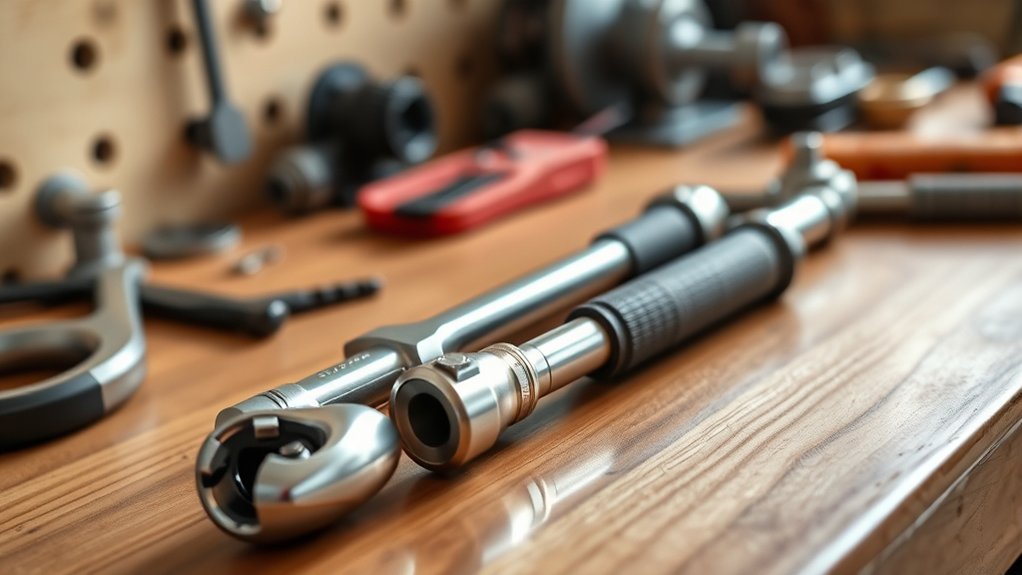
Choosing the right torque wrench starts with matching the tool to the fastener specification rather than simply buying the model with the highest maximum torque. Pay attention to the torque range, drive size, stated calibration accuracy, scale readability, construction, storage requirements, and the type of work you plan to perform.
Torque Range Selection
The required torque specification should fall inside the wrench’s rated range. A 1/2-inch-drive foot-pound torque wrench such as the EPAuto is suited to substantially higher torque values than a 1/4-inch inch-pound model. Conversely, a 1/4-inch-drive inch-pound torque wrench such as the LEXIVON or Amazon Basics model is better suited to smaller fasteners requiring much lower torque.
Do not assume that a wrench with a higher maximum torque is automatically better. First check the service manual, equipment instructions, or other authoritative specification for the exact fastener you are tightening, then choose a wrench that covers that value.
Calibration Accuracy Importance
Calibration accuracy matters because a torque wrench is a measuring tool, not simply a ratchet. Accuracy specifications vary by model, so figures such as ±3% or ±4% should not be treated as universal standards for every wrench.
Check the manufacturer’s calibration information for the specific model you buy. Have the wrench inspected or recalibrated sooner if it has been dropped, overloaded, repaired, handled improperly, or begins producing results that you suspect are inaccurate.
Material Durability Features
Materials such as treated Chrome Vanadium steel alloy are commonly used in ratchet heads because they provide strength and wear resistance. Corrosion-resistant finishes can also help protect the tool during normal storage and workshop use.
Construction quality matters, but it should not replace proper handling. A torque wrench is a precision instrument and should not be used as a breaker bar, hammer, pry bar, or general-purpose tool for loosening seized fasteners.
Design Ergonomics Consideration
A non-slip grip, readable scale, balanced handle, and secure adjustment lock can make a torque wrench easier to set and control. High-contrast markings are particularly helpful when you need to read small increments quickly.
A reversible ratchet can make positioning easier, but do not assume that a reversible ratchet means the wrench provides calibrated torque measurement in both directions. Check the individual model’s manual for its specified measurement direction.
Ease of Use
A good click torque wrench should let you set and lock the desired value without unnecessary difficulty. Apply force slowly and steadily until you hear or feel the click, then stop pulling. Continuing to apply force after the click can over-tighten the fastener and can also affect the tool.
The click can be more subtle at low torque settings. Learning to feel the mechanical release as well as listening for the sound can make low-torque work easier.
Storage and Portability Options
A protective case helps shield a torque wrench from impacts, contamination, and accidental adjustment during storage or transport. Compact 1/4-inch models are easier to fit into smaller toolboxes, while larger 1/2-inch models naturally require more storage space.
Follow the manufacturer’s storage instructions. Many click-style torque wrenches should be returned to their specified lowest storage setting after use rather than left under unnecessary spring tension. Do not turn the handle below the manufacturer’s minimum setting.
Before You Buy: Find the required torque specification first. Then confirm the wrench’s torque range, drive size, socket compatibility, measurement direction, accuracy specification, and calibration instructions. A wrench cannot safely compensate for using the wrong torque value.
Frequently Asked Questions
How Often Should I Calibrate My Torque Wrench?
There is no single calibration interval that applies to every torque wrench. Follow the instructions for your specific model and recalibrate sooner after an overload, impact, repair, improper handling, or suspected loss of accuracy. For example, the Amazon Basics B07ST25WDG manual calls for recalibration no later than 10,000 cycles or 12 months after the tool is placed in service, whichever comes first.
Can I Use a Torque Wrench for Different Types of Fasteners?
Yes, as long as the required torque falls within the wrench’s rated range and you use the correct drive size, socket, or suitable adapter for the fastener. Always use the torque specification provided by the vehicle, equipment, or component manufacturer rather than guessing.
What Is the Lifespan of a Typical Torque Wrench?
There is no dependable universal lifespan for a torque wrench. Service life depends on frequency of use, storage, impacts, overloads, maintenance, calibration history, and the condition of the internal mechanism. A well-maintained wrench can remain useful for years, but accuracy should be verified rather than assumed from age alone.
Are Digital Torque Wrenches Better Than Manual Ones?
Not automatically. Digital torque wrenches can offer electronic displays, alerts, memory functions, and other convenience features, while traditional click wrenches are mechanically simple and do not require batteries. The better choice depends on the torque range, required accuracy, working environment, features, and maintenance preferences.
How Do I Maintain My Torque Wrench Properly?
Keep the wrench clean and dry, store it in its protective case, follow the manufacturer’s recommended storage setting, and avoid drops or overloads. Do not use a calibrated torque wrench as a breaker bar for loosening seized fasteners. Apply torque with a smooth, steady pull and arrange calibration or inspection whenever accuracy is in doubt.
Conclusion
The right torque wrench is the one whose drive size and torque range match the work you actually perform. For higher-torque jobs, the EPAuto 1/2-inch Drive Click Torque Wrench is the strongest fit among these three. For smaller fasteners requiring inch-pound settings, the LEXIVON LX-181 offers the widest range at 20-200 in-lb, while the Amazon Basics Click Torque Wrench provides a simpler 20-150 in-lb option for household and DIY tasks.
Before choosing any model, check the required torque specification for your fastener and confirm that it falls safely within the wrench’s rated range. That one step is more important than choosing a wrench based only on brand, maximum torque, or appearance.