
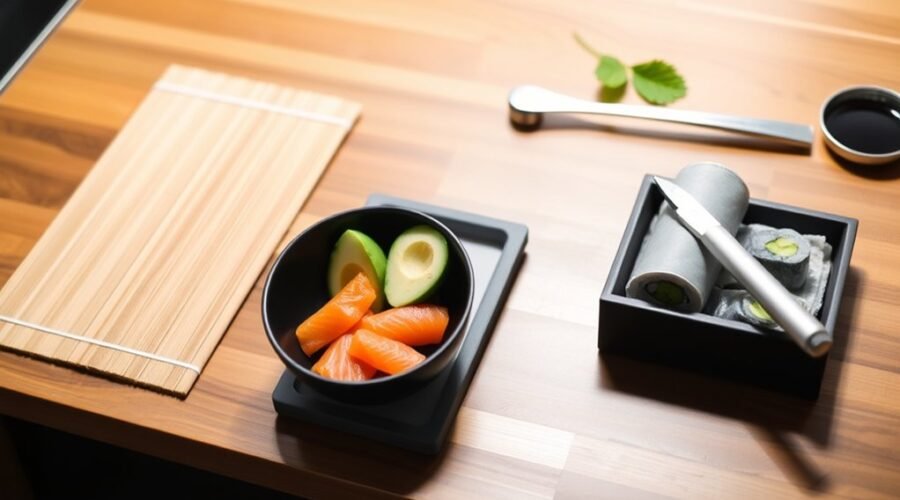
If you want to make sushi at home without buying every tool separately, these three sushi making kits cover three different needs. The Soeos kit keeps things simple with traditional bamboo tools, SushiQuik adds a guided rolling and cutting system for beginners, and the Delamu 22-in-1 kit provides the widest selection of molds and accessories. The best choice depends on how much guidance you want, how you prefer to clean your tools, and whether children will be joining you in the kitchen.
Affiliate disclosure: This article contains Amazon affiliate links. If you purchase through these links, the site may earn a commission at no extra cost to you.
Quick Verdict: Which Sushi Making Kit Should You Choose?
Choose Soeos if you want a simple bamboo setup and prefer learning the traditional rolling-mat technique. Choose SushiQuik if you are a beginner who wants extra guidance for spreading rice, rolling, and making evenly sized pieces. Choose Delamu if you want the most versatile set, including multiple sushi molds and a dedicated sushi knife.
| Kit | Best For | Key Tools | Cleanup | Main Limitation |
|---|---|---|---|---|
| Soeos Beginner Sushi Making Kit | Simple, traditional rolling | Bamboo mats, chopsticks, paddle, spreader | Hand wash | Requires more rolling practice |
| SushiQuik | Beginners who want extra guidance | Training frame, paddle, rolling mat, cutting guide | Dishwasher-safe components | A separate sharp knife is still needed for slicing |
| Delamu 22-in-1 | More tools and sushi styles | Bamboo mats, roller, molds, rice tools, sushi knife | Mixed materials require appropriate cleaning | More pieces to organize and store |
Soeos Beginner Sushi Making Kit (10 Pieces)
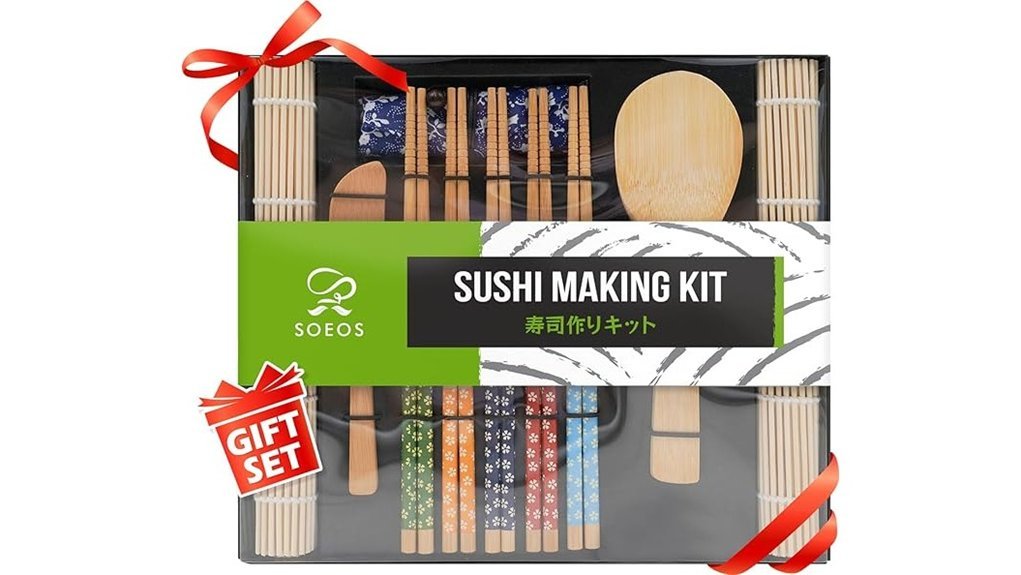
The Soeos Beginner Sushi Making Kit is the simplest option of the three and is a good fit if you want to learn sushi rolling with traditional bamboo tools. Its core accessories include two bamboo rolling mats, five pairs of chopsticks, a rice paddle, and a spreader. This straightforward setup avoids complicated molds and lets you concentrate on learning how to spread rice, position fillings, and roll sushi with a mat.
The bamboo tools should be cleaned by hand rather than placed in a dishwasher. Wrapping a rolling mat in food-safe plastic wrap before use can also make sticky rice easier to clean away afterward.
Best For: Beginners, couples, or families who want a simple bamboo sushi kit without a large collection of molds and accessories.
Why You’ll Like It: It provides the basic tools needed to practice traditional sushi rolling without taking up as much storage space as a large all-in-one set.
Pros:
- Simple Setup: Focuses on the core tools used for rolling and serving sushi.
- Bamboo Rolling Mats: A good choice for people who want to learn a traditional rolling technique.
- Easy to Store: Fewer bulky molds and accessories make organization relatively simple.
Cons:
- More Practice Required: A bamboo mat does not provide as much shaping guidance as a molded system.
- Limited Variety: It lacks the specialty molds and shaping tools found in larger kits.
- Hand Washing Recommended: Bamboo tools need more careful cleaning and drying than dishwasher-safe plastic components.
SushiQuik Sushi Making Kit for Beginners and Kids
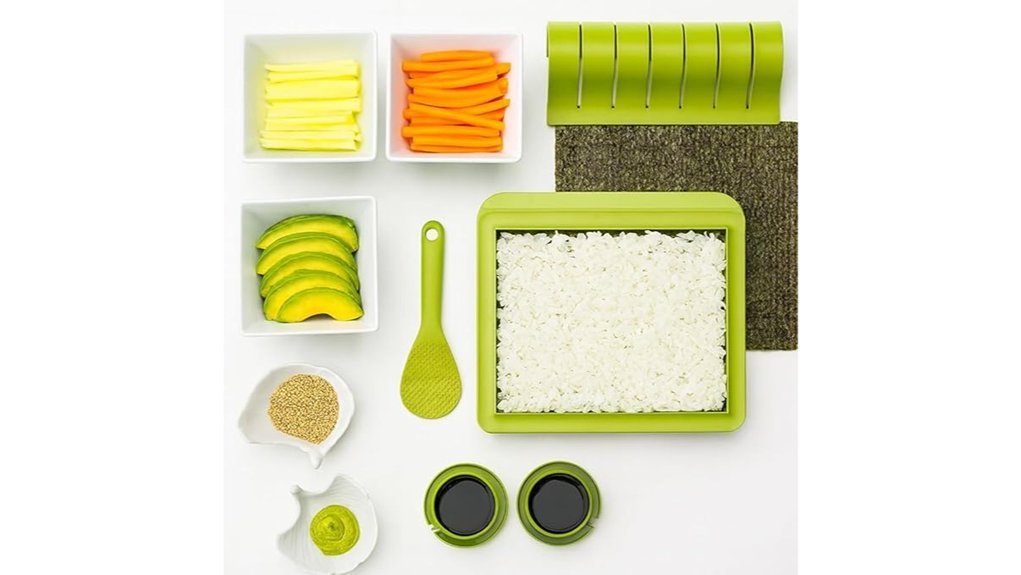
The SushiQuik Sushi Making Kit is designed to give beginners more guidance than a traditional bamboo mat alone. It includes a rice-spreading training frame, rice paddle, rolling mat, base, roll-cutting guide, and end caps that can also be used for soy sauce. The training frame helps you spread a more consistent layer of rice, while the cutting guide helps position a knife for evenly sized pieces.
The kit also provides access to instructional videos, making it easier for first-time users to understand the process. Its components are designed to be dishwasher safe, which is a meaningful advantage if quick cleanup is one of your priorities.
Safety Note: The SushiQuik roll cutter is a cutting guide, not a substitute for a knife. A sharp kitchen knife is still required to slice the finished roll. Children should have close adult supervision whenever a knife is being used.
Best For: First-time sushi makers and families who prefer a more guided rolling process and easy cleanup.
Why You’ll Like It: The training frame and cutting guide reduce some of the guesswork involved in spreading rice and dividing a finished roll into similar-sized pieces.
Pros:
- Beginner-Friendly Guidance: The training frame and rolling system can make the learning process less intimidating.
- Instructional Support: Videos provide extra visual guidance for new sushi makers.
- Dishwasher-Safe Components: Cleanup is simpler than with many traditional bamboo sets.
Cons:
- Knife Not Included: You still need a suitable sharp kitchen knife to use the cutting guide.
- Less Traditional: Cooks who want to master a standard bamboo-mat technique may prefer a simpler kit.
- Ingredients Sold Separately: Sushi rice, nori, fillings, sauces, and other food ingredients are not part of the tool kit.
Delamu 22-in-1 Sushi Making Kit for Beginners
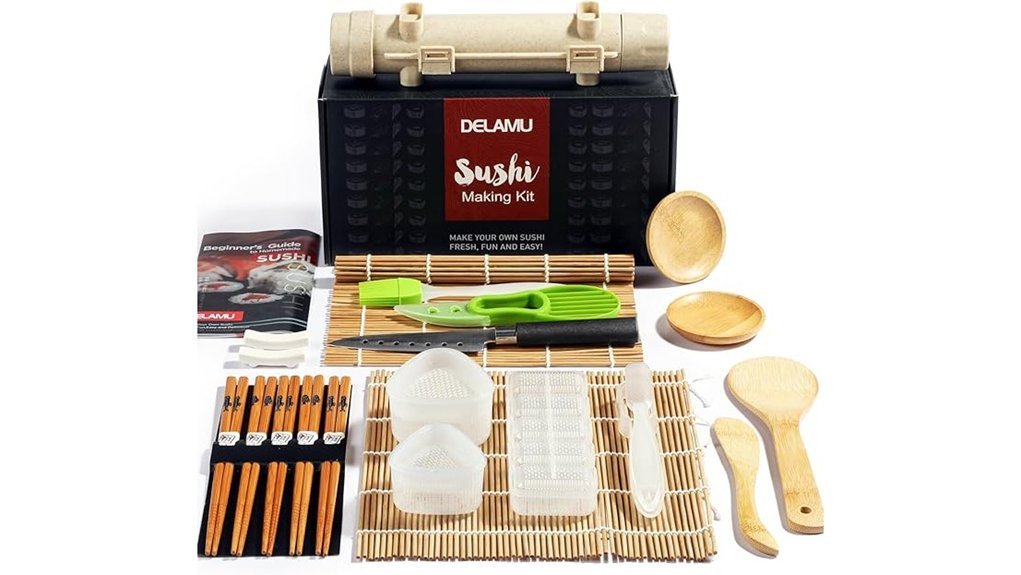
The Delamu 22-in-1 Sushi Making Kit is the most extensive option in this roundup. Along with bamboo rolling mats and rice tools, it includes a rolling tool, several molds for different sushi shapes, chopsticks and holders, sauce dishes, an avocado knife, an oil brush, and a steel sushi knife. This makes it more suitable for buyers who want to experiment with several preparation styles instead of purchasing extra accessories later.
The included guide covers sushi-rice preparation, rolling techniques, and sample recipes. Beginners may appreciate having several shaping tools available, while more experienced home cooks may simply prefer the convenience of keeping numerous sushi-making accessories in one set.
Knife Safety: This kit includes a sharp steel sushi knife. Keep it out of children’s reach, use an appropriate cutting surface, and provide direct adult supervision if children participate in sushi preparation.
Best For: Buyers who want an all-in-one kit with multiple molds, shaping tools, serving accessories, and a dedicated knife.
Why You’ll Like It: Its wider tool selection lets you try different sushi shapes and techniques without having to assemble a collection one accessory at a time.
Pros:
- Extensive Tool Selection: Includes rolling, shaping, serving, and cutting accessories.
- Multiple Sushi Styles: Specialty molds provide more shaping options than a basic bamboo kit.
- Detailed Guide: Instructions cover sushi rice, rolling methods, and sample recipes.
Cons:
- More Storage Needed: A 22-piece set takes more space and organization than a basic mat-and-paddle kit.
- Sharp Knife Included: Extra care is required when storing or using the kit around children.
- Some Tools May Be Unnecessary: Buyers who only plan to make basic rolls may not need the full accessory selection.
Factors to Consider When Choosing a Sushi Making Kit
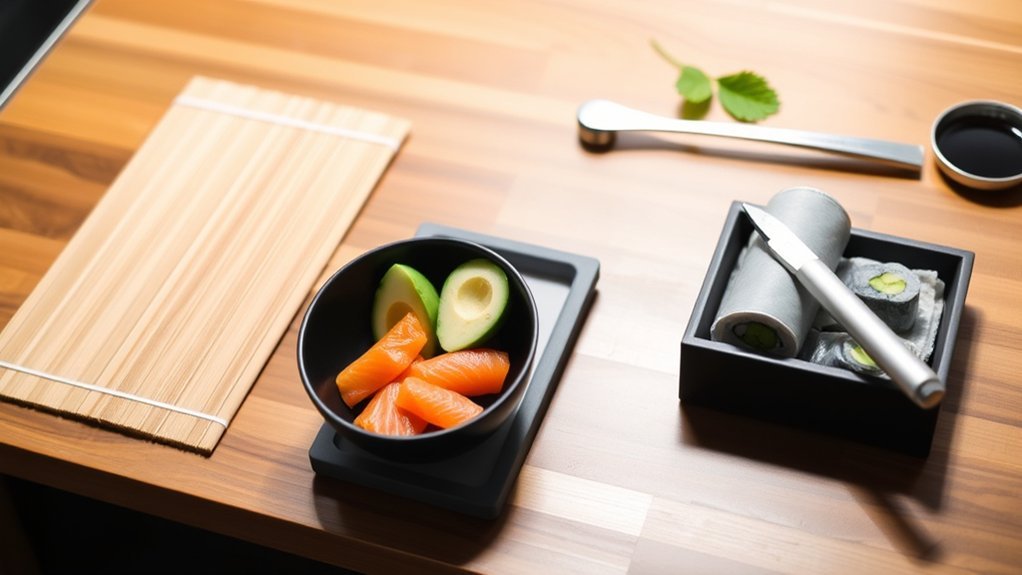
The best sushi making kit is not necessarily the one with the most pieces. Think about the type of sushi you want to make, how much guidance you need, where you will store the tools, and how much cleanup you are willing to do. These factors can help you choose between a basic bamboo kit, a guided rolling system, and a larger all-in-one set.
Essential Tools Included
For basic maki rolls, a rolling mat and rice paddle may be enough. A spreader can make rice preparation easier, while cutting guides and molds can help beginners create more consistent shapes. Larger kits may also include chopsticks, serving dishes, specialty molds, and knives.
Do not assume that a higher piece count automatically makes a kit better. If you only want traditional rolls, you may get more practical value from a compact set that contains a few tools you will use regularly.
Material Quality Considerations
Bamboo is common in traditional rolling mats because it is lightweight and flexible. It does, however, require proper hand washing and thorough drying. Plastic components can be easier to clean, especially when the manufacturer identifies them as dishwasher safe.
If a kit contains a knife, also consider the blade material, handle comfort, storage, and how safely the knife can be kept when not in use.
Ease of Use
Traditional bamboo mats offer flexibility but require practice. Beginners who are worried about spreading too much rice or producing uneven pieces may prefer a guided system with a rice frame or cutting guide.
Instructional videos, illustrated manuals, and recipes can also shorten the learning curve. These resources are particularly helpful if you have never prepared sushi rice or rolled nori before.
Cleanup and Maintenance
Cleanup varies considerably between kits. Dishwasher-safe plastic components can be convenient for frequent use, while bamboo tools generally need gentle hand washing and complete drying before storage.
Sticky rice can become difficult to remove after it dries. Cleaning tools shortly after use and placing food-safe plastic wrap over a bamboo rolling mat can make maintenance easier.
User Experience Features
Useful convenience features include rice-spreading frames, cutting guides, multiple molds, comfortable paddles, detailed instructions, and organized storage. Which features matter most depends on your experience level.
A first-time user may benefit from extra guidance, while someone who already knows how to roll sushi may prefer fewer parts and a more traditional setup.
Educational Value for Families
Making sushi can be an enjoyable hands-on cooking activity for families. Children can help with age-appropriate tasks such as spreading cooled rice, arranging vegetables, or choosing fillings.
Adults should handle sharp knives and supervise children closely. A product being marketed toward families or beginners does not mean every step of sushi preparation is appropriate for unsupervised children.
Versatility Across Skill Levels
Basic kits are often enough for learning traditional rolls, while larger kits can support nigiri-style shapes, onigiri, gunkan-style molds, and other presentations depending on the accessories included.
If you expect your interest in sushi making to grow, a more extensive set may provide room to experiment. If you mainly want an occasional homemade roll, a compact kit may be easier to own and maintain.
Size and Storage Options
Consider where the kit will live when it is not in use. Bamboo mats and paddles can fit easily into many kitchen drawers, while multi-piece kits with molds, bowls, rollers, and knives may require a dedicated container or cabinet space.
Before choosing a large kit, consider whether you are likely to use its specialty accessories often enough to justify the extra storage.
Before You Buy: Quick Checklist
- Decide whether you want a traditional bamboo mat or a guided rolling system.
- Check exactly which tools are included in the current product listing.
- Confirm whether you need to supply your own sharp knife.
- Choose dishwasher-safe components if quick cleanup is important to you.
- Plan extra storage space if you are buying a large multi-piece kit.
- If children will participate, choose age-appropriate tasks and keep knives under adult control.
- Remember that sushi rice, nori, fillings, sauces, and other ingredients are normally purchased separately.
Frequently Asked Questions
Can Sushi Making Kits Be Used for Gluten-Free Sushi?
Yes. The tools themselves can be used to prepare sushi with gluten-free ingredients, but the kit does not make a recipe automatically gluten free. Check ingredients such as sauces, imitation seafood, marinades, and seasonings carefully. If avoiding cross-contact is important, also make sure your tools and preparation surfaces are appropriately cleaned or dedicated to that use.
How Do I Clean and Maintain Sushi Making Tools?
Follow the manufacturer’s care directions for each component. Bamboo mats are generally best hand washed and dried thoroughly, while some plastic sushi-making systems can be placed in the dishwasher. Wash knives separately and dry them promptly before storage.
Are Sushi Making Kits Safe for Children to Use?
Children can participate in many sushi-making activities with adult supervision, but sharp knives should remain under adult control. Even the SushiQuik cutting guide requires a separate knife to slice the roll, while the Delamu set includes a sharp knife. Choose age-appropriate preparation tasks rather than allowing children to use the complete kit unsupervised.
What Types of Sushi Can I Make With These Kits?
Basic rolling mats can be used for familiar maki-style rolls such as vegetable rolls and California-style rolls. Kits with additional molds can provide more options for shaped rice, nigiri-style presentations, onigiri, or other forms supported by the included tools.
Do I Need Special Ingredients for Sushi Beyond the Kit?
Yes. These products primarily provide tools. You will generally need to buy sushi or short-grain rice, nori, rice seasoning ingredients, vegetables, seafood or other fillings, and any sauces or garnishes you want to use.
Do I Need a Separate Knife?
It depends on the kit. The SushiQuik roll cutter is a guide that is used with a separate sharp knife, so you need to supply your own knife. The Delamu 22-in-1 kit includes a sushi knife. A basic bamboo kit such as the Soeos set does not replace the kitchen knife needed to slice finished rolls.
Conclusion
Each of these sushi making kits suits a different type of home cook. The Soeos Beginner Sushi Making Kit is the straightforward choice for learning traditional bamboo-mat rolling without a large collection of accessories. The SushiQuik Kit is better suited to beginners who want a rice-spreading frame, guided rolling system, cutting guide, and dishwasher-friendly cleanup. The Delamu 22-in-1 Kit offers the broadest selection of tools and molds for buyers who want to experiment with several sushi styles.
Choose based on the tools you will actually use rather than piece count alone. A simple kit can be easier to store and maintain, while a guided or all-in-one system can reduce some of the guesswork when you are learning. Whichever option you choose, check the current product contents before ordering and use appropriate adult supervision whenever sharp knives are involved.







[…] 3 Best Sushi Making Kits for Everyday Use in 2027 […]