The best ways to get rid of fire ants in a yard in 2026 combine mound treatments, bait, and fast-acting sprays. Amdro Fire Ant Killer for Mounds targets visible colonies, while Extinguish Plus Fire Ant Bait helps stop young colonies from growing. Monterey LG6150 with spinosad offers organic control. Bonide Rose Rx and Amdro Quick Kill add broader protection. Matching the product to the infestation and timing the application well can improve results, and more details follow.
Amdro Fire Ant Killer for Mounds, 2 Lb
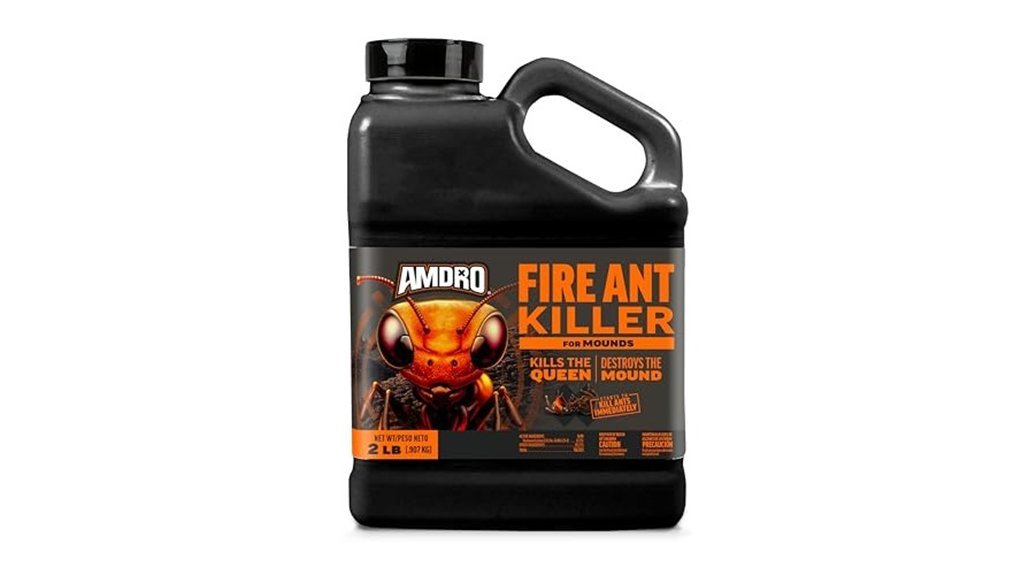
Amdro Fire Ant Killer for Mounds, 2 lb is a strong choice for homeowners looking for a straightforward mound treatment that targets fire ants quickly and effectively. Its dual-action formula reaches visible mounds and hidden colonies, attracting and killing ants on contact. Results often appear within a week, with reduced activity across imported fire ants, native fire ants, Argentine ants, bigheaded ants, and harvester ants. For best performance, application should occur in early morning or late afternoon, avoiding wet soil and incoming rain. Amdro’s long-standing pest control reputation adds further confidence.
Best For: Homeowners who want a simple, effective mound treatment for quickly controlling fire ants and other common invasive ant species.
Pros:
- Dual-action formula targets both visible mounds and hidden colonies.
- Kills ants quickly, with reduced activity often seen within a week.
- Effective against multiple ant types, including imported fire ants and Argentine ants.
Cons:
- Works best when applied in specific conditions, such as early morning or late afternoon.
- Should not be used when the soil is wet or rain is expected soon.
- For optimal results, it may need to be paired with a lawn treatment product.
Extinguish Plus Fire Ant Bait-4.5 lb 55555354
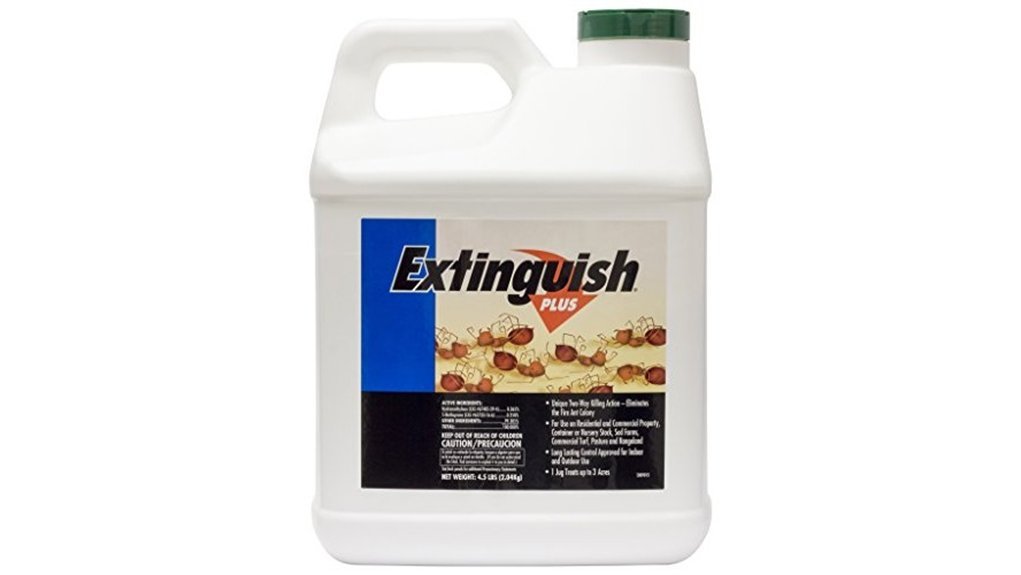
Extinguish Plus Fire Ant Bait suits residential, commercial, and agricultural sites needing broad ant control. The 4.5 lb formulation from ZOECON is designed for indoor and outdoor use, making it adaptable across varied infestation settings. It can be broadcast over larger areas or applied directly to individual fire ant mounds. The bait is also suitable for container and nursery stock, farms, commercial turf, pastures, and rangelands. Its key advantage is colony prevention, since it stops young colonies from developing into larger problem colonies, helping limit future infestations.
Best For: Residential, commercial, and agricultural users who need flexible fire ant control for indoor or outdoor areas, including mounds, turf, farms, and nursery stock.
Pros:
- Can be used both indoors and outdoors
- Works as a broadcast treatment or for individual mound applications
- Helps prevent young fire ant colonies from becoming larger infestations
Cons:
- Designed specifically for fire ants, so it is not a broad-spectrum pest solution
- Bait treatments may take time to show results
- Requires careful application over the target area for best effectiveness
Monterey LG6150 Garden Insect Spray with Spinosad (16 oz)
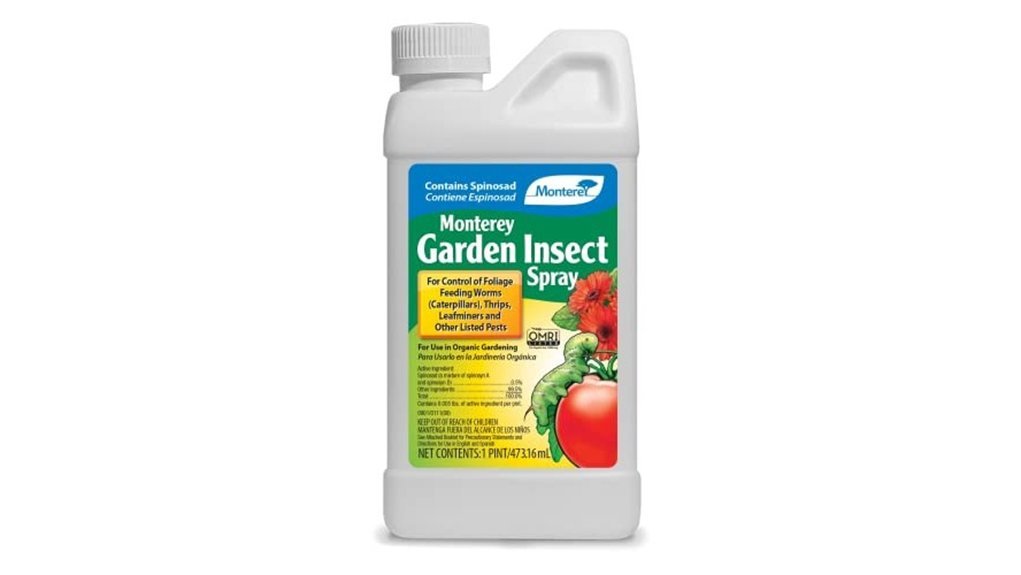
Monterey LG6150 Garden Insect Spray suits gardeners seeking an organic, fast-acting fire ant treatment. This 16 oz insecticide uses spinosad, an odorless ingredient derived from fermentation, and is approved for organic gardening. It is designed to help control fire ants along with caterpillars, leafminers, codling moth, tent caterpillars, gypsy moth, thrips, and borers. The spray works on outdoor ornamentals, lawns, vegetables, and broadleaf weeds. It can be applied with trigger, hand-held, backpack, or hose-end sprayers. Users should follow label directions carefully for proper results and safe use around people and pets.
Best For: Organic gardeners and homeowners looking for a fast-acting, spinosad-based spray to control fire ants and other common garden pests.
Pros:
- Approved for organic gardening and made from an odorless fermentation-derived active ingredient.
- Controls a wide range of pests, including fire ants, caterpillars, leafminers, and thrips.
- Versatile application for ornamentals, lawns, vegetables, and more with multiple sprayer types.
Cons:
- Requires careful reading and following of label directions for safe, effective use.
- May not be ideal for users seeking a ready-to-use product, since proper dilution/application may be needed.
- Effectiveness can vary depending on pest type and timing of application.
Bonide Rose Rx Systemic Drench, 32 oz
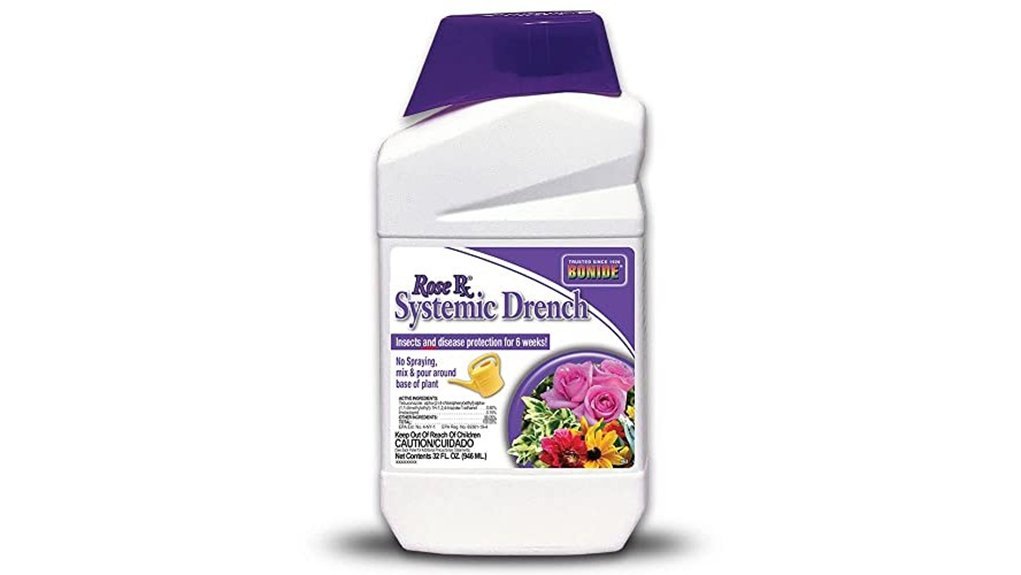
Bonide Rose Rx Systemic Drench suits gardeners wanting long-lasting protection for shrubs and flowerbeds. This 32 oz concentrate from Bonide is designed for roses, azaleas, camellias, and similar plants, delivering six weeks of insect and disease control after each application. It targets Japanese beetles, borers, aphids, black spot, powdery mildew, rust, and related problems. The no-spray formula is mixed and poured at the base or sprinkled over plants, then repeated every six weeks. It works on plants of all ages, but should not be used while bees are foraging.
Best For: Gardeners who want an easy, long-lasting systemic treatment for roses, azaleas, camellias, and other shrubs without the need for spraying.
Pros:
- Provides up to six weeks of insect and disease protection per application.
- No-spray formula is simple to mix and apply around the base of plants.
- Effective against a wide range of pests and diseases, including aphids, Japanese beetles, black spot, powdery mildew, and rust.
Cons:
- Must be avoided while bees and other pollinators are foraging.
- Requires reapplication every six weeks during the growing season.
- Concentrate format may be less convenient for users who prefer ready-to-use products.
Amdro Quick Kill Ant & Spider Killer, 3 lb
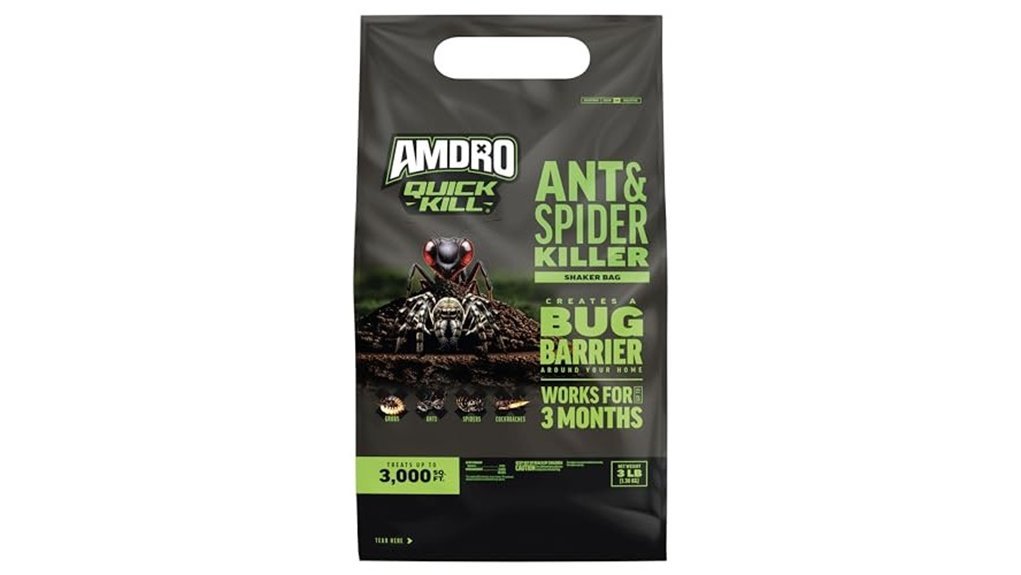
Amdro Quick Kill Ant & Spider Killer suits homeowners needing broad outdoor pest control. This 3 lb shaker bag from Amdro, manufactured by Central Garden & Pet, is designed for outdoor ant and spider control. It kills up to 100 insects, covers as much as 3,000 square feet, and continues working for up to three months. The ready-to-use granules require no mixing or extra equipment, making perimeter treatment simple. It can be applied around lawns, ornamentals, flower gardens, and home foundations to form a protective bug barrier.
Best For: Homeowners looking for an easy-to-use outdoor granule treatment to control ants and spiders and create a perimeter bug barrier around lawns, gardens, and foundations.
Pros:
- Covers up to 3,000 sq ft, making it suitable for larger outdoor areas.
- Ready-to-use shaker bag requires no mixing or extra equipment.
- Continues working for up to 3 months for longer-lasting protection.
Cons:
- Designed for outdoor use only, so it won’t help with indoor infestations.
- Focuses mainly on ants and spiders, with less emphasis on broader pest types.
- Granular application may be less precise than targeted spray treatments.
Factors to Consider When Choosing How to Get Rid of Fire Ants in Your Yard: Useful Products and Buying Tips

Choosing the right fire ant treatment depends on the method used, the size of the yard, and the active ingredients in the product. Application timing also matters, since many treatments work best when ants are active and weather conditions are favorable. Safety precautions should be reviewed carefully, especially in yards used by children or pets.
Treatment Method
When selecting a fire ant treatment, product type matters because the most effective options are formulated for mound treatment and can reach both visible and hidden colonies. Applications tend to work best in early morning or late afternoon, when fire ants are most active and bait is more likely to be carried into the colony. Treatments should not be applied during wet weather or before heavy rain, since moisture can reduce performance and wash the product away. A two-step approach often improves results: first treat mounds directly, then use a broader lawn application to address lingering activity. Treated areas should be checked regularly, and reapplication may be needed after heavy rainfall or according to label directions to keep populations under control.
Coverage Area
Coverage area is a key factor because fire ant products are designed for different treatment scales, from targeted mound applications to formulas that can cover up to 3,000 square feet or more. The infestation size should guide the purchase, since small problems may be handled with a single mound treatment, while widespread activity can require several products or repeated applications. Some baits are meant for broadcast use across lawns or pastures, whereas others work best when placed directly on individual mounds. Product labels should be checked for limits tied to rain, soil moisture, or other conditions that can reduce performance. Matching the product’s coverage to the yard size helps avoid waste, improves planning, and supports more complete fire ant control.
Active Ingredients
The active ingredient is often the deciding factor in how well a fire ant product performs. Buyers often compare insecticides such as spinosad, valued for quick action against fire ants and other pests. Bait formulas work differently: ants carry the product back to the colony, where ingestion can interrupt growth and reproduction. Dual-action products aim to reduce both the mound and the hidden network below it, offering broader control. Organic options may rely on naturally derived ingredients that can suit households seeking lower-risk choices around people and pets. Product labels should clearly state the active ingredient, since that information reveals how the treatment works and what results to expect. A well-chosen ingredient can improve control without unnecessary applications or wasted expense in the yard.
Application Timing
Timing can determine how effectively fire ant treatments work in the yard. Early morning or late afternoon is usually the best window, since fire ants are most active then and more likely to encounter the product. Applications made during wet conditions, or just before heavy rain, can lose effectiveness because moisture may dilute or wash away treatments. Dual-action formulas may begin attracting ants immediately, and visible activity can decline within a week. Even so, results should be checked regularly after treatment, because persistent colonies may need a second application. Product labels should be followed closely, especially for timing directions, as those instructions are designed to improve control. Careful scheduling does not guarantee success, but it can considerably improve outcomes and reduce wasted effort.
Safety Precautions
Safety precautions should come first when choosing a fire ant treatment, because even effective products can cause problems if they are handled carelessly. Every label should be read before application, since directions explain proper rates, methods, and warnings. Gloves and long sleeves help prevent skin contact with insecticides, especially during mixing or spreading. Treatments are best applied in early morning or late afternoon, when bees and other beneficial insects are less active. Windy weather and heavy rain should be avoided because drift and runoff can carry chemicals beyond the target area. After use, all products should be stored securely, away from children and pets, to reduce accidental exposure and guarantee they remain effective for future use.
Pest Spectrum
A good fire ant product should match the pest spectrum in the yard, since treatments vary in their effectiveness against imported fire ants, native fire ants, and other troublesome species such as Argentine and harvester ants. Matching the label to the exact invader improves results and avoids wasted effort. The best options often combine mound treatments with bait products, so visible workers are reduced while colonies are weakened below ground. Dual-action formulas are especially useful because they attack active ants and hidden mounds at the same time. Timing also matters: early morning or late afternoon usually brings stronger ant activity and better uptake. Products that stop young colonies from maturing can limit future infestations, making early intervention valuable. Selection should consequently focus on species coverage, colony control, and practical application.
Frequently Asked Questions
Can Fire Ants Return After a Rainstorm?
Yes, fire ants can return after a rainstorm; flooded colonies often rebuild quickly in drier ground. Their tunnels may surface again, and survivors frequently relocate nearby, especially if the soil remains warm and moist.
How Long Does Fire Ant Treatment Usually Take to Work?
Fire ant treatment usually takes a few days to several weeks to work, depending on the product and colony size. Fast-acting sprays kill quickly, while baits may require slower, colony-wide effects over time.
Are Fire Ant Treatments Safe for Pets and Children?
Fire ant treatments can be safe for pets and children when applied exactly as labeled and kept dry until settled. The detached assessment recommends choosing low-toxicity options, restricting access, and consulting a veterinarian or pediatrician if exposure concerns arise.
Do Fire Ants Spread Quickly Across Neighboring Yards?
Yes—fire ants can spread quickly into neighboring yards, especially when nests are disturbed or conditions favor colony expansion. Like a telegram racing through town, colonies often form satellite mounds and invade adjacent properties.
What Time of Year Are Fire Ants Most Active?
Fire ants are usually most active during warm months, especially spring and summer, when soil temperatures rise. Activity often increases after rain and during mild winters in southern regions, where colonies remain active year-round.
Conclusion
Choosing the right fire ant solution can feel like picking the right key for a stubborn lock, but the five options above offer practical ways to tackle the problem. Whether the goal is fast mound control, broader yard protection, or a bait-based approach, each product has its place. By considering infestation size, application style, and safety needs, homeowners can make a smarter choice and reclaim their yard with greater confidence in 2026.