The 7 best portable air conditioners for 2026 include the Whynter ARC-14S, Midea Duo, DREO 515S, TOSOT, BLACK+DECKER BPACT08WT, Frigidaire 8,000 BTU model, and COSTWAY 8000 BTU unit. These picks stand out for cooling power, energy efficiency, smart controls, and quieter operation. Dual-hose and inverter designs offer better performance in larger spaces, while compact models suit smaller rooms. Each option balances comfort, convenience, and value, and more details can clarify which one fits best.
Whynter Portable Air Conditioner 14,000 BTU Dual Hose 500 Sq Ft ARC-14S
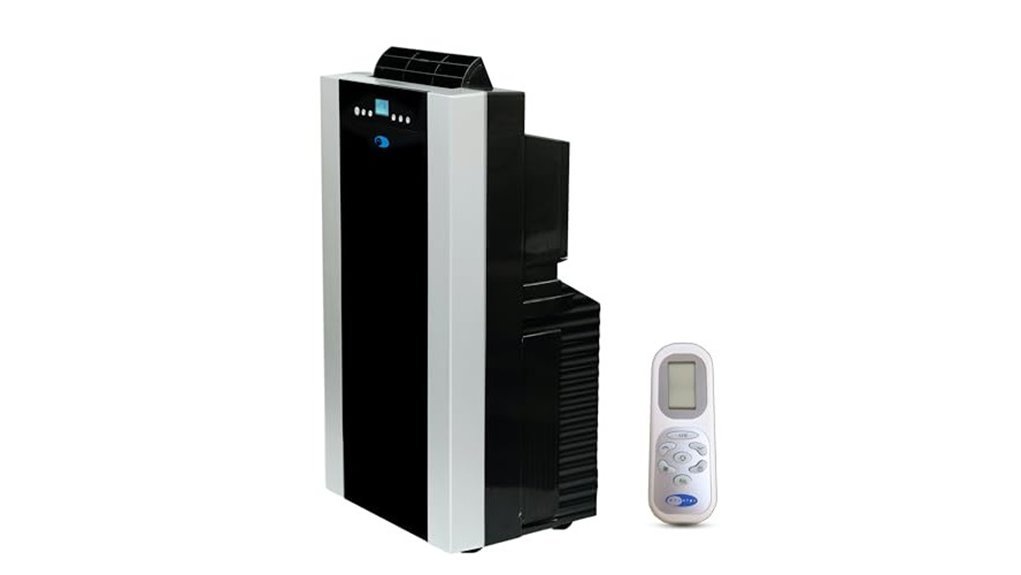
The Whynter ARC-14S stands out as a strong choice for anyone needing a portable air conditioner for medium-sized rooms up to 500 square feet, especially bedrooms or apartments where quieter operation matters. Its 14,000 BTU cooling capacity, dual-hose design, and 430 m³/h airflow support efficient temperature control. Three modes, three fan speeds, and adjustable thermostatic control from 61°F to 89°F add flexibility. The unit also dehumidifies up to 71 pints per day. With auto-drain, included window kit, carbon filter, and CFC-free refrigerant, it combines practicality, efficiency, and environmental consideration.
Best For: People looking to cool medium-sized rooms up to 500 sq. ft., especially bedrooms or apartments, with a portable unit that balances strong performance and quieter operation.
Pros:
- 14,000 BTU cooling capacity with dual-hose design for efficient cooling performance.
- Quiet operation at 51 dBA on low speed, making it suitable for bedrooms.
- Includes helpful features like dehumidifying mode, auto-drain, window kit, and washable filters.
Cons:
- At 1300 W max, it may use more power than smaller portable AC units.
- Heavier, bulkier portable units can be less convenient to move and install.
- Best performance is limited to medium-sized spaces, so it may not suit larger rooms.
Midea Duo Portable Air Conditioner with Heat and Alexa
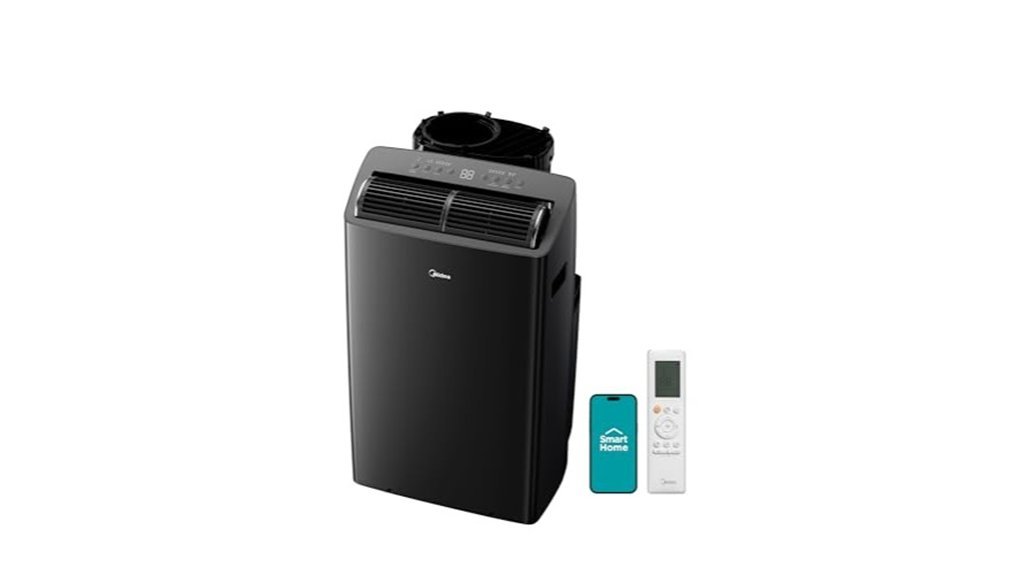
With dual-hose efficiency, the Midea Duo suits medium-to-large rooms needing fast cooling and heating. This 14,000 BTU portable unit, rated at 12,000 BTU SACC, handles spaces up to 550 square feet in black. Its industry-first dual hose design draws intake and exhaust air outdoors, helping prevent hot air from reentering the room. An optimized air duct system boosts cooling speed, while inverter technology cuts electricity use by more than 40% versus federal standards. It also operates as a heat pump from 41°F to 86°F. App control and Alexa or Google Assistant support add convenience.
Best For: People who want a powerful portable AC with efficient dual-hose cooling, heating capability, and smart app/voice control for medium to large rooms.
Pros:
- Dual-hose design improves efficiency by preventing hot air from cycling back into the room.
- Cools and heats spaces up to 550 sq. ft., making it versatile year-round.
- App, Alexa, and Google Assistant compatibility add convenient smart control.
Cons:
- Bulkier and less discreet than a window unit or mini-split system.
- Portable ACs can still be noisy compared with fixed HVAC options.
- Best performance depends on proper venting and room setup.
DREO Portable Air Conditioner 515S 12000 BTU Smart AC
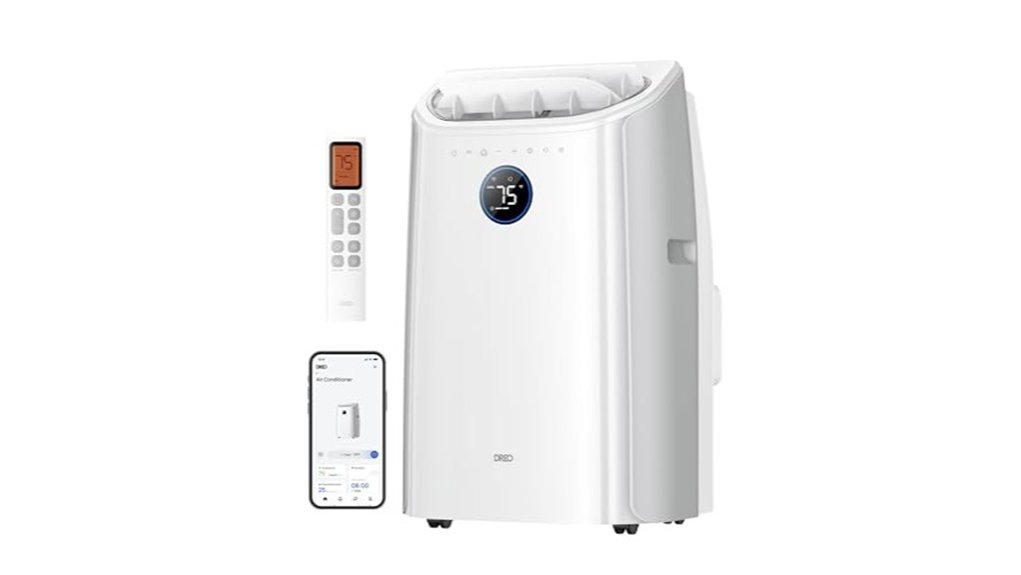
For sleepers and home office users, the DREO 515S keeps noise to a near-whispering 45dB. The 12,000 BTU ASHRAE unit, rated at 8,000 BTU DOE, offers cooling, fan, and dehumidifier functions in a white chassis. It can cool spaces up to 16 feet away and lets users set temperatures from 61°F to 86°F. DREO’s noise isolation system limits compressor and airflow disruption. Self-evaporating technology reduces drainage concerns below 90% humidity. Smart controls support Siri, Alexa, Google Home, and the app for sleep settings, humidity, and monitoring.
Best For: Sleepers and home office users who want a quiet, smart, 3-in-1 portable air conditioner for medium-sized spaces.
Pros:
- Very quiet operation at 45dB, making it suitable for bedrooms and workspaces.
- Smart controls work with Siri, Amazon Alexa, Google Home, and the DREO app.
- Self-evaporating design helps reduce drainage needs in lower-humidity environments.
Cons:
- Cooling is best suited for areas within about 16 feet, so it may not handle larger rooms as effectively.
- Portable AC units still require venting setup, which can be inconvenient.
- Performance and drainage convenience may be reduced in very humid conditions.
TOSOT Portable Air Conditioner with Smart WiFi Control
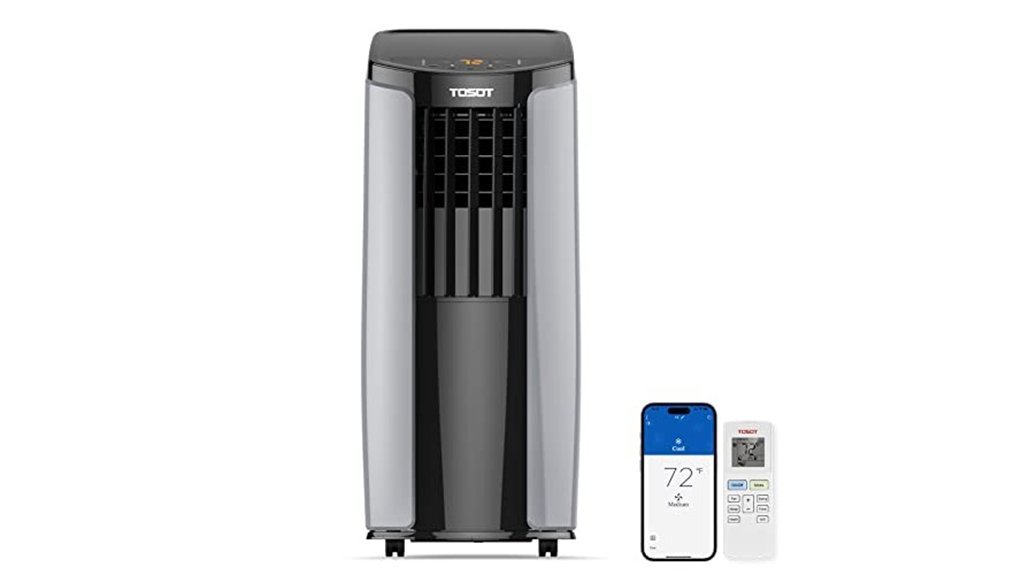
Ideal for remote workers and bedroom cooling, TOSOT’s smart WiFi portable AC handles spaces up to 300 square feet. With 9,700 BTU ASHRAE capacity and 206 CFM airflow, it can cool a room in about 20 minutes. The free Gree+ app enables remote adjustments, while WiFi support allows customized settings from anywhere. Installation is straightforward with the included window kit, flexible hose, and broad fit range. It also offers dehumidifier and fan modes for humid conditions. Copper core compressors support stable performance and long-term durability in hot weather.
Best For: Remote workers, bedroom users, and anyone needing smart, portable cooling for rooms up to 300 square feet.
Pros:
- Smart WiFi control with the free Gree+ app for convenient remote adjustments
- Cools spaces up to 300 square feet and can help cool a room in about 20 minutes
- Includes dehumidifier and fan modes plus an easy-install window kit
Cons:
- Best suited for smaller rooms, so it may not be powerful enough for larger spaces
- Portable AC units still require window venting and setup
- Cooling performance can vary depending on room insulation and heat load
BLACK+DECKER Portable Air Conditioner, 9,000 BTU, BPACT08WT, White
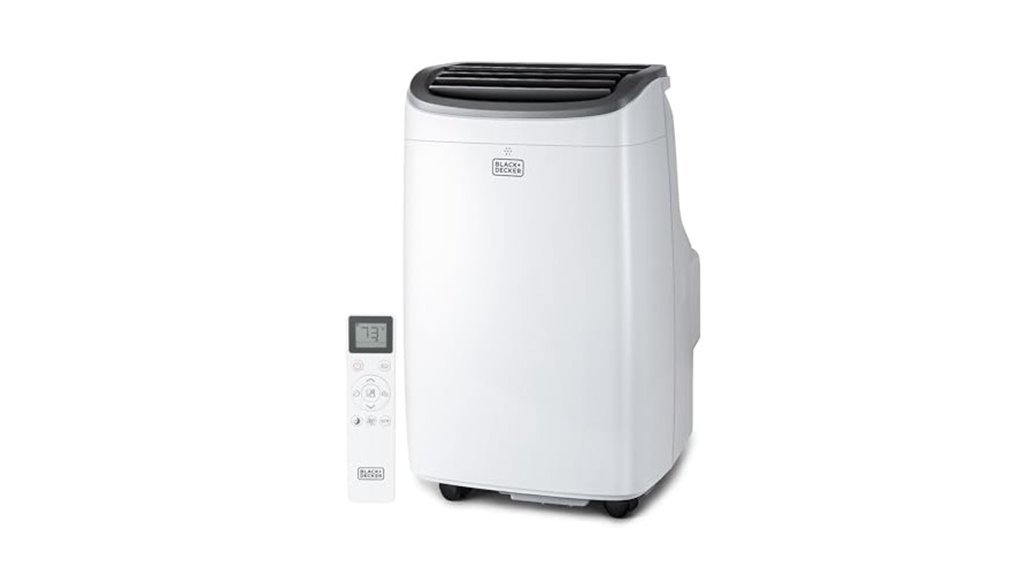
The BLACK+DECKER BPACT08WT suits small rooms needing flexible cooling up to 400 square feet. This three-in-one unit combines air conditioning, dehumidifying, and fan functions, offering practical climate control in a compact white cabinet. Its 9,000 BTU rating, with 5,300 BTU SACC, targets moderate cooling needs effectively. A full-function remote and Follow Me feature improve temperature accuracy by using the remote as a thermostat. Casters and side handles support easy relocation, while the included window kit simplifies installation. Measuring 15.3 by 14 by 24.8 inches, it remains manageable for home use.
Best For: Small-room users who want a portable, easy-to-move 3-in-1 cooling solution with dehumidifier and fan functions.
Pros:
- Cools rooms up to 400 sq. ft., making it suitable for bedrooms, offices, and other small spaces.
- Includes a full-function remote with Follow Me for more accurate temperature control.
- Comes with casters, side handles, and an easy-install window kit for convenient setup and mobility.
Cons:
- 9,000 BTU cooling capacity may be insufficient for larger or very hot rooms.
- Portable units can still be somewhat noisy compared with window or central AC systems.
- Requires window installation, so it may not work well in every room layout.
Frigidaire 8,000 BTU Portable Air Conditioner, Cools 350 Sq Ft, White
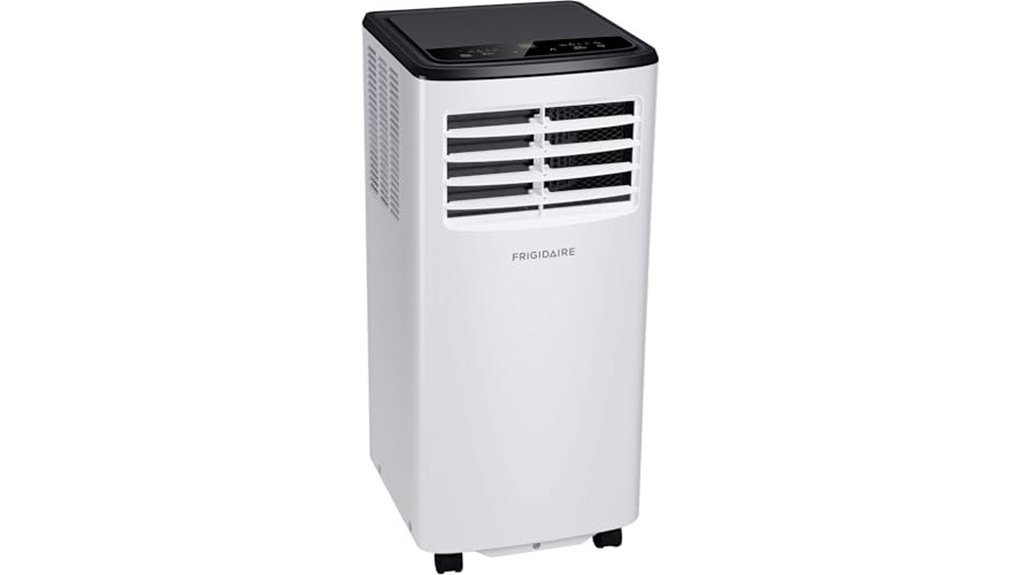
Frigidaire’s 8,000 BTU portable unit suits small rooms up to 350 square feet. The FHPC082AC1 comes in white and uses a compact, lightweight build with caster wheels for easy movement between rooms. It offers custom temperature control and two fan speeds for flexible comfort. Sleep Mode helps reduce overnight energy use, while Dry Mode removes excess moisture for a calmer space. A remote control simplifies adjustments, and the clean filter alert supports maintenance. The 24-hour timer and auto restart feature add convenience after outages or planned scheduling throughout daily use.
Best For: People who need a portable, easy-to-move air conditioner for cooling small rooms up to 350 sq. ft. with convenient everyday features.
Pros:
- Compact, lightweight design with caster wheels for easy room-to-room movement
- Custom temperature control, two fan speeds, and useful modes like Sleep and Dry
- Remote control, clean filter alert, 24-hour timer, and auto restart for added convenience
Cons:
- Best suited only for smaller spaces, not larger rooms
- Portability can mean less cooling power than a window or whole-room unit
- Requires regular maintenance, including filter cleaning, to keep performance optimal
COSTWAY 8000 BTU Portable Air Conditioner with Remote
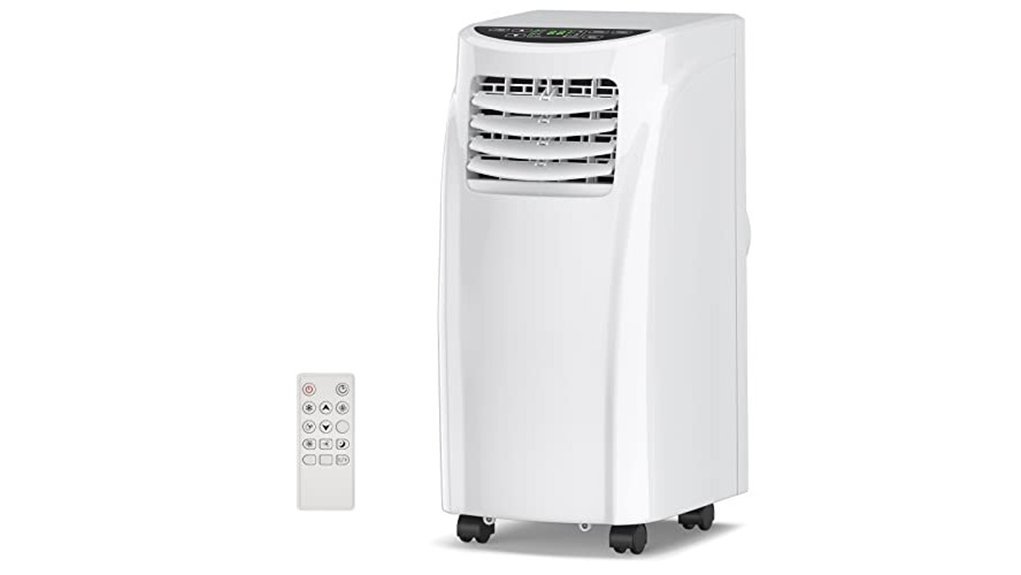
With 8,000 BTU cooling, this COSTWAY model suits small rooms up to 230 square feet. It delivers up to 300 m³/h airflow with wide-angle distribution, reaching 120 degrees horizontally and 70 degrees vertically. Three modes are available: cooling, fan, and dehumidifying, with moisture removal rated at 50 pints per day. Sleep mode keeps noise below 56dB, while the temperature can be set from 64°F to 86°F. A timer, remote control, touch panel, washable filter, caster wheels, and window kit add convenience.
Best For: People looking for a compact portable air conditioner for small rooms up to 230 sq. ft. with simple controls and multiple comfort modes.
Pros:
- Cools small spaces effectively with 8,000 BTU and up to 300 m³/h airflow.
- Offers cooling, fan, and dehumidifying modes with handy extras like sleep mode and a timer.
- Includes remote control, touch display, washable filter, and caster wheels for easy use and mobility.
Cons:
- Best suited only for smaller rooms, so it may not be powerful enough for larger spaces.
- Noise is under 56dB, but it may still be noticeable for very light sleepers.
- The portable design still requires window installation, which may be inconvenient for some users.
Factors to Consider When Choosing Portable Air Conditioners 2026: Top Picks and Buying Guide
Choosing a portable air conditioner in 2026 requires attention to cooling capacity, room size match, energy efficiency, noise levels, and hose design. The right unit should deliver enough power for the intended space without wasting energy or creating excess noise. Its hose setup should also support easy installation and reliable airflow.
Cooling Capacity
Cooling capacity is the starting point for comparing portable air conditioners, because it determines how much heat a unit can remove in an hour, and it is measured in BTUs. Higher BTU ratings generally indicate stronger cooling power, with portable units commonly ranging from 8,000 BTUs for smaller areas to 14,000 BTUs for larger spaces. A practical rule of thumb is about 20 BTUs per square foot of living space, though actual performance also depends on room insulation, ceiling height, and window count. SEER should be reviewed alongside BTUs, since it reflects seasonal efficiency by comparing cooling output to energy input. Together, these figures help distinguish between raw power and energy performance, two essentials in selecting a capable portable air conditioner.
Room Size Match
Room size should be matched closely to a portable air conditioner’s BTU rating to keep cooling efficient and consistent. Smaller rooms, up to 300 square feet, are usually well served by units near 8,000 BTU, while spaces approaching 500 square feet often need about 14,000 BTU for dependable cooling. SACC ratings should also be checked, since they reflect real-world performance more accurately than BTU figures alone. Airflow, measured in CFM, matters as well; stronger airflow can cool larger rooms faster and improve comfort. Room layout should not be ignored, because narrow spaces, poor insulation, and internal heat sources can reduce effectiveness. Matching coverage area to the actual room helps prevent underperformance and unnecessary strain on the unit.
Energy Efficiency
After fit and coverage, efficiency becomes the next major filter for portable air conditioners, since the right BTU level should also align with low power use. BTU remains a useful starting point: higher ratings cool larger rooms, but oversizing can waste electricity. More reliable comparisons come from SEER and especially EER, where stronger numbers indicate cooler air delivered with less energy. Inverter models add another advantage by varying compressor speed, cutting consumption by more than 40% versus conventional designs. Dual hose units also tend to perform better because they keep hot air from cycling back into the system. Eco-friendly, CFC-free refrigerants further support lower impact without sacrificing cooling. For buyers, the best choice pairs room-appropriate capacity with proven efficiency metrics and modern compressor design.
Noise Levels
Noise levels are often the deciding factor in how comfortable a portable air conditioner feels day to day, especially in bedrooms or shared living spaces. Portable units are commonly rated in decibels, and lower numbers signal quieter performance. Some models run at about 45 dB, making them suitable for sleep or focused work. For most households, choosing a unit below 56 dB helps preserve a balance between cooling strength and a calmer room. Sleep mode can lower sound further overnight, improving rest without constant adjustment. Advanced noise isolation can reduce compressor and airflow noise, while thoughtful design and air distribution may soften the sound profile as well. In practice, quieter operation often feels as important as cooling capacity, particularly where uninterrupted comfort matters most.
Hose Design
Hose design plays a major role in how effectively a portable air conditioner cools a space, with dual hose systems often delivering stronger performance by keeping hot air from cycling back into the room. By separating intake and exhaust, they reduce negative pressure and limit the need to pull warm outside air indoors, which can improve efficiency. Single hose models are typically easier to set up, but they may consume more energy under the same conditions. Hose length also matters; excessive length can weaken airflow and lower cooling output if it is not carefully arranged. Fewer bends and turns help preserve circulation. Insulated exhaust hoses are preferable because they reduce heat exchange, allowing cooled air to remain effective in the living space.
Smart Controls
Smart controls can make a portable air conditioner easier to manage and more efficient to use, especially when app connectivity allows adjustments from a smartphone anywhere. This remote access lets users change temperature, fan speed, and operating modes without being near the unit. Many models also support voice commands through Alexa or Google Assistant, adding hands-free convenience. Some units go further by showing live temperature and humidity readings, which helps maintain comfortable indoor conditions. Others use machine learning to learn routines and refine cooling performance over time. Energy usage reports are another useful feature, giving a clearer picture of consumption and helping identify ways to lower electricity costs. Together, these functions turn basic cooling into a more responsive and informed experience.
Maintenance Needs
Maintenance needs can shape how convenient and cost-effective a portable air conditioner is over time, even when smart features make daily use simpler. Regular filter cleaning or replacement helps preserve airflow, limit dust buildup, and support better cooling and air quality. Drainage should be monitored closely, since self-evaporating systems may still need manual emptying in humid conditions. The exhaust hose also benefits from periodic inspection and cleaning to prevent clogs, overheating, and reduced performance. Keeping the exterior free of dirt supports airflow, lowers noise, and helps the unit run efficiently. Annual professional servicing is advisable to assess refrigerant levels and overall system health, which can extend lifespan and maintain reliable operation.
Frequently Asked Questions
How Often Should Portable Air Conditioners Be Cleaned?
Portable air conditioners should be cleaned every two to four weeks during regular use, with filters checked monthly and the water reservoir emptied as needed. Deeper cleaning, including vents and coils, helps maintain efficiency and air quality.
Can Portable ACS Work Without Window Venting?
No, portable ACs generally cannot cool effectively without window venting, because they must expel hot air outside. Some evaporative coolers work differently, but true portable air conditioners need a vent path for exhaust.
Do Portable Air Conditioners Increase Electricity Bills?
Yes, portable air conditioners usually raise electricity bills; a small studio once saw its summer costs jump 20%, like a thirsty sponge. Efficiency, room size, and runtime determine whether the increase stays modest or significant.
How Loud Are Portable Air Conditioners at Night?
Portable air conditioners are usually noticeable at night, often around 50 to 60 decibels, like steady conversation. On sleep mode, some run quieter, but compressor cycling and fan noise can still disturb light sleepers.
Can One Portable AC Cool Multiple Rooms?
Typically not; one portable AC usually cools only one room, since cool air drifts and heat returns. Coincidentally, open doors, fans, and layout can extend reach, but effectiveness drops quickly across multiple spaces.
Conclusion
Choosing the right portable air conditioner often comes down to balancing cooling power, efficiency, noise, and convenience. From dual-hose designs to smart WiFi features, each option serves a different need and space. Yet the best unit is the one that quietly fits your lifestyle, not just your room size. Isn’t that what comfort should really mean? As temperatures rise, thoughtful selection turns a simple appliance into a more dependable kind of relief.