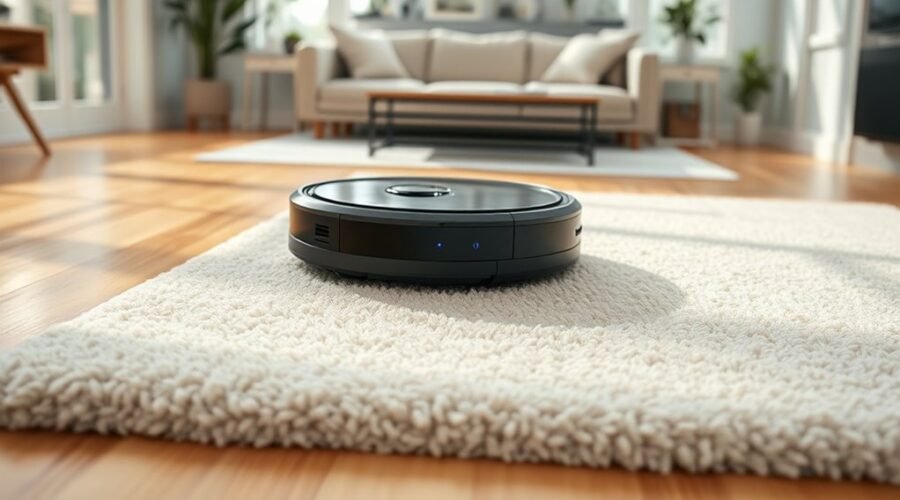
Robot vacuum carpet detection refers to the system that identifies carpeted areas and changes cleaning behavior accordingly. It relies on sensors such as LiDAR, infrared, and floor-contact data to infer texture, height, and reflectivity. Once a carpet is recognized, the robot may increase suction or lift mop components to avoid damage. The real distinction lies in how accurately these machines classify mixed flooring and respond in real time.
What Is Robot Vacuum Carpet Detection?
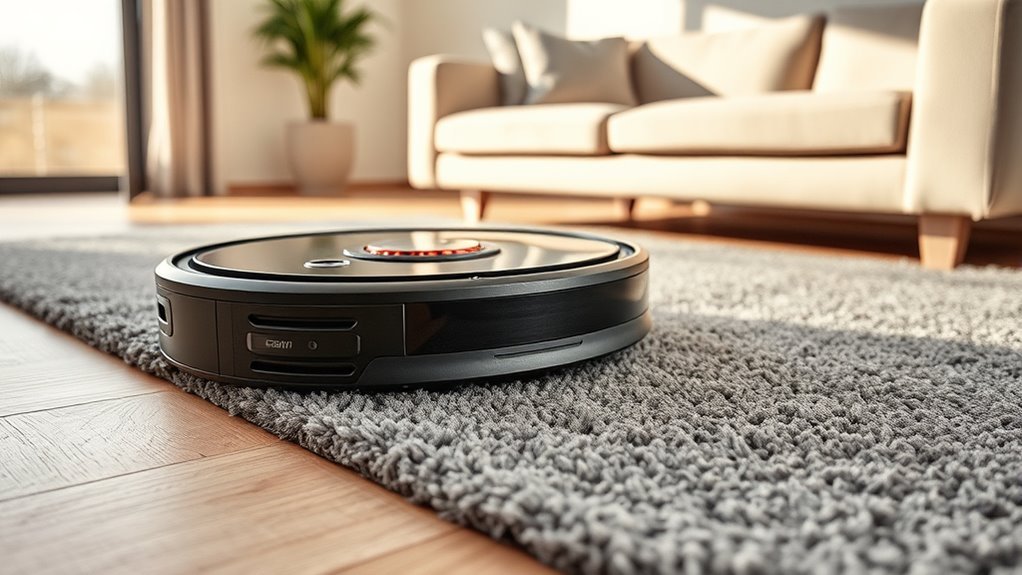
Robot vacuum carpet detection refers to the use of onboard sensors and mapping systems, such as LiDAR or infrared, to identify carpeted surfaces and adjust cleaning behavior accordingly.
In robot vacuum carpet detection, advanced sensors classify floor types in real time, allowing the unit to modify cleaning settings without manual intervention. When carpeted areas are identified, many models raise suction power to improve debris removal, while carpet detection technology may also lift mop pads before crossing from hard floors.
AI-driven mapping can store carpet locations and refine routes across repeated cycles, supporting more systematic coverage. This adaptive logic improves navigation, especially on high-pile carpets, where inaccurate movement can disrupt operation.
The result is a cleaner floor path governed by machine perception rather than constant human oversight. By coordinating sensing, mapping, and actuation, the system increases cleaning efficiency and reduces unnecessary passes, giving users more autonomous control over domestic labor.
Why Does Carpet Detection Matter?
Carpet detection matters because it enables robot vacuums to adjust cleaning behavior based on surface type, improving performance without manual intervention.
Through automatic carpet detection, the machine can increase suction power on carpet and reduce energy use on hard floors, raising cleaning efficiency. On thicker pile, stronger airflow is often necessary for deep cleaning, since debris settles below the surface and resists weaker passes.
Advanced models use LiDAR mapping to build accurate floor plans, then apply surface-specific routines across mixed rooms. This reduces wasted movement and helps avoid getting stuck on transitions, edges, or misread zones.
The result is a more autonomous system that limits user oversight while preserving carpet integrity. When mop components are present, detection also supports dry treatment on textiles, preventing moisture exposure.
In practical terms, carpet detection turns robot vacuums from simple movers into adaptive cleaning tools that operate with greater reliability, control, and liberation from repetitive household labor.
How Do Robot Vacuums Detect Carpet?
Robot vacuums typically detect carpet through sensor-based recognition, using LiDAR, infrared, and related inputs to distinguish surface texture and reflectivity from hard flooring.
When carpet is identified, many models automatically increase suction power to improve debris removal on higher-resistance surfaces.
In units with mopping functions, the system may also lift the mop mechanism on carpet to prevent wet contact and maintain cleaning efficiency.
Sensor-Based Carpet Recognition
Through sensor fusion, robot vacuums detect carpet by comparing surface texture, height, and reflectivity as they move across the floor. This sensor technology relies on LiDAR and infrared advanced sensors to classify carpet detection versus hard flooring with measurable precision.
Auto-detection systems then inform the cleaning strategy, while surface texture data and AI algorithms improve mapping over time. By memorizing carpet zones, the machine can maintain cleaner pathways and support cleaning efficiency without constant human intervention.
In high-end models, sensor-driven recognition may also coordinate mop lifting on shifts, reducing moisture damage to absorbent fibers. The result is a responsive, adaptive platform that reads floor conditions continuously, translating environmental cues into autonomous decisions that preserve performance and operational freedom.
Auto Suction Boost
Once carpet zones are identified by LiDAR, infrared, and surface-texture analysis, the control system can shift into auto suction boost mode by applying floor-type classification data in real time.
In robot vacuum carpet detection, algorithms compare surface height and texture during navigation, then trigger higher power on fibered surfaces. Advanced models commonly raise suction above 10,000 Pa to improve debris extraction and maintain effective cleaning without manual intervention.
AI-driven recognition can also store carpet maps, enabling tailored cleaning in later runs. These cleaning strategies support independent operation by reducing repeated oversight and by distinguishing carpet from hard flooring with precision.
Reliable classification helps avoid moisture damage by keeping cleaning decisions aligned with surface conditions. The result is disciplined, liberated automation: stronger pickup where needed, lower resistance elsewhere, and more efficient routes.
Mop Lift On Carpet
Carpet detection in a robot vacuum typically relies on LiDAR, infrared, and surface-texture analysis to distinguish fibered flooring from hard surfaces in real time.
| Signal | Response | Outcome |
|---|---|---|
| Carpeted surfaces | mop lift | Dry pass |
| Hard floors | cleaning mode | Wet pass |
| Auto carpet detection | suction boost | Deep cleaning |
| Advanced algorithms | Path memory | Freedom from stalls |
| Sensor depth | robot vacuum | Accurate carpet detection |
When carpeted surfaces are identified, the system raises the mop pad, preventing moisture transfer while preserving momentum. This mop lift function supports liberated, uninterrupted cleaning across mixed floors. On hard floors, the cleaning mode remains active; on carpets, suction boost may engage for deeper extraction. Advanced algorithms also map edges and fringes, reducing entanglement and improving autonomy. The result is a robot vacuum that adapts with precision, separating dry carpet care from liquid mopping.
Which Sensors Help Robots Spot Carpet?
Robot vacuums identify carpet using a combination of sensing technologies rather than a single detector. LiDAR sensors build room maps and flag shifts in surface types, supporting carpet detection when a route changes from tile to pile.
Infrared sensors perform texture assessment by reading height and reflectance differences, letting robot vacuums raise suction power when softer flooring appears. Optical sensors add another layer, comparing color and pattern cues to separate rugs from hard surfaces.
Acoustic sensors analyze sound signatures created by denser fibers, giving the controller another signal for classification. Cliff sensors are also present, but dark carpets can trigger navigation issues when they resemble open drops.
Together, these inputs reduce dependence on guesswork and help the machine respond to the floor as it is, not as a fixed assumption. For users seeking control over domestic labor, this sensor fusion matters because it converts carpet into a legible condition, improving coverage, efficiency, and mechanical autonomy.
What Happens When a Robot Vacuum Hits Carpet?
When the vacuum shifts from hard flooring to carpet, its control system typically registers the change in surface resistance and modifies cleaning parameters accordingly. A Robot uses carpet detection to alter suction, motor load, and navigation behavior, allowing cleaning technology to respond without user intervention.
On carpet, auto carpet boost may elevate suction from roughly 1,000-2,000 Pa to 15,000 Pa or higher, improving debris extraction from fibers and freeing the user from manual adjustment.
- Surface sensing confirms the shift and triggers a new cleaning mode.
- Suction rises, while obstacle avoidance maintains controlled movement over denser pile.
- On high-pile or thick carpets, performance can drop if clearance, traction, or brush geometry are insufficient.
Some systems also raise mop pads to avoid moisture transfer, preserving carpet condition.
Which Carpet Detection Features Should You Look For?
A capable robot vacuum should offer more than basic surface sensing; the most useful carpet detection systems pair auto-carpet detection with suction boost, LiDAR mapping, adaptive brush height, and AI navigation. | Feature | Technical value |
| — | — |
|---|---|
| Auto-Carpet Detection | Identifies carpeted zones and triggers correct cleaning strategies. |
| Suction Boost Capabilities | Raises power 1.5 to 2.4 times for effective cleaning. |
| LiDAR Mapping | Locates carpet and helps optimize cleaning patterns. |
| Adaptive Brush Height | Protects fibers while maintaining dirt removal on different surfaces. |
| AI Navigation | Distinguishes floor types and adjusts in real time. |
These carpet detection features matter because advanced robot vacuums must move cleanly between hard floors and rugs without manual intervention. Auto-Carpet Detection supports effective cleaning by switching behavior instantly. Suction Boost Capabilities improve extraction in dense pile. Adaptive Brush Height reduces drag and wear. AI Navigation refines paths, improving liberation from repetitive oversight. LiDAR further guides coverage, ensuring each surface receives appropriate treatment, and allows systems to optimize cleaning patterns with disciplined precision.
Frequently Asked Questions
What Are the Downsides of Using a Robotic Vacuum Cleaner?
Robotic vacuum cleaners often reduce robot vacuum efficiency, especially on varied floor types, because suction power, battery life, obstacle avoidance, mapping technology, app connectivity, cleaning modes, noise levels, and maintenance costs can limit thorough, autonomous cleaning.
How Does Roborock Know Not to Mop Carpet?
How does it avoid soaking carpet—through carpet sensors and smart mapping. Robot navigation identifies floor types, switches cleaning modes, lifts mops via app integration, while obstacle avoidance preserves vacuum efficiency, guided by user settings and maintenance tips.
Which Robot Vacuum and Mop Has Carpet Detection?
Roborock, Dreame, and ECOVACS models offer carpet detection, combining robot vacuum features, navigation technology, and suction power for better carpet cleaning efficiency; smart home integration, battery life, brand reliability, user reviews, maintenance tips, and price comparison matter.
Is It Okay to Run a Robot Vacuum Every Day?
Yes; evidence suggests daily cleaning benefits outweigh carpet wear concerns when robot vacuum efficiency, floor type compatibility, and maintenance requirements are managed. Pet hair management, dust allergy reduction, scheduling convenience, noise level comparison, battery life impact improve.
Conclusion
In the quiet logic of modern home robotics, carpet detection stands as a small but decisive intelligence. By reading texture, reflectivity, and height, the robot distinguishes pile from hard floor and responds with calibrated suction, careful navigation, and, where available, lifted mop pads. The result is not merely convenience, but a measured choreography of sensors and software. For buyers, the best systems are those that recognize the ground beneath them before the dust does.