You make better tortillas when the tool matches the dough, the size you want, and the amount of weight you are comfortable handling. A good tortilla press can speed up prep, improve consistency, and make batches of corn tortillas much easier than flattening every piece by hand.
Material matters too. Cast iron gives you substantial weight and leverage, hardwood offers a traditional look and feel, and aluminum keeps the press lighter and easier to move. This guide compares five tortilla presses so you can choose the right balance of pressing size, weight, maintenance, and everyday convenience.
Quick Verdict
Victoria Cast Iron is the strongest all-around choice if you want an 8-inch press with substantial leverage and do not mind extra weight. Central Coast Press suits buyers who prefer handcrafted hardwood, La Mexicana Mezquite is the most traditional-looking option, HIC Aluminum is best for smaller tortillas and easy storage, and IMUSA Aluminum gives you a lightweight 8-inch alternative.
Affiliate disclosure: This roundup is reader-supported. If you buy through qualifying links, we may earn a referral commission at no extra cost to you. Product prices, retailer ratings, review totals, and availability can change.
Freshness note: Product details and manufacturer information were reviewed in September 2026. Always check the linked listing for the latest version, dimensions, warranty terms, and availability before ordering.
Top Picks
|
Category |
Product |
Best For |
|---|---|---|
|
🏆 Best Overall |
Frequent tortilla making and substantial leverage |
|
|
🎨 Best Handmade |
Hardwood craftsmanship and countertop appeal |
|
|
🔰 Most Traditional |
Heavy mesquite construction and traditional styling |
|
|
🎯 Best For Small Tortillas |
Small taco-size rounds and easy storage |
|
|
💰 Best Lightweight 8-Inch Pick |
Buyers who want 8-inch capacity without cast-iron weight |
How We Chose
We compared these presses by material, usable pressing size, leverage, storage demands, cleaning requirements, and the type of dough each design handles best. Cast iron and heavy hardwood provide more mass, while aluminum is easier to lift, move, and store.
We also considered recurring buyer concerns such as sticking, plate alignment, hardware, rust prevention, wood care, and whether a press is better suited to small tacos or larger tortillas. We did not treat changing retailer star ratings or review totals as permanent product specifications.
Before You Buy: Corn vs Flour Tortillas
A manual tortilla press is especially useful for corn masa and many gluten-free or low-gluten doughs because those doughs generally stay where the plates press them. Wheat-flour tortilla dough contains gluten, which can make it spring back after pressing.
If you want to make flour tortillas, rest the dough well before pressing and expect that some recipes may still need a rolling pin for the thinnest result. A parchment sheet, food-safe plastic liner, or a cut-open food-storage bag also helps prevent sticking and makes removal easier.
Safety Note
Tortilla presses create significant leverage at the plates and hinge. Keep fingers clear while lowering the handle, place the press on a stable surface, and supervise children closely rather than treating the press as a toy.
Victoria Cast Iron

The Victoria press is a strong choice when you want substantial leverage and an 8-inch pressing surface. Its cast-iron construction gives the tool enough mass that you do not have to rely only on arm strength to flatten a ball of masa.
The trade-off is weight. It is less convenient to lift in and out of a high cabinet than an aluminum press, and cast iron needs to be kept dry to reduce the chance of rust.
Best for: Frequent corn-tortilla making, batch cooking, and buyers who want a substantial press.
Skip if: You need a very lightweight tool or have limited storage space.
What People Say
Buyer feedback commonly focuses on the sturdy feel, useful leverage, and ability to produce repeatable rounds once the dough amount and liner technique are dialed in. The main drawback mentioned with heavy cast-iron presses is the effort required to move and store them.
The chart below is an existing review-analysis snapshot from this article. It should not be interpreted as a live Amazon rating or current review count.

Long-Term Ownership
Cast iron is durable when it is kept dry and maintained, but it is not maintenance-free. Wipe the press after use, dry it thoroughly if water is used, and apply a very thin film of cooking oil when the surface needs protection.
Value Considerations
The Victoria makes the most sense for someone who expects to use a tortilla press regularly. Its weight helps with leverage, so you are paying for a more substantial tool rather than the portability of a lightweight model.
Situational Benefits
|
Situation |
How It Helps |
|---|---|
|
Family Taco Night |
The broad pressing surface makes it easier to produce a steady batch of similar-size corn tortillas. |
|
Weekend Batch Cooking |
The heavy plates provide stable leverage when you are pressing many dough balls in one session. |
|
Permanent Counter or Pantry Spot |
Its weight is less inconvenient when you do not have to move the press far before each use. |
Ease of Use
|
Feature |
Ease Level |
|---|---|
|
Pressing Effort |
Easy once positioned |
|
Cleaning |
Moderate |
|
Surface Care |
Moderate |
|
Handling & Storage |
More demanding than aluminum |
Versatility
The 8-inch plates can be used for corn tortillas, arepas, empanada dough, roti-style doughs, and other flat foods that benefit from an even press. Wheat-flour tortillas may spring back because of gluten and can require resting or additional rolling.
Practicality
Use a liner between the dough and plates for easier release. Keep the press dry after cleaning and store it away from steam or persistent moisture.
Problem Solving
The main problem this press solves is inconsistent hand-flattening. Its weight and lever make it easier to reproduce a similar thickness from one portion of masa to the next.
Material & Care Considerations
Cast iron can remain useful for many years with proper care and is recyclable at the end of its usable life, but the practical environmental impact depends on how long you keep and use the product. Avoid leaving moisture on the surface.
Key Benefits
- Substantial cast-iron construction provides useful pressing leverage
- 8-inch size works well for common taco and tortilla portions
- Preseasoned surface reduces the amount of initial preparation required
Check Product Details on Amazon
Central Coast Press

The Central Coast press is the option for buyers who want a functional tortilla tool that also looks like handcrafted kitchenware. The linked oak-and-walnut model uses an approximately 8-inch pressing area, making it suitable for many taco-size tortillas and other small flatbreads.
Hardwood is lighter to handle than a very heavy iron press but still needs thoughtful care. Keep it dry, avoid soaking it, and periodically maintain the finish according to the maker’s instructions.
Best for: Buyers who value handcrafted hardwood, countertop appearance, and an approximately 8-inch pressing surface.
Skip if: You want dishwasher-safe cleaning, minimal wood maintenance, or the heaviest possible pressing plates.
What People Say
Feedback around this style of press often centers on craftsmanship, smooth wood surfaces, and presentation. Buyers who choose hardwood generally value the look and feel as much as the mechanical function.
The chart below is an existing review-analysis snapshot from this article. It is not a live retailer rating or current review count.

Long-Term Ownership
A quality hardwood press can serve for a long time if it is kept dry and its finish is maintained. Wood should not be soaked or left wet because moisture can affect the surface and joints.
Value Considerations
Part of the value here comes from craftsmanship and appearance rather than simply maximum pressing weight. It is a better fit for buyers who appreciate wood construction than for someone seeking the lowest-maintenance tool.
Situational Benefits
|
Situation |
How It Helps |
|---|---|
|
Regular Family Meals |
The approximately 8-inch pressing area gives you useful flexibility for common tortilla portions. |
|
Gift Giving |
The hardwood construction has a more handcrafted appearance than a basic metal press. |
|
Visible Countertop Storage |
The contrasting wood makes the tool easier to leave on display when cabinet space is limited. |
Ease of Use
|
Feature |
Ease Level |
|---|---|
|
Pressing Effort |
Easy to moderate |
|
Cleaning |
Moderate |
|
Wood Conditioning |
Occasional maintenance |
|
Storage |
Moderate |
Versatility
The press works naturally with corn masa and other low-gluten doughs. Wheat-flour dough can be more elastic, so resting the dough, adjusting the recipe, rotating the tortilla, or finishing with a rolling pin may be necessary when you want a very thin flour tortilla.
Practicality
Use parchment or food-safe plastic between the dough and wood to simplify release and cleanup. Wipe rather than soak the press and follow the manufacturer’s guidance for maintaining the wood finish.
Problem Solving
The main advantage over hand-pressing is repeatability. The hinged plates give you a more consistent starting thickness and shape for each portion of dough.
Material & Care Considerations
Hardwood avoids the rust concerns associated with iron, but it introduces different maintenance needs. Keeping the wood dry and maintaining its protective finish will do more for longevity than aggressive washing.
Key Benefits
- Handcrafted hardwood construction with oak-and-walnut styling
- Approximately 8-inch pressing area for common tortilla sizes
- Attractive enough for buyers who prefer to leave kitchen tools on display
Check Product Details on Amazon
La Mexicana Mezquite

La Mexicana’s mesquite press is the most traditional-looking choice in this group. The solid wood construction gives it substantial mass, while the varnished finish makes the wood grain and decorative character a major part of the appeal.
The pressing area is smaller than the tool’s overall or package dimensions, so do not use shipping measurements to estimate tortilla diameter. It is best viewed as a taco-oriented wooden press rather than an oversized burrito press.
Best for: Buyers who specifically want a heavy mesquite press with traditional Mexican styling.
Skip if: You need a light, compact tool or want the simplest possible storage and cleanup.
What People Say
Feedback commonly praises the weight and visual appeal of the mesquite construction. Some buyer reports have also mentioned hardware, feet, or shipping-related quality issues, so inspect the press when it arrives and confirm that the hinge and base sit securely before use.
The chart below is an existing review-analysis snapshot from this article. It is not a live retailer rating or current review count.

Long-Term Ownership
Dense hardwood can be durable, but longevity depends on construction quality, hardware condition, moisture exposure, and care. Check the hinge and feet periodically and keep the press dry.
Value Considerations
This model makes the most sense if traditional mesquite construction and appearance are priorities. Buyers who care mainly about portability or compact storage will probably get more practical value from aluminum.
Situational Benefits
|
Situation |
How It Helps |
|---|---|
|
Traditional Kitchen Setup |
The mesquite construction provides the traditional wood look many buyers specifically want. |
|
Taco Night |
The weighted upper plate helps flatten portions of masa without relying only on hand pressure. |
|
Countertop Display |
The finished wood gives the press a decorative role when it is left out between uses. |
Ease of Use
|
Feature |
Ease Level |
|---|---|
|
Pressing Effort |
Easy once positioned |
|
Cleaning |
Moderate |
|
Hardware Check |
Worth doing after delivery |
|
Storage |
More demanding |
Versatility
The press is intended for tortillas and can also flatten other small masa- or dough-based foods. With elastic wheat-flour dough, resting and rotating the dough may help, and a rolling pin can still be useful for very thin results.
Practicality
Use parchment, wax paper, or food-safe plastic between the dough and pressing surfaces to reduce sticking. Keep the wood dry and periodically inspect the hardware.
Problem Solving
The weight of the wooden plates helps reduce the effort involved in flattening masa evenly, which is useful when hand-patting produces inconsistent thickness.
Material & Care Considerations
Mesquite is a dense hardwood, but the complete press also relies on its hinge, feet, joints, and finish. Longevity therefore depends on both the wood and the quality of the assembled hardware.
Key Benefits
- Heavy mesquite hardwood provides useful pressing mass
- Traditional appearance stands out from basic metal presses
- Suitable for taco-size tortillas and other small pressed doughs
Check Product Details on Amazon
HIC Aluminum
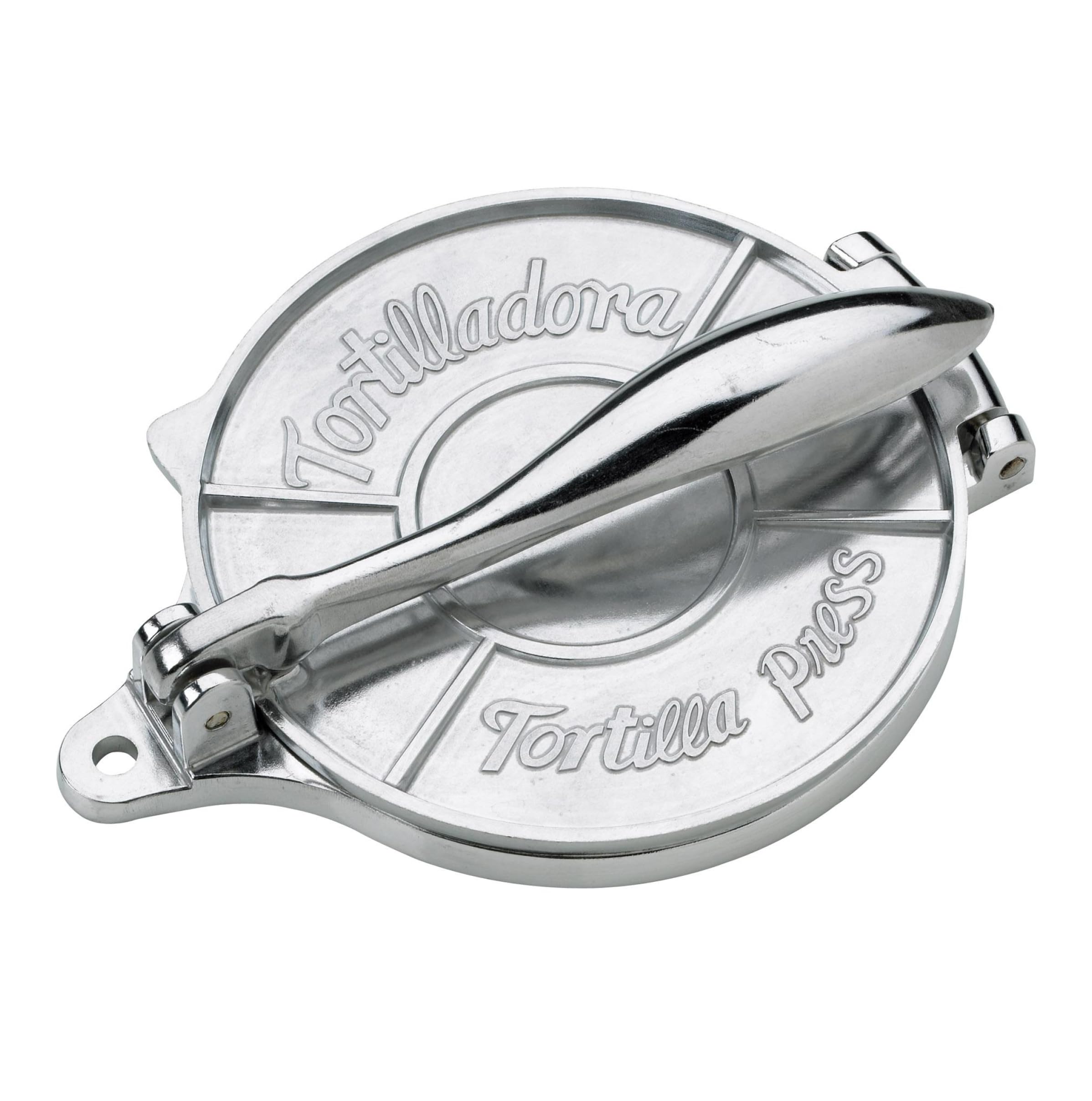
The HIC press is a compact aluminum option designed around small tortillas. Manufacturer information describes it as producing approximately 6.25-inch rounds, which makes it a natural fit for smaller tacos rather than large wraps or burritos.
Its biggest advantage is handling. Aluminum keeps the tool easier to lift and store than a heavy cast-iron or mesquite model, although the lower mass means you may rely a little more on the lever and your pressing technique.
Best for: Small tortillas, compact kitchens, and buyers who want lightweight storage.
Skip if: You routinely make tortillas wider than about 6 inches.
What People Say
Feedback around the HIC press frequently emphasizes simple operation, manageable size, and easy cleanup. As with most hinged presses, dough placement and rotating the dough between presses can help if one edge comes out thicker than another.
The chart below is an existing review-analysis snapshot from this article. It is not a live retailer rating or current review count.

Long-Term Ownership
Aluminum does not need cast-iron seasoning, which simplifies routine care. Hand wash when needed, dry the press thoroughly, and avoid leaving food residue around the hinge.
Value Considerations
This is a practical choice if your priority is a small manual tortilla press rather than maximum plate size or decorative construction. The compact format also reduces the storage penalty of owning a dedicated press.
Situational Benefits
|
Situation |
How It Helps |
|---|---|
|
Street-Taco-Size Tortillas |
The approximately 6.25-inch format is well matched to smaller tortilla portions. |
|
Small Kitchens |
The lightweight construction is easier to move into and out of storage. |
|
Quick Flatbreads |
The hinged press can flatten small portions quickly without setting up a rolling pin and large work area. |
Ease of Use
|
Feature |
Ease Level |
|---|---|
|
Pressing Effort |
Easy |
|
Cleaning |
Easy |
|
Setup |
Easy |
|
Storage |
Easy |
Versatility
The size is best for small tortillas and other compact flatbreads. It can also flatten small pastry or dough portions when you want a consistent round shape, provided the dough is appropriate for pressing.
Practicality
A liner makes release and cleanup easier. Because the press is light, it is convenient for kitchens where a heavy permanent countertop tool would be inconvenient.
Problem Solving
The HIC replaces slow hand-flattening for small portions and gives you a repeatable starting diameter for taco-size tortillas.
Material & Care Considerations
Aluminum is recyclable and does not require seasoning, but the useful life of the press still depends on the hinge, handle, plate alignment, and how the tool is treated during use.
Key Benefits
- Heavyweight aluminum construction without cast-iron bulk
- Approximately 6.25-inch format is well suited to small tortillas
- Easy to lift, clean, and store
Check Product Details on Amazon
IMUSA Aluminum

The IMUSA MEXI-86016 gives you an 8-inch pressing surface in cast aluminum, making it a useful middle ground between compact aluminum presses and heavier cast-iron models. The manual lever provides the mechanical advantage while the lighter body makes storage less demanding.
It is particularly attractive if you want common 8-inch capacity but do not want to lift a heavy iron press every time you cook.
Best for: Buyers who want an 8-inch press that remains comparatively easy to move and store.
Skip if: You specifically prefer the extra mass and traditional feel of cast iron or hardwood.
What People Say
Common feedback themes include the easy-to-handle aluminum body, useful lever, and straightforward cleanup. As with other light presses, consistent dough placement and a liner can make a noticeable difference in the final shape.
The chart below is an existing review-analysis snapshot from this article. It is not a live retailer rating or current review count.

Long-Term Ownership
The cast-aluminum construction requires less surface maintenance than seasoned cast iron. The manufacturer specifies hand washing, so clean it gently and dry it before storage.
Value Considerations
The main value proposition is size-to-weight balance: you get an 8-inch press without committing to a much heavier material. That is useful for occasional tortilla makers and anyone who must store the tool after every meal.
Situational Benefits
|
Situation |
How It Helps |
|---|---|
|
Weeknight Meals |
The simple lever setup lets you move quickly from dough balls to griddle-ready rounds. |
|
Limited Storage |
The aluminum body is easier to move than a heavy cast-iron or hardwood press. |
|
8-Inch Tortillas |
The larger pressing surface gives you more room than compact 6-inch models. |
Ease of Use
|
Feature |
Ease Level |
|---|---|
|
Pressing Effort |
Easy |
|
Cleaning |
Easy |
|
Setup |
Easy |
|
Storage |
Easy |
Versatility
The 8-inch format works for tortillas and a range of other pressed doughs such as arepas, empanada rounds, pita-style dough, and similar foods. Highly elastic wheat dough can still require resting or additional rolling.
Practicality
Use parchment or food-safe plastic to minimize sticking and simplify cleanup. Hand wash the press rather than placing it in a dishwasher.
Problem Solving
The IMUSA addresses the compromise between plate size and portability. You get a larger pressing surface than a compact taco press while avoiding the weight of a heavy iron tool.
Material & Care Considerations
Cast aluminum is recyclable and relatively light. As with any hinged press, long-term durability also depends on the lever, hinge, alignment, and how much force is applied.
Key Benefits
- 8-inch cast-aluminum pressing surface
- Lighter to handle than a similarly sized cast-iron press
- Manual lever provides useful pressing leverage
Check Product Details on Amazon
What to Look for in a Tortilla Press
Choose the Right Size
A press around 6 to 6.25 inches works well for small taco tortillas and takes up less storage space. An 8-inch press gives you more flexibility for larger tortillas, arepas, empanada rounds, and other flat doughs. Remember that the advertised press size is more useful than package dimensions.
Cast Iron vs Wood vs Aluminum
Cast iron provides substantial weight and leverage but is heavier to store and needs protection from moisture. Hardwood offers traditional appearance and useful mass but should not be soaked. Aluminum is much easier to move and generally requires less surface maintenance, although it provides less plate weight.
Look at the Hinge and Lever
The material alone does not determine performance. Plate alignment, hinge construction, handle leverage, and hardware quality affect how evenly a tortilla presses. Inspect those parts when the product arrives and stop using the press if the hinge or handle becomes loose or damaged.
Plan to Use a Liner
Even a well-seasoned or smoothly finished press is easier to use with parchment or food-safe plastic between the dough and plates. A liner reduces sticking, keeps dough out of hinges and textured surfaces, and lets you peel delicate tortillas away without stretching them.
Match the Press to Your Dough
For corn masa, a tortilla press is usually a natural fit. With wheat-flour dough, gluten elasticity can make the round spring back after pressing. Resting the dough and rotating it can help, but very thin flour tortillas may still need a rolling pin.
FAQ
Which Tortilla Press Should I Buy?
Choose according to material, size, and storage needs. Victoria is the strongest all-around option here if you want an 8-inch cast-iron press with substantial leverage. Central Coast suits buyers who prefer handcrafted hardwood, La Mexicana appeals to buyers who want traditional mesquite construction, HIC is better for compact taco-size tortillas, and IMUSA gives you an 8-inch aluminum alternative that is easier to move.
What Size Tortilla Press Is Best?
A 6- to 6.25-inch press is convenient for small taco tortillas. An 8-inch press is more versatile for larger tortillas and other flat doughs. Buy according to the tortilla diameter you actually make rather than the exterior or shipping dimensions of the tool.
Can I Use a Tortilla Press for Flour Tortillas?
Yes, but results depend heavily on the recipe. Wheat flour develops gluten, which makes the dough more elastic than corn masa. Rest the dough well before pressing, rotate it if necessary, and be prepared to finish with a rolling pin if you want an especially thin flour tortilla.
How Do I Prevent Sticking and Get Even Tortillas?
Place the dough between parchment, wax paper, or food-safe plastic. Start with a centered dough ball, close the press gradually, and apply controlled pressure. If one edge is noticeably thicker, rotate the tortilla and press again. Dough hydration also matters: very dry masa can crack, while overly wet dough can stick.
How Do I Clean and Maintain Different Materials?
For cast iron, remove residue, dry the press completely, and apply a very thin coating of cooking oil when needed. Wooden presses should be wiped clean rather than soaked and may require periodic conditioning according to the maker’s instructions. Aluminum presses are generally simpler to maintain but should still be hand washed and dried thoroughly unless the manufacturer specifically states otherwise.
Is a Tortilla Press Safe for Children to Use?
A tortilla press has pinch points around the plates and hinge, so children should only participate under close adult supervision. Keep fingers away from the pressing surfaces while the handle is moving and place the tool on a stable counter before use.
Which Type Fits You Best?
Choose Victoria when you prioritize pressing weight and an 8-inch work surface. Pick Central Coast when hardwood craftsmanship and appearance matter. La Mexicana makes the most sense when you specifically want traditional mesquite construction. HIC is the better match for small tortillas and compact storage, while IMUSA is useful when you want an 8-inch pressing surface in a lighter aluminum body.

The chart above is an existing preference snapshot from this article and should be treated as directional guidance rather than live retailer or market data.
Wrapping Up
The best tortilla press is the one that matches your dough, tortilla size, storage space, and tolerance for maintenance. Cast iron provides useful weight, hardwood offers traditional craftsmanship, and aluminum keeps daily handling easier.
For most frequent tortilla makers, Victoria offers the strongest balance of size and leverage. Central Coast is appealing when handcrafted wood is part of the purchase decision, La Mexicana is the niche traditional choice, HIC is ideal for small taco-size rounds, and IMUSA provides a practical 8-inch aluminum alternative. Whichever material you choose, use a liner, keep fingers clear of the hinge and plates, and follow the manufacturer’s care instructions.
| Product Name | Image | Pressing Size | Material | Best For | Main Trade-Off |
|---|---|---|---|---|---|
| Victoria 8 Inches Cast Iron Tortilla Press |
|
8-inch class | Cast Iron | Frequent use and strong leverage | Heavy to move and needs dry storage |
| 8 Inch Oak & Walnut Tortilla Press |
|
Approx. 8-inch pressing area | Hardwood (Red Oak & Walnut) | Craftsmanship and countertop appearance | Wood requires dry cleaning and maintenance |
| Mezquite Tortilla Press |
|
About 7-inch tortilla class | Mezquite Wood | Traditional heavy wood construction | Bulky and hardware should be inspected |
| HIC Kitchen Tortilla Press |
|
Approx. 6.25 inches | Aluminum | Small taco tortillas and compact storage | Too small for larger tortillas |
| IMUSA USA Aluminum Tortilla Press 8-Inch, Orange |
|
8 inches | Cast Aluminum | Lightweight 8-inch pressing | Less plate weight than cast iron |
Affiliate disclosure: This roundup is reader-supported. When you click qualifying product links, we may earn a referral commission at no extra cost to you.