If tortilla chips are stored in a pantry, basement stockroom, snack-storage room, or other space that stays noticeably damp, a room dehumidifier can help reduce moisture in the surrounding air. However, it does not replace tightly resealing the original bag or transferring opened chips to an airtight food-storage container. This updated 2026 guide compares three dehumidifiers for small, medium, and larger storage areas and explains when each option makes sense.
Quick Answer
Quick Verdict: Choose the Waykar 34 Pints Dehumidifier (PD160B) for a larger pantry, basement storage room, or stockroom. The ZAFRO 1600 Sq.Ft Dehumidifier offers a useful balance of room coverage, portability, and quieter operation. The Pure Enrichment PureDry Mini is the better fit for a very small pantry area, closet, RV, or compact storage space.
Important: These products manage moisture in the surrounding room. They do not directly dry tortilla chips, restore stale chips, or keep an unsealed bag fresh by themselves.
Quick Comparison
| Product | Best Use | Advertised Moisture Removal | Drainage | Main Limitation | Details |
|---|---|---|---|---|---|
| ZAFRO 1600 Sq.Ft Dehumidifier | Medium-size pantry, storage room, or basement area | Up to 21 pints per day under suitable conditions | 0.45-gallon tank or included drain hose | Maximum rating may not reflect normal room conditions | Check on Amazon |
| Waykar 34 Pints Dehumidifier (PD160B) | Larger storage rooms and persistently humid areas | Up to 34 pints per day under high-temperature, high-humidity test conditions | 0.66-gallon tank or continuous gravity drainage | Larger footprint and more capacity than most small pantries need | Check on Amazon |
| Pure Enrichment PureDry Mini | Very small pantry areas, closets, RVs, or compact storage spaces | Approximately 300 ml per day under favorable conditions | 27-ounce removable tank | Too small for a full kitchen, basement, or large stockroom | Check on Amazon |
Storage Note: Before buying a dehumidifier, reseal opened tortilla-chip bags tightly or transfer the chips to an airtight food-safe container. A dehumidifier becomes more useful when the entire room has a persistent moisture problem, visible condensation, a musty smell, or consistently high humidity.
How These Picks Were Chosen
These dehumidifiers were compared by room-size suitability, advertised moisture-removal capacity, drainage options, humidity controls, portability, noise considerations, tank size, and ease of maintenance. The goal is to match the appliance to the storage room rather than treat any dehumidifier as a direct food-preservation device.
The three models also represent clearly different use cases: the PureDry Mini for very small spaces with mild moisture, the ZAFRO for a medium-size room, and the Waykar PD160B for larger or more persistently humid storage areas.
ZAFRO 1600 Sq.Ft Dehumidifier with Drain Hose
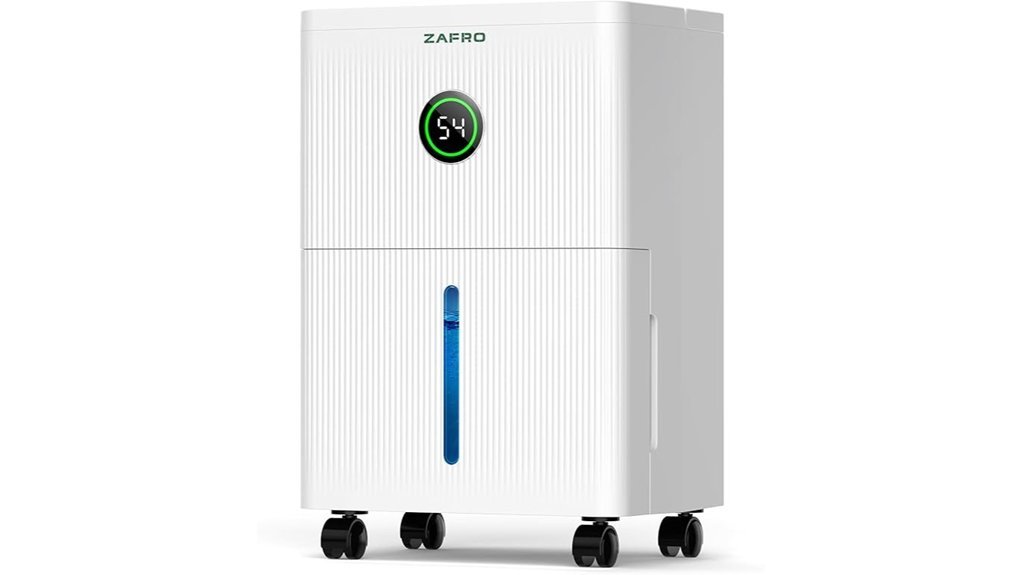
The ZAFRO 1600 Sq.Ft Dehumidifier is a practical option when a pantry, basement storage area, or snack-stock room needs more moisture control than a mini unit can provide. The manufacturer lists coverage up to 1,600 square feet and moisture removal up to 21 pints per day under suitable conditions. Actual collection will vary with room temperature, starting humidity, airflow, moisture sources, and operating time.
The unit includes a 0.45-gallon transparent tank and an included drain hose for continuous gravity drainage. Adjustable humidity control, digital displays, operation listed as low as 41 dB, sleep mode, and four 360-degree wheels can make it easier to monitor, place, and reposition in residential storage areas.
Why You’ll Like It
- Balanced capacity: Better suited to a medium-size room than a small thermoelectric model.
- Two drainage methods: Use the removable tank or connect the included hose where gravity drainage is practical.
- Easy to reposition: Wheels allow the unit to be moved when humidity problems shift between rooms.
- Visible humidity information: Digital controls make it easier to monitor and adjust room conditions.
Best For: Medium-size pantries, basement storage rooms, utility areas, and other residential spaces where dry goods are stored in persistently damp conditions.
Who Should Avoid It: Anyone who only needs to protect one or two opened bags of chips. Airtight containers are a simpler and less expensive solution for that situation.
Pros:
- Advertised to remove up to 21 pints of moisture per day under suitable conditions.
- Advertised coverage up to 1,600 square feet.
- Offers both manual tank collection and continuous gravity drainage.
- Includes adjustable humidity controls, a digital display, sleep mode, and mobility wheels.
- Listed operation as low as 41 dB may be useful near frequently occupied rooms.
Cons:
- The maximum pint rating should not be treated as a guaranteed daily result.
- The 0.45-gallon tank may need frequent emptying in a very damp room.
- It is more appliance than most small cupboards or compact pantries require.
- Current warranty, seller support, and Amazon availability should be checked before ordering.
Waykar 34 Pints Dehumidifier for Home (PD160B)
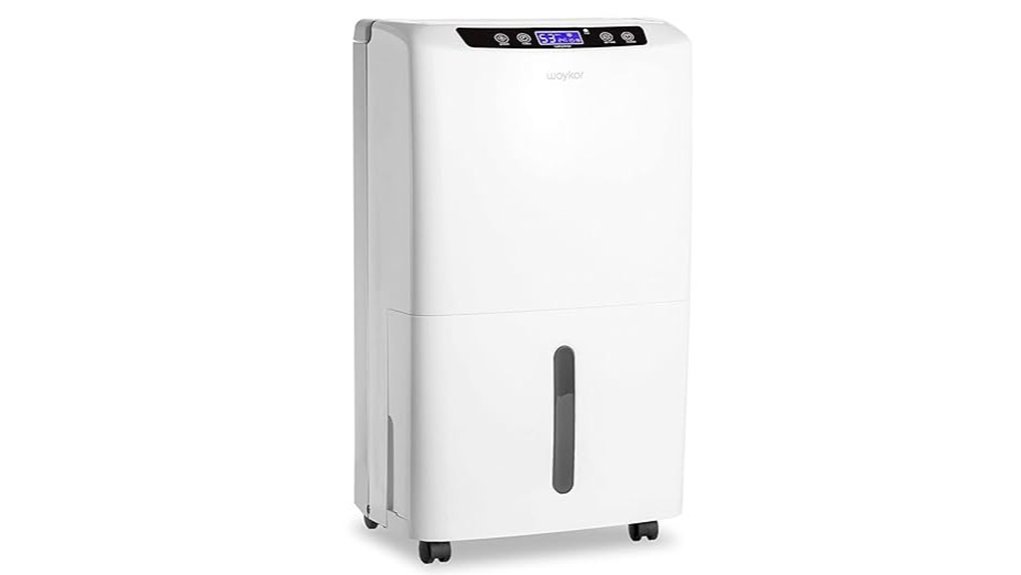
The Waykar PD160B is the strongest fit in this group for a larger pantry, basement storage room, stockroom, or other area with a persistent humidity problem. The manufacturer lists it for spaces up to 2,000 square feet, with adjustable humidity control and an advertised extraction capacity of 34 pints per day at 95°F and 90% relative humidity.
Normal household performance can be lower than the maximum rating because temperature and starting humidity affect water removal. For everyday use, the more practical advantages are its automatic humidity control, full-tank protection, adjustable fan speeds, timer, mobility features, 0.66-gallon tank, and option for continuous gravity drainage.
Why You’ll Like It
- Useful for larger rooms: It provides substantially more moisture-removal ability than a mini tabletop unit.
- Automatic control: The unit can cycle according to the selected room-humidity setting.
- Flexible drainage: Choose the removable 0.66-gallon tank or a continuous gravity-drain setup.
- Useful operating features: Auto defrost, power-off memory, timer controls, wheels, and handles reduce day-to-day management.
Best For: Larger storage rooms, humid basements, utility rooms, and homes where excess moisture affects more than a single cabinet or food package.
Who Should Avoid It: Buyers with a small, normally dry pantry or no practical location for a larger compressor dehumidifier. Its output and footprint may be unnecessary for limited spaces.
Model Note: Certification can differ between similar Waykar PD160B-family model numbers. If ENERGY STAR certification is important to your purchase, verify the exact model or variant shown on the current product listing before ordering.
Pros:
- Higher advertised extraction capacity for larger or more humid rooms.
- Advertised coverage up to 2,000 square feet.
- Automatic humidity adjustments reduce the need for constant manual changes.
- Supports manual tank emptying and continuous gravity drainage.
- Includes automatic shutoff, restart, defrost, timer, and mobility features.
Cons:
- The 34-pint rating applies to specified high-temperature, high-humidity conditions rather than every home environment.
- The 0.66-gallon tank may still fill quickly when a room begins very damp.
- It requires more floor space than a mini dehumidifier.
- A gravity-drain hose must slope correctly toward the drain to work reliably.
- Do not assume ENERGY STAR certification based only on a similar Waykar model name.
Pure Enrichment PureDry Mini Dehumidifier (27oz)
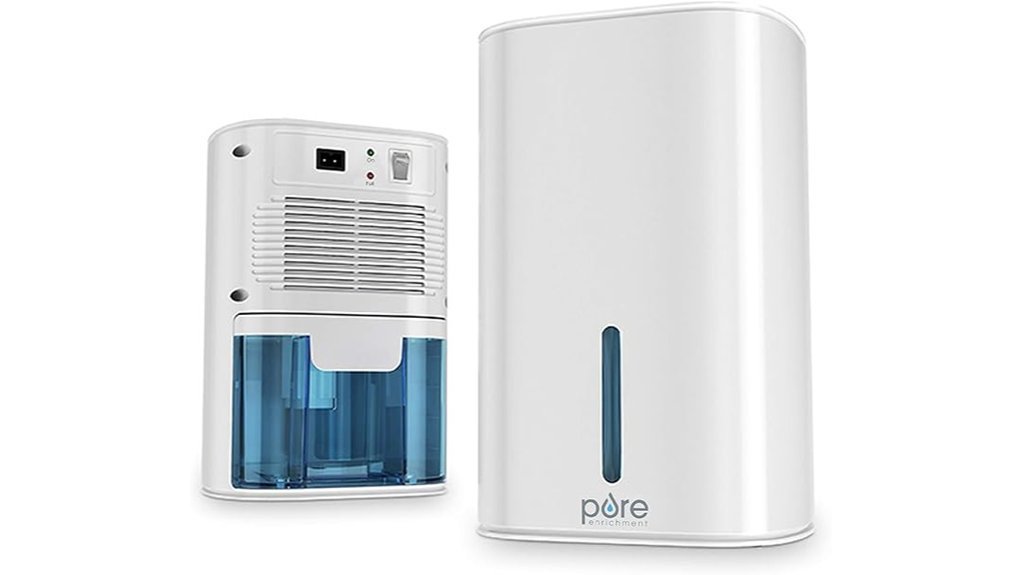
The Pure Enrichment PureDry Mini is designed for users who need light moisture control in a compact space. The manufacturer lists coverage up to approximately 110 square feet, making it much more appropriate for a small pantry area, closet, RV, or similarly limited space than for a full kitchen or basement.
Its 27-ounce transparent tank makes the water level easy to see, while automatic shutoff helps prevent overflow when the tank becomes full. The listed extraction rate is approximately 300 ml, or 10 ounces, per day under favorable temperature and humidity conditions. That is far below the capacity of the ZAFRO and Waykar models, but the smaller footprint can be more practical when the moisture problem is mild and localized.
Why You’ll Like It
- Compact footprint: Easier to place in a limited storage area than a full-size compressor unit.
- Simple operation: A single power switch reduces setup and control complexity.
- Visible tank: Users can check the collected-water level without removing the reservoir.
- Automatic shutoff: The unit stops when the tank is full.
Best For: Very small pantry areas, closets, RV storage spaces, and compact rooms with mild moisture concerns.
Who Should Avoid It: Anyone trying to control humidity in a full kitchen, large basement, commercial stockroom, or severely damp area.
Pros:
- Compact design is suitable for tight spaces.
- Advertised for spaces up to approximately 110 square feet.
- Transparent 27-ounce tank is easy to monitor.
- Automatic shutoff reduces the chance of tank overflow.
- Simple one-switch operation is beginner-friendly.
- Backed by a listed five-year manufacturer warranty.
Cons:
- Its extraction rate is limited compared with compressor dehumidifiers.
- It cannot manage a large or heavily damp room.
- The tank requires manual emptying because continuous drainage is not provided.
- Performance varies with room temperature and relative humidity.
Factors to Consider When Choosing a Dehumidifier for a Tortilla Chip Storage Area
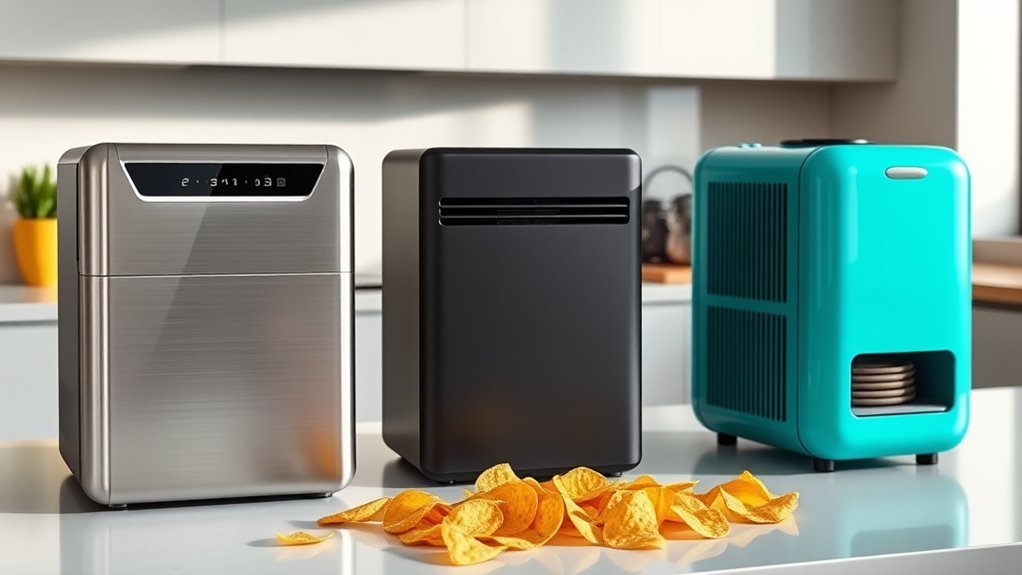
The best dehumidifier depends on the storage room rather than the quantity of tortilla chips. Measure the space, check its humidity with a hygrometer, identify the moisture source, and confirm that opened food is already stored in tightly sealed packaging.
Start With Airtight Storage
A dehumidifier should not be the first purchase for one open bag of tortilla chips. Fold or clip the original bag tightly, use its resealable closure when provided, or move the chips to a clean airtight food-storage container. Limiting direct exposure to humid air is more practical than trying to condition an entire room solely for one food package.
A room dehumidifier becomes more reasonable when multiple dry goods are stored in a consistently damp pantry, basement, utility room, or stock area.
Moisture Extraction Capacity
Dehumidifier capacity is normally expressed as the amount of water the unit can remove in 24 hours under specified test conditions. A higher number generally indicates more moisture-removal ability, but it does not guarantee that the unit will collect that amount in your room every day.
Temperature, starting humidity, airflow, doors, windows, moisture sources, and operating time all affect real performance. Compare extraction ratings as one factor rather than treating them as guaranteed daily results.
Room Size and Dehumidifier Size
Choose a unit for the size and dampness of the room. The PureDry Mini is intended for a very small area with mild moisture concerns. The ZAFRO offers a middle-ground option, while the Waykar PD160B is more appropriate for a larger or persistently humid room.
Advertised coverage figures are useful comparison points, not guarantees. A damp basement with leaks or water intrusion can require a different moisture-control approach than a relatively dry room of the same square footage. Repair leaks and address ventilation problems instead of expecting a portable appliance to solve the underlying moisture source.
Humidity Controls and Monitoring
A built-in humidistat allows a dehumidifier to cycle according to a selected setting. A separate hygrometer can help confirm whether the room reading is reasonable and whether the appliance is making a meaningful difference.
There is no verified tortilla-chip-specific room-humidity target in the supplied product information. Focus on avoiding persistently damp storage conditions, keep opened chips tightly sealed, and follow the storage directions printed on the food package.
Drainage Options Available
Manual drainage is convenient when the dehumidifier is moved between rooms. Continuous gravity drainage is more useful when the appliance runs for long periods near a suitable drain.
For gravity drainage, the hose must run downward toward the drain without kinks or raised sections that can trap water. Keep the hose away from electrical cords and walking paths. A unit with automatic shutoff should stop when its collection tank becomes full, but the tank still needs regular emptying and cleaning.
Noise Level and Placement
Noise matters when the storage area is near a bedroom, office, dining room, or shared living space. Lower fan settings and sleep modes may reduce disturbance, although operating behavior varies by model and setting.
Leave the clearance required by the manufacturer around the air intake and outlet. Do not squeeze a full-size dehumidifier into a sealed cabinet or place food packages directly against its vents.
Energy Efficiency and Model Verification
Consider how many hours the dehumidifier will run and whether the selected capacity is appropriate for the room. An unnecessarily large unit may cost more than needed, while an undersized model may run for long periods without adequately controlling a damp space.
ENERGY STAR certification can be a useful comparison point when it applies to the exact model being purchased. Similar-looking model numbers or PRO variants may have different certifications, specifications, and features, so verify the precise model number rather than assuming one listing applies to the entire product family.
Safety and Kitchen Placement
Use the dehumidifier on a stable, level surface and follow the manufacturer’s electrical requirements. Keep the unit, plug, cord, tank, and drain hose away from splashing water, hot oil, open flames, and active cooking equipment.
A dehumidifier is not a range hood, exhaust fan, food dehydrator, or grease-removal appliance. Do not place one beside a tortilla-chip fryer or stove in an attempt to capture cooking vapor.
Maintenance and Cleaning
Follow the manufacturer’s cleaning schedule. Inspect the air filter, tank, intake, outlet, and drain hose more often during heavy use. Empty stagnant water promptly, clean the tank before residue develops, and unplug the unit before maintenance.
Grease and dust can restrict airflow, so avoid operating the appliance where cooking residue will be pulled directly into the filter.
Before You Buy Checklist
- Confirm that the real problem is room humidity rather than an unsealed chip bag.
- Measure the storage room and check its humidity with a hygrometer.
- Look for leaks, condensation, or ventilation problems that need repair.
- Match the unit’s size and extraction capacity to the room rather than the amount of food being stored.
- Choose between manual tank emptying and continuous gravity drainage.
- Confirm the unit has enough clearance around its air intake and outlet.
- Check the product manual for electrical and placement requirements.
- Verify the exact model or variant if ENERGY STAR certification or another specific feature matters to you.
- Review current warranty terms and seller support before ordering.
- Keep opened tortilla chips in airtight, food-safe packaging.
Frequently Asked Questions
Do Dehumidifiers Affect the Flavor of Tortilla Chips?
A room dehumidifier does not directly improve flavor. It may help reduce humid air in the surrounding storage room, which can be useful when the room itself has a persistent moisture problem. Freshness and flavor still depend mainly on product condition, storage time, temperature, and how well the bag or container is sealed.
Can I Use a Dehumidifier While Frying Tortilla Chips?
Do not place a portable dehumidifier beside a fryer, stove, open flame, hot oil, or splashing water. It is not designed to replace kitchen ventilation. A unit should only be operated where the manufacturer’s clearance, electrical, temperature, and placement instructions can be followed safely.
What Is the Ideal Humidity Level for Storing Tortilla Chips?
There is no universal tortilla-chip-specific room setting provided by these dehumidifier manufacturers. Avoid persistently damp storage conditions, follow the food package instructions, and keep opened chips in airtight packaging. A separate hygrometer can help you monitor the room instead of relying only on the dehumidifier’s display.
Are These Dehumidifiers Made Specifically for Tortilla Chips?
No. The ZAFRO, Waykar, and Pure Enrichment models are general-purpose room dehumidifiers. They may help manage ambient humidity in a pantry or storage room, but none is a dedicated tortilla-chip storage appliance.
How Often Should I Clean My Dehumidifier?
Follow the cleaning intervals in the product manual. During regular use, inspect the filter, tank, intake, outlet, and drain hose frequently enough to prevent dust, residue, mold, or blockages. Unplug the unit before cleaning and keep water away from electrical components.
Can I Place a Dehumidifier Inside a Pantry?
Only when the pantry is large enough to provide the airflow clearance and electrical setup required by the manufacturer. Do not place a compressor dehumidifier inside a small closed cupboard, block its vents with food packages, or run a drain hose where it creates a trip or electrical hazard.
Will a Dehumidifier Make Stale Chips Crispy Again?
No reliable result should be expected. A room dehumidifier controls ambient air and is not designed to restore food texture. Preventing moisture exposure with tightly sealed packaging is more practical than trying to reverse staleness later.
Which Size Dehumidifier Is Best for a Pantry?
It depends on the pantry’s actual floor area, temperature, humidity level, airflow, and moisture source. A small model such as the PureDry Mini may make sense in a very small space with mild moisture, while compressor models such as the ZAFRO or Waykar are more suitable when a larger room has a persistent humidity problem. Do not choose capacity based only on how many bags of chips you store.
Conclusion
A dehumidifier can be useful when tortilla chips and other dry goods are stored in a genuinely humid room, but it should support, not replace, airtight food storage. The Waykar 34 Pints Dehumidifier (PD160B) is the strongest option here for a larger storage area. The ZAFRO 1600 Sq.Ft Dehumidifier offers a practical middle ground for medium-size rooms, while the Pure Enrichment PureDry Mini is better suited to very small spaces with mild moisture concerns.
Final Recommendation:
- Choose Waykar PD160B for a larger or persistently humid storage room.
- Choose ZAFRO for medium-size spaces where portability and quieter operation matter.
- Choose PureDry Mini for a compact pantry area, closet, or RV with a mild moisture problem.
- Buy an airtight container first when the only issue is keeping one opened bag of tortilla chips protected from humid air.