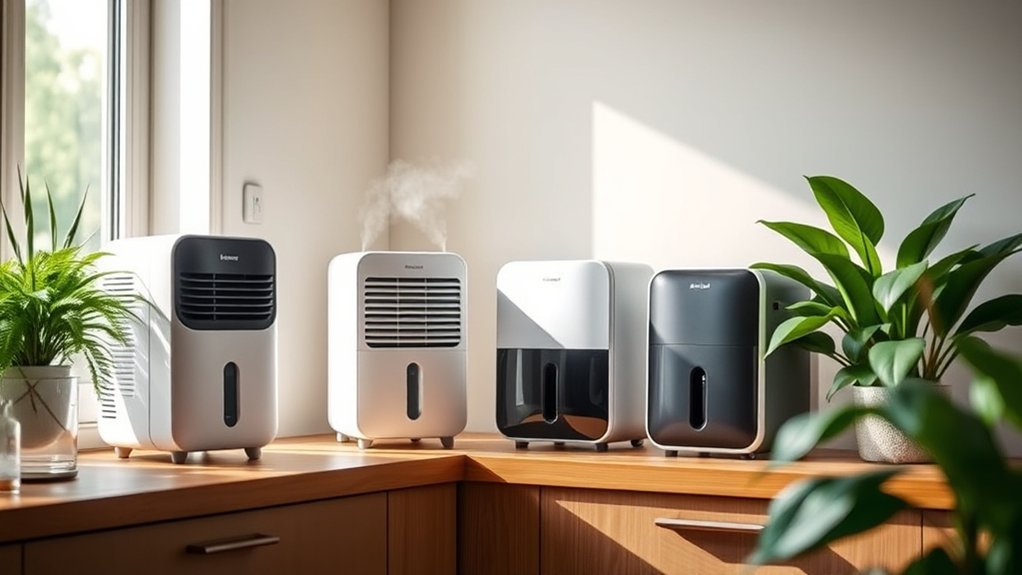
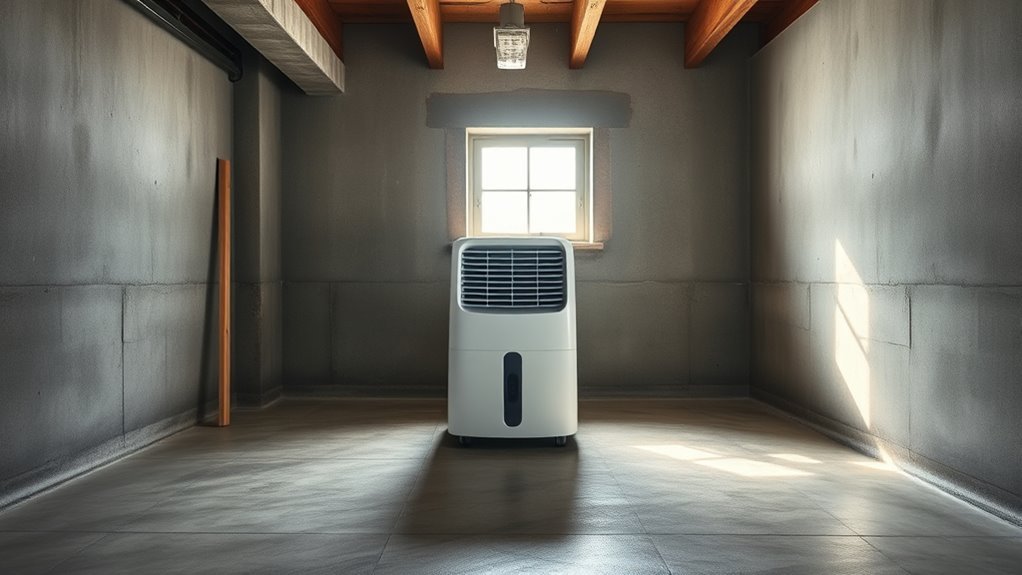
If condensation is collecting on metal walls, tools, vehicles, lumber, or stored equipment, a dehumidifier can help protect an enclosed, weather-protected pole barn. The right choice depends on more than the square-foot number in a product title. Air leakage, ceiling height, indoor temperature, drainage access, floor moisture, door openings, and the severity of the humidity problem all affect real-world performance.
The Waykar 150 Pint Dehumidifier with Pump is the best overall choice here when flexible, unattended drainage matters most. The GoveeLife H7151 is the best smart-control option, while the AEOCKY Leo-Lite is the strongest efficiency-focused midsize pick. The Ludatido 80 Pint favors simple controls and a large collection tank, and the PLUSCENT 32 Pint is the most realistic match for a smaller, insulated, or partitioned barn area.
Affiliate disclosure: This article contains Amazon affiliate links. If you purchase through one of these links, we may earn a commission at no additional cost to you.
Quick verdict
- Best Overall: Waykar 150 Pint with Pump
- Best Smart Option: GoveeLife H7151 Smart Dehumidifier Max
- Best Efficiency-Focused Midsize Option: AEOCKY Leo-Lite 74 Pint
- Best Simple Large-Tank Option: Ludatido 80 Pint
- Best for a Small Enclosed Pole Barn: PLUSCENT 32 Pint
Important capacity note
Headline ratings are not always measured under the same conditions. Some products use a maximum extraction figure measured in very warm, extremely humid air, while standardized DOE capacity uses a different test method. Treat square-foot coverage as a broad marketing guide, not a guarantee for a drafty, cold, frequently opened, or dirt-floor barn.
How these picks were compared
The ranking prioritizes pole-barn relevance, drainage flexibility, clearly stated capacity conditions, temperature limitations, humidity controls, maintenance needs, and the quality of available product documentation. No hands-on testing is claimed.
Use-case warning
These are portable residential-style dehumidifiers. Use them only in an enclosed location that stays within the manufacturer’s permitted temperature range and protects the unit from rain, wash water, combustible dust, flammable vapors, livestock contact, and vehicle impact. An open-sided, freezing, or continuously wet pole barn may need building-envelope work or professionally sized commercial equipment instead.
Quick Comparison of Pole Barn Dehumidifiers
| Product | Best For | Capacity Context | Drainage | Smart Control | Main Limitation | Details |
|---|---|---|---|---|---|---|
| Waykar 150 Pint with Pump | Large enclosed barns and flexible unattended drainage | Up to 150 pints at the manufacturer’s hot, high-humidity test condition | Tank, gravity hose, or built-in pump | No app control listed | Do not treat the 150-pint headline as a standardized barn output | Check Current Amazon Availability |
| GoveeLife H7151 | Remote humidity monitoring and scheduling | Approximately 50 pints per day under the standardized rating | Tank or continuous gravity hose | App, supported voice control, and touch controls | Remote features need dependable Wi-Fi; no built-in pump | Check Current Amazon Availability |
| AEOCKY Leo-Lite 74 Pint | Efficiency-focused control in a midsize enclosed barn | Manufacturer lists 74 pints at 95°F/95% RH and 52 pints at 86°F/80% RH | Tank or continuous gravity hose | Built-in humidistat; no app listed | No built-in pump; verify the exact model number and current certification listing | Check Current Amazon Availability |
| Ludatido 80 Pint | Simple controls, a large tank, and included gravity hose | Listing and manual state 80 pints per day; comparable DOE capacity was not confirmed | 6.5-liter tank or included gravity hose | No app control listed | Limited standardized performance and warranty documentation | Check Current Amazon Availability |
| PLUSCENT 32 Pint | Small, insulated, or partitioned pole-barn areas | Official site and listing market it as a 32-pint model for up to 2,500 square feet | Tank or continuous gravity hose | No app control listed | Likely undersized for a full-size, leaky, or wet barn | Check Current Amazon Availability |
Waykar 150 Pint Dehumidifier with Pump
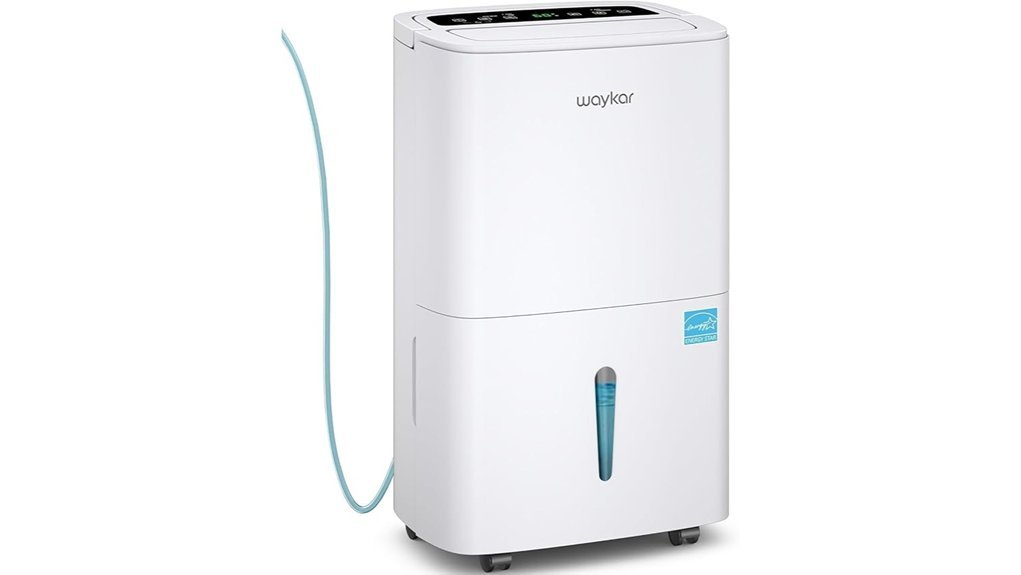
The Waykar 150 Pint Dehumidifier with Pump is the strongest all-around option in this comparison when drainage flexibility is the deciding factor. Its built-in pump can move condensate upward, while the tank and gravity-hose options cover simpler installations. That flexibility matters in a detached barn where the nearest suitable drain may not be below the machine.
The manufacturer rates this model for up to 150 pints per day at 95°F and 90% relative humidity and advertises coverage up to 7,000 square feet. Those are favorable, high-moisture conditions. Do not assume the unit will remove 150 pints every day in a cooler pole barn, and do not size the building from the coverage claim alone.
The product information also lists a 1.85-gallon tank, an included short gravity-drain hose, an adjustable humidistat, a 24-hour timer, automatic defrost, and pump discharge up to approximately 9.84 feet. The pump is the main reason to choose this model over a simpler gravity-drain unit.
Verification note: The exact Amazon model linked here is identified as YDZ-150PM. Because model numbers can differ across retail listings and certification databases, confirm the current model number, operating range, warranty, and any ENERGY STAR claim on the live listing before buying.
Why You’ll Like It: It solves the common pole-barn drainage problem better than the other options in this list.
Best For: Large, reasonably sealed barns where condensate must travel upward or where frequent bucket emptying is impractical.
Who Should Avoid It: Owners of a small space with an easy floor drain, or anyone trying to dry an open, freezing, or continuously wet building with one portable unit.
Pros:
- Built-in pump gives more placement freedom than gravity drainage alone.
- Tank, gravity hose, and pump provide three water-removal methods.
- Adjustable humidity control, timer, auto-restart, and auto-defrost support unattended use.
- Casters and a handle make occasional repositioning easier.
Cons:
- The 150-pint headline is a maximum-condition figure, not a guaranteed DOE-equivalent output.
- Larger and more complex than a basic gravity-drain model.
- The pump adds a component that may require cleaning or troubleshooting.
- Still a portable residential-style unit, not a substitute for fixing leaks or ground moisture.
GoveeLife H7151 Smart Dehumidifier (50 Pint)
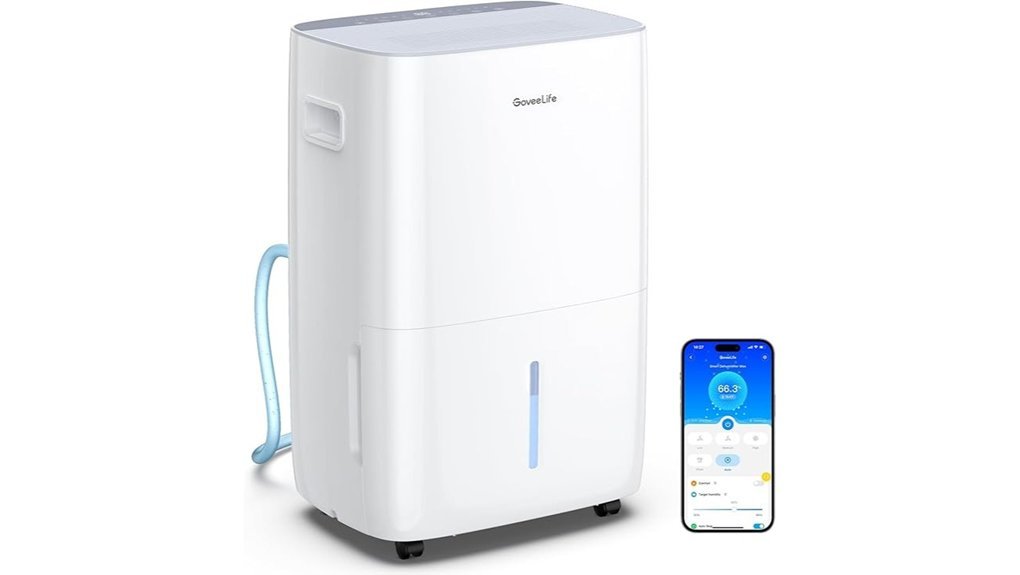
The GoveeLife H7151 is the best choice here for owners who want to check humidity, change settings, or run schedules without walking to a detached barn. It combines touch controls with app features and supported voice control, provided the building has dependable Wi-Fi and power.
The H7151 is rated at approximately 50 pints per day under the standardized capacity system and is advertised for spaces up to 4,500 square feet. The coverage number is not a promise for a high-ceiling metal building. Frequent door openings, air leakage, an exposed soil floor, and low temperatures can all reduce its practical reach.
Published product specifications list a 7.6-liter tank, 850-watt input, approximately 53 dB of operating noise, a built-in humidity sensor, and continuous hose drainage. It can also work with compatible Govee temperature and humidity sensors, which may help monitor a location away from the unit’s dry-air exhaust.
Why You’ll Like It: Remote monitoring makes it easier to notice rising humidity before condensation becomes obvious on metal surfaces.
Best For: Connected workshops, vehicle-storage barns, and owners who value schedules and remote adjustments.
Who Should Avoid It: Buyers without stable Wi-Fi, those who need water pumped upward, or anyone who expects a residential smart unit to control an open-sided building.
Pros:
- App, supported voice control, and touch controls.
- Remote humidity monitoring, scheduling, and full-tank notifications.
- Approximately 50-pint standardized capacity.
- Washable filter, automatic defrost, auto-restart, and continuous drainage.
Cons:
- Remote functions depend on a stable wireless connection.
- Approximately 53 dB may be noticeable in a workshop office or quiet hobby area.
- No built-in condensate pump for upward drainage.
- The 4,500-square-foot claim may overstate useful coverage in a leaky or tall barn.
AEOCKY Leo-Lite 74 Pint Dehumidifier
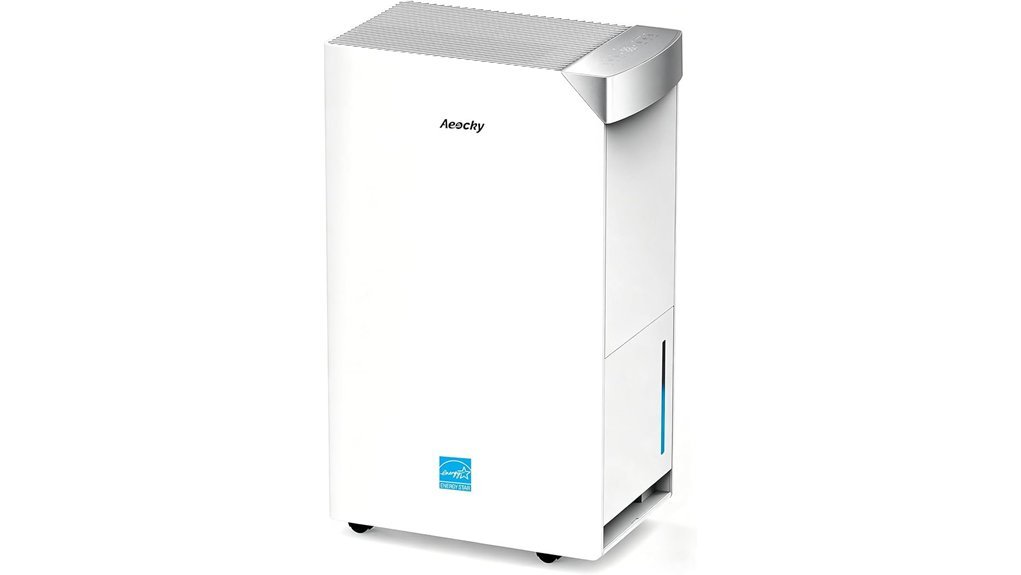
The AEOCKY Leo-Lite is the most appealing option here for a midsize enclosed pole barn when efficient cycling and straightforward humidity control matter more than app access or pumped drainage. Its humidistat allows the compressor to cycle around a selected relative-humidity target rather than running continuously after the space is under control.
AEOCKY lists two performance figures for the Leo-Lite: up to 74 pints per day at 95°F and 95% relative humidity, and 52 pints per day at 86°F and 80% relative humidity. Both are manufacturer-stated test conditions, so neither should be treated as guaranteed output in a cooler barn. The advertised 4,500-square-foot coverage is also only a rough selection guide.
The product information highlights automatic defrost, continuous gravity drainage, a washable filter, casters, power-off memory, and a 24-hour timer. It does not include a built-in pump, so the drain hose must maintain a reliable downhill path unless a separate compatible condensate pump is used.
Before you buy: Confirm the exact model number and UPC shown on the Amazon listing and compare them with the current ENERGY STAR product database. Leo-Lite naming is used across more than one listed configuration, so the certification and standardized capacity should be matched to the unit actually being sold.
Why You’ll Like It: It offers a balanced feature set for a sealed storage or workshop area without requiring smart-home setup.
Best For: Midsize enclosed barns with a nearby floor-level drain and temperatures that remain within the manual’s operating range.
Who Should Avoid It: Anyone who needs upward pump drainage, remote app control, or dependable operation in freezing conditions.
Pros:
- Humidity-based cycling can reduce unnecessary runtime once the set point is reached.
- Automatic defrost and power-off memory support changing conditions.
- Continuous gravity drainage reduces bucket maintenance.
- Portable design with casters and a washable filter.
Cons:
- The 74-pint headline uses hot, extremely humid test conditions.
- No built-in condensate pump.
- Exact standardized capacity and certification depend on matching the current model number or UPC.
- Coverage will fall sharply in a drafty, uninsulated, or frequently opened building.
Ludatido 80 Pint Dehumidifier
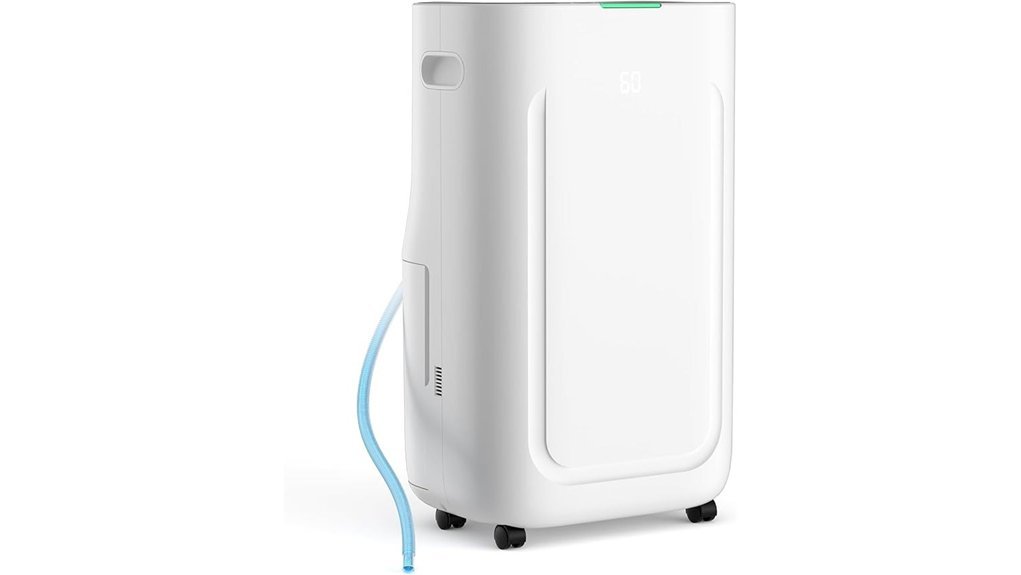
The Ludatido 80 Pint Dehumidifier is a straightforward alternative for buyers who prefer physical controls, a large collection tank, and an included gravity-drain hose instead of app-based features. It is best viewed as a simple residential-style option for an enclosed storage or workshop area, not as verified commercial drying equipment.
The listing and available manual identify an 80-pint-per-day rating and a 5,000-square-foot coverage claim, but they do not provide a clearly matched DOE Appendix X1 capacity for this exact model. Actual collection will vary with temperature, relative humidity, ceiling height, air leakage, and moisture entering from soil, wet vehicles, equipment, or open doors.
The manual lists a 6.5-liter tank, an included 3.9-foot gravity-drain hose, four dehumidification modes, a 24-hour timer, child lock, automatic shutoff, a washable filter, and automatic defrost. The short drain hose must run continuously downhill, so placement near a suitable low drain is important.
Why You’ll Like It: The large tank and included hose provide two practical drainage methods without requiring Wi-Fi.
Best For: Enclosed storage buildings where simple controls and a nearby floor-level drain are more important than verified smart features.
Who Should Avoid It: Buyers who require a built-in pump, thoroughly documented standardized capacity, or a clearly published long-term warranty.
Pros:
- Large 6.5-liter tank reduces the frequency of manual emptying.
- Included gravity hose supports continuous drainage near a low drain.
- Four modes, timer, child lock, auto-defrost, and washable filter.
- No app or account setup required.
Cons:
- The 80-pint claim is not presented with a clearly comparable DOE standardized rating.
- No built-in condensate pump.
- The included hose is short and must maintain a downhill route.
- Warranty details and authoritative manufacturer documentation are less complete than for the leading picks.
PLUSCENT 32 Pint Dehumidifier
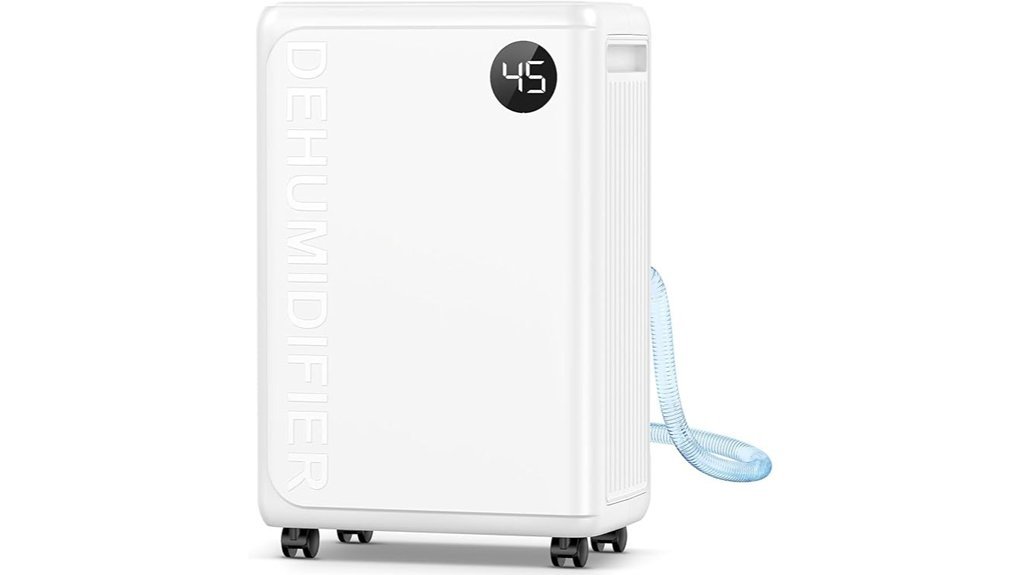
The PLUSCENT 32 Pint Dehumidifier is the smallest-capacity option in this comparison. It is a realistic match only for a small, insulated, partitioned, or moderately damp area rather than an entire full-size pole barn.
The official brand site and current product listing market it as a 32-pint model for spaces up to 2,500 square feet. The listing does not make the test conditions easy to compare with standardized ratings, so use the coverage figure as general guidance. A compact unit can be overwhelmed by an exposed soil floor, roof leaks, large doors, or regular outdoor-air exchange.
Its listed features include standard dehumidification, continuous operation, a drying mode, a 24-hour timer, automatic defrost, adjustable humidity control, portability, and continuous gravity drainage. For unattended use, connect the hose to a dependable low drain and confirm the tank, float, filter, and drain path regularly.
Why You’ll Like It: It offers compressor-based moisture control in a more compact format for a limited barn zone.
Best For: Small workshops, tack or storage rooms, insulated rooms built inside a larger barn, or seasonal humidity control.
Who Should Avoid It: Owners of a large, wet, unsealed, high-ceiling, or frequently opened pole barn.
Pros:
- More compact and easier to reposition than the larger models.
- Three operating modes and a 24-hour timer.
- Automatic defrost and continuous gravity drainage.
- Clear use case for a small or partitioned barn area.
Cons:
- Likely undersized for many complete pole barns.
- No built-in pump for upward drainage.
- Capacity test conditions and standardized efficiency details are not clearly documented.
- Should not be chosen solely from the 2,500-square-foot marketing claim.
Factors to Consider When Choosing a Dehumidifier for a Pole Barn
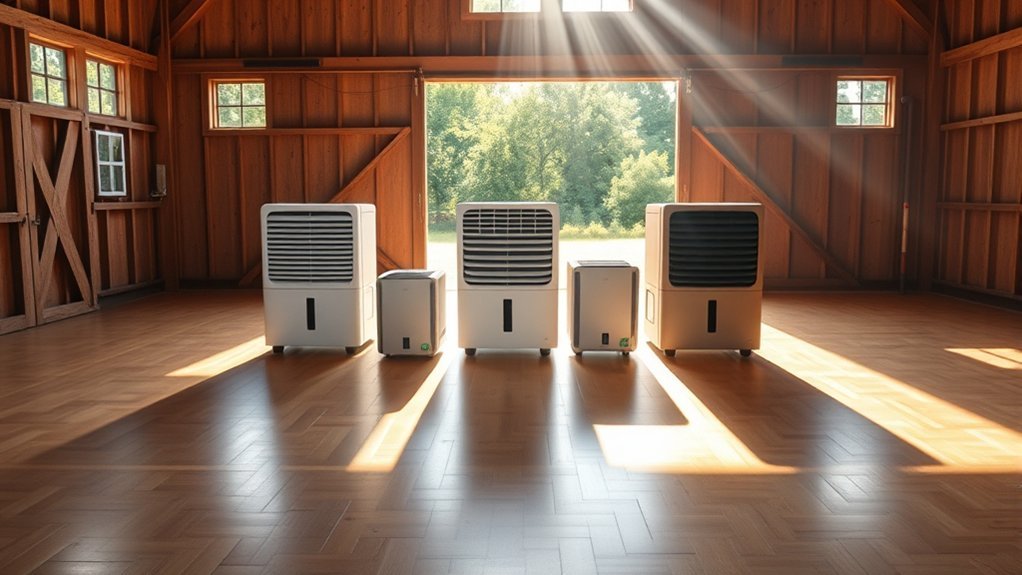
A pole barn can be harder to dehumidify than a basement or finished room. Metal surfaces cool quickly, tall ceilings increase air volume, large doors exchange substantial amounts of air, and exposed soil or wet equipment can continuously add moisture. Evaluate the building before relying on any advertised square-foot number.
Seal the Building Before Sizing
A dehumidifier cannot efficiently control humidity while large amounts of outdoor air continuously enter the barn. Close unnecessary openings, repair damaged weatherstripping, seal practical air leaks, and check the roof, walls, windows, and door tracks for water entry.
If the barn has an exposed dirt or gravel floor, moisture can migrate upward from the soil. A properly selected ground-vapor barrier, better grading, gutters, downspout extensions, and site drainage may reduce the load more effectively than buying a larger portable unit. Use appropriate building methods and local professional guidance when modifying the floor or structure.
Key Capacity Requirements
Capacity is the amount of water a dehumidifier removes in 24 hours under stated test conditions. The right capacity depends on:
- The enclosed floor area, ceiling height, and total air volume.
- Current relative humidity and the amount of visible condensation.
- Indoor temperature and the unit’s permitted operating range.
- Air leakage and the frequency and duration of door openings.
- Roof, wall, plumbing, slab, or foundation leaks.
- Moisture from exposed soil, livestock, wet vehicles, washing, or drying materials.
- The recovery speed needed after doors open or wet equipment enters.
Do not use a formula such as one or two pints for every square foot. Record temperature and relative humidity with a separate hygrometer for several days, then compare standardized pint-per-day capacity where available. When two capacities appear suitable, a larger model can recover faster after moisture spikes, provided it has an accurate humidistat and enough airflow clearance.
Understand Advertised Pint Ratings
Two products with different headline numbers may perform more similarly than their names suggest. Maximum ratings such as 74, 80, or 150 pints may be measured in much hotter and wetter air than the current DOE method. Standardized capacity is intended to make models easier to compare under the same procedure.
Before you buy: Match the exact model number or UPC, then look for the standardized capacity, stated test temperature and humidity, integrated energy factor, operating-temperature range, tank size, and drainage method. Do not compare only the largest number printed in the title.
Operating Temperature and Auto Defrost
Portable compressor dehumidifiers remove less water as the air becomes cooler. Frost may form on the evaporator coil in low temperatures, causing the unit to pause while it defrosts. Auto-defrost helps the machine manage frost, but it does not make every residential unit suitable for an unheated winter barn.
Check the manual for the permitted range and any storage-temperature instructions. If the barn regularly falls below that range, consider seasonal operation, safe background heat, or equipment specifically designed for lower-temperature commercial spaces.
Energy Efficiency Ratings
An efficient dehumidifier removes more water for each unit of electricity consumed. ENERGY STAR certification and integrated energy factor can help compare exact models, but certification does not mean every product has the same capacity or operating cost.
Runtime is affected by humidity, temperature, capacity, set point, air leakage, fan speed, drainage arrangement, and filter condition. Avoid universal annual-savings promises. Compare the exact certified model and standardized performance instead of assuming the largest maximum pint claim is the most efficient.
Noise Level Considerations
Noise may be less important in an equipment barn than in a bedroom, but it still matters in a workshop, office, tack room, or hobby area. Published sound figures are measured under controlled conditions, and perceived noise changes with fan speed, floor vibration, and reflections from nearby metal panels.
Place the unit on a firm, level surface. Avoid locations where vibration can transfer into loose sheet metal, shelving, tools, or hollow platforms. Leave the manufacturer’s required clearance around the intake and outlet.
Drainage Options Available
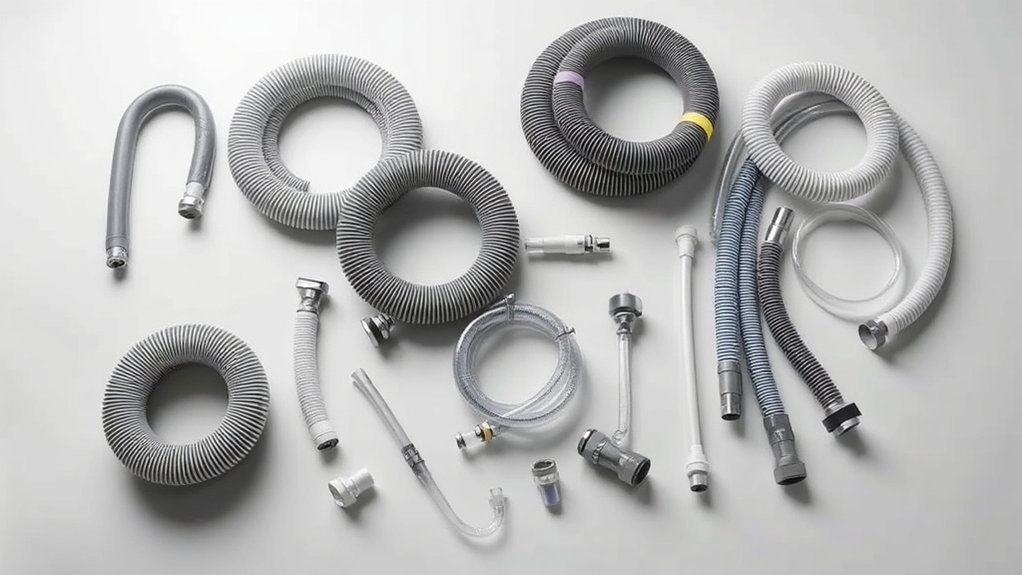
Continuous drainage is one of the most important features for pole-barn humidity control. The main options are:
- Water tank: Simple, but requires regular checking and emptying.
- Gravity hose: Reliable when the entire hose can run downhill to a suitable drain.
- Built-in pump: Useful when water must move upward to a sink, window, or elevated drain.
- Separate condensate pump: May be added to a compatible gravity-drain unit when permitted by the product instructions.
Route the hose where it will not freeze, kink, become crushed, create a trip hazard, or discharge against the barn foundation. Use a secure termination point and confirm that the drain remains open before leaving the unit unattended.
Smart Features and Controls
Smart controls can be valuable when the barn is detached from the home. App monitoring, scheduling, and full-tank notifications can reduce unnecessary trips and reveal humidity changes after storms or large door openings.
App features should not replace an independent humidity check. Place a separate hygrometer away from the unit’s exhaust and compare its reading with the built-in humidistat. Remote functions also require dependable Wi-Fi, power, and a product that successfully restarts after an outage.
Dust, Filter and Maintenance Requirements
Pole barns may contain sawdust, soil dust, hay particles, pollen, and debris that clog filters faster than in a finished room. Inspect the filter frequently during the first few weeks, then set a cleaning schedule based on the actual buildup.
Keep the intake, outlet, coils, tank, float, filter, and drain connection clean. Never spray the machine with a hose or operate it where rain, wash water, or condensation can directly enter the electrical components.
Electrical and Placement Safety
Use the voltage, outlet type, grounding arrangement, circuit capacity, and clearances specified in the manual. Place the dehumidifier on a stable, level surface where it is protected from rain, vehicle contact, livestock, falling objects, and combustible debris.
Avoid an extension cord unless the manufacturer specifically permits one. Do not operate a residential dehumidifier near gasoline, solvents, flammable vapors, welding fumes, grain dust, or other potentially hazardous atmospheres. A pole barn used for commercial work, livestock, washing, or hazardous-material storage may require professional electrical and ventilation guidance.
Before You Buy Checklist
- Measure the enclosed floor area, ceiling height, and approximate air volume.
- Record relative humidity and temperature for several days with a separate hygrometer.
- Repair active roof, wall, door, plumbing, or slab leaks first.
- Decide whether an exposed soil floor needs a vapor barrier or drainage work.
- Match the exact product model number or UPC before comparing specifications.
- Check standardized capacity and test conditions instead of the title alone.
- Verify the permitted operating-temperature range and auto-defrost behavior.
- Choose tank, gravity drainage, or pump drainage before deciding placement.
- Confirm that the circuit and grounded outlet can support the unit safely.
- Allow the required clearance around the intake and exhaust.
- Plan for frequent filter inspection in dusty conditions.
- Confirm the current warranty, included drain accessories, and return terms.
- Use a separate hygrometer to verify the result after installation.
Frequently Asked Questions
How Often Should I Empty the Dehumidifier’s Water Tank?
Check the tank at least daily when you first start the unit. A wet barn can fill a small tank within hours, while a moderately damp room may take much longer. For unattended use, connect a properly routed continuous-drain hose or choose a model with a built-in pump.
Can I Use a Dehumidifier in Winter?
Only when the barn temperature remains within the manufacturer’s operating range. Compressor dehumidifiers collect less water in colder air and may pause to defrost. Auto-defrost helps manage coil frost, but it does not guarantee useful performance in a freezing, unheated pole barn.
What Humidity Level Is Best for a Pole Barn?
A practical starting target for many enclosed storage barns is around 45% to 55% relative humidity. The best setting depends on temperature, the dew point of metal surfaces, stored materials, livestock, and building use. Maintaining humidity below about 60% is usually more useful than forcing the unit to hold an unnecessarily low setting.
What Maintenance Is Required for Dehumidifiers?
Clean the filter as directed, empty and wash the tank, inspect the float and drain hose, remove dust from the grilles, and keep the intake and outlet unobstructed. A dusty pole barn may require filter inspection far more often than a finished home.
Are Dehumidifiers Noisy During Operation?
All compressor models create fan, airflow, and compressor noise. Published ratings vary by fan speed and test method. Sound can seem louder when vibration transfers through a concrete floor, metal wall, shelf, or loose panel.
How Do I Determine the Right Capacity for My Pole Barn?
Measure the enclosed area and ceiling height, record temperature and relative humidity, and identify moisture sources such as exposed soil, leaks, wet vehicles, livestock, or frequent door openings. Compare standardized capacity where available and use the manufacturer’s maximum rating only with its stated test conditions. Large, wet, tall, or leaky buildings may need more than one portable unit or professionally sized commercial equipment.
Will a Dehumidifier Stop Condensation on Metal Walls?
It may reduce condensation by lowering the indoor dew point, but it cannot correct every cause. Condensation can also result from poor insulation, thermal bridging, rapid temperature changes, air leaks, and moisture rising from the floor. Those building problems may need to be corrected for reliable control.
Can I Run a Dehumidifier With the Pole-Barn Doors Open?
The machine may run, but it will usually be inefficient because it is continuously trying to dry incoming outdoor air. Close exterior doors and windows while dehumidifying unless ventilation is temporarily required for engines, fumes, livestock, dust, or another safety reason.
Do I Need a Built-In Pump?
A pump is useful when condensate must travel upward to a sink, window, or elevated drain. If the unit can sit above a nearby floor drain, a gravity hose is simpler and has fewer moving parts.
Can One Portable Dehumidifier Handle a Dirt-Floor Pole Barn?
Often not efficiently. Exposed soil can supply moisture continuously, especially after rain or during warm weather. Ground-vapor control, roof-water management, grading, air sealing, and drainage improvements should be addressed before expecting one portable unit to control the entire barn.
How Soon Should Humidity Drop After Installation?
A reasonably sealed space may show a measurable change within the first day, but the final result depends on the starting humidity, temperature, building volume, wet materials, and ongoing moisture entry. Track an independent hygrometer for several days. If the reading barely changes while the unit runs continuously, investigate leaks, drainage, temperature, airflow, and undersizing.
Final Recommendation
Choose the Waykar 150 Pint with Pump when you have a larger enclosed pole barn and need the most flexible continuous-drain arrangement. Its pump, rather than the headline pint number, is the main buying advantage.
Choose the GoveeLife H7151 when remote monitoring, scheduling, and smart controls are more important than upward pump drainage.
Choose the AEOCKY Leo-Lite for a midsize enclosed area where efficient humidity-based cycling, auto-defrost, and gravity drainage are the priorities. Confirm the exact model number and certification record before purchase.
Choose the Ludatido when you prefer simple controls, a large tank, and an included short gravity hose, but verify the current warranty and standardized capacity information.
Choose the PLUSCENT 32 Pint only for a small, insulated, partitioned, or moderately damp barn area. It is not the right pick for a large, leaky, or dirt-floor building.
Conclusion
A suitable pole-barn dehumidifier can help reduce condensation, musty odors, corrosion risk, and moisture damage, but the machine is only one part of metal-building humidity control. Repair leaks, reduce uncontrolled outdoor-air entry, address ground moisture, and create a dependable drainage route before expecting a portable unit to manage the entire building.
Compare exact model numbers, standardized capacity where available, stated test conditions, operating-temperature limits, drainage options, energy efficiency, and maintenance requirements. With the barn enclosed and the moisture source reduced, these five products cover useful pump, smart, efficiency-focused, large-tank, and compact use cases without pretending that one square-foot claim fits every pole barn.