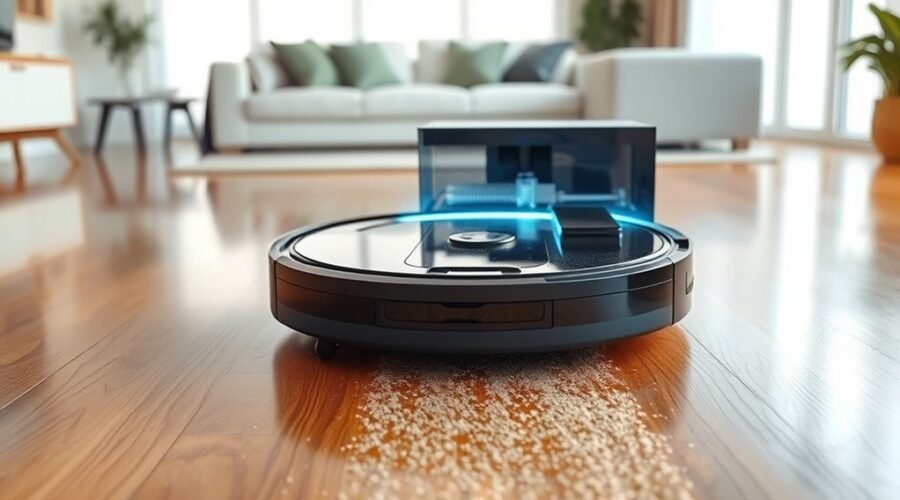
A robot vacuum self-washing dock is more than a charging base. It cleans and dries mop pads after each run, reducing hands-on upkeep. Smart alignment, water flow, scrubbing, and heated drying all work together in one cycle. The setup sounds convenient, but its real value depends on how well it handles mess, moisture, and daily use. A closer look shows where it helps, and where it may fall short.
What Is a Robot Vacuum Self-Washing Dock?
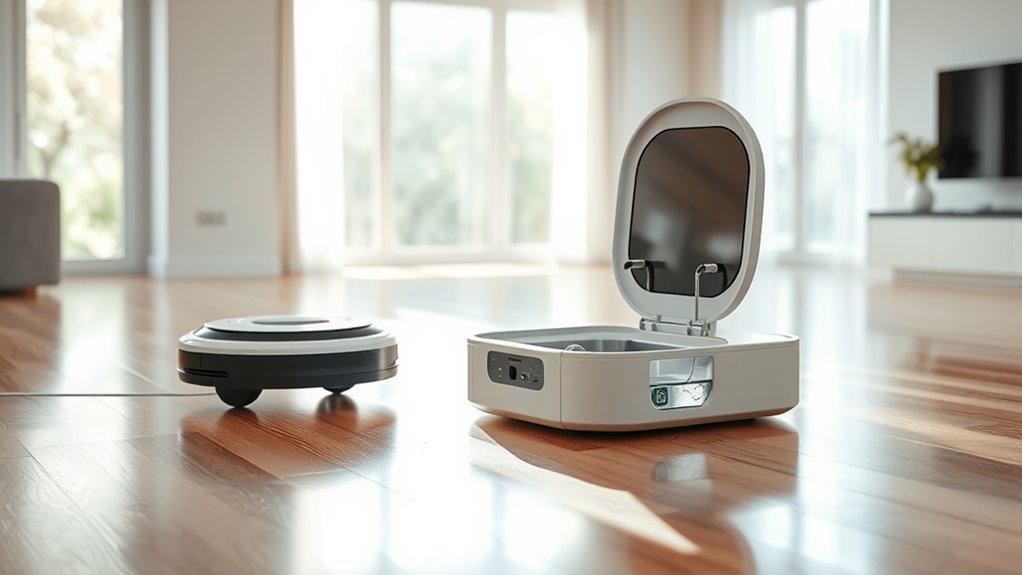
A robot vacuum self-washing dock is a specialized docking station that automatically cleans and dries a robot vacuum’s mop pads between cleaning cycles.
It serves as a support system for a robot vacuum, helping the machine return to work with less manual oversight. The self-washing dock usually includes a water reservoir that supplies cleaning solution, allowing the mop pads to be refreshed without frequent refilling by the user.
It supports the robot vacuum, keeping mop pads refreshed without frequent refilling or manual oversight.
Rotating brushes scrub away dirt and debris, while drying features help keep the pads ready for the next task. This design improves cleaning efficiency by reducing residue buildup and limiting interruptions.
It also lowers maintenance needs, which can matter for households seeking more time and less routine labor. For homes with pets or heavy foot traffic, the self-washing dock offers a practical route to more consistent floor care and greater freedom from repetitive upkeep.
How Self-Washing Docks Work
Once a cleaning run ends, the robot returns to the dock, where smart sensors can trigger an automated wash cycle for the mop pads. In a self-washing dock, the process is largely automatic, reducing manual chores and supporting a more independent routine.
Hot water may rinse the mop pads, while built-in systems help with hygienic cleaning and limit odors or mildew after each cleaning cycle.
- sensors detect pad condition
- automatic washing starts without intervention
- airflow or heat supports drying
- some docks refill cleaning solution
This design lets users step away from repetitive upkeep while the robot manages basic maintenance. The drying stage helps keep mop pads effective for future use, and advanced docks can maintain cleaning supply levels on their own.
The result is a practical system that preserves convenience, extends pad life, and keeps the dock ready for the next cycle.
What Happens During the Self-Wash Cycle
Once the robot vacuum returns to the dock, precise alignment positions the mop pads for the cycle to begin.
The dock then rinses the pads with water and cleaning solution while rotating brushes scrub away dirt, with wash intensity adjusted to the grime level.
After cleaning, hot air drying helps reduce moisture, odors, and mildew before the next session.
Docking And Alignment
During the self-wash cycle, the robot vacuum carefully aligns itself with the docking station to guarantee the mop pads meet the correct cleaning area. This automated step reduces manual effort and supports a more liberated routine.
- The docking station guides the unit into position with steady precision.
- Once aligned, the mop pads are set over the rinsing zone.
- Fresh water and cleaning solution help prepare the pads for washing.
- After the cycle, the pads are dried to keep them ready for reuse.
The process is practical: it limits handling, keeps maintenance simple, and helps preserve cleaning performance.
Mop Rinse And Scrub
With the robot vacuum properly docked and aligned, the self-wash cycle moves into the mop rinse and scrub stage.
At this point, the dock directs water and cleaning solution across the mop pads, loosening dirt and debris that would otherwise limit performance.
Rotating brushes then scrub the mop with controlled pressure, and the system can adjust that force to suit different flooring conditions.
This measured action helps the self-wash process stay efficient without requiring manual effort.
A built-in refill system often replenishes cleaning solution as needed, supporting continued rinsing during the cycle.
The result is a cleaner mop ready for the next pass, with less dependence on user intervention and more freedom from routine maintenance.
Hot Air Drying
Hot air drying typically follows the rinse stage in the self-wash cycle, as the dock circulates heated air around the mop pads to remove remaining moisture.
This hot air drying step supports hygiene by reducing mildew, odors, and bacteria buildup, while keeping cleaning performance steady for the next run.
- The mop pads dry without manual handling.
- Airflow reaches the fibers after washing.
- Advanced models may regulate temperature for safety.
- Dry pads help preserve material integrity.
Benefits of a Self-Washing Dock
A self-washing dock reduces the need for manual mop care by rinsing and drying pads after each cycle, keeping the system ready for continued use.
Its hot air drying helps limit odors and bacterial buildup, supporting cleaner and more hygienic operation.
This added automation also preserves consistent performance without frequent user intervention.
Hands-Free Mop Care
Hands-free mop care is one of the most practical advantages of a self-washing dock, since it automatically rinses and dries mop pads after each use to keep them fresh and odor-free.
In this self-washing dock, the system can automatically refill cleaning solution, reducing routine upkeep and supporting consistent performance. For users seeking hands-free mop care, rotating brushes improve dirt removal during the wash cycle, while hot air drying finishes the process with little effort required.
- Less manual washing
- More consistent mop readiness
- Better dirt removal
- Frees time for other tasks
This setup offers a balanced, practical way to maintain clean floors without repeated interruptions.
Odor And Bacteria Control
By automatically washing and drying mop pads after each cycle, a self-washing dock helps prevent the buildup of mold, mildew, odors, and bacteria between uses.
Hot air drying removes lingering moisture, limiting conditions that let bacteria spread. Many models use a sealed system to trap allergens and contaminants, supporting hygienic cleaning without constant user intervention. This reduces exposure to unpleasant smells and keeps the machine ready for the next task.
When mop pads are cleaned regularly, the self-washing dock also supports peak performance and helps preserve cleaning parts over time.
Some docks even adjust washing intensity to match dirt levels, improving efficiency while avoiding unnecessary wear. For households seeking more freedom from maintenance, the result is a cleaner process with fewer hidden hygiene concerns.
Drawbacks of Self-Washing Docks
Although self-washing docks add convenience, they also come with practical drawbacks that can affect everyday use. These self-washing docks can be bulky, taking up more floor space than standard charging bases, which may limit freedom in smaller homes. Their maintenance can also be demanding, since clogs, drainage issues, and residue need regular attention to prevent odors and weak cleaning performance.
- Noise levels may rise during washing cycles, echoing a conventional vacuum.
- The initial investment is often higher than for simpler robot vacuum setups.
- Compatibility can be limited, reducing flexibility when upgrading or replacing the robot.
- Bulky designs may feel intrusive in compact living areas.
For users seeking low-effort cleaning without extra burdens, these trade-offs matter. The technology can reduce labor, yet it does not eliminate every chore or cost. A balanced view helps clarify whether the added automation truly supports a more liberated routine.
How to Choose a Self-Washing Dock
Selecting a self-washing dock requires weighing convenience against fit, upkeep, and performance. Compatibility should come first, because not every dock works with every robot vacuum. Owners of self-emptying robot vacuums benefit most when the dock matches the exact model and supports its charging, water, and mop functions.
Cleaning features matter next: auto-refilling water tanks, scrubbing mops, and drying systems reduce manual effort and help prevent odors. Maintenance requirements should be clear, including how often waste tanks must be emptied and cleaning solutions refilled.
Size and design also deserve attention, since the dock should fit comfortably in the home without blocking movement or access. Noise levels can affect daily freedom, so user feedback is useful for judging whether washing cycles are quiet enough for shared spaces.
A well-chosen dock removes chores without creating new burdens, making hands-free cleaning more practical and reliable.
Frequently Asked Questions
Are Self-Cleaning Robots Worth It?
Yes—often they are worth it when self cleaning benefits, time saving convenience, and cleaning efficiency outweigh higher maintenance costs. User experiences suggest smart technology suits busy households seeking liberation from repetitive chores and manual upkeep.
What Are the Downsides of Using a Robotic Vacuum Cleaner?
Like a helpful servant with hidden flaws, robotic vacuum cleaners can bring maintenance challenges, performance issues, navigation problems, price concerns, noise levels, and declining battery life, making convenience less liberating than many buyers expect.
What Robot Vacuum Has an Auto-Emptying Dock?
Roomba 105 Vac, Saros 20, and similar models offer auto-emptying docks. Robot vacuum features, maintenance requirements, user reviews, price comparison, brand reliability, and suction power vary, but these options reduce upkeep and free time.
What Is the Average Lifespan of a Robot Vacuum?
Typically, a robot vacuum lasts 3–5 years; a well-kept unit can outlive that. Regular robot vacuum maintenance, cleaning frequency, battery replacement, filter longevity, usage tips, and technology advancements all meaningfully improve durability and freedom.
Conclusion
In conclusion, a robot vacuum self-washing dock offers a practical way to automate mop-pad cleaning, rinsing, scrubbing, and drying with minimal user effort. It can save time and improve consistency, especially in busy homes. One notable industry figure is that many premium all-in-one docks now handle both washing and hot-air drying in a single cycle, reducing manual upkeep considerably. Still, buyers should weigh convenience against cost, space requirements, and ongoing maintenance needs.