If you are shopping for a 115 pint dehumidifier, focus on how the capacity was measured—not just the largest number in the product title. The three models below closely match this buyer intent: the Glowells PD12A is marketed at up to 120 pints per day, the ALORAIR Sentinel HD55 is rated at 113 pints under saturation conditions, and the Gasbye DryPrime 50 reaches 115 pints under hot, humid conditions. Compare drainage, intended room type, published test conditions, noise, and maintenance needs before choosing.
Quick Answer
Best exact 115-pint match: Gasbye DryPrime 50, because its manufacturer publishes capacity at several temperature and humidity conditions and it offers both tank and continuous gravity drainage.
Best for a large residential area: Glowells PD12A, if you want a portable bucket-style unit with a drain hose and understand that its highest capacity and coverage figures are best-case marketing claims.
Best for a crawl space: ALORAIR Sentinel HD55, because its compact metal design, gravity drain, auto defrost, and low-temperature operating range suit a permanent basement or crawl-space setup.
Key Takeaways
- A “115-pint” claim may be measured under hotter and more humid conditions than the current DOE test used for portable dehumidifiers.
- Do not compare 115 pints at 86°F and 80% RH directly with a capacity measured at 65°F and 60% RH.
- Choose a bucket-style portable model for flexible placement, or a gravity-drain commercial model for a permanent crawl-space installation.
- Coverage-area figures are manufacturer estimates; room temperature, starting humidity, airflow, and water intrusion can change real performance.
- Confirm the exact model number, current certification, included drain accessories, and warranty terms on the Amazon listing before ordering.
Quick Comparison of the Best 115 Pint Dehumidifier Options
| Model | Published Capacity | Drainage | Best Use | Amazon |
|---|---|---|---|---|
| Glowells PD12A | Up to 120 pints/day under hot, very humid conditions | Tank or continuous gravity hose | Large residential rooms and basements | Check Price |
| ALORAIR Sentinel HD55 | 113 pints/day at saturation; 53 pints/day at AHAM conditions | Continuous gravity drain; no collection tank | Crawl spaces, compact basements, and permanent setups | Check Price |
| Gasbye DryPrime 50 | 115 pints/day at 86°F/80% RH; lower at cooler conditions | 1.72-gallon tank, included hose, or garden-hose adapter | Basements, garages, and large living areas | Check Price |
Glowells PD12A 120-Pint Dehumidifier — Best for Large Residential Spaces
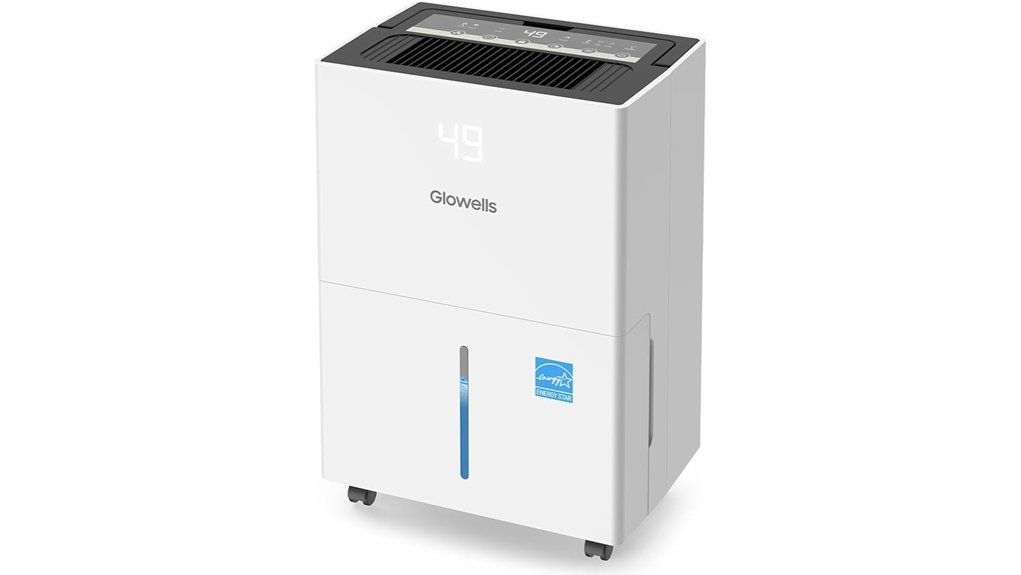
The Glowells PD12A is a portable option for a large basement, garage, living area, or other damp residential space. It is marketed to remove up to 120 pints per day under hot, highly humid conditions and to cover a very large area. Those maximum figures should not be treated as a guaranteed result in a cooler basement. The practical advantages are its adjustable humidity control, automatic defrost, auto shutoff, washable filter, caster wheels, side handles, water tank, and continuous-drain connection.
Why You’ll Like It: You can use the tank when the unit needs to remain portable, then connect the included drain hose when you want less daily maintenance.
Best For: Buyers who want a high-capacity portable dehumidifier for a large residential area and have a nearby floor drain for optional continuous drainage.
Who Should Avoid It: Buyers who need a clearly standardized 115-pint DOE rating, a built-in condensate pump, or a compact unit for a small room.
Pros:
- Near the target capacity, with a published maximum of up to 120 pints per day.
- Supports both manual tank drainage and continuous gravity drainage.
- Includes useful convenience features such as automatic defrost, humidity control, caster wheels, and a washable filter.
Cons:
- The highest capacity and coverage claims are based on favorable conditions and may not reflect a cool basement.
- Published specifications can vary between sellers, so the exact wattage, hose length, warranty, and coverage should be confirmed on the current listing.
- There is no built-in pump, so continuous drainage needs a lower drain point.
ALORAIR Commercial Dehumidifier 113 Pint (Sentinel HD55) — Best for Crawl Spaces
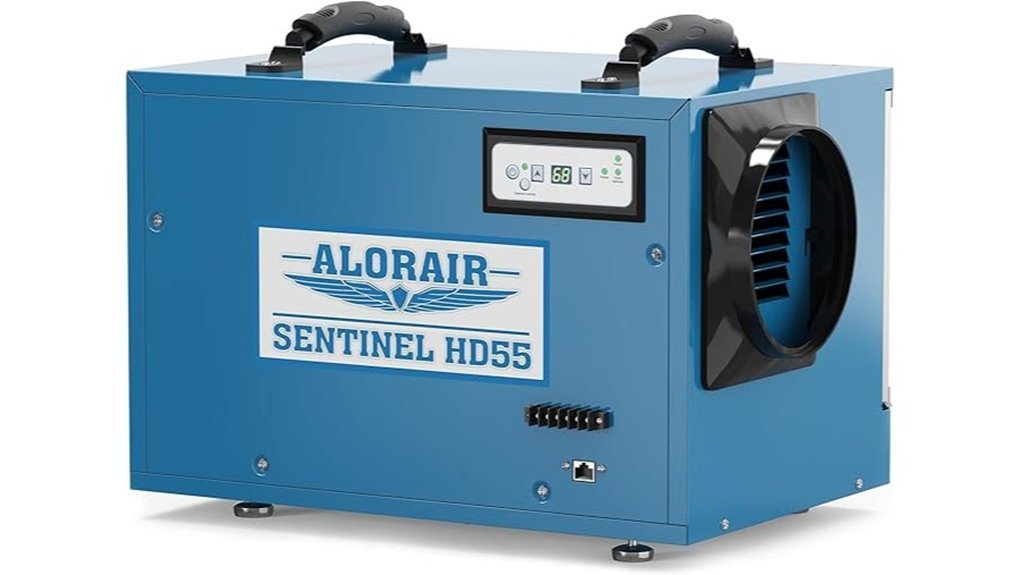
The ALORAIR Sentinel HD55 is the most installation-focused option in this guide. Its manufacturer lists 113 pints per day at saturation and 53 pints per day at AHAM conditions, which shows why test conditions matter. It is designed for crawl spaces, basements, and compact commercial areas up to a published 1,200 sq. ft. The metal cabinet weighs about 41.7 pounds and uses a built-in handle rather than caster wheels.
This model has no collection tank. It sends condensate through a gravity-drain hose, so it works best as a permanent installation with a suitable drain below the outlet. Automatic defrost supports cooler-space operation, while the MERV-1 filter helps protect internal components from dust. The manufacturer also lists cETL compliance and a six-year limited warranty, but warranty coverage has conditions that should be reviewed before purchase.
Why You’ll Like It: Once the gravity drain is installed correctly, the unit can manage humidity without repeated bucket emptying.
Best For: Encapsulated crawl spaces, compact basements, workshops, or buyers who want a rugged metal unit for continuous drainage.
Who Should Avoid It: Anyone without a suitable gravity drain, anyone who needs a built-in pump, or anyone wanting a lightweight room-to-room appliance.
Pros:
- Publishes both saturation and AHAM capacity figures for a clearer performance comparison.
- Compact metal construction, automatic defrost, adjustable humidity control, and gravity drainage suit permanent installations.
- Includes a MERV-1 filter and a published operating range that supports cooler crawl-space conditions.
Cons:
- No internal tank, so a correct drain setup is required.
- Its 1,200-sq.-ft. published coverage is lower than the large-room portable models in this guide.
- The limited warranty is not the same as six years of full replacement coverage; review the current terms carefully.
Gasbye DryPrime 50 115-Pint Dehumidifier — Best Exact-Capacity Match
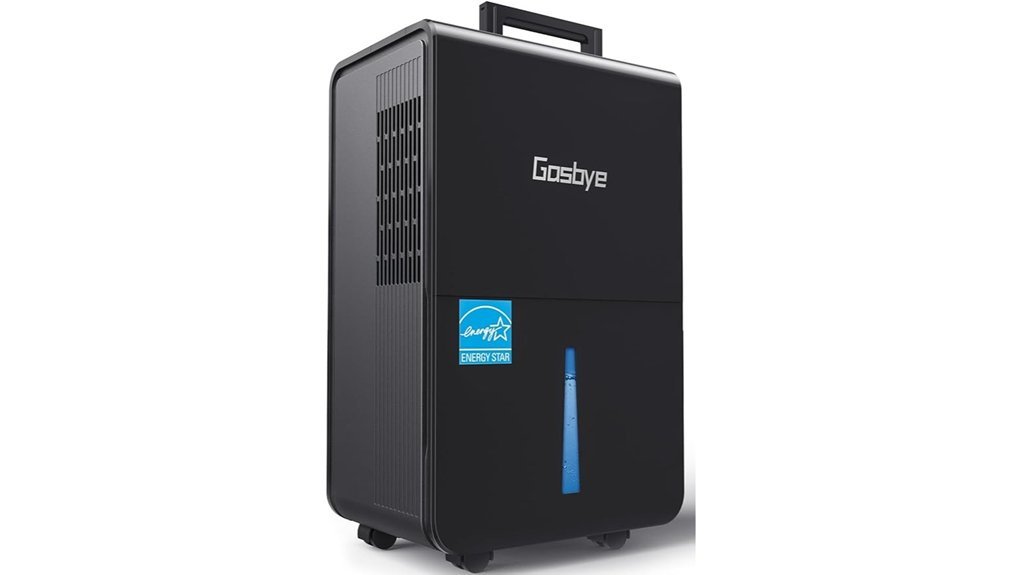
The Gasbye DryPrime 50 is the clearest match for shoppers searching specifically for a 115 pint dehumidifier. The manufacturer publishes several capacity figures: up to 115 pints per day at 86°F and 80% RH, 73 pints at 80°F and 60% RH, and 50 pints at 65°F and 60% RH. This makes it easier to estimate how much performance may drop as a basement becomes cooler or less humid.
The unit is marketed for areas up to 4,500 sq. ft. and includes a 1.72-gallon tank, a short continuous-drain hose, and a garden-hose adapter. It does not have a built-in pump, so the drain must be below the outlet. Published noise is about 44–45 dB, and the controls include adjustable humidity, automatic shutoff and restart, multiple operating modes, caster wheels, and a washable filter. The manufacturer lists a two-year warranty and ENERGY STAR certification, but buyers should verify the exact model’s current certification record before ordering.
Why You’ll Like It: The multiple published test-condition ratings make the capacity claim more transparent than a single best-case number.
Best For: Large basements, garages, or living spaces where you want an exact 115-pint maximum claim, quiet operation, and flexible tank or hose drainage.
Who Should Avoid It: Buyers who need pump-assisted drainage to a sink or window, or anyone expecting the full 115-pint figure in a cool 65°F basement.
Pros:
- Exact 115-pint maximum rating with additional capacity figures for more realistic conditions.
- Offers tank drainage, included hose drainage, and a garden-hose connection.
- Published low noise, smart humidity control, auto restart, wheels, and a washable filter improve everyday usability.
Cons:
- No built-in pump, which limits upward or long-distance drainage.
- The 1.72-gallon tank can fill quickly in a very damp space if continuous drainage is not used.
- The advertised 4,500-sq.-ft. coverage is a marketing estimate and should not replace capacity and airflow planning.
Factors to Consider When Choosing a 115 Pint Dehumidifier
Start with the published test conditions, then compare the drainage setup, room type, operating temperature, airflow, noise, maintenance, warranty, and current efficiency certification. A model with a larger headline number is not automatically the better choice if that number was measured in much hotter and wetter air.
Moisture Removal Capacity and Test Conditions
Portable dehumidifier capacity represented under the current DOE procedure is normalized to 65°F and 60% relative humidity. Some product listings also show an older AHAM-style figure or a much higher “maximum” figure measured at 80°F to 95°F and very high humidity. Those numbers can all be legitimate within their stated conditions, but they are not directly interchangeable. Compare models at the same temperature and RH whenever possible.
Coverage Area Needs
Square-foot coverage is useful only as a rough screening tool. A cool basement with active seepage, poor air circulation, open doors, or high ceilings can need more dehumidification than a sealed room of the same floor area. Measure the space, note the starting RH and temperature, identify any water source, and consider whether air can circulate back to the unit.
Drainage Options
A removable tank gives you flexible placement but adds routine emptying. Continuous gravity drainage reduces maintenance but requires the hose to slope downward without kinks. A built-in pump is useful when water must travel upward to a sink or window; none of the three retained models in this guide includes a built-in pump. Confirm hose diameter, included adapters, drain height, and route before buying.
Energy Efficiency Rating
Look for the exact model in the current ENERGY STAR product database and compare its Integrated Energy Factor (IEF), measured in liters of water removed per kilowatt-hour. Avoid relying only on a seller’s generic claim that a model uses a fixed percentage less electricity. Certification versions and qualified-model lists can change, so match the certification to the model number shown on the appliance.
Noise Level Matters
Check the published decibel rating and whether it applies to low or high fan speed. A unit that sounds acceptable in a basement may be distracting in a bedroom or office. Hard floors, nearby walls, loose drain hoses, and vibration can also make a dehumidifier seem louder than its laboratory rating.
Smart Humidity Control
An adjustable humidistat lets the unit cycle instead of running nonstop. Useful supporting features include automatic restart after a power interruption, bucket-full shutoff, continuous mode, timer controls, and auto defrost. For most damp basements, begin near 50% RH and adjust based on comfort, condensation, and the manufacturer’s guidance.
Low-Temperature Operation
Dehumidifier coils can frost in cool spaces. If your basement or crawl space often falls below 65°F, prioritize a model with automatic defrost and a published minimum operating temperature. Even with defrost, moisture-removal capacity normally drops as the room gets cooler.
Portability and Size
Portable residential models usually have caster wheels, handles, and a bucket. Compact crawl-space units may be easier to position under low joists but can require lifting and permanent drainage. Check cabinet dimensions, weight, discharge clearance, filter-removal space, and access for future cleaning before choosing a location.
Warranty and Support
Read the complete warranty rather than relying on the headline number. Coverage may differ by year and by component, and labor, shipping, registration, maintenance records, or direct-purchase requirements may apply. Save the receipt, model and serial numbers, and the product listing shown at the time of purchase.
Before You Buy Checklist
- Confirm whether the headline pint rating is maximum, saturation, AHAM, or DOE-rated capacity.
- Record your room’s square footage, ceiling height, temperature, and starting humidity.
- Choose tank, gravity-drain, or pump drainage before deciding where the unit will sit.
- Verify the minimum operating temperature for a cool basement or crawl space.
- Check the exact model’s current ENERGY STAR record instead of relying only on the listing title.
- Allow enough clearance for airflow, filter removal, tank access, and hose routing.
- Review warranty exclusions, registration requirements, and who pays return shipping.
Frequently Asked Questions
Are All 115 Pint Dehumidifier Ratings Comparable?
No. One brand may publish a maximum figure at 86°F and 80% RH, while another lists saturation, AHAM, or DOE conditions. Compare the temperature and relative humidity beside each capacity number before deciding which unit is stronger.
How Noisy Are 115 Pint Dehumidifiers During Operation?
The retained models publish roughly mid-40s to below-50 dBA figures, but real sound depends on fan speed, room surfaces, placement, and vibration. Use a firm, level floor and keep the hose from touching walls or loose objects.
Do 115 Pint Models Work in Cold Basement Temperatures?
They can, but performance drops as temperature falls. Choose a model with automatic defrost and check its published minimum operating temperature. A crawl-space model may suit a cool permanent installation better than a standard portable room unit.
How Often Should the Filter Be Cleaned or Replaced?
Inspect the filter every two to four weeks and more often in a dusty basement. Clean or replace it according to the manual. Reduced airflow can lower moisture removal and increase operating strain.
Can I Run a 115 Pint Dehumidifier Continuously?
Yes, when the manufacturer allows continuous mode and the drain is installed correctly. Keep the hose clear, clean the filter, inspect the coils and tank, and use an appropriate humidity setting so the unit does not run unnecessarily.
Can One Unit Dehumidify an Entire Basement?
Possibly, but the answer depends on layout, airflow, temperature, ceiling height, and the source of moisture. Closed rooms and separated areas may need open doors, transfer airflow, or more than one unit. Fix active leaks or drainage problems instead of expecting a dehumidifier to solve them alone.
What Maintenance Prevents Mold Inside the Unit?
Empty and wash the tank, keep the filter clean, inspect the drain hose, wipe accessible surfaces, and let the unit dry before long-term storage. Follow the manual for coil cleaning and never open the sealed refrigeration system.
Conclusion
Final Recommendation: Choose the Gasbye DryPrime 50 when you want the clearest exact 115-pint maximum claim and transparent performance figures at several conditions. Choose the Glowells PD12A for a large residential space when portable tank drainage and a gravity hose are priorities. Choose the ALORAIR Sentinel HD55 for a compact crawl space or permanent basement installation with a suitable gravity drain.
Whichever model you choose, compare capacities at the same test conditions, plan the drain route first, and verify the current model number, certification, accessories, and warranty on Amazon before purchasing.