
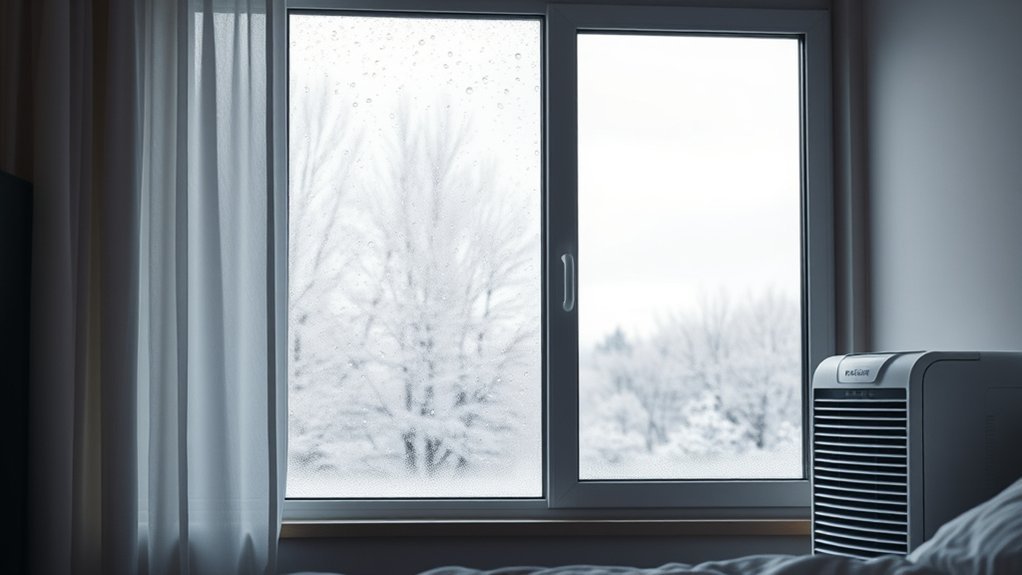
Yes, a dehumidifier can stop winter window condensation when high indoor humidity is the cause. Condensation forms when moist indoor air touches cold glass, so lowering humidity, venting steam, and keeping air moving across the window all help. If the glass itself is very cold, you may also need weatherstripping, storm windows, or better glazing.
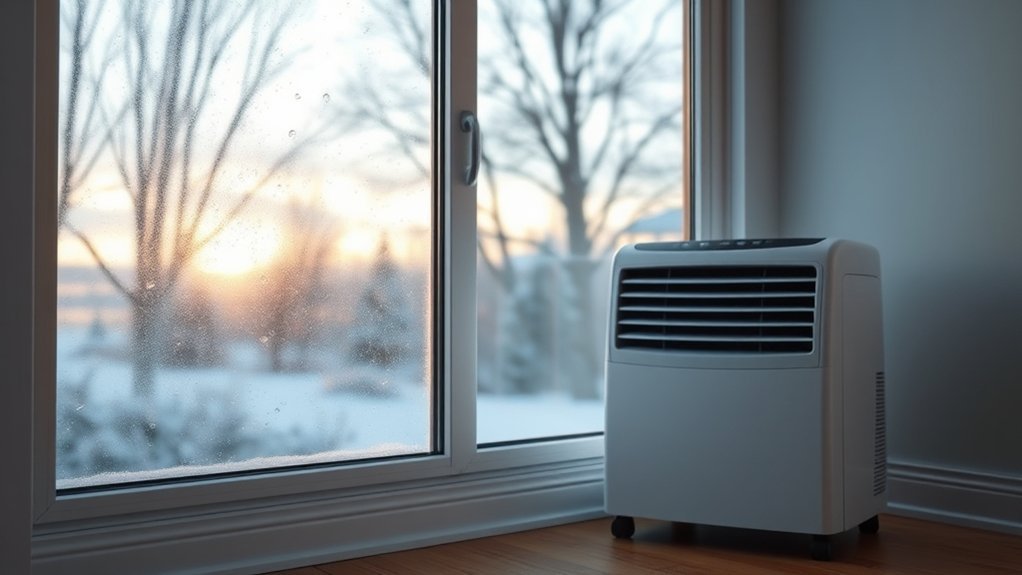
What Causes Winter Window Condensation?
Cornell Cooperative Extension explains that condensation starts when air cools to its dew point, where relative humidity reaches 100 percent. Colder air holds less water vapor, so cold glass is where the moisture shows up first. Interior condensation happens when indoor humidity is high, air movement carries vapor to the cold glass, and the glass runs cold.
Common indoor moisture sources include showers, cooking, drying laundry indoors, breathing overnight in closed bedrooms, humidifiers, unvented dryers, and damp basements or crawl spaces.
Window glass is a weak insulator. Cornell lists single glazing at an R value of about 1 and double glazing at about 2, compared with 11 to 20 for a typical wall, which is why windows are usually the first cold surface to fog.
- Room-side condensation: a dehumidifier, ventilation, and a warmer window surface can help.
- Outdoor-side condensation: moisture on the outside of the glass is not caused by indoor humidity.
- Moisture between double-pane glass: this commonly points to a failed seal in the glass unit. A dehumidifier will not fix that. Ask a glazing professional.
Will a Dehumidifier Stop Winter Window Condensation?
It can, if excess moisture in the room air is the main cause. The dehumidifier pulls water vapor out of the air and lowers relative humidity, so less moisture settles on cold glass. Cornell also notes that in electrically heated homes, dehumidifiers remove moisture more efficiently than ventilating fans, which exhaust heat as well.
It may not clear the glass completely if the window is very cold, the room adds moisture faster than the unit removes it, or air barely moves around the glass. In those cases, combine it with ventilation, sealing, storm windows or film, and moisture-source control.
Note: A dehumidifier treats moisture in the room air. It cannot repair a failed window seal, a roof leak, or a wall cold bridge.
What Humidity Level Stops Condensation?
The EPA advises keeping indoor humidity below 60 percent, ideally between 30 and 50 percent, if possible. For cold weather specifically, ENERGY STAR says that during the heating season in colder climates, humidity should be in the range of 30% to 40% RH to prevent window condensation.
| Humidity reading | What it means | What to do |
|---|---|---|
| Below 30% | Air may feel too dry | Do not dehumidify further unless damp shows up elsewhere. |
| 30% to 40% | ENERGY STAR’s cold-climate target | Check windows in the morning; hold here in very cold weather. |
| 40% to 50% | Within the EPA ideal range | Fine for many rooms; lower it if the glass still fogs. |
| 50% to 60% | Condensation risk rises on cold glass | Run the dehumidifier and vent steam. |
| Above 60% | Above the EPA ceiling | Dehumidify, ventilate, and look for hidden moisture. |
Use a hygrometer instead of guessing. If humidity is already in range but the glass is still wet, the window surface is probably too cold, and lowering humidity further just makes the room uncomfortable.
How to Use a Dehumidifier to Reduce Window Condensation
- Measure first. Put a hygrometer in the room and note the reading before switching the unit on.
- Set a target. Start near 40% to 45%, then step down toward the 30% to 40% range in very cold weather if windows still fog.
- Give it airflow. Keep the unit centrally placed with open space around the intake and exhaust, and keep curtains slightly open so air reaches the glass.
- Close exterior doors and windows while it runs. ENERGY STAR says doors and windows to the space should be closed.
- Check next morning. If humidity is high, run it longer or improve airflow. If humidity is in range but glass is wet, work on window temperature.
Do not set the unit where it can be splashed, tipped, or blocked by bedding or curtains, and follow the manufacturer’s clearance and electrical instructions.
Other Ways to Stop Window Condensation
Cornell’s fact sheet groups fixes into reducing vapor, venting moist air, and improving window performance.
- Vent steam at the source: use kitchen, bath, and laundry exhaust fans, ideally on a timer or humidistat.
- Vent the dryer outdoors and avoid running humidifiers in cold weather.
- Keep air moving: open interior doors and pull drapes and shades away from the glass during the day.
- Add a second glazing layer: storm windows or insulating glass, sealed with weatherstripping or gaskets.
- Caulk and weatherstrip around windows and the adjacent wall.
- Control basement and crawl space moisture through grading, drainage, gutters, and a ground cover.
- Raise the room temperature only as a last resort, since it increases fuel use.
Choosing a Dehumidifier for Winter Use
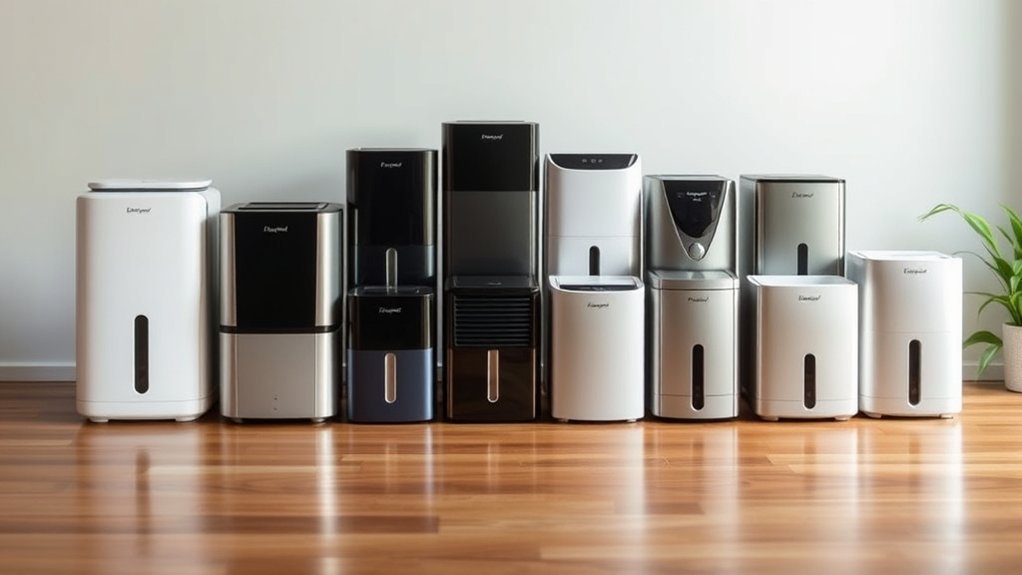
ENERGY STAR notes that capacity depends on the size of the space and the conditions in it, and that it is better to oversize than undersize. For bedrooms, check noise ratings. For cool rooms, check the model’s minimum operating temperature, since many compressor units struggle in cold air and ENERGY STAR warns frost can form on the coils below 65 degrees F.
- Look for a built-in humidistat so the unit cycles to a target RH.
- Pick a tank size you will actually empty, or use a continuous drain hose if the model supports one.
- For laundry drying, use a small closed room with space between garments.
Running Cost
Running cost depends on wattage, run hours, and your electricity rate. The formula is: cost = kilowatts × hours × price per kWh. For example, a 200-watt unit running 4 hours uses 0.2 kW × 4 h = 0.8 kWh. Multiply that by the rate on your bill. A humidistat-controlled unit often runs hard at first and then cycles off once the room reaches target.
Why Windows Are Still Wet With a Dehumidifier Running
- Humidity is still high: run longer, improve airflow, or use a larger unit.
- Wrong placement: move it out of corners and away from blocked airflow.
- Steam is entering the room: close bathroom or kitchen doors while the fan runs.
- Glass is too cold: add storm windows, film, or better glazing; closed drapes can trap cold air against the glass.
- Water between panes: likely a failed seal; call a glazing pro.
- Hidden leak: check frames, walls, ceilings, gutters, and plumbing.
When to Call a Professional
Call a pro for water between panes, persistent damp patches, a strong musty smell, widespread mold, or rot around window frames. The EPA says the key to mold control is moisture control, and cleaning alone lets mold return if the water problem is not fixed. People with asthma, COPD, or weakened immune systems should be especially cautious around mold.
Frequently Asked Questions
How do you stop condensation on windows overnight in winter?
Measure humidity before bed, run the dehumidifier until the room is in the 30% to 50% range, and use exhaust fans after evening showers or cooking. Keep air moving around the glass. If windows are still soaked in the morning, improve the window itself with weatherstripping, film, or storm windows.
Is 50% humidity too high in winter?
It can be. 50% is the top of the EPA’s ideal range, but ENERGY STAR suggests 30% to 40% RH in cold climates during the heating season to prevent window condensation. With single glazing or very cold weather, a lower target may be needed.
Does condensation between window panes mean the room is too humid?
Usually not. Moisture between panes commonly means the sealed glass unit has failed. A dehumidifier can reduce room-side condensation but will not remove moisture trapped inside a failed unit. A glazing professional can advise on repair or replacement.
When should I not use a dehumidifier in winter?
Skip it when indoor humidity is already below 30%, when the room is colder than the unit’s rated operating range, or where splashing or standing water makes it electrically unsafe. A dry-air problem calls for no dehumidifier at all.
Should I use a dehumidifier if I have COPD?
A dehumidifier may help if indoor air is damp, but it is not a COPD treatment. Avoid both very damp and very dry air, monitor humidity with a hygrometer, keep the unit clean, and follow your clinician’s advice if symptoms change.
Does a dehumidifier help dry laundry indoors?
Yes, removing moisture from the air lets wet fabric keep evaporating. Use a small closed room, space the clothes apart, and run the unit until clothes are dry and humidity falls back into range. Avoid drying laundry on radiators, which can push moisture onto cold glass overnight.
Related Guides
- Will a dehumidifier stop condensation on ductwork?
- What a dehumidifier should be set to in winter
- Does a dehumidifier prevent mold?
- Dehumidifier for bathroom moisture
- Small dehumidifier for drying clothes
Sources
- Cornell Cooperative Extension: Moisture Condensation of Windows
- U.S. EPA: A Brief Guide to Mold, Moisture and Your Home
- ENERGY STAR: Dehumidifiers



[…] the Pacific Northwest), or live in a tightly sealed home where moisture cannot escape. Our guide on whether a dehumidifier stops window condensation in winter covers how to clear sweating glass step by […]