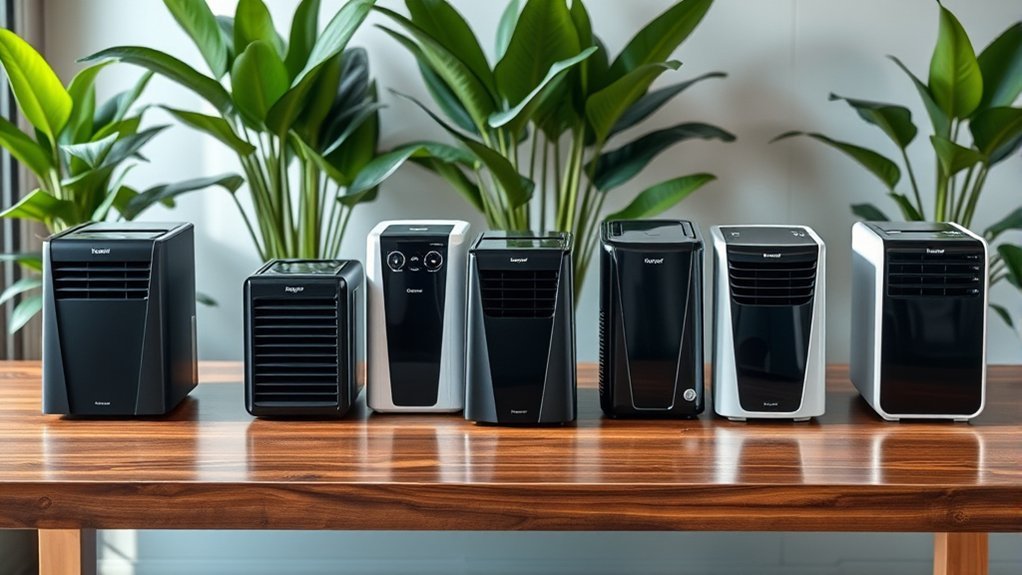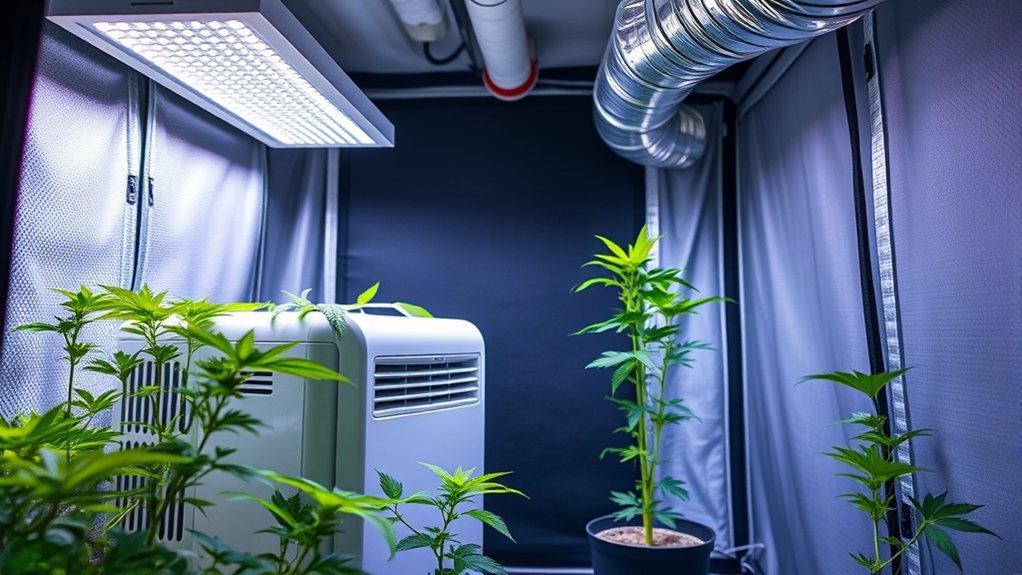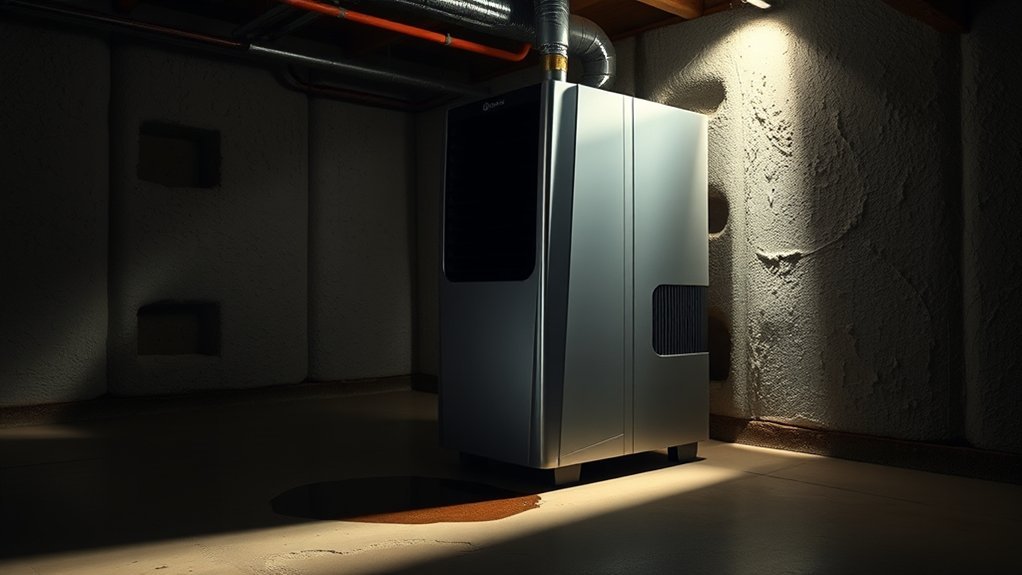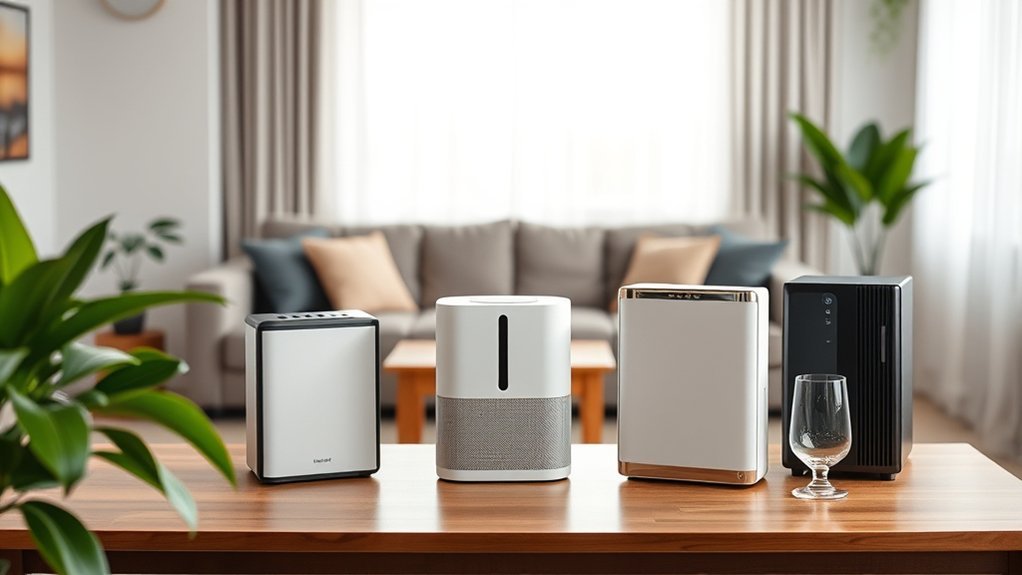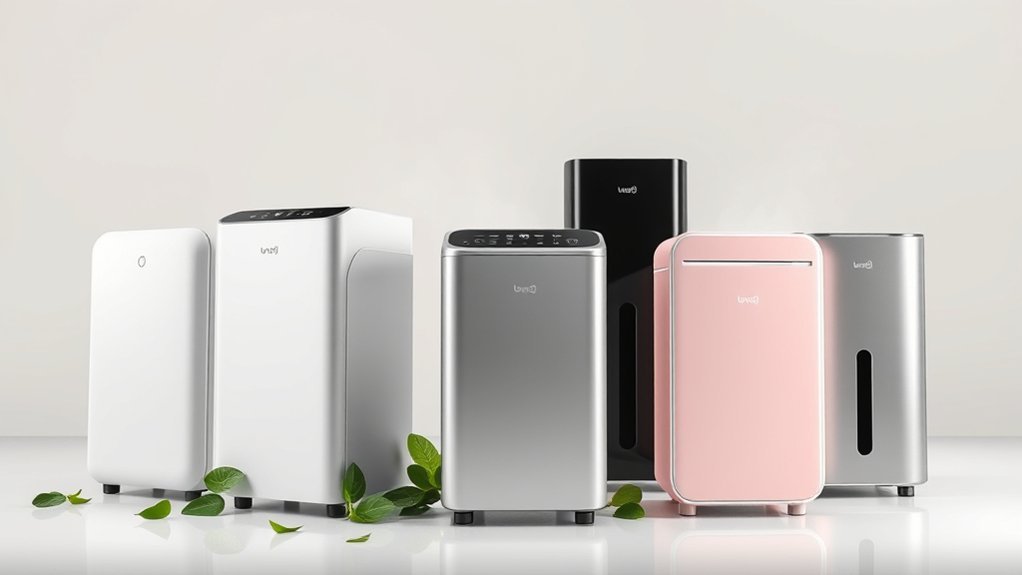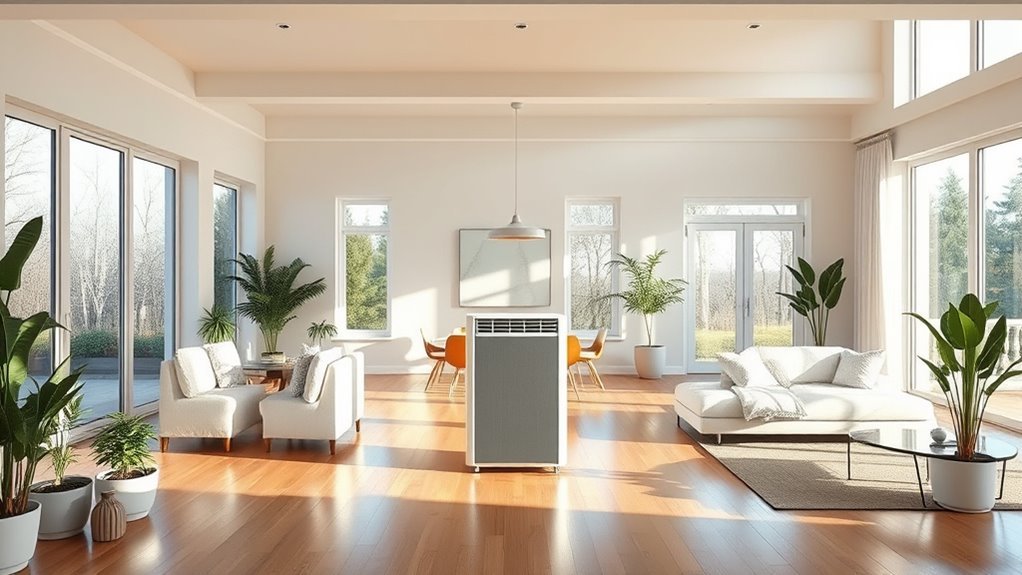
For a 2,000 sq ft home or basement, the right dehumidifier size depends on how damp the space is, how open the layout is, and whether you are treating one level or the whole house. In most damp 2,000 sq ft situations, start with a current 50-pint portable dehumidifier or step up to a larger whole-house model when humidity affects several rooms.
Quick Answer
For 2,000 sq ft, choose a current 50-pint dehumidifier for a damp basement or open living area. If the space is very wet, spans multiple levels, or stays above 55% relative humidity throughout the house, consider a 70- to 130-pint whole-house dehumidifier sized by an HVAC professional.
Key Takeaways
- A current 50-pint portable unit is the safest starting point for most damp 2,000 sq ft spaces.
- Older “70-pint” labels often describe what is now sold as a 50-pint unit under newer DOE rating methods.
- Keep indoor humidity around 40–50% for comfort, while staying within the broader 30–50% range recommended by the EPA.
- Use continuous drainage if the unit will run daily in a basement, Louisiana climate, or other high-humidity space.
- Choose a whole-house dehumidifier when humidity affects multiple rooms or levels, not just one basement or living area.
How Much Dehumidifier Capacity Do You Need for 2,000 Sq Ft?
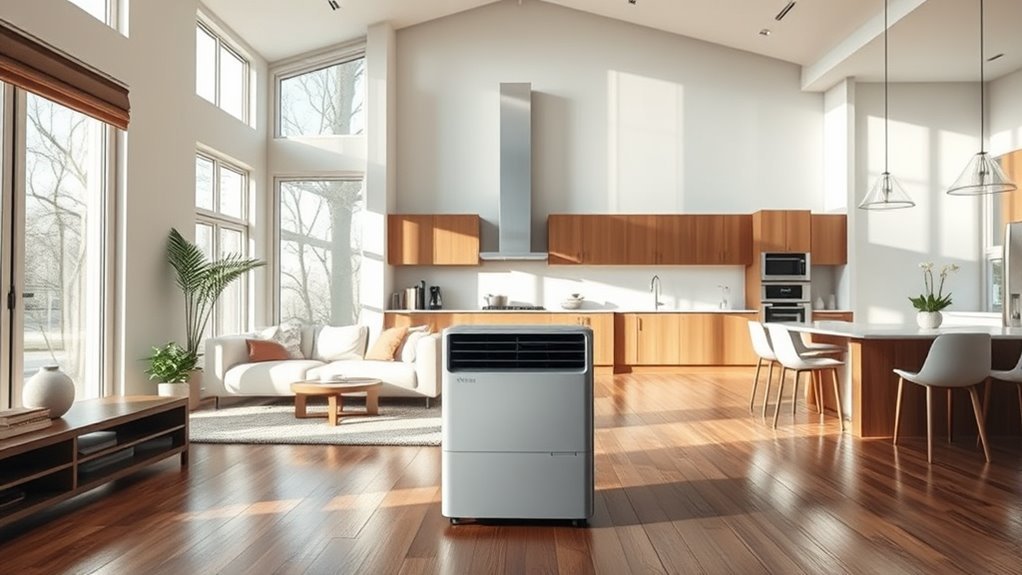
For a damp 2,000 sq ft space, a current 50-pint dehumidifier is usually the best portable starting point. This size gives enough moisture removal for a large basement, open living area, or connected lower level without jumping straight to a ducted system.
The confusing part is the label. Some retailers still describe units as “70 pint 2019 DOE standard” even when the current rating is 50 pints per day. That does not mean the unit suddenly got weaker; it means the test and labeling method changed. Under current federal test rules, dehumidifier capacity is represented in pints per 24 hours, and current DOE rules reference Appendix X1 for efficiency representations after January 22, 2024. The current federal test method also incorporates AHAM DH-1-2022 in specified sections.
ENERGY STAR explains that dehumidifier capacity depends on two things: the size of the space and how damp it is before dehumidification. For that reason, the right size for 2,000 sq ft can range from a smaller portable unit in a mildly damp open area to a whole-house system when several rooms stay humid. ENERGY STAR dehumidifier guidance also notes that capacity is measured in pints per 24 hours.
| Condition in the 2,000 sq ft space | Best starting size | What to choose |
|---|---|---|
| Slightly damp, occasional musty smell, RH near 50–60% | 35–50 pints | A 35-pint unit may work for one open area, but 50 pints gives more headroom. |
| Consistently damp, musty, RH often above 60% | 50 pints | Choose a current 50-pint unit with a humidistat and continuous drain option. |
| Wet basement, seepage, laundry drying, or RH above 70% | 50 pints minimum, or larger system | Use a 50-pint portable for one area, multiple units for separated rooms, or a ducted unit for whole-house humidity. |
| Whole home feels humid across rooms or levels | 70–130 pints whole-house | Have an HVAC contractor size a ducted whole-house dehumidifier. |
Pro Tip: Before you buy, place a hygrometer in the dampest area for 24–48 hours. If readings stay above 55–60%, choose the higher-capacity option instead of the smallest model that claims to cover your square footage.
What Humidity Level Should You Aim For?
A good daily target is 40–50% relative humidity. That range feels comfortable for most homes and gives you a buffer below the level where mold risk increases. The EPA recommends keeping indoor humidity between 30% and 50%, and the American Lung Association recommends keeping indoor humidity below 50% to help limit mold conditions. EPA indoor air guidance and American Lung Association mold guidance both support controlling indoor moisture.
Do not set the dehumidifier too low. Running a unit at 30–35% all summer can waste electricity and make the air feel dry. In cold climates, lower winter humidity may be needed to prevent window condensation, but in warm humid climates, 45–50% is usually a practical target.
Why Layout Matters in a 3-Level Home
A 2,000 sq ft number does not tell the whole story. A single open basement is easier to dry than a three-level home with closed bedrooms, hallways, stairwells, and weak return-air paths. Humidity moves through connected air, but a portable dehumidifier only treats the air it can pull across its coil.
If your home has three levels, place the dehumidifier where humidity is highest first. In many homes, that means the basement, crawl space entrance, laundry area, or lowest level. Then improve air movement with open doors, a fan, or the HVAC fan setting if your system supports it.
- Check humidity on each level with a hygrometer.
- Target the dampest level first instead of the center of the house.
- Keep interior doors open when safe and practical.
- Use a fan to move dry air into dead-air corners.
- Consider multiple units if rooms are separated by doors or long hallways.
Note: A portable dehumidifier is best for one large connected zone. A whole-house dehumidifier is better when the problem is spread across several floors.
Which Dehumidifier Type Works Best in Louisiana?
In Louisiana and other warm, humid climates, a compressor dehumidifier is usually the right type for residential use. Compressor models work well in warm indoor air, remove a meaningful amount of water per day, and are widely available in current 35- and 50-pint portable sizes.
For a 2,000 sq ft Louisiana home, choose at least a current 50-pint portable dehumidifier if you are treating a damp basement, open living area, or large ground-floor zone. Look for:
- Built-in humidistat: lets the unit cycle on and off at your target RH.
- Continuous drainage: useful when humidity is high for months.
- Auto-restart: helpful during power interruptions.
- Washable or easy-access filter: important in dusty or high-pollen areas.
- ENERGY STAR certification: helps reduce operating cost.
A 40-pint model can be useful for a smaller zone or moderately damp room, but it may be undersized for a wet 2,000 sq ft space. A current 50-pint model, including units marketed as “70 pint under 2019 DOE standards,” is a better match for a large humid area. If the whole house stays above 55% RH, a ducted whole-house model is usually the cleaner long-term solution.
Recommended Products

4,500 SQ. FT. DEHUMIDIFIER – Removes up to 50 pints of moisture per day with an adjustable humidity setting from 35% to 85%. Perfect for use in basement, bathroom, bedroom, office, kitchen, cellar, or crawlspace. Maintain a healthy 45%-55% humidity range

This 50 pint dehumidifier covers spaces up to 5,000 Sq.Ft, ideal for basements, bedrooms and laundry rooms. Its high-efficiency compressor swiftly cuts humidity from 90% down to a cozy 30% RH. It offers dehumidification, clothes drying & ventilation modes, alongside dual drainage, quiet operation, auto-defrost, child lock and 24-hour timer for steady year-round damp control

1600 Sq.Ft High Capacity Dehumidifier- The GoGuess basement dehumidifier is equipped with a quiet yet powerful compressor that efficiently extracts up to 21 pints of moisture per day (tested at 95°F and 90% RH). Perfect for use in basements, offices, bathrooms, bedrooms, kitchens, storage areas, living rooms, laundry spaces, garages, crawl spaces, and RVs. It helps maintain a healthy humidity level between 30% and 70%, promoting a more comfortable and healthier indoor environment
What Size Works Best for a Damp Basement?
A damp 2,000 sq ft basement usually needs a current 50-pint dehumidifier with continuous drainage. Basements often have higher moisture loads than upstairs rooms because of concrete walls, foundation seepage, cooler surfaces, and weaker airflow.
Choose a larger or professionally installed system if the basement has standing water, frequent seepage after storms, wet walls, or humidity that stays above 70% even after the dehumidifier runs for several days. A dehumidifier can manage moisture in the air, but it cannot solve a water-entry problem by itself.
Warning: Fix leaks, seepage, clogged gutters, and drainage problems first. A dehumidifier can lower indoor humidity, but it should not be used as the only solution for active water intrusion.
Also check basement temperature. If the space often falls below 65°F, choose a model rated for lower-temperature operation or one with auto-defrost. Frost on the coils can reduce moisture removal and make the compressor cycle without drying the air well.
Recommended Products

EASY TO CLEAN WASHABLE FILTER: Capture dust from the air and keep your dehumidifier working efficiently with our easy-to-clean washable filter.

This dehumidifier delivers powerful performance — removing up to 80 pints of moisture per day and covering up to 5000 sq.ft, perfect for whole homes, basements, large living rooms, and garages. It effectively eliminates dampness and musty odors, keeping your entire large space dry and comfortable all day long, even in highly humid environments (90-100% relative humidity).

Used for large basements, whole houses, or home areas up to 3,500 sq.ft. Removes 50 pints of moisture per day (under 90°F/80% RH). Protects your wood furniture, leather sofas, and electronics from humidity-related aging.
How to Set Up Drainage and Airflow
Good setup can matter as much as capacity. A strong dehumidifier placed in a blocked corner with a kinked drain hose will perform like a smaller unit. Give the unit space, move air through the room, and make the drainage path simple.
Drainage Location
Place the dehumidifier near a floor drain, sump pump, utility sink, or condensate pump. Continuous drainage lets the unit run without shutting off when the bucket fills. This is especially important for basements, vacation homes, and humid climates where the unit may collect several pints per day.
- Use the manufacturer-approved hose size.
- Keep the hose as short and straight as practical.
- Use a steady downward slope for gravity drainage.
- Check the hose for kinks, clogs, algae, and leaks.
- Use a condensate pump if the water must drain upward.
Continuous Drain Setup
For gravity drainage, attach the hose to the drain outlet and run it downhill to the drain. Do not loop the hose upward unless the unit has a built-in pump or you are using a separate condensate pump. A hose that rises and falls can trap water, back up, and shut the unit off.
After setup, run the unit for 30 minutes and inspect the full hose path. Look for drips at the fitting, water pooling under the unit, or a bucket filling when it should be bypassed.
Airflow and Placement
Keep the dehumidifier away from walls, curtains, furniture, storage boxes, and dusty work areas. If the unit does not have top-mounted discharge, leave extra space around the intake and exhaust so air can circulate freely.
- Place the unit near the dampest part of the space.
- Keep windows and exterior doors closed while it runs.
- Use a fan to move air from distant corners.
- Clean the filter as often as the manual recommends.
- Keep dusty tools and sawdust away from the intake.
Warning: Keep drain hoses away from outlets, extension cords, power strips, and electrical panels. Plug the dehumidifier into a properly grounded outlet and follow the manufacturer’s electrical safety instructions.
When to Choose a Whole-House Dehumidifier
A whole-house dehumidifier makes sense when the humidity problem is not limited to one room. If several rooms or levels stay above 55% RH, a portable unit may dry only the area around itself while the rest of the house remains humid.
Recommended Products

160 Pints/Day Upgraded Energy-Efficient Dehumidification: Built with an upgraded high-efficiency system, the Moiswell WD160 removes up to 160 pints of moisture per day (65 PPD @DOE) with lower energy consumption(2.25 L/wKh). It maintains optimal humidity levels across large living spaces, helping prevent structural damage such as wood rot and musty odors, while promoting a healthier indoor environment.

125 Pint Crawl Space Dehumidifier – Designed for crawl spaces, basements, and large areas up to 6,500 sq. ft., this unit removes up to 125 pints of moisture per day (95°F, 90% RH). A 176 CFM airflow and brushless motor help dry spaces faster with 10%–90% RH adjustable humidity
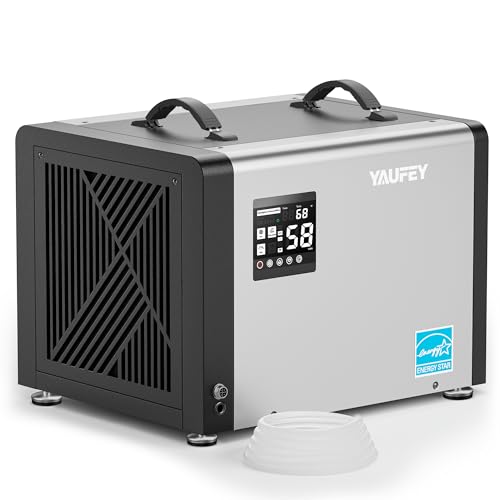
【70 Pint High-Efficiency Moisture Removal】Removes up to 70 pints per day under 95°F, 90% RH with a powerful 159 CFM airflow. Effectively covers areas up to 5,000 sq. ft., ideal for crawlspaces, basements, workshops, or large storage rooms. Helps maintain dry conditions and a consistently balanced indoor environment.
Climate and Home Coverage
In a humid climate with central air conditioning, a whole-house dehumidifier can be the better long-term choice. ENERGY STAR notes that whole-home systems may be appropriate for humid climates with central air, especially when humidity readings stay above 55% throughout the house.
Whole-house models are commonly available in the 70- to 130-pint-per-day range. For example, the Santa Fe Ultra70 is rated for up to 70 pints per day, while the AprilAire E130 removes up to 130 pints per day. Those examples show the range, but the right size should be selected for your house, ductwork, air leakage, and moisture load.
Ducted System Advantages
A ducted system connects to HVAC ductwork or dedicated ducts, so it can pull humid air from more than one area and deliver drier air throughout the home. This is useful in two-story and three-story homes where a single portable unit cannot reach every room.
| Feature | Benefit | Why it matters |
|---|---|---|
| Whole-home coverage | More even humidity control | Fewer damp rooms and corners |
| Higher capacity | 70–130 pints per day | Handles severe or widespread moisture |
| Automatic humidistat | Runs only when needed | Improves comfort and reduces manual work |
Installation and Maintenance
Most whole-house dehumidifiers should be installed by an HVAC professional. The installer needs to confirm duct design, drain routing, electrical requirements, static pressure, controls, and access for filter changes.
- Set the humidistat around 45–50% RH for normal warm-weather use.
- Inspect or replace filters on the schedule in the manual.
- Check drain lines for clogs or algae buildup.
- Keep supply and return paths open.
- Schedule HVAC maintenance if the unit is tied into your duct system.
How Much Does It Cost to Run a Dehumidifier?
The cost depends on wattage, runtime, electricity rate, and how often the compressor cycles. Use this simple formula:
Watts ÷ 1,000 × hours used × your electricity rate = estimated daily cost.
For example, a 500-watt dehumidifier running for 12 hours uses 6 kWh. At $0.18 per kWh, that costs about $1.08 per day. If the same unit cycles on and off and only runs its compressor half the time, the real cost may be lower. Check the nameplate or manual for watts, then use your local utility rate for a more accurate estimate.
Maintenance and Troubleshooting
A dehumidifier loses performance when airflow drops or drainage backs up. Basic maintenance keeps the unit removing water efficiently.
- Clean the filter: A clogged filter reduces airflow and can make the unit run longer.
- Check the bucket float: If the float sticks, the unit may shut off even when the bucket is empty.
- Inspect the drain hose: Kinks, slime, or a poor slope can stop continuous drainage.
- Watch for frost: Frost may mean the room is too cold or airflow is blocked.
- Verify the humidity reading: Compare the built-in display with a separate hygrometer.
- Reduce moisture sources: Run bath fans, vent dryers outdoors, fix leaks, clean gutters, and slope soil away from the foundation.
If the unit runs constantly but humidity does not fall, the dehumidifier may be undersized, the space may be too open, outside air may be leaking in, or there may be an active water problem that needs repair.
Frequently Asked Questions
What size dehumidifier do I need for 2,000 square feet?
For a damp 2,000 sq ft space, choose a current 50-pint dehumidifier. If the home is very wet, split across several levels, or consistently above 55% RH throughout the house, consider multiple portable units or a 70- to 130-pint whole-house dehumidifier.
Is a 50-pint dehumidifier the same as an older 70-pint model?
Often, yes. Many units once marketed as 70-pint models under older DOE conditions are now listed as 50-pint models under newer rating methods. Check the product page or manual for wording such as “50 pint” and “70 pint 2019 DOE standard.”
Should you use a dehumidifier if you have COPD?
A dehumidifier may help if your indoor humidity is high because damp air can support mold and dust mites, which may irritate breathing. Keep RH around 30–50%, monitor symptoms, and ask your clinician for personal advice if humidity changes affect your COPD.
Is it better to undersize or oversize a dehumidifier?
It is better to size it correctly, but slight oversizing is usually safer than undersizing in a damp 2,000 sq ft space. An undersized unit may run constantly and never reach the target RH. A much-too-large unit can cost more, create extra noise, and cycle often.
Can one dehumidifier handle a three-level 2,000 sq ft home?
Sometimes, but only if the layout is open and air moves well between levels. In many three-level homes, one portable unit dries the area closest to it while distant rooms stay humid. Use multiple hygrometers to check each level before deciding.
How much does it cost to run a dehumidifier 12 hours a day?
Multiply watts by hours and your electricity rate. A 500-watt unit running 12 hours uses 6 kWh. At $0.18 per kWh, that is about $1.08 per day. Your actual cost changes with local rates, humidity level, fan speed, and compressor cycling.
Conclusion
For a 2,000 sq ft home, basement, or large open area, start with a current 50-pint dehumidifier if the space is damp. Step up to multiple units or a 70- to 130-pint whole-house dehumidifier when humidity affects several rooms, multiple levels, or the entire home. Measure RH first, aim for about 40–50%, use continuous drainage when possible, and fix moisture sources so the dehumidifier is not fighting an ongoing water problem.
Sources
- ENERGY STAR — Dehumidifiers — capacity, sizing factors, humidity targets, drainage, placement, and whole-home guidance.
- eCFR Appendix X1 to 10 CFR Part 430 — current federal test method and rating representation requirements for dehumidifiers.
- U.S. EPA — Care for Your Air — indoor humidity range and mold-related moisture guidance.
- American Lung Association — Mold — keeping indoor humidity below 50% and reducing mold conditions.
- Santa Fe Ultra70 Dehumidifier — example of a 70-pint whole-house dehumidifier specification.
- AprilAire E130 Whole-House Dehumidifier — example of a 130-pint whole-house dehumidifier specification.