
A damp home may have one mildly humid room or a larger area with persistent moisture. Those situations need different equipment. The BANABIE compressor dehumidifier is the strongest option in this list for a larger room or warm basement because it offers higher moisture-removal capacity, adjustable humidity control, and continuous gravity drainage. The BEDRED, OWAAE, and TABYIK models are quieter thermoelectric units intended for lighter humidity in small, enclosed spaces.
Do not compare tank size with daily extraction. A 95-ounce tank describes how much collected water the appliance can store, while a pints-per-day or liters-per-day figure describes how quickly it may remove moisture under stated test conditions. None of the mini models should be treated as a whole-house or wet-basement solution.
How these dehumidifiers were compared
The products were compared by dehumidifier technology, published extraction information, tank size, drainage, humidity controls, nighttime features, portability, and realistic room use. Manufacturer square-foot claims were treated as marketing guidance rather than guaranteed performance. No hands-on testing is claimed.
Quick verdict
- Best overall in this list for a larger damp room: BANABIE 2500 Sq. Ft. 32-Pint Dehumidifier
- Best quiet black mini model for a bedroom: BEDRED 95oz Dehumidifier
- Best gray 95-ounce mini alternative: OWAAE 95oz Dehumidifier
- Best compact pick for a closet, bathroom, or RV: TABYIK 35 OZ Dehumidifier
| Product | Type | Best For | Published Performance | Drainage | Amazon |
|---|---|---|---|---|---|
| BANABIE 32-Pint | Compressor | Larger rooms and warm basements | Listed at 32 pints/day at 95°F and 90% RH; marketed for up to 2,500 sq. ft. | 2.5 L tank or included gravity hose | Check Amazon |
| BEDRED 95oz | Thermoelectric | Closed bedrooms and other small rooms with mild humidity | 95 oz tank; marketed for up to 1,000 sq. ft.; standardized daily extraction not verified | Manual tank with automatic shutoff | Check Amazon |
| OWAAE 95oz | Thermoelectric | Bedrooms, offices, and small enclosed areas | 95 oz tank; marketed for up to 1,000 sq. ft.; standardized daily extraction not verified | Manual tank with automatic shutoff | Check Amazon |
| TABYIK 35 OZ | Thermoelectric | Closets, RVs, bathrooms, and compact rooms | Up to 0.45 L/day at 86°F and 80% RH; marketed for up to 280 sq. ft. | Manual 35 oz tank with automatic shutoff | Check Amazon |
BANABIE 2500 Sq. Ft. 32-Pint Dehumidifier
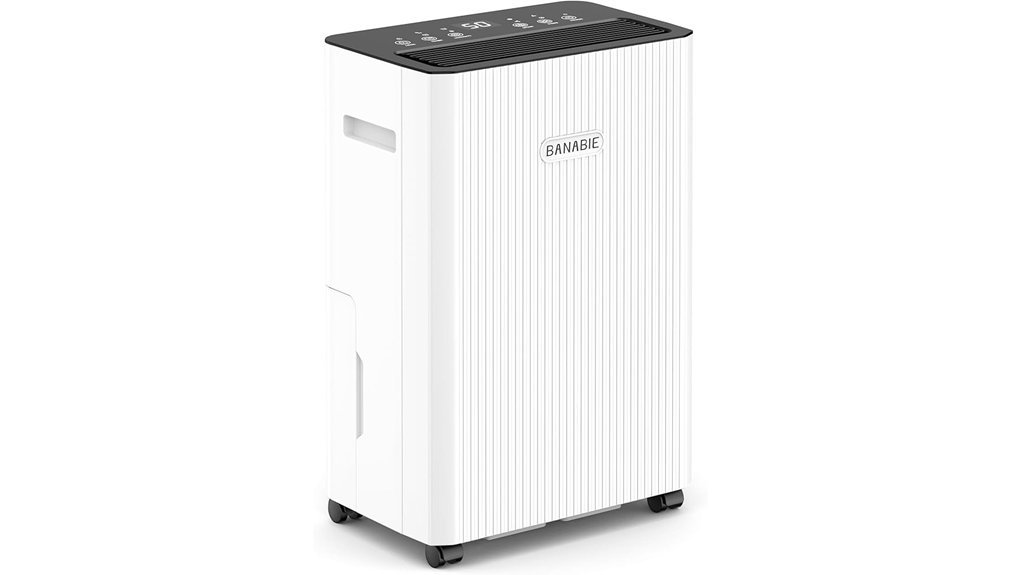
Best Overall in This List for a Larger Damp Room
If you are dealing with persistent humidity in a larger room or warm basement, the BANABIE is the most capable option among these four products. It uses a rotary compressor and is listed to remove up to 32 pints of moisture per day at 95°F and 90% relative humidity. The advertised coverage is up to 2,500 square feet, but actual results will depend on temperature, starting humidity, airflow, ceiling height, and moisture entry.
The published 32-pint figure uses hot, highly humid test conditions and should not automatically be treated as equivalent to a standardized DOE capacity rating. Buyers comparing it with other full-size dehumidifiers should check the current product manual or energy label for the model’s standardized capacity, wattage, operating-temperature range, and efficiency information.
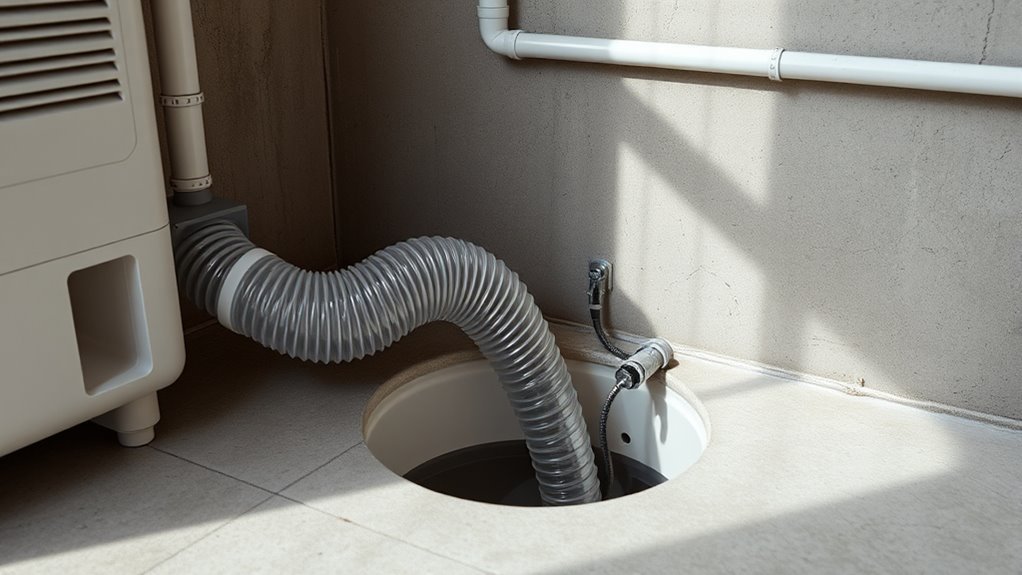
The 2.5-liter tank provides automatic shutoff for manual operation. For longer run times, the included hose supports gravity drainage when it can slope continuously toward a lower drain. Adjustable humidity control, operating modes, a 24-hour timer, child lock, wheels, a carrying handle, and a washable filter add convenience for regular room use.
Why You’ll Like It: It combines stronger moisture removal with automatic humidity control and a continuous-drain option, requiring less attention than the three mini models.
Who Should Buy This: Homeowners who need the strongest dehumidifier in this list for a larger enclosed room, laundry area, or warm basement with ongoing airborne humidity.
Who Should Avoid This: Buyers who need only occasional closet moisture control or who plan to use the appliance in an unusually cold space without first verifying its minimum operating temperature and defrost protection.
Pros:
- Strongest published daily extraction in this comparison.
- Includes a gravity drain hose for lower-maintenance operation.
- Offers adjustable humidity control, operating modes, a 24-hour timer, child lock, wheels, and a washable filter.
Cons:
- The 32-pint claim is based on 95°F and 90% RH rather than a verified standardized rating.
- The 2.5-liter tank may fill quickly in damp conditions if continuous drainage is not used.
- Gravity drainage requires an unobstructed hose route to a lower drain point.
BEDRED 95oz Dehumidifier for Home
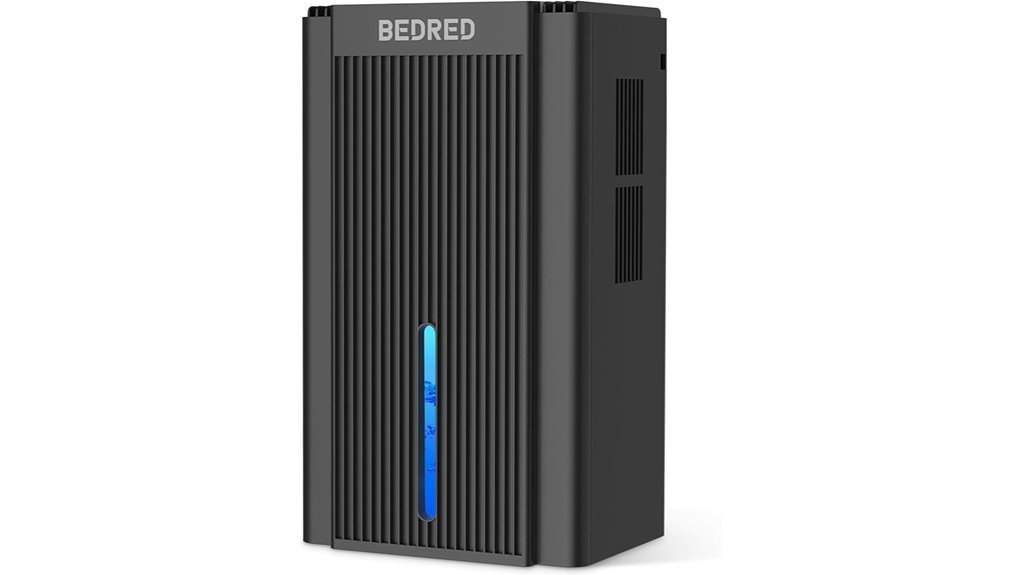
Best Quiet Black Mini Model for Bedrooms
The BEDRED 95oz is a thermoelectric dehumidifier intended for enclosed bedrooms, offices, bathroom areas, and similar spaces with mild humidity. Its 95-ounce water tank provides more storage than many compact units, while automatic shutoff helps prevent overflow when the tank is full or not installed correctly.
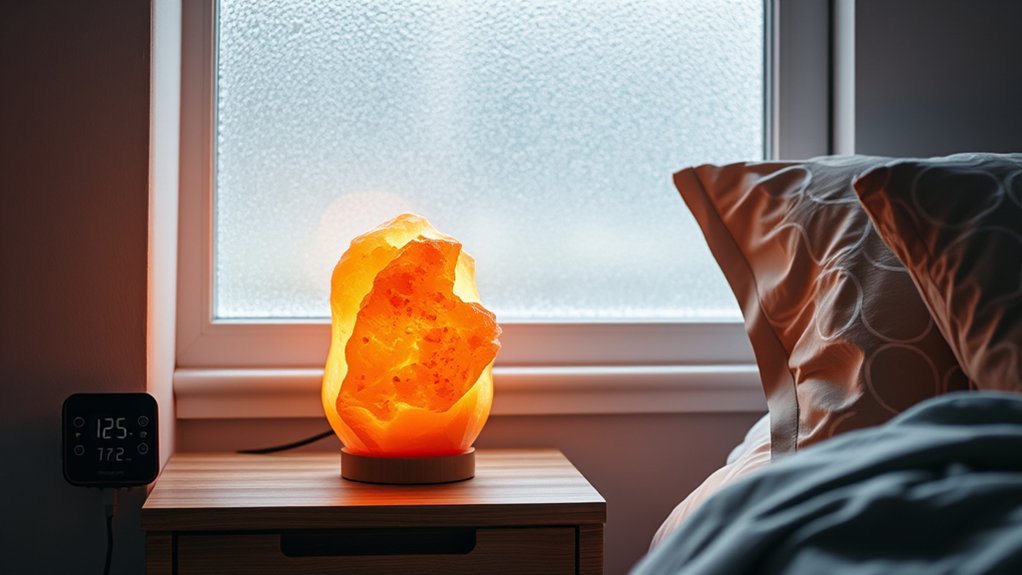
Sleep mode turns off the ambient lighting and is intended to reduce nighttime disruption. The seven-color light can also provide a soft glow when wanted. Although the product is marketed for spaces up to 1,000 square feet, that coverage figure should not be confused with the performance of a high-capacity compressor dehumidifier. A standardized daily extraction rate was not verified for this model.
Why You’ll Like It: It offers a relatively large collection tank, sleep-friendly controls, and a compact black design for a bedroom or office.
Who Should Buy This: Renters or homeowners who want light moisture control in a closed room and prefer a mini appliance with a larger tank.
Who Should Avoid This: Anyone trying to dry a wet basement, manage standing water, or control humidity across several open rooms.
Pros:
- Large 95-ounce storage tank for a thermoelectric model.
- Sleep mode, switchable lighting, and automatic shutoff support bedroom use.
- Compact housing is easier to place than a full-size compressor unit.
Cons:
- A standardized daily moisture-removal rate was not verified.
- The advertised 1,000-square-foot coverage may create unrealistic expectations in open or very damp rooms.
- It requires manual tank emptying and does not provide continuous drainage.
OWAAE 95oz Quiet Dehumidifier
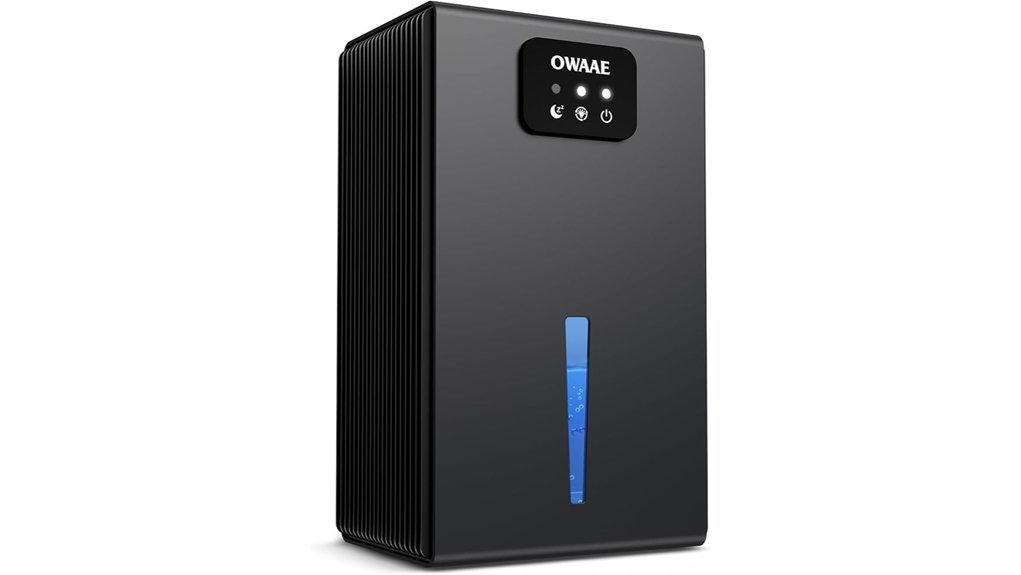
Best Gray 95-Ounce Mini Alternative
The OWAAE is another thermoelectric option with a 95-ounce water tank. It is intended for bedrooms, offices, bathroom areas, and other small enclosed spaces where quiet operation and convenient tank storage matter more than rapid extraction.
Listed features include automatic shutoff, sleep mode, a removable tank, and seven-color LED lighting. The manufacturer markets the model for coverage up to 1,000 square feet, but real-world performance will depend heavily on room temperature, starting humidity, airflow, and whether doors and windows remain closed. A standardized pints-per-day extraction rate was not verified.
Why You’ll Like It: The larger tank can reduce emptying frequency compared with smaller mini units, while sleep mode makes it easier to use in a bedroom or office.
Who Should Buy This: Buyers who want a gray thermoelectric dehumidifier for light humidity in a closed room.
Who Should Avoid This: Buyers dealing with standing water, active leakage, severe basement humidity, or whole-home moisture problems.
Pros:
- 95-ounce tank with automatic shutoff.
- Sleep mode and switchable lighting suit bedrooms and work areas.
- Compact design is easier to move and position than a large compressor model.
Cons:
- No standardized daily extraction rate was verified.
- The square-foot marketing claim does not guarantee effective performance in an open or severely damp area.
- Manual tank emptying is required because continuous drainage is not listed.
TABYIK 35 OZ Small Dehumidifier
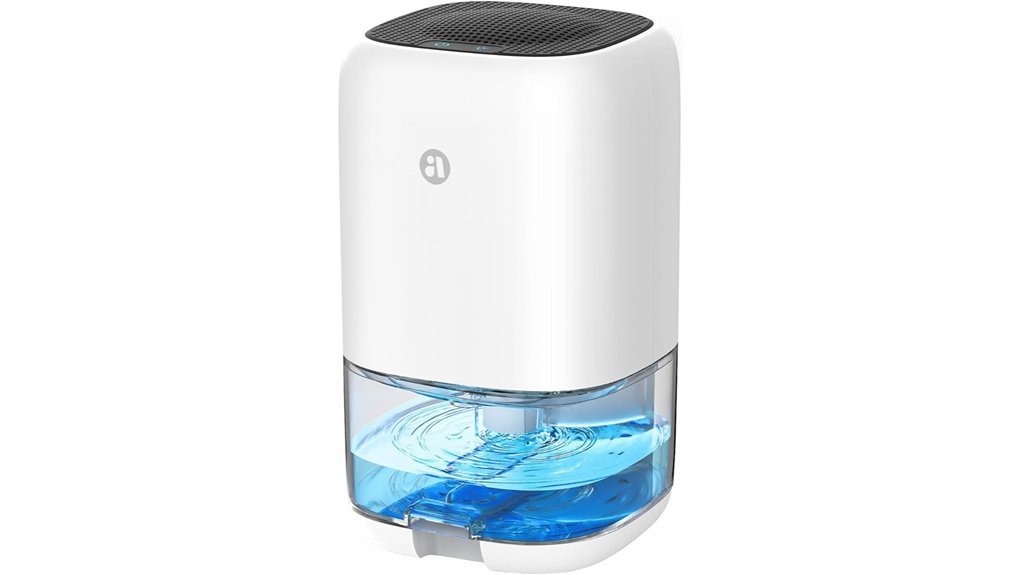
Best Compact Pick for Closets, Bathrooms, and RVs
The TABYIK 35 OZ is the smallest and easiest-to-move option in this comparison. It measures about 5.9 x 5.9 x 10.1 inches, weighs approximately 2.2 pounds, and includes a built-in handle. The unit is marketed for spaces up to 280 square feet.
The listing states that it can collect up to 0.45 liters of water per day at 86°F and 80% relative humidity. That is a warm, highly humid test environment, so collection will normally be lower in cooler or less humid rooms. Its listed 28 dB sound level, transparent tank, automatic shutoff, and simple controls make it convenient for a closet, RV, small bathroom area, compact bedroom, or desk area.
Why You’ll Like It: It is lightweight, simple to operate, and easy to place where a full-size dehumidifier would be awkward.
Who Should Buy This: People who need light moisture control in a small, enclosed space.
Who Should Avoid This: Anyone expecting one mini unit to control persistent dampness across a basement, open living area, or entire house.
Pros:
- Compact dimensions and built-in handle make it easy to move.
- Listed 28 dB operation suits bedrooms and work areas.
- Transparent 35-ounce tank and automatic shutoff simplify daily use.
Cons:
- Limited to light-duty use in small, enclosed spaces.
- Maximum extraction is measured under warm and very humid conditions.
- The smaller tank may need frequent emptying during humid weather.
Factors to Consider When Choosing a Dehumidifier for a Damp House
The best dehumidifier is not simply the model with the largest advertised coverage number. Start with the type of dehumidifier, then compare standardized extraction capacity where available, room conditions, drainage, noise, controls, operating temperature, and maintenance. A properly matched unit is more likely to hold humidity at a comfortable level without constant emptying or excessive run time.
Compressor vs. Thermoelectric Dehumidifiers
A compressor dehumidifier is generally the better choice for a basement, larger room, laundry area, or persistent airborne humidity because it can remove substantially more water each day. A thermoelectric or Peltier model is smaller and usually quieter, but it works best in a warm, enclosed room with mild moisture. Do not compare a 95-ounce tank with a 32-pint-per-day extraction claim. Tank size describes storage, while a daily extraction figure describes moisture-removal performance under stated test conditions.
Moisture Removal Capacity and Test Conditions
Capacity tells you how much water a dehumidifier can remove during 24 hours under specified conditions. Check the temperature and relative humidity used for the published figure. A rating measured at 95°F and 90% RH may be much higher than performance under normal household or basement conditions and should not be compared directly with a standardized DOE capacity unless the same test method was used.
For serious room or basement dampness, prioritize a compressor model with a clearly stated standardized pints-per-day capacity. For a closet, RV, bathroom, or small closed bedroom, a thermoelectric unit may be enough when the moisture source is limited.
Room Size and Dampness
Advertised square-foot coverage is only a starting point. Ceiling height, temperature, air leakage, doors, open layouts, and starting humidity all affect performance. A small unit may struggle in an open room even when the floor area appears to fit the listing. Choose primarily by extraction capacity, technology, and moisture severity rather than square footage alone.
Whole-Home vs. Portable Room Dehumidifiers
A portable dehumidifier controls the room or connected area where it operates. A true whole-home dehumidifier normally connects to ductwork and requires proper sizing and installation. None of the four products in this comparison should be presented as a ducted whole-home system.
Humidity Controls
A built-in humidistat is especially useful in a damp home because it lets the appliance cycle around a chosen setting. A practical indoor target is roughly 30% to 50% relative humidity. Use a separate hygrometer to check whether the dehumidifier is controlling the room rather than merely collecting a small amount of water.
Operating Temperature
Compressor performance can decline in a cool basement, and frost may form on the coils when a model is operated below its intended temperature range. Check the current manual for minimum operating temperature and automatic-defrost protection. Thermoelectric models also collect less water as room temperature and humidity fall.
Noise Level
Thermoelectric units are generally quieter than compressor models, making them attractive for bedrooms and offices. Look for a published decibel rating and sleep mode, but remember that real-world sound can also include vibration, water drips, and fan-speed changes. For a basement or laundry room, extraction performance may matter more than an ultra-low noise claim.
Tank Capacity
Tank capacity affects how often you empty the appliance, but it does not show how quickly the appliance removes moisture. A 95-ounce tank may be convenient on a compact model, while a compressor unit may fill its tank more quickly because it extracts substantially more water. Automatic shutoff is important for any tank-based setup.
Drainage Options
Continuous drainage is one of the most useful features for a persistently damp room. A gravity hose must slope downward to a suitable drain without kinks, loops, or upward sections. If a lower drain is unavailable, you will need to empty the tank manually or choose a model with a built-in pump. Confirm the included hose, connection size, and drain location before buying.
Energy Efficiency
For a compressor dehumidifier that may run for hours each day, check the current ENERGY STAR directory rather than relying only on an “energy efficient” phrase in a marketplace title. Compare standardized capacity, wattage, and integrated energy factor when available. For thermoelectric units, compare power consumption with the amount of water the model can realistically collect in your room conditions.
Safety and Maintenance
Choose a unit with automatic shutoff and place it on a stable, level surface with clear airflow around the inlet and outlet. Keep any electrical appliance away from bathtubs, showers, sinks, splashing water, and wet flooring. Clean reusable filters and tanks according to the manufacturer’s instructions, and keep the cord and plug dry.
A household dehumidifier is not a substitute for repairing plumbing leaks, roof leaks, foundation seepage, blocked drainage, or water-damaged building materials.
Portability and Size
Handles and wheels matter when you plan to move the unit between rooms. Mini models are easy to carry but have limited output. Larger compressor units are less convenient to move, yet they are more appropriate for ongoing dampness. Measure the intended space and leave enough clearance for airflow, tank removal, filter cleaning, and hose routing.
Warranty and Current Specifications
Marketplace product details can change. Before ordering, confirm the model number, extraction test conditions, voltage, wattage, operating-temperature range, included accessories, return terms, and manufacturer warranty on the current Amazon listing and in the product manual.
Before You Buy Checklist
- Measure the room and note whether its doors normally stay open or closed.
- Check the starting relative humidity with a hygrometer.
- Choose compressor performance for a larger or persistently damp room.
- Choose a thermoelectric unit only for light-duty use in a small enclosed space.
- Compare daily extraction and test conditions, not just tank size or advertised coverage.
- Check the appliance’s minimum operating temperature for a cool basement.
- Confirm whether you have a suitable lower location for gravity drainage.
- Verify voltage, wattage, warranty, certifications, and current specifications before ordering.
Frequently Asked Questions
What Size Dehumidifier Do I Need for a Damp House?
Use a compressor model with a clearly stated standardized pints-per-day rating for a basement, larger room, or persistent moisture problem. A compact thermoelectric model is better suited to a closet, RV, bathroom area, or closed bedroom with lighter humidity. Square-foot claims alone are not enough; also consider temperature, airflow, ceiling height, and the severity of the moisture source.
Can a Mini Dehumidifier Dry a Whole House?
No. A mini thermoelectric unit may improve comfort in a small enclosed room, but it is not designed to control humidity across an entire damp house. Multiple damp rooms may require appropriately sized compressor units or a professionally sized and installed whole-home dehumidifier.
Does a 95-Ounce Tank Mean the Unit Removes 95 Ounces Per Day?
No. A 95-ounce specification normally describes the storage capacity of the water tank. It does not state how much moisture the appliance removes during 24 hours. Look for a separate daily extraction figure and the temperature and relative humidity used during the test.
How Often Should I Empty a Dehumidifier Tank?
Empty the tank whenever the full-tank indicator appears. In a damp room, a compressor model may fill daily or more often. A mini model may take longer, depending on temperature and humidity. Continuous drainage removes the need for routine emptying when the hose is installed correctly.
Can Dehumidifiers Prevent Mold Growth Completely?
No. A dehumidifier can reduce excess airborne humidity, but it cannot repair leaks, remove existing mold, or dry hidden water damage by itself. Fix the moisture source, dry wet materials promptly, improve ventilation, and arrange appropriate mold cleanup or remediation when needed.
What Humidity Level Should I Use?
A practical indoor target is approximately 30% to 50% relative humidity. Use a hygrometer to check the room. If the dehumidifier runs constantly while humidity remains high, it may be undersized, the room may be too open, the temperature may be unsuitable, or an active moisture source may be present.
Is a Drain Hose Better Than Manual Tank Emptying?
A drain hose is usually better for a persistently damp basement or larger room because it supports longer operation with fewer interruptions. Manual tanks are suitable for occasional use and compact spaces. Gravity drainage works only when the hose slopes continuously toward a lower drain.
Will a Compressor Dehumidifier Work in a Cold Basement?
Performance depends on the model’s operating range and defrost design. Compressor coils may frost in cool conditions, reducing water removal. Check the manufacturer’s minimum operating temperature and automatic-defrost information before using a model in an unheated or unusually cool basement.
How Noisy Are Dehumidifiers at Night?
Mini thermoelectric models generally produce a soft fan sound, while compressor models are more noticeable. Sleep mode may reduce fan speed or turn off lighting, but actual noise also depends on the floor, nearby furniture, water movement, and vibration. Place the appliance on a stable surface and leave adequate room for airflow.
Final Recommendation
For a larger damp room or warm basement, the BANABIE 32-pint dehumidifier is the strongest option in this comparison because it combines compressor-based moisture removal, humidity controls, and continuous gravity drainage. Its 32-pint figure is published at 95°F and 90% RH, so verify the standardized capacity and operating-temperature range before comparing it with other full-size models.
For a closed bedroom, office, or similar room with mild humidity, the BEDRED 95oz and OWAAE 95oz models offer larger tanks and sleep-oriented features. Their advertised coverage should not be treated as equivalent to compressor performance.
For a closet, RV, compact bathroom area, or very small room, the lightweight TABYIK 35 OZ is the easiest model to position and move.
Whichever model you choose, check the current specifications and manual on Amazon, measure humidity with a hygrometer, keep electrical appliances away from splashing water, and repair leaks or water entry instead of relying on a dehumidifier alone.

[…] inherently bad for dogs. A dehumidifier removes excess moisture from indoor air. That can help in damp homes because excess moisture supports mold growth, musty odors, condensation, and conditions that favor […]
[…] before it needs emptying. If you are comparing mini and full-size options, see the site’s dehumidifier for a damp house comparison, which separates light-duty thermoelectric models from higher-capacity compressor […]