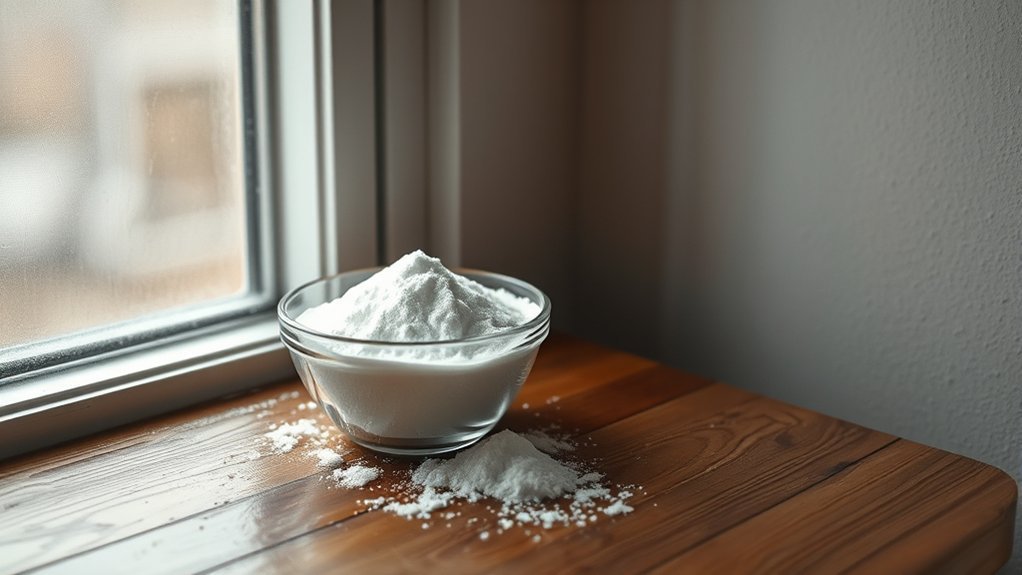
If you’ve ever set an open box of baking soda in a damp closet and noticed only a slight improvement, you’ve already seen both its value and its limits. Baking soda can absorb a small amount of moisture in tight, enclosed spaces, but it will not meaningfully dehumidify a normal room. Its effect depends on the size of the space, airflow, humidity level, and how much powder you use.
Quick Answer
Baking soda can absorb a little moisture in small enclosed spaces like closets, drawers, cabinets, and shoe bins. It is not strong enough to dehumidify a full room. For real humidity control, measure humidity with a hygrometer and use ventilation, leak repair, calcium chloride absorbers, or a properly sized dehumidifier.
Key Takeaways
- Baking soda is best for minor dampness and odors in small enclosed spaces.
- It works until it clumps or hardens, then you need to replace it.
- It will not lower whole-room humidity enough to solve condensation, mold, or damp walls.
- For room humidity, aim for a practical indoor range around 30% to 50% relative humidity, and keep it below mold-friendly levels.
- Use a real dehumidifier when humidity stays high, the room smells musty, or surfaces stay damp.
At a Glance
| Time Required | 2 to 5 minutes to set up; check weekly |
| Difficulty | Very easy |
| Tools Needed | Baking soda, shallow bowl or open box, thin cloth or breathable cover, optional hygrometer |
| Cost | Usually low; more if you add a humidity meter |
Quick Decision: When Baking Soda Is Enough
Use baking soda only when the dampness is small, local, and enclosed. If the problem affects the whole room, shows up on a humidity meter, or causes condensation, choose a stronger fix.
| Situation | Use Baking Soda? | Better Next Step |
|---|---|---|
| Musty drawer, shoe bin, or small cabinet | Yes, as a light absorber and deodorizer | Use a shallow bowl and replace it when it clumps |
| Closet with stale air but no wet surfaces | Maybe, if the issue is mild | Add airflow and check humidity with a hygrometer |
| Bathroom, basement, or laundry room humidity | No, not as the main fix | Use exhaust ventilation, leak repair, or a dehumidifier |
| Condensation, visible mold, damp drywall, or wet flooring | No | Fix the moisture source first and dry materials quickly |
How Does Baking Soda Absorb Moisture?
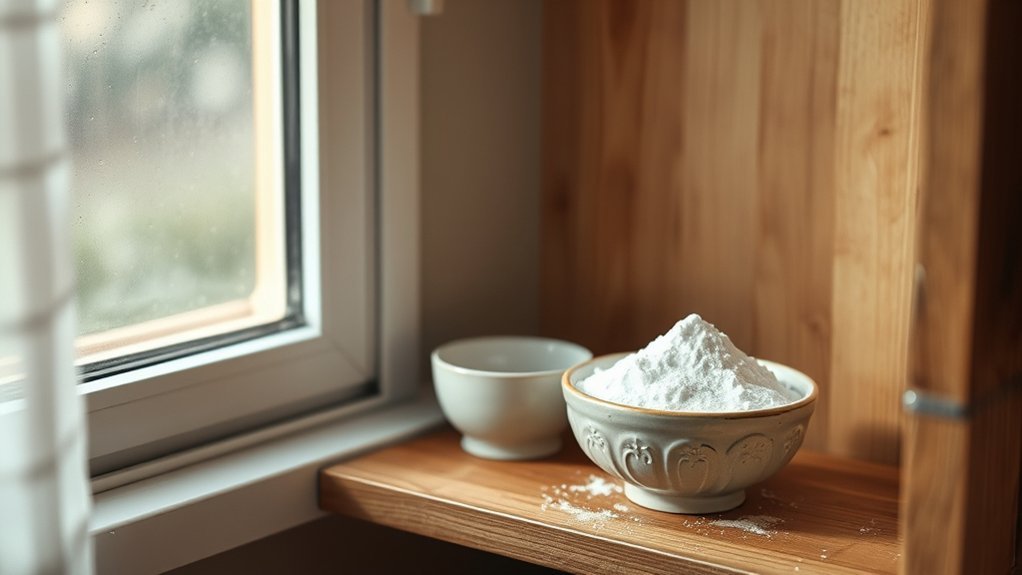
Baking soda, also called sodium bicarbonate, can take in small amounts of moisture from the air. In a closet, cabinet, drawer, or sealed storage bin, that can help reduce light dampness and musty odor. As it takes on moisture, the powder may clump or harden, which is your sign that it is losing effectiveness.
That does not mean baking soda acts like a room dehumidifier. A dehumidifier pulls air through the machine, condenses or collects water, and removes much more moisture over time. Baking soda just sits in place and passively absorbs what it can reach. That makes it useful for tiny problem spots, not for open rooms with steady humidity.
Note: If your goal is to protect a room from mold, condensation, or damp walls, do not rely on baking soda alone. Use a hygrometer so you know the actual humidity level instead of guessing by feel.
Can Baking Soda Dehumidify a Room?
No, not in the practical whole-room sense. Baking soda can absorb moisture in a small enclosed area, but it does not move enough water out of the air to control a bedroom, bathroom, basement, laundry room, or other normal living space.
A better way to think about it is this: baking soda is a small-space moisture helper. It may make a drawer, shoe cabinet, pantry shelf, or closet feel a little fresher. It will not fix high humidity readings, wet windows, musty carpet, swollen wood, peeling paint, or visible mold.
For indoor moisture control, the EPA recommends keeping indoor humidity below 60%, ideally between 30% and 50%. The CDC recommends keeping home humidity no higher than 50% all day to help prevent mold growth. Baking soda alone is not a reliable way to reach those numbers in a room.
If you can measure the humidity problem on a room hygrometer, baking soda is probably too weak to be your main fix.
How Do You Use Baking Soda to Reduce Humidity?
To use baking soda for light moisture control, place it where damp air gets trapped. Use it in a small, contained spot rather than the middle of a large room.
- Choose the right spot. Use baking soda in closets, drawers, cabinets, shoe bins, under-sink areas, or small storage containers.
- Pour it into a shallow bowl. A wider surface gives the powder more contact with the air. You can also use an open box.
- Cover it loosely if needed. A thin cloth or breathable cover helps keep dust and debris out while still letting air reach the powder.
- Keep it away from spills. Do not place it where it can tip into stored items, electrical outlets, pet bowls, or children’s play areas.
- Check it weekly. If it clumps, cakes, hardens, smells stale, or looks dirty, replace it.
Pro Tip: Use several small bowls in separate enclosed spots instead of one large bowl in an open room. Baking soda works best when the air volume is small and airflow is limited.
How Much Baking Soda Should You Use?
For a drawer, shoe bin, or small cabinet, a few tablespoons in a small open container is usually enough. For a closet or under-sink cabinet, use about half a cup to one cup in a shallow bowl or open box. If the space still smells damp after a week, add airflow, inspect for leaks, or switch to a stronger moisture absorber.
| Space | Suggested Amount | Check / Replace |
|---|---|---|
| Drawer or shoe bin | 2 to 4 tablespoons | Weekly |
| Cabinet or pantry shelf | 1/4 to 1/2 cup | Every 1 to 2 weeks |
| Small closet | 1/2 to 1 cup | Weekly in humid weather |
| Full room | Not recommended as the main method | Use a hygrometer and dehumidifier instead |
A Simple 7-Day Test Before You Upgrade
If you are not sure whether the problem is minor, test the space for one week. Put baking soda in a shallow container, place a hygrometer nearby, and write down the humidity reading once in the morning and once in the evening.
- If the space smells fresher and the powder clumps slowly, baking soda may be enough for that small spot.
- If humidity stays high, the powder hardens quickly, or surfaces still feel damp, use airflow, leak repair, silica gel, calcium chloride, or a dehumidifier.
- If you see mold, wet drywall, wet carpet, or recurring condensation, skip the test and fix the moisture source first.
Where Does Baking Soda Work Best?
Baking soda works best in small, enclosed spaces where humidity and odors tend to linger. It is most useful when the problem is mild, local, and not caused by an active leak.
| Area | Best Use |
|---|---|
| Cabinets | Limit mild odor and light dampness |
| Closets | Reduce stale smell in trapped air |
| Refrigerators | Help with odors, not serious condensation |
| Drawers | Protect small stored items from musty smells |
| Shoe bins | Absorb odor and minor moisture from enclosed storage |
Place bowls where air feels trapped, not where they will spill. If the same spot keeps getting damp, look for the real cause: a plumbing leak, condensation, poor ventilation, wet shoes, damp laundry, or outdoor moisture entering through gaps.
When Is Baking Soda Not Enough?
Baking soda is not enough when moisture is steady, visible, or measurable across a room. Once humidity rises, baking soda saturates quickly and loses most of its effect. In bathrooms, basements, laundry rooms, crawlspaces, or rooms with condensation, you need stronger moisture control.
Warning: If you see visible mold, smell a strong musty odor, or notice damp walls, wet flooring, or recurring condensation, fix the moisture source first. Absorbers can support a dry space, but they cannot solve leaks, flooding, or hidden water damage.
Recommended Products

Semiconductor dehumidifiers use thermoelectric cooling to remove moisture from the air. They create a drier, more comfortable environment by reducing humidity and improving air quality.

【Ideal for Large Homes & Basements (Up to 5,000 Sq. Ft)】The Waykar 80 pint dehumidifier efficiently removes up to 80 pints of moisture per day in high-humidity conditions (95°F, 90% RH). In warmer, damp spaces like basements (86°F, 80% RH), it removes 62 pints/day. This dehumidifier for basement is perfect for large areas such as basements, bathrooms, bedrooms, and living rooms. Customize your space by adjusting the humidity level from 30% to 80%, creating a drier and healthier environment
Small-Space Limits
You can rely on baking soda for tight spots, but its ability to absorb water is limited. It works best when the air volume is small and the container is close to the moisture-prone area. In a larger room, the air keeps moving and bringing in more water vapor than the powder can handle.
- Use it in cabinets, drawers, closets, and bins.
- Replace it when it hardens or smells stale.
- Pair it with airflow and leak prevention.
- Choose a stronger absorber or dehumidifier for room-level dampness.
Heavy Moisture Loads
When humidity is high enough to keep surfaces damp, baking soda stops being practical. It cannot protect a room from constant condensation, wet walls, damp carpet, or mold-friendly conditions. A properly sized dehumidifier is built for that job.
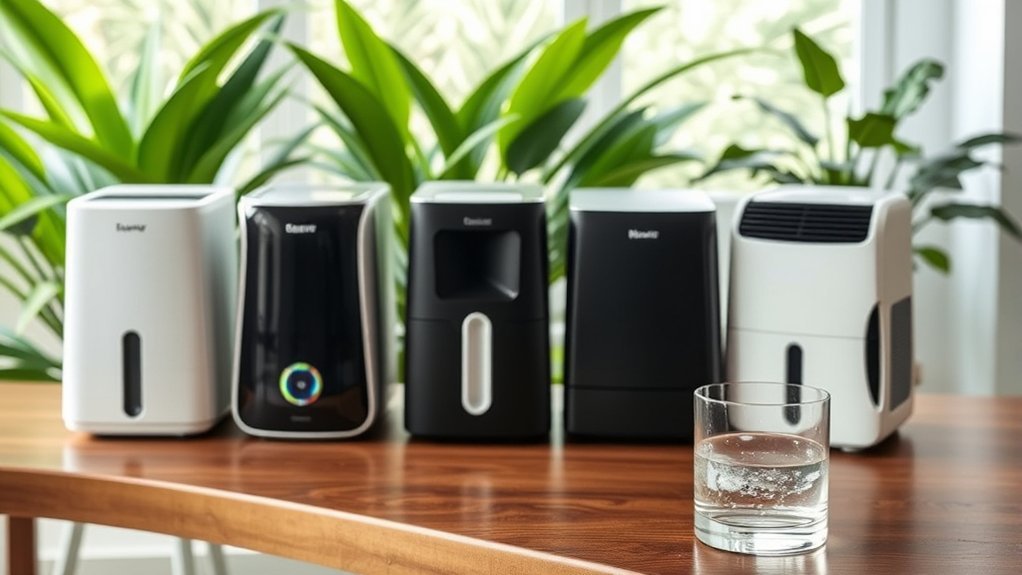
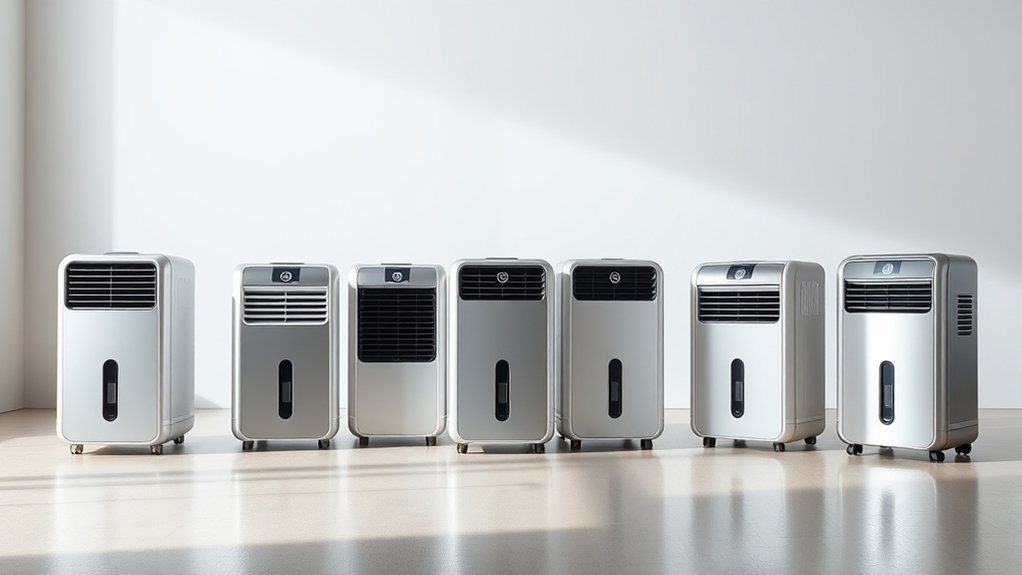
ENERGY STAR explains that portable dehumidifier capacity is usually measured in pints per 24 hours, and the right size depends on room size and how damp the space is. That is the scale difference: a dehumidifier may remove pints of water per day, while baking soda only gives light passive support.
Better Absorbers Needed
When moisture levels go beyond a small localized problem, use a better tool. Baking soda is cheap and safe for minor use, but it is not the strongest passive absorber.
| Option | Best For | Main Limit |
|---|---|---|
| Baking soda | Small enclosed spaces and mild odors | Weak for open rooms |
| Activated charcoal | Odor control in closets and storage areas | Limited moisture removal |
| Silica gel | Small containers, tools, photos, electronics storage | Needs enough packets or bulk beads to matter |
| Calcium chloride tubs | Closets, bathrooms, RVs, basements, and storage rooms | Can spill salty liquid; keep away from children and pets |
| Dehumidifier | Rooms with high humidity, condensation, or musty smell | Costs more and needs cleaning/maintenance |
How to Tell if Your Room Needs a Real Dehumidifier
Use a hygrometer first. If the room stays above 50% to 60% relative humidity, baking soda is not enough. You should also upgrade if you notice any of these signs:
- Condensation on windows, walls, pipes, or toilet tanks
- Musty odor that comes back after cleaning
- Visible mold or mildew spots
- Damp carpet, damp furniture, or clammy bedding
- Peeling paint, swollen trim, warped wood, or rust
- Baking soda clumps again within a few days
For real control, fix water sources first. Run bathroom and kitchen exhaust fans, vent dryers outside, repair leaks, improve drainage, and use an air conditioner or dehumidifier when needed. The WHO indoor air quality guidance on dampness and mould links damp indoor conditions with respiratory effects, so persistent dampness deserves more than a bowl of powder.
Recommended Products
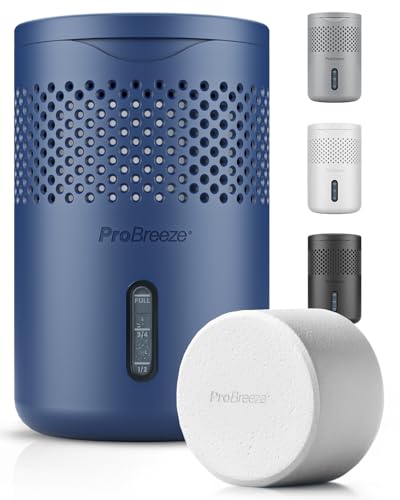
REUSABLE, ECO-FRIENDLY DESIGN: The Osmo Moisture Absorber features a refillable water tank, removing up to 44 fl oz of moisture from the air. Unlike disposable moisture absorbers such as hanging bags or crystals, our Moisture Absorber can be used over and over again, helping to reduce waste and improve your carbon footprint.

Effective Moisture Control for Home Use: OWAAE dehumidifier is designed to reduce excess moisture and help maintain comfortable humidity levels in everyday living spaces. It works best in moderate-to-high humidity environments, improve overall air comfort at home

Efficient Dehumidification: Traps excess moisture quickly. Vacplus moisture absorbers use spherical calcium chloride to enlarge the absorbing area. The large collecting capacity of this moisture remover keeps a long time dry.
What Works Better Than Baking Soda?
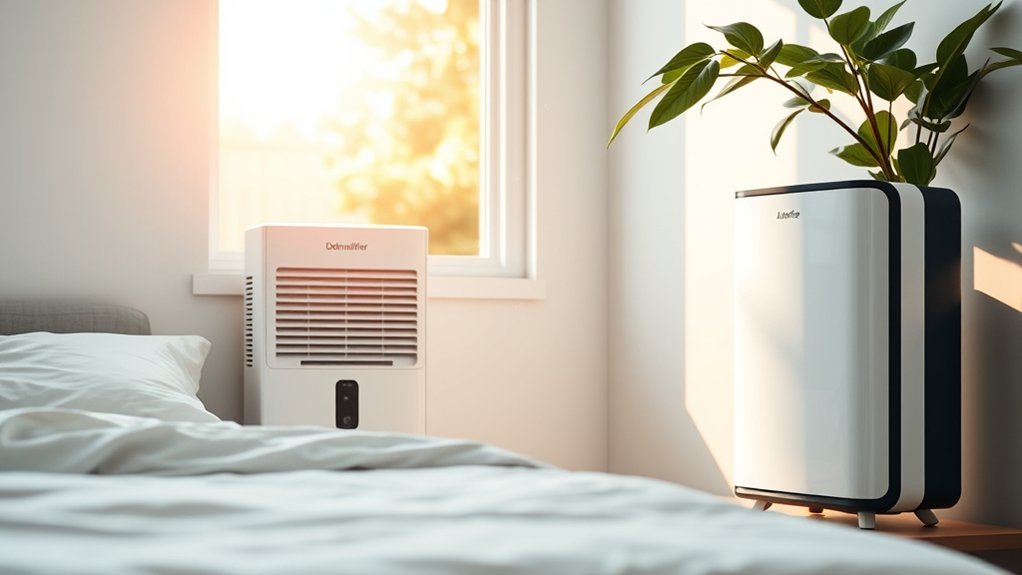
If you need better moisture control than baking soda, choose the tool that matches the space. For a sealed box or small drawer, silica gel is more targeted. For a closet or storage room, calcium chloride moisture absorbers usually work better than baking soda. For a damp bedroom, basement, bathroom, or laundry room, a dehumidifier is the better choice.
Rock salt and calcium chloride can absorb more moisture than baking soda, but they can also leave brine or residue as they collect water. Keep them in stable containers and away from children, pets, fabrics, wood floors, and metal surfaces. For a full room, skip the guesswork and use a hygrometer plus a dehumidifier sized for the space.
Recommended Products
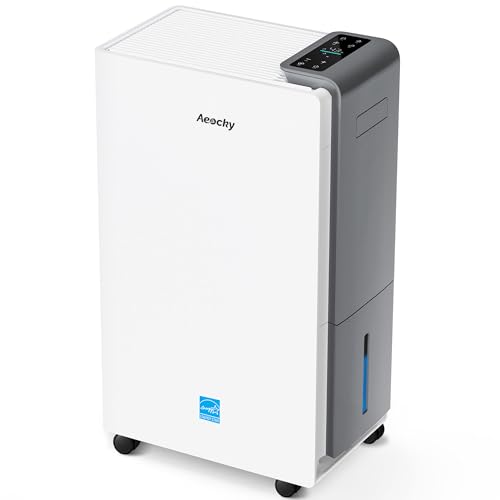
【ENERGY STAR 25 ≠ ENERGY STAR Most Efficient 2025】Don't fall for competitors' word games. With only 2.6% of ENERGY STAR models earning "Most Efficient 2025" title, these options are exceptionally rare on the market. RHEA-001 is one of the few to truly hold this top-tier certification. Many brands use misleading phrases like "Energy Star Efficient 25" or "Energy Star 25" to imply a standard they haven't met. Choosing them is a risk.With AEOCKY, you get verified performance and the peace of mind of authentic, top-tier efficiency.

【Upgrade High Efficient Home Dehumidifier】PSOS dehumidifier utilize dual semiconductor condensation technology, ensuring quiet operation while effectively extracting moisture from the air. They create a drier, more comfortable environment by reducing humidity and improving air quality

【Compact Size, Big Efficiency】 The upgraded 2025 Waykar dehumidifier features cutting-edge rotary compressor technology. It’s more compact but still powerful, capable of removing up to 34 pints of moisture per day (at 95℉, 90% RH), ideal for spaces up to 2,000 sq. ft. such as living rooms, basements, bedrooms, and offices. The adjustable humidity range from 30% to 80% helps you easily maintain the ideal indoor humidity
Frequently Asked Questions
Does baking soda dehumidify a closet?
Baking soda can help with light dampness and musty odor in a small closet, especially if the closet stays closed. It will not fix a wet closet, condensation, mold, or high humidity caused by a leak. Use it as support, then add airflow and check the closet with a hygrometer.
Should you use a dehumidifier if you have COPD?
A dehumidifier may help if your indoor air is damp, musty, or mold-prone, but COPD needs individual medical guidance. Ask your clinician what indoor humidity range is best for you. Also keep any dehumidifier clean, because dirty tanks and filters can worsen indoor air quality.
What naturally soaks up moisture?
Baking soda, charcoal, silica gel, rock salt, and calcium chloride can all absorb or trap some moisture. Baking soda is the mildest option. Silica gel is better for small sealed containers, while calcium chloride is stronger for closets, bathrooms, RVs, and storage spaces.
What is the best homemade dehumidifier?
For a small homemade moisture absorber, calcium chloride usually works better than baking soda because it pulls in more moisture. For light odor and mild dampness, baking soda is cheaper and simpler. For a full room, a homemade absorber is not enough; use a real dehumidifier.
What draws moisture out of a room?
A dehumidifier is the most reliable way to draw moisture out of a room. Air conditioning, exhaust fans, ventilation, leak repair, and proper drainage also help. Passive absorbers like baking soda or charcoal are better for small enclosed areas, not room-wide humidity control.
Is baking soda better than calcium chloride for moisture?
No. Baking soda is simpler and less messy for mild odor control, but calcium chloride is usually stronger for moisture absorption. Calcium chloride can turn into salty liquid as it collects water, so keep it in a stable container and away from children, pets, fabrics, wood, and metal.
How often should you replace baking soda used for moisture?
Check it weekly. Replace it when it clumps, hardens, looks dirty, smells stale, or no longer helps with odor. In humid weather or damp closets, you may need to replace it more often.
Can baking soda prevent mold?
Baking soda may help reduce slight dampness in a tiny enclosed space, but it does not prevent mold in a damp room. Mold prevention depends on controlling moisture, fixing leaks, improving ventilation, drying wet materials quickly, and keeping humidity in a safe range.
Conclusion
So, can baking soda dehumidify a room? Not in any useful whole-room way. It can absorb a little moisture in closets, cabinets, drawers, shoe bins, and other small enclosed spaces, but it is support, not a solution. If you have condensation, musty odors, visible mold, damp walls, or humidity readings above the safe range, use a hygrometer, fix the moisture source, improve ventilation, and choose a stronger absorber or a properly sized dehumidifier.
Sources
- U.S. Environmental Protection Agency: A Brief Guide to Mold, Moisture and Your Home — backs indoor humidity targets, moisture control, and mold prevention guidance.
- Centers for Disease Control and Prevention: About Mold — backs mold prevention, humidity control, and moisture-source guidance.
- ENERGY STAR: Dehumidifiers — backs dehumidifier capacity, sizing, and room moisture guidance.
- WHO Guidelines for Indoor Air Quality: Dampness and Mould, via NCBI Bookshelf — backs the connection between damp indoor environments and respiratory health concerns.
- PubChem: Sodium Bicarbonate — backs baking soda’s chemical identity as sodium bicarbonate.