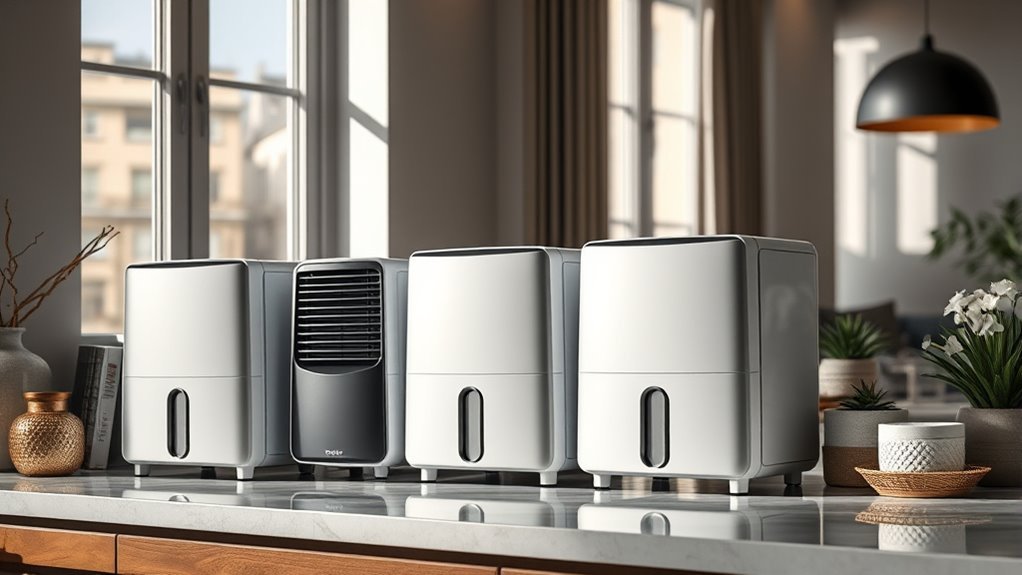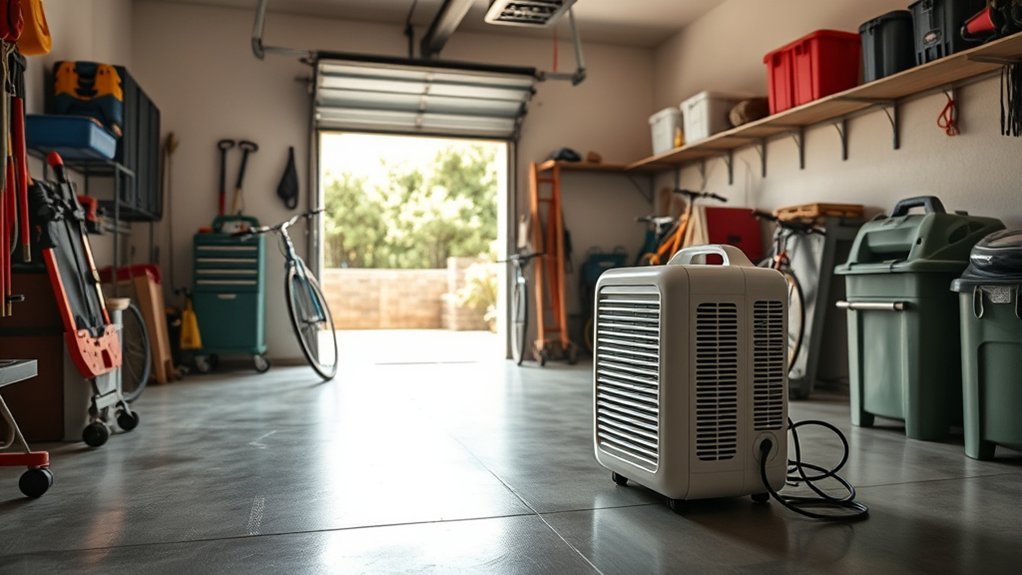
Can You Use a Dehumidifier in a Garage?
By Editorial Team · Last updated July 7, 2026
Yes, you can use a dehumidifier in a garage when the space has high humidity, musty odors, condensation, damp boxes, or rust-prone storage. It works best after you fix water entry, close humid outdoor air leaks, choose the right pint capacity, and keep the relative humidity near 30% to 50%. The goal is not just a drier room. It is a garage that resists rust, mold, musty odors, and long-term moisture damage.
Quick Answer
Yes, you can use a dehumidifier in a garage if the space has excess humidity, musty odors, condensation, or rust-prone storage. For best results, keep garage humidity around 30% to 50%, confirm the moisture level with a hygrometer, choose a unit rated for the garage size and temperature, use safe drainage, and fix leaks or water entry first.
Key Takeaways
- A garage dehumidifier is worth using when humidity stays high, tools rust, boxes feel damp, or the space smells musty.
- Aim for 30% to 50% relative humidity, and try to keep humidity below 60% at minimum.
- Size the unit by both garage square footage and moisture level, not by square footage alone.
- Cold garages need a low-temperature compressor model or a desiccant unit because standard compressor units can frost up.
- A dehumidifier helps control moisture, but it will not fix leaks, standing water, bad drainage, or existing mold by itself.
At a Glance
| Time Required | 30 minutes to set up, plus several days of humidity monitoring |
| Difficulty | Easy for a portable unit; moderate if adding a drain hose, condensate pump, or new outlet |
| Tools Needed | Hygrometer, tape measure, grounded outlet, drain hose if supported, level surface, and filter-cleaning brush or vacuum |
| Cost | Varies by capacity, pump feature, low-temperature rating, and whether electrical or drainage work is needed |
Quick Decision Guide
Use this table before you buy. It separates problems a dehumidifier can help manage from problems you should repair first.
| Garage Situation | Best First Step | Dehumidifier Role |
|---|---|---|
| Musty smell after rain | Check seals, gutters, downspouts, and humidity readings | Useful after water entry is controlled |
| Rust on tools or bikes | Move metal items off the slab and lower humidity | Helpful for steady humidity control |
| Standing water or seepage | Repair drainage, cracks, leaks, or door seals first | Secondary support only |
| Cold unheated garage | Check the unit’s operating temperature range | Use a low-temperature or desiccant model when needed |
Why Garage Humidity Matters
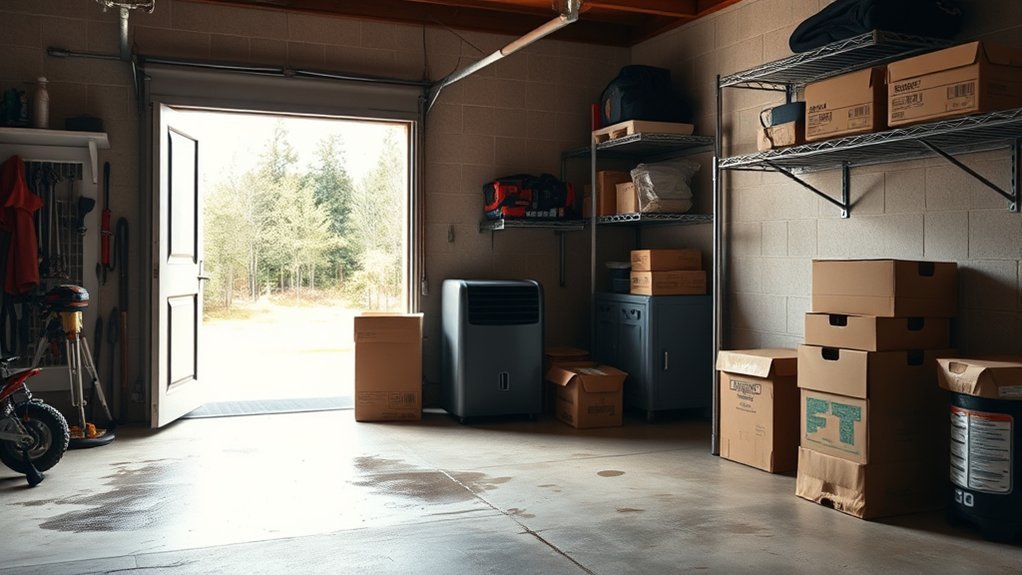
Garage humidity matters because moisture collects on metal, cardboard, wood, drywall, concrete, and stored fabric. When relative humidity stays high, you may notice musty odors, rust on tools, corrosion on vehicle parts, swelling wood, peeling finishes, or damp storage boxes. A hygrometer gives you a real number instead of relying on smell or guesswork.
The EPA recommends keeping indoor humidity below 60%, ideally between 30% and 50%, to help reduce mold risk. The CDC also recommends keeping humidity no higher than 50% to help prevent mold growth. A garage is not always conditioned like the rest of the house, so it can swing above those levels after rain, snowmelt, car washing, wet tires, poor drainage, or humid outdoor air.
A good garage humidity target is 30% to 50% relative humidity. If the space often rises above 60%, treat that as a moisture problem to investigate, not just a number to ignore.
Better ventilation helps in some weather, but a garage dehumidifier gives you more control when the outside air is damp. That control can protect tools, vehicles, bikes, lawn equipment, paint supplies, holiday storage, and workout equipment.
Why Use a Garage Dehumidifier
You use a garage dehumidifier to pull excess moisture from the air and keep the space closer to a safe humidity range. It is most useful when your garage has repeated dampness instead of a one-time spill or leak. A dehumidifier can help with musty smells, surface condensation, tool rust, and moisture-sensitive storage, but it should work alongside drainage, sealing, and airflow improvements.
Protecting Tools and Vehicles
Keeping humidity under control helps protect metal tools, fasteners, bicycles, motorcycles, lawn equipment, and vehicle parts from rust and corrosion. Moisture can also affect electrical connectors, vehicle interiors, cardboard packaging, and stored parts.
- Reduces corrosion on steel, chrome, fasteners, and blades
- Helps limit musty odors in vehicle interiors and stored fabric
- Protects cardboard boxes, labels, manuals, and seasonal storage
- Helps preserve wood, lumber, and moisture-sensitive hobby materials
Reducing Mold and Moisture
A dehumidifier can make mold less likely by reducing the moisture that mold needs to grow. It does not remove existing mold, and it will not solve the source of a leak. If you already see or smell mold, clean it safely and fix the moisture source first.
Dehumidifier capacity is usually rated in pints of water removed per 24 hours. Real-world water removal changes with air temperature, humidity, airflow, and how often the garage door opens.
Note: If there is visible mold, standing water, roof leakage, or water entering under the garage door, do not rely on a dehumidifier alone. Fix the water source first, then use the dehumidifier to keep the air stable.
Before You Buy: Check These Garage Conditions
Before choosing a dehumidifier, spend a few days learning how your garage behaves. This helps you avoid buying a unit that is too small, too loud, unsafe for the setup, or wrong for cold temperatures.
- Measure the garage. Multiply length by width to get square footage.
- Check humidity. Put a hygrometer in the garage and record morning and evening readings for several days.
- Look for water sources. Check the garage door seal, roofline, gutters, downspouts, slab cracks, wall seams, and low spots on the floor.
- Watch the temperature. If the garage often drops below 65°F, choose a model rated for lower temperatures or consider a desiccant unit.
- Plan drainage. Decide whether you will empty a bucket, use a gravity drain hose, or use a pump model.
- Check power. Make sure you have a properly grounded outlet in a safe location.
- Check the surrounding area. Keep the unit away from flammable vapors, stored chemicals, vehicle exhaust, and heavy dust, and follow the manufacturer’s safety warnings.
Recommended Products
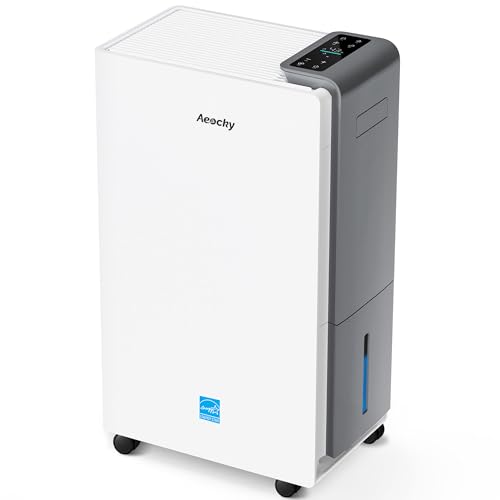
【ENERGY STAR 25 ≠ ENERGY STAR Most Efficient 2025】Don't fall for competitors' word games. With only 2.6% of ENERGY STAR models earning "Most Efficient 2025" title, these options are exceptionally rare on the market. RHEA-001 is one of the few to truly hold this top-tier certification. Many brands use misleading phrases like "Energy Star Efficient 25" or "Energy Star 25" to imply a standard they haven't met. Choosing them is a risk.With AEOCKY, you get verified performance and the peace of mind of authentic, top-tier efficiency.

HANDY AND PORTABLE: The SereneLife Portable Air Conditioner System features a lightweight, handy, sleek body design intended to be used in the bedroom, living room or garage at home or office. It features rolling wheels for easy portability
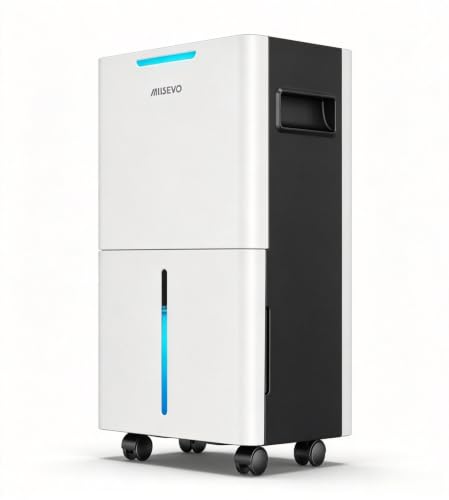
High Efficient Dehumidifier — Equipped with a high-performance compressor, Whether it’s your basement, bedroom, bathroom, living room, bathroom, crawlspace, or even an RV, this dehumidifier effectively keeps your environment dry, comfortable, and healthy.
Best Dehumidifier Types for Garages
The best type depends on garage size, temperature, humidity level, and how much maintenance you want. Most homeowners choose a compressor model, but cold garages and specialty spaces may need a different approach.
Recommended Products

2500 Sq. Ft High-Efficiency Dehumidifier – The KNKA basement dehumidifier features a quiet, high-performance compressor that removes up to 34 pints of moisture per day (at 95°F, 90% RH). Ideal for basements, offices, bathrooms, bedrooms, kitchens, stockrooms, living rooms, laundry rooms, garages, crawlspaces, or RVs. It helps maintain optimal humidity between 50%–70% for healthier, more comfortable living

1600 Sq.Ft High Capacity Dehumidifier- The GoGuess basement dehumidifier is equipped with a quiet yet powerful compressor that efficiently extracts up to 21 pints of moisture per day (tested at 95°F and 90% RH). Perfect for use in basements, offices, bathrooms, bedrooms, kitchens, storage areas, living rooms, laundry spaces, garages, crawl spaces, and RVs. It helps maintain a healthy humidity level between 30% and 70%, promoting a more comfortable and healthier indoor environment

【Reduce humidity - Enhance comfort】:Massive Capacity + Wide Coverage. This dehumidifier has dehumidification capacity ranging 45- 80 pints—outperforming standard units while covering 4,500 sq. ft. of living space. Great dehumidifier for basements, large house, garages, bedroom, bathroom and gyms where excess humidity triggers cause unpleasant odors and discomfort. The result? A noticeably drier, fresher, and more comfortable environment for your entire family.
Compressor Dehumidifiers
Compressor dehumidifiers are the common choice for garages because they can remove a useful amount of moisture in warm or mild conditions. They work by cooling coils so moisture condenses out of the air. They are a strong option for larger garages, but they can be louder than smaller desiccant units.
- Best for warm or mild garages with steady humidity
- Good choice for one-car, two-car, and many larger residential garages
- Usually available with bucket, gravity-drain, or pump options
- Needs filter cleaning and safe drainage
If the garage gets cold, check the operating temperature range before buying. ENERGY STAR notes that frost can form on condensing coils when the space is typically below 65°F, which can reduce performance unless the model is designed for lower-temperature operation.
Desiccant Dehumidifiers
Desiccant dehumidifiers use moisture-absorbing material instead of cold coils. They can work better than standard compressor units in cooler garages, storage areas, sheds, and other spaces where coil frost is a problem. They are often quieter, but they may remove less water than a large compressor model and are not always the most energy-efficient choice in warm, very humid spaces.
- Best for cooler garages or targeted moisture control
- Useful where a compressor unit struggles with frost
- Often portable and easier to move
- May have lower capacity than larger compressor models
Low-Temperature and Commercial Dehumidifiers
If your garage is large, very damp, used as a workshop, or connected to a basement-like space, consider a low-temperature or commercial-style dehumidifier. These models often handle tougher conditions, larger moisture loads, and continuous drainage better than small household units.
Hybrid and specialty units may combine different moisture-control methods, but you should judge them by capacity, operating temperature range, drain options, warranty, and energy use rather than by the label alone.
Will a Dehumidifier Work in an Unheated Garage?
A dehumidifier can work in an unheated garage only if the unit is rated for the temperature in that space. Standard compressor dehumidifiers lose performance in cooler air, and frost can form on the coils when the garage drops below the unit’s operating range. If your garage often falls below 65°F, check the manual before buying.
For cold garages, compare three options: a low-temperature compressor model with automatic defrost, a desiccant dehumidifier for smaller or cooler spaces, or moisture-source repairs if the real issue is water entry. Do not run a compressor unit that keeps icing up. Let it defrost, improve the room conditions, or switch to a model designed for lower temperatures.
How to Choose the Right Dehumidifier Size
To size a garage dehumidifier correctly, use three inputs: square footage, dampness level, and temperature. Do not use square footage alone. A small garage with water seepage can need more capacity than a larger garage that only feels slightly damp after rain.
| Garage Condition | What You May Notice | Starting Capacity Range | Garage-Specific Note |
|---|---|---|---|
| Slightly to moderately damp | Occasional musty odor, humidity often around 50% to 75% | 20 to 30 pints per day for spaces under 2,000 sq. ft.; 30+ pints for larger spaces | Step up if the garage door leaks air or the space stores damp equipment. |
| Very damp | Frequent musty smell, damp spots, humidity often around 75% to 90% | 25 to 40 pints per day for spaces under 2,000 sq. ft.; 40+ pints for larger spaces | Plan continuous drainage if the bucket fills often. |
| Wet | Condensation, sweating floor or walls, seepage, or standing water | 30 to 50 pints per day for spaces under 2,000 sq. ft.; 50+ pints for larger spaces | Fix water entry first, then use a high-capacity unit with safe drainage. |
The ranges above follow ENERGY STAR’s current guidance for small-to-medium spaces under 2,000 sq. ft. and larger spaces over 2,000 sq. ft. ENERGY STAR also notes that modern pint ratings changed after DOE test updates, so a newer 35-pint or 50-pint model may not match older labels one-to-one. When comparing units, look at the current rating, coverage guidance, operating temperature, drain options, and whether the model is ENERGY STAR certified.
Pro Tip: If your humidity readings stay above 60% after several days of use, first close outside air leaks and fix drainage problems. Then consider a larger dehumidifier or a second unit for a separate damp zone.
Recommended Products

EASY TO CLEAN WASHABLE FILTER: Capture dust from the air and keep your dehumidifier working efficiently with our easy-to-clean washable filter.

[The Undisputed Champion — Industry-Leading Dehumidifier Brand] When you choose AEOCKY, you get double market validation. According to data independently verified by Stackline, a leading third-party data analytics company, AEOCKY was an industry‑leading dehumidifier brand on Amazon U.S. in 2025. This means you’re not just choosing a flagship product from a market leader, but a top-performing brand backed by independent market data and trusted by millions of real users, delivering the ultimate combination of performance, quality and trust.

This 50 pint dehumidifier covers spaces up to 5,000 Sq.Ft, ideal for basements, bedrooms and laundry rooms. Its high-efficiency compressor swiftly cuts humidity from 90% down to a cozy 30% RH. It offers dehumidification, clothes drying & ventilation modes, alongside dual drainage, quiet operation, auto-defrost, child lock and 24-hour timer for steady year-round damp control
Where to Place a Garage Dehumidifier
Place your garage dehumidifier on a flat, stable surface near the dampest part of the garage, but keep it away from direct water, sawdust, dirt, and clutter. Most portable units need open space around the intake and exhaust so air can move freely.
- Place the unit near the wettest zone, such as a condensation-prone wall or storage area.
- Keep at least 6 to 12 inches of open space around the unit unless the manual allows closer wall placement.
- Do not push it into a packed corner behind boxes or tools.
- Keep it away from woodworking dust, grinding dust, and loose debris that can clog coils and filters.
- Close the garage door and windows while it runs unless you are intentionally ventilating during dry weather.
If the unit has top-mounted discharge, it may be allowed closer to a wall, but always follow the manufacturer’s manual. Good placement improves moisture removal, reduces wasted energy, and makes maintenance easier.
How to Set Up Garage Drainage
Garage dehumidifiers collect water in a bucket, send water through a gravity hose, or pump water to a drain. Choose the safest option for your layout.
- Use the bucket for simple setups. Empty it before it fills. Most units shut off automatically when the bucket is full.
- Use gravity drainage if a drain is nearby. Connect the drain hose firmly and slope it downward to a floor drain or approved outlet.
- Use a pump model if the drain is higher than the unit. This helps when draining into a sink, standpipe, or higher discharge point.
- Avoid long, loose hoses. Long hoses can kink, clog, leak, or create a tripping hazard.
- Check the hose often. Look for algae, dirt, ice, blockages, and leaks.
Warning: Keep water and electricity separated. Use a properly grounded outlet, keep drain hoses away from cords and electrical connections, do not run the unit with a damaged cord, and do not route hoses where someone can trip over them.
Also reduce water before it enters the garage. Keep gutters clean, extend downspouts away from the foundation, and make sure soil slopes away from the building. If water pools on the slab, improve drainage before expecting a dehumidifier to solve the problem.
When Not to Run a Dehumidifier in a Garage
Do not run a garage dehumidifier as a substitute for repairs. If water is entering under the door, dripping from the roof, pooling on the slab, or seeping through cracks, fix the source first. The unit may lower air moisture, but it cannot remove an active water source.
Also pause use when the garage is outside the unit’s temperature range, the coils frost repeatedly, the cord or plug is damaged, the drain hose leaks, or the area contains flammable vapors. Close doors and windows while the unit runs unless outdoor air is drier and you are ventilating on purpose.
How to Reduce Garage Humidity Without a Dehumidifier
You can lower garage humidity without a dehumidifier by reducing the moisture source first. These steps also help a dehumidifier work better if you decide to use one later.
Improve Airflow and Ventilation
Ventilation helps when outdoor air is drier than garage air. Open doors or windows during dry weather, use exhaust fans to push damp air out, and avoid trapping moisture behind stacked boxes. Do not ventilate with humid outdoor air during muggy weather, because that can make the garage wetter.
- Use exhaust fans during wet jobs, washing, or chemical-safe ventilation needs.
- Open windows or doors only when outdoor air is drier.
- Leave space around storage so air can circulate.
- Dry wet tires, floor mats, and equipment before storing them in a closed garage.
Seal Gaps and Cracks
Sealing gaps and cracks in garage walls, windows, and doors can reduce humid air infiltration. Pay special attention to the garage door bottom seal, side seals, window frames, wall penetrations, and slab-to-wall joints.
| Action | Result |
|---|---|
| Caulk wall joints and small cracks | Limits air leaks and moisture entry |
| Replace worn garage door seals | Reduces rain splash, drafts, and humid air |
| Extend downspouts away from the foundation | Helps keep water from entering near the slab |
If the concrete slab releases moisture from below, ask a qualified flooring or waterproofing professional about vapor barriers, sealers, or drainage improvements before adding finished flooring.
Use Moisture Absorbers
Moisture absorbers like silica gel, activated charcoal, baking soda, and rock salt can help in small enclosed areas, tool drawers, cabinets, and storage bins. They are not a replacement for a dehumidifier in a large damp garage, but they can protect sensitive items.
- Use silica gel packets in toolboxes and sealed bins.
- Use moisture absorbers in cabinets or small closets.
- Store tools, documents, and parts in sealed containers.
- Replace or recharge absorbers on a regular schedule.
Best Moisture-Resistant Garage Materials
If your garage is often damp, finishes matter. Moisture-resistant materials can reduce swelling, staining, mildew risk, and long-term damage.
- Walls: moisture-resistant drywall, cement board in splash-prone areas, or washable PVC wall panels.
- Floor: properly prepared epoxy-coated concrete, sealed concrete, or moisture-tolerant garage flooring.
- Storage: metal shelving, sealed plastic bins, and raised racks instead of cardboard directly on the slab.
- Door: intact weatherstripping and an insulated garage door if condensation forms on cold surfaces.
- Ceiling and trim: mold-resistant paint and materials that can handle temperature swings.
Do not cover a damp wall or slab with finished material until you fix the moisture source. Trapping water behind panels, flooring, or insulation can make the problem harder to see and more expensive to repair.
How to Keep Your Garage Dehumidifier Running Well
A garage dehumidifier works best when airflow, filters, drainage, and settings stay clean and clear. Set a reminder to check the unit during humid seasons.
- Clean the filter. Check it every few weeks during heavy use, or more often in dusty workshops.
- Keep airflow clear. Move boxes, rags, sawdust, and tools away from the intake and exhaust.
- Empty and rinse the bucket. Do not let water sit for long periods, and clean slime or odor before it builds up.
- Inspect the drain hose. Look for kinks, algae, dirt, leaks, and freeze risk.
- Use the humidistat. Set the target around 45% to 50% for most garage storage needs.
- Close the space. Keep doors and windows closed while running the unit unless outdoor air is drier and you are ventilating on purpose.
- Check the manual. Follow the manufacturer’s temperature, cleaning, and clearance rules.
What Humidity Level Is Best for a Garage?
The best garage humidity level is usually 30% to 50%. This range helps limit mold risk, rust, musty smells, and moisture damage to stored items. If your garage often rises above 60%, use a hygrometer to confirm the pattern and look for water entry, poor drainage, bad seals, or damp storage habits.
For many garages, a target around 45% to 50% works well because it is dry enough to protect storage but not so dry that the unit runs nonstop. In colder climates, you may need a lower winter target to reduce condensation on cold surfaces.
If Humidity Still Stays High
If your garage dehumidifier runs but humidity will not drop, work through the problem in this order:
- Confirm the reading. Use a separate hygrometer to make sure the unit’s built-in sensor is accurate.
- Close outside openings. A dehumidifier cannot keep up if the garage door, windows, or vents keep bringing in humid air.
- Check the drain and bucket. A full bucket, blocked hose, or bad hose slope can stop moisture removal.
- Clean the filter. Dust and sawdust reduce airflow.
- Check temperature. If the garage is cold, the unit may frost or cycle without removing much water.
- Look for hidden water. Inspect gutters, downspouts, roof leaks, wall stains, slab cracks, and door seals.
- Increase capacity if needed. If the garage is large or very damp, the unit may simply be undersized.
Frequently Asked Questions
Is it worth putting a dehumidifier in the garage?
Yes, it is worth it if your garage has high humidity, musty odors, condensation, rusting tools, damp boxes, or mold risk. It is less useful if the real problem is an active leak, standing water, or poor exterior drainage that has not been fixed.
Should you use a dehumidifier if you have COPD?
A dehumidifier may help if dampness, mold, or musty air worsens your indoor air quality, but it is not a COPD treatment. If you have COPD or another chronic lung condition, ask your healthcare professional what humidity range is best for your home, and avoid spending time in a garage with mold, fumes, dust, or poor ventilation.
Can I use a regular dehumidifier in my garage?
Yes, you can use a regular portable dehumidifier if the garage stays within the unit’s operating temperature range and the capacity matches the moisture load. If the garage often drops below 65°F, choose a model rated for low-temperature operation or consider a desiccant dehumidifier.
Where should a dehumidifier be placed in a garage?
Place it on a flat, stable surface near the dampest area, but keep it away from direct water, cords, sawdust, and clutter. Leave open space around the intake and exhaust, and route any drain hose so it slopes correctly and does not create a tripping hazard.
Should garage windows and doors be open when the dehumidifier runs?
Usually no. Keep the garage door and windows closed while the dehumidifier runs so it can dry the same air instead of constantly pulling in humid outdoor air. Open the space only when outdoor air is drier and you are using ventilation on purpose.
Will a dehumidifier remove mold from my garage?
No. A dehumidifier helps reduce the moisture that supports mold growth, but it does not remove existing mold. If you see or smell mold, clean it safely, remove damaged porous materials when needed, and fix the water source so the mold does not return.
How long should you run a dehumidifier in a garage?
Run it long enough to bring humidity into the 30% to 50% range, then let the humidistat cycle the unit on and off. During damp weather, this may mean several hours a day or near-continuous operation until the garage stabilizes. Use a separate hygrometer to confirm the reading.
Can a dehumidifier stop condensation in a garage?
It can help if condensation comes from high air humidity, but it may not solve condensation caused by cold surfaces, poor insulation, wet vehicles, or water entry. Lower the humidity, dry wet items before storage, improve airflow around cold surfaces, and fix leaks or drainage problems.
Conclusion
Yes, you can use a dehumidifier in your garage, and it is a smart choice when humidity, condensation, rust, or musty odors are a real problem. Start with a hygrometer reading, keep humidity around 30% to 50%, choose the right capacity for the garage size and dampness level, use safe drainage, and follow the unit’s temperature limits. For lasting results, fix leaks, improve drainage, seal gaps, and keep airflow clear. A dehumidifier works best as part of a moisture-control plan, not as a replacement for repairs.
Sources
- U.S. Environmental Protection Agency: A Brief Guide to Mold, Moisture and Your Home – humidity targets, mold prevention, moisture control, and cleanup cautions
- Centers for Disease Control and Prevention: Mold – mold health effects, prevention, humidity guidance, and chronic lung disease caution
- ENERGY STAR: Dehumidifiers – sizing, capacity ranges, placement, temperature, drainage, and electrical safety guidance
- ENERGY STAR: Dehumidifier Testing and Capacity – DOE testing changes, pint-per-day capacity ratings, and modern capacity comparisons