Updated: August 2, 2026
If your dehumidifier cannot drain downhill into a floor drain, an automatic condensate pump can collect the water and move it to an approved discharge point. The best condensate pump for a dehumidifier depends on your measured vertical rise, pump performance at that lift, inlet height, tubing route, voltage, maintenance access, and overflow-switch compatibility.
The four options below include a balanced residential pump with tubing, a 22-foot high-lift model, an 85 GPH Aquastrong pump with a 20-foot maximum head, and a compact 115V model with included discharge tubing. Maximum-flow and maximum-head figures are not the same as normal operating performance, so leave a practical margin above your measured installation requirements.
How these pumps were compared: Selection focused on dehumidifier compatibility, published pump performance, maximum head, voltage, reservoir access, discharge connections, included tubing, check-valve design, overflow-switch capability, and ease of routine cleaning. No hands-on testing is claimed.
Quick Verdict
- Best Overall: Little Giant VCMA-15ULST for its established residential design, included 20-foot tubing, half-gallon reservoir, and overflow-switch capability.
- Best 22-Foot Lift: Asurity by DiversiTech ULTRACP-22 for its high maximum head, status lights, translucent reservoir, and removable check valve.
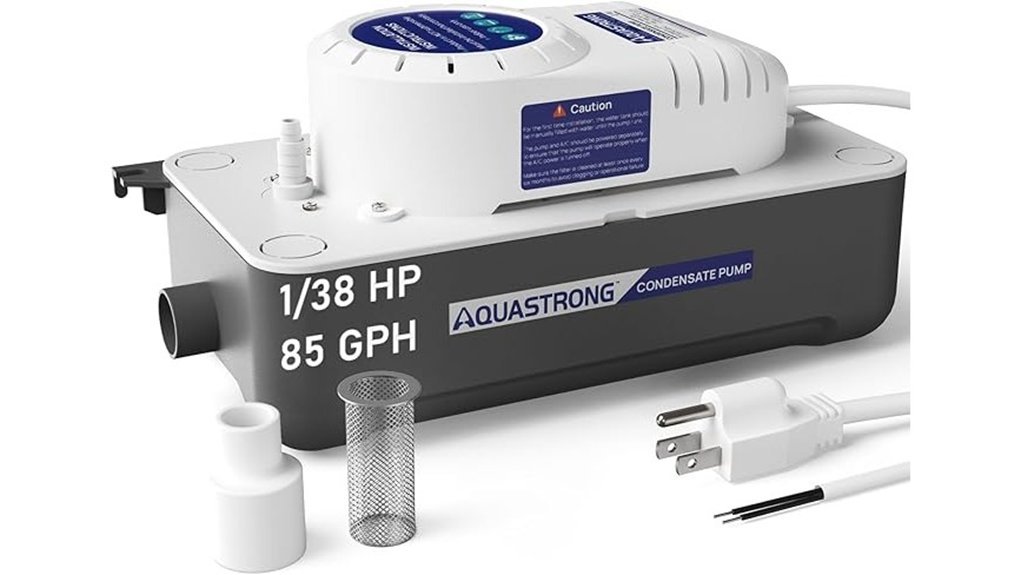
- Best 20-Foot Lift: Aquastrong CDS320-1 for an 85 GPH maximum flow, five inlet ports, and removable half-gallon reservoir.
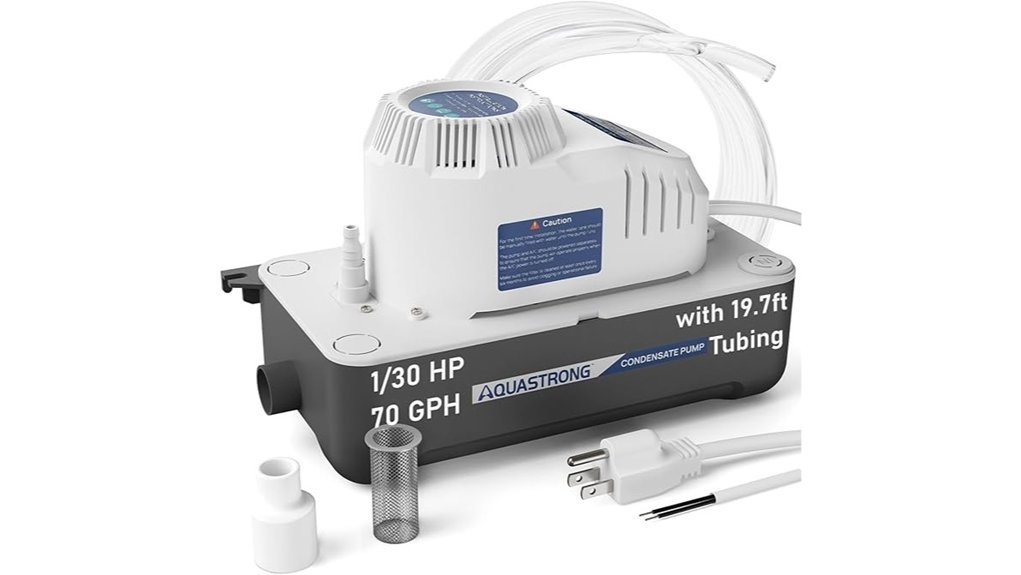
- Best Compact 115V Pick: Aquastrong CDS125STU for a 70 GPH maximum flow, 16-foot maximum head, and included 19.7-foot tubing.
Quick Comparison: Best Condensate Pumps for Dehumidifiers
Important: Published maximum-flow figures are measured at low or zero head unless otherwise stated. Flow decreases as vertical rise, tubing length, bends, check valves, and restrictions increase. A pump’s maximum head is its shutoff limit, not a recommended operating height.
| Product | Best For | Published Flow | Maximum Head | Power | Key Feature | Amazon |
|---|---|---|---|---|---|---|
| Little Giant VCMA-15ULST | Most standard residential installations | 65 GPH at 1 ft head | 15 ft | 115V | 20-ft tubing and safety switch included | Check Amazon Details |
| Asurity by DiversiTech ULTRACP-22 | Longer vertical discharge routes | 1.6 GPM at zero head | 22 ft | 120V | LED indicators and translucent tank | Check Amazon Details |
| Aquastrong CDS320-1 | Routes needing up to 20 ft of lift | 85 GPH maximum | 20 ft | Verify exact listing configuration | Five inlets and removable half-gallon tank | Check Amazon Details |
| Aquastrong CDS125STU | Compact residential installations | 70 GPH maximum | 16 ft | 115V | 19.7-ft tubing and removable tank | Check Amazon Details |
Little Giant VCMA-15ULST Automatic Condensate Removal Pump
Best Overall
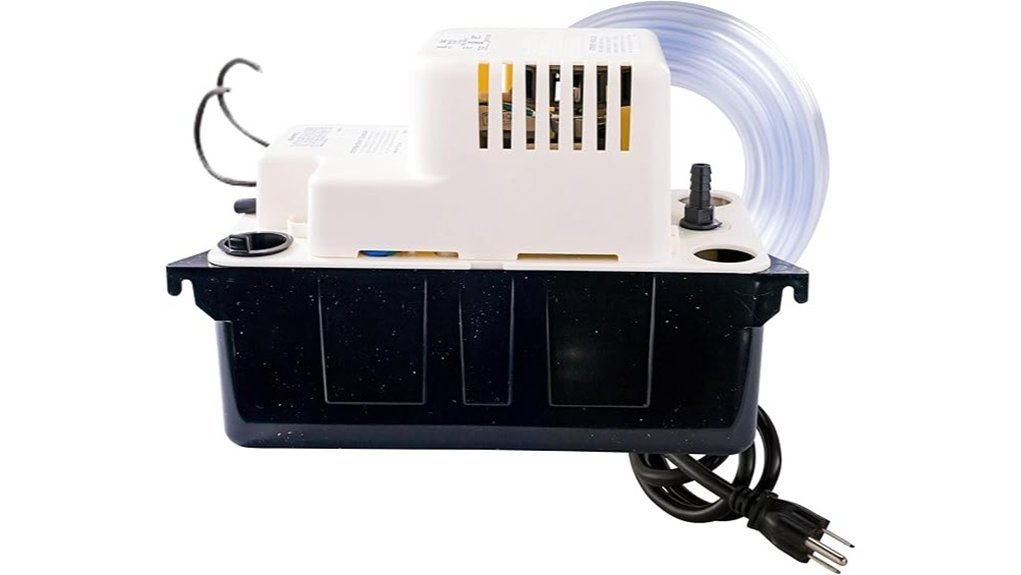
The Little Giant VCMA-15ULST is a practical external drain pump when a dehumidifier sits below the available discharge point or cannot use gravity drainage for the full route. Its automatic float system collects condensate in a half-gallon reservoir and starts the motor when the water reaches the operating level.
The pump is rated for 65 GPH at one foot of head and has a 15-foot shutoff head. It includes 20 feet of vinyl tubing, a removable barbed check valve, and an overflow detection switch. Those included parts reduce the number of separate components needed for a basic residential installation.
Best For: Homeowners who want a compact, established condensate removal pump for a basement, utility room, air conditioner, furnace, or dehumidifier with a moderate vertical rise.
Why You’ll Like It: It combines automatic operation, included discharge tubing, a half-gallon tank, and safety-switch capability in a straightforward 115V design.
Who Should Avoid It: Choose a higher-head model if your measured vertical rise is close to 15 feet or the route includes a long horizontal run, several bends, or other restrictions.
Pros:
- Designed for automatic condensate removal from dehumidification and HVAC equipment.
- Includes 20 feet of discharge tubing and a removable check valve.
- Overflow detection switch can help protect compatible equipment after correct wiring.
- Half-gallon reservoir provides useful temporary storage between pump cycles.
Cons:
- The 15-foot maximum head is lower than the other pumps in this guide.
- The overflow switch may require low-voltage control wiring rather than simple plug-in installation.
- Available flow drops substantially as vertical head and tubing resistance increase.
Asurity by DiversiTech ULTRACP-22 Condensate Pump
Best 22-Foot Lift
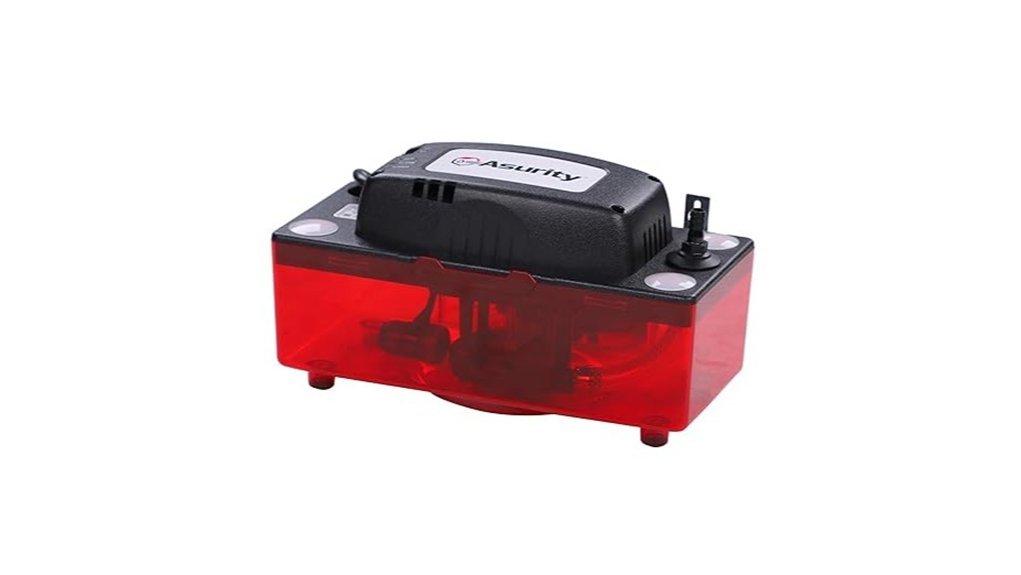
The Asurity by DiversiTech ULTRACP-22 automatically removes condensate from dehumidifiers, air conditioners, furnaces, and similar equipment. Its 22-foot maximum head provides more routing flexibility than a 15- or 16-foot pump when the discharge point is well above the appliance.
The 120V model has a published 1.6 GPM flow rate at zero head, a half-gallon reservoir, LED status indicators, a removable check valve, overflow-switch terminals, and vibration-dampening components. Its translucent tank also lets you inspect the water level and reservoir condition without first opening the pump.
Best For: Installations requiring a higher vertical lift, visible operating indicators, and convenient reservoir inspection.
Why You’ll Like It: The combination of a 22-foot maximum head, status lights, vibration control, translucent housing, and removable check valve makes operation and maintenance easier to monitor.
Who Should Avoid It: It may be more pump than necessary when the dehumidifier is only a few feet from a suitable gravity drain. It also does not eliminate the need to calculate working flow at the actual lift.
Pros:
- Up to 22 feet of maximum vertical head for flexible discharge routing.
- LED indicators show power, motor, and alarm status.
- Translucent half-gallon tank allows quick visual inspection.
- Removable check valve simplifies cleaning and servicing.
Cons:
- The 1.6 GPM figure is measured at zero head and decreases as lift increases.
- Requires access to a suitable grounded 120V outlet.
- The safety-switch terminals require correct wiring before they can provide equipment-shutoff protection.
Aquastrong CDS320-1 HVAC Condensate Pump
Best 20-Foot Lift
The Aquastrong CDS320-1 is a tank-style automatic condensate pump rated for a maximum flow of 85 GPH and a maximum vertical head of 20 feet. It is intended for dehumidifiers, air conditioners, furnaces, condensing equipment, and other compatible appliances that produce condensate.
The removable half-gallon reservoir, five inlet ports, debris basket, built-in check valve, and automatic level control make it adaptable to different drain-line layouts. A high-level safety switch can be connected to compatible equipment to reduce overflow risk if the pump or discharge route stops working correctly.
Best For: Homeowners who need more maximum head than a basic 15- or 16-foot residential pump provides and want several inlet-position choices.
Why You’ll Like It: It offers a useful combination of 20-foot head capacity, multiple connections, automatic operation, and accessible reservoir maintenance.
Who Should Avoid It: Verify the exact voltage on the Amazon variation and product label before ordering. Aquastrong sells similar condensate pumps in different electrical configurations, so the model appearance alone is not enough to confirm compatibility.
Pros:
- Maximum flow rating of 85 GPH with up to 20 feet of maximum head.
- Removable half-gallon reservoir makes the float and debris basket easier to access.
- Five inlet ports provide flexibility for different drain-hose positions.
- High-level safety switch and built-in check valve provide overflow and backflow safeguards when installed correctly.
Cons:
- The exact voltage configuration must be confirmed before purchase and installation.
- The unit must remain upright and level because it is a non-submersible reservoir pump.
- The reservoir, float, and filter basket require periodic cleaning to prevent buildup.
Aquastrong CDS125STU Automatic Condensate Pump
Best Compact 115V Pick
The Aquastrong CDS125STU Automatic Condensate Pump is a compact 115V option for dehumidifiers, air conditioners, furnaces, ice makers, and other compatible appliances. It is rated for a maximum flow of 70 GPH and a maximum vertical head of 16 feet.
The pump starts and stops automatically as the reservoir fills and drains. Its half-gallon removable tank, multiple inlet ports, debris filter, check valve, high-level safety switch, and included 19.7-foot discharge tubing cover the main features needed for a standard residential dehumidifier drain-pump installation.
Best For: Residential installations with moderate lift requirements, limited installation space, and access to a grounded 115V outlet.
Why You’ll Like It: It provides automatic drainage, included tubing, several connection options, and accessible maintenance without requiring a large installation area.
Who Should Avoid It: Select a 20- or 22-foot model when your measured vertical rise approaches 16 feet or the discharge route is unusually long or restrictive.
Pros:
- Automatic 70 GPH maximum flow with up to 16 feet of maximum head.
- Includes approximately 19.7 feet of discharge tubing.
- Removable half-gallon reservoir and filter simplify routine cleaning.
- Multiple inlet ports make it easier to adapt to different drain-line positions.
Cons:
- The 16-foot head rating offers less installation margin than 20- or 22-foot pumps.
- The safety switch must be wired correctly to shut down compatible equipment.
- Reservoir, filter, check-valve, and float maintenance is necessary to prevent slime and debris buildup.
Factors to Consider When Choosing a Condensate Pump for a Dehumidifier
A dehumidifier condensate pump must do more than advertise a high maximum flow. It must match the dehumidifier outlet, working head, inlet height, electrical supply, tubing route, safety controls, and available maintenance space.
Dehumidifier Compatibility
Start with the dehumidifier manual. Confirm whether the unit permits drainage into an external condensate pump and identify the outlet size, required hose or adapter, recommended pump placement, condensate-temperature limits, and any supported safety-switch terminals.
The pump inlet must sit low enough for water to flow downhill from the dehumidifier. A pump can have enough discharge power and still fail to collect water correctly if the inlet is too high or the incoming drain hose slopes upward.
Flow Rate and Pump Curve
A pump’s maximum GPH or GPM rating is normally measured with little or no vertical head. Available flow decreases as the pump pushes water higher. Long tubing, tight bends, kinks, undersized tubing, and a restricted check valve create additional resistance.
Most residential dehumidifiers produce condensate much more slowly than these pumps can move it at low head. However, you still need enough working-flow margin for your measured rise and tubing route. Consult the pump curve when the installation approaches the model’s performance limits.
Maximum Vertical Head
Measure vertically from the pump outlet to the highest point reached by the discharge tubing. Do not confuse total tubing length with vertical rise. A 30-foot tubing run may include only eight feet of actual vertical head.
Avoid designing the route at the pump’s absolute maximum. Maximum head is generally the point at which useful flow approaches zero. Choose a pump with capacity comfortably above the measured rise, especially when the route includes several bends or a long horizontal section.
Voltage and Power Source
Confirm the exact pump voltage before ordering. Many residential models use a grounded 115V or 120V outlet, while visually similar versions may use 230V. Check the listing variation, model number, product label, plug type, and manual rather than relying on the housing design.
The outlet should remain accessible and comply with the pump and dehumidifier instructions and applicable electrical requirements. Never operate a non-submersible reservoir pump while it is sitting in standing water.
Reservoir Size, Inlet Height, and Installation Space
A half-gallon tank provides more temporary storage than a smaller reservoir, but both can work because the pump empties automatically. More important questions are whether the pump fits the space, sits level, and leaves enough clearance to remove the reservoir, filter, or check valve.
Measure the height of the pump inlet from the floor or mounting surface. The dehumidifier drain outlet and hose must normally remain above that inlet with a continuous downward slope.
Tubing and Discharge Route
Check whether discharge tubing is included and confirm its inside or outside diameter against the pump outlet specification. Do not force incompatible tubing onto a fitting or rely on a loose connection that could separate during a pumping cycle.
Route the tubing without kinks, crushing, sharp bends, trip hazards, or exposure to freezing temperatures. Secure the discharge end so it cannot move out of the approved drain location.
Overflow and Backflow Protection
A high-level safety switch can signal compatible HVAC or dehumidification equipment to stop if the reservoir reaches an unsafe level. This feature generally requires control wiring and may provide no protection until it has been connected and tested correctly.
A check valve helps prevent discharged water from flowing back into the tank after the motor stops. A removable or accessible valve is easier to inspect when buildup or repeated cycling becomes a problem.
Power Outage and Leak Planning
An electric condensate pump cannot drain during a power outage. If the dehumidifier restarts before the pump, or if the pump shares a tripped circuit, the reservoir may fill. Consider the consequences of a spill when placing the equipment in a finished basement, closet, or area above living space.
A correctly wired high-level switch, drain pan, separate leak alarm, or other approved protection can provide additional warning or shutdown capability. Select safeguards that are compatible with the equipment and installation.
Noise and Vibration
Tank-style condensate pumps do not normally run continuously. They operate in short cycles as the reservoir fills. Proper leveling, secure tubing, vibration-dampening feet, and clearance from nearby walls can reduce rattling and transmitted vibration.
A new grinding, buzzing, or repeated rapid-cycling sound may indicate debris, a restricted discharge line, a sticking float, a check-valve problem, or an installation fault.
Maintenance and Durability
Unplug the pump before servicing it. Periodically clean the reservoir, float, inlet filter, and check valve according to the manufacturer’s instructions. Homes with dust, biological buildup, or frequent dehumidifier operation may require more frequent inspection.
Also check the discharge tubing for kinks, algae, slime, hardened sections, loose connections, and freezing damage. After cleaning, test the pump by adding clean water to the reservoir and confirming that it starts, drains, stops, and does not leak.
Before You Buy Checklist
- Measure the actual vertical rise to the highest point of the discharge route.
- Leave operating margin below the pump’s published maximum head.
- Confirm the required voltage, plug type, and grounded-outlet location.
- Check the dehumidifier drain outlet and pump inlet dimensions.
- Measure the pump inlet height from its mounting surface.
- Confirm that the drain hose can slope continuously into the reservoir.
- Check whether correctly sized discharge tubing is included.
- Allow room to remove the tank, filter, float, or check valve for cleaning.
- Verify whether the safety switch can connect to your equipment.
- Plan for leaks, blocked tubing, pump failure, and power outages.
Frequently Asked Questions
How Does a Condensate Pump Work With a Dehumidifier?
Water drains by gravity from the dehumidifier into the pump reservoir. A float or level switch starts the motor when the water reaches a preset height. The pump pushes the water through its discharge tubing and stops automatically after the reservoir level falls.
Can a Dehumidifier Drain Directly Into a Condensate Pump?
Yes, provided the dehumidifier manufacturer permits external pump drainage. The dehumidifier outlet should normally sit above the pump inlet so water can flow into the reservoir by gravity. Match the hose, adapter, inlet position, and placement instructions to both manuals.
How Much Vertical Lift Do I Need?
Measure vertically from the pump outlet to the highest point reached by the discharge tubing. Choose a pump with maximum head comfortably above that measurement. Do not select a 15-foot pump for a route that rises almost exactly 15 feet.
Will a Pump Deliver Full Flow at Its Maximum Head?
No. Maximum head is normally the shutoff point where usable flow is at or near zero. Review the pump curve or published flow at different head heights to estimate performance for your actual route.
Is an Overflow Safety Switch Necessary?
It is worth considering when the pump sits in a finished basement, closet, or other area where a spill could cause damage. The switch must be compatible with the connected equipment and wired and tested correctly before it can shut the system down.
What Maintenance Is Required?
Unplug the pump and inspect the reservoir, float, inlet filter, check valve, and discharge tubing periodically. Remove slime and debris according to the manufacturer’s cleaning instructions. After reassembly, test the pump with clean water and inspect every connection for leakage.
Can One Pump Serve More Than One Appliance?
Some pumps have several inlet ports and may accept condensate from multiple compatible appliances. The combined inflow, condensate temperature, inlet arrangement, discharge capacity, and safety controls must remain within the pump manufacturer’s limits.
What Happens During a Power Outage?
The pump cannot remove water without power. Depending on how the appliances are wired, the dehumidifier may also stop, but you should not assume this. A correctly connected safety switch, leak alarm, or drain pan can provide additional protection for vulnerable installations.
How Long Does a Condensate Pump Last?
There is no guaranteed universal lifespan. Service life depends on operating frequency, cleaning, water quality, discharge resistance, check-valve condition, installation quality, and motor wear. Regular inspection is more useful than relying on a fixed replacement age.
Are Condensate Pumps Noisy?
You will normally hear the motor during each short pumping cycle. Noise varies by model and installation. A level surface, vibration-dampening feet, secure tubing, and clearance from nearby walls can reduce transmitted sound.
Conclusion
Final Recommendation: The Little Giant VCMA-15ULST is the most balanced option for a typical residential dehumidifier installation with a moderate vertical rise. Choose the Asurity ULTRACP-22 when you need greater headroom, the Aquastrong CDS320-1 for a 20-foot maximum-head setup with multiple inlets, or the CDS125STU for a compact 115V installation with included tubing.
The Little Giant VCMA-15ULST combines automatic operation, a half-gallon reservoir, included 20-foot tubing, a check valve, and overflow-switch capability in a compact residential design. Its 15-foot maximum head is suitable only when the real installation remains comfortably below that limit.
Choose the Asurity by DiversiTech ULTRACP-22 when you need up to 22 feet of maximum head and want visible status indicators and a translucent tank. The Aquastrong CDS320-1 provides an 85 GPH maximum flow and up to 20 feet of head, while the Aquastrong CDS125STU suits more moderate routes and includes approximately 19.7 feet of tubing.
Before ordering, measure the vertical rise, check the pump curve where available, verify the exact voltage, confirm inlet and outlet dimensions, and make sure the pump remains accessible for cleaning. Those checks are more important than selecting the largest advertised maximum-flow number.