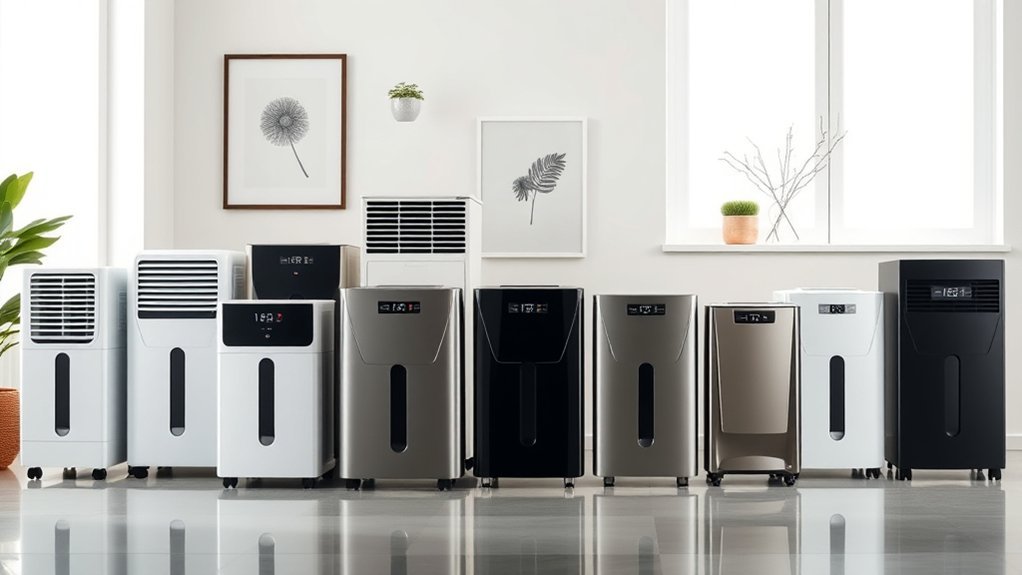
For 2026, the strongest verified options in this guide are the VEVOR 30 Pints Dehumidifier, the HUMSURE 30 Pint Dehumidifier, and the inetra 1,500 Sq. Ft Dehumidifier. All three are compressor dehumidifiers with a water tank and a connection for continuous gravity drainage.
The VEVOR is the best balanced choice for straightforward controls, quiet listed operation, and compact 1,500-square-foot coverage. The HUMSURE offers useful operating modes and automatic defrost, although its published coverage figures conflict between the listing and available manual. The inetra is the better choice when app control and remote humidity adjustments matter most.
Quick Verdict
- Best Overall: VEVOR 30 Pints Dehumidifier
- Best for Flexible Controls: HUMSURE 30 Pint Dehumidifier
- Best Smart Option: inetra 1,500 Sq. Ft Dehumidifier
Quick Comparison
| Product | Best For | Advertised Coverage | Drainage | Key Feature | Amazon |
|---|---|---|---|---|---|
| VEVOR 30 Pints | Balanced home and basement use | Up to 1,500 sq. ft. | Tank or gravity hose | Listed 37–38 dB operation | Check Details |
| HUMSURE 30 Pint | Multiple modes and automatic defrost | Conflicting 1,500–2,500 sq. ft. claims | Tank or gravity hose | DEHU, DRY, and continuous modes | Check Details |
| inetra 30 Pint | Remote and app-based control | Up to 1,500 sq. ft. | Tank or gravity hose | Smart app and 24-hour timer | Check Details |
Capacity note: “30 pints per day” is a maximum rating measured under specified temperature and humidity conditions. Actual water removal will normally be lower in cooler or less humid rooms. Manufacturer square-foot figures should be treated as general guidance rather than guaranteed coverage.
VEVOR 30 Pints Dehumidifier for Home and Basement
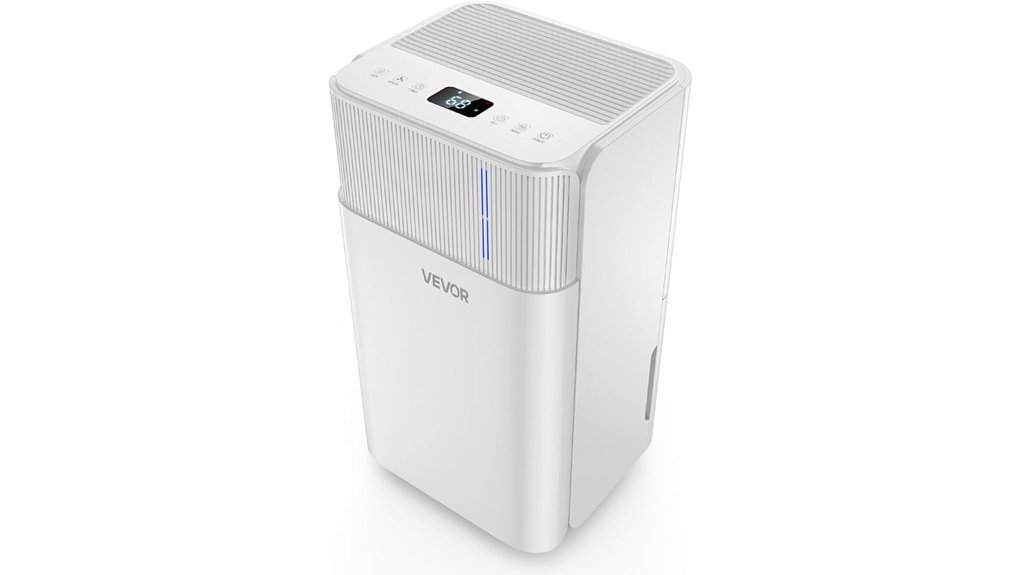
The VEVOR is the most balanced option in this three-product group. It is advertised to remove up to 30 pints of moisture per day under warm, humid conditions and cover spaces up to 1,500 square feet. It is a practical match for a bedroom, storage area, laundry room, or moderately damp basement when its capacity matches the actual moisture load.
You can select Auto Mode for normal humidity management, Continuous Drying for extended operation, or Sleep Mode when lower disruption is important. The available product information lists operation at approximately 37–38 dB, although perceived noise will depend on fan setting, room acoustics, and placement.
Water can collect in the approximately 0.53-gallon tank or leave through a drain hose. The hose connection is gravity-fed, so the unit must sit above the drain and the hose must slope downward without loops or kinks.
Who Should Buy This: Buyers who want a compact, comparatively quiet dehumidifier with simple controls and two basic drainage choices.
Who Should Avoid This: Anyone with a very wet or oversized basement, or anyone who needs water pumped upward to an elevated drain.
Pros:
- Advertised capacity of up to 30 pints per day under the stated test conditions.
- Auto, Continuous Drying, and Sleep operating modes.
- Listed low-noise operation and a clear LED control panel.
- Supports both tank collection and continuous gravity drainage.
- Caster wheels make it easier to reposition on a level floor.
Cons:
- Does not have a verified built-in drainage pump.
- The small tank may fill quickly during humid weather.
- Thirty-pint capacity may be insufficient for severe seepage or consistently wet basements.
- Real-world extraction will be lower outside the stated warm and humid test conditions.
HUMSURE 30 Pint Dehumidifier with Drainage Hose
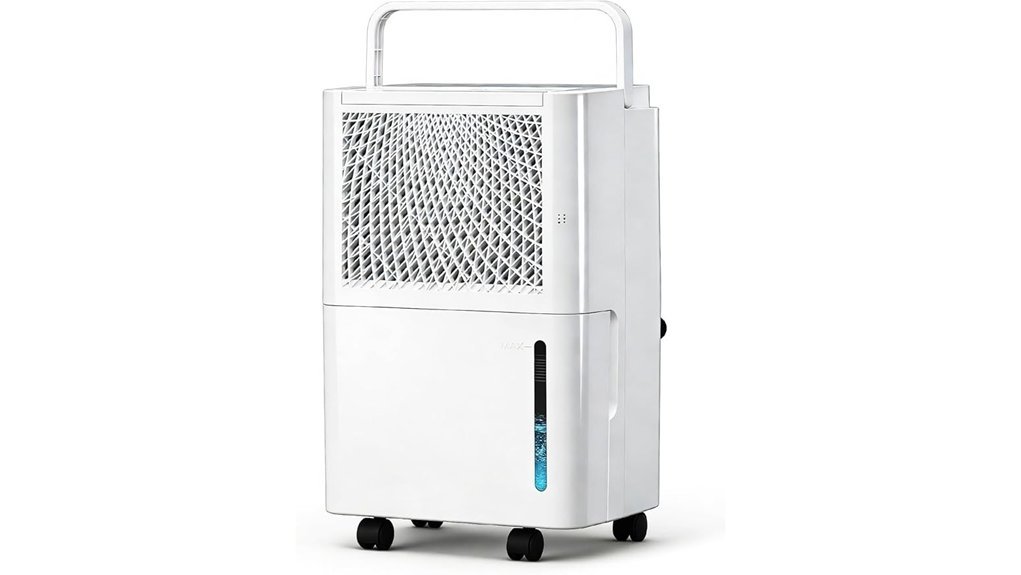
The HUMSURE combines a compressor, adjustable humidity control, automatic defrost, a 24-hour timer, and three useful operating modes. DEHU Mode is intended for normal humidity management, DRY Mode supports more intensive drying, and CONTINUOUS Mode keeps the compressor cycle active according to the unit’s operating logic.
The unit is rated for up to 30 pints per day under its stated test conditions and includes a roughly two-liter collection tank. The hose connection allows continuous gravity drainage when a lower drain is available. Automatic shutoff helps prevent tank overflow during manual collection.
Who Should Buy This: Buyers who value multiple operating modes, automatic defrost, a timer, and flexible tank-or-hose drainage.
Who Should Avoid This: Buyers who require a firmly verified 2,500-square-foot rating, an integrated pump, or well-documented energy-efficiency certification.
Pros:
- Offers DEHU, DRY, and CONTINUOUS operating modes.
- Automatic defrost can help manage frost buildup in cooler conditions.
- Includes a 24-hour timer and adjustable humidity control.
- Supports manual tank collection and continuous gravity drainage.
- Casters and a built-in handle improve portability.
Cons:
- Published coverage information is inconsistent.
- Does not have a verified built-in pump.
- The two-liter tank may require frequent emptying without hose drainage.
- Energy use and efficiency should not be judged from the source wattage claim alone.
inetra 1500 Sq. Ft Dehumidifier for Home and Basement
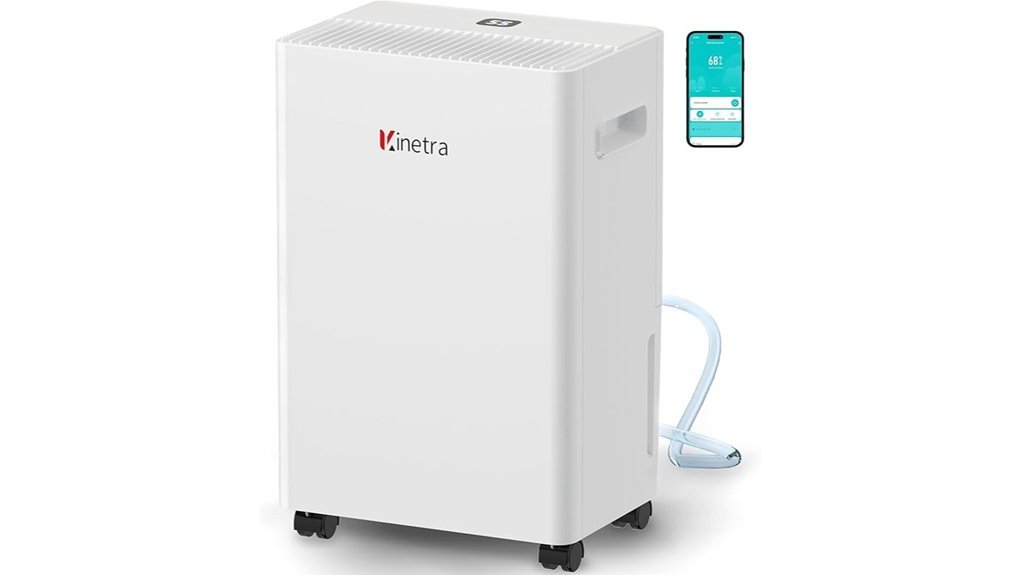
The inetra model stands out for its smart app control. The product listing advertises up to 30 pints of daily moisture removal under its stated conditions, coverage up to 1,500 square feet, a 1.6-liter tank, intelligent humidity control, and a 24-hour timer.
The app can be useful when the unit is placed in a basement, laundry room, or another area you do not visit frequently. However, remote control does not remove the need to check the filter, tank, hose connection, and surrounding floor regularly.
Its included hose supports continuous gravity drainage. Keep the dehumidifier on a level surface above the drain and make sure the hose slopes downward for its entire route. The product does not have a verified built-in pump.
Who Should Buy This: Buyers who want to monitor or adjust basic dehumidifier settings through an app and have access to a suitable lower drain.
Who Should Avoid This: Buyers who prefer simple offline controls, do not have reliable Wi-Fi, or need uphill drainage.
Pros:
- Advertised for up to 30 pints of moisture removal per day under stated conditions.
- Smart app control supports remote setting adjustments.
- Includes a 24-hour timer and automatic humidity management.
- Compact footprint, caster wheels, and side handles aid placement.
- Supports tank collection and continuous gravity drainage.
Cons:
- Does not include a verified built-in pump.
- The 1.6-liter tank is small for prolonged high-humidity operation.
- App features depend on a compatible phone, network, and successful setup.
- Advertised coverage does not guarantee adequate performance in a severely wet basement.
Factors to Consider When Choosing a 30 Pint Dehumidifier With Drain Hose
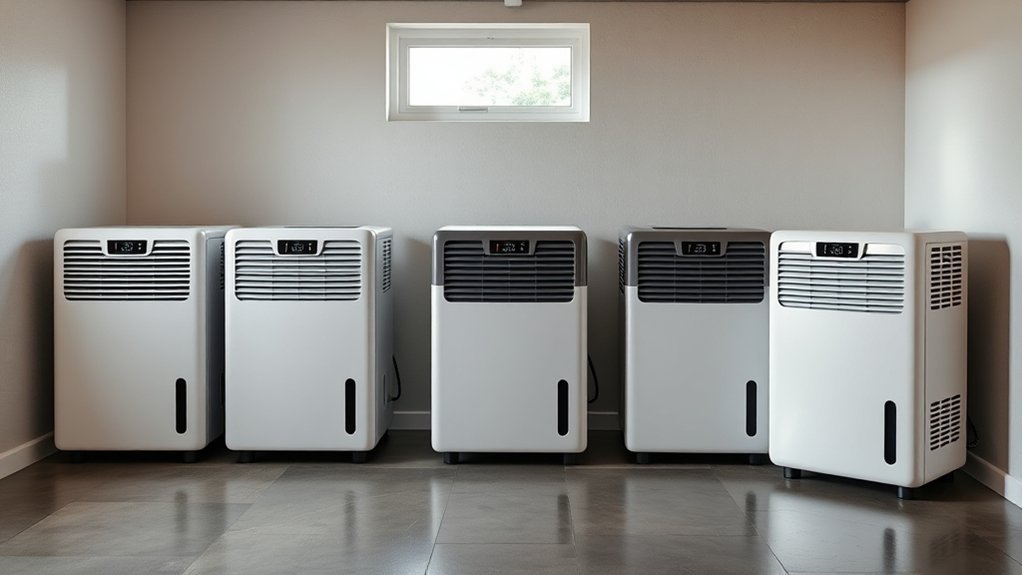
A 30-pint dehumidifier can be useful in a moderately damp basement, bedroom, laundry room, storage area, or apartment, but the printed square-foot number should not be your only sizing tool. Consider the room’s actual humidity, temperature, water intrusion, drainage access, tank size, controls, and expected operating time.
Built-In Pump vs. Gravity Drainage
A drain-hose connection does not automatically mean that a dehumidifier has a pump. Standard continuous drainage relies on gravity, which means the hose must travel downhill from the dehumidifier to a lower drain.
A built-in pump actively pushes collected water and may allow drainage to an elevated sink, window, standpipe, or other outlet within the manufacturer’s lift limit. Confirm that the listing explicitly says built-in pump before buying. Wording such as “drain hose included,” “continuous drainage,” or “automatic drainage” does not prove that a pump is installed.
Capacity and Test Conditions
Dehumidifier capacity is measured in pints of water collected over 24 hours under specified conditions. A unit advertised at 30 pints per day will normally collect less water when the room is cooler or less humid than the test environment.
Use the capacity as a comparison point rather than a guarantee. A moderately damp room may be manageable with a 30-pint model, while a wet basement with seepage, standing water, open windows, or frequent laundry drying may require more capacity and repairs to the underlying moisture source.
Coverage Area and Moisture Load
Manufacturer coverage figures can vary widely even among products with the same pint rating. Consider both floor area and moisture severity:
- Slightly damp: Occasional musty odor or elevated humidity.
- Moderately damp: Persistent odor, condensation, or clammy surfaces.
- Very damp: Visible damp patches or frequent water collection.
- Wet: Seepage, sweating walls, or recurring standing water.
A hygrometer can help you measure relative humidity instead of relying only on how the room feels.
Tank Size and Drainage Setup
A small tank makes the appliance easier to move but may fill several times per day in humid weather. Continuous drainage reduces manual emptying when you have a suitable floor drain.
Before connecting a hose:
- Place the dehumidifier on a stable, level surface.
- Confirm that the drain is lower than the hose outlet.
- Run the hose in a continuous downward slope.
- Avoid loops, upward sections, crushing, and sharp bends.
- Secure the connection and inspect it regularly for leaks.
- Keep the hose and collected water away from plugs, outlets, and extension connections.
Operating Temperature and Defrost
Compressor dehumidifiers lose effectiveness as room temperature falls. Frost may develop on the coils in a cold basement, causing the compressor to cycle without removing much moisture. Automatic defrost helps manage frost, but it does not make a standard household dehumidifier suitable for freezing temperatures.
Check the manufacturer’s minimum operating temperature and consider a low-temperature or desiccant solution when the space stays unusually cold.
Noise, Modes, and Smart Controls
For bedrooms and offices, compare documented noise specifications and remember that compressor cycling, fan speed, floor vibration, and room acoustics affect what you hear. A listed decibel figure is useful for comparison but does not guarantee silent operation.
Auto Mode is generally the most convenient for routine humidity control. Continuous or laundry modes are useful for short periods of heavier moisture removal. App control can add convenience, but it should not replace regular inspection and maintenance.
Energy Efficiency
Do not judge efficiency from wattage alone. A higher-capacity unit may use more power while removing substantially more water. When available, compare ENERGY STAR certification and the Integrated Energy Factor, which measures how much moisture the appliance removes for the electricity it consumes.
Efficiency also depends on setup. Keep exterior doors and windows closed, clean the filter, leave the required airflow clearance, correct water leaks, and avoid setting the target humidity lower than necessary.
- Measure the room and assess how damp it becomes.
- Confirm whether your drain is below or above the appliance.
- Look for the exact words “built-in pump” if uphill drainage is required.
- Check the capacity test conditions and minimum operating temperature.
- Confirm tank size, hose inclusion, warranty terms, and filter access.
- Verify current listing details before ordering because specifications can change.
Frequently Asked Questions
Do These 30-Pint Dehumidifiers Have Built-In Pumps?
No built-in pump could be verified for the three retained models. They support tank collection and continuous gravity drainage. Their hoses should run downhill to a lower drain.
Can a Gravity Drain Hose Move Water Uphill?
No. A normal drain hose cannot reliably move water above the dehumidifier’s outlet. Uphill drainage requires a model with a built-in pump or a correctly installed compatible condensate pump.
How Often Should the Filter Be Cleaned?
Follow the schedule in the product manual. As a general practice, inspect the filter every two to four weeks and clean it sooner in dusty rooms, homes with pets, or during continuous use. Allow a washable filter to dry fully before reinstalling it.
Can a Dehumidifier Run in Freezing Temperatures?
A standard compressor dehumidifier should not be assumed to work in freezing temperatures. Ice can form on the coils, reducing water removal and stressing the appliance. Follow the stated operating-temperature range even when the model includes automatic defrost.
What Humidity Level Should I Set?
A target around 40% to 50% relative humidity is practical for many occupied rooms. Avoid driving humidity unnecessarily low, and use a separate hygrometer to confirm the actual level if accurate control matters.
Will a Dehumidifier Remove Mold?
No. A dehumidifier can help make conditions less favorable for new moisture-related growth, but it does not remove existing mold or repair water intrusion. Existing contamination, leaks, seepage, and damaged materials should be cleaned or repaired appropriately.
Does Continuous Drainage Mean the Unit Can Be Ignored?
No. Check the hose connection, drain route, filter, tank seating, surrounding floor, and power cord regularly. A loose or blocked hose can still cause leakage or interrupt drainage.
Conclusion
The VEVOR 30 Pints Dehumidifier is the strongest all-around option in this group for buyers who want simple controls, listed low-noise operation, and gravity drainage. The HUMSURE is worth considering for its multiple modes and automatic defrost, but its conflicting coverage figures should be considered before purchase. The inetra is the most suitable choice when app control and remote adjustments are priorities.
Final Recommendation
Choose one of these models only when you can empty the tank manually or route its hose downhill to a suitable drain. For an elevated sink, window, or standpipe, skip gravity-only drainage and look for a dehumidifier whose current specifications explicitly confirm an integrated pump and sufficient vertical lift.