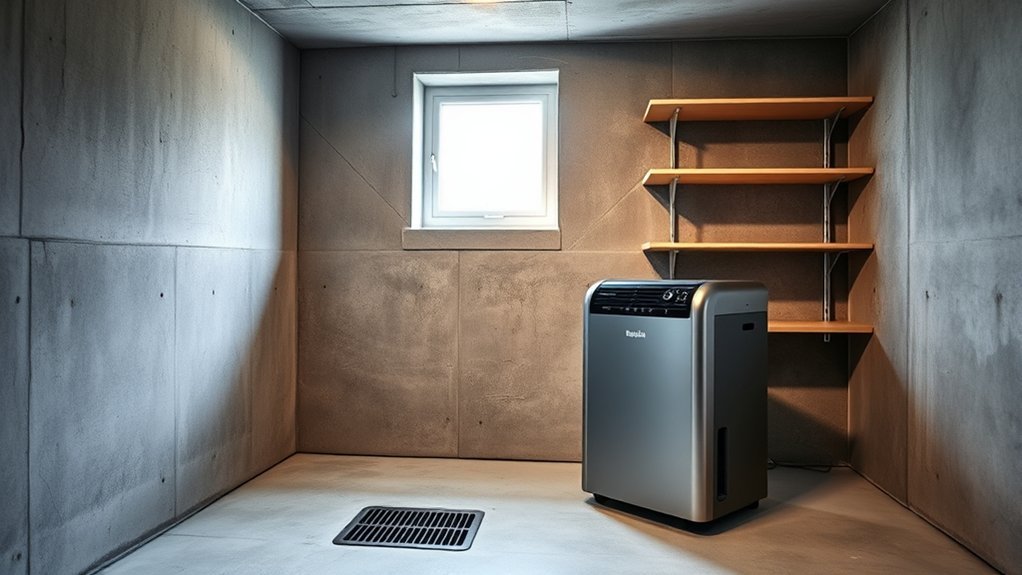
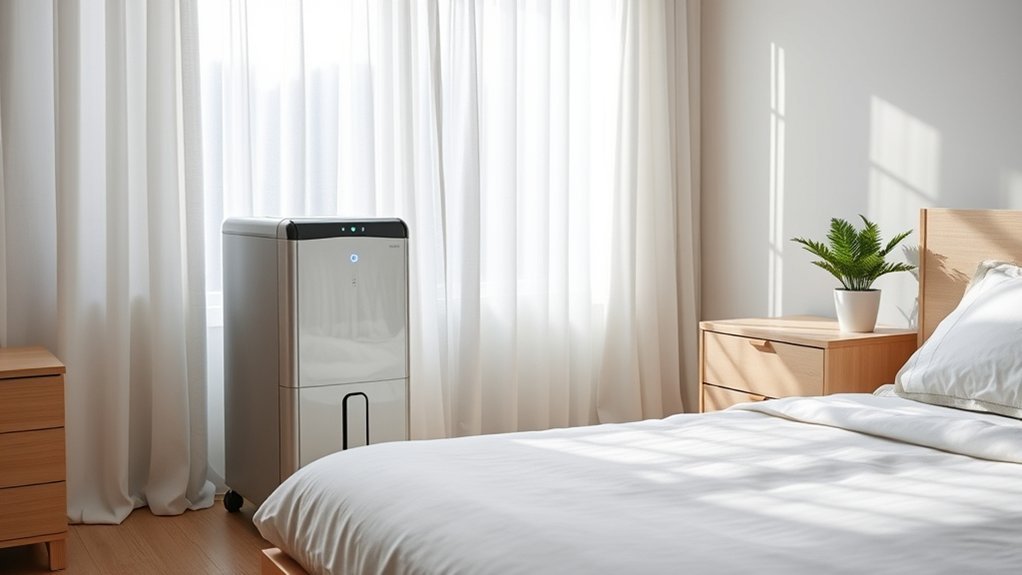
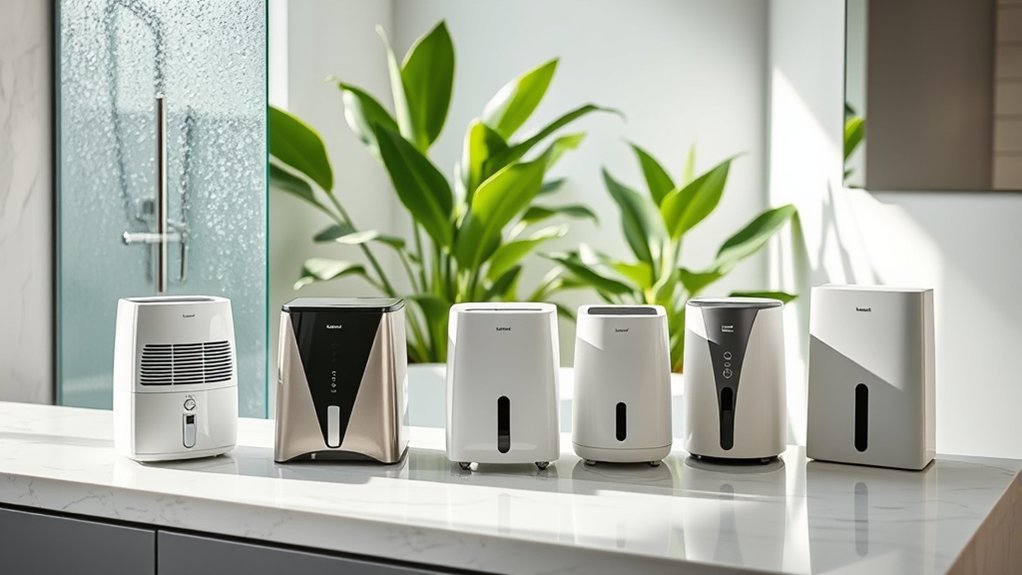
If you are comparing the best dehumidifiers for mold control in 2026, focus on humidity prevention rather than mold removal. A dehumidifier can lower airborne moisture and make a room less favorable for future mold growth, but it cannot clean established mold, repair a leak, or dry water trapped inside walls. The KNKA and PLUSCENT compressor models are the stronger choices here for continuing humidity in basements, laundry rooms, and other medium-to-larger spaces. The BeOkay and NeedDuck mini models are only for mild, localized moisture in small enclosed areas.
Quick Verdict
Choose the KNKA for the best combination of compressor-based moisture removal, adjustable humidity control, a 3-liter tank, and continuous drainage. Choose the PLUSCENT when you want a more compact compressor alternative with a drain hose and a smaller 2-liter tank. Choose the BeOkay for measurable but light moisture removal in a small bathroom, bedroom, or closet. Choose the NeedDuck only when compact size matters most and you are prepared to verify performance with a hygrometer because its daily extraction rate is not clearly stated.
- A compressor dehumidifier is the better fit for continuing basement or large-room humidity.
- A mini semiconductor model is suitable only for mild moisture in a small, warm, enclosed space.
- Seller-stated square-foot coverage is not a reliable sizing method by itself.
- Tank size tells you how much water can be stored, not how quickly the unit removes moisture.
- Use a hygrometer and judge success by the room’s actual relative humidity.
- Correct product type and relevance to household humidity control.
- Moisture-removal capacity, drainage, and realistic room use.
- Adjustable humidity settings, timers, defrost, and full-tank protection.
- Noise, portability, tank size, filter access, and maintenance.
- Clear limitations for mold-prevention use.
Quick Comparison
| Product | Type | Seller-Stated Capacity | Best For | Main Limitation | Amazon |
|---|---|---|---|---|---|
| KNKA 2500 Sq. Ft. | Compressor | Maximum 34 pints/day; 3-liter tank | Basements, laundry rooms, garages, and continuing humidity | The maximum pint figure and 2,500-sq.-ft. claim should not replace real humidity-based sizing | Check Product Details |
| PLUSCENT 32 Pint | Compressor | Maximum 32 pints/day; 2-liter tank | Medium-to-larger rooms needing a humidistat and gravity drain hose | Smaller tank; maximum extraction will fall in cooler or less humid conditions | Check Product Details |
| BeOkay 1657ML | Semiconductor | Approximately 0.3 liters/day; 1,657 ml tank | Small bathrooms, bedrooms, closets, and mild condensation | Far less capable than a compressor model and not suitable for a wet basement | Check Product Details |
| NeedDuck 44 OZ | Semiconductor | 44-ounce tank; daily extraction rate not clearly stated | Closets, RVs, cabinets, and light localized moisture | Harder to size confidently because tank volume is provided without a clear daily removal rate | Check Product Details |
KNKA 2500 Sq. Ft. 34-Pint Dehumidifier
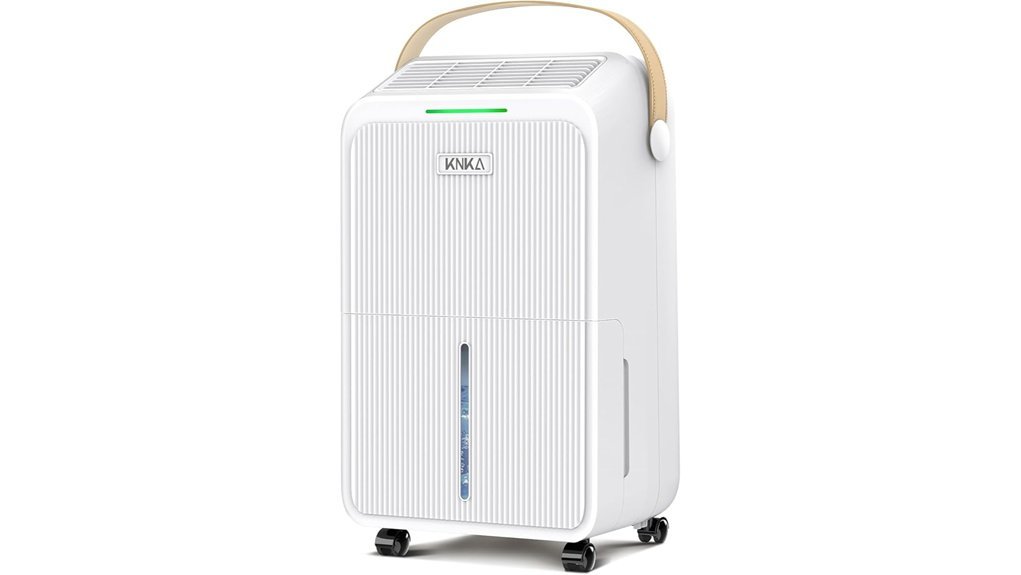
The KNKA is the strongest all-around option in this group for a basement, laundry area, garage, or other enclosed space with continuing humidity. It is a compressor model marketed with a maximum moisture-removal figure of 34 pints per day, a 3-liter tank, adjustable humidity control, and continuous drainage. Because real extraction changes with temperature and starting humidity, use the 34-pint figure as a comparison point rather than a guaranteed daily result.
The seller states coverage of up to 2,500 square feet and lists DEHU, DRY, and continuous operating modes. The adjustable humidistat is more useful for mold prevention than an always-on mini unit because you can select a target humidity and allow the machine to cycle. Water can collect in the removable tank or flow through the included gravity drain hose to a suitable lower drain.
Why You’ll Like It
- Compressor performance: Better suited to a substantial moisture load than either mini model in this comparison.
- Continuous drainage: Reduces manual tank emptying when a properly positioned drain is available.
- Adjustable humidistat: Helps maintain a target rather than relying on guesswork.
- Three operating modes: Supports normal dehumidification, continuous operation, and clothes drying.
- Useful mobility: Wheels and a handle make room-to-room movement easier for a compressor unit.
Who Should Buy This
Choose the KNKA when a medium-to-larger enclosed room remains humid for long periods and you want adjustable control plus hose drainage. It is the best fit in this list for a basement or laundry room, provided its actual capacity is appropriate for the measured moisture load.
Who Should Avoid This
Skip it if you only need light moisture control in a tiny closet, if there is no safe space for airflow, or if the room has active seepage that must be repaired first. It will not remove established mold or dry moisture trapped behind finished walls.
Pros:
- Highest seller-stated moisture-removal capacity in this comparison.
- Continuous-drain option reduces bucket handling.
- Adjustable humidity range, timer, and multiple operating modes.
- Washable filter, auto defrost, and full-tank shut-off.
Cons:
- The maximum capacity and coverage claim may not reflect your room’s temperature and humidity.
- Larger and heavier than a countertop semiconductor model.
- The tank may require frequent emptying in a very damp room when the hose is not used.
PLUSCENT 32-Pint Dehumidifier for Home
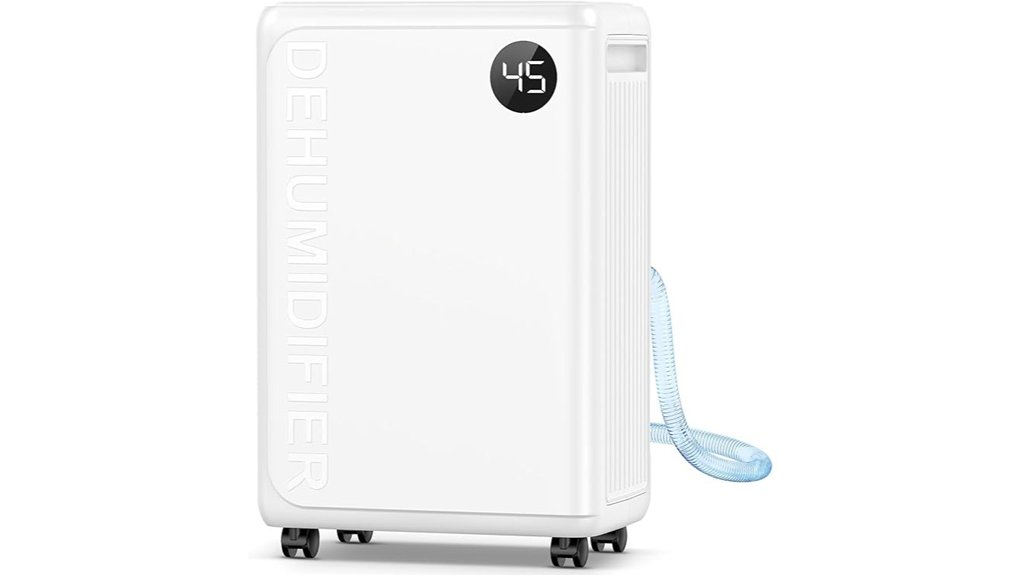
The PLUSCENT is a compressor dehumidifier for basements, bedrooms, storage rooms, and other spaces with more moisture than a mini unit can reasonably handle. The listing markets it with a maximum removal figure of 32 pints per day, a 2-liter tank, adjustable humidity control, and a gravity drain hose. As with the KNKA, actual collection will be lower in cooler or moderately humid conditions.
Its listed features include three operating modes, a 24-hour timer, auto defrost, auto restart, automatic full-tank shut-off, a washable filter, child lock, and wheels. The seller also lists approximately 39 to 42 dB of operating noise. The smaller cabinet and tank may appeal to buyers who want compressor performance without the KNKA’s larger footprint.
Why You’ll Like It
- Compressor-based removal: More appropriate for continuing room humidity than a low-wattage semiconductor unit.
- Drain-hose compatibility: Supports longer operation near a suitable lower drain.
- Automatic defrost: Helps the machine manage frost formation as operating conditions cool.
- Compact cabinet: Easier to position than some larger compressor dehumidifiers.
- Convenience controls: Timer, child lock, auto restart, and full-tank shut-off reduce supervision.
Who Should Buy This
Choose the PLUSCENT when you need a compressor unit for a medium or larger room but prefer a smaller cabinet and can use its drain hose. It is a practical alternative for a laundry room, storage room, bedroom, or moderately damp basement.
Who Should Avoid This
It is unnecessary for a cabinet or tiny closet, and its 2-liter bucket may be inconvenient if you cannot use continuous drainage. Do not assume that the 2,500-square-foot seller claim guarantees adequate performance in a wet or divided basement.
Pros:
- Compressor-based moisture removal.
- Continuous drainage and automatic full-tank shut-off.
- Adjustable humidity setting, three modes, and a 24-hour timer.
- Auto defrost, auto restart, wheels, and washable filter.
Cons:
- Maximum extraction depends heavily on temperature and relative humidity.
- The 2-liter tank is smaller than the KNKA’s 3-liter tank.
- Filter cleaning, hose inspection, and tank cleaning are still required.
BeOkay 1657ML Small Dehumidifier
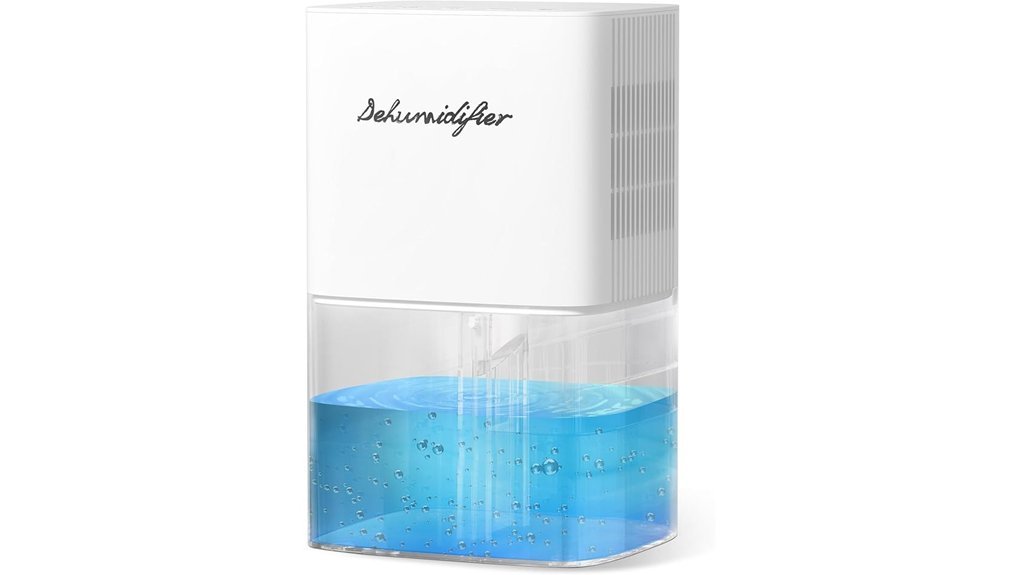
The BeOkay is a compact semiconductor dehumidifier for mild moisture in a small, warm, enclosed room. Its specifications list a 1,657 ml, or 58-ounce, tank and a seller-stated dehumidification rate of approximately 0.3 liters per day. That is far below the output of a compressor dehumidifier, but it gives buyers a more useful comparison point than tank volume alone.
It offers sleep, normal, and performance modes, five timer choices, optional lighting, and automatic shut-off when the tank is full, removed, or the unit is tilted. The seller lists sleep-mode sound below 40 dB. Automatic defrost is included, although semiconductor units still tend to work best in warmer air with enough humidity to condense.
Why You’ll Like It
- Clearer capacity information: The stated 0.3-liter daily rate is more useful than a tank-only specification.
- Compact footprint: Fits more easily on a counter, shelf, or small section of floor.
- Large tank for a mini unit: The 1,657 ml reservoir reduces how often it must be emptied.
- Three operating modes: Lets you balance noise and moisture collection.
- Multiple shut-off triggers: Stops if the tank is full, removed, or the unit is tilted.
Who Should Buy This
Choose the BeOkay for mild condensation or a slightly musty feel in a small bathroom, bedroom, closet, or similar enclosed area. Use a hygrometer to confirm that its modest output is enough to lower the actual room humidity.
Who Should Avoid This
Do not rely on it for a wet basement, active seepage, standing water, widespread wall condensation, or a room that remains above the target humidity despite continuous operation.
Pros:
- Compact and lightweight design.
- Seller-stated 0.3-liter daily moisture-removal rate.
- Three modes, five timer settings, auto defrost, and automatic shut-off.
- Sleep mode is designed for quieter nighttime use.
Cons:
- Much lower extraction capacity than a compressor dehumidifier.
- The 230-square-foot coverage claim is seller-stated and not a guarantee.
- No hose drainage for continuous unattended water disposal.
NeedDuck 44-Ounce Portable Dehumidifier
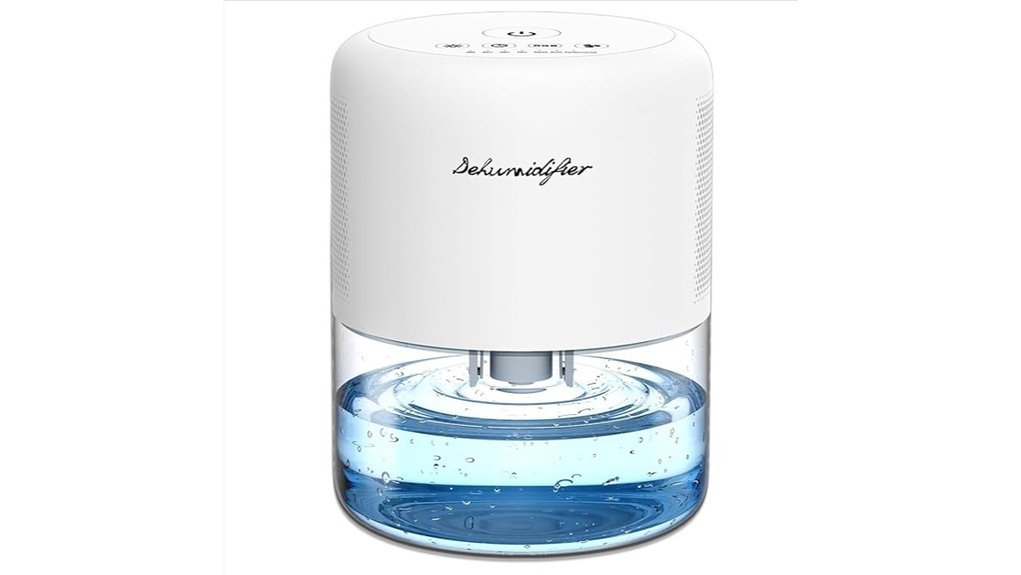
The NeedDuck combines a small footprint with a 44-ounce tank, three operating modes, four timer choices, automatic shut-off, and automatic defrost. The seller states that it is intended for spaces up to 215 square feet, including small bedrooms, bathrooms, closets, and RVs.
This is a low-wattage semiconductor dehumidifier, so moisture removal will be gradual. The listing does not provide a sufficiently clear daily extraction rate, which makes it harder to compare with the BeOkay or either compressor model. Treat it as a compact convenience option for mild localized dampness and keep it only if a separate hygrometer confirms that the room reaches and maintains the desired humidity.
Why You’ll Like It
- Easy to position: Compact dimensions suit shelves, counters, RVs, closets, and tight rooms.
- 44-ounce tank: Provides useful storage capacity for a mini dehumidifier.
- Flexible controls: Includes three modes and four timer options.
- Automatic protection: Defrost and full-tank shut-off reduce supervision.
- Optional lighting: Ten light colors and adjustable brightness can double as a night-light.
Who Should Buy This
Choose it when you need gentle moisture control in a closet, cabinet area, RV, small bathroom, or compact bedroom and value portability more than fast extraction.
Who Should Avoid This
Avoid this model if you need rapid drying, measurable whole-room capacity, continuous hose drainage, whole-basement coverage, or a machine for heavy condensation or seepage.
Pros:
- Compact design for tight spaces.
- Automatic defrost and full-tank shut-off.
- Multiple timer and operating-mode choices.
- Simple tank-based operation without a drainage installation.
Cons:
- No clearly stated daily extraction rate for confident sizing.
- Limited to light moisture in smaller spaces.
- The 44-ounce tank does not indicate how quickly water will be collected.
Factors to Consider When Choosing a Dehumidifier for Mold Control
The best dehumidifier is not necessarily the one with the largest advertised coverage number. Compare moisture-removal capacity, the severity of the dampness, drainage, operating temperature, room layout, and your measured relative humidity.
1. Match Capacity to the Dampness
Daily moisture-removal capacity is more useful than tank size. A basement that remains musty, develops wall condensation, or regularly exceeds the target relative humidity generally needs a compressor model. A mini semiconductor unit is better for light moisture in a small enclosed space.
Use the ENERGY STAR sizing guidance only when you know the model’s current standardized capacity. Seller-stated “maximum” figures measured under hotter and wetter conditions may not be directly comparable with current DOE-rated capacities.
2. Understand Compressor vs. Semiconductor Models
Compressor dehumidifiers usually move substantially more water and are the better choice for basements, laundry rooms, garages, and continuing humidity. They require more floor space and power but can provide adjustable humidistats and hose drainage.
Semiconductor or thermoelectric dehumidifiers are compact and often quieter. They work best in warmer, smaller spaces with mild moisture and should not be treated as direct replacements for properly rated compressor machines.
3. Measure the Room and Check Airflow
Measure the actual floor area and consider ceiling height, closed doors, partitions, shelving, stored belongings, and airflow. A single large coverage number assumes favorable conditions and may overstate performance in a divided or cluttered basement.
4. Choose the Right Drainage Option
A removable tank works for occasional use but must be emptied whenever it fills. Continuous gravity drainage is better for a basement or laundry area where the unit may run for many hours. The hose must slope downward without kinks to a suitable drain unless the unit has a built-in pump.
5. Use a Hygrometer
Do not judge humidity only by comfort or tank collection. Place a separate hygrometer away from the dehumidifier’s direct exhaust and check it at different times of day. Aim for roughly 30% to 50% relative humidity when practical and avoid allowing the room to remain above 60%.
6. Consider Operating Temperature
Cool air holds less moisture, and frost can form on cold components. For a basement or garage, check the manufacturer’s minimum operating temperature and auto-defrost instructions. Defrost protects operation, but it does not guarantee strong water removal in a cold room.
7. Review Noise Levels
Noise matters in bedrooms and offices. A semiconductor unit is often quieter, while a compressor model provides more moisture removal. Sleep or low-fan settings can reduce sound but may also slow extraction.
8. Check Energy Efficiency
A dehumidifier may run for many hours, so compare wattage and look for a verifiable ENERGY STAR certification when available. Do not describe a model as ENERGY STAR certified unless it appears in the official product database or the current listing provides valid certification details.
9. Plan Placement and Maintenance
Keep the intake and exhaust clear, place the unit on a level surface, and follow the required clearances in the manual. Clean washable filters, empty and wash the tank, and inspect drain hoses for kinks, algae, or clogs.
10. Know When a Dehumidifier Is Not Enough
A dehumidifier cannot correct plumbing leaks, rain penetration, groundwater seepage, poor exterior drainage, wet insulation, or mold hidden inside a wall. Recurring visible mold, strong odors, flood damage, sewage contamination, HVAC contamination, or a large affected area may require qualified inspection and remediation.
- Measure the room and record the typical relative humidity.
- Identify and repair leaks, seepage, or condensation sources.
- Confirm whether the pint rating follows current standardized test conditions.
- Choose compressor capacity for substantial or continuing dampness.
- Use a mini model only for light moisture in a small enclosed space.
- Decide whether you need a tank, gravity hose, or pump drainage.
- Check minimum operating temperature, defrost, and clearance requirements.
- Verify current product details and Amazon availability before ordering.
Frequently Asked Questions
Do Dehumidifiers Kill Mold?
No. A dehumidifier lowers airborne moisture and can make conditions less favorable for new growth. It does not reliably kill or remove established mold. Visible mold must be cleaned or remediated as appropriate, and the water source must be corrected.
What Humidity Level Helps Prevent Mold?
A practical target is approximately 30% to 50% relative humidity. EPA guidance says to keep indoor humidity below 60%, ideally between 30% and 50%, while CDC guidance advises no higher than 50% when practical. Use a hygrometer because humidity changes throughout the day.
What Size Dehumidifier Do I Need?
Match capacity to both the room size and the severity of the moisture problem. A slightly damp bedroom needs far less capacity than a wet basement with seepage or indoor laundry drying. Use standardized pint-per-day ratings when available, not only seller-stated square-foot coverage.
Is a Mini Dehumidifier Enough for a Basement?
Usually not. Compact semiconductor models are intended for localized moisture in small, warmer spaces. A basement with a musty odor, visible condensation, or consistently high humidity normally needs a compressor dehumidifier with a clearly stated standardized capacity.
How Often Should I Empty the Water Tank?
Empty it whenever the full-tank indicator appears or the unit shuts off. The frequency can range from more than once a day in very damp conditions to every few days in a mildly humid room. Continuous drainage avoids this task when a suitable drain is available.
Where Should a Dehumidifier Be Placed?
Place it on a level, stable surface with the manufacturer’s required clearance around the intake and exhaust. Keep doors and windows closed while dehumidifying unless ventilation is part of a planned moisture-control strategy. Keep the unit away from direct water splash.
Will a Dehumidifier Fix a Musty Smell?
It may reduce an odor caused mainly by high humidity, but a continuing musty smell can indicate hidden mold, wet building materials, plumbing leaks, or drainage problems. Investigate the cause instead of using fragrance or a dehumidifier to mask it.
Should I Run a Dehumidifier Continuously?
Continuous mode can help during the initial drying of a very humid room. For ongoing use, a properly working humidistat is usually more efficient because the machine can cycle after reaching the target. Confirm the result with a separate hygrometer.
When Should I Call a Mold Professional?
Consider qualified help for recurring or widespread mold, hidden mold, major water damage, sewage contamination, HVAC contamination, or situations involving people with significant health concerns. Fixing the moisture source remains essential even when professional cleanup is used.
Final Recommendation
Best overall for continuing humidity: The KNKA offers the strongest combination in this list of compressor-based removal, a 3-liter tank, adjustable humidity control, and continuous drainage.
Best compact compressor alternative: The PLUSCENT provides similar core controls in a smaller cabinet, but its 2-liter tank makes hose drainage more valuable during long run times.
Best mini option: The BeOkay ranks above the NeedDuck because it provides a stated daily removal figure. Both mini models should be limited to mild, localized moisture and verified with a hygrometer.
Most important: A dehumidifier is only one part of mold prevention. Repair leaks, improve drainage or ventilation where appropriate, remove existing mold safely, and confirm that the room stays near the target relative humidity.