By Editorial Team · Reviewed for product relevance and listing accuracy · Last updated August 19, 2026
Disclosure: As an Amazon Associate, we may earn from qualifying purchases. If you click a link on this page and make a purchase, we may receive a small commission at no extra cost to you.
If you want to control everyday humidity in a small space, a tabletop dehumidifier can help with damp closets, bathrooms, bedrooms, RVs, and musty corners. The best choice depends on how much moisture you need to remove, how often you want to empty the tank, and whether you need quiet overnight operation.
This guide compares four compact, powered dehumidifiers for home use. Choose the NovaLivin model if you want auto humidity control or the BEDRED 95OZ model if tank size matters more. Small thermoelectric units work best for mild to moderate dampness, not leaks, flood cleanup, or whole-basement drying.
Quick Verdict
For most small rooms, the NovaLivin Home Dehumidifier with Auto Humidity Control is the most balanced pick because it combines digital controls, sleep mode, a removable 68-ounce tank, and automatic humidity management. Choose the BEDRED 95OZ model if you want more tank capacity.
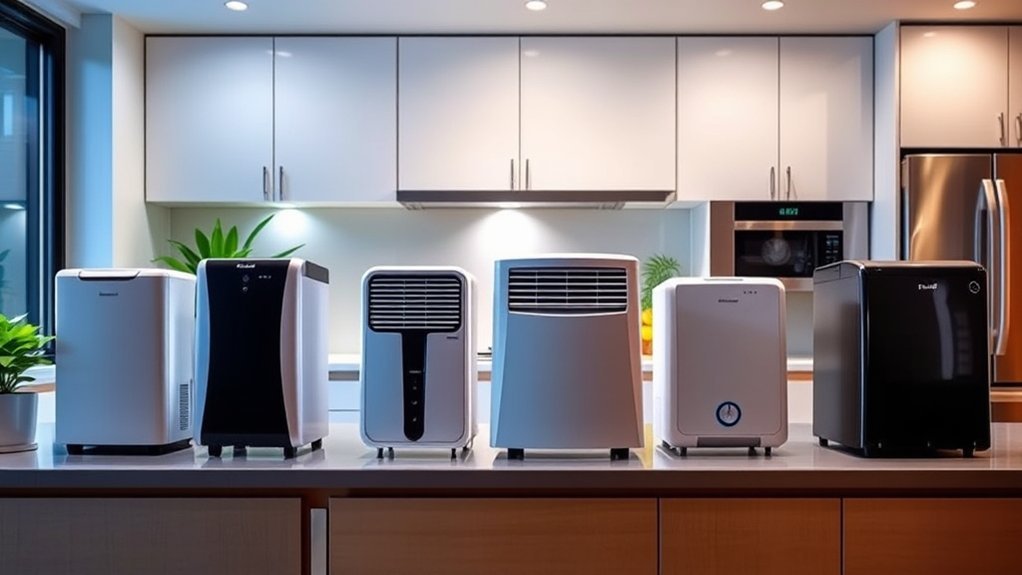
Quick Comparison: Best Tabletop Dehumidifiers for Home
| Product | Best For | Key Feature | Tank / Capacity Detail | CTA |
|---|---|---|---|---|
| NovaLivin Home Dehumidifier with Auto Humidity Control, Digital Display | Bathrooms, bedrooms, RVs, and small living areas | Auto humidity control with digital display | 68-ounce tank; up to 34 ounces daily removal under warm, humid conditions | Check Current Amazon Availability |
| BEDRED 95OZ Dehumidifier for Home, Quiet, Auto Shut Off | Bedrooms, bathrooms, RVs, and damp corners | 95-ounce tank with sleep mode | Large tank; listed for up to 1,000 square feet | Check Current Amazon Availability |
| Windangel 44oz Small Quiet Portable Dehumidifier for Home | Small bedrooms, bathrooms, closets, and RVs | Compact body with three modes | 44-ounce tank; up to 11.8 ounces/day at 86°F and 80% RH | Check Current Amazon Availability |
| BeOkay 1657ML 58OZ Small Home Dehumidifier with 10 Colors & Timer | Small rooms, apartments, bathrooms, and living rooms | 10-color lighting and long timer options | 1657ml (58-ounce) tank; listed for up to 230 square feet | Check Current Amazon Availability |
Before You Buy
- Choose by use case first: closet, bathroom, bedroom, RV, or damp basement corner.
- Check the daily moisture removal rating and the conditions used for that rating.
- Pick a larger tank if you do not want to empty the unit often.
- Look for auto shutoff if you plan to run the unit while sleeping or away from the room.
- Use small thermoelectric models for comfort-level dampness, not leaks, flood damage, or major mold problems.
- Treat square-foot coverage as a seller claim; compare daily water-removal capacity and your room conditions before buying.
How We Chose These Picks
We compared published product details for compact size, tank capacity, moisture-removal claims, auto shutoff, quiet modes, controls, and clear use cases. We also looked for honest limitations because a tabletop dehumidifier is not a replacement for a full-size compressor model in large wet rooms. This is a specification-and-use-case comparison, not a claim of hands-on testing. Product specifications and seller offers can change, so confirm the current Amazon listing before ordering.
NovaLivin Home Dehumidifier with Auto Humidity Control
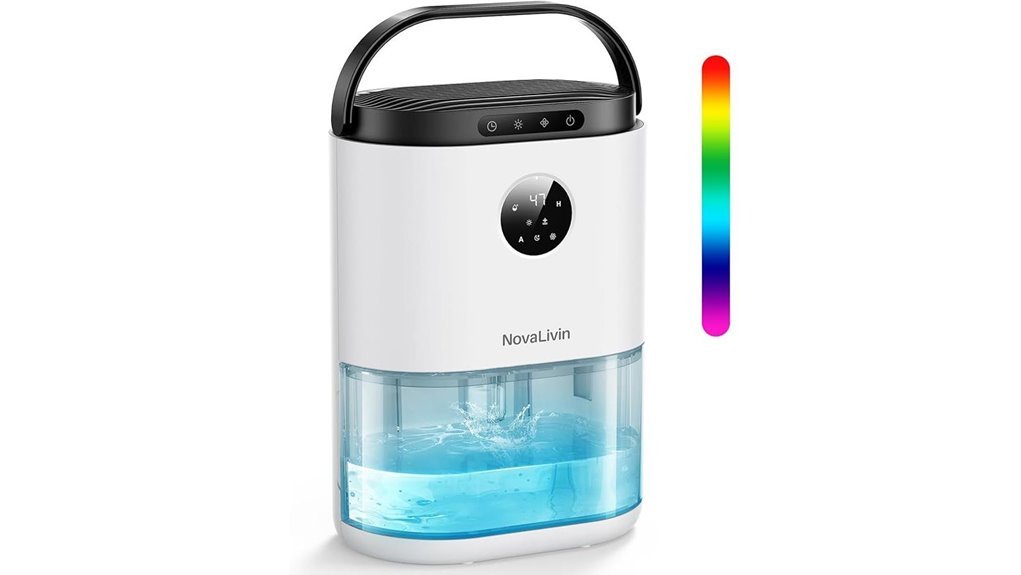
Best Overall Tabletop Pick
If you want a compact dehumidifier with more control than a basic on/off mini unit, this NovaLivin model is the best fit. It combines a digital display, auto mode, sleep mode, and a removable 68-ounce tank. The listed daily removal is up to 34 ounces in warm, humid conditions, so it suits bathrooms, bedrooms, RVs, and small living areas with everyday dampness.
Why You’ll Like It: The biggest benefit is control. You can see settings clearly, choose the operating mode, and let the unit respond to changing room humidity instead of guessing when to turn it on or off.
Best For: People who want an easy tabletop dehumidifier for small rooms, bathrooms, bedrooms, living rooms, or RVs.
Pros:
- Auto humidity control and digital display make it easier to manage changing room conditions.
- Sleep mode and compact size help it fit bedrooms and small living spaces.
- Removable tank, timer options, and nightlight add everyday convenience.
Cons:
- Best suited for small spaces rather than large rooms or wet basements.
- The 68-ounce tank may need frequent emptying in very damp weather.
- Like most compact units, performance depends heavily on room temperature and humidity.
Who Should Buy This: Buy this if you want the best balance of compact size, simple controls, digital feedback, and automatic humidity management.
Who Should Skip It: Skip this model if you need whole-basement drying, flood recovery, or moisture removal after a leak. A larger compressor dehumidifier would be more appropriate.
BEDRED 95OZ Dehumidifier for Home
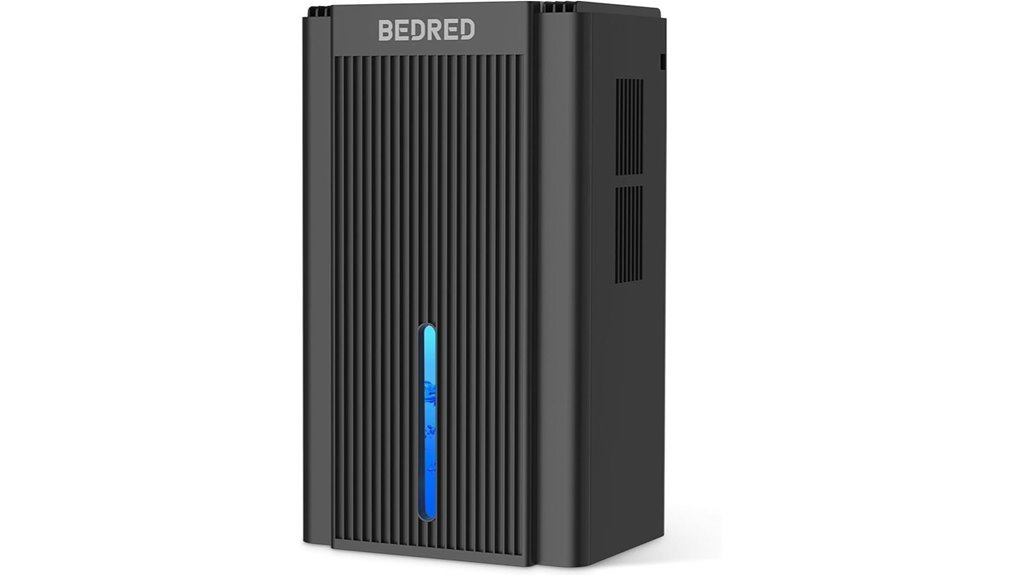
Best Larger-Tank Compact Pick
This 95-ounce model is a good match if you want a tabletop-style dehumidifier with more tank capacity than the smallest mini units. The seller lists coverage up to 1,000 square feet, but treat that as a marketing coverage claim rather than proof of full-room drying power. Use it mainly for enclosed rooms, bathrooms, RVs, or damp corners with mild to moderate moisture, and judge performance by actual water collection in your space.
Why You’ll Like It: The larger tank, auto shutoff, sleep mode, and ambient light make it convenient for bedrooms, bathrooms, and living spaces where you want quiet background moisture control.
Best For: People who want a compact dehumidifier with a larger tank for bedrooms, bathrooms, basement corners, living rooms, or RVs.
Pros:
- 95-ounce tank reduces how often you need to empty it compared with smaller mini models.
- Auto shutoff helps reduce overflow risk when the tank fills, while sleep mode lowers disturbance at night.
- Compact body fits shelves, counters, RVs, and small room corners.
Cons:
- The 1,000-square-foot seller claim should not be treated as equivalent to the capacity of a full-size compressor dehumidifier.
- Thermoelectric performance can drop in cool rooms or severe humidity.
- Warranty and long-term support details should be checked on the product page before buying.
Who Should Buy This: Buy this if you want a larger tank than a tiny desktop unit and prefer auto shutoff for easier daily use.
Who Should Skip It: Skip this if your space has standing water, serious basement humidity, or visible water damage.
Windangel 44oz Small Quiet Portable Dehumidifier
Best Compact Timer Pick
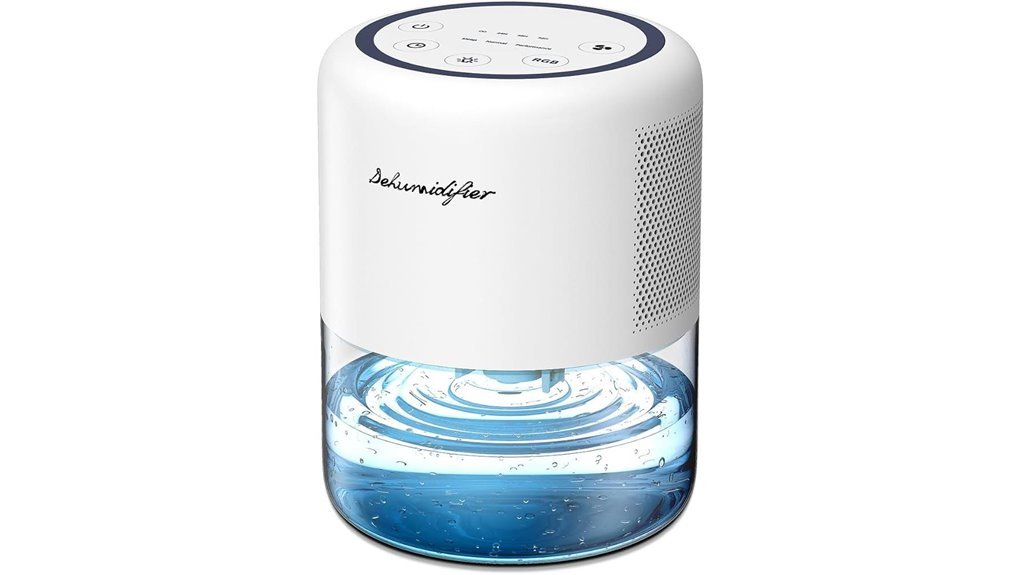
The Windangel 44-ounce dehumidifier suits you if you want a small footprint with more control than a basic mini model. Its compact 5.46 x 5.46 x 8.91-inch body fits bedrooms, bathrooms, closets, and RVs. It lists up to 11.8 ounces of daily moisture removal at 86°F and 80% RH and includes Sleep, Normal, and Performance modes, plus 24, 48, and 72-hour timer choices and continuous operation.
Why You’ll Like It: This is a practical middle ground between simple mini units and larger tabletop models. The three modes let you adjust noise and performance depending on where you place it.
Best For: People who want a compact, quiet dehumidifier for small bedrooms, bathrooms, closets, or RVs.
Pros:
- Compact shape fits shelves, counters, and other tight spaces.
- Sleep, Normal, and Performance modes give you flexible operation, and the timer also supports continuous run mode.
- Auto shutoff, auto defrost, timer settings, and mood lighting add convenience.
Cons:
- Best for small areas, not whole-home moisture control.
- 11.8-ounce daily removal may be modest in very humid rooms.
- The 44-ounce tank may need regular emptying during continuous use.
Who Should Buy This: Buy this if you want a small portable model with timer choices, adjustable modes, and mild-room moisture control.
Who Should Skip It: Skip this model if you need a large reservoir or strong drying for a basement.
BeOkay 1657ML 58OZ Small Home Dehumidifier
Best for Small Rooms with Lighting
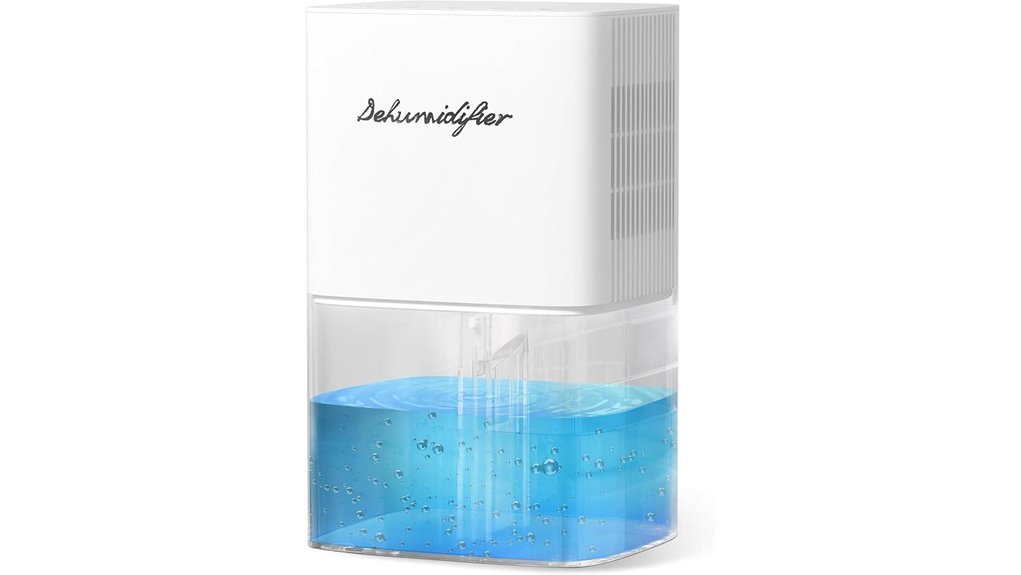
This BeOkay dehumidifier is a good option if you want a compact small-room unit with mood lighting, a low-noise sleep mode, and long timer choices. It has a 1657ml (58-ounce) tank, coverage listed up to 230 square feet, three operating modes, and timer options for 24, 48, 72, or 96 hours plus continuous operation. Use it for comfort-level humidity control in bedrooms, bathrooms, apartments, and small living spaces.
Why You’ll Like It: The main appeal is flexibility. You get a practical tank size, several timer options, optional lighting, and basic safety features in a tabletop body.
Best For: People who need a compact dehumidifier for bedrooms, bathrooms, apartments, or small living rooms.
Pros:
- 10-color lighting and multiple timer settings add convenience.
- 1657ml (58-ounce) tank and 230-square-foot listed coverage fit small rooms.
- Sleep mode is listed below 40 dB, while auto shutoff and defrost protection make daily use easier.
Cons:
- Best only for small areas, not larger rooms.
- Moisture removal capacity is modest compared with bigger tabletop models.
- Lighting features may be unnecessary if you want a purely functional unit.
Who Should Buy This: Buy this if you want a small tabletop dehumidifier with a practical tank, long timer options, auto shutoff, and optional mood lighting.
Who Should Skip It: Skip it if you dislike built-in lighting or need fast moisture removal in a large room.
Factors to Consider When Choosing Tabletop Dehumidifiers for Home
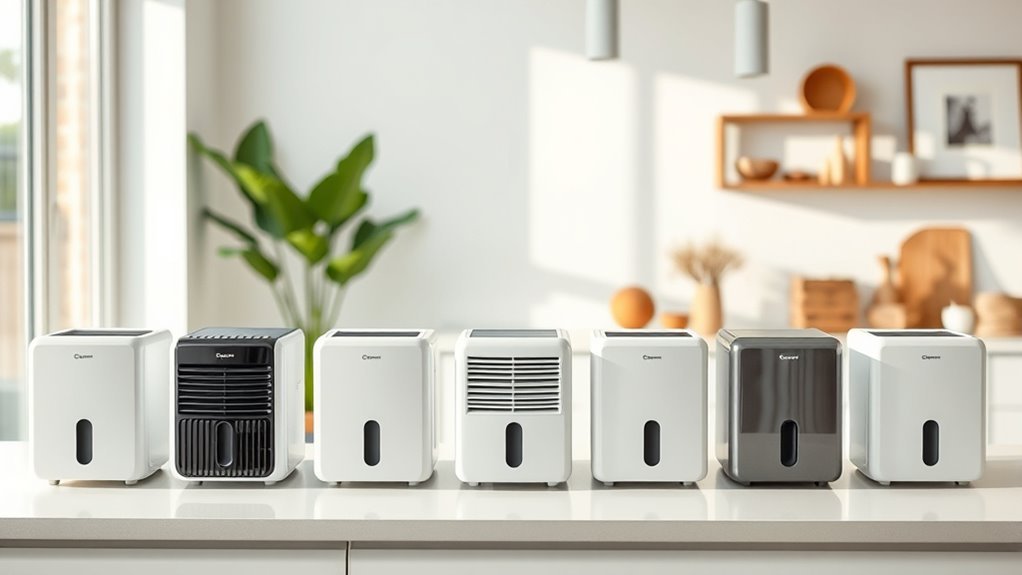
When you choose a tabletop dehumidifier, match the unit to your space and moisture problem. Room size, tank capacity, noise level, auto shutoff, portability, and daily moisture removal all affect how well the unit fits your routine.
Moisture Removal Capacity
Moisture removal capacity tells you how much water the unit can collect in a day. Compare ratings carefully because many small tabletop dehumidifiers reach their best numbers only in warm, humid test conditions. If your room stays cool, collection may be slower. For heavy dampness, choose a stronger model or step up to a full-size compressor dehumidifier.
Room Size Coverage
Room coverage claims help you compare models, but they should not be the only factor. A compact model may list coverage up to 1,000 square feet, yet still remove less water than a larger compressor unit. For closets and cabinets, a cordless desiccant unit can work well. For bedrooms, bathrooms, RVs, and small living rooms, choose a powered model with a suitable tank and auto shutoff.
Noise Level
Noise matters most in bedrooms, offices, nurseries, and study spaces. Look for a sleep mode, low-decibel rating, dimmable lights, and simple controls. A quiet tabletop dehumidifier can run in the background without interrupting sleep, work, or conversation.
Tank Capacity
Tank capacity affects how often you empty the unit. 44-ounce, 58-ounce, 68-ounce, and 95-ounce tanks can reduce emptying frequency. Match tank size to the daily collection rate so the unit does not stop too often when humidity rises.
Energy Efficiency
Small thermoelectric dehumidifiers usually draw less power than full-size compressor models, but they also remove much less water. Check the listed wattage, operating modes, and moisture removal rating together. The most efficient choice is the one that can handle your actual space without running constantly and falling behind.
Auto Shutoff Features
Auto shutoff is one of the most important features for a tabletop dehumidifier. It turns the unit off when the tank fills, which helps prevent overflow and wasted power. A full-tank indicator, tilt protection, and overheat protection are also useful if the unit will run while you sleep or leave the room.
Size And Portability
Choose a compact unit that fits your shelf, counter, desk, nightstand, or RV surface without blocking vents. Lightweight models and built-in handles make it easier to move the unit between rooms. If you plan to keep it in a closet, check both the footprint and the clearance needed for airflow.
Safety And Placement
A tabletop dehumidifier should sit on a flat, stable surface with open space around the air vents. Avoid placing it where fabric, curtains, towels, or clutter can block airflow. In bathrooms, keep the unit away from splash zones and follow the maker’s placement instructions. If the room gets cold, check the listed operating temperature range because many small thermoelectric dehumidifiers work better in warm, humid spaces.
Pro Tips for Better Results
- Close doors and windows while the dehumidifier runs so it is not fighting fresh humid air.
- Place the unit near the damp area, but keep the vents clear on all sides.
- Use a hygrometer to confirm whether the room is actually getting drier.
- Empty and wipe the tank often to reduce odors and buildup.
- For bathrooms, run the unit after showers and use an exhaust fan when possible.
- For closets, leave a small gap around stored clothes so air can move more freely.
Which Tabletop Dehumidifier Should You Choose?
Choose the NovaLivin model if you want digital controls and auto humidity control. Pick the BEDRED 95OZ model if you want a larger tank for a bedroom, RV, bathroom, or damp corner. For small rooms where portability and timer controls matter, choose the 44oz Windangel or the BeOkay 1657ML model.
Safety Note
A small tabletop dehumidifier can help with everyday dampness, but it is not a substitute for fixing leaks, flood damage, poor ventilation, or mold problems. If you see water damage, strong musty odors, or visible mold growth, address the moisture source first and consider professional help.
Frequently Asked Questions
How Often Should I Empty a Tabletop Dehumidifier?
You should empty it whenever the tank fills. In humid rooms, that might be daily. In drier rooms, closets, or cabinets, it may be every few days or longer. Check the tank often; models with auto shutoff should stop when the reservoir reaches its full-tank level, but regular cleaning and inspection are still important.
Can Tabletop Dehumidifiers Run Overnight Safely?
Many tabletop dehumidifiers are designed for extended or overnight operation, but only use them that way when the manufacturer permits it. Place the unit on a stable surface, keep vents clear, keep it away from splash zones, and use the built-in auto shutoff as an overflow safeguard. Always follow the manufacturer’s safety instructions.
Do Tabletop Dehumidifiers Work in Cold Rooms?
Small tabletop dehumidifiers often work less efficiently in cold rooms. You will usually get better results when the room stays within the unit’s listed operating temperature range and the air is warm enough to hold moisture.
Are Tabletop Dehumidifiers Enough for Basements?
A tabletop model may help a damp corner, closet, or small enclosed basement area, but it will not solve a wet basement. For large rooms, leaks, condensation, or persistent musty odors, fix the moisture source and consider a full-size compressor dehumidifier.
What Maintenance Do Tabletop Dehumidifiers Need?
You need to empty the tank, wipe the reservoir, keep vents clear, and check for dust buildup. If your model uses a filter, drain hose, or rechargeable desiccant beads, follow the maker’s cleaning and recharging instructions.
Final Recommendation
For the best balance of control, size, and everyday convenience, start with the NovaLivin Home Dehumidifier with Auto Humidity Control. Choose the BEDRED 95OZ model if tank capacity matters more.
Conclusion
The best tabletop dehumidifier for your home depends on where you need moisture control. Choose the NovaLivin if you want digital settings and automatic humidity control, the BEDRED 95OZ model if you prefer a larger tank, or the Windangel and BeOkay options if compact size and timer flexibility are higher priorities. Match the unit to your room size, moisture level, noise tolerance, and emptying routine, and remember that compact thermoelectric models are designed for everyday dampness rather than major water problems.