Affiliate disclosure: This article contains Amazon affiliate links. If you buy through these links, we may earn a small commission at no extra cost to you.
If you’re looking for the best dehumidifiers for a woodshop in 2026, focus on steady humidity control, the right pint capacity, simple drainage, and a size that matches your shop. Wood can swell, cup, warp, crack, or attract mold when moisture stays too high, so a dependable unit can help protect lumber, tools, finishes, hardware, and stored projects.
This guide compares four woodshop-friendly options: the Frigidaire 50 Pint Dehumidifier w/Wifi, Waykar 2000 Sq. Ft. Energy Star Dehumidifier, KNKA 2500 Sq.Ft Dehumidifier with Drain Hose, and ALORAIR 113 Pint Commercial Dehumidifier. Each pick fits a different shop size, drainage setup, budget level, and moisture-control need.
Quick Verdict
Best for remote monitoring: The Frigidaire 50 Pint Dehumidifier w/Wifi is a better fit if you want app-based control in a larger shop, basement, garage, or detached workspace.
Best for smaller shops: The Waykar 2000 Sq. Ft. Energy Star Dehumidifier is a practical choice when quiet operation, energy use, and compact placement matter most.
Best for continuous drainage: The KNKA 2500 Sq.Ft Dehumidifier with Drain Hose is useful if you have a floor drain, sink, sump area, or safe water outlet nearby.
Best heavier-duty option: The ALORAIR 113 Pint Commercial Dehumidifier is the stronger pick for stubborn moisture, gravity drainage, and commercial-style shop conditions.
Woodshop humidity goal: Many woodworkers try to keep shop humidity stable rather than chasing the lowest possible number. A common indoor target range is about 30% to 50% relative humidity, but consistency matters because fast swings can affect lumber, glue-ups, finishes, and tool storage.
Best buying move: Use a separate hygrometer in your shop before and after setup. That helps you know whether the unit is controlling the full room, not just the air near the dehumidifier.
How to Read Pint Ratings Before You Buy
Dehumidifier pint ratings often depend on test conditions. A unit may remove more water in very warm, humid air and less in a cooler shop. That matters for garage and basement woodshops because temperature, airflow, insulation, and door openings can change real-world results.
Use pint capacity as a comparison point, then match it with your shop’s actual square footage, moisture level, drainage access, and dust exposure.
Quick Comparison: Woodshop Dehumidifier Picks
| Product | Best For | Moisture Removal | Coverage | Key Advantage | Amazon |
|---|---|---|---|---|---|
| Frigidaire 50 Pint Dehumidifier w/Wifi | Large spaces and remote control | 50 pints/day listed capacity | Listed up to 4,500 sq. ft. | Wi-Fi control and strong airflow | Check Price |
| Waykar 2000 Sq. Ft. Energy Star Dehumidifier | Smaller shops and energy savings | Up to 30 pints/day in high humidity | Listed up to 2,000 sq. ft. | Quiet 35 dB operation and Energy Star design | Check Price |
| KNKA 2500 Sq.Ft Dehumidifier with Drain Hose | Continuous drainage setups | Up to 34 pints/day listed capacity | Listed up to 2,500 sq. ft. | Includes a drain hose and smart controls | Check Price |
| ALORAIR 113 Pint Commercial Dehumidifier | Heavier-duty moisture control | 113 pints at saturation; 53 pints/day at AHAM | Listed up to 1,200 sq. ft. | Commercial design with gravity drainage | Check Price |
Before you choose: Match the dehumidifier to your real shop conditions, not only the advertised coverage number. A damp basement shop, unsealed garage, or lumber-storage area may need more capacity and better drainage than a clean, insulated hobby room of the same size.
Woodshop target: Aim for steady relative humidity in a practical range, then avoid sudden swings. Stable moisture control usually protects wood better than aggressively drying the room for short periods.
Frigidaire 50 Pint Dehumidifier w/Wifi
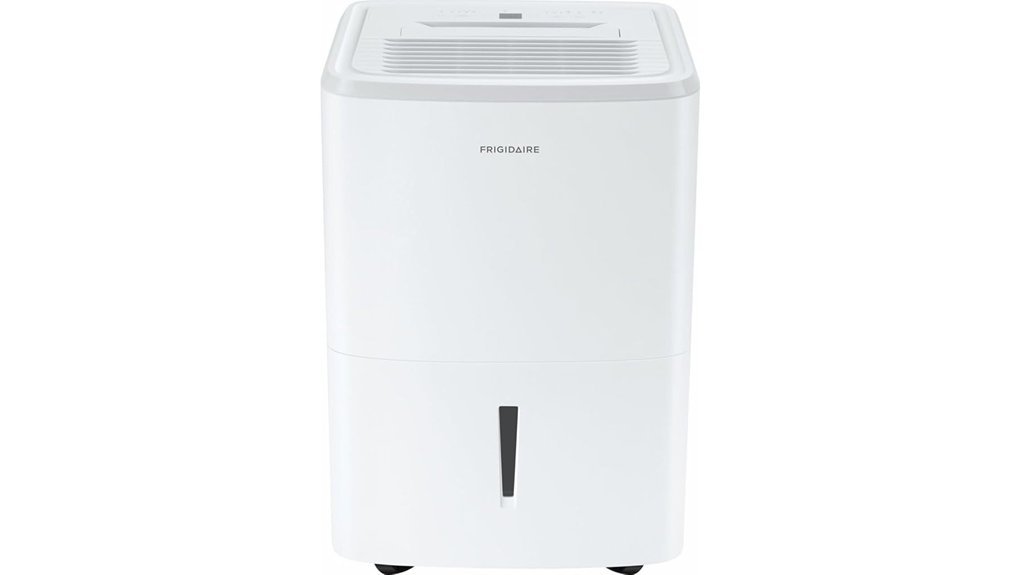
Best for Large Shops and App Control: Looking for a powerful dehumidifier for a larger woodshop? The Frigidaire 50 Pint Dehumidifier w/Wifi is built for buyers who want strong moisture removal plus remote control. With a listed capacity of 50 pints per day and coverage up to 4,500 square feet, it can suit large basements, garages, and workshop areas where humidity can change quickly.
You’ll appreciate its three-speed settings and listed 235 cubic feet per minute airflow when you need faster air movement after damp weather, wet materials, or high-humidity days. The Wi-Fi capability lets you adjust humidity settings from your smartphone, which is helpful if your shop is detached from your home or you want to monitor the unit without walking back and forth.
Cleaning is simple because the unit includes a washable filter and a front-loading bucket. At a listed 44.53 pounds, it is portable enough for many home woodshops, but it is still worth planning its placement before filling the space with benches, saws, and lumber storage.
Why you’ll like it: This is the easiest pick to justify if you want to check or adjust humidity without being physically inside the shop. Remote control can be helpful for detached garages, basement shops, or seasonal spaces where you do not want to guess how damp the room feels.
Best For: Buyers seeking reliable humidity control for large spaces like woodshops, basements, garages, or mixed-use work areas.
Who Should Buy This: Choose it if your shop is large, humidity changes quickly, or you want Wi-Fi control for easier monitoring.
Who Should Avoid This: Avoid it if you do not need app features, have a very small shop, or prefer a lighter unit.
Pros:
- Wi-Fi enabled for remote humidity control via smartphone.
- Listed coverage up to 4,500 sq. ft., making it suitable for larger spaces.
- Easy to clean with a washable filter and front-loading bucket design.
- Strong listed airflow can help larger rooms feel more evenly controlled.
Cons:
- Relatively heavy at a listed 44.53 pounds, which may affect portability.
- Requires regular filter and bucket maintenance, especially in dusty shops.
- Listed 470-watt power draw may increase energy use during long operating periods.
- Wi-Fi features may be unnecessary if the unit will sit near your main workbench.
Woodshop buying note: Choose this one if you want remote monitoring and stronger listed coverage for a larger workspace. It may be more unit than a small one-car garage shop needs.
Waykar 2000 Sq. Ft. Energy Star Dehumidifier
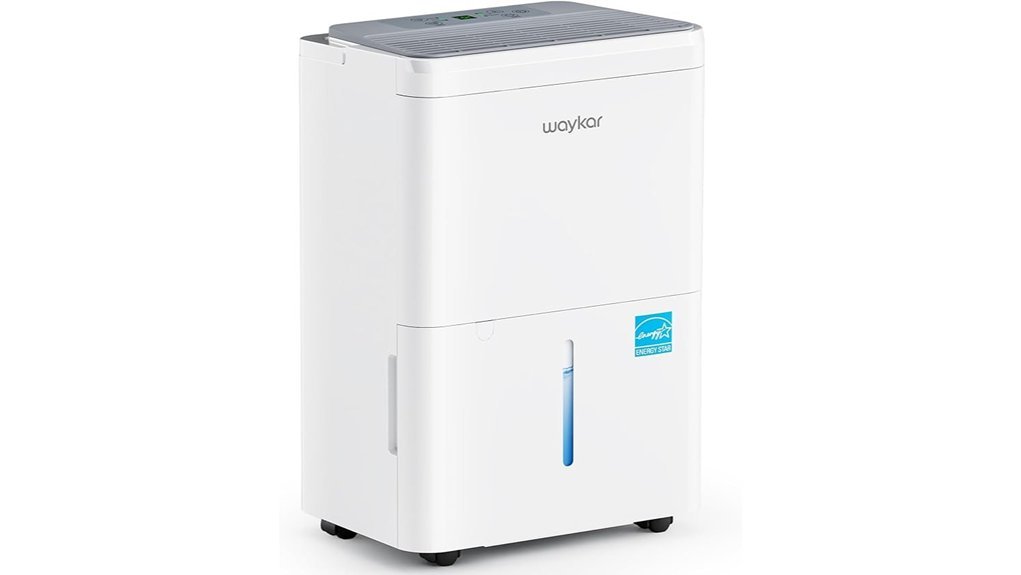
Best for Smaller Shops: If you need a reliable dehumidifier for a smaller woodshop, the Waykar 2000 Sq. Ft. Energy Star Dehumidifier is a practical option. It extracts up to 30 pints of humidity daily in high-humidity test conditions and covers spaces listed up to 2,000 sq. ft., making it a better fit for compact shops, hobby rooms, basement work areas, or tool-storage spaces.
Its adjustable humidity control ranges from 15% to 80% RH, giving you room to fine-tune the shop based on storage needs, drying conditions, and seasonal changes. Modes like Comfort, Dry, Turbo, and Continuous help you choose between everyday operation and faster moisture removal. The listed 35 dB noise level is also a plus if you work for long periods and do not want a loud unit running next to your bench.
This model is also described as Energy Star and ETL listed, with a reusable washable screen. If your shop runs a dehumidifier often, energy use matters because moisture control is usually a long-term habit, not a one-time fix.
Why you’ll like it: It is a smart option for woodworkers who want a quieter shop environment while still protecting lumber, hardware, and tools from excess moisture. It also fits buyers who care about long running time and lower energy use.
Best For: Homeowners or hobby woodworkers needing effective humidity control in medium-sized spaces like small woodshops, basements, or storage rooms.
Who Should Buy This: Choose it for a compact woodshop, hobby room, storage corner, or basement workspace where quiet operation is important.
Who Should Avoid This: Skip it if your shop is large, very damp, or open to outside air for long periods.
Pros:
- Energy-focused design: Built for buyers who want lower long-term operating cost than many basic units.
- Versatile humidity control: Offers multiple modes and an adjustable humidity range from 15% to 80% RH.
- Quiet operation: Listed at 35 dB, making it suitable for quieter work sessions.
- Good fit for hobby spaces: Makes sense when you need control without a bulky commercial-style machine.
Cons:
- Limited capacity: While effective for spaces listed up to 2,000 sq. ft., it may not be ideal for larger shops.
- Initial cost: Higher upfront investment compared to very basic compact dehumidifiers.
- Drainage setup may take extra time: Continuous drainage may require connecting hoses depending on your layout.
- Not ideal for severe moisture: Very damp basements or open garages may need a stronger unit.
Woodshop buying note: This is a smart pick for smaller shops where quiet operation and energy use matter more than maximum daily moisture removal.
KNKA 2500 Sq.Ft Dehumidifier with Drain Hose
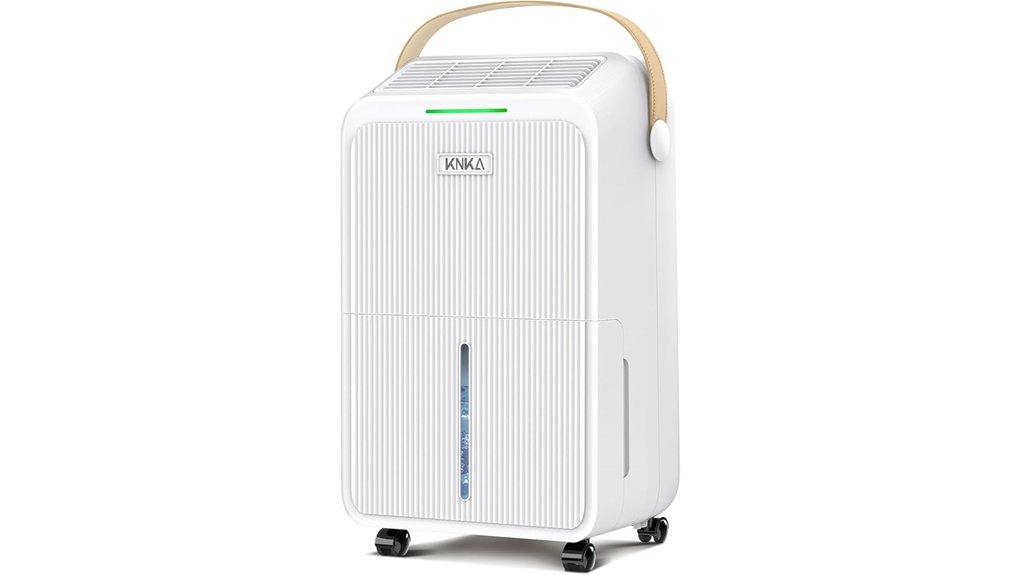
Best for Continuous Drainage: For woodworkers who want reliable humidity control without constantly emptying a tank, the KNKA 2500 Sq.Ft Dehumidifier with Drain Hose is a strong option. It is listed as removing up to 34 pints of moisture daily and covering areas up to 2,500 sq. ft., which makes it suitable for many home workshops, garage shops, and basement woodworking spaces.
The main advantage is its continuous drainage option. The included 3.28 ft drain hose lets you route water away from the unit, which can save time if your shop gets humid for long stretches. You can also adjust humidity or use drying and continuous modes when conditions call for faster moisture removal.
At a listed 37 dB, it operates quietly enough for a workspace where saws, sanders, and dust collectors may already add plenty of noise. Smart controls also make it easier to monitor humidity levels and keep your woodshop in a safer range for lumber, glue-ups, and stored tools.
Why you’ll like it: The included drain hose gives this unit a clear advantage for shops where daily bucket emptying would become annoying. It is especially useful for damp seasons, basement work areas, and spaces where the unit may need to run for long stretches.
Best For: Woodworkers and homeowners needing reliable humidity control with continuous drainage in spaces listed up to 2,500 sq. ft.
Who Should Buy This: Choose it if your shop has a nearby floor drain, utility sink, sump area, or other safe drainage point.
Who Should Avoid This: Avoid it if your shop has no good drainage route and you do not want to empty a tank manually.
Pros:
- Efficient moisture removal: Listed to remove up to 34 pints of moisture daily.
- Quiet operation: Listed at 37 dB, making it suitable for many workspaces.
- Multiple modes: Offers dehumidify, dry, and continuous operating options.
- Drainage convenience: The included hose helps reduce the need for frequent manual emptying.
Cons:
- Limited coverage: Best for spaces listed up to 2,500 sq. ft., so it may not be enough for larger open shops.
- Manual tank option: Requires periodic emptying of the 3L water tank if you do not use continuous drainage.
- Placement planning needed: The drain hose works best when the unit is placed near a suitable drain or water-safe outlet point.
- Hose length matters: You may need to plan the route carefully so the hose does not cross walkways or tool paths.
Woodshop buying note: This is a useful choice if your shop has a floor drain, utility sink, or another easy drainage point nearby.
ALORAIR 113 Pint Commercial Dehumidifier (Sentinel HD55)
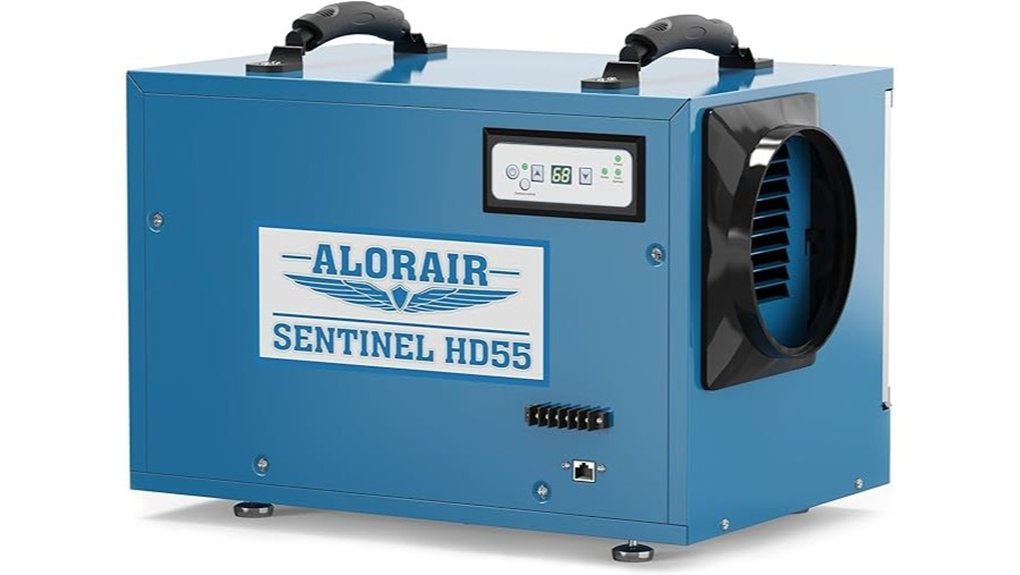
Best Heavy-Duty Pick: The ALORAIR 113 Pint Commercial Dehumidifier (Sentinel HD55) is built for woodshop owners who need efficient moisture control in a tougher environment. It is listed at 113 pints per day at saturation and 53 pints per day at AHAM conditions, with coverage up to 1,200 sq. ft.
Its gravity drainage setup means you do not have to stop work to empty a tank, and the auto defrost feature helps prevent frost buildup in cooler conditions. That can matter if your woodshop is in a basement, garage, crawl-space-style work area, or another space that does not stay at a steady indoor temperature.
At a listed 41.7 pounds, it is still movable for a commercial unit. The MERV-1 filter helps keep dust away from internal components, which is useful in a woodworking space where sawdust is always part of the environment. The listed 6-year limited warranty also adds confidence for buyers who want a longer-term moisture-control tool.
Why you’ll like it: This model is for buyers who care more about durability, drainage, and tough moisture control than simple bedroom-style quietness. It can be a strong fit for serious shop owners who need a more rugged unit in a demanding space.
Best For: Woodshop owners seeking commercial-style moisture control in a compact and portable unit.
Who Should Buy This: Choose it if your shop has stubborn moisture problems, a cooler environment, or a drainage setup that supports gravity water removal.
Who Should Avoid This: Avoid it if you only need light humidity control in a small hobby corner or want the lowest upfront cost.
Pros:
- Gravity drainage eliminates the need for frequent tank emptying.
- Compact and portable design makes it easier to move between different areas.
- Auto defrost feature helps prevent frost buildup for more consistent performance.
- Commercial-style design makes it better suited to tougher shop conditions than many basic home units.
Cons:
- Listed coverage area of up to 1,200 sq. ft. may not suit larger open shops.
- Listed 460 W-class draw may increase energy costs during extended use.
- MERV-1 filter may require more frequent attention in dusty shop conditions.
- May be more than necessary for a clean, dry, climate-controlled hobby room.
Woodshop buying note: Pick this model if you want a heavier-duty unit and have a clear drainage setup. It may be overbuilt for a small hobby corner but useful for demanding moisture problems.
Factors to Consider When Choosing Dehumidifier for Woodshop
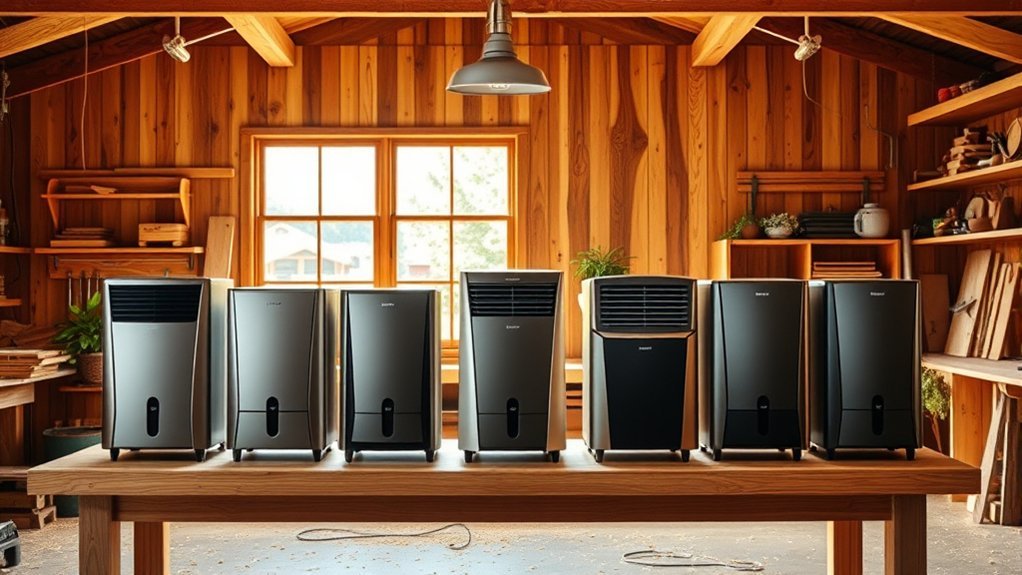
When choosing a dehumidifier for your woodshop, do not look only at pint capacity. You need to match the unit to your shop size, moisture level, drainage access, noise tolerance, dust exposure, and maintenance habits. The right model should make humidity control easier without getting in the way of your tools, lumber, finishing area, or workflow.
How These Woodshop Dehumidifiers Were Compared
These picks were compared by the details included in the article and available product listings, including moisture removal, coverage area, drainage convenience, noise level, portability, filter access, control options, and whether the unit solves a real woodshop problem. The best choice depends on your space, not only on the largest advertised coverage number.
For a woodshop, the most important questions are simple: Will the unit lower humidity enough, can it run without constant attention, will dust make maintenance difficult, and can it sit somewhere safe without blocking your tools or lumber storage?
Optimal Coverage Area
Choosing the right dehumidifier for your woodshop starts with understanding the ideal coverage area. Measure your woodshop’s square footage, then compare it with the unit’s rated coverage. Dehumidifiers in this roundup range from about 1,200 sq. ft. to 4,500 sq. ft., so the right choice depends on the size and layout of your space.
If your shop is small, up to around 2,000 sq. ft., a model that removes around 30 pints of moisture daily in high-humidity conditions may be enough. For larger spaces over 3,500 sq. ft., look at models with a listed capacity of 50 pints per day or more. Also consider your local humidity conditions. A damp basement shop or humid garage may need more power than a dry, climate-controlled room.
Humidity Control Range
Understanding the humidity control range of a dehumidifier is essential for protecting wood. A common target for a woodshop is a relative humidity range of about 30% to 50%, which can help reduce the risk of warping, swelling, and mold growth.
Look for adjustable settings that let you customize moisture levels based on seasonal changes, storage needs, or specific wood types. Some models also offer continuous operation modes, which help when the shop environment changes throughout the day. A wider range, such as 15% to 80% RH, gives you more flexibility for drying, storage, and general shop comfort.
Energy Efficiency Ratings
While selecting a dehumidifier for your woodshop, energy efficiency ratings play an important role in long-term cost. A dehumidifier may run for many hours during humid seasons, so power use can add up. Models with ENERGY STAR certification or lower listed wattage can help reduce electricity costs while still controlling moisture.
Also make sure the unit’s capacity, measured in pints per day, matches your space. An undersized unit may run too often and still fail to manage humidity. An oversized unit may cost more than you need. Features like humidity sensors and programmable settings can also improve efficiency because the unit can respond to real conditions instead of running at full power all the time.
Noise Level Considerations
How much noise can you tolerate while working in your woodshop? Noise levels in dehumidifiers commonly range from quiet, bedroom-friendly operation to louder fan noise. For woodworking, look for models that operate below 40 dB if you want the unit to fade into the background during measuring, layout work, finishing, or hand-tool use.
Some dehumidifiers include noise-reduction systems or lower fan modes for quieter operation. Placement also matters. Putting the dehumidifier away from your main bench can reduce distractions while still helping control humidity throughout the shop.
Drainage Options Available
When selecting a dehumidifier for your woodshop, drainage options can make a big difference in daily use. Most units offer either manual tank emptying or continuous drainage. Manual models require you to empty the water tank when it fills, which may be fine in a dry climate but frustrating in a damp shop.
Continuous drainage lets you connect a hose to a nearby drain, sink, or safe outlet point. This is often the better setup for woodshops because humidity control works best when the unit can run without constant attention. Look for automatic shutoff features to prevent overflow if you use the tank instead of the hose.
Portability and Design
Choosing the right dehumidifier for your woodshop also depends on portability and design. A unit that weighs less than 50 pounds is easier to move around when you rearrange benches, store lumber, or clean the shop. Built-in wheels and handles help if you need to move the unit between a garage, basement, and finishing area.
A compact design can help the dehumidifier fit into tight spaces, like corners or under workbenches, without blocking your work path. Also consider whether the controls are easy to see and reach. In a busy shop, simple controls are better than a complicated panel you need to check constantly.
Maintenance and Filter Type
Regular maintenance is vital if you want your dehumidifier to perform well in a woodshop. Cleaning or replacing filters helps maintain efficiency by preventing dust from clogging the unit. Because woodworking creates sawdust, filters may need attention more often than they would in a normal living room.
Washable filters can lower long-term costs because they can be reused. In high-dust environments, aim to check filters often and clean them as needed. Also pay attention to MERV ratings; a higher rating can improve filtration, while a lower rating may need more frequent replacement in dusty shop conditions.
How to Choose the Right Size Dehumidifier for Your Woodshop
Start with your shop size, then factor in how damp the space gets. A small, well-sealed hobby shop may work well with a 30-pint unit. A larger garage shop, basement shop, or humid storage area may need a 50-pint model or a commercial-style unit.
- Small shops: Look for compact models with quiet operation and simple drainage.
- Medium shops: Choose a unit with adjustable humidity control and enough pint capacity for regular use.
- Large shops: Prioritize stronger coverage, airflow, and reliable drainage.
- High-humidity shops: Consider continuous drainage so the unit can run without frequent tank emptying.
- Dusty shops: Choose a model with accessible filters and clean it often.
Before You Buy Checklist
- Measure your shop’s actual square footage and ceiling height.
- Decide whether you will use a bucket or continuous drain hose.
- Check where the unit can sit without blocking benches, lumber racks, doors, or tool paths.
- Think about dust exposure and how easy the filter will be to clean.
- Use a separate hygrometer so you can confirm the shop’s real humidity level.
- Choose a model based on your moisture problem, not only the largest coverage claim.
- Confirm that the power cord, hose route, and drain placement will not create a tripping hazard.
- Check whether you need quiet operation for finishing, measuring, hand-tool work, or long shop sessions.
Woodshop Humidity Tips
A dehumidifier works best when the rest of your shop setup supports moisture control. Keep doors and windows closed during humid weather, store lumber off the floor, and avoid placing the unit where dust piles up around the intake. If you use the shop for finishing, stable humidity can also help finishes dry more predictably.
You should also place a separate hygrometer in the shop so you can compare the room’s actual humidity with the dehumidifier’s display. This helps you decide whether the unit is sized correctly and whether you need to adjust the target humidity during different seasons.
Pro Tips for Better Woodshop Moisture Control
- Keep lumber raised off concrete floors because concrete can transfer moisture into stored wood.
- Place the dehumidifier where airflow is open on all sides, not buried behind lumber or boxes.
- Clean filters more often than you would in a normal room because sawdust can reduce airflow.
- Do not rely only on the dehumidifier display. A separate hygrometer gives you a better room-level reading.
- For finishing work, keep humidity as stable as possible before, during, and after applying finish.
- Keep the drain hose secure and sloped correctly so water does not back up or leak near power tools.
- Leave enough clearance around the intake and exhaust so the unit does not recycle the same pocket of air.
Woodshop Safety Note
A dehumidifier should never sit where sawdust, chips, water, or extension cords can create a hazard. Keep the unit away from direct dust blasts from saws and sanders, and do not let a drain hose run across a main walking path unless it is secured safely.
Also avoid setting humidity so low that stored wood dries too fast compared with your local environment. For woodworking, stable moisture control is usually better than extreme drying.
Frequently Asked Questions
How Do Dehumidifiers Affect Wood Finishing Processes?
Dehumidifiers help control moisture levels, which can reduce the risk of wood swelling, warping, or drying unevenly during finishing. A steadier shop environment can support smoother finishes, more predictable drying times, and better results on projects that depend on clean surface preparation.
Can I Use a Dehumidifier for Other Spaces?
You can use a dehumidifier in various spaces like basements, bathrooms, garages, laundry rooms, or storage areas. It can help keep humidity lower, create a more comfortable atmosphere, and protect belongings from moisture damage.
What Maintenance Do Dehumidifiers Require?
Dehumidifiers need regular maintenance, including emptying the water tank, cleaning or replacing filters, and checking for mold or dust buildup. You should also inspect the coils and drainage system to help maintain good performance.
How Loud Are These Dehumidifiers During Operation?
Many dehumidifiers operate around 40 to 50 decibels, which is similar to a quiet refrigerator or background household noise. If you need a quieter workspace, look for models with lower dB ratings, sleep modes, or quiet fan settings.
Do Dehumidifiers Consume a Lot of Electricity?
Dehumidifiers do use electricity, but many modern models are designed to be more efficient. To manage costs, choose the right size for your shop, use a target humidity setting instead of running the unit nonstop, and look for energy-efficient models when possible.
What Humidity Level Is Best for a Woodshop?
A common target range for many woodshops is about 30% to 50% relative humidity. This range can help reduce swelling, shrinking, warping, and mold risk while keeping the space more comfortable for work and storage.
Should I Use Continuous Drainage in a Woodshop?
Continuous drainage is helpful if your shop stays humid or if you do not want to empty a bucket often. It works best when the dehumidifier can sit near a floor drain, utility sink, or another safe drainage point.
Where Should I Place a Dehumidifier in a Woodshop?
Place the dehumidifier where it has open airflow and is away from heavy sawdust piles, direct tool spray, and blocked corners. If you use continuous drainage, place it close enough to a drain or sink so the hose can run safely without creating a tripping hazard.
Is a Basement Woodshop Different From a Garage Woodshop?
Yes. Basement shops often deal with steady moisture from below-grade walls and floors, while garage shops may get humidity swings from open doors, weather changes, and outside air. Either space can benefit from a dehumidifier, but drainage, airflow, and insulation will affect which model works best.
Do I Still Need a Hygrometer If My Dehumidifier Has a Display?
A separate hygrometer is still useful because the dehumidifier display usually measures conditions near the unit. A hygrometer placed near lumber storage, a finishing area, or the opposite side of the shop can give you a better picture of the full room.
Can Sawdust Damage a Dehumidifier?
Sawdust can reduce airflow and clog filters faster than normal household dust. Keep the dehumidifier away from direct dust streams, clean the filter often, and avoid placing it beside machines that throw chips or fine sanding dust.
Is a Dehumidifier Enough for a Very Damp Woodshop?
A dehumidifier can help, but it should not be your only fix if the shop has leaks, standing water, poor drainage, or wet walls. Fix the moisture source first, then use the dehumidifier to maintain a stable humidity range.
Final Recommendation
For most medium to large home woodshops, start with the Frigidaire 50 Pint Dehumidifier w/Wifi. The Frigidaire is a strong choice if app control and larger-area coverage are priorities.
If your shop is smaller, the Waykar 2000 Sq. Ft. Energy Star Dehumidifier is easier to justify. If drainage is your biggest concern, the KNKA 2500 Sq.Ft Dehumidifier with Drain Hose is the more convenient choice. For demanding moisture problems, the ALORAIR 113 Pint Commercial Dehumidifier offers a heavier-duty setup with gravity drainage.
The best choice depends on how your shop actually behaves. A dry, insulated hobby room may only need a quiet compact unit, while a damp basement or garage shop may need higher capacity, continuous drainage, and more frequent filter care.
Conclusion
Choosing the right dehumidifier for your woodshop can protect lumber, tools, finishes, and stored projects from excess moisture. If you want strong coverage for a large space, the Frigidaire 50 Pint Dehumidifier w/Wifi is a useful option. For smaller shops, the Waykar 2000 Sq. Ft. Energy Star Dehumidifier offers quiet, efficient humidity control.
If drainage convenience matters most, the KNKA 2500 Sq.Ft Dehumidifier with Drain Hose gives you a practical continuous-drainage setup. For heavier-duty moisture problems, the ALORAIR 113 Pint Commercial Dehumidifier provides a commercial-style solution. Match the unit to your shop size, humidity level, dust exposure, and drainage access, and you’ll have a much better chance of keeping your workspace dry, stable, and ready for better woodworking results.