Quick verdict: The AEOCKY 4500 Sq.Ft Smart Compressor Dehumidifier is the strongest all-around option here for a large, persistently damp room when gravity drainage is available. Choose the AEOCKY pump model when water must travel upward to a sink or standpipe. For a lower-capacity unit with a more established model history, the Midea 22 Pint is the more practical choice for moderate moisture loads.
- Best overall: AEOCKY 4500 Sq.Ft Smart Compressor
- Best with a pump: AEOCKY 4500 Sq.Ft Dehumidifier with Pump
- Best lower-capacity pick: Midea 22 Pint
Important compatibility note: These links point to Amazon.com listings intended primarily for the North American market. Check the exact voltage, frequency, plug type, warranty coverage, installation clearances, and local electrical requirements before ordering, especially if you live outside the United States or Canada.
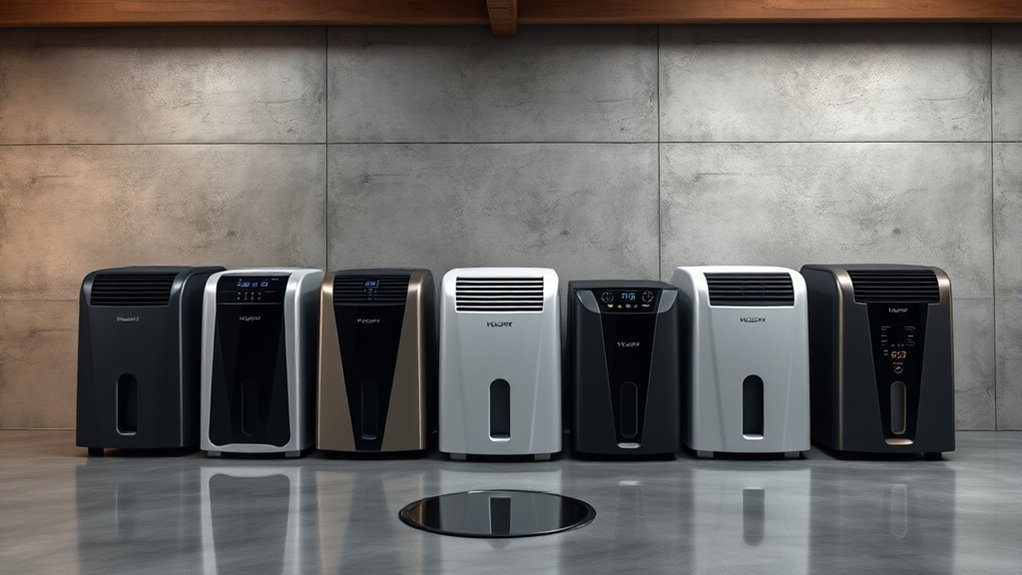
Choosing the best dehumidifier for your home in 2026 depends on the actual moisture load, room layout, temperature, drainage access, tank size, operating noise, and electrical compatibility. The eight compressor models below cover lower-capacity room use, medium-size living areas, laundry drying, large damp spaces, and pump-assisted drainage. The comparisons focus on practical differences and rating conditions instead of treating advertised square-foot coverage as a guarantee.
How these models were compared:
- Moisture-removal rating and the conditions behind the number
- Bucket, gravity-hose, and pump drainage options
- Room type, moisture severity, placement, and portability
- Control features, maintenance needs, brand support, and honest limitations
Quick Comparison
| Product | Best For | Capacity Context | Drainage | Amazon |
|---|---|---|---|---|
| AEOCKY 4500 Sq.Ft Smart Compressor | Best overall for large damp spaces | 80-pint maximum; seller also lists a 56-pint standard figure | Tank or continuous gravity hose | Check Price on Amazon |
| AEOCKY 4500 Sq.Ft With Pump | Best when water must drain upward | Up to 80 pints/day under stated test conditions | Tank, gravity hose, or pump | Check Price on Amazon |
| Midea 22 Pint | Moderate moisture and lower-capacity needs | 22 pints/day under the current rating method | Tank or optional hose | Check Price on Amazon |
| KNKA 2500 Sq.Ft | Mid-capacity rooms and laundry areas | Up to 34 pints/day under stated conditions | Tank or included hose | Check Price on Amazon |
| Waykar 80 Pints | Large areas and wide airflow | Up to 80 pints/day at 95°F and 90% RH | Tank or gravity hose | Check Price on Amazon |
| PLUSCENT 32 Pint | Laundry mode and bedrooms | Up to 32 pints/day at 95°F and 90% RH | 2L tank or included hose | Check Price on Amazon |
| Tehanld 5000 Sq.Ft 50 Pint | Large-room feature set | Seller-listed up to 50 pints/day | Tank or hose | Check Price on Amazon |
| AEOCKY 50 Pint | Compact compressor performance | 50 pints/day at 95°F and 95% RH; 38 pints/day at 86°F and 80% RH | Tank or included hose | Check Price on Amazon |
Before comparing numbers: A maximum figure measured in very hot, humid air is not directly comparable with a lower figure measured under a current standardized test. Use the rating conditions, tank size, room temperature, and drainage plan together. Square-foot claims are screening tools, not promises that one portable unit will control every room in a home.
AEOCKY 4500 Sq.Ft Smart Compressor Dehumidifier
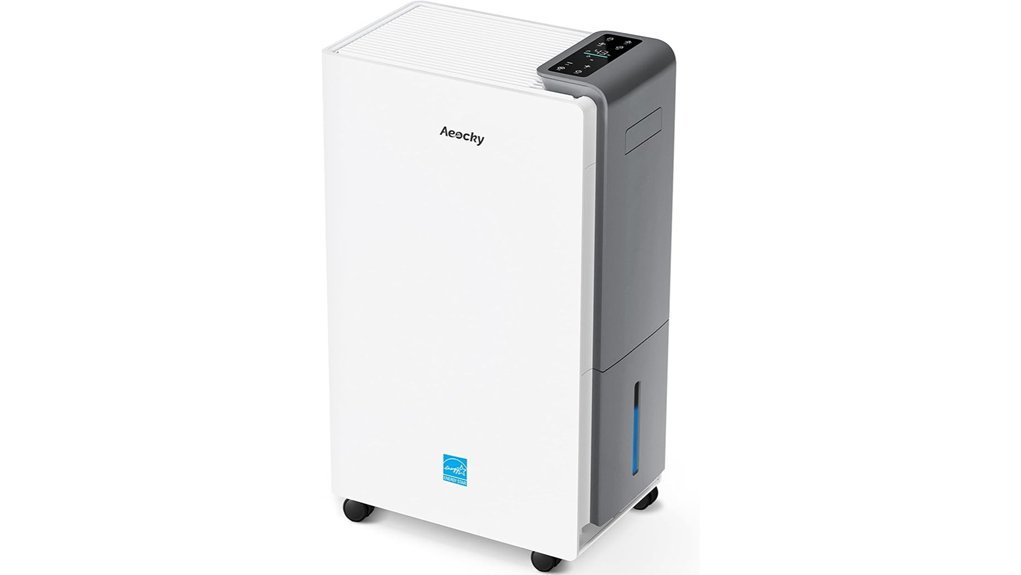
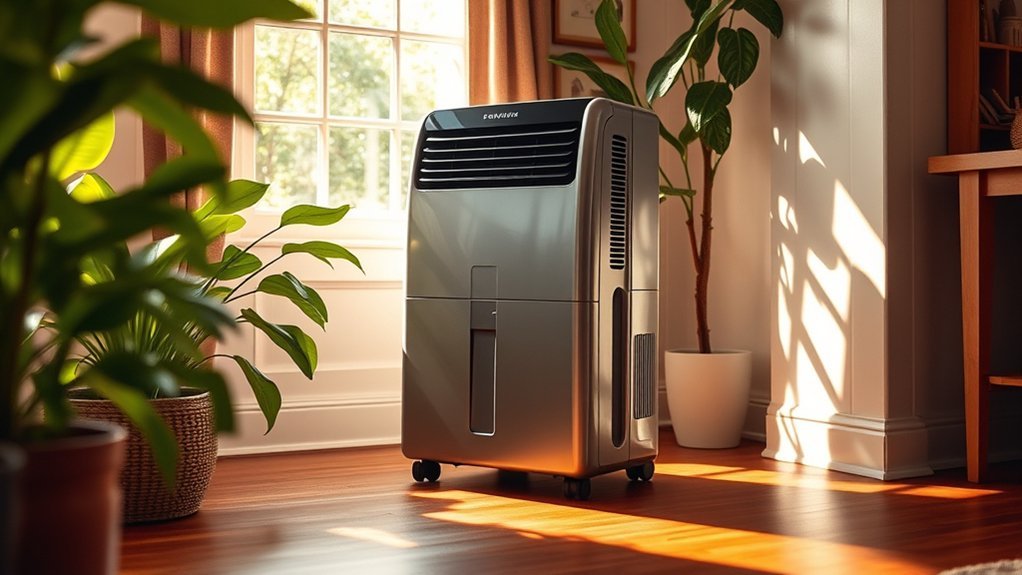
Best Overall: This AEOCKY RHEA-series compressor model is the most balanced large-space option in the roundup. The listing presents it as an 80-pint maximum-capacity unit and also gives a lower 56-pint standard figure, which is the more useful number for comparing it with conventionally rated models. It adds an adjustable humidistat, automatic operation, a timer, and continuous gravity drainage.
Why you’ll like it: It can manage persistent dampness without constant manual adjustment. The drain-hose option is especially useful in a basement, laundry room, or large living area with a nearby lower drain.
Who should buy this: Buyers with a large, consistently humid room who want automatic control and flexible drainage.
Who should avoid this: Anyone who only needs occasional moisture control in a small room, or anyone who has not confirmed electrical compatibility.
Pros:
- Useful 56-pint standard listing figure alongside the 80-pint maximum claim.
- Adjustable humidistat, timer, and automatic operating controls.
- Continuous gravity drainage can reduce tank-emptying work.
- Suitable for larger damp zones when correctly sized and placed.
Cons:
- The 80-pint figure is a maximum-condition claim, not the main comparison figure.
- Large-room performance depends on doors, airflow, temperature, and the moisture source.
- No built-in pump, so the hose must run continuously downhill to a suitable drain.
AEOCKY 4500 Sq.Ft Dehumidifier with Pump
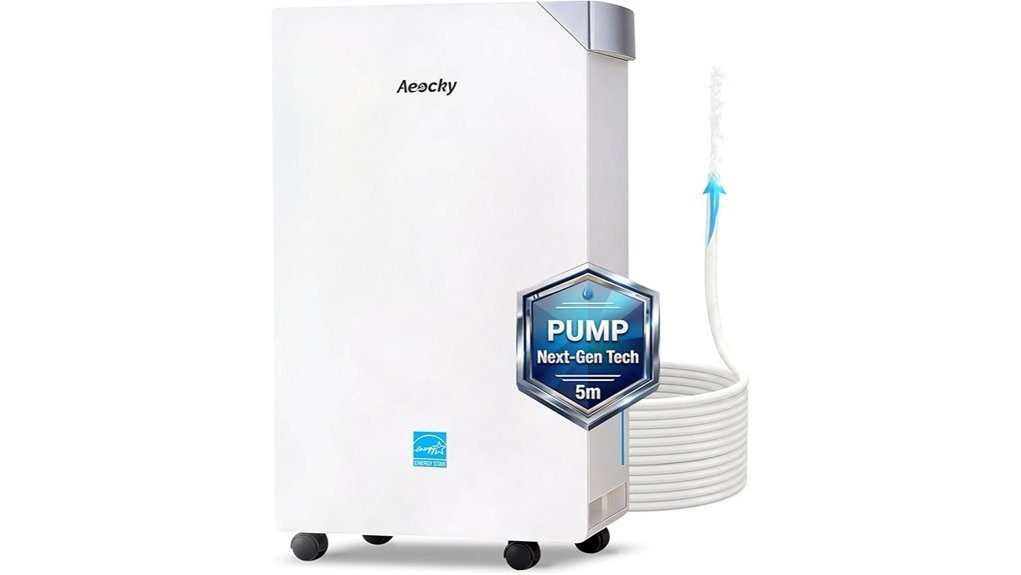
Best With Pump: This AEOCKY LEO-series model is the practical choice when collected water cannot flow downhill to a floor drain. Its built-in pump adds flexibility for draining into a sink, standpipe, or another approved outlet, but the installation still must stay within the pump-height and hose-routing limits in the manual.
Why you’ll like it: The pump can reduce daily maintenance in a high-humidity room where the bucket would otherwise fill quickly. Smart humidity control and automatic operation make it easier to maintain a chosen target.
Who should buy this: Buyers who need large-space moisture control and cannot use gravity drainage.
Who should avoid this: Buyers with an easy floor-drain setup who do not need the extra cost or complexity of a pump.
Pros:
- Built-in pump offers more drainage-placement flexibility.
- Tank, gravity-hose, and pump-assisted drainage options.
- Automatic humidity control and continuous-operation settings.
- High seller-listed maximum extraction for persistently humid spaces.
Cons:
- Pump hoses still have routing, lift-height, and maintenance limits.
- More components can mean more maintenance than a gravity-only model.
- The 80-pint figure is a maximum-condition claim and should not be treated as directly comparable with every standardized rating.
Midea 22 Pint ENERGY STAR Dehumidifier (White)
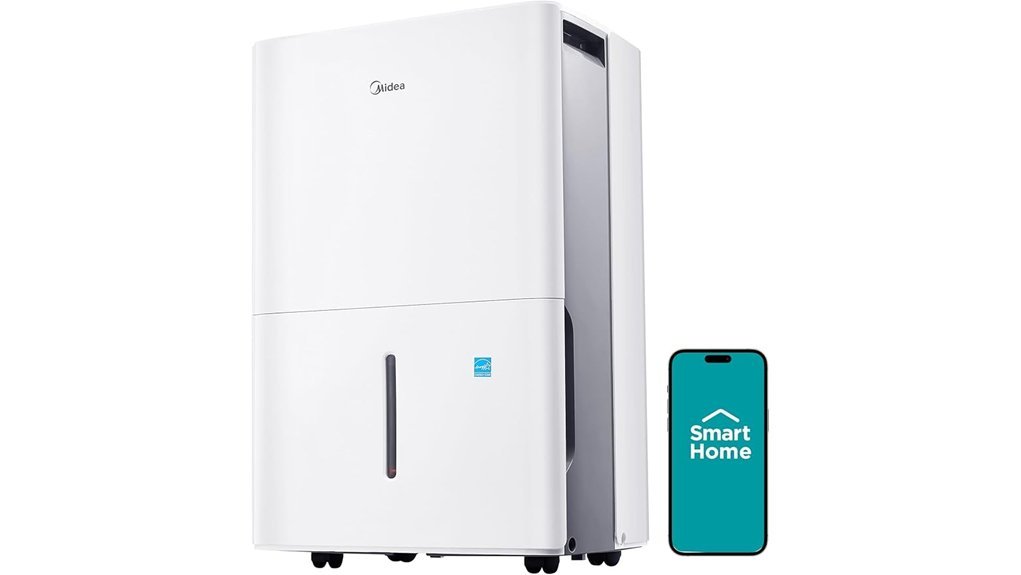
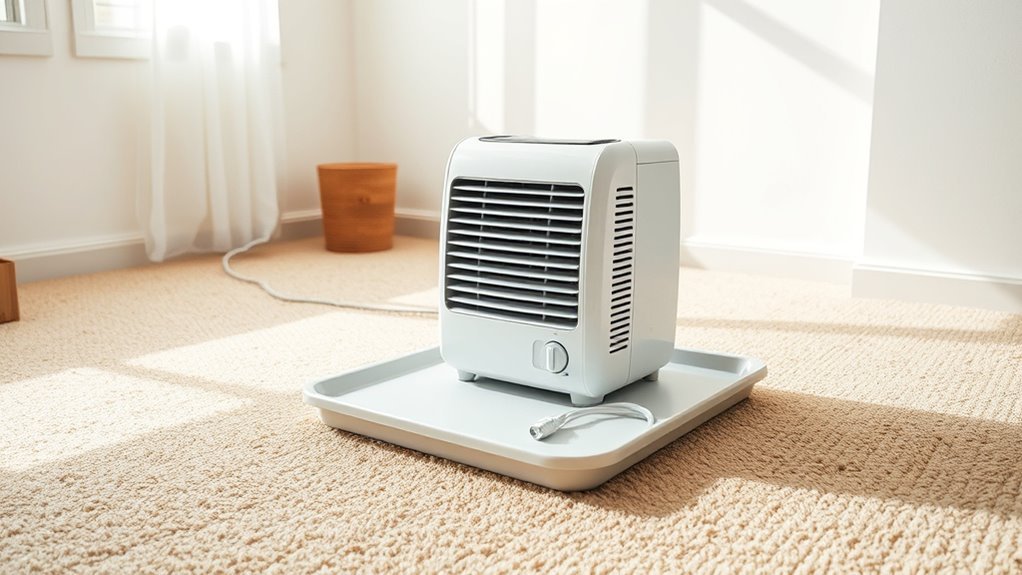
Best Lower-Capacity Pick: The Midea MAD22C1AWS is a more sensible match for moderate moisture problems than the 50- and 80-pint-class options. It is rated at 22 pints per day under the current test method and includes adjustable humidity control, automatic shut-off, caster wheels, a washable filter, and a continuous gravity-drain connection.
Why you’ll like it: The lower capacity can be easier to justify in a bedroom, office, bathroom area, or compact basement zone when the moisture problem is moderate rather than severe.
Who should buy this: Buyers who want a well-established model, a current 22-pint rating, and straightforward tank or gravity-hose drainage.
Who should avoid this: Buyers dealing with flooding, severe water intrusion, or a very large open space.
Pros:
- 22-pint current rating suits moderate moisture loads.
- ENERGY STAR certification is listed for the exact model.
- Automatic shut-off helps prevent bucket overflow.
- Wheels and a washable filter simplify routine use.
Cons:
- The bucket may need frequent emptying in very humid conditions.
- A compatible drain hose may need to be purchased separately.
- This exact ASIN is the EasyDry model, not the newer Smart Access version, so do not expect app control.
KNKA 2500 Sq.Ft Dehumidifier with Drain Hose
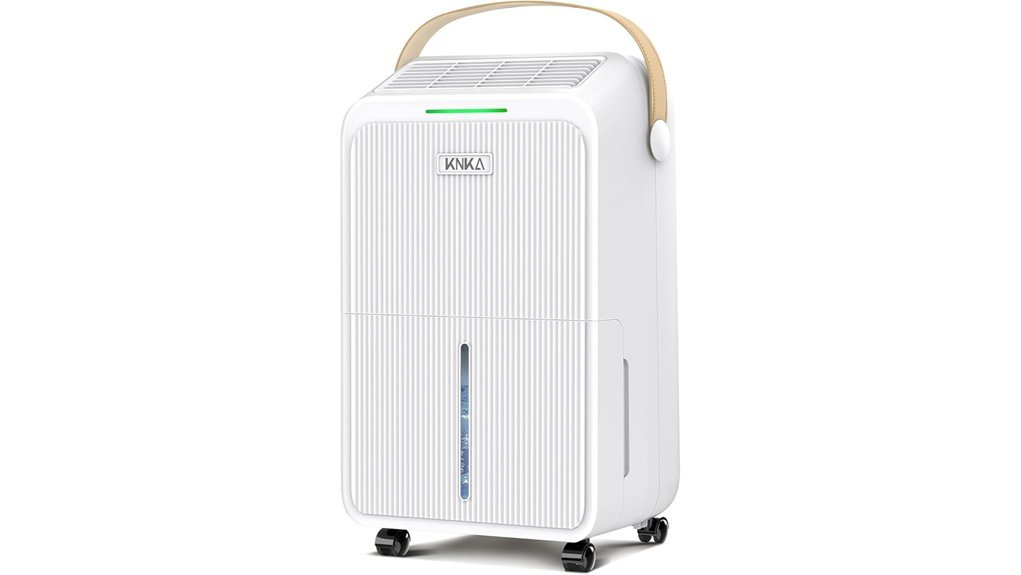
Best Mid-Capacity Feature Set: The KNKA PD22SC-12 offers a seller-listed 34-pint daily capacity, a removable tank, an included drain hose, and dehumidifying, continuous, and clothes-drying modes. It is a useful middle ground for buyers who need more moisture removal than a lower-capacity unit but do not need an 80-pint maximum-class machine.
Why you’ll like it: Continuous drainage, automatic defrost, a timer, child lock, and caster wheels make it convenient for regular home use.
Who should buy this: Buyers seeking a feature-rich compressor dehumidifier for a bedroom, basement zone, bathroom area, or laundry space.
Who should avoid this: Buyers who need a built-in pump or who cannot place the hose below the drain outlet.
Pros:
- Up to 34 pints per day under the seller’s stated conditions.
- Included hose supports continuous gravity drainage.
- Multiple modes, timer, child lock, and washable filter.
- Caster wheels improve mobility.
Cons:
- The tank can fill quickly in high humidity.
- Gravity drainage requires a suitable lower outlet.
- Coverage claims should not replace room-specific sizing.
Waykar 80 Pints ENERGY STAR Dehumidifier for Home
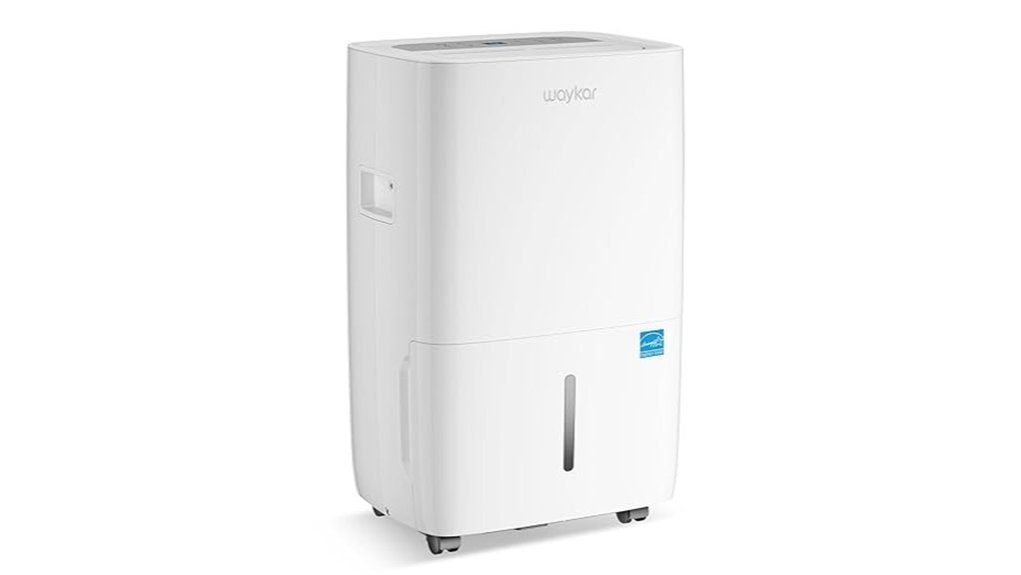
Best for Wide Air Distribution: The Waykar JD025CE-80 combines a seller-listed 80-pint capacity at 95°F and 90% relative humidity with automatic swing, adjustable humidity control, a 1.14-gallon tank, and gravity drainage. It is intended for a large residential zone where broader airflow is useful.
Why you’ll like it: The adjustable swing outlet can distribute airflow more broadly than a fixed vent, while the official listing also gives a 42 dB operating figure under its stated conditions.
Who should buy this: Buyers managing a large damp area with access to a suitable drain.
Who should avoid this: Buyers in small apartments or anyone needing a compact, lightweight unit.
Pros:
- 80-pint seller-listed capacity with test conditions disclosed.
- Automatic swing helps distribute airflow.
- Adjustable humidistat and continuous gravity-drain option.
- ENERGY STAR certification is listed for the product.
Cons:
- Larger footprint and weight than lower-capacity units.
- The 80-pint figure is measured under hot, humid conditions.
- Manual tank use can require frequent emptying in a persistently wet room.
PLUSCENT 32 Pint Dehumidifier for Home
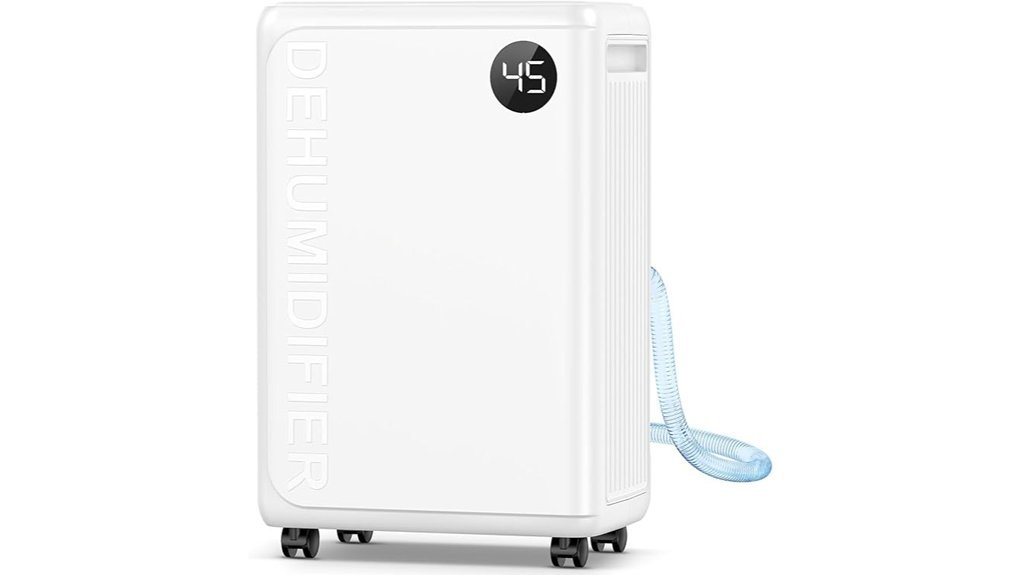
Best for Laundry Mode: The PLUSCENT PD10 is designed for medium-size rooms and includes dehumidifying, continuous, and clothes-drying modes. Its 24-hour timer, child lock, washable filter, 2-liter tank, and included gravity-drain hose add useful everyday convenience.
Why you’ll like it: The drying mode can support indoor laundry by reducing surrounding moisture, although it does not replace proper ventilation or a clothes dryer.
Who should buy this: Buyers who want a mid-capacity unit with a dedicated laundry setting.
Who should avoid this: Buyers who need a built-in drainage pump or a larger water tank.
Pros:
- Up to 32 pints per day at the seller’s stated 95°F and 90% RH conditions.
- Three modes provide flexible humidity management.
- Included hose supports continuous drainage.
- Child lock and automatic shut-off improve usability.
Cons:
- The 2L tank may fill quickly.
- Continuous drainage requires a lower drain point.
- Advertised coverage can vary considerably in open or very wet spaces.
Tehanld 5000 Sq.Ft 50-Pint Dehumidifier with Smart Humidity Control
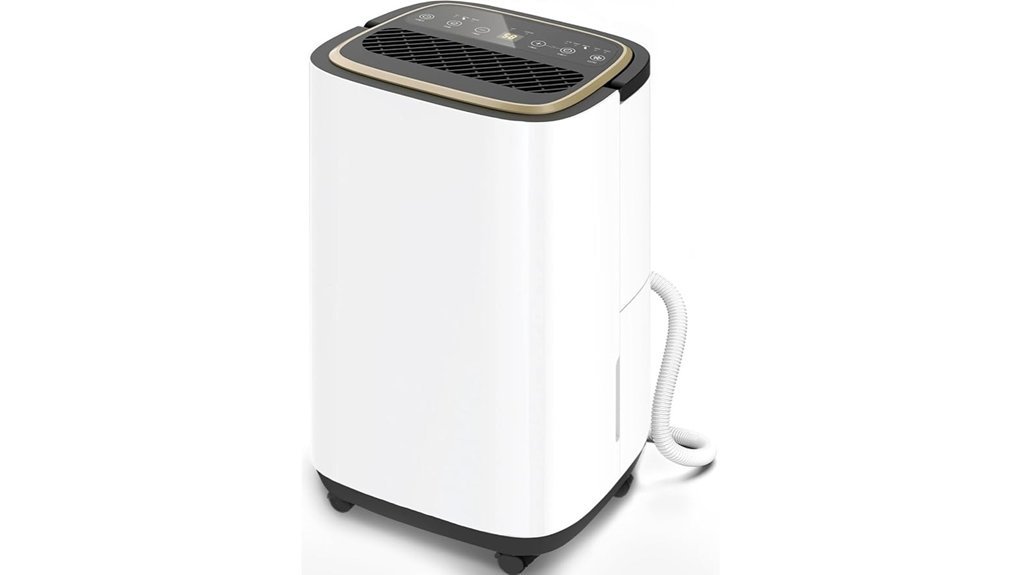
Best for Buyers Comparing More Features: The Tehanld 2026 Promax001 is seller-listed as a 50-pint-class model for large rooms. Its feature list includes adjustable humidity settings, two fan speeds, a drying mode, a timer, automatic defrost, automatic shut-off, and continuous gravity drainage.
Why you’ll like it: The digital controls and portable layout make it straightforward to configure for different room tasks, while the drying and continuous-drain modes add flexibility.
Who should buy this: Buyers who want a broad feature set and are comfortable checking a lesser-known brand’s warranty and service terms.
Who should avoid this: Buyers who prioritize an established service network or independently verified long-term performance.
Pros:
- Seller-listed 50-pint-class daily capacity.
- Humidity, drying, and air-circulation modes.
- Automatic shut-off, defrost, timer, and error display.
- Tank and continuous-drain options.
Cons:
- The 5,000 sq. ft. claim is highly dependent on layout, temperature, and moisture load.
- Independent documentation and long-term brand-support information are more limited than for established brands.
- The removable tank may need frequent emptying without a drain hose.
AEOCKY 50 Pint Dehumidifier with Drain Hose
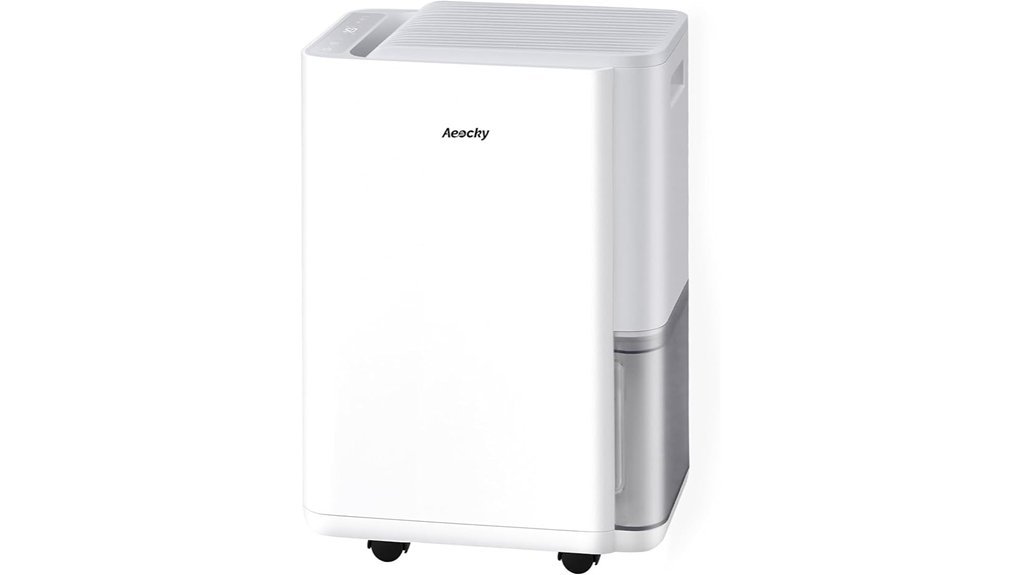
Best Compact Compressor Option: The AEOCKY ARION-001 combines a compact cabinet with a seller-listed output of 50 pints per day at 95°F and 95% relative humidity, plus 38 pints per day at 86°F and 80% relative humidity. It is designed for buyers who want compressor performance without the larger footprint of an 80-pint-class model.
Why you’ll like it: The included drain hose, adjustable humidistat, automatic controls, and compact shape make it practical for bedrooms, tight utility areas, or larger RV interiors only when the power supply, ventilation, clearance, and drainage requirements are confirmed.
Who should buy this: Buyers who need a compact compressor unit with continuous drainage.
Who should avoid this: Buyers who need a built-in pump or a large bucket for manual collection.
Pros:
- Compact footprint for its seller-listed extraction class.
- Continuous-drain hose and garden-hose adapter are listed.
- Adjustable humidity control and automatic shut-off.
- Useful 38-pint figure at 86°F and 80% RH for added context.
Cons:
- The 0.5-gallon tank can fill quickly at high output.
- The 50-pint figure is based on very hot, humid conditions.
- Gravity drainage requires correct downhill hose placement.
Factors to Consider When Choosing a Dehumidifier
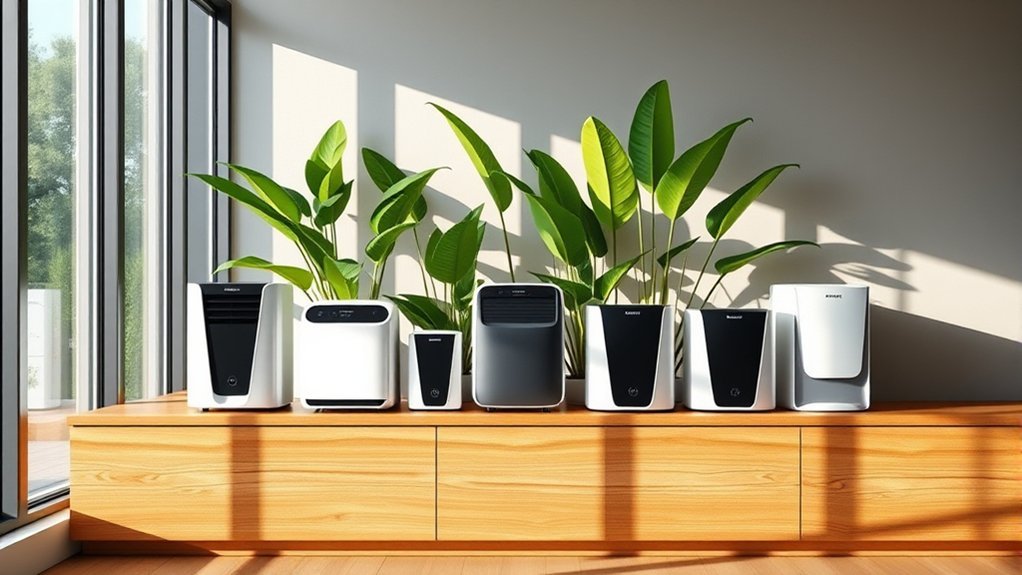
The best model is not always the one with the largest number on the box. Use the checklist below to match the machine to the actual room, moisture source, drainage setup, and maintenance routine.
Before you buy:
- Measure the room or connected zone and identify the moisture source.
- Compare rating conditions, not only the largest pint number.
- Choose tank, gravity drain, or pump drainage before selecting a model.
- Confirm outlet voltage, grounding, hose route, clearance, and noise tolerance.
- Check the exact model number, written warranty, and replacement-part support.
1. Room Size and Moisture Load
Start with the room’s floor area, ceiling height, number of doors, airflow, temperature, and how damp the space feels. A mildly humid bedroom needs less capacity than a basement with visible condensation. Manufacturer square-foot ratings are useful for screening options, but they are not a guarantee of identical performance. Portable dehumidifiers work best in a room or connected zone with reasonable air circulation; they are not the same as a ducted whole-home system.
2. Moisture-Removal Capacity
Compare pints per day only after checking the test conditions. Some brands emphasize a maximum figure measured in very hot, humid air, while a current standardized figure may be lower. A higher-capacity unit can remove moisture faster, but it may also cost more, take up more room, use a smaller bucket relative to its output, and create more noise than a properly sized model.
3. Voltage, Frequency, and Plug Compatibility
Read the product nameplate and manual before buying an imported appliance. Confirm voltage, frequency, plug type, grounding requirements, extension-cord restrictions, and local warranty support. A plug adapter changes the plug shape; it does not safely convert voltage or frequency. Use only equipment approved for the local electrical supply, and do not place the unit where it can be splashed or reached from a tub or shower.
4. Drainage Options
A removable bucket is simple but requires regular emptying. Gravity drainage is more convenient when a floor drain is below the outlet and the hose can slope downward without loops. A built-in pump is useful when water must travel upward, but pump height, hose length, cleaning, and routing limits still apply. Secure every hose so it cannot kink, leak, backflow, or create a tripping hazard.
5. Noise and Placement
Published sound levels are often measured under controlled conditions and may differ by fan speed, compressor cycling, floor surface, and room acoustics. For a bedroom, prioritize a lower fan setting or sleep mode and place the unit on a firm, level surface with the manual’s required clearance around the air inlet and outlet.
6. Tank Size and Maintenance
A small tank may be acceptable with continuous drainage but inconvenient for manual use. Clean the washable filter on the schedule in the manual, inspect the tank and hose, and keep airflow openings clear. Regular maintenance supports efficiency and helps prevent odors or unexpected shutdowns.
7. Humidistat, Controls, and Safety
Useful features include an adjustable humidistat, automatic shut-off, full-tank alert, automatic defrost, timer, child lock, and restart memory. “Smart” in a product name may refer only to automatic humidity control, not Wi-Fi or app access. Do not use a dehumidifier to compensate for an active plumbing leak, flooding, or structural water entry. Fix the moisture source whenever possible.
8. Warranty and Brand Support
Check who handles warranty claims, whether return shipping is covered, whether registration is required, and whether replacement filters, tanks, hoses, or pump parts are available. A long written warranty is more valuable when the seller, exact model number, exclusions, and service process are clearly identified.
Frequently Asked Questions
How Often Should I Empty My Dehumidifier’s Water Tank?
Empty it whenever the full-tank indicator appears. In very humid conditions, a small bucket may fill daily or even faster. Continuous drainage is more practical for unattended or long-duration operation.
What Maintenance Is Required for Dehumidifiers?
Clean the filter, rinse and dry the tank, inspect the drain hose, keep air openings clear, and follow the manufacturer’s storage and restart instructions. Always unplug the unit before cleaning.
Can Dehumidifiers Help With Allergies?
Reducing excess indoor moisture may make the environment less favorable for mold and dust mites, but a dehumidifier is not a medical treatment or a replacement for cleaning, ventilation, leak repair, or professional advice.
Are Dehumidifiers Noisy During Operation?
Compressor dehumidifiers produce fan and compressor noise. Sleep modes and lower fan speeds can reduce disruption, but actual sound depends on placement, room acoustics, and operating load.
How Do I Know the Right Size for My Space?
Measure the room, assess how damp it is, and compare standardized capacity rather than relying only on advertised coverage. Choose extra capacity for persistently wet conditions, but address leaks or water intrusion first.
What Humidity Level Should I Set?
A starting target around 45% to 50% relative humidity is practical for many homes, but comfort, climate, condensation, and the manufacturer’s operating range matter. Avoid forcing the setting unnecessarily low because that can increase runtime and energy use.
Can One Portable Dehumidifier Control an Entire House?
Usually not unless the home is small and air moves freely between connected rooms. Closed doors, multiple floors, isolated bedrooms, and active moisture sources can prevent one portable unit from controlling the whole building. Treat square-foot claims as guidance for an open zone rather than guaranteed whole-house coverage.
Is a Built-In Pump Worth It?
A pump is worth considering when the only suitable drain is above the dehumidifier or across a route that gravity drainage cannot serve. For a nearby floor drain, a simpler gravity-hose model is usually easier to maintain.
Can I Use a U.S. Dehumidifier in Another Country?
Only when the appliance nameplate explicitly supports the local voltage and frequency, or when a qualified professional approves a correctly sized conversion setup. Do not assume that a plug adapter makes a 115V appliance safe on a 230V supply.
Conclusion
Final recommendation: Choose the AEOCKY 4500 Sq.Ft Smart Compressor for a strong balance of large-zone capacity, automatic humidity control, and gravity drainage. Choose the AEOCKY pump model when water must drain upward. For moderate moisture and a lower current capacity rating, the Midea 22 Pint is the more practical starting point. The Waykar 80 Pints is the stronger alternative when wider airflow is a priority, while the PLUSCENT 32 Pint is the clearest laundry-mode option.
Before ordering, confirm the exact model number, rating conditions, tank size, drain-hose or pump requirements, electrical rating, warranty terms, noise expectations, and available installation space. Correct sizing, safe placement, and a reliable drainage plan matter more than choosing the largest advertised coverage number.