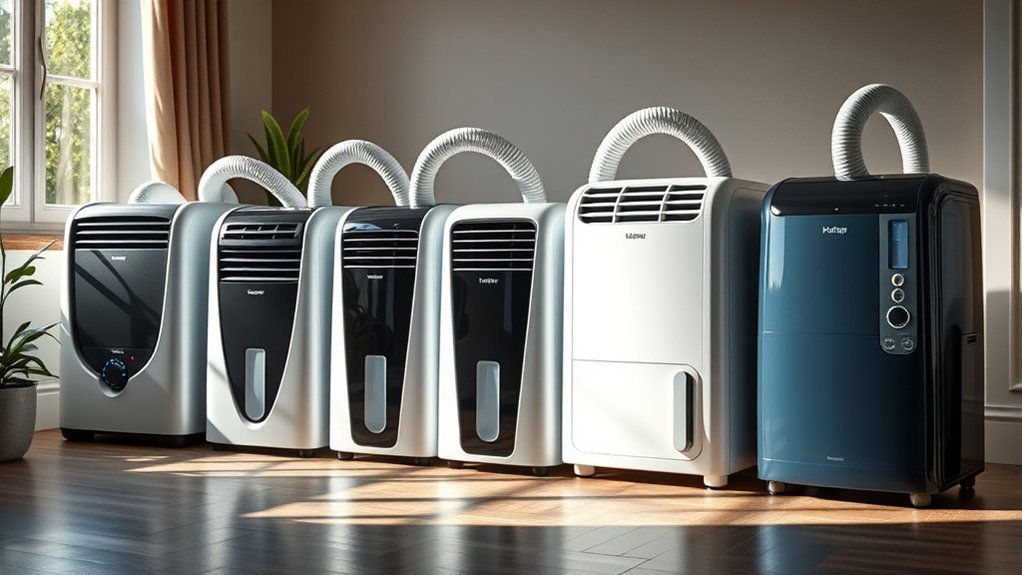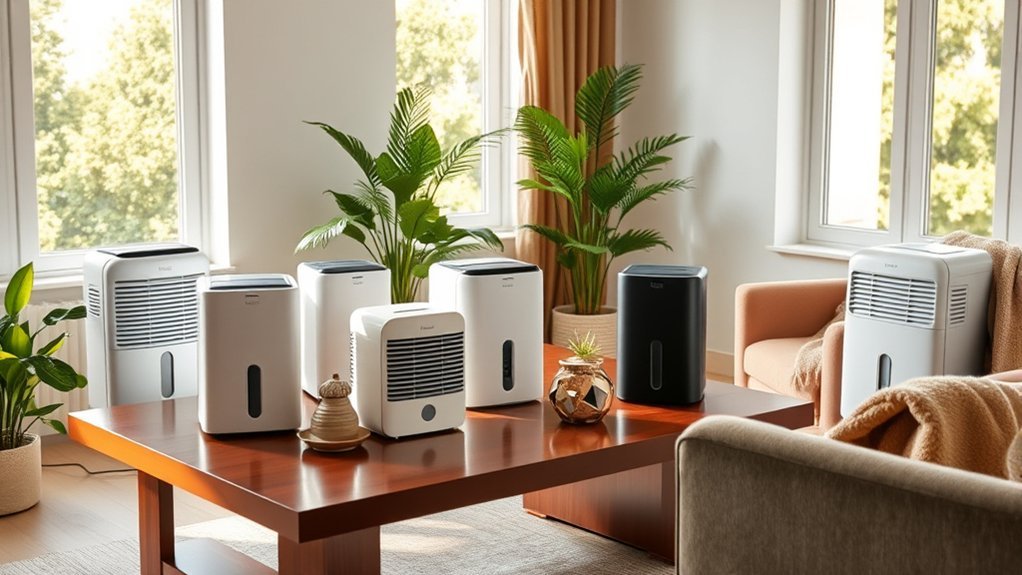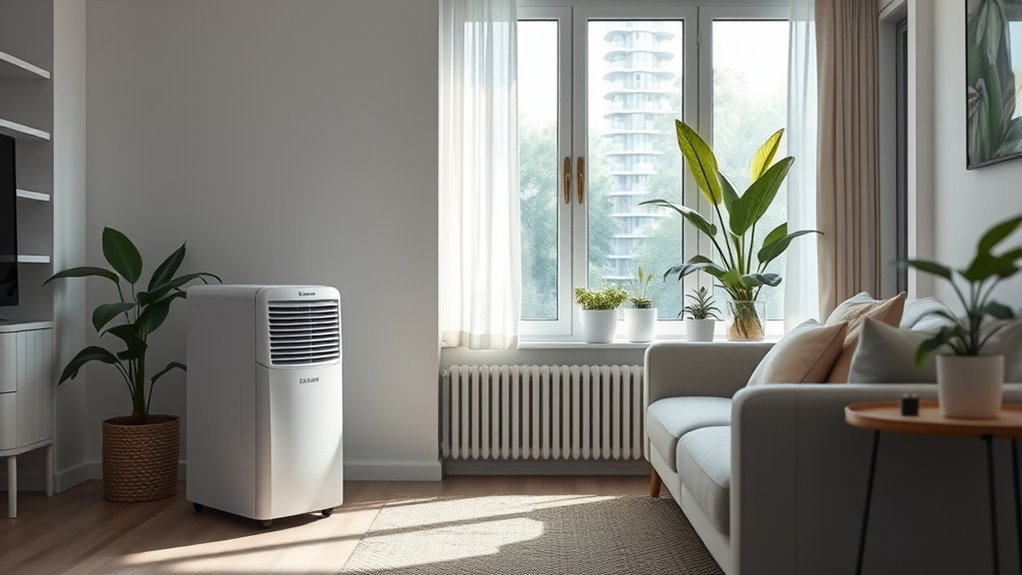
Last updated: August 19, 2026
For most apartments and flats, start with a 10L to 12L dehumidifier, then adjust based on your actual humidity level, layout, room temperature, occupancy, and daily moisture sources. A 10L model is a sensible starting point for many small one- or two-bedroom flats with light condensation. Choose 12L if you regularly dry laundry indoors, have more than two people at home, or deal with persistent moisture. Consider 15L to 20L for larger open-plan apartments or unusually heavy moisture loads.
Quick Answer
For a typical apartment, start with a 10L dehumidifier for mild condensation in a small one- or two-bedroom flat. Move to 12L for regular indoor laundry, higher occupancy, or persistent damp. Consider 15L to 20L for a larger open-plan layout or a much heavier moisture load. If you have leaks, wet plaster, water staining, or spreading mould, fix the moisture source rather than simply buying a larger machine.
Key Takeaways
- Measure humidity first with a hygrometer; aim for roughly 30% to 50% relative humidity and avoid letting damp rooms sit above 60%.
- A 10L unit suits light, seasonal condensation; a 12L unit gives more headroom for indoor laundry, higher occupancy, or damp that returns daily.
- The 10L, 12L, or 20L figure is a daily moisture-removal rating under test conditions, not the size of the water tank.
- Room temperature matters. If the space often gets cold, check that the model is rated to work effectively at that temperature.
- A dehumidifier helps control air moisture, but it does not fix leaks, failed ventilation, rising damp, or mould caused by a continuing water source.
At a Glance
| Time Required | 10 minutes to check room size and features; 24 hours to monitor humidity properly |
| Difficulty | Easy |
| Tools Needed | Hygrometer, tape measure or floor-plan estimate, socket near the damp area, optional drain hose |
| Typical Starting Capacity | 10L for light moisture in many small flats; 12L for higher daily moisture; 15L to 20L for larger or higher-load spaces |
What Size Dehumidifier Does Your Apartment Need?
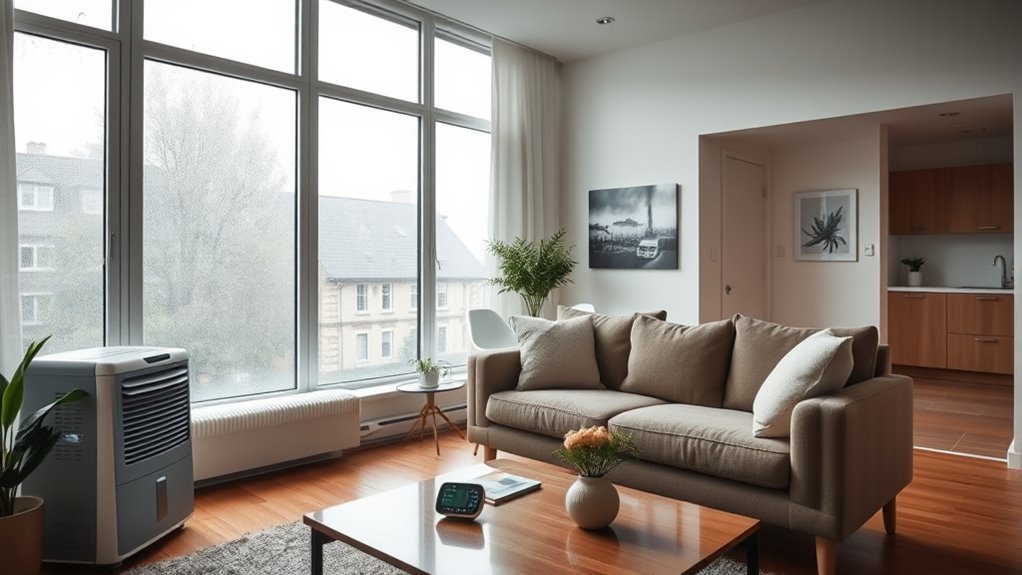
To choose the right dehumidifier size for your apartment, match capacity to three things: floor area, moisture level, and how much moisture you create each day. Cooking, showers, indoor clothes drying, poor ventilation, and cold external walls all raise the moisture load.
In the UK, compact units are usually described in litres per day. In the US, capacity is commonly listed in pints per 24 hours. ENERGY STAR explains that capacity depends on both the size of the space and the dampness conditions, not floor area alone.
Note: A 10L dehumidifier is roughly equal to 21 US pints per day, while a 12L unit is roughly equal to 25 US pints per day. Do not confuse a 10L model with a 10-pint model. Also remember that 10L or 12L describes the rated moisture extraction over 24 hours under test conditions; it does not mean the collection tank holds 10 or 12 litres.
| Apartment condition | Best starting size | Good fit for |
| Light condensation, no musty smell, humidity usually below 60% | 10L per day | Studio, small one-bedroom, or mild seasonal damp |
| Regular window condensation, indoor laundry, more than two occupants, or humidity often above 60% | 12L per day | Many one- to two-bedroom flats with a higher daily moisture load |
| Open-plan layout, larger flat, heavy laundry drying, or a moisture load a smaller unit struggles to control | 15L to 20L per day | Larger apartments or spaces with unusually high moisture generation |
| Wet walls, leaks, water staining, or mould spreading despite ventilation | Do not size by appliance alone | Find and fix the water source first |
If you are buying a US-rated model, check the pint-per-day rating and remember that modern pint ratings are lower than older ratings for some comparable units. ENERGY STAR notes that DOE test changes introduced a cooler portable-dehumidifier test condition, so an older 30-pint unit may compare roughly with a newer 20-pint unit.
Recommended Products

Powerful & Energy-Efficient – Dual semiconductors pull out up to 34 oz of moisture daily at 86°F/80% RH, using only 1.3kWh of energy. As a home dehumidifier for rooms, it keeps air dry without spiking your electric bill.
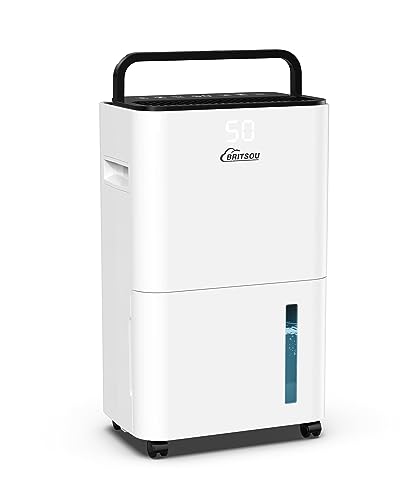
Max 30 pint moisture removal & covers 2,000 sq. ft.:Enough for a typical basement, a large bedroom, or a finished basement up to 2,000 sq.ft. Stops humidity from warping your wood floors or fogging up your windows. A solid 30 pint dehumidifier for East Coast homes.

3 IN 1 COMFORT - The Midea EasyCool Window Air Conditioner unit has three modes to help your house, apartment, office, or room be as comfortable as possible. It can cool a space up to 350 sq. ft. quickly, circulate air with its 3-speed fan, or reduce humidity utilizing the dehumidifier mode.Controller type:Remote Control.Air Flow efficiency:196.47 CFM.core material : Copper.Control Type : Electronic
How Damp Is Your Apartment?
Before you buy, check how damp your apartment actually is. Use a hygrometer in the dampest room for at least 24 hours. Place it away from direct steam, radiators, and open windows so the reading reflects normal room air.
The EPA recommends keeping indoor relative humidity below 60% and ideally between 30% and 50% where possible. In real apartment use, a practical target is often around 45% to 50% in damp rooms, as long as the air does not become uncomfortably dry.
- 30% to 50% RH: Good control for most homes. Avoid pushing much below 30%, especially in winter.
- 50% to 60% RH: Watch closely. Use ventilation, extractor fans, and a dehumidifier if condensation appears.
- Above 60% RH: Damp risk is higher, especially on cold walls, window frames, bathroom ceilings, and behind furniture.
- Musty smell, damp patches, or visible mould: Treat this as a moisture problem, not just a comfort issue.
A hygrometer is the cheapest way to avoid guessing. If your flat repeatedly sits above 60% RH after normal ventilation and moisture control, use that reading together with occupancy, laundry habits, layout, and room temperature when choosing capacity.
Use This 4-Step Apartment Sizing Rule
- Start at 10L for a small flat with light or seasonal condensation and a modest daily moisture load.
- Move to 12L if you regularly dry laundry indoors, have more than two occupants, or damp and condensation return most days.
- Consider 15L to 20L for a larger open-plan apartment, frequent heavy laundry drying, or a moisture load that a smaller correctly positioned unit cannot control.
- Stop sizing and investigate the building if you have leaks, growing water stains, wet plaster, penetrating water, or mould that keeps spreading. A larger appliance cannot repair the water source.
Temperature check: If the room often falls below 65°F (about 18°C), check the manufacturer’s low-temperature operating range. ENERGY STAR notes that frost can reduce the performance of some compressor dehumidifiers in colder conditions.
Also look at your routine. A single person in a well-ventilated studio may only need 10L. A couple drying clothes indoors in a one-bedroom flat may be better served by 12L. A family in a larger flat with daily laundry may need 15L to 20L or more, depending on layout and how quickly humidity falls.
Should You Buy a 10L or 12L Dehumidifier?
Choose a 10L model if your apartment has mild condensation, the humidity usually stays below 60%, and you mainly want to keep windows clear in colder months. It is the better choice when you want a compact unit that is easy to move and the apartment has a relatively light moisture load.
Choose a 12L model if damp comes back every day, you regularly dry washing indoors, your bathroom has poor extraction, or more than two people live in the flat. The extra capacity gives you more moisture-removal headroom when daily conditions are demanding.
- 10L: Best starting point for light, seasonal condensation and smaller moisture loads.
- 12L: Better for higher daily moisture, regular laundry drying, and persistent condensation.
- 15L to 20L: Consider for larger open-plan apartments, heavy laundry use, or spaces a smaller correctly used unit cannot control effectively.
Pro Tip: If you are stuck between two sizes, choosing the larger option can give you useful headroom if it has a humidistat. ENERGY STAR advises that it is generally better to oversize than undersize a portable dehumidifier, while the humidistat lets the machine respond to your target humidity.
Do not buy only by the biggest number on the box. A higher-capacity unit can be useful, but it may also be heavier, louder, and harder to place in a small flat. Choose enough capacity to control the normal moisture load without ignoring noise, footprint, temperature range, and drainage.
Recommended Products
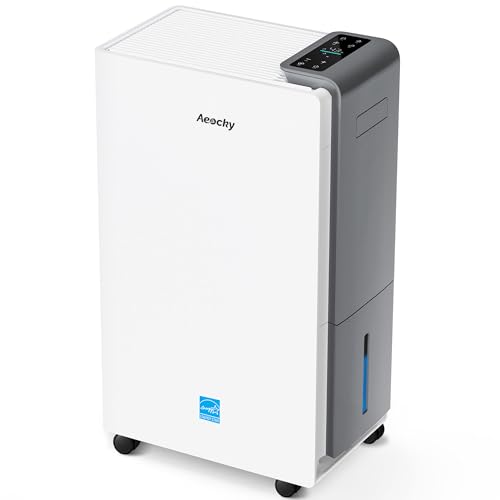
【ENERGY STAR 25 ≠ ENERGY STAR Most Efficient 2025】Don't fall for competitors' word games. With only 2.6% of ENERGY STAR models earning "Most Efficient 2025" title, these options are exceptionally rare on the market. RHEA-001 is one of the few to truly hold this top-tier certification. Many brands use misleading phrases like "Energy Star Efficient 25" or "Energy Star 25" to imply a standard they haven't met. Choosing them is a risk.With AEOCKY, you get verified performance and the peace of mind of authentic, top-tier efficiency.

【The Undisputed Champion — Industry-Leading Dehumidifier Brand】Choose AEOCKY, getting double market validation. According to data independently verified by Stackline, a leading third-party data analytics company, AEOCKY was an industry‑leading dehumidifier brand on Amazon U.S. in 2025. Meanwhile, it stands as a technology-leading rotary desiccant dehumidifier brand on Amazon. This isn’t just an appliance—it’s a complete humidity-control solution for small spaces. Skip low-performance alternatives and trust a brand recognized by the market.

【ENERGY STAR Certified & Powerful Moisture Removal】Covers up to 6,000 sq.ft. and removes up to 100 pints/day (95°F, 90%RH) or 60 pints/day (86°F, 80%RH). This ENERGY STAR dehumidifier with a high-efficiency compressor delivers reliable humidity control for basements, bedrooms, bathrooms, garages, and offices while helping reduce energy consumption.
Where Should You Place It in a Flat?
Place your dehumidifier where moisture builds up most. In many flats, that is near the bathroom door after showers, in the kitchen after cooking, beside an indoor clothes airer, or in a hallway that connects damp rooms.
For whole-flat control, put it in a central spot if the layout and manufacturer’s airflow requirements allow it, then keep relevant internal doors open. For laundry drying, use the smallest suitable room you can, close external windows and doors, and leave space around the clothes rack so air can move through the fabric.
- Keep the air intake and outlet clear and follow the manufacturer’s required clearances. Some top-discharge models can sit against a wall; others need free space around the intake.
- Close outside windows and doors while the unit is running so it is not continually trying to dehumidify incoming outdoor air.
- Use extractor fans during and after showers or cooking so the dehumidifier is not doing all the work.
- If using continuous drainage, keep the hose secure, correctly routed, and away from electrical cords and walkways.
- Move furniture slightly away from cold external walls if condensation or mould is developing behind it so air can circulate.
Warning: Do not place a standard plug-in dehumidifier where it can be splashed by a bath or shower unless the manufacturer specifically says it is safe for that location. Keep plugs, electrical connections, and drainage water separated.
If the machine runs constantly but the humidity barely drops, try a more effective position, clean the filter, close external windows, and check whether a leak or ventilation fault is adding moisture faster than the unit can remove it.
What Features Matter Most in Apartments?
In an apartment, the most useful dehumidifier features are the ones that save space, reduce noise, and cut daily hassle. Capacity matters, but so does whether you can live comfortably with the unit running.
- Humidistat: Lets you set a target humidity so the unit can respond automatically as conditions change.
- Quiet operation: Look for a low dB rating if you will use it in a bedroom, office, or open-plan living space.
- Laundry mode: Useful if you dry clothes indoors because it is designed to prioritize moisture removal during a drying session.
- Continuous drainage: Helpful if you run the unit for long periods or place it near a suitable drain.
- Auto shut-off: Stops collection when the tank reaches its full level on models that use a removable bucket.
- Washable filter: Helps maintain airflow when cleaned according to the manual.
- Carry handle and manageable weight: Important if you need to move it between rooms.
- Low-temperature operation: Important for cooler rooms, utility areas, or unheated spaces.
For cooler rooms, check the operating temperature. ENERGY STAR advises choosing a model specified for lower-temperature use if the space often falls below 65°F. Frost can affect compressor performance in colder air, so the manufacturer’s operating range matters as much as the headline litres-per-day figure.
Recommended Products

Semiconductor dehumidifiers use thermoelectric cooling to remove moisture from the air. They create a drier, more comfortable environment by reducing humidity and improving air quality.

Effective Moisture Control for Home Use: OWAAE dehumidifier is designed to reduce excess moisture and help maintain comfortable humidity levels in everyday living spaces. It works best in moderate-to-high humidity environments, improve overall air comfort at home

🍃Advanced Small Dehumidifier for Home: Designed for lasting home use, our bathroom dehumidifier works gently and steadily to maintain a balanced humidity level. The large 44 OZ (1.3L) water tank minimizes emptying frequency. Suitable for dorm room, camper, apartment, room, office and living room. No more dampness-just fresh, comfortable air everywhere
How Much Will It Cost to Run?
Do not compare dehumidifiers by “pence per kWh” alone. Electricity is sold by the kilowatt-hour; the appliance cost depends on how many watts the unit uses and how long it is actively drawing that power.
Use this simple formula:
Running cost per hour = wattage ÷ 1,000 × your electricity unit rate
For a current example, Ofgem lists an average electricity unit rate of 26.11p per kWh for Direct Debit customers on default tariffs in England, Scotland, and Wales from July 1 to September 30, 2026. Your actual tariff and regional rate may differ.
- A 165W unit costs about 4.3p per hour while actively drawing 165W.
- A 250W unit costs about 6.5p per hour while actively drawing 250W.
- A 300W unit costs about 7.8p per hour while actively drawing 300W.
Actual cost depends on the appliance’s real power draw and how often it needs to operate. UK tariffs also change, so check your bill or the latest Ofgem price cap unit rates if you are on a default tariff in Great Britain.
For the best balance, choose an energy-efficient model with a humidistat, use it with windows closed while dehumidifying, clean the filter according to the manual, and tackle moisture at the source. An undersized or badly positioned unit may need to work harder to control the same moisture load.
When a Dehumidifier Is Not Enough
A dehumidifier removes moisture from the air, but it does not repair the cause of structural damp. If you have a leak, blocked extractor fan, missing ventilation, failed window seals, penetrating damp, or water coming through a wall, investigate and repair that problem.
Call your landlord, building manager, or a qualified tradesperson if you notice:
- Water stains that grow after rain
- Wet plaster, bubbling paint, or crumbling skirting boards
- Mould spreading across walls or ceilings
- A musty smell that remains even when humidity is controlled
- Condensation inside double-glazing panes
- Extractor fans that do not pull steam out of bathrooms or kitchens
Note: If you rent, report leaks, failed fans, damp patches, and recurring mould in writing. A dehumidifier can reduce airborne moisture, but it should not become a substitute for necessary building repairs.
Troubleshooting Common Dehumidifier Problems
If your apartment still feels damp after buying the right size, check the setup before replacing the unit.
- Humidity is not dropping: Close external windows, clean the filter, improve the unit’s position, and check for leaks or constant moisture input.
- Tank fills very quickly: The flat may have a high moisture load. Keep monitoring RH, but also investigate leaks, wet laundry, poor extraction, or cold-wall condensation.
- Unit is noisy: Make sure it sits level, keep it away from loose furniture, and use a lower fan or quiet mode if the model provides one.
- Coils frost or performance drops: The room may be too cold for that model. Check its operating-temperature range.
- Air smells musty: Empty and clean the tank, clean or replace the filter according to the manual, and inspect nearby walls, carpets, and furniture for damp or mould.
- Clothes dry too slowly: Use a smaller suitable room, space garments apart, close external windows and the room door, and keep airflow moving around the drying rack without blocking the appliance.
Frequently Asked Questions
How big of a dehumidifier do I need for my apartment?
For many small apartments, start around 10L to 12L per day. A 10L model suits lighter condensation and modest moisture loads, while 12L gives more headroom for regular indoor laundry, higher occupancy, or persistent damp. Consider 15L to 20L for larger open-plan spaces or unusually high moisture loads.
Is a 10L or 12L dehumidifier better for an apartment?
Choose 10L for a smaller flat with mild or seasonal condensation. Choose 12L if you regularly dry clothes indoors, have more than two occupants, or moisture returns most days. Layout, temperature, and the actual humidity reading still matter, so litres per day should not be your only decision factor.
What humidity should I set my apartment dehumidifier to?
EPA guidance says indoor relative humidity should stay below 60% and ideally between 30% and 50% where possible. A target around 45% to 50% is a practical starting point for many damp rooms, provided the air remains comfortable and you follow any model-specific instructions.
Where should I put a dehumidifier in a flat?
Put it near the main moisture problem or in a central location if you want to treat connected rooms. Keep the intake and outlet clear, follow the manufacturer’s clearance instructions, and close external windows and doors while dehumidifying. For laundry, place it in the drying room without blocking airflow around the clothes.
Is a 10L dehumidifier enough for drying laundry indoors?
A 10L unit can help with occasional laundry in a small room, but a 12L or larger unit gives more capacity if you dry clothes indoors frequently. Use a suitable enclosed room, close external windows, space clothes apart, and use laundry mode if your model provides one.
Should I leave a dehumidifier running all day?
Follow the manufacturer’s operating instructions rather than running it blindly. A humidistat lets you choose a target RH so the machine can respond to changing conditions, while a full-tank auto shut-off or correctly installed continuous drain helps manage collected water. If it runs almost continuously without lowering humidity, check sizing, placement, temperature, ventilation, and possible water sources.
Conclusion
For most apartments, start with a 10L dehumidifier for light condensation and a modest moisture load, move to 12L when you regularly dry laundry indoors, have higher occupancy, or deal with recurring damp, and consider 15L to 20L for larger open-plan apartments or unusually demanding conditions. Check your indoor humidity with a hygrometer, consider room temperature as well as capacity, and choose useful features such as a humidistat, manageable noise level, washable filter, and safe drainage. If damp keeps returning despite controlled RH, investigate leaks, poor extraction, cold surfaces, or other building defects instead of simply buying a bigger appliance.
Sources
- US EPA Mold Course: Humidity — supports keeping RH below 60% and ideally between 30% and 50%, plus the relationship between cooking, showering, condensation, and indoor humidity.
- ENERGY STAR Dehumidifiers Buying Guidance — supports sizing by both space and dampness, drainage guidance, placement, low-temperature considerations, and the recommendation to avoid undersizing.
- ENERGY STAR Dehumidifier Testing and Capacity — supports the 24-hour capacity definition and DOE portable-dehumidifier test-procedure change.
- Ofgem Energy Price Cap Unit Rates — supports the July 1 to September 30, 2026 average electricity unit-rate example used in the running-cost calculation.
- Meaco: Which Dehumidifier Do I Buy for a Flat? — supports using a 10L model for many one- to two-bedroom flats and considering 12L when moisture problems or occupancy are higher.