Affiliate disclosure: This article contains Amazon affiliate links. We may earn a commission from qualifying purchases at no extra cost to you.
Choosing a low-energy dehumidifier is not only about buying the lowest-wattage model. A compact semiconductor unit can be economical for a closet, bathroom, RV, or small bedroom, while an efficient compressor dehumidifier is usually the better choice for a damp basement or larger living area. This updated 2026 guide compares seven relevant options by room size, moisture-removal method, drainage, operating features, and verified energy information where available.
How These Dehumidifiers Were Compared
- Verified wattage or ENERGY STAR information where available.
- Separated standardized capacity ratings from seller maximums measured in hotter, more humid conditions.
- Matched compressor and semiconductor models to realistic room and moisture loads.
- Compared drainage, tank size, automatic shut-off, defrost, portability, and everyday maintenance.
- Excluded products without enough dependable energy information for this specific low-energy comparison.
Quick Verdict
- Best overall for large damp areas: AEOCKY RHEA-001
- Best large-space option with a pump: AEOCKY LEO-001
- Best compact ENERGY STAR compressor option: Waykar PD160B-PRO
- Best 22-pint option for medium rooms: Midea 22-Pint
- Best compact 48W option: BREEZOME 60 OZ
- Best 28W option with a larger tank: BeOkay DH-A2
- Best for closets and very small spaces: NeedDuck B-2
Quick Comparison of the Best Low-Energy Dehumidifiers
| Product | Best For | Type | Key Energy Detail | Drainage | Amazon |
|---|---|---|---|---|---|
| AEOCKY RHEA-001 | Large basements and open areas | Compressor | Corresponding ENERGY STAR Most Efficient family lists an IEF of 2.21 L/kWh | Tank or gravity drain | Check Price |
| AEOCKY LEO-001 | Large spaces without a floor-level drain | Compressor with pump | Corresponding ENERGY STAR Most Efficient family lists an IEF of 2.21 L/kWh | Tank or powered pump | Check Price |
| Waykar PD160B-PRO | Small-to-medium rooms needing compressor performance | Compressor | ENERGY STAR Most Efficient; certified IEF of 1.91 L/kWh | Tank or gravity drain | Check Price |
| Midea 22-Pint | Medium rooms and smaller basements | Compressor | ENERGY STAR certified listing | Tank or continuous gravity drain | Check Price |
| BREEZOME 60 OZ | Small bedrooms, RVs, and bathrooms | Dual semiconductor | 48W rated input | Manual tank | Check Price |
| BeOkay DH-A2 | Small enclosed rooms and low-wattage use | Semiconductor | 28W rated input | Manual tank | Check Price |
| NeedDuck B-2 | Closets, RVs, and compact bathrooms | Semiconductor | 28W rated input | Manual tank | Check Price |
Important capacity note: Some brands advertise a higher maximum moisture-removal figure measured in hot, very humid conditions. ENERGY STAR and Department of Energy figures use standardized test conditions, so a certified pint rating can be substantially lower. Compare models using the same test basis whenever possible and confirm that the model number on the appliance matches the certification entry.
AEOCKY RHEA-001 4500 Sq.Ft Energy Star Dehumidifier
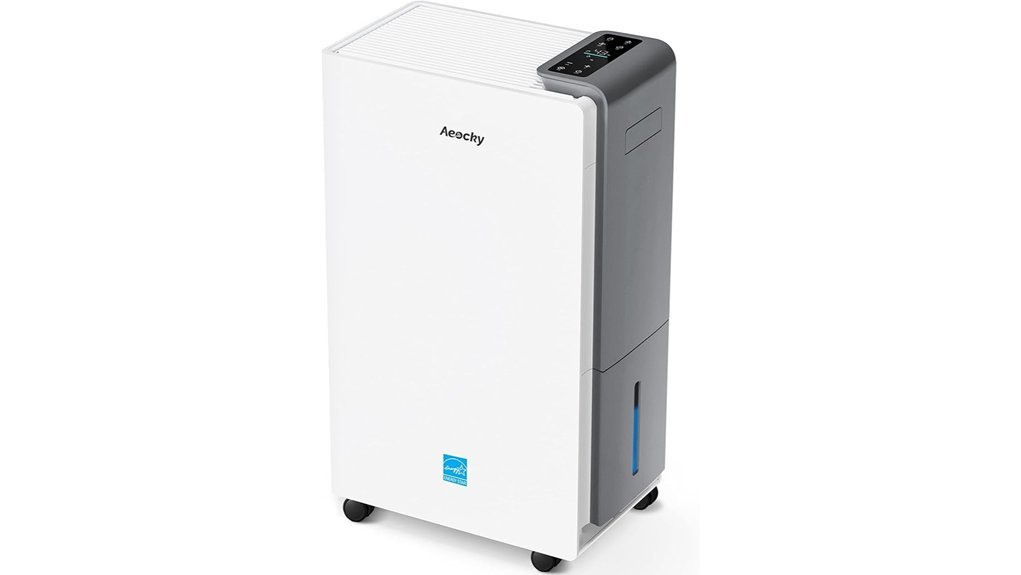
Best Overall for Large Damp Spaces
The AEOCKY RHEA-001 is the strongest all-around choice in this comparison for a damp basement, large living area, laundry room, or another space that needs compressor-level moisture removal. The seller promotes removal of up to 80 pints per day under very warm, highly humid conditions. A corresponding RHEA PRO family entry in the ENERGY STAR database uses standardized conditions and reports a capacity of approximately 44 pints per day with an Integrated Energy Factor of 2.21 L/kWh.
Those figures do not conflict; they describe performance under different test conditions. For the most accurate comparison, check the exact model number on the current listing and appliance label against the ENERGY STAR product database.
Useful features include an adjustable humidistat, automatic defrost, power-off memory, timer controls, a washable filter, tank collection, and gravity-drain support. It is a substantially better fit than a mini semiconductor unit when a room has persistent humidity rather than occasional window condensation.
Why You’ll Like It: It combines high-capacity moisture removal, strong standardized efficiency, and practical controls for unattended operation with a suitable gravity drain.
Who Should Buy This: Homeowners managing a basement, large room, laundry area, or consistently humid space with access to a lower drain point.
Who Should Avoid This: Anyone who only needs occasional moisture control in a closet, RV, or tiny bathroom.
Pros:
- Corresponding ENERGY STAR Most Efficient family has a strong IEF rating.
- Designed for persistent humidity in larger areas.
- Gravity drainage reduces manual tank emptying.
- Includes humidistat, defrost, timer, memory, and filter-maintenance features.
Cons:
- Larger and heavier than semiconductor units.
- The seller’s maximum pint figure should not be compared directly with standardized ratings.
- Gravity drainage requires a continuously downward-sloping hose route.
- A separate condensate pump may be needed when the drain is above the unit.
AEOCKY LEO-001 4500 Sq.Ft Energy Star Dehumidifier with Pump
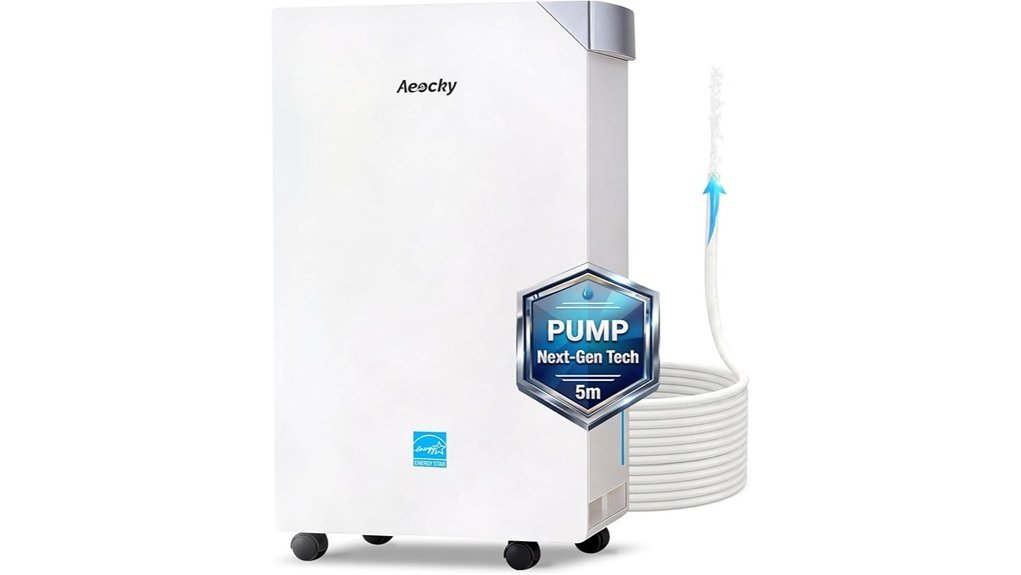
Best Large-Space Pick with a Pump
The AEOCKY LEO-001 targets the same large-space buyer as the RHEA but adds a powered drainage pump. That matters when the nearest sink or drain is above the machine or when a continuously downward-sloping gravity hose is impractical. The current product information describes an included upward-drainage hose of approximately 5 meters.
The seller promotes moisture removal of up to 80 pints per day in very warm, highly humid conditions. A corresponding LEO PRO family entry in the ENERGY STAR database uses standardized conditions and reports approximately 45 pints per day with an IEF of 2.21 L/kWh. Confirm the exact certification model number before purchase because product-family and retail model names can differ.
An adjustable humidistat, automatic operation, tank collection, powered pump drainage, defrost, timer controls, and power-off memory make this a practical set-and-maintain choice. The pump is the main reason to choose the LEO over the RHEA.
Why You’ll Like It: The built-in pump allows more flexible placement and can move collected water to a higher drain.
Who Should Buy This: Buyers with a large damp area and no convenient floor-level drain.
Who Should Avoid This: Buyers who already have an easy gravity-drain route and do not need the added pump system.
Pros:
- Corresponding ENERGY STAR Most Efficient family has a strong IEF rating.
- Powered pump supports upward drainage.
- High-capacity compressor design for persistent humidity.
- More flexible placement than a gravity-drain-only model.
Cons:
- Usually costs more than a comparable gravity-drain model.
- The pump and hose add components that require inspection and cleaning.
- Bulky for small rooms and occasional use.
- The seller maximum and standardized capacity use different test conditions.
Waykar PD160B-PRO 1500 Sq. Ft Energy Star Dehumidifier
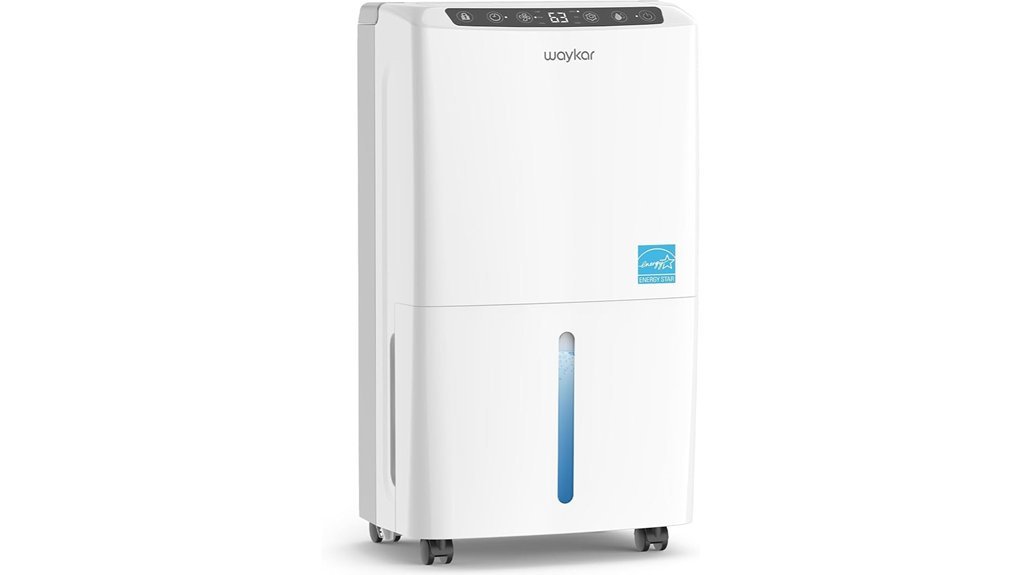
Best Compact ENERGY STAR Compressor Pick
The Waykar PD160B-PRO is a compact compressor dehumidifier for bedrooms, offices, living rooms, and other small-to-medium spaces that need more extraction than a semiconductor unit can provide. The current seller listing promotes coverage up to 1,500 square feet and removal of up to 30 pints per day under hot, highly humid conditions.
Its standardized ENERGY STAR entry reports a lower capacity of 10.16 pints per day and an IEF of 1.91 L/kWh. The difference reflects the use of different test environments, so the standardized figure is the more useful number when comparing it with other certified dehumidifiers.
The unit provides adjustable humidity control, a timer, automatic defrost, a washable filter, wheels, a lift handle, tank collection, and gravity drainage. Its approximately 0.62-gallon tank can fill quickly in humid conditions, making the included drain-hose option valuable for regular use.
Why You’ll Like It: It provides compressor-level moisture control in a smaller format with independently listed efficiency information.
Who Should Buy This: Buyers who have outgrown a mini dehumidifier but do not need a large 4,500-square-foot-class machine.
Who Should Avoid This: Buyers dealing with active water intrusion, a large continuously wet basement, or a drainage route above the appliance.
Pros:
- ENERGY STAR Most Efficient designation.
- Certified IEF of 1.91 L/kWh.
- Tank and continuous gravity-drain options.
- Portable design with wheels and a handle.
Cons:
- The compact tank may fill quickly without a drain hose.
- No built-in pump for upward drainage.
- Seller and certified pint ratings use different test conditions.
- Marketing square footage should not replace capacity-based sizing.
Midea 22 Pint Energy Star Dehumidifier (White)
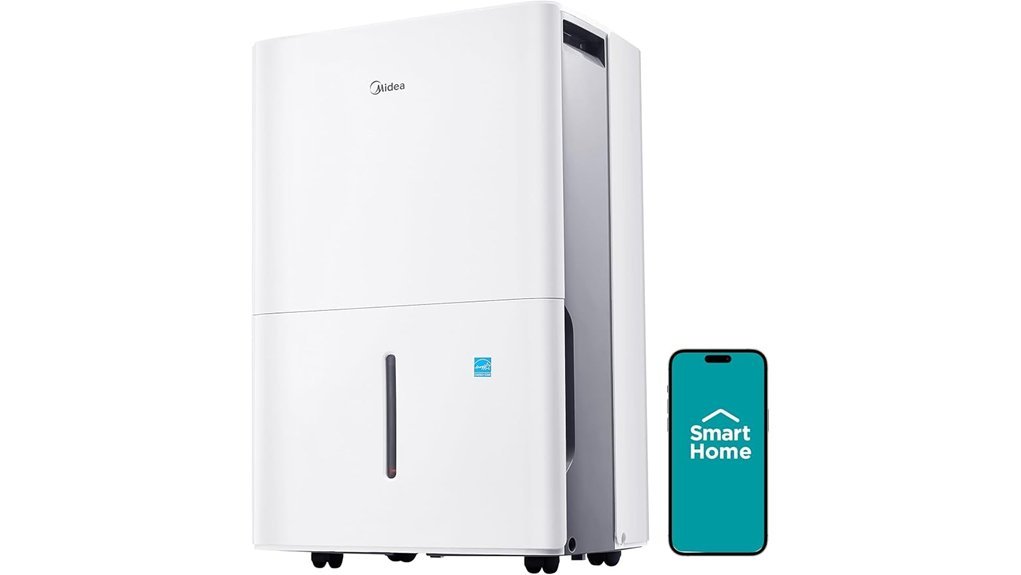
Best 22-Pint Pick for Medium Rooms
The Midea 22-Pint dehumidifier is a practical compressor option for medium rooms, laundry areas, and smaller basements. It is rated to remove up to 22 pints of moisture per day and is marketed for spaces up to 1,500 square feet. Actual room suitability depends on starting humidity, temperature, airflow, and whether moisture is entering the building continuously.
Adjustable humidity control, automatic defrost, auto restart, a timer, reusable filter, wheels, tank collection, and continuous gravity-drain support make it easier to manage than a basic bucket-only unit. The approximately 0.8-gallon bucket may still need frequent emptying in damp conditions, and a drain hose may need to be purchased separately.
The manufacturer’s information for the linked MAD22C1AWS model does not identify it as a smart-control model. Buyers seeking Wi-Fi or voice control should confirm the exact model number rather than assuming those features are included.
Why You’ll Like It: It provides familiar 22-pint compressor performance with straightforward controls and continuous-drain capability.
Who Should Buy This: Buyers who want a medium-capacity dehumidifier for everyday household humidity control.
Who Should Avoid This: Buyers who require a built-in pump, verified app control, or a much larger water bucket.
Pros:
- ENERGY STAR certified listing.
- Adjustable humidity control and reusable filter.
- Continuous drainage, automatic defrost, and auto restart.
- Wheels make its approximately 32-pound body easier to reposition.
Cons:
- No built-in pump.
- The 0.8-gallon bucket may fill frequently without continuous drainage.
- A drain hose may not be included.
- The linked manufacturer model is not identified as having smart controls.
BREEZOME 60 OZ Portable Quiet Dehumidifier with Timer
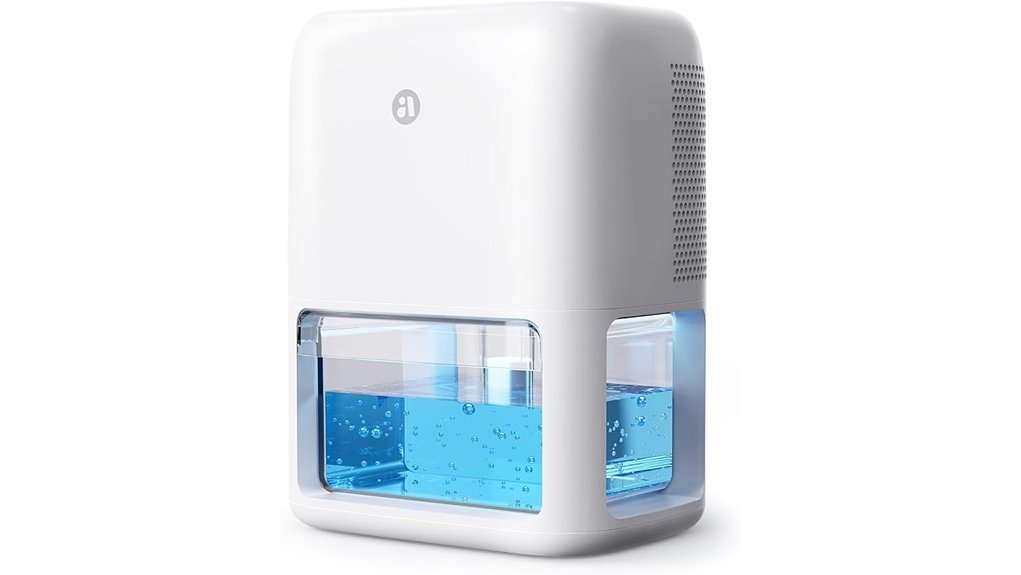
Best Compact 48W Pick
The BREEZOME 60 OZ model uses dual semiconductor condensers and has a rated power input of 48 watts. The seller promotes collection of up to 700 ml per day under warm, humid test conditions, while other structured information on the listing reports approximately 0.56 liters per day. Actual collection will normally decrease as the room becomes cooler or less humid.
Its 1.8-liter tank, 12- to 48-hour timer, automatic shut-off, sleep mode, carrying handle, and seven-color night light make it convenient for a small bedroom, bathroom, cloakroom, or RV. The larger tank reduces emptying frequency, but it does not give the unit compressor-level extraction speed.
Why You’ll Like It: It offers more moisture-removal potential than many basic single-condenser mini units while retaining a compact, low-wattage design.
Who Should Buy This: Buyers who need quiet, light-duty moisture control in a warm, small, enclosed area.
Who Should Avoid This: Anyone expecting rapid basement drying, whole-floor coverage, or continuous hose drainage.
Pros:
- 48W rated power input.
- Relatively large 1.8-liter tank for a compact unit.
- Timer, sleep mode, automatic shut-off, and carrying handle.
- Dual semiconductor design.
Cons:
- Performance falls in cool or only mildly humid rooms.
- Manual tank emptying only.
- Listing materials show more than one extraction figure.
- Not suitable for severe dampness or active water intrusion.
BeOkay DH-A2 Small Dehumidifier with Adjustable Lights and Timers
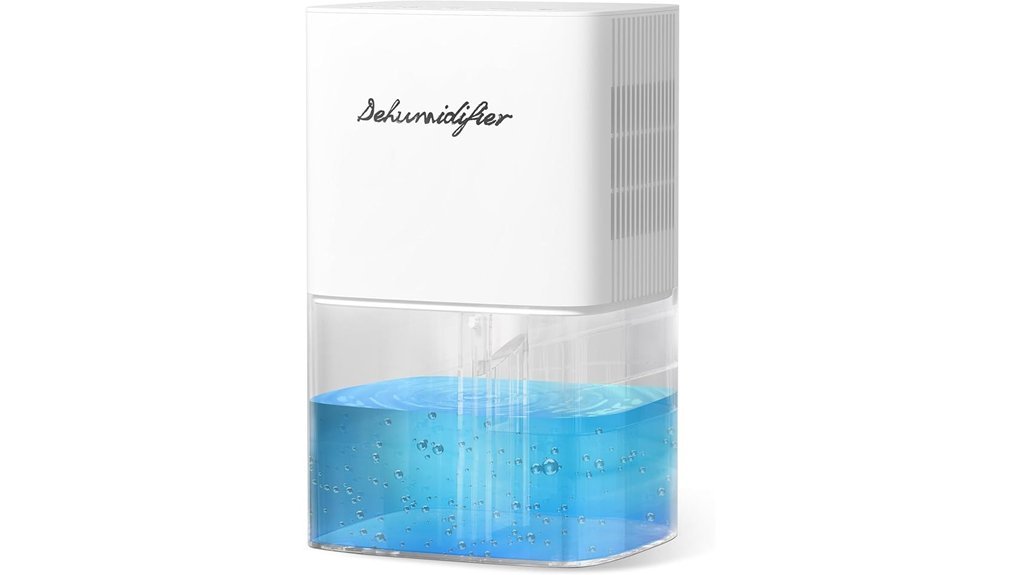
Best 28W Pick with a Larger Tank
The BeOkay DH-A2 is a 28W semiconductor dehumidifier with a 1,657 ml tank. It is intended for compact enclosed areas, with seller-promoted coverage around 230 square feet and stated extraction of approximately 0.3 liters per day under favorable conditions.
Three operating modes, multiple timer choices, adjustable lighting, and automatic shut-off give it more control than a basic mini unit. Its low wattage can be attractive for light-duty use, but low input power also means considerably slower moisture removal than a compressor model.
Why You’ll Like It: It combines a low 28W input with a relatively generous tank and flexible timer controls.
Who Should Buy This: Buyers with a small bathroom, bedroom, closet, RV, or similarly enclosed area with mild moisture.
Who Should Avoid This: Buyers who need rapid humidity reduction across a large room or basement.
Pros:
- Low 28W rated power input.
- Large tank relative to its compact body.
- Timer, multiple operating modes, lighting, and automatic shut-off.
- Easy to move between small spaces.
Cons:
- Slow extraction compared with compressor models.
- Not suitable for severe or structural dampness.
- Tank must be emptied manually.
- The promoted coverage should be treated as an upper marketing estimate.
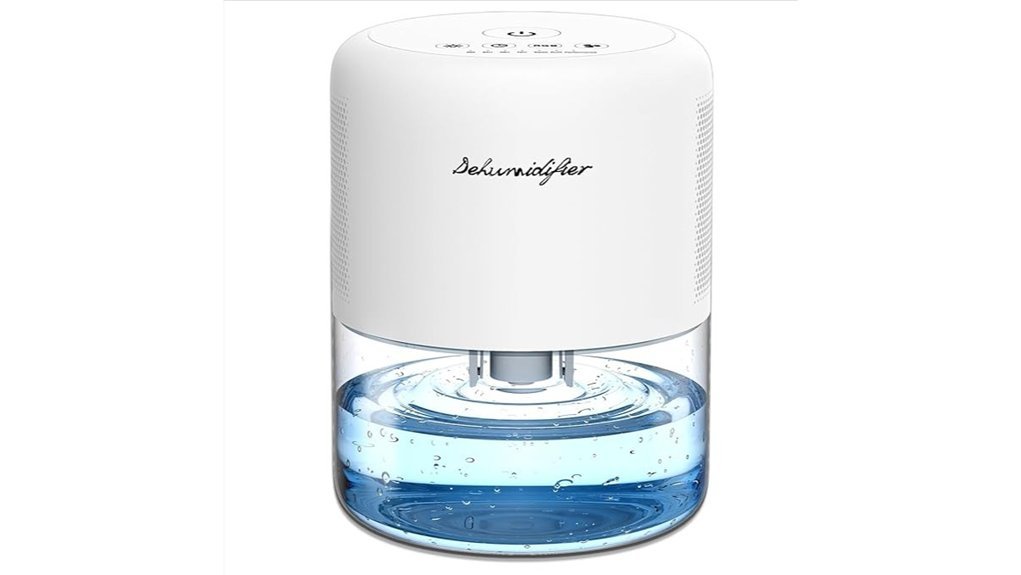
NeedDuck B-2 Dehumidifier for Home with 44OZ Water Tank
Best for Closets and Very Small Spaces
The NeedDuck B-2 is a 28W semiconductor dehumidifier with a 44-ounce tank. Its compact 5.91-by-5.91-by-8.46-inch body and weight of approximately 2.6 pounds make it easy to move between a closet, bathroom, RV, storage area, or small bedroom.
It includes three operating modes, timer settings, automatic defrost, automatic shut-off, and decorative lighting. The promoted 215-square-foot coverage should be treated as a marketing ceiling rather than a promise of uniform room-wide humidity control. It will work best in a small enclosed area with doors and windows closed.
Why You’ll Like It: It is one of the smallest and easiest models in the comparison to carry and store.
Who Should Buy This: Buyers managing mild moisture in a closet, RV, compact bathroom, cabinet area, or very small room.
Who Should Avoid This: Buyers who need to dry a basement, laundry area, or large open-plan room.
Pros:
- Low 28W rated power input.
- Very compact and lightweight.
- Automatic shut-off and defrost functions.
- Useful timers and operating modes for small-space use.
Cons:
- Limited moisture-removal capacity.
- Manual tank emptying is required.
- The coverage figure may overstate practical room-wide performance.
- Decorative lighting may be unnecessary for some buyers.
Factors to Consider When Choosing a Low-Energy Dehumidifier
The best choice depends on the severity of the moisture problem, room size, temperature, drainage access, and how capacity was measured. A low-wattage mini unit and an ENERGY STAR compressor model solve very different problems.
Semiconductor vs. Compressor Dehumidifiers
Semiconductor or Peltier dehumidifiers are compact, light, and often rated between approximately 20 and 50 watts. They work best in warm, small, enclosed spaces with mild moisture. Compressor dehumidifiers use more power while running but remove much more water, making them more appropriate for basements, laundry rooms, and larger living areas.
Do not assume the lowest wattage automatically provides the lowest cost for the job. A mini unit that runs continuously without reaching the target humidity can be less useful than a properly sized compressor model that removes moisture quickly and then cycles off.
ENERGY STAR and Integrated Energy Factor
For compressor models, look for current ENERGY STAR certification and the Integrated Energy Factor, or IEF, measured in liters of water removed per kilowatt-hour. A higher IEF indicates more moisture removal for the electricity used.
Certification is more useful than unsupported statements such as “uses 45% less energy” or “saves $1,000 per year.” You can check current certified models in the official ENERGY STAR product finder. Match the complete model number rather than relying only on the retail product name.
How to Estimate Electricity Use
You can estimate maximum daily electricity use with this formula:
Rated watts × operating hours ÷ 1,000 = kilowatt-hours used
For example, a 28W mini dehumidifier running continuously for 24 hours would use approximately 0.672 kWh per day. A 48W model running continuously would use approximately 1.152 kWh per day. Multiply the kWh figure by your electricity rate to estimate cost.
These are maximum continuous-runtime estimates. Actual compressor-model consumption varies because the compressor and fan may cycle according to humidity, fan mode, room temperature, and control settings.
Capacity and Test Conditions
Read the conditions attached to any pints-per-day or milliliters-per-day claim. A model advertised at 30 or 80 pints per day may have been measured at approximately 95°F and very high relative humidity, while an ENERGY STAR capacity uses standardized conditions. Compare like with like and prioritize the certified figure when comparing certified products.
Coverage Area Requirements
Square-foot coverage is only a starting point. A cool basement at 70% humidity needs more capacity than a warm bedroom with occasional condensation. Open doors, air leaks, indoor laundry, showers, ceiling height, and groundwater can also increase the moisture load.
For persistent humidity, size the machine by moisture-removal capacity and conditions rather than choosing the largest advertised floor-area number. Mini-dehumidifier coverage claims are especially likely to describe an upper marketing estimate rather than fast, uniform humidity control.
Tank Size vs. Extraction Speed
A larger tank means the unit may run longer before it needs to be emptied. It does not mean the machine removes moisture faster. Extraction speed depends on the dehumidification system, temperature, humidity, airflow, and rated capacity.
Drainage Options
A small tank is manageable for occasional use, but a continuously damp basement is easier to maintain with a drain hose. Gravity drainage requires a lower drain point and a hose that slopes downward without kinks. A built-in pump can move water upward to a sink or higher outlet, but it adds cost and another component to maintain.
Noise Level Considerations
Manufacturer noise ratings can be measured under different conditions. Fan speed, flooring, room echo, vibration, and listening distance all affect perceived sound. For a bedroom, look for a sleep mode or lower fan setting and place the unit on a level, stable surface with adequate clearance.
Temperature and Auto Defrost
Compressor coils can frost in cool rooms, so automatic defrost is important for basement use. Semiconductor models also collect less water as temperature and humidity fall. Check the specified operating-temperature range before placing any dehumidifier in an unheated area.
Safety and Maintenance
Choose automatic shut-off for tank-full protection, keep the air inlet and outlet clear, clean the filter on schedule, and plug the unit into an appropriate outlet according to its manual. Inspect drain hoses for kinks, algae, leaks, and loose connections.
A dehumidifier can control airborne moisture, but it will not repair a plumbing leak, foundation seepage, roof problem, failed waterproofing, or active water intrusion. Correct the moisture source whenever possible.
Before You Buy
- Measure the room and note whether doors normally stay open or closed.
- Check the current relative humidity with a separate hygrometer.
- Identify whether the moisture is mild condensation or persistent dampness.
- Decide whether you can use gravity drainage or need a built-in pump.
- Compare standardized pint ratings rather than unrelated seller maximums.
- Confirm the exact model number in the ENERGY STAR database when certification matters.
- Check whether a drain hose, replacement filter, app, or other accessory is included.
- Review the current warranty and operating-temperature range before purchase.
Frequently Asked Questions
What Does “Low Energy” Mean for a Dehumidifier?
For a mini unit, it often refers to low electrical input such as 28W or 48W. For a compressor model, the better measure is how much water it removes per kilowatt-hour. ENERGY STAR certification and IEF data are more useful than wattage alone when comparing full-size models.
Does a Lower-Wattage Dehumidifier Always Cost Less?
It uses less electricity per hour, but that does not automatically make it the most economical choice for every room. A low-wattage mini unit may run continuously without controlling a damp basement, while a correctly sized compressor model can remove more water and cycle off after reaching the target humidity.
What Size Dehumidifier Do I Need for My Space?
Use a semiconductor unit for mild moisture in a small enclosed space. Choose a compressor model for a basement, large room, laundry area, or humidity that remains above the desired level. Dampness, temperature, airflow, and water entry matter as much as square footage.
Are Mini Dehumidifiers Good for Basements?
Usually not for an entire basement. A mini semiconductor unit may help inside a small storage room, cabinet, or enclosed corner, but a damp basement normally needs a compressor dehumidifier with a humidistat and continuous drainage.
Are Low-Energy Dehumidifiers Noisy During Operation?
Semiconductor models are generally quieter because they do not use a compressor. Compressor models produce fan, airflow, and compressor noise, although lower fan settings and careful placement can reduce disturbance.
Can I Use a Dehumidifier in Winter?
Yes, provided the room temperature remains within the manufacturer’s operating range. In a cool basement, choose a compressor model with automatic defrost. All dehumidifiers remove less water as the air becomes colder and drier.
What Humidity Level Should I Set?
A setting near 45% to 50% relative humidity is a practical starting point for many homes, within a broader general range of approximately 30% to 50%. Avoid setting the machine unnecessarily low because that can increase runtime and energy use. Adjust for comfort, condensation, climate, and the condition of the building.
How Do I Maintain My Low-Energy Dehumidifier?
Clean the filter and air openings, empty and rinse the tank, inspect the drain hose, and keep the unit level with adequate airflow. Follow the manual for cleaning intervals, pump maintenance, and seasonal storage.
How Long Do Dehumidifiers Typically Last?
Lifespan varies with construction, operating hours, room temperature, humidity, maintenance, and drainage conditions. Regular filter cleaning, correct placement, and reliable drainage can reduce strain, but no fixed lifespan is guaranteed.
Final Recommendation
Choose by moisture load and extraction efficiency, not marketing square footage alone.
For a large or persistently damp space with a suitable lower drain, the AEOCKY RHEA-001 offers the best overall balance of capacity, controls, and corresponding standardized efficiency. Choose the AEOCKY LEO-001 when you specifically need a powered pump to move water to a higher drain.
The Waykar PD160B-PRO is the most compact certified compressor option in this comparison, while the Midea 22-Pint is a straightforward medium-room choice with familiar humidity controls and continuous-drain capability.
For mild moisture in a small enclosed area, the BREEZOME 60 OZ provides the strongest compact 48W package. The BeOkay DH-A2 combines a 28W input with a larger tank, while the NeedDuck B-2 is the most portable choice for closets, RVs, and very small bathrooms.
A mini unit can be economical for the right job, but it is not a substitute for a compressor dehumidifier when humidity is severe, the room is large, or water is entering the building.