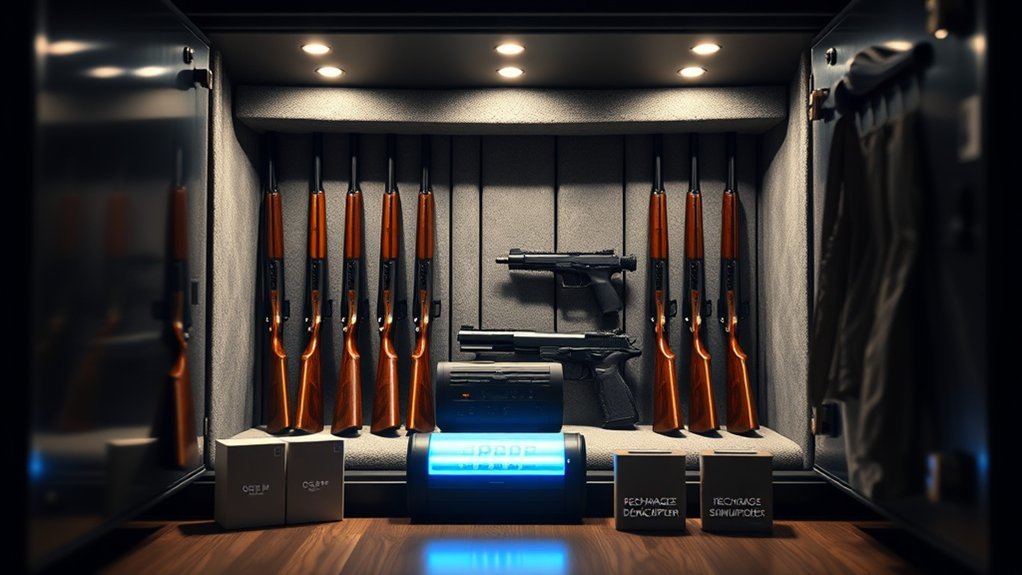
You may not notice moisture inside a gun safe until rust, musty odor, or cloudy optics have already appeared. To dehumidify a gun safe, measure the humidity, keep the safe in a stable room, and use the right mix of a gun safe dehumidifier, desiccant, and regular maintenance. A safe protects firearms from theft and unauthorized access, but it also creates a closed space where damp air can linger.
Quick Answer
Keep moisture out of a gun safe by holding relative humidity around 30% to 50%, checking it with a hygrometer, placing the safe in a dry climate-controlled room, and using an electric dehumidifier rod or rechargeable desiccant. For mixed steel and wood firearms, a stable middle range around 40% to 45% is a practical target.
Key Takeaways
- Use a digital hygrometer so you know the safe’s actual humidity instead of guessing.
- Aim for 30% to 50% relative humidity, and act quickly if the safe stays above 50% to 55%.
- Choose an electric rod for steady powered protection, or rechargeable desiccant when you do not have safe power access.
- Keep the safe out of damp basements, garages, laundry rooms, and direct contact with concrete whenever possible.
- Inspect firearms regularly, wipe exposed metal with a proper protective oil, and recharge or replace moisture absorbers on schedule.
At a Glance
| Time Required | 15 to 30 minutes to set up; 5 minutes per monthly check |
| Difficulty | Easy for desiccants and hygrometers; moderate if routing power for an electric rod |
| Tools Needed | Digital hygrometer, dehumidifier rod or desiccant, soft cloth, firearm-safe protective oil |
| Cost | A modest cost that varies with hygrometer quality, safe size, and dehumidifier type |
What Humidity Is Best in a Gun Safe?
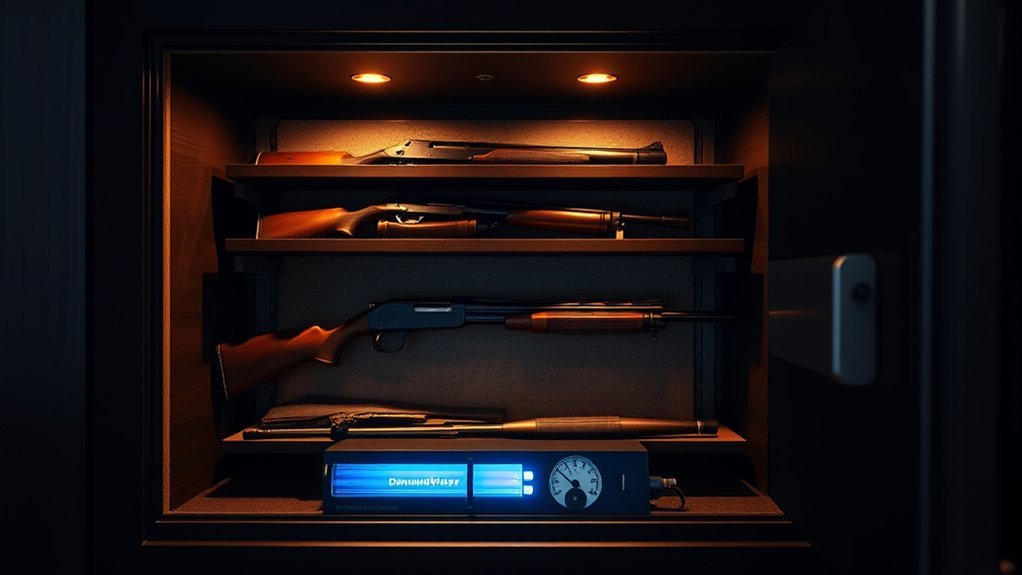
The best humidity range for a gun safe is usually 30% to 50% relative humidity. That range is dry enough to reduce rust and mildew risk but not so dry that wood stocks, grips, and leather accessories are pushed into an overly dry environment. A steady reading around 40% to 45% is a practical target for many safes that hold both metal and wood components.
The U.S. Environmental Protection Agency recommends keeping indoor relative humidity below 60% and ideally between 30% and 50% when possible to control moisture and mold. Firearm-storage guidance commonly uses a similar range because high humidity encourages corrosion, while unstable humidity can stress wood.
Note: Do not chase the lowest possible number. If your safe contains wood-stocked firearms, leather slings, documents, or optics, stable humidity matters more than forcing the safe below 30%.
What Causes Moisture in a Gun Safe?
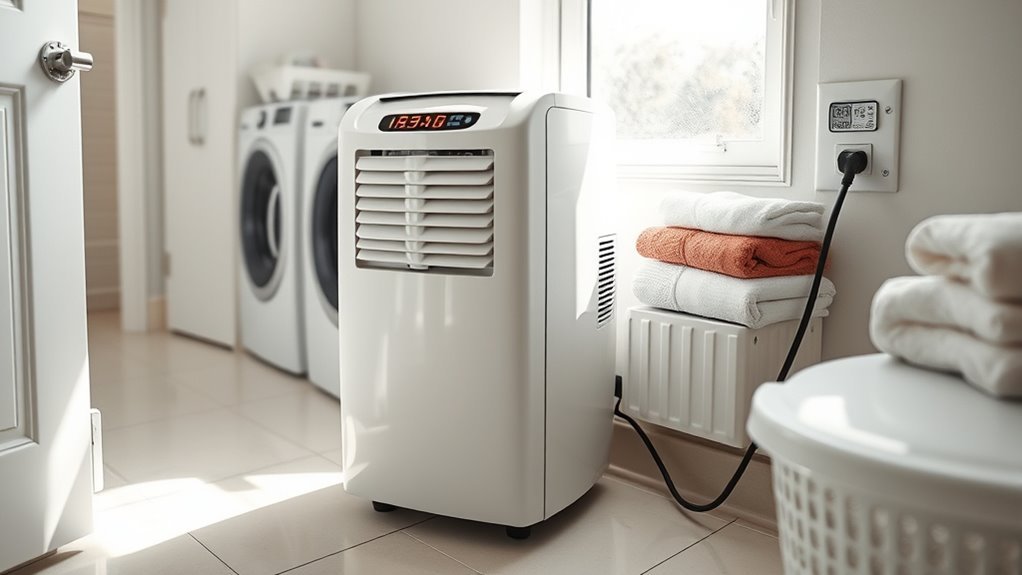
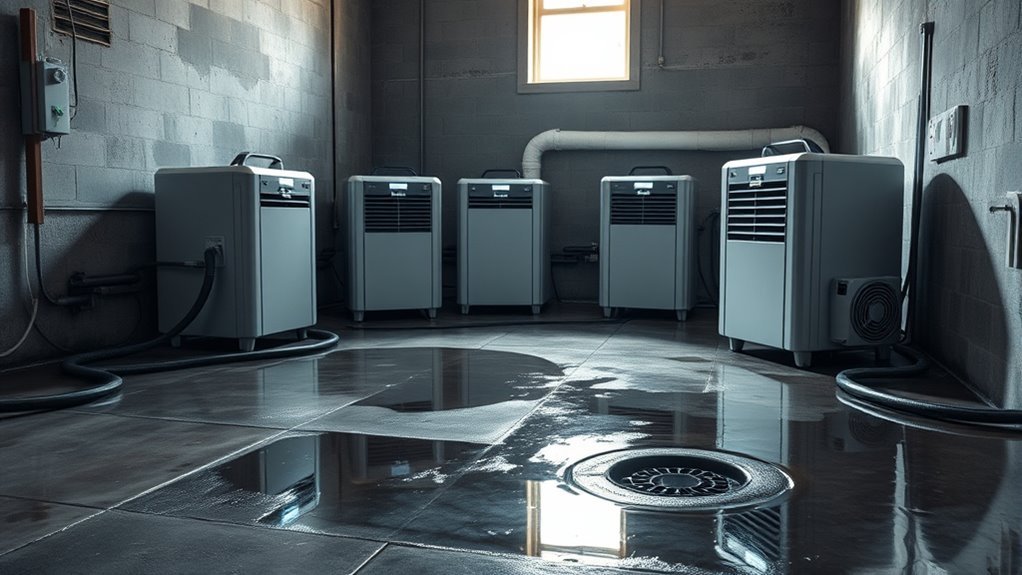
Moisture gets into a gun safe in predictable ways. Humid room air enters whenever the door opens, temperature swings can create condensation on cold metal, and poor airflow traps damp air inside the safe. Basements, garages, laundry rooms, coastal homes, and rooms with swamp coolers usually create more moisture risk than interior climate-controlled rooms.
Condensation is especially common when cold firearms, ammunition cans, or accessories are moved into a warmer safe. Warm air holds more water vapor, and that moisture can condense on cooler metal surfaces. A tightly closed safe can then hold that damp air long enough for rust to begin.
Safe materials can also contribute. Carpeted interiors, documents, foam, leather, and some fire-resistant materials can hold or release moisture. That does not mean you need to remove every accessory, but it does mean you should monitor the safe instead of assuming a locked door equals a dry environment.
How Gun Safe Dehumidifiers Work
Gun safe dehumidifiers work in two main ways. Desiccants, such as silica gel, adsorb water vapor from the air. Electric dehumidifier rods, such as the Lockdown GoldenRod, slightly warm the air inside the safe so it circulates and is less likely to condense on cold surfaces.
A good moisture-control setup does not replace a safe. It helps the safe do its job without trapping the damp air that causes rust, mildew, and musty odor.
- Silica gel and desiccant packs absorb moisture and work without power.
- Rechargeable desiccant units use color indicators to show when they need drying or recharging.
- Electric rods run continuously and help reduce condensation through gentle heat and airflow.
- Hygrometers show whether your setup is actually keeping the safe in range.
How to Dehumidify a Gun Safe: Best Methods
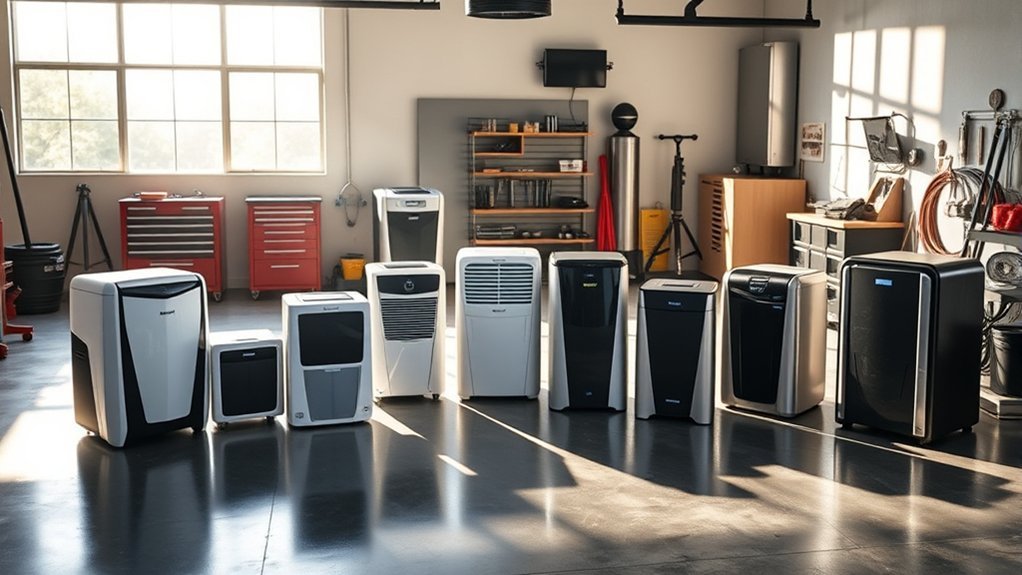
The best method depends on your safe size, power access, room humidity, and how often you want to maintain the system. Most owners do well with one of three setups: an electric rod, a rechargeable desiccant unit, or a silica gel canister. In humid rooms or larger safes, combining a rod with desiccant backup often works best.
| Method | Best For | Main Maintenance |
|---|---|---|
| Electric dehumidifier rod | Medium to large safes with power access | Keep plugged in, inspect cord, confirm humidity readings |
| Rechargeable desiccant unit | Small safes, cabinets, apartments, and safes without outlets | Recharge when the color indicator changes |
| Silica gel canister | Backup protection and enclosed storage spaces | Dry or replace when saturated, following the label |
Electric Dehumidifier Rods
Electric dehumidifier rods are a strong choice when your safe has a factory power pass-through or a nearby outlet. They do not collect water like a room dehumidifier. Instead, they gently warm the air so it circulates through the safe and reduces condensation risk. This makes them useful for long-term, low-maintenance moisture control. For more detail, see what a dehumidifier rod is and where to use one.
Install the rod low in the safe because warm air rises. Leave space around it so air can move freely. Match the rod length and coverage rating to your safe’s interior volume, and follow the manufacturer’s instructions for mounting and power routing.
Warning: Do not run improvised wiring through a safe door, pinch a cord in the hinge area, or use an extension cord as permanent wiring. Use the safe’s factory access hole or have a qualified electrician handle power access.
Rechargeable Desiccant Packs
Rechargeable desiccant packs are a reliable power-free option. They are especially useful in small safes, handgun vaults, cabinets, and storage areas where you cannot run a cord. Many units use color-changing crystals that show when the desiccant is saturated.
The Hornady Rechargeable Gun Safe Dehumidifier, for example, uses moisture-control crystals that change color when the unit needs recharging. Some rechargeable products plug into a wall outlet to dry the crystals. Others are oven-dried or microwaved. Always follow the product’s own instructions because recharge methods are not interchangeable.
Safe Placement and Ventilation
Safe placement has a major effect on moisture control. Put the safe in a climate-controlled room whenever possible. Avoid damp basements, garages, exterior sheds, laundry areas, and rooms with repeated temperature swings. If the safe must sit near concrete, raise it on a platform or moisture barrier so the bottom is not pulling dampness from the floor.
- Choose a dry interior room with stable temperature.
- Leave clearance around the safe so the room air can circulate.
- Keep the safe away from plumbing leaks, HVAC condensation, and exterior walls when possible.
- Open the safe periodically in a dry room to allow air exchange.
- Use a hygrometer inside the safe, not just in the room.
Electric Gun Safe Dehumidifiers
An electric gun safe dehumidifier is best when you want continuous protection with little hands-on maintenance. A rod-style unit is simple: mount it near the bottom of the safe, route power safely, and let it run. It works best when the safe is not overcrowded and air can move around long guns, shelves, and accessories.
| Feature | Benefit |
|---|---|
| Gentle heat | Reduces condensation risk on metal surfaces |
| Continuous airflow | Helps prevent pockets of damp, stagnant air |
| Low maintenance | Good for safes that are opened only occasionally |
| Multiple lengths | Lets you match the rod to the safe’s interior volume |
Use a hygrometer even with an electric rod. If the safe still reads above 50% to 55% RH for several days, add desiccant backup, improve the room environment, or move the safe to a drier location.
Recommended Products
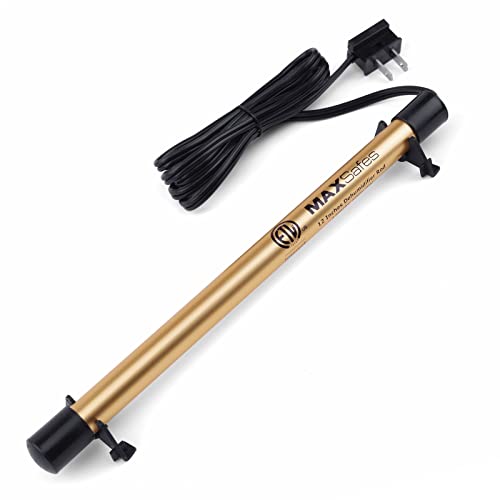
Electric Dehumidifier Rod: Maintenance-free heating rod that provides humidity control in gun safes, cabinets and small enclosures by increasing the temperature in your gun safe to a slightly higher level than the ambient temperature to help to drive out excess humidity

Helps prevent rust and corrosion

PROTECT YOUR INVESTMENTS: Don't let moisture & condensation take a toll on your arms and valuable belongings any longer. Introducing the Zarpax gun safe dehumidifier rod, the compact yet formidable solution to keep your enclosed storage spaces moisture-free. Whether it's your prized gun locker, cherished heirlooms, or essential documents, our humidity absorber rod ensures your arms and other possessions stay safe, dry, and in pristine condition.
Desiccant Packs and Silica Gel Canisters
Desiccant packs and silica gel canisters adsorb water vapor from the air. They are quiet, cordless, and easy to place on a shelf or near the bottom of a safe. Silica gel can adsorb up to about 40% of its weight in water under high-humidity or saturation conditions, although real-world capacity depends on the humidity, temperature, and product design, according to SorbentSystems desiccant data.
How Desiccants Absorb Moisture
Silica gel is hygroscopic, which means it attracts and holds water vapor. It does not make moisture disappear forever. Once saturated, it stops working well until it is dried, recharged, or replaced. That is why indicator beads are helpful: they show when the desiccant has taken on moisture and needs attention.
- Use enough desiccant for the safe’s interior volume.
- Place it where air can move around it, not buried behind cases or boxes.
- Check the indicator color during your monthly safe inspection.
- Replace disposable packets when they are spent.
Choosing Silica Gel Canisters
Choose silica gel canisters or packs that are sized for your safe. A tiny packet from product packaging is not enough for a full-size gun safe. Look for a moisture capacity or cubic-foot rating, a clear saturation indicator, and simple recharge instructions.
For larger safes, use more than one canister or combine a canister with an electric rod. For small handgun safes, a compact rechargeable desiccant unit may be enough if the room itself is not damp.
Recharging and Reusing Packs
Recharge desiccants as soon as the color indicator shows saturation or your hygrometer starts climbing above the target range. Some units plug into a wall outlet, some are oven-dried, and some loose silica products can be dried according to their label. Do not microwave or heat any product unless the manufacturer specifically says that method is safe. For loose silica gel, see how to recharge silica gel at home, and check your product label first.
Pro Tip: Write the recharge date on a small tag inside the safe. If the desiccant saturates faster each month, the room is probably too humid or the safe is being opened often in damp air.
Does a Light Bulb Help Dry Out a Safe?
A low-wattage incandescent bulb can add gentle heat, but it is not the best moisture-control method for most gun safes. A purpose-built dehumidifier rod is safer, cleaner, and designed for continuous enclosed-space use. A bulb can also create heat near wood, paper, foam, fabric, and wiring if installed carelessly.
If you use any powered device inside a safe, use a properly rated fixture, keep it away from anything flammable, avoid overloaded cords, and follow electrical safety rules. The Electrical Safety Foundation International warns that cords should not be overloaded, covered, run through walls or floors, or used as permanent wiring.
How to Prevent Rust in Your Gun Safe
To prevent rust in your gun safe, control the environment and maintain the firearms. The safe should stay dry, the firearms should be clean, and exposed metal should have a light protective coating recommended by the firearm or product manufacturer.
Warning: Before inspecting, wiping, or oiling any firearm, confirm it is unloaded, keep the muzzle pointed in a safe direction, and keep ammunition away from the cleaning area. Store firearms locked and unloaded, with ammunition locked separately, as recommended by NSSF safe-storage guidance.
- Measure first. Place a digital hygrometer inside the safe and check it for a few days.
- Set your target. Aim for 30% to 50% RH, with a stable middle range around 40% to 45% when possible.
- Add moisture control. Use an electric rod, rechargeable desiccant, silica gel canister, or a combination.
- Improve placement. Move the safe away from damp rooms, concrete contact, leaks, and temperature swings.
- Maintain firearms. Wipe fingerprints from metal surfaces and apply a light coat of proper protective oil.
- Inspect monthly. Look for rust freckles, musty smell, damp carpet, wet desiccant, and rising hygrometer readings.
Gun Safe Maintenance to Prevent Moisture
Gun safe moisture control is not a one-time setup. It is a small routine. Check the safe monthly, and check more often during rainy seasons, summer humidity, basement flooding, moving, or long storage periods.
| Check | Target | Action |
|---|---|---|
| Humidity level | 30% to 50% RH | Adjust dehumidifier setup if readings stay high |
| Moisture signs | No condensation, musty odor, or damp carpet | Dry the safe, inspect contents, and improve room humidity |
| Silica gel or desiccant | Indicator shows active/dry | Recharge or replace according to product instructions |
| Door seals and gaps | Clean, intact, and seated evenly | Clean debris and repair damaged seals |
| Firearm surfaces | Clean, dry, and lightly protected | Wipe fingerprints and reapply suitable protective oil |
Troubleshooting Gun Safe Humidity Problems
If your safe still feels damp after adding a dehumidifier, use the hygrometer reading to decide what to do next.
| Problem | Likely Cause | Fix |
|---|---|---|
| RH stays above 55% | Room is humid, desiccant is saturated, or safe is oversized for the device | Add capacity, recharge desiccant, run a room dehumidifier, or relocate the safe |
| Condensation appears | Temperature swing or cold metal entering warm air | Let items acclimate dry, improve airflow, and use an electric rod |
| Musty smell | Damp carpet, papers, cases, or stagnant air | Remove damp items, dry the safe, replace odor-holding materials, and increase ventilation |
| RH drops below 25% | Too much drying capacity for wood or leather items | Reduce desiccant load and watch for cracking or shrinking wood |
Which Gun Safe Dehumidifier Is Right for You?
The right gun safe dehumidifier depends on the safe and the room around it. If you have a full-size safe with power access, choose a quality electric rod sized to the safe’s cubic footage. If you have a small safe or no outlet, choose a rechargeable desiccant unit with a visible indicator. If you live in a humid climate, use both and monitor the reading.
- Best low-maintenance setup: electric rod plus digital hygrometer.
- Best no-power setup: rechargeable desiccant plus monthly recharge checks.
- Best backup: silica gel canister on a shelf or near the bottom of the safe.
- Best fix for a damp room: improve room humidity first, then treat the safe interior.
Do not rely on rice, baking soda, charcoal, or random packaging packets as your main moisture-control plan. They may absorb odors or small amounts of moisture, but they are not a dependable substitute for a properly sized dehumidifier or desiccant.
Recommended Products

SPECS: 12 inches long with a 110/120 volt AC plug to protect up to 100 cubic feet

Electric Dehumidifier Rod: Maintenance-free heating rod that provides humidity control in gun safes, cabinets and small enclosures by increasing the temperature in your gun safe to a slightly higher level than the ambient temperature to help to drive out excess humidity
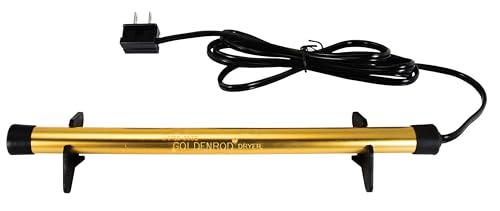
SPECS: 12 inches long with a 110-120 volt AC plug, 6 foot power cord to protect up to 100 cubic feet
Frequently Asked Questions
What keeps moisture out of a gun safe?
A dry room, a reliable hygrometer, and a properly sized dehumidifier or desiccant keep moisture out of a gun safe. The best setup is usually a climate-controlled location plus an electric rod or rechargeable silica gel unit inside the safe.
Do you really need a dehumidifier in a gun safe?
You need one if your safe regularly reads above 50% relative humidity, sits in a basement or garage, or is located in a humid climate. In a very dry climate, a hygrometer may show that you only need occasional desiccant backup.
Is there a dehumidifier made for gun safes?
Yes. Gun safe dehumidifiers include electric rods, rechargeable desiccant units, and silica gel canisters. Rods are best for powered full-size safes, while desiccants are best for small safes or places without power access.
What humidity is too high for a gun safe?
Humidity above 50% should be watched closely, and readings above 55% to 60% mean you should take action. High humidity raises the risk of rust, mildew, musty odor, and moisture damage to accessories.
Can a gun safe be too dry?
Yes. Extremely low humidity can dry wood stocks, grips, leather, and some stored documents. If your safe stays below about 25% RH, reduce drying capacity and aim for a steadier middle range.
Where should I put a dehumidifier inside a gun safe?
Place an electric rod near the bottom of the safe so warm air can rise. Put desiccant on a shelf or open area where air can circulate around it. Avoid burying moisture absorbers behind cases, boxes, or fabric.
Conclusion
Keeping moisture out of a gun safe comes down to measurement, placement, and maintenance. Use a hygrometer, aim for a steady 30% to 50% relative humidity, choose a dehumidifier or desiccant that matches your safe, and inspect your firearms before rust has a chance to spread. Store the safe in the driest stable room you can, recharge moisture absorbers on time, and keep firearms locked, unloaded, clean, and properly protected.
Sources
- U.S. Environmental Protection Agency — Mold Course Chapter 2 — supports indoor humidity guidance below 60% and ideally 30% to 50%.
- Liberty Safe — How to Keep Moisture Out of Your Gun Safe — supports firearm safe humidity range and temperature guidance.
- Lockdown — GoldenRod Dehumidifier Rod — supports how electric dehumidifier rods work.
- Hornady — Rechargeable Gun Safe Dehumidifier — supports rechargeable desiccant operation and color-change indicators.
- SorbentSystems — Desiccant Charts — supports silica gel moisture adsorption capacity.
- NSSF — Securely Storing Firearms in the Home — supports locked, unloaded firearm storage and separate ammunition storage.