Affiliate disclosure: This article contains Amazon affiliate links. We may earn a commission from qualifying purchases at no extra cost to you.
Selection note: These products were compared by safe compatibility, moisture-control method, recharge or power requirements, size, maintenance, and the clarity of their listed specifications. Coverage claims are not always measured consistently, so use a hygrometer to confirm performance in your own safe.
The best dehumidifier for a safe depends on whether you have an electrical outlet inside the enclosure, how tightly the safe seals, and how often you are willing to recharge a desiccant. Rechargeable silica-gel units are convenient for small or cordless setups, while low-wattage heating rods can provide continuous protection in larger gun safes with a manufacturer-approved power route.
Quick verdict
- Best continuous option: Lockdown Golden Rod Dehumidifier for a larger safe with internal power.
- Best rechargeable gun-safe unit: Hornady Rechargeable Dehumidifier for simple cordless use between recharging cycles.
- Best compact cordless option: Eva-Dry E-333 for cabinets, closets, and smaller safes.
- Best multi-pack: FULLBOW or Wisesorb canisters for distributing desiccant across several enclosed compartments.
- Best for flexible placement: Zarpax or Wisedry bags for shelves, cases, drawers, and irregular spaces.
Important: A heating rod does not collect water like a compressor dehumidifier. It gently warms the air to reduce relative humidity and condensation risk. A desiccant physically adsorbs moisture and must be regenerated when its indicator changes color. Always follow the product instructions and your safe manufacturer’s guidance before routing a cord or drilling an access hole.
Before buying: Measure the usable interior space, check for an approved electrical outlet or cord pass-through, and place a digital hygrometer inside the safe so you can verify the actual result.
Quick Comparison
| Product | Type | Best for | Main trade-off | Amazon |
|---|---|---|---|---|
| DryTote 100g | Rechargeable desiccant bag | Small safes, bins, document storage | General-purpose rather than safe-specific | Check Price |
| Hornady Rechargeable | Plug-in regeneration unit | Cordless use inside gun safes | Must be removed and recharged | Check Price |
| Zarpax 2-Pack | Rechargeable desiccant bags | Flexible placement around gear | Manual microwave or sun regeneration | Check Price |
| FURWEY 6-Pack | Small silica-gel packs | Multiple drawers or compact compartments | Requires frequent checking in humid areas | Check Price |
| Eva-Dry for Liberty Safes | Renewable cordless absorber | Simple Liberty Safe-compatible setup | Model-specific details are limited | Check Price |
| MAXSafes 12-Inch Rod | Low-wattage heating rod | Continuous protection with power | Needs an approved cord route | Check Price |
| SafeNDry XL | Reusable silica-gel canister | Medium-size enclosed storage | Oven regeneration takes time | Check Price |
| Electric 360° Heating Unit | Heater with active airflow | Compact safes needing circulation | Continuous power and fan operation | Check Price |
| Eva-Dry E-333 | Renewable silica-gel unit | Small safes, cabinets, and closets | Plugs in only for regeneration | Check Price |
| Hornady 95903 Rod | 12-inch heating rod | Compact powered gun safes | Rod becomes warm during use | Check Price |
| Wisesorb 3-Pack | Indicating canisters | Toolboxes, pistol safes, small cabinets | Small capacity per canister | Check Price |
| FULLBOW 3 Units | Reusable canisters | Several safes or separated shelves | Manual oven regeneration | Check Price |
| Afloia with Heating Base | Cordless sticks with base | Rotating several absorbers between spaces | Base and multiple parts need storage | Check Price |
| Wisedry 2-Pack | Large desiccant bags | Larger safes, vehicles, and storage cases | Bulky compared with small canisters | Check Price |
| Lockdown Golden Rod | 18-inch heating rod | Large powered gun safes | Needs continuous 110–120V power | Check Price |
DryTote Rechargeable Desiccant Pack (100g, Yellow)
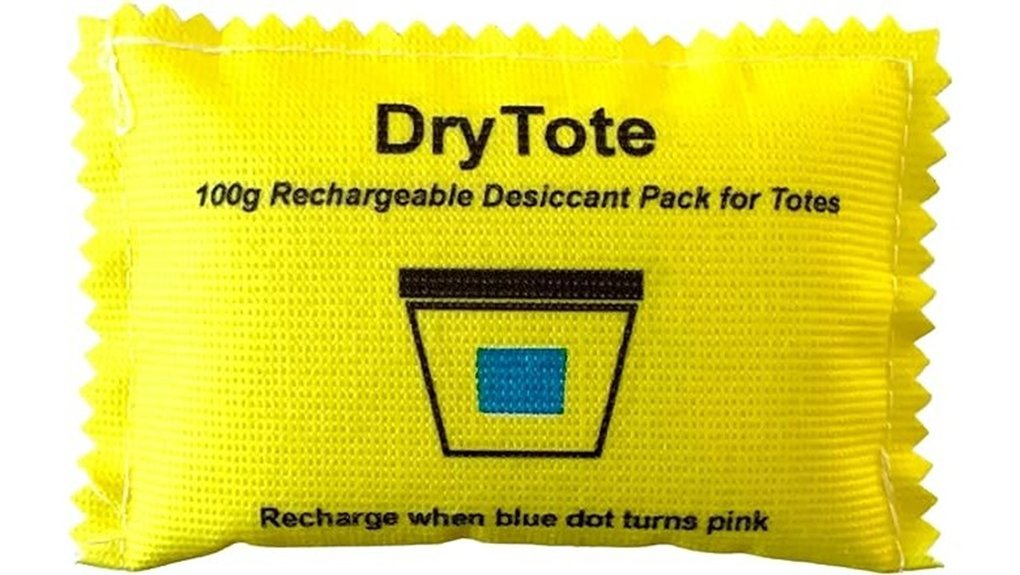
Best compact budget pick: The DryTote is a reusable silica-gel bag designed for enclosed storage. Its flexible shape makes it easy to place beside documents, electronics, jewelry boxes, or other valuables without installing a powered device.
Why you may like it: A color-change indicator shows when regeneration is needed, and the pack can be moved between a safe, storage bin, or equipment case. Because it is a general-purpose product, judge performance with a hygrometer rather than relying only on the advertised storage-volume claim.
Who should buy this: Owners of small safes or sealed containers who want a low-cost, cordless absorber.
Who should avoid this: Anyone with a large, frequently opened safe or severe room humidity that quickly saturates small desiccant packs.
Pros:
- Compact, lightweight, and easy to reposition.
- Reusable design with a visible saturation indicator.
- No cord, batteries, or liquid reservoir inside the safe.
Cons:
- Not designed specifically around gun-safe layouts.
- Needs periodic regeneration.
- Coverage depends heavily on how well the safe seals and how humid the room is.
Hornady Rechargeable Dehumidifier for Gun Safes
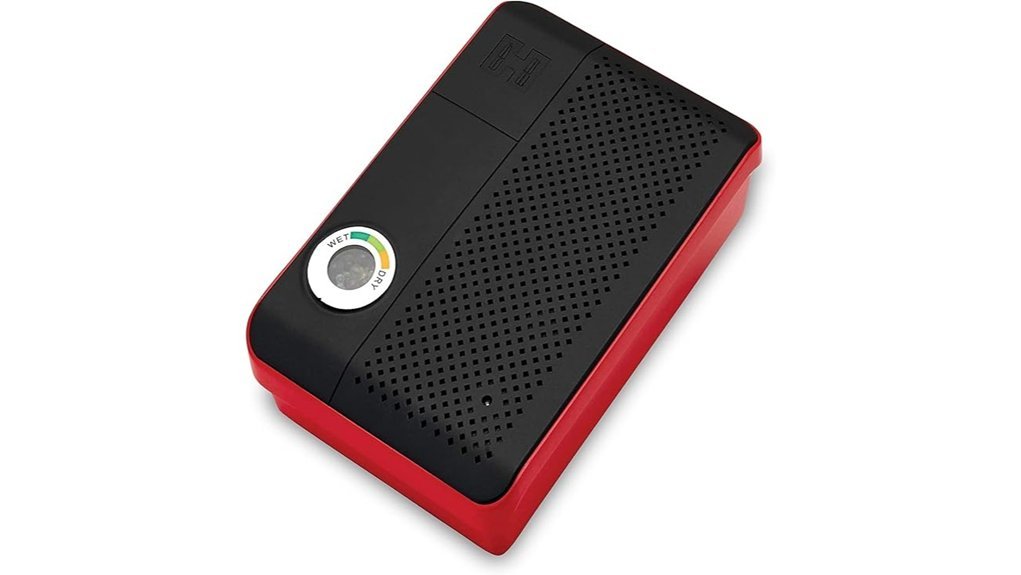
Best rechargeable gun-safe unit: The Hornady 95900 is made for enclosed firearm storage and uses indicating desiccant crystals. It remains cordless while sitting in the safe, then plugs into a standard household outlet outside the safe for regeneration.
Why you may like it: The rigid housing and mounting bracket create a tidier installation than a loose bag. The indicator changes color as the desiccant becomes saturated, helping you recharge based on actual condition rather than a fixed calendar.
Who should buy this: Gun owners who do not have internal safe power but want a purpose-built rechargeable unit.
Who should avoid this: Owners who want continuous operation without removing the unit for regeneration.
Pros:
- Designed specifically for gun safes and other enclosed storage.
- Cordless during normal use inside the safe.
- Visible desiccant indicator and mounting hardware.
Cons:
- Must be removed from the safe and plugged in to regenerate.
- Recharge frequency increases in humid or frequently opened spaces.
- Advertised coverage should be verified with a hygrometer in the actual enclosure.
Zarpax Rechargeable Gun Safe Dehumidifier Bags (2-Pack)

Best for flexible placement: The Zarpax two-pack gives you two soft desiccant bags that can be placed on different shelves or around cases and gear. They work without cords or batteries and can be regenerated when the indicator shows saturation.
Why you may like it: Two separate bags can provide more even placement than one large absorber. The listing describes microwave regeneration and optional sunlight drying; follow the included instructions exactly and never overheat the bags.
Who should buy this: Owners who want reusable bags for a gun safe, equipment case, vehicle, or cabinet.
Who should avoid this: Anyone who prefers a permanently installed device or does not want to use a microwave for regeneration.
Pros:
- Two-pack supports flexible placement.
- No power required during use.
- Soft design fits around stored equipment.
Cons:
- Requires manual regeneration.
- Soft bags take up shelf or floor space.
- Performance depends on enclosure sealing and ambient humidity.
FURWEY Rechargeable Silica Gel Desiccant Packs (6-Pack)
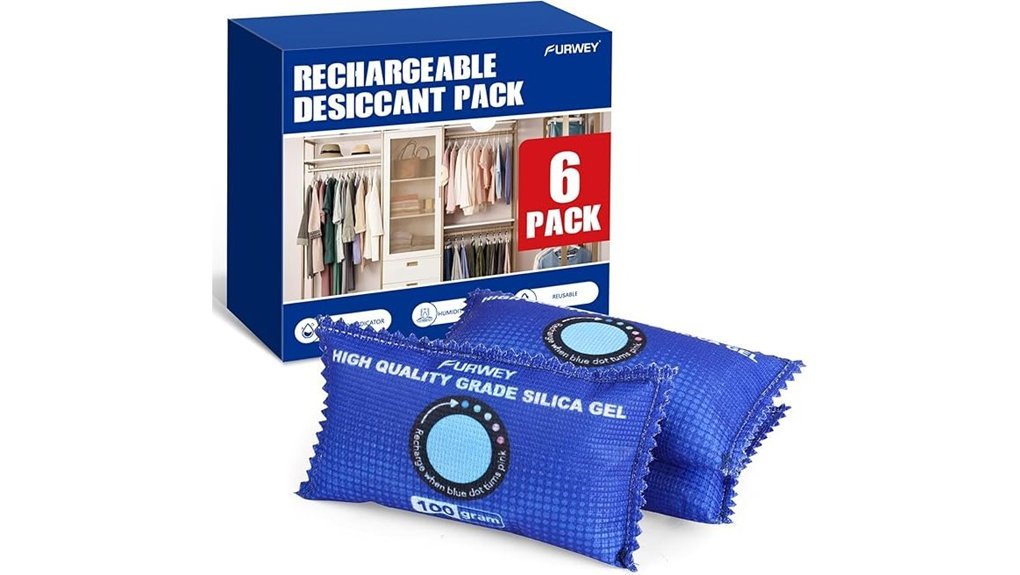
Best for multiple small compartments: The FURWEY set includes six 100-gram indicating silica-gel packs. Instead of relying on one absorber, you can spread them across drawers, shelves, document boxes, or several small safes.
Why you may like it: The color window makes maintenance easier, and the compact bags do not require permanent installation. Ignore inconsistent area units sometimes shown in marketplace data; use the packs according to the manufacturer instructions and monitor the actual safe humidity.
Who should buy this: Buyers who need several small absorbers for separated spaces.
Who should avoid this: Owners of one large, very humid enclosure who would rather maintain a single higher-capacity unit.
Pros:
- Six packs allow distributed moisture control.
- Rechargeable with a visible indicator.
- Compact enough for drawers and tight corners.
Cons:
- More pieces to inspect and regenerate.
- Small packs can saturate quickly in demanding conditions.
- Microwave regeneration requires careful adherence to instructions.
Eva-Dry Dehumidifier, Liberty Safes
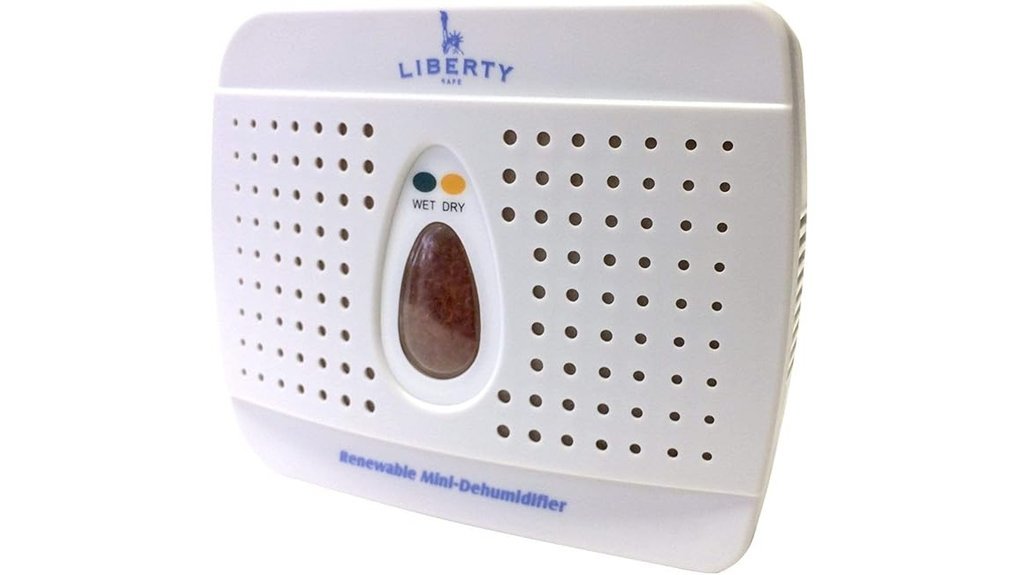
Best simple Liberty Safe-compatible option: This Eva-Dry listing is marketed for use with Liberty Safes and offers renewable, wireless moisture control. It is intended to sit inside the enclosure without a cord during normal use.
Why you may like it: The self-contained design avoids a loose liquid reservoir and is easier to position than a heating rod. However, the source listing provides limited model-specific technical detail, so confirm dimensions, regeneration method, and warranty terms on the current product page before ordering.
Who should buy this: Liberty Safe owners who want a straightforward cordless absorber.
Who should avoid this: Buyers who need a clearly documented coverage rating, timer, or water tank; those claims are not reliable for this product type.
Pros:
- Wireless during use inside the safe.
- Renewable rather than single-use.
- Simple placement with no permanent installation.
Cons:
- Limited model-specific specification data.
- Needs periodic regeneration.
- Not a powered room dehumidifier and does not have a conventional collection tank.
MAXSafes Gun Safe Dehumidifier Rod (12in)
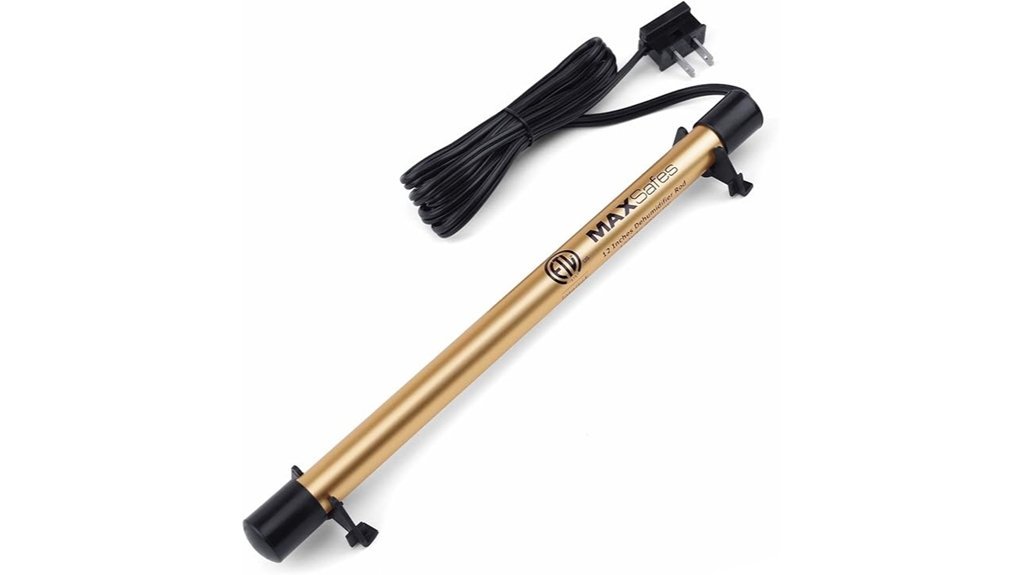
Best compact heating rod: The 12-inch MAXSafes rod is a low-wattage electric heater that runs continuously inside a powered gun safe. Rather than collecting water, it raises the air temperature slightly to reduce relative humidity and condensation risk.
Why you may like it: The slim aluminum body can mount horizontally or vertically, and the detachable plug design helps route the cord through an existing access opening. Do not rely on marketplace fields that describe coverage in square centimeters; verify fit and results in cubic interior space with a hygrometer.
Who should buy this: Owners of small to medium gun safes with an approved electrical pass-through.
Who should avoid this: Anyone with no safe power access or with heat-sensitive contents that require tightly controlled temperature.
Pros:
- Continuous operation without desiccant regeneration.
- Slim 12-inch profile and mounting brackets.
- Low-power heating method suits enclosed safes.
Cons:
- Requires continuous household power.
- Does not physically collect water.
- Must be installed where the warm rod and cord cannot contact or pinch stored items.
XL Gun Safe Dehumidifier – Reusable Silica Gel Desiccant
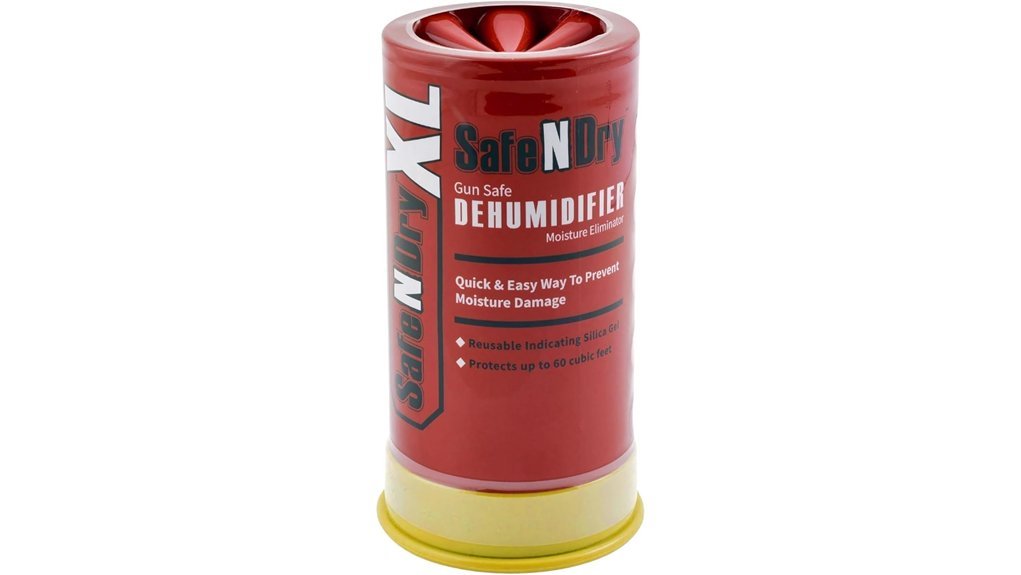
Best large reusable canister: The SafeNDry XL uses a 450-gram pouch of indicating silica gel inside a display canister. It is designed for enclosed storage such as gun safes, ammunition cabinets, document storage, and collectible cases.
Why you may like it: The larger desiccant quantity can reduce how often you need to regenerate compared with small packets. When the beads indicate saturation, remove the pouch and follow the listed oven-regeneration directions rather than heating the plastic display container.
Who should buy this: Buyers who want a higher-capacity cordless canister for a medium-size safe.
Who should avoid this: Anyone who cannot safely use an oven for regeneration or who wants maintenance-free continuous operation.
Pros:
- Large reusable desiccant charge.
- Color indicator supports condition-based maintenance.
- No cord or liquid tank inside the safe.
Cons:
- Oven regeneration takes longer than microwave-ready bags.
- The canister occupies more shelf space.
- Coverage still depends on safe sealing and ambient conditions.
Electric Gun Safe Dehumidifier with 360° Heating
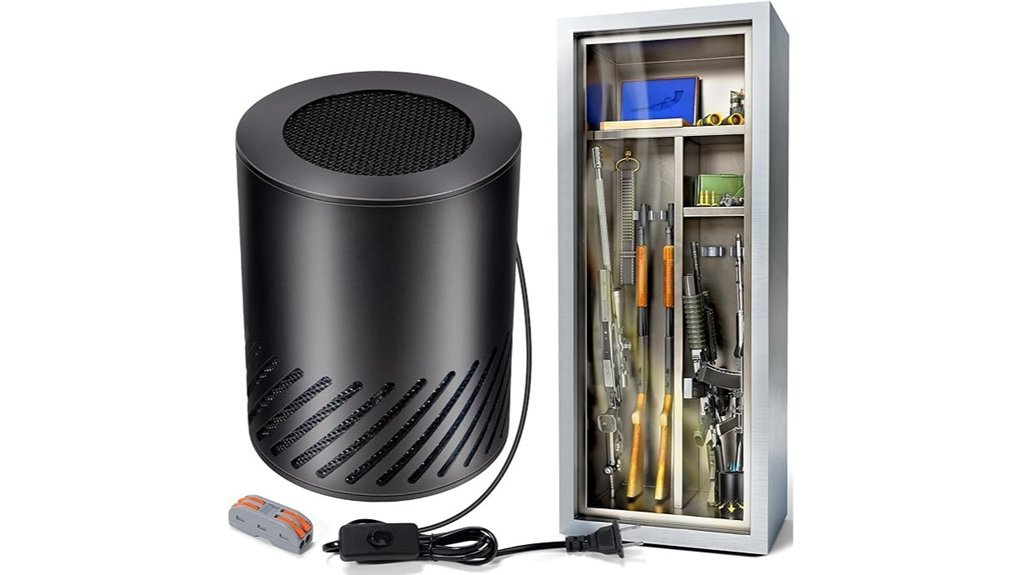
Best active-airflow option: This Martronic-style electric safe dryer combines gentle heating with a built-in fan to circulate air inside a compact safe. It is intended for continuous plug-in use rather than periodic desiccant regeneration.
Why you may like it: Active circulation can help reduce stagnant pockets in a crowded enclosure. Unlike the original copy, a fan-equipped product does contain a moving part, so do not describe it as maintenance-free in the same sense as a simple heating rod. Keep vents clear and confirm that the safe can safely route the power cord.
Who should buy this: Owners of a compact powered safe who want both warming and active airflow.
Who should avoid this: Buyers who prefer silent, passive operation or need protection during power outages.
Pros:
- Combines heat with active air circulation.
- No desiccant packs to regenerate.
- Compact form can fit where a long rod cannot.
Cons:
- Requires continuous 110–120V power.
- The fan is a moving component and may produce some sound.
- Fit is limited to safes with enough clearance around the intake and outlet.
Eva-Dry Wireless Mini Dehumidifier, White (E-333)
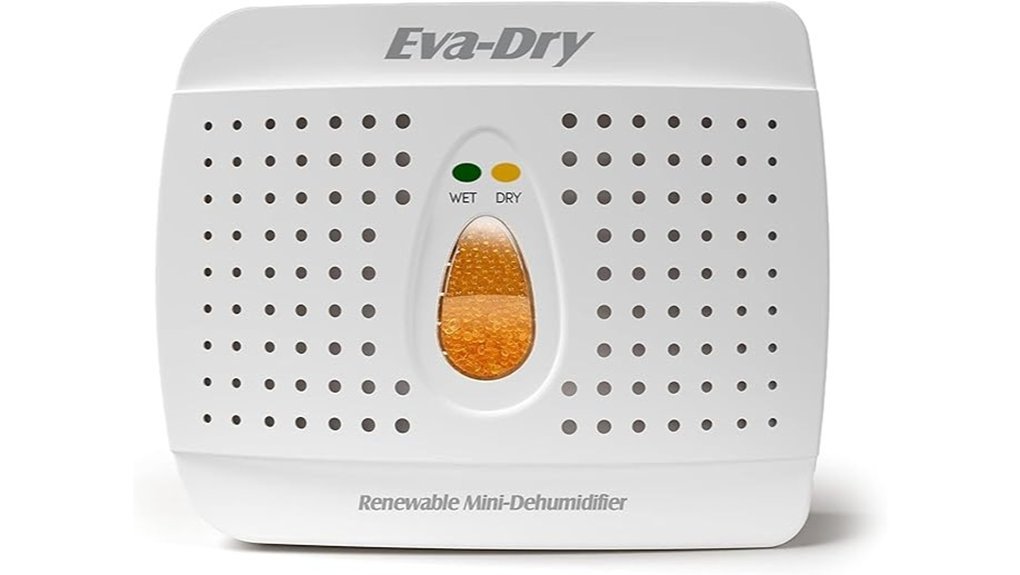
Best compact cordless unit: The Eva-Dry E-333 is a renewable silica-gel dehumidifier for small enclosed spaces. It absorbs moisture while sitting cordless in the safe and plugs into an outlet only when the beads need regeneration.
Why you may like it: The E-333 is a self-contained alternative to loose packets and has a visible moisture indicator. It does not use a rechargeable battery, so there is no battery-runtime concern; the plug-in step is for drying the internal desiccant.
Who should buy this: Owners of a small safe, cabinet, closet, car, or equipment case who want a neat reusable unit.
Who should avoid this: Anyone expecting compressor-level water removal or continuous powered dehumidification.
Pros:
- Cordless and spill-free during use.
- Self-contained indicator and reusable silica gel.
- Compact profile with a hanging hook.
Cons:
- Needs periodic plug-in regeneration.
- Best suited to small enclosed spaces.
- May saturate quickly if the safe is opened often or located in a damp room.
Hornady 95903 Electronic Gun Safe Dehumidifier Rod (12"), Black
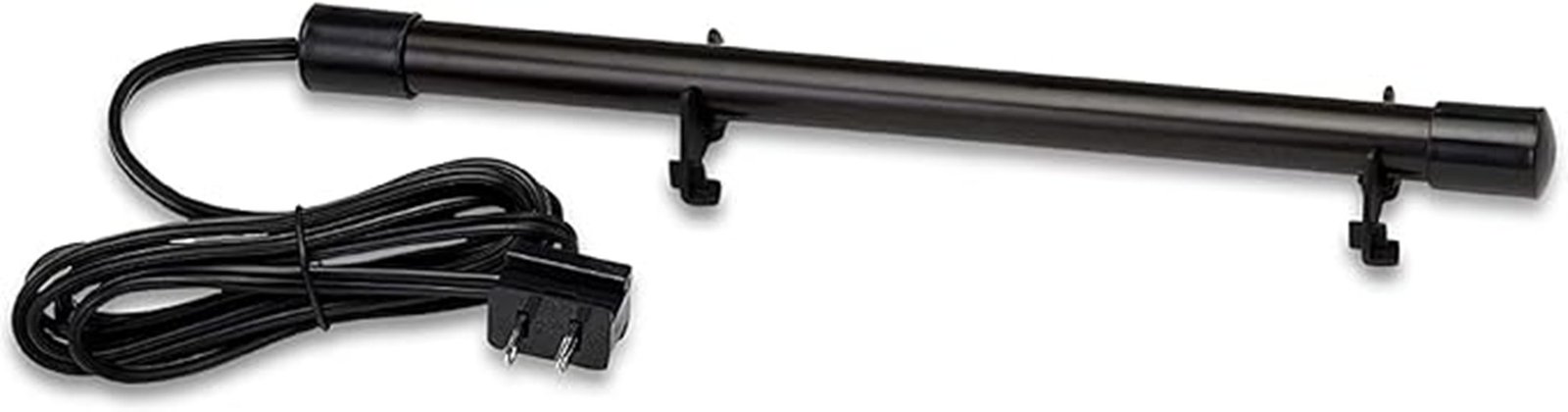
Best branded 12-inch rod: The Hornady 95903 is a 7-watt heating rod intended for gun safes and cabinets. It runs continuously to create gentle convection and reduce the conditions that lead to condensation and corrosion.
Why you may like it: Its compact rod format uses little floor space and avoids recharge cycles. Install it low in the safe, keep it clear of stored items, and protect the cord from sharp metal edges or pinch points.
Who should buy this: Buyers who want a recognizable gun-storage brand and have an approved power route.
Who should avoid this: Owners of unpowered safes or anyone who needs a device that physically removes and stores water.
Pros:
- Continuous low-wattage operation.
- Compact 12-inch format.
- No desiccant replacement or regeneration.
Cons:
- Requires a household outlet.
- The rod becomes warm and needs safe clearance.
- Not waterproof and not a substitute for fixing leaks.
Wisesorb Silica Gel Canisters (Pack of 3)
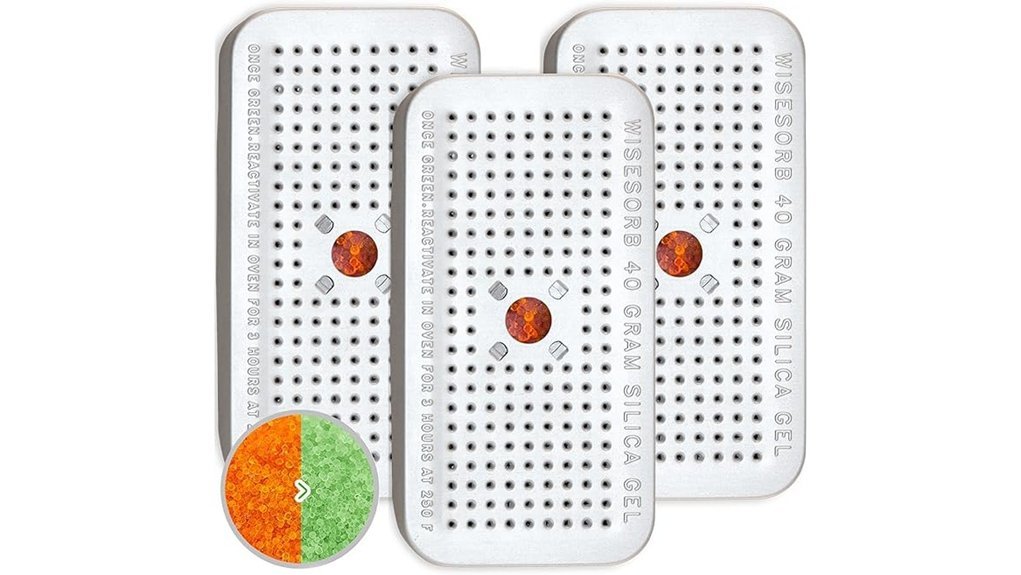
Best for pistol safes and toolboxes: The Wisesorb set includes three compact 40-gram indicating silica-gel canisters. Their rigid shape and viewing windows make them easy to check in small enclosures.
Why you may like it: Orange beads change toward green as they absorb moisture, and the canisters can be regenerated in an oven according to the product directions. Multiple units can be divided among a handgun safe, toolbox, document cabinet, or camera case.
Who should buy this: Buyers protecting several small enclosed spaces.
Who should avoid this: Anyone needing one high-capacity solution for a large gun safe.
Pros:
- Three compact reusable canisters.
- Transparent indicator window.
- Cobalt-chloride-free indicating beads are listed.
Cons:
- Limited capacity per canister.
- Oven regeneration is less convenient than plug-in renewal.
- Small units require more frequent inspection in humid conditions.
FULLBOW Silica Gel Dehumidifier for Gun Safe (3 Units)
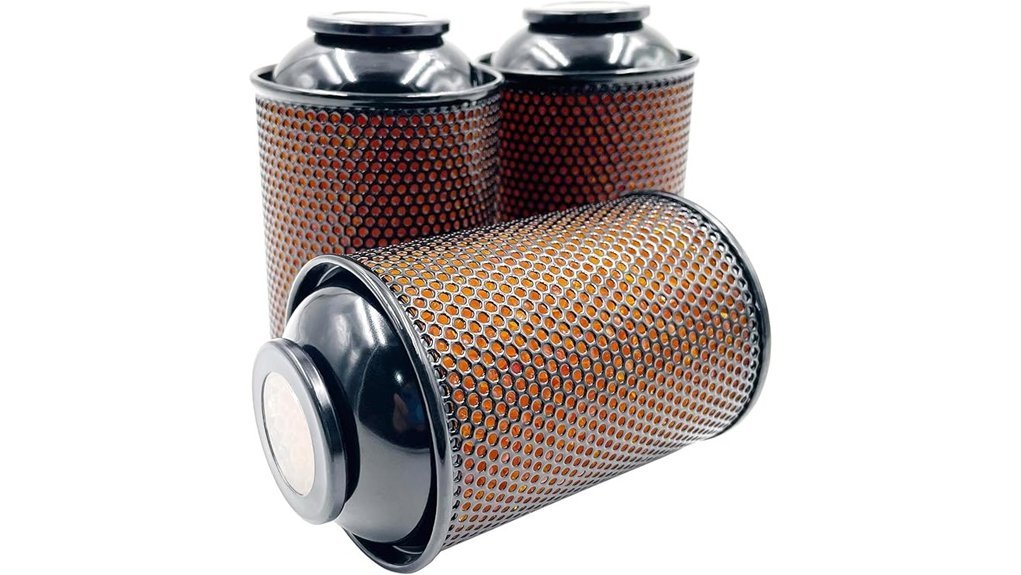
Best multi-canister value: The FULLBOW set includes three 200-gram reusable desiccant canisters for gun safes, toolboxes, cabinets, and other enclosed storage. The separate units can be placed on different shelves or used in multiple safes.
Why you may like it: The product uses indicating silica gel and does not need power while working. Marketplace data suggests the combined set is intended for substantially more space than one canister alone, so do not treat the coverage figure as a per-canister guarantee.
Who should buy this: Owners who want several rigid, reusable absorbers instead of soft bags.
Who should avoid this: Anyone who wants continuous operation without oven regeneration.
Pros:
- Three separate 200-gram canisters.
- No electricity required inside the safe.
- Reusable and easy to distribute.
Cons:
- Requires manual oven regeneration.
- Three canisters consume more shelf space.
- Coverage claims should be confirmed with a hygrometer.
Afloia Rechargeable Cordless Dehumidifier with Heating Base
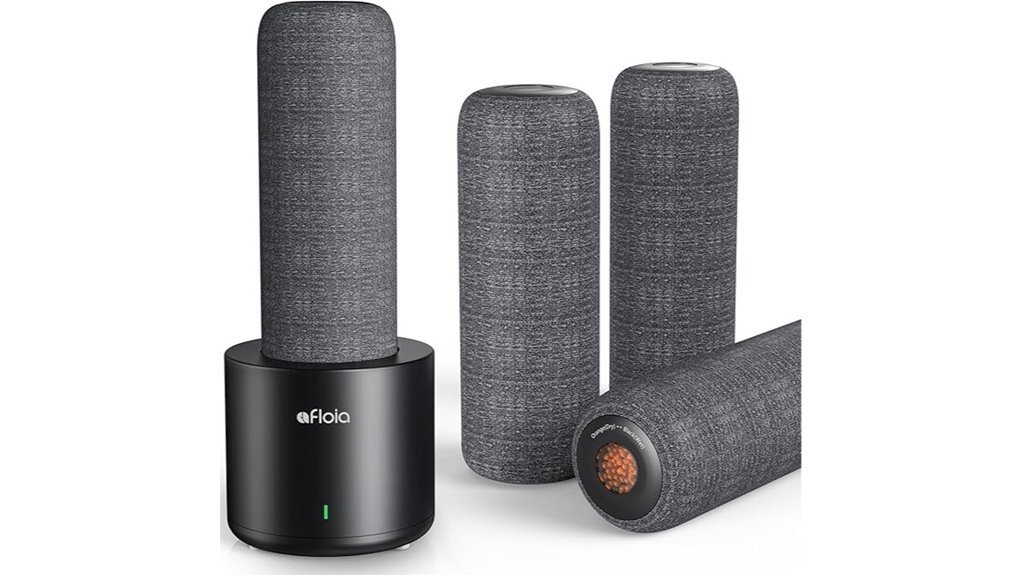
Best renewable system for several spaces: This Afloia set uses cordless silica-gel sticks during normal operation and a powered heating base for regeneration. The 360-degree air-intake design gives the beads exposure around the body of each stick.
Why you may like it: You can rotate regenerated sticks among a safe, closet, vehicle, or cabinet. The base includes automatic shutoff according to the listing. Published marketplace data gives conflicting coverage figures, so the article should not promise a precise room or safe size.
Who should buy this: Buyers who want multiple cordless absorbers and prefer a dedicated regeneration base.
Who should avoid this: Anyone who needs a single compact unit or does not have room to store the base and accessories.
Pros:
- Cordless operation inside the safe.
- Dedicated heating base with listed automatic shutoff.
- Multiple sticks support rotation between spaces.
Cons:
- Coverage information is inconsistent across listings.
- More components than a simple canister.
- Regeneration takes time and requires power at the base.
Wisedry Rechargeable Silica Gel Car Dehumidifier
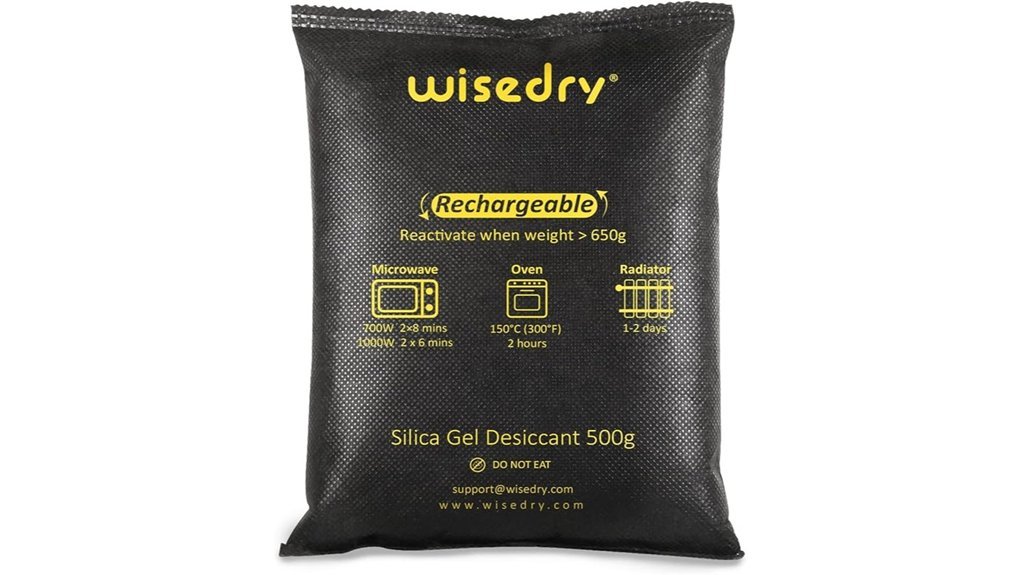
Best large desiccant bags: The Wisedry set includes two 500-gram reusable silica-gel bags. Although the product is commonly marketed for vehicles, its listing also identifies gun safes, closets, garages, and storage areas as suitable enclosed uses.
Why you may like it: Each bag provides more desiccant than a small packet, making the pair useful for a larger safe or two separate enclosures. They can be regenerated in a microwave or oven according to the supplied directions.
Who should buy this: Owners who want high-capacity flexible bags and have enough shelf or floor space.
Who should avoid this: Buyers with a crowded compact safe or anyone who prefers a rigid mounted device.
Pros:
- Two large reusable desiccant bags.
- Flexible placement in safes, vehicles, or cases.
- Fast regeneration compared with some oven-only canisters.
Cons:
- Bulkier and heavier than small packs.
- Requires periodic regeneration.
- Soft bags can be buried or blocked by stored items.
Lockdown Golden Rod Dehumidifier for Gun Safe
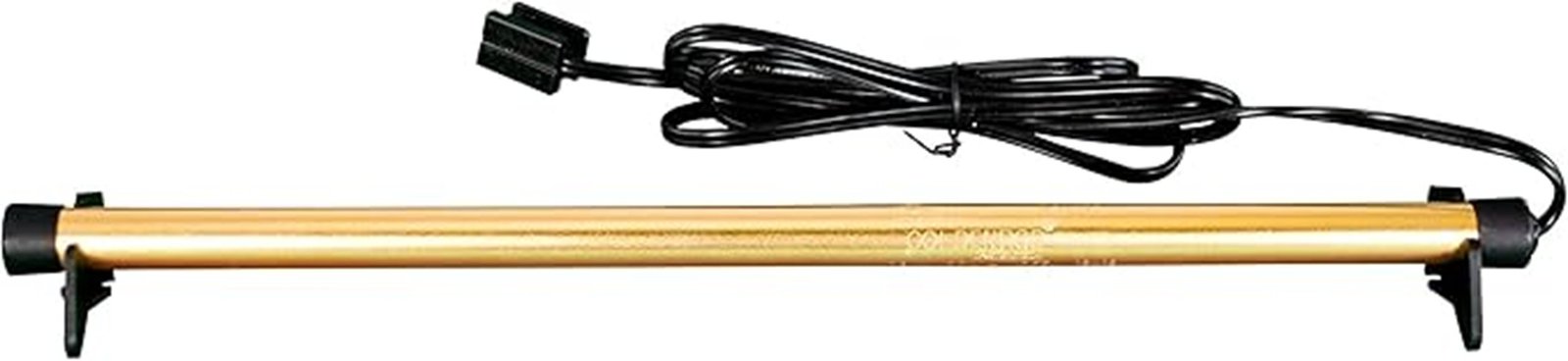
Best overall continuous option: The 18-inch Lockdown Golden Rod is a plug-in heating rod made for gun safes and other enclosed storage. It continuously warms the air to create convection, helping reduce relative humidity, condensation, mildew, and rust risk.
Why you may like it: The official product information lists an 18-inch rod, 110–120V operation, mounting hardware, protection for up to 200 cubic feet, Made-in-USA construction, and a lifetime warranty. It uses vermiculite as internal insulation or fill; it does not work by absorbing water into that material.
Who should buy this: Owners of a medium or large gun safe with a manufacturer-approved electrical pass-through who want continuous, low-maintenance protection.
Who should avoid this: Owners of unpowered safes, frequently moved safes, or enclosures containing items that should not be warmed.
Pros:
- Continuous operation with no recharge cycle.
- Slim profile preserves useful safe space.
- Officially listed mounting hardware and lifetime warranty.
Cons:
- Requires continuous 110–120V power.
- Does not collect liquid water.
- Installation must keep the rod and cord clear of stored items and sharp edges.
Factors to Consider When Choosing a Dehumidifier Inside a Safe
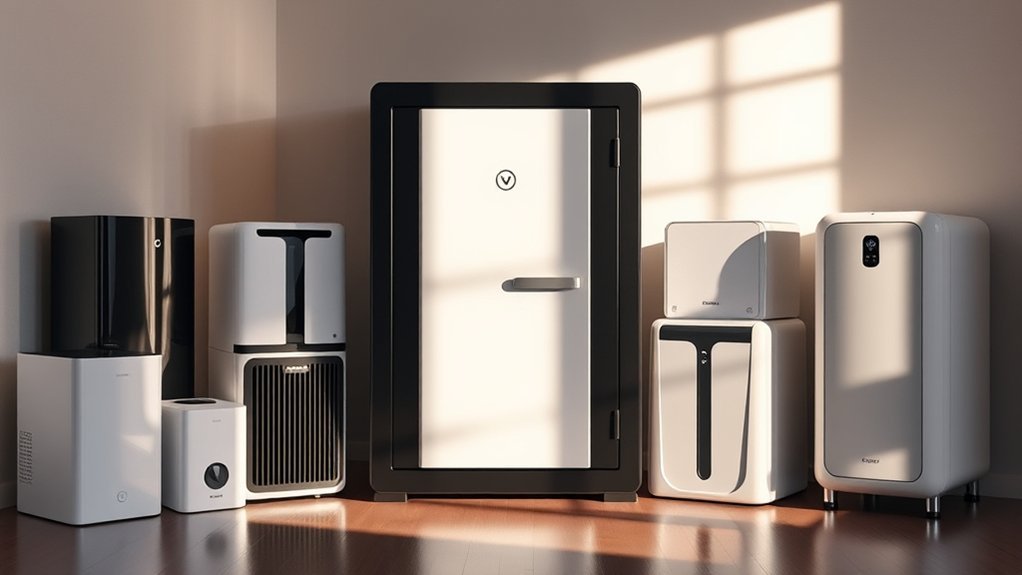
A safe dehumidifier should match the enclosure, the surrounding room, and your maintenance preference. The most useful comparison is not a vague square-foot rating; it is whether the device can maintain stable humidity in the safe without blocking access or creating an installation hazard.
Choose Between Desiccant and a Heating Rod
Desiccant units adsorb moisture and work without a cord inside the safe. They are a good fit for small safes, document boxes, pistol safes, and enclosures without power. Their limitation is saturation: the beads eventually need microwave, oven, sunlight, or plug-in regeneration depending on the product.
Heating rods run continuously and reduce relative humidity by gently warming the air and creating convection. They suit larger gun safes with an approved power route, but they do not remove liquid water and should not be treated as a repair for leaks or a very damp room.
Measure Cubic Interior Space
Measure the usable interior width, depth, and height rather than relying on an exterior safe size. Shelves, door organizers, firearm racks, and internal lock hardware reduce usable volume and can block airflow. Product listings sometimes mix cubic feet, square feet, square centimeters, gallons, and moisture capacity; these units are not interchangeable.
Check Power and Installation
Before buying an electric rod or fan-equipped unit, confirm that the safe has an internal outlet or an approved cord pass-through. Do not drill a fire-rated or warranty-covered safe until the manufacturer confirms that the location and method are permitted. Mount warm devices where they cannot touch cases, foam, documents, fabric, ammunition packaging, or the power cord.
Use a Digital Hygrometer
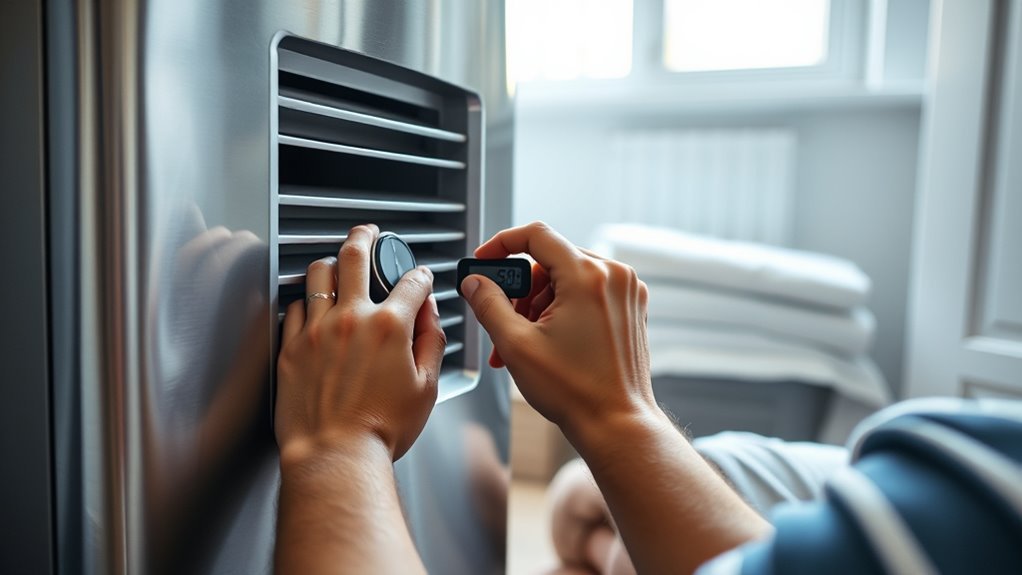
A small digital hygrometer is the easiest way to judge whether the chosen product is working. Record the humidity before installation, then check it over several days and after the safe has been opened. Recharge desiccant when its indicator changes or when the measured humidity begins to rise.
Consider the Room Around the Safe
A safe in a damp basement, garage, coastal environment, or room with a leak will place a much heavier load on a small absorber. Improve ventilation, repair water entry, and control the room humidity where possible. A safe dehumidifier is a protective layer, not a substitute for correcting the moisture source.
Maintenance and Regeneration
Follow the exact product directions because regeneration methods differ. Some bags are microwave-safe, some can be dried in an oven, some use a powered heating base, and self-contained Eva-Dry or Hornady units plug directly into an outlet. Never microwave or bake a plastic housing unless the manufacturer specifically instructs you to do so.
Material and Storage Compatibility
Silica-gel products are useful where a spill-free absorber is preferred, but keep all products away from children and pets and do not open the desiccant container. Heating products may raise the safe temperature slightly, so review the storage requirements for sensitive documents, adhesives, optics, electronics, medicines, film, or other temperature-sensitive valuables.
Frequently Asked Questions
What Type of Dehumidifier Is Best for a Gun Safe?
A heating rod is usually the most convenient continuous option when the safe has an approved power source. A rechargeable silica-gel unit is better when the safe has no outlet, is small, or must remain completely cordless. Use a hygrometer to confirm the result rather than choosing by product type alone.
How Do I Know When to Recharge My Dehumidifier?
Use the color indicator on the desiccant and the reading from a hygrometer. Recharge when the manufacturer’s indicator reaches its saturated color or when safe humidity begins rising. A fixed schedule is less reliable because recharge time changes with room humidity, safe sealing, and how often the door opens.
Can I Use Multiple Dehumidifiers in One Safe?
Yes. Multiple small desiccant units can improve placement in a large or divided safe. Avoid crowding vents or placing packs against a heating rod. Continue monitoring with a hygrometer so you know whether the extra units are useful.
Can I Use a Heating Rod and Desiccant Together?
Yes, provided both products are installed according to their instructions and have safe clearance. A rod supports continuous convection, while desiccant adsorbs moisture. The combination may extend the time between desiccant regenerations, but actual results depend on the enclosure and room conditions.
Are Safe Dehumidifiers Safe for Electronics and Documents?
Contained silica-gel absorbers are generally convenient around electronics and documents because they do not use a liquid collection tank. Heating devices can raise the internal temperature, so check the storage limits of sensitive items and keep them away from the warm surface.
Can I Drill a Hole for a Dehumidifier Cord?
Check with the safe manufacturer first. Drilling can damage fire-resistant materials, wiring, lock components, or warranty coverage. Use an existing factory pass-through whenever possible.
Does a Safe Dehumidifier Fix a Damp Basement?
No. It can help protect the inside of the safe, but it will not repair leaks, stop condensation on walls, or control a large room. Correct the moisture source and use an appropriately sized room dehumidifier when needed.
Conclusion
Final recommendation: Choose the Lockdown Golden Rod for continuous protection in a powered medium or large gun safe. Choose the Hornady Rechargeable Dehumidifier or Eva-Dry E-333 when you need cordless operation. For several small safes or divided compartments, the FULLBOW, Wisesorb, or FURWEY multi-packs make placement easier.
Whichever option you choose, verify the result with a digital hygrometer, follow the correct regeneration or installation instructions, and address any room leak or persistent dampness outside the safe.