Updated: August 2026
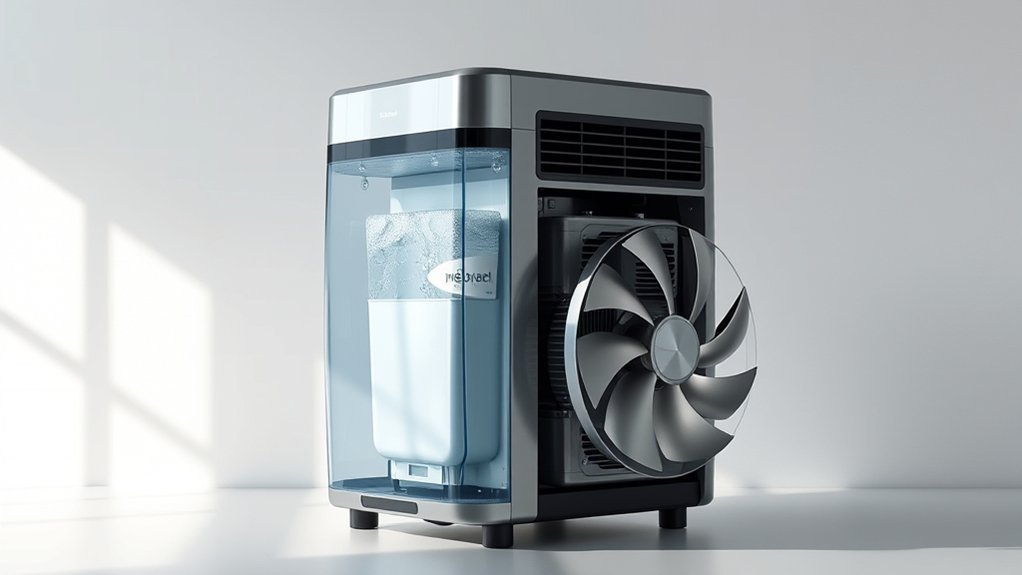
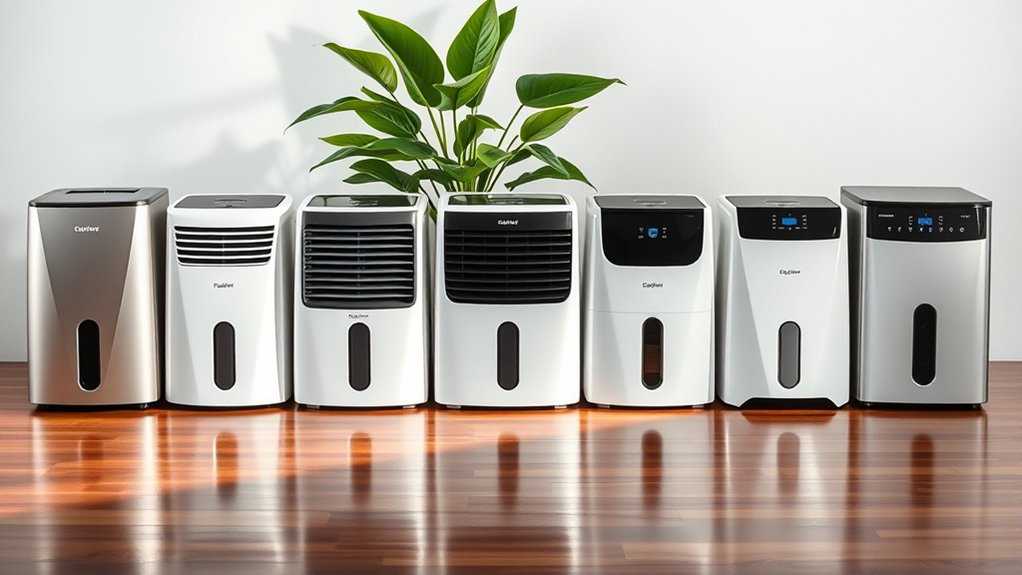
Choosing the best dehumidifier in 2026 depends on the size and dampness of your space, the amount of water the unit can remove, and how you plan to drain it. For broad everyday use, the KNKA 2500 Sq.Ft Dehumidifier offers a useful balance of compressor performance, simple controls, and continuous gravity drainage. The Frigidaire 50 Pint Dehumidifier with Wi-Fi is the strongest smart-home option, while the AEOCKY 4500 Sq.Ft Dehumidifier with Pump is better suited to large, persistently damp areas where collected water must be moved to a higher drain.
Compact thermoelectric models such as the KeepGlad and Onsekin are quieter and easier to move, but they belong to a much lighter-duty product class. They are most useful in bedrooms, bathrooms, closets, RVs, and other enclosed spaces with mild moisture. They should not be treated as replacements for full-size compressor dehumidifiers in wet basements.
Quick verdict
- Best overall for everyday use: KNKA 2500 Sq.Ft Dehumidifier
- Best smart model: Frigidaire 50 Pint Dehumidifier with Wi-Fi
- Best with a built-in pump: AEOCKY 4500 Sq.Ft Dehumidifier with Pump
- Best compact option with a humidity display: KeepGlad Dehumidifier
- Best quiet compressor option: SEMKAP 2500 Sq.Ft Dehumidifier
Important capacity note
Do not compare a compact thermoelectric dehumidifier directly with a full-size compressor model. Thermoelectric units may remove ounces or a few pints per day under favorable conditions, while compressor models can remove several gallons. Also distinguish standardized ENERGY STAR or DOE capacity from higher seller-listed figures measured around 95°F and 90% relative humidity.
Quick Comparison of the Best Dehumidifiers
| Model | Type and stated capacity | Best for | Drainage | Main limitation |
|---|---|---|---|---|
| KNKA 2500 Sq.Ft | Compressor; seller states up to 34 pints/day at 95°F and 90% RH | Basements, laundry rooms and general home use | 3L tank or gravity hose | Capacity is not a standardized rating |
| Frigidaire FHDD5034Y1 | Compressor; marketed as 50 pint, ENERGY STAR lists 49.71 pints/day | Large rooms and app-based control | 2.7-gallon bucket or gravity hose | No built-in pump |
| KeepGlad | Thermoelectric; seller lists 2.8 pints/day | Bathrooms, bedrooms, closets and RVs | Removable tank or hose | Not suitable for serious basement dampness |
| Onsekin CS08-Cream | Compact electric model; seller states up to 37 oz/day | Small rooms where diffuser and lighting features matter | 2.5L tank or external drain | Seller capacity is not standardized |
| SEMKAP 2500 Sq.Ft | Compressor; seller states up to 32 pints/day at 95°F and 90% RH | Quiet low-speed operation and flexible controls | 2.5L tank or gravity hose | Advertised coverage is only a rough guide |
| GoGuess 1600 Sq.Ft | Compressor; seller states up to 21 pints/day at 95°F and 90% RH | Medium-size rooms and moderate dampness | 2.3L tank or gravity hose | Lower output than the larger compressor picks |
| AEOCKY 4500 Sq.Ft with Pump | Compressor; EPA-listed capacity of 44.94 pints/day | Large damp spaces and upward drainage | Tank, gravity hose or built-in pump | Pump adds cost and maintenance |
| AEOCKY 4500 Sq.Ft | Compressor; EPA-listed capacity of 44.34 pints/day | Efficient large-space operation with a lower drain | Tank or gravity hose | No built-in pump |
How these picks were evaluated
This is a specification- and suitability-based comparison, not a claim that every model was personally tested. The evaluation considers moisture-removal capacity, test method, drainage, noise, controls, room suitability, portability, electrical compatibility and clearly stated limitations. Manufacturer square-foot claims are treated as estimates rather than guarantees.
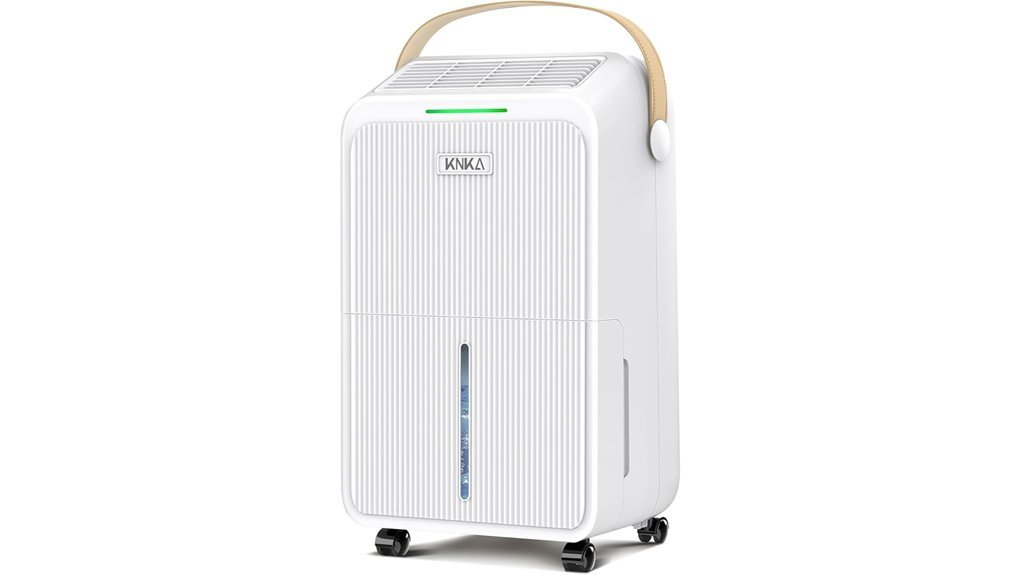
KNKA 2500 Sq.Ft Dehumidifier with Drain Hose
Best Overall for Everyday Use
The KNKA 2500 Sq.Ft Dehumidifier is a practical compressor model for buyers who need substantially more moisture removal than a small desktop-style unit can provide. Its listing states a maximum extraction rate of 34 pints per day at 95°F and 90% relative humidity. Because that is an unusually hot and humid test condition, actual removal will normally be lower in cooler household spaces.
DEHU, DRY and continuous modes make it useful for routine humidity control, indoor laundry drying and persistent dampness. The 3-liter tank is manageable for occasional use, but it can fill quickly in a wet room. Connecting the included hose is the more practical arrangement for extended operation when a lower drain is available.
Best For: Buyers who want a versatile compressor dehumidifier for a basement, laundry room, bedroom, office or garage without paying for Wi-Fi or a built-in pump.
Why You’ll Like It:
- Much higher moisture-removal potential than compact thermoelectric products.
- Three operating modes for normal use, laundry drying and continuous operation.
- Manual bucket collection and continuous gravity drainage.
- Casters, handle, washable filter, automatic defrost and child lock.
Keep In Mind:
- The 34-pint figure is a seller-listed maximum-condition claim, not an ENERGY STAR capacity.
- The 3-liter tank may require frequent emptying during humid weather.
- Gravity drainage requires a continuous downward hose route.
- Confirm current availability because Amazon offers and sellers can change.
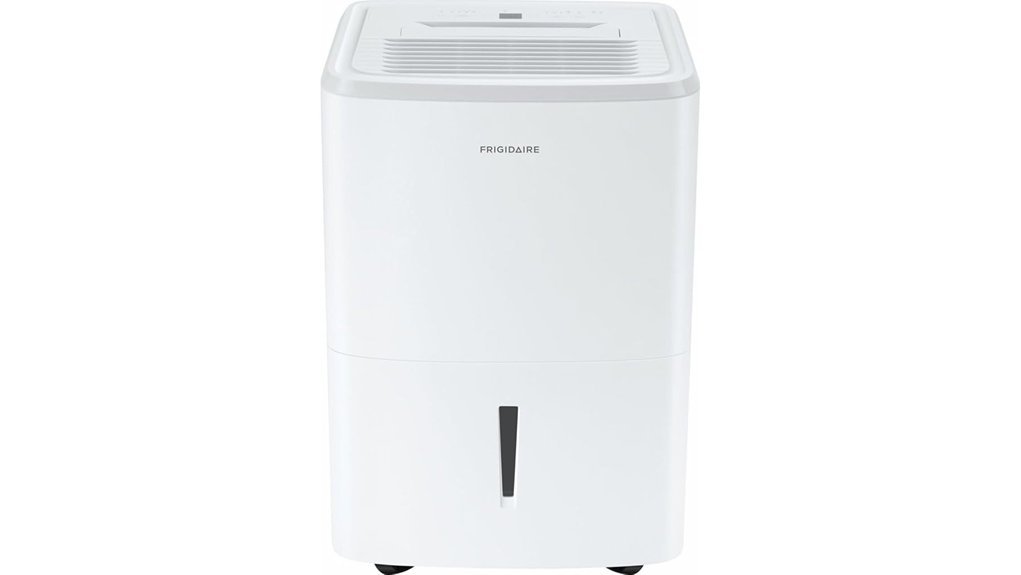
Frigidaire 50 Pint Dehumidifier with Wi-Fi
Best Smart Dehumidifier
The Frigidaire 50 Pint Dehumidifier with Wi-Fi is the most complete connected option in this comparison. Frigidaire markets the FHDD5034Y1 as a 50-pint model, while its ENERGY STAR record lists a standardized capacity of approximately 49.71 pints per day. That standardized figure makes it easier to compare with other certified compressor models.
The Frigidaire app can turn the unit on or off, change the target humidity, adjust fan speed and create schedules. Manufacturer information also lists Alexa and Google Home support. Three fan speeds, a 2.7-gallon bucket and continuous gravity drainage make it suitable for regular use in a large room or basement.
Official specifications list noise levels of 47, 49 and 51 dBA across the three fan settings. That is reasonable for a full-size compressor model, but it is not whisper quiet. At about 41 pounds, it is better moved on its casters than carried repeatedly between floors.
Best For: Large rooms, basements and connected homes where remote control and scheduling are worth the added cost.
Why You’ll Like It:
- Standardized capacity close to 50 pints per day.
- Wi-Fi app control plus Alexa and Google Home compatibility.
- Large 2.7-gallon bucket and continuous drain option.
- Three fan speeds and custom humidity control.
- Designed for operation in temperatures down to 41°F.
Keep In Mind:
- It does not include a built-in pump, so hose drainage depends on gravity.
- The 470-watt rated input can affect electricity use during long run times.
- Manufacturer specifications list one-year labor warranty coverage.
- Remote functions depend on a working network, app service and account connection.
KeepGlad Dehumidifier with Humidity Display
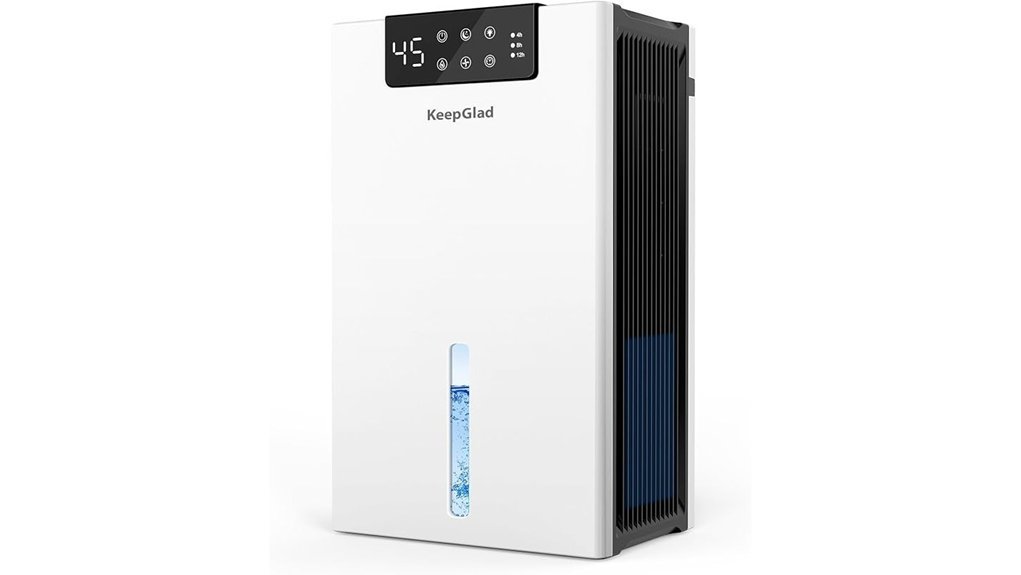
Best Compact Model with a Humidity Display
The KeepGlad is a thermoelectric dehumidifier designed for buyers who value quiet operation, portability and simple visual controls. Its current listing states a moisture-removal capacity of about 2.8 pints per day under favorable conditions. It also lists three speeds, a digital display, timer, washable filter, automatic shutoff and continuous-drain support.
The advertised 1,000-square-foot coverage should be treated cautiously. A thermoelectric unit in this class is most useful in a closed bathroom, bedroom, closet, RV or other modest space with light to moderate moisture. It is not the right tool for standing water, active leaks or a wet full-size basement.
Best For: Small enclosed rooms where low noise, portability and a visible humidity reading matter more than high extraction capacity.
Why You’ll Like It:
- Compact design that is easier to move than a compressor appliance.
- Humidity display, timer and three operating speeds.
- Washable filter and continuous-drain support.
- Lower operating noise than most full-size compressor models.
Keep In Mind:
- Its moisture-removal rate is far below the compressor units in this guide.
- Thermoelectric performance normally falls in cool rooms.
- Do not rely on the square-foot claim alone when sizing it for a basement.
- Confirm the tank size and included hose shown on the current Amazon listing.
Onsekin CS08-Cream Dehumidifier with Aromatherapy Diffuser
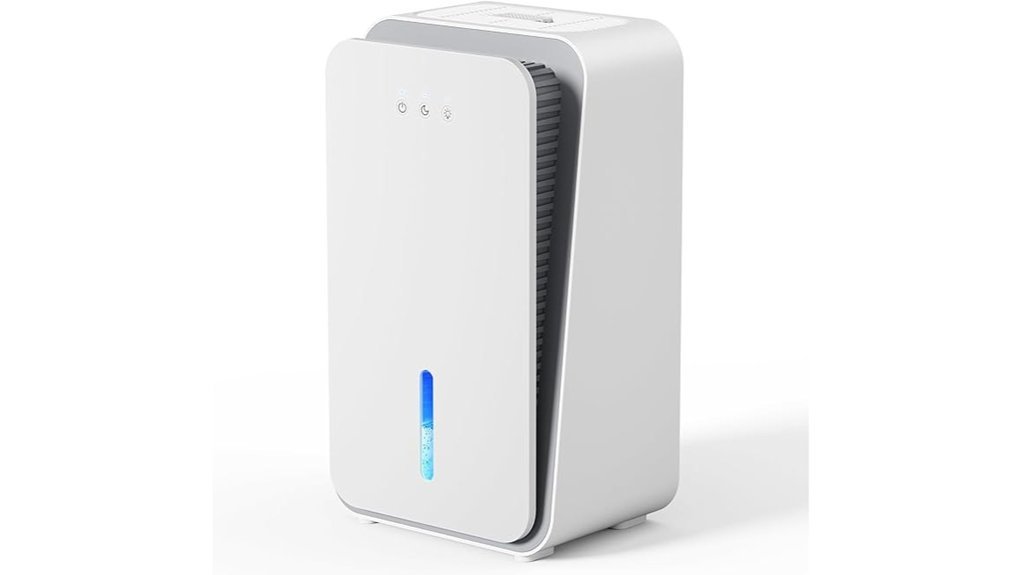
Best Compact Comfort Pick
The Onsekin CS08-Cream combines compact moisture collection with a built-in aromatherapy diffuser and seven-color lighting. Seller-provided product content states an average daily extraction of up to 37 ounces, a 2.5-liter tank and an external drain connection. These are seller claims rather than standardized ENERGY STAR or DOE figures.
This is a comfort-focused small-room appliance rather than a heavy-duty moisture solution. Consider it for a bedroom, bathroom, closet or RV where mild humidity, lighting and fragrance features are priorities. It should not be compared directly with 21-, 34- or 50-pint compressor models.
Best For: Buyers who want a portable small-room dehumidifier with a diffuser, sleep setting and mood lighting.
Why You’ll Like It:
- Combines moisture collection, fragrance and ambient lighting.
- Sleep mode, automatic shutoff, handles and external drainage.
- Compact enough to move between small enclosed rooms.
- Larger seller-listed tank than many basic mini units.
Keep In Mind:
- The 37-ounce output is a seller-provided figure measured under unspecified conditions.
- It is not suitable for flood drying or a persistently wet large basement.
- Do not add essential oils to the collection tank unless the manual specifically directs you to do so.
- Check the voltage and included power adapter on the exact unit before ordering.
SEMKAP 2500 Sq.Ft Dehumidifier with Intelligent Humidity Control
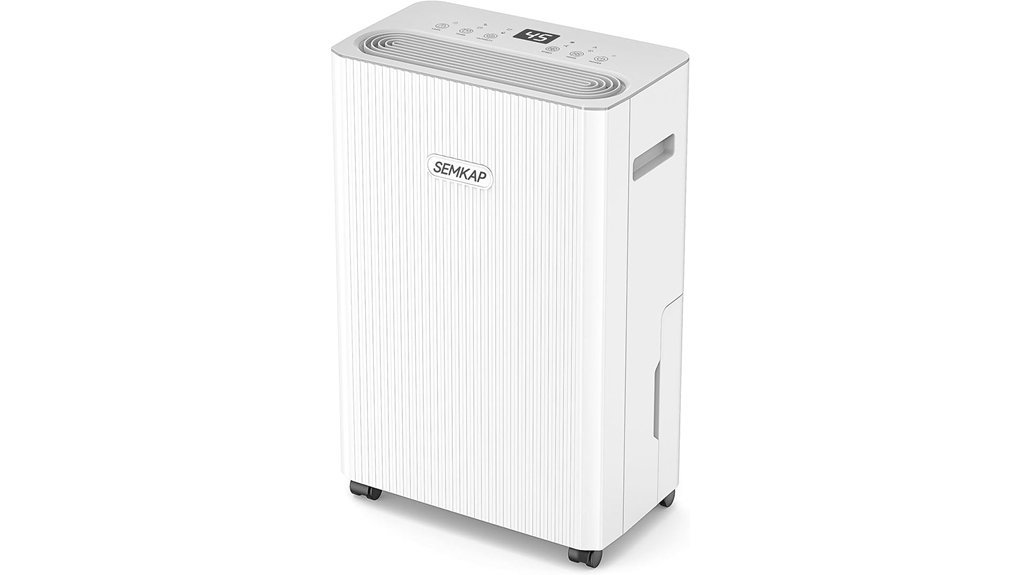
Best Quiet Compressor Pick
The SEMKAP 2500 Sq.Ft Dehumidifier is a compact compressor model with a seller-listed maximum removal rate of 32 pints per day at 95°F and 90% relative humidity. The listing also claims a 35 dB low fan setting and includes automatic, continuous and custom humidity modes.
A 2.5-liter tank, included 3.28-foot drain hose, 24-hour timer, washable filter, automatic defrost, power-outage memory, automatic shutoff, casters and child lock make it flexible for everyday home use. Continuous gravity drainage is preferable when the room remains damp for long periods.
Best For: Buyers who want compressor-level moisture removal, a compact cabinet and a seller-listed quiet low-speed setting.
Why You’ll Like It:
- More moisture-removal potential than a thermoelectric mini unit.
- Multiple humidity-control modes and a 24-hour timer.
- Manual bucket collection and continuous drainage.
- Automatic defrost, restart memory, casters and child lock.
Keep In Mind:
- The 32-pint claim uses hot, humid conditions and is not a standardized rating.
- The 35 dB figure is a seller claim for the lowest fan setting.
- The 2.5-liter bucket can fill quickly in a wet basement.
- Allow the unit to remain upright before first use for the period stated in its manual.
GoGuess 1600 Sq.Ft Dehumidifier with Drain Hose and Timer
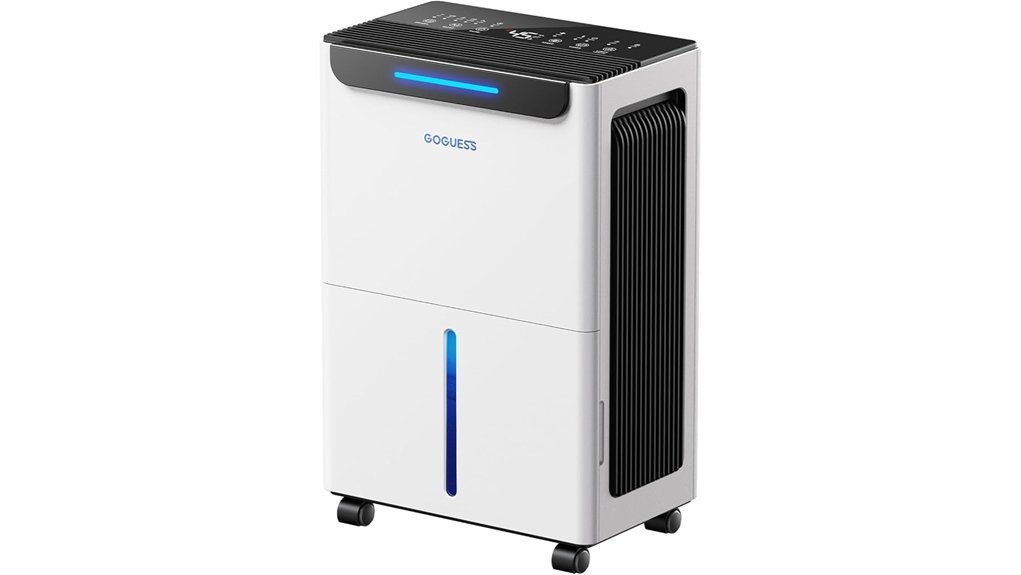
Best for Moderate-Size Spaces
The GoGuess 1600 Sq.Ft Dehumidifier is a lower-capacity compressor option for buyers who do not need a machine in the 45- to 50-pint standardized class. Its listing states a maximum of 21 pints per day at 95°F and 90% relative humidity.
DEHU mode maintains a selected humidity level, TURBO increases airflow for faster drying and SLEEP lowers fan speed. Manual tank collection and continuous gravity drainage are both available. A timer, automatic shutoff, child lock, casters and humidity display improve everyday usability.
Best For: Medium-size bedrooms, offices, laundry areas and moderately damp spaces where a larger 50-pint-class model would be unnecessary.
Why You’ll Like It:
- Useful middle ground between compact thermoelectric and larger compressor units.
- DEHU, TURBO and SLEEP modes cover different use cases.
- 2.3-liter tank plus continuous gravity drainage.
- Humidity display, timer, casters and child lock.
Keep In Mind:
- The 21-pint figure is a maximum-condition seller claim.
- It may need to run longer than a higher-capacity model in a very damp basement.
- Confirm the exact model and variant displayed after opening the Amazon page.
- Test the hose route before relying on unattended continuous operation.
AEOCKY 4500 Sq.Ft Dehumidifier with Pump
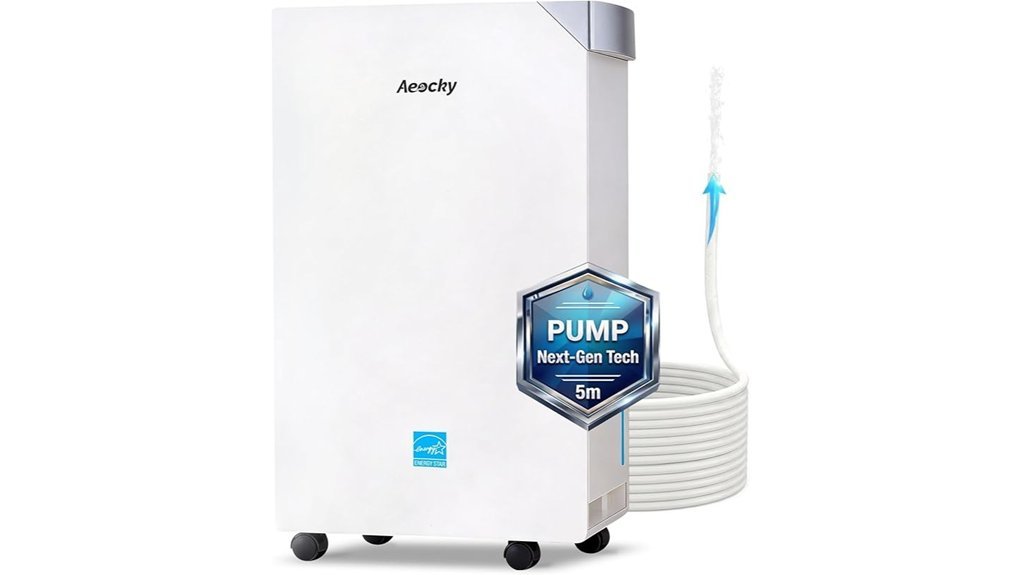
Best Dehumidifier with a Built-In Pump
The AEOCKY 4500 Sq.Ft Dehumidifier with Pump is the strongest choice here when collected water must travel to a sink, window or drain above the unit. The product is advertised at up to 80 pints per day in very hot and humid conditions, while the EPA ENERGY STAR Product Finder lists the corresponding LEO certified model at 44.94 pints per day. The standardized figure is the more useful number for comparison.
Its built-in pump, gravity drain option, removable tank, intelligent humidistat, timer and low-temperature features make it a better fit for a large basement, garage or utility room than a compact thermoelectric product. The pump adds convenience but also adds a component that must be routed, inspected and cleaned correctly.
Best For: Large damp spaces where the drain is above the dehumidifier or a continuous downhill hose route is unavailable.
Why You’ll Like It:
- Built-in pump offers more drain-placement flexibility than a gravity-only unit.
- EPA-listed standardized capacity of 44.94 pints per day for the certified LEO model.
- Tank, gravity hose and pump-assisted drainage choices.
- Humidistat, timer and low-temperature operating features.
Keep In Mind:
- The advertised 80-pint maximum is not the same as the standardized 44.94-pint rating.
- The EPA record shows a model-specific Most Efficient 2025 designation, not a new 2026 award.
- A pump model generally costs more and requires more maintenance than a gravity-drain model.
- Confirm the exact certified model number, maximum pump lift and hose-routing instructions.
AEOCKY 4500 Sq.Ft Energy Star Dehumidifier
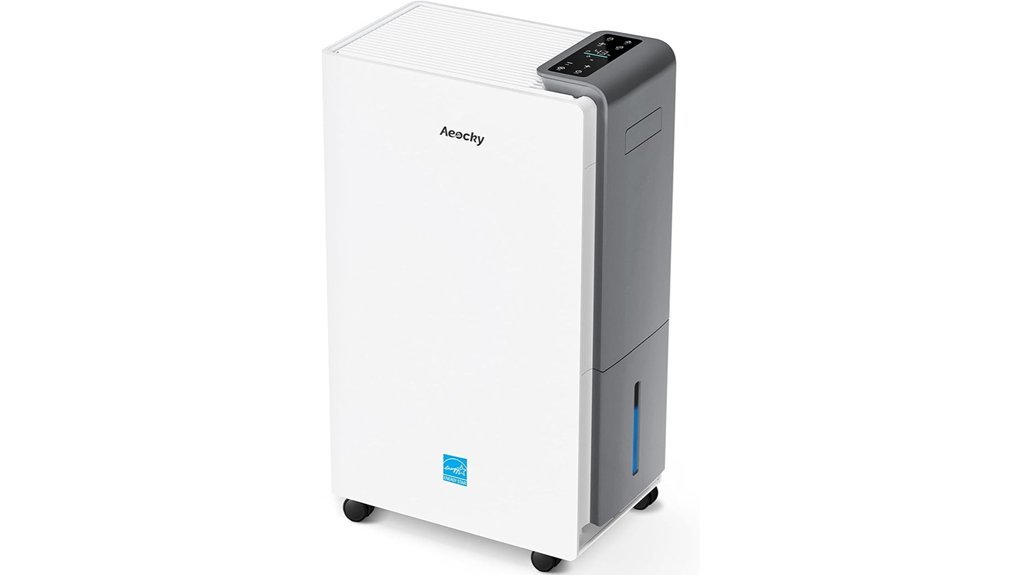
Best Certified Gravity-Drain Pick
The AEOCKY 4500 Sq.Ft Energy Star Dehumidifier is the better AEOCKY option for buyers who have a floor drain, sump or another drain point below the unit and therefore do not need a pump. The product is marketed with an 80-pint maximum under hot, humid conditions, while the EPA ENERGY STAR Product Finder lists the corresponding RHEA model at a standardized 44.34 pints per day.
The RHEA model includes a 1.45-gallon tank, drain hose, garden-hose adapter, humidistat, timer, child lock, fan controls and several operating modes. Its certified efficiency is a meaningful comparison point, but it does not support a universal promise of a specific dollar amount in annual savings.
Best For: Large rooms and basements where high standardized capacity and efficient operation matter, and a lower drain is available.
Why You’ll Like It:
- EPA-listed standardized extraction capacity of 44.34 pints per day.
- Strong efficiency rating for the certified RHEA model.
- Drain hose and garden-hose adapter support flexible gravity-drain setups.
- Humidistat, timer, fan control and child lock.
Keep In Mind:
- This version does not have a built-in pump.
- The advertised 80-pint maximum should not be compared directly with standardized ratings.
- The EPA record shows a model-specific Most Efficient 2025 designation.
- The 1.45-gallon tank still requires regular emptying when a hose is not used.
How to Choose the Right Dehumidifier
The right model is not always the one with the largest square-foot number on the box. Focus on the actual moisture problem, unit type, standardized capacity, drainage route, operating temperature, electrical requirements and acceptable noise level.
Compressor vs. Thermoelectric Models
Compressor dehumidifiers remove much more moisture and are normally the right choice for basements, laundry rooms, garages and large living areas. Thermoelectric models are smaller and quieter, but their daily extraction is much lower. They work best in closets, bathrooms, bedrooms, RVs and other enclosed spaces with mild to moderate humidity.
Match Capacity to Dampness
| Room condition | What you may notice | General capacity direction |
|---|---|---|
| Mildly damp | Occasional musty smell or seasonal humidity | A compact unit for a very small enclosure or a 20–30 pint-class compressor for a larger room |
| Very damp | Persistent odor, condensation or damp spots | Usually a compressor model in roughly the 25–40+ pint standardized class |
| Wet or high load | Seepage, sweating surfaces or frequent indoor laundry drying | A larger 40–50+ pint standardized model after the water source is corrected |
Do Not Size by Square Feet Alone
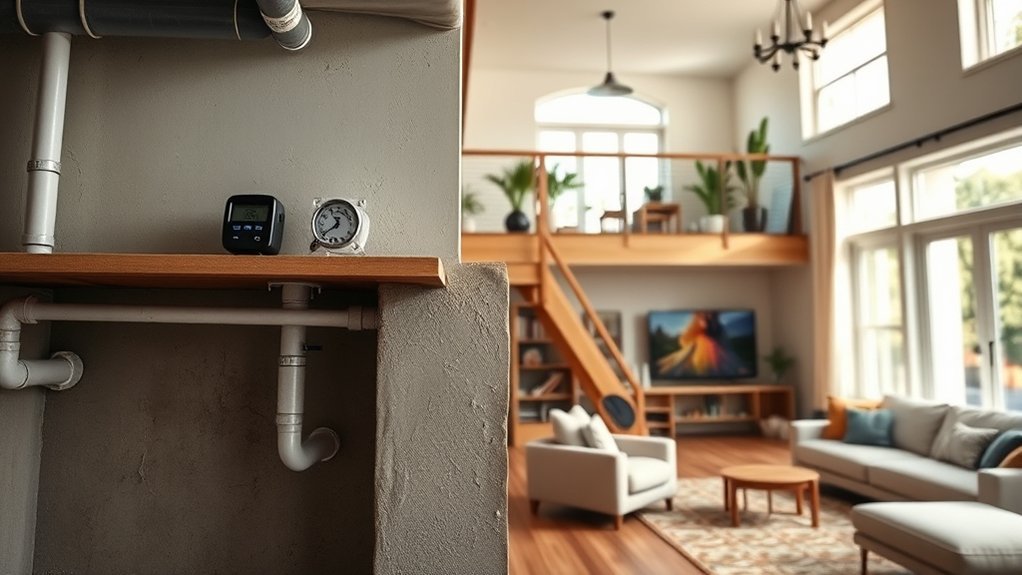
Coverage claims are rough marketing guides. A cool 1,000-square-foot basement with seepage may require more capacity than a warm 2,000-square-foot living area with mild seasonal humidity. Consider room temperature, starting humidity, air leakage, laundry, showers and whether the space has an active water problem. A separate hygrometer lets you measure the result instead of guessing.
Compare Pint Ratings Carefully
Some listings quote a maximum removal rate measured around 95°F and 90% relative humidity. ENERGY STAR and DOE ratings use defined test conditions that support more meaningful model-to-model comparison. When both figures are available, use the standardized number for comparison and treat the hotter-condition number as a maximum seller claim.
Noise Level and Placement
Small thermoelectric models may be quieter than full-size compressor units, but they also remove much less water. Fan speed, compressor cycling, room echo and placement affect perceived sound. For a bedroom, look for a sleep or low-fan mode and avoid placing the unit directly beside the bed.
Tank, Gravity Hose or Pump
A bucket is simple but requires regular emptying. A gravity hose works only when water can flow continuously downhill from the drain port. A built-in pump is useful when the hose must reach a sink, window or drain above the unit. Keep hoses free of kinks, confirm that every connection is secure and test the setup before leaving the appliance unattended.
Controls, Temperature and Efficiency
A humidistat, timer, automatic restart, automatic defrost, filter reminder and Wi-Fi control can make a dehumidifier easier to live with. For a cool basement, confirm the minimum operating temperature and whether defrost is included. For long daily run times, compare ENERGY STAR certification, standardized capacity and integrated energy factor instead of relying on vague energy-saving language.
Check Voltage and Outlet Requirements
Verify the voltage and frequency shown on the rating label or power adapter before ordering. Most standard household outlets in the United States supply approximately 120 volts. Do not assume that an Amazon.com listing is electrically compatible, and do not use a simple plug-shape adapter to operate a product designed for a different voltage.
Before you buy
- Fix plumbing leaks, seepage, grading or drainage problems first.
- Decide whether you can use gravity drainage or need a pump.
- Compare standardized pint capacity whenever it is available.
- Measure room humidity with a separate hygrometer.
- Check minimum operating temperature for a cool basement.
- Allow clearance around air inlets and outlets.
- Confirm voltage, hose route, filter access and warranty terms.
- Verify the exact model number displayed on the current Amazon page.
Frequently Asked Questions
How Do I Maintain My Dehumidifier for Optimal Performance?
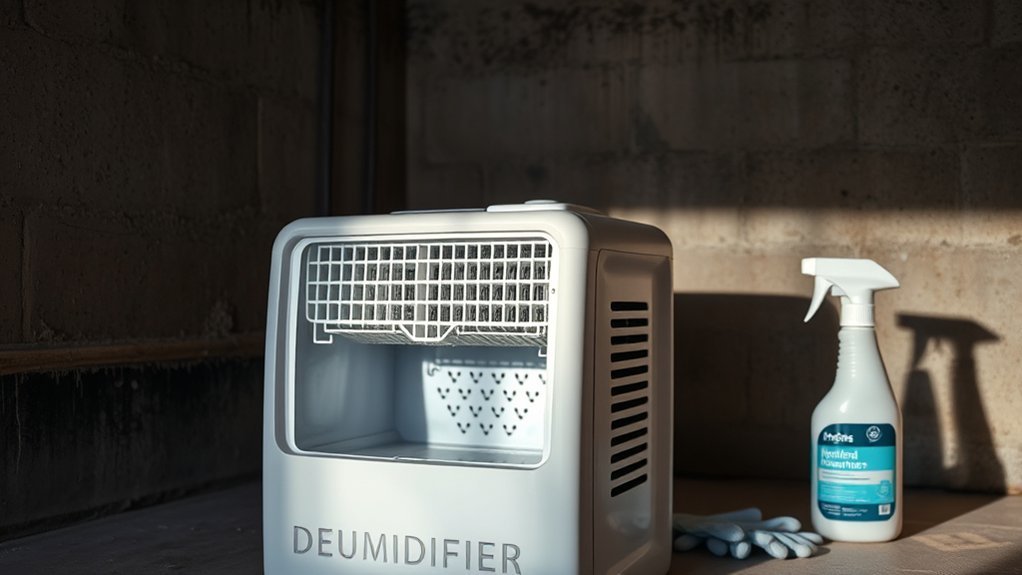
Clean or wash the filter according to the owner’s manual, empty and rinse the bucket before residue builds up, inspect the drain hose for kinks or clogs and keep the air inlet and outlet clear. If the model has a pump, follow its pump-cleaning and winter-storage instructions. Unplug the appliance before cleaning.
What Size Dehumidifier Do I Need for My Space?
Use standardized daily moisture-removal capacity, room dampness and temperature rather than square footage alone. A compact thermoelectric model may help in a small bathroom or closet, but a damp basement normally needs a compressor model. For severe humidity, choose enough capacity to reach the target without forcing an undersized appliance to run constantly.
What Humidity Level Should I Set?
A practical household target is generally between 30% and 50% relative humidity. Many homes are comfortable near 45% to 50%, although climate, temperature and condensation risk vary. Avoid making the room excessively dry, and use a separate hygrometer to check the dehumidifier’s reading.
Are Dehumidifiers Noisy During Operation?
Most compressor models produce steady fan sound plus periodic compressor cycling. Compact thermoelectric units are usually quieter but remove less water. Published dB figures can help with comparison, although fan speed, flooring and room acoustics affect how loud a unit feels.
How Often Should I Empty the Dehumidifier Tank?
Empty it whenever the full-tank indicator appears. In humid weather, a small tank may fill more than once a day; in mild conditions, it may take much longer. Continuous drainage is normally the better choice when a compressor unit operates in a persistently damp area.
Can a Dehumidifier Help With Allergies?
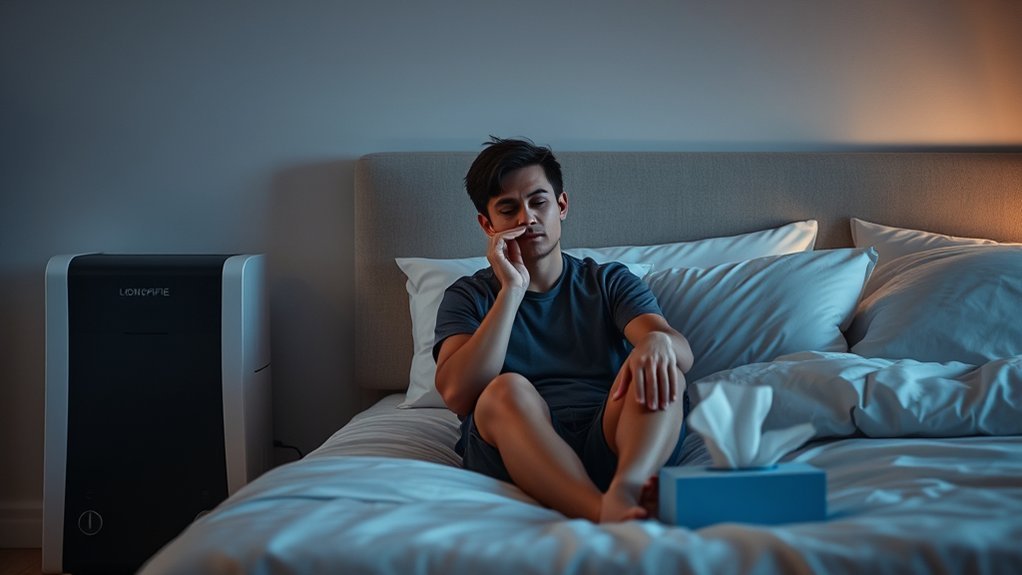
A dehumidifier can reduce damp conditions that support mold and dust mites, but it is not a medical treatment and does not remove an existing mold source by itself. Control the moisture source, maintain an appropriate humidity level and clean or remediate visible mold safely.
Can a Dehumidifier Fix a Wet Basement?
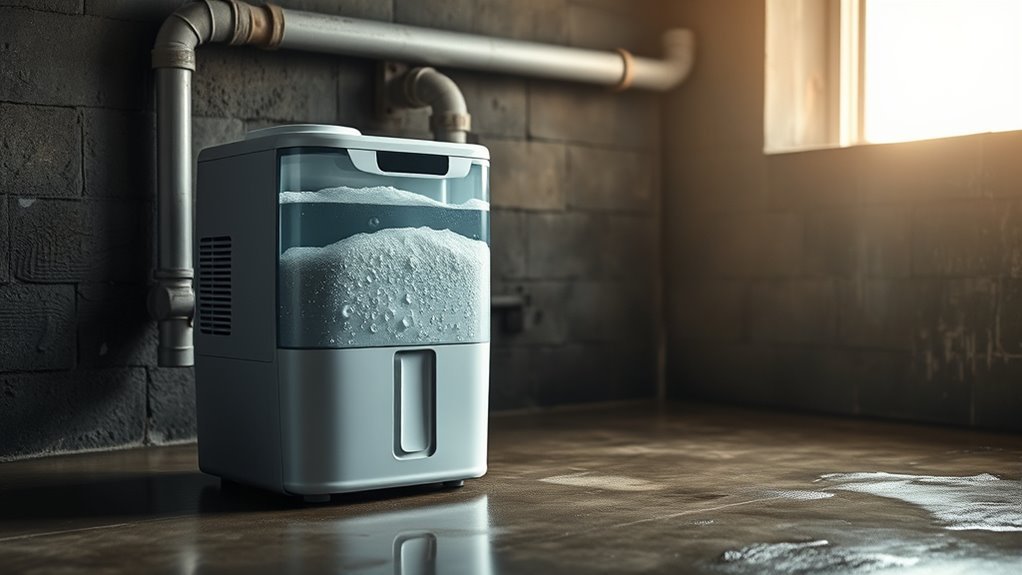
It can control airborne moisture after the water source is addressed, but it cannot repair foundation seepage, plumbing leaks, poor grading, blocked gutters or a failed sump system. Stop the source of water first, dry affected materials and then use the dehumidifier to maintain stable humidity.
Do I Need a Dehumidifier With a Pump?
You need a pump when the drain destination is above the dehumidifier or when gravity cannot maintain a continuous downward slope. If a floor drain or sump is nearby and below the drain port, a gravity-hose model is normally simpler, less expensive and easier to maintain.
Can I Run a Dehumidifier Continuously?
Many models include a continuous mode, but that does not mean they should be installed without checking the setup. Use a secure hose route, confirm the drain remains open, clean the filter, provide airflow clearance and inspect the appliance regularly. A humidistat-controlled setting is generally more efficient than forcing continuous operation after the room reaches its target.
Conclusion
Final recommendation
Choose by standardized capacity and drainage requirements first. Smart controls, lighting and square-foot claims should be secondary considerations.
For most buyers who want useful compressor performance without app control, the KNKA 2500 Sq.Ft Dehumidifier is the most balanced everyday pick, provided its seller-listed maximum capacity suits the room. Choose the Frigidaire FHDD5034Y1 when connected controls, a large bucket and a standardized capacity close to 50 pints per day matter most.
For a large damp basement with no lower drain, the AEOCKY 4500 Sq.Ft Dehumidifier with Pump is the more practical drainage solution. The gravity-drain AEOCKY is the better choice when a floor drain or sump is already available.
For bedrooms, bathrooms, closets and RVs, the KeepGlad and Onsekin offer easier portability and lower-output moisture control. Their extraction rates are much lower than those of full-size compressor models, so they should not be expected to solve serious basement dampness. Match the unit to the moisture load, confirm electrical compatibility, use a hygrometer and choose a drainage setup you can inspect and maintain safely.