
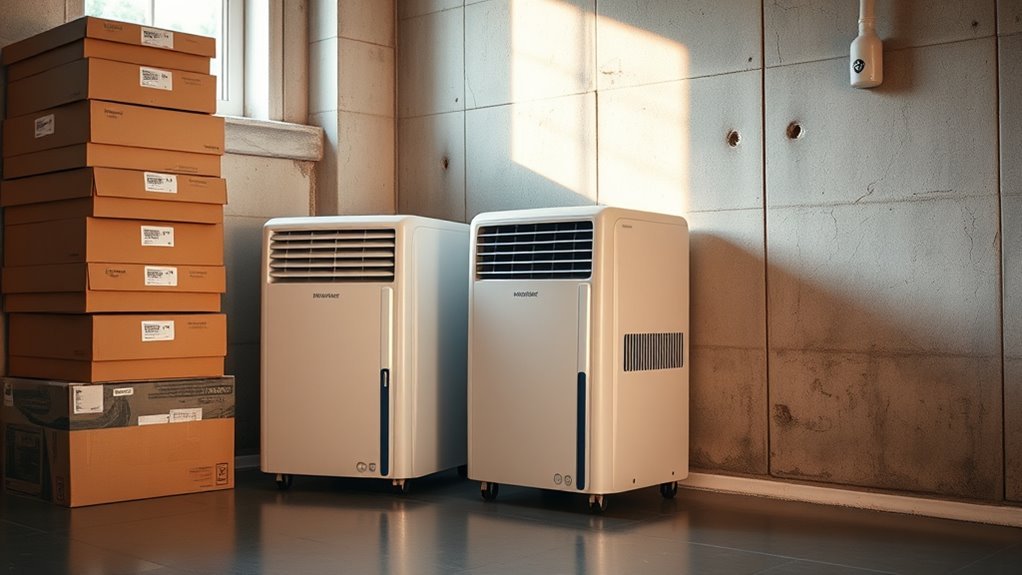
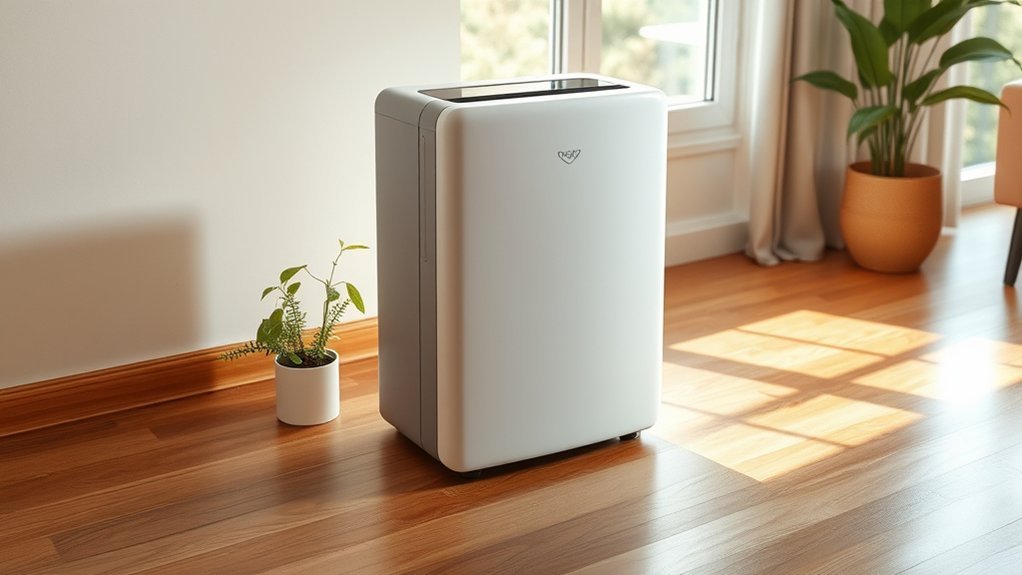
Two dehumidifiers are better than one only when your damp air is split across separate zones. If one correctly sized unit can hold every problem area near 30% to 50% relative humidity, one unit is simpler, quieter, and usually more efficient. If closed doors, stairways, finished basement rooms, laundry areas, bathrooms, garages, or crawlspace entries stay damp while the first unit runs, a second dehumidifier can dry the home faster and more evenly.
Last updated: July 7, 2026 · Reviewed for accuracy
Quick Answer
Two dehumidifiers are better than one when your home has separate damp zones, multiple floors, poor airflow between rooms, or humidity that stays above target despite one correctly sized unit running. For one open room, a single ENERGY STAR certified unit with the right pint capacity is usually simpler, quieter, and more efficient.
Key Takeaways
- Use one dehumidifier for an open, connected space when it can hold indoor humidity near 30% to 50%.
- Use two dehumidifiers when walls, doors, floors, or moisture sources create separate damp zones.
- Do not guess by feel alone. Use a hygrometer in each problem room and watch whether readings stay above 50% to 60%.
- Fix leaks, drainage problems, and poor ventilation first; dehumidifiers control moisture but do not remove the source.
- Check older units for recalls and keep vents clear so the appliance can run safely.
At a Glance
| Time Required | 15 to 30 minutes to measure rooms and humidity; 24 to 48 hours to judge whether one unit is enough |
| Difficulty | Easy for normal rooms; moderate for basements, crawlspaces, flood-drying, or whole-house moisture problems |
| Tools Needed | Hygrometer, tape measure, dehumidifier manual or product label, grounded outlet, optional drain hose or condensate pump |
| Cost | Usually the cost of one or two portable units, plus electricity; a whole-house dehumidifier costs more but may be cleaner for large homes |
How Many Dehumidifiers Do You Need?
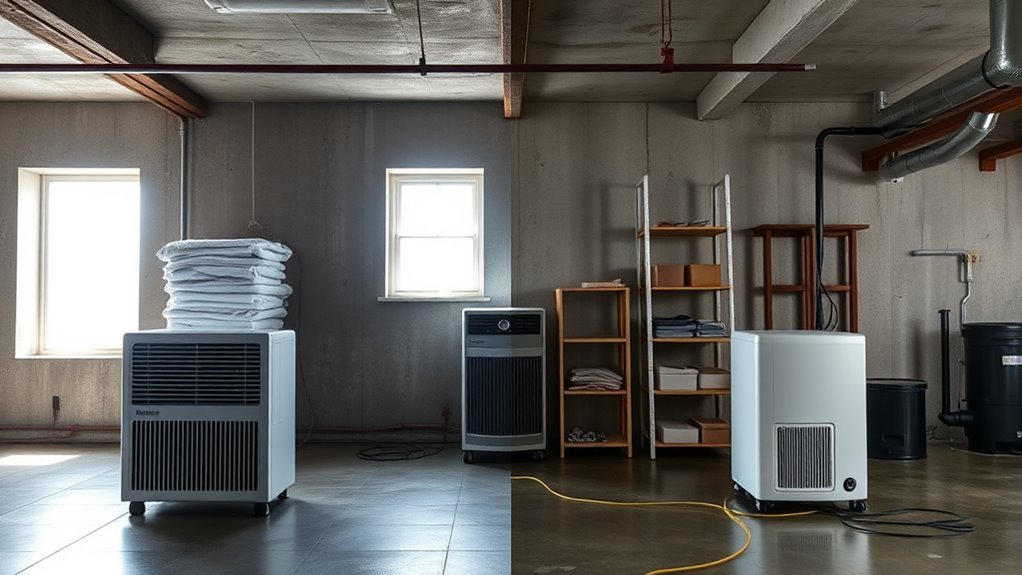
How many dehumidifiers you need depends on the size, layout, and moisture load of your space. A single unit can work well in one open basement, living area, apartment, or connected group of rooms. Multiple dehumidifiers make more sense when the damp areas are separated by doors, walls, stairways, long hallways, or different moisture sources.
The best way to decide is to measure relative humidity instead of guessing. The U.S. Environmental Protection Agency says indoor relative humidity should be kept below 60%, ideally between 30% and 50% when possible. The Centers for Disease Control and Prevention advises keeping home humidity no higher than 50% all day to help prevent mold.
If one unit keeps every problem area near 30% to 50% without running nonstop, one is enough. If one room is dry while another still smells musty, shows condensation, or stays above 60%, you probably need a second unit, a larger unit, better airflow, or a fix for the moisture source.
Quick Decision Test
- Put one hygrometer in the dampest room and another in the room farthest from the dehumidifier.
- Clean the filter, close exterior windows, keep interior doors open, and run one correctly sized unit for 24 to 48 hours.
- Check both meters. If both zones settle near 45% to 50%, keep one unit.
- Add a second unit only when the far room stays above 55% to 60%, smells musty, or shows condensation while the first room is already dry.
| Situation | Best Choice | Why |
| One open room or open basement | One high-capacity unit | Air can circulate back to the unit without major barriers. |
| Two closed rooms with dampness | Two smaller or medium units | Each unit treats its own zone instead of fighting blocked airflow. |
| Basement plus upstairs humidity | One unit per floor or a whole-house option | Moisture conditions can differ by level. |
| Humidity stays above 60% with one unit running | Add capacity or fix the moisture source | The unit may be undersized, poorly placed, or overwhelmed by leaks or ventilation issues. |
Recommended Products

Face Icon Comfort Indicator: Humidity temperature gauge features face icons to indicate DRY/COMFORT/WET air conditions, quickly informs you how to adjust your humidifier or dehumidifier to achieve optimal comfort.

Wellness Indicator: This humidity meter with humidity level icon indicates air conditions - DRY/COMFORT/WET, allowing this humidity sensor to ensure you’re always aware of changes to your home/household with just a quick glance

Smart Features: The Govee Wireless Thermometer Hygrometer supports all basic functions as well as smart functions such as remote monitoring and temp humidity graphs. Our humidity meters are reliable and easy to use for homes, greenhouses and more.(Only supports 164ft Bluetooth connection)
When One Dehumidifier Is Enough
You only need one dehumidifier when the space is open, the dampness is mild to moderate, and the unit can pull air from the whole area. One correctly sized model is often better than two undersized models because it is easier to drain, maintain, monitor, and place.
Single Unit Sufficiency
A single dehumidifier is usually enough for an open floor plan, a small apartment, a single basement room, or a lightly damp space where air moves freely. It also works when your humidity problem is seasonal and you can move a portable unit from one room to another as needed.
Use a hygrometer to confirm the result. Put the meter in the dampest area first, then check nearby rooms after the unit has run for a day. If readings drop into the target range and musty odors fade, you do not need a second machine.
Best-Sized Placement
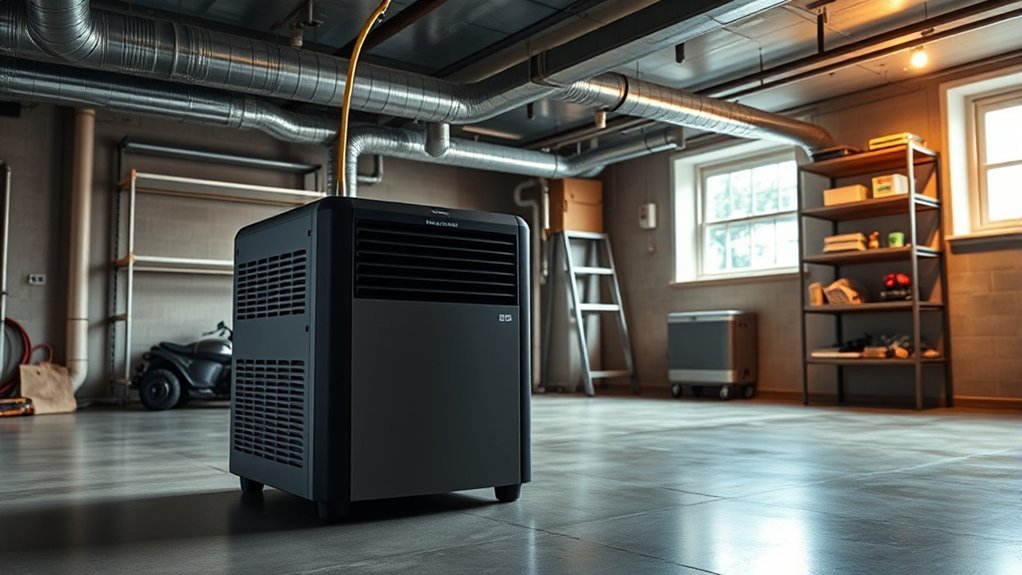
Placement matters as much as capacity. Put one dehumidifier in the dampest usable spot, not in a dry hallway far from the problem. Keep the intake and exhaust vents clear, leave space around the machine, and close windows while it runs. If the unit has continuous drainage, position it near a floor drain, sump pit, utility sink, or condensate pump.
Pro Tip: Before buying a second unit, move your existing unit to the dampest spot, clean its filter, set the humidistat around 45% to 50%, and recheck the room after 24 hours. Poor placement often looks like low capacity.
Signs You Need Two Dehumidifiers
You may need two dehumidifiers when dampness is spread across separated zones. Common signs include musty odors in more than one room, condensation on windows or pipes, mold-prone corners, damp laundry areas, and humidity readings that stay high even while one unit is running.
Two dehumidifiers are especially useful in these situations:
- A basement and an upstairs room both have high humidity.
- A bathroom, laundry room, garage, or crawlspace is isolated from the main living area.
- Doors stay closed most of the day, blocking airflow.
- One unit fills its bucket quickly but nearby rooms still feel damp.
- You are drying out after a leak, flood, or plumbing failure.
Warning: If humidity is high because of a roof leak, plumbing leak, foundation seepage, or flooding, fix the water source first. A dehumidifier can help dry the air, but it cannot solve active water intrusion or safely remediate major mold growth.
Can One Dehumidifier Work Across Multiple Rooms?
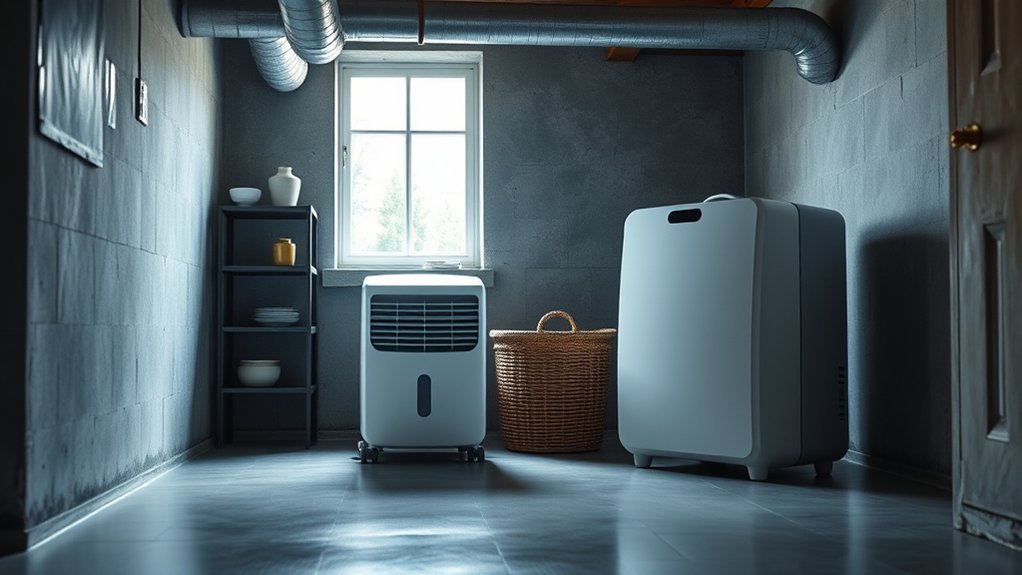
One dehumidifier can work across multiple rooms only when air can move freely between those rooms. A wide doorway, open stairwell, or open-plan basement gives humid air a path back to the machine. A closed storage room, closet, bedroom, or laundry room often needs its own unit because the dehumidifier cannot pull enough damp air through the barrier.
This is why the same dehumidifier may work well in one open basement but fail in a finished basement with several closed rooms. Before you buy another unit, open interior doors, use a small fan to improve circulation, and recheck humidity in the farthest room. If the far room still stays high, treat it as a separate zone.
How to Size a Dehumidifier
To size a dehumidifier, start with square footage, then adjust for moisture severity, room type, temperature, and airflow. The ENERGY STAR dehumidifier guide explains that dehumidifier capacity is measured in pints per 24 hours and depends on both the size of the space and the conditions in that space.
Measure Room Square Footage
Measure the length and width of each room, then multiply them to get square footage. For example, a 20-foot by 25-foot basement is 500 square feet. If two rooms are separated by a closed door, measure them as separate zones rather than pretending they are one open area.
Match Capacity To Humidity
After measuring the room, check the humidity. A space that sits around 55% relative humidity needs less drying power than one that sits at 70% with condensation. For many homes, common portable dehumidifier tiers are around 22, 35, and 50 pints per day, but the right choice depends on the product label, manufacturer coverage rating, and real room conditions.
| Room Condition | What It Looks Like | Sizing Move |
| Mild humidity | Slight clamminess, no visible condensation | Choose a unit rated for the room size and monitor results. |
| Moderate dampness | Musty odor, cool damp air, RH often above 55% | Move up in capacity or use a unit with continuous drainage. |
| Heavy moisture | Condensation, wet spots, recent leak, RH above 60% | Use higher capacity, consider two zones, and fix the water source. |
Account For Layout And Rooms
Room layout changes performance. Open rooms let one unit pull humid air from a wide area. Closed rooms, split levels, long hallways, and finished basements with partitions often need separate units because dry air does not move evenly through barriers.
Temperature also matters. Compressor dehumidifiers remove less moisture in cooler basements and garages. If the space is cold, check the product’s operating temperature range and look for auto-defrost. In very cold areas, fixing insulation, air sealing, or ventilation may matter as much as buying a larger unit.
Note: Older “70-pint” sizing advice may not match newer labels. ENERGY STAR explains that DOE test procedures changed, newer capacity ratings often look lower, and current products are rated using Integrated Energy Factor. Compare current product labels, not old capacity names.
Where to Place Dehumidifiers
Place dehumidifiers where moisture is highest and airflow is clear. Good locations include basements, bathrooms, laundry rooms, utility rooms, and damp finished rooms. Avoid pushing the unit tight against a wall, hiding it behind furniture, or placing two units so close that they compete for the same air.
The best placement is not the most convenient corner. It is the spot where the unit can pull damp air freely and drain safely.
- Place the unit near the dampest area, not near a dry supply vent.
- Keep intake and exhaust vents open.
- Use a level surface so the bucket and float switch work correctly.
- Keep doors open when one unit is serving multiple rooms.
- Use separate units when doors must stay closed.
- Route drain hoses downward so water does not back up.
How Two Dehumidifiers Affect Energy Use
Running two dehumidifiers usually uses more electricity than running one. That does not automatically mean it is wasteful, though. Two units can be efficient when they are drying separate zones and shutting off once each room reaches the target humidity. They become wasteful when they sit in the same small room, cycle against each other, or run because the actual moisture source has not been fixed.
To keep energy use under control, choose ENERGY STAR certified models, use built-in humidistats, clean filters, and set a reasonable target around 45% to 50%. If the bucket fills several times a day, use continuous drainage so the unit does not shut off while the room is still damp.
How Two Dehumidifiers Affect Noise
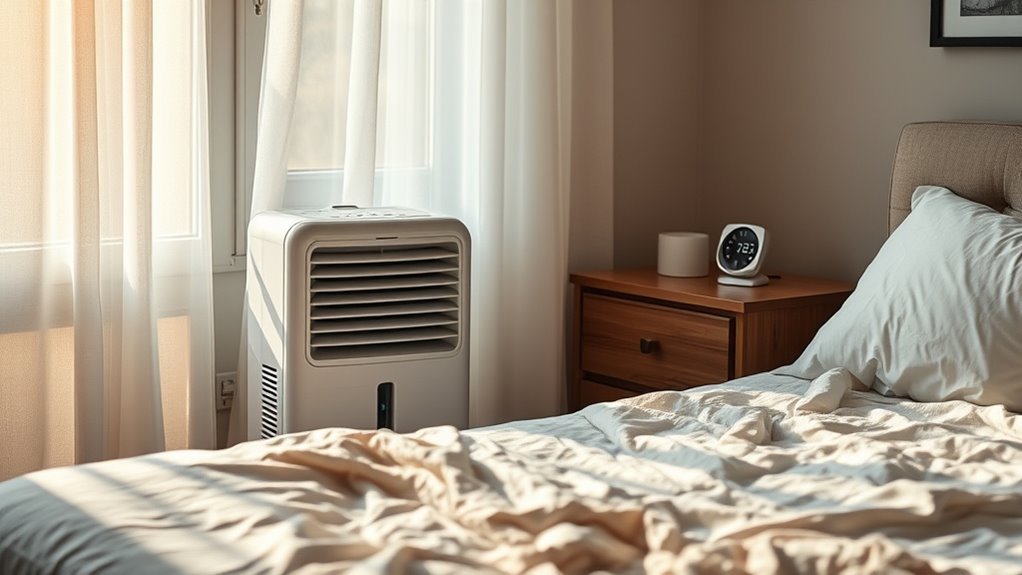
Two dehumidifiers can make a room noticeably louder. Each compressor and fan adds sound, vibration, and heat. In a basement or utility room, that may not matter. In a bedroom, office, nursery, or living room, one quieter unit may be the better choice.
Noise Levels Add Up
Do not assume two small units will be quieter than one larger unit. If both run at the same time, the combined hum may be more distracting than a single machine cycling on and off. Check the product’s decibel rating when the unit will be used near sleeping, work, or TV areas.
Comfort Drops With Hum
Humidity control should make a room more comfortable, not harder to use. If noise bothers you, place the unit farther from seating and sleeping areas, use continuous drainage so you are not emptying the bucket often, and choose a model with a lower fan setting or sleep mode.
How to Prevent Over-Drying
To prevent over-drying, measure humidity and use the humidistat instead of running the unit nonstop. For many homes, 30% to 50% relative humidity is the practical comfort range. If the room falls below 30%, the air may feel dry, static may increase, and wood or musical instruments can be affected.
- Set the target humidity around 45% to 50% for normal dampness control.
- Lower the setting only when the room still smells musty or shows condensation.
- Use separate hygrometers because built-in sensors can read differently from the room.
- Recheck readings after weather changes, heavy rain, showers, laundry, or basement seepage.
Best Rooms for a Second Dehumidifier
The best room for a second dehumidifier is the wettest room that your first unit cannot reach. In many homes, that means a basement, bathroom, laundry room, garage, crawlspace entry area, or a closed bedroom on another floor.
A second unit works best when it has its own job. Put one dehumidifier in the basement and another in the upstairs problem room. Or place one near a laundry area and another in a finished basement room with closed doors. Avoid placing both units side by side unless you are drying a large wet area after water damage and can manage drainage safely.
What Dehumidifier Capacity Your Home Needs
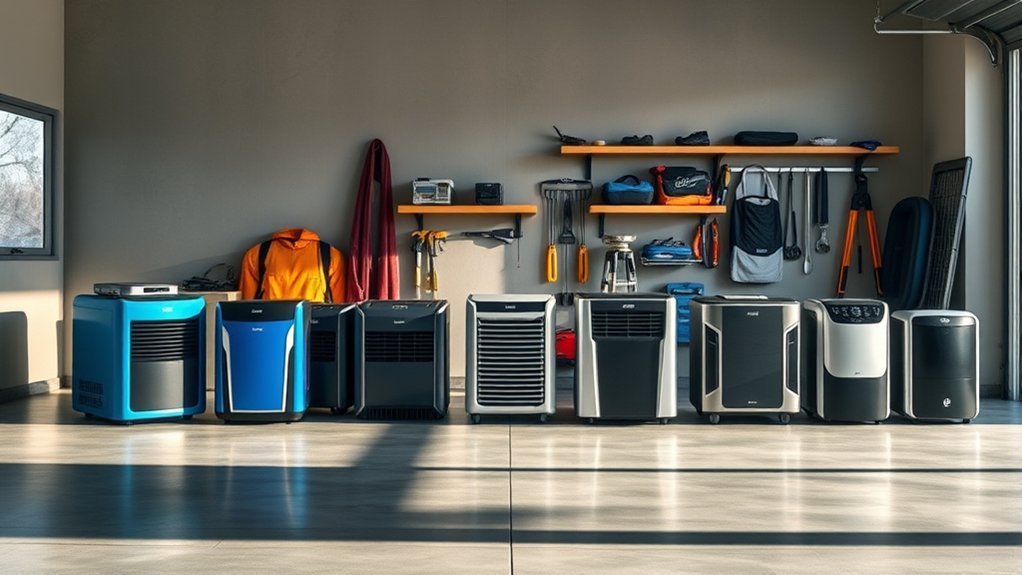
Dehumidifier capacity should match the area and the amount of moisture the unit must remove. A small, lightly damp bedroom may need only a smaller portable unit, while a damp basement, garage, or large open living area may need a higher-capacity model. Large homes with moisture across several floors may be better served by a whole-house dehumidifier or a combination of portable units.
Use this simple process:
- Measure each damp zone separately.
- Check each zone with a hygrometer for at least a full day.
- Identify the moisture source: outdoor humidity, showering, laundry, seepage, leaks, poor ventilation, or flood damage.
- Choose a unit rated for that square footage and severity.
- Run it for 24 to 48 hours and recheck readings.
- Add a second unit only if one correct unit cannot control all areas.
Recommended Products

【𝐄𝐍𝐄𝐑𝐆𝐘 𝐒𝐓𝐀𝐑 𝐂𝐞𝐫𝐭𝐢𝐟𝐢𝐞𝐝 𝐟𝐨𝐫 𝐄𝐟𝐟𝐢𝐜𝐢𝐞𝐧𝐭 𝐏𝐞𝐫𝐟𝐨𝐫𝐦𝐚𝐧𝐜𝐞】Delivers consistent dehumidification across a variety of real-life conditions. Designed for energy-efficient operation, helping reduce excess power consumption and lower long-term energy costs without sacrificing performance

2500 Sq. Ft Dehumidifier - SEMKAP dehumidifier for basement features a quiet, high-performance compressor that removes up to 32 pints of moisture per day (at 95°F, 90% RH). Ideal for basements, offices, bathrooms, bedrooms, kitchens, stockrooms, living rooms, laundry rooms, garages, crawlspaces, or RVs. It helps maintain optimal humidity between 40%–60%RH for healthier, more comfortable living

【The Undisputed Champion — Industry-Leading Dehumidifier Brand】When you choose AEOCKY, you get double market validation. According to data independently verified by Stackline, a leading third-party data analytics company, AEOCKY was an industry‑leading dehumidifier brand on Amazon U.S. in 2025. This means you’re not just choosing a flagship product from a market leader, but a top-performing brand backed by independent market data and trusted by millions of real users, delivering the ultimate combination of performance, quality and trust.
Whole-House Dehumidifier vs. Two Portable Units
If humidity affects most of the home, two portable dehumidifiers may not be the cleanest long-term fix. A whole-house dehumidifier can connect to HVAC ductwork or serve a larger area with central drainage. It costs more upfront and usually needs professional installation, but it may be quieter and easier to maintain than moving buckets around the house.
Two portable units are better when the moisture problem is seasonal, limited to a basement and one other room, or not worth a full installation. They also give you flexibility if one room dries out faster than another.
Recommended Products
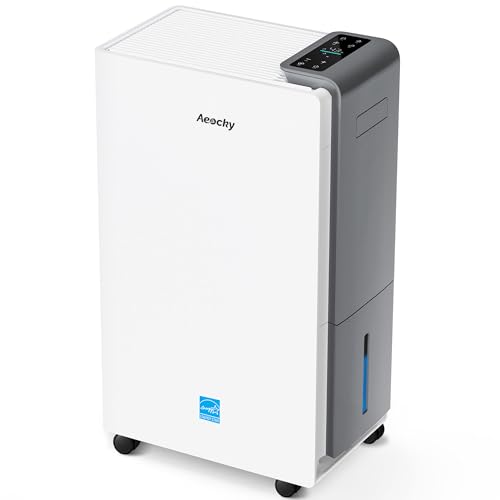
【ENERGY STAR 25 ≠ ENERGY STAR Most Efficient 2025】Don't fall for competitors' word games. With only 2.6% of ENERGY STAR models earning "Most Efficient 2025" title, these options are exceptionally rare on the market. RHEA-001 is one of the few to truly hold this top-tier certification. Many brands use misleading phrases like "Energy Star Efficient 25" or "Energy Star 25" to imply a standard they haven't met. Choosing them is a risk.With AEOCKY, you get verified performance and the peace of mind of authentic, top-tier efficiency.

32-Pint Daily Capacity for Spaces up to 2,500 Sq. Ft. — Designed to manage ambient moisture in large living spaces, finished basements, and storage areas. This unit removes up to 32 pints of water vapor every 24 hours under test conditions of 95°F and 90% RH, helping promote a more balanced indoor air environment across areas up to 2,000 sq. ft

Quiet & High-Efficiency Dehumidifier: Adopting next-generation semiconductor cooling technology, efficient moisture removal while maintaining ultra-low noise operation. Stable humidity levels are maintained, making your home environment more comfortable and pleasantly dry.
Drainage, Maintenance, and Safety
A second dehumidifier also means a second bucket, filter, drain hose, cord, and maintenance schedule. Before doubling up, make sure you can drain both units safely and keep both filters clean.
- Use continuous drainage when the unit runs often.
- Clean or replace filters according to the manual.
- Empty and rinse buckets to prevent odors.
- Keep cords away from standing water.
- Plug units into properly grounded outlets.
- Check older dehumidifiers against the CPSC dehumidifier recall list.
Warning: Stop using any dehumidifier that smells hot, has a damaged cord, trips breakers, leaks near electrical parts, or appears on a recall list. Do not run cords under rugs or overload power strips.
Frequently Asked Questions
Is it better to have multiple small dehumidifiers or one large one?
One large dehumidifier is usually better for one open space because it is simpler to place, drain, and maintain. Multiple smaller units are better when the damp areas are separated by rooms, doors, floors, or different moisture sources.
Can one dehumidifier work in two rooms?
Yes, one dehumidifier can work in two rooms if the rooms stay open to each other and air circulates freely. It will work poorly in an enclosed room, closet, or separated area unless you improve airflow or add a second unit.
Should you use a dehumidifier if you have COPD?
A dehumidifier may help if your home is damp because lower humidity can reduce mold-friendly conditions. However, COPD needs personalized medical guidance, so ask your clinician what indoor humidity range is best for you and your symptoms.
Will a dehumidifier help dry out plaster?
Yes, a dehumidifier can help plaster dry by lowering the room’s moisture level, especially when paired with gentle airflow. Do not force-dry fresh plaster too aggressively, and make sure any leak or water source is fixed first.
What is the most reliable brand of dehumidifier?
There is no single safest answer for every home. Compare ENERGY STAR certification, warranty length, owner reviews, drain options, filter access, noise level, and recall status. A reliable unit is one that is correctly sized, easy to drain, and maintained regularly.
Can two dehumidifiers run in the same room?
Yes, but it is usually not the best setup unless the room is large, very wet, or being dried after water damage. In a normal room, one correctly sized unit is usually quieter and more efficient.
Can one dehumidifier work for a whole house?
A portable dehumidifier can help one open area, but it usually will not control a whole house with closed rooms or multiple floors. For whole-home humidity problems, consider a ducted whole-house dehumidifier or separate portable units in the dampest zones.
What humidity should I set my dehumidifier to?
A good everyday setting is usually around 45% to 50% relative humidity. Keep indoor humidity below 60%, and avoid running the room below 30% unless a specific drying job requires it for a short time.
Conclusion
Two dehumidifiers are better than one only when your home has more than one damp zone or one correctly sized unit cannot hold humidity in range. For an open room, one high-capacity, well-placed unit is usually easier, quieter, and more efficient. For separated rooms, multiple floors, wet basements, or post-leak drying, two units can solve the problem faster because each one treats its own area. Measure first, place carefully, drain safely, and let humidity readings guide the decision.
Sources
- U.S. Environmental Protection Agency — Mold Course, Chapter 2 — backs indoor humidity range and mold-prevention thresholds.
- Centers for Disease Control and Prevention — Mold — backs keeping home humidity no higher than 50% to help prevent mold.
- ENERGY STAR — Dehumidifiers — backs capacity being measured in pints per 24 hours and based on space size plus conditions.
- ENERGY STAR — Dehumidifier Testing and Capacity — backs current testing and Integrated Energy Factor context.
- Haier Appliances — Dehumidifying More Than One Room — backs the need for an opening and adequate air circulation between rooms.
- U.S. Consumer Product Safety Commission — Dehumidifier Recalls — backs recall and fire-risk safety advice.


[…] Two Dehumidifiers: When 2 Units Are Better Than One […]