
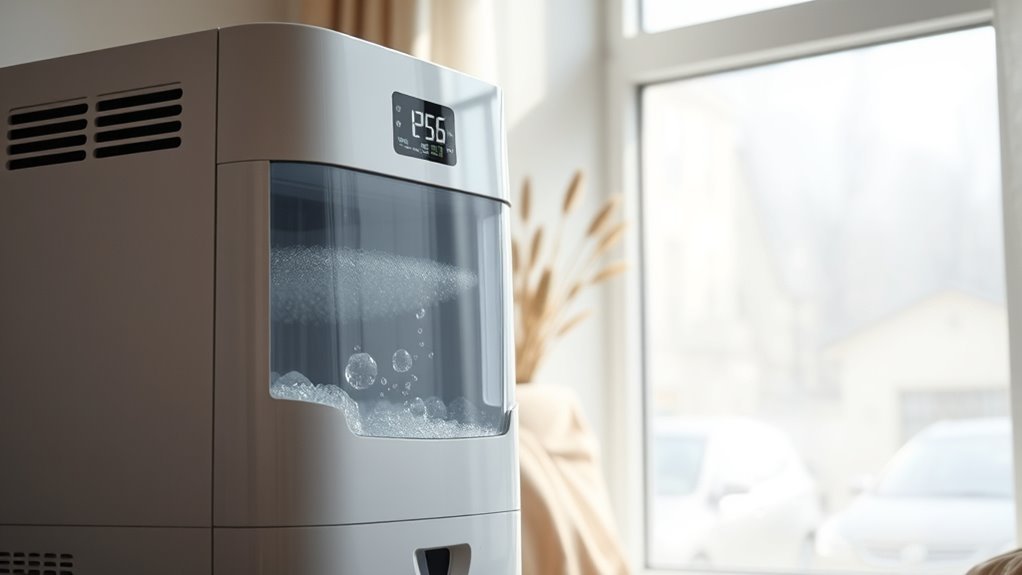
Do Dehumidifiers Work?
Last updated: July 7, 2026
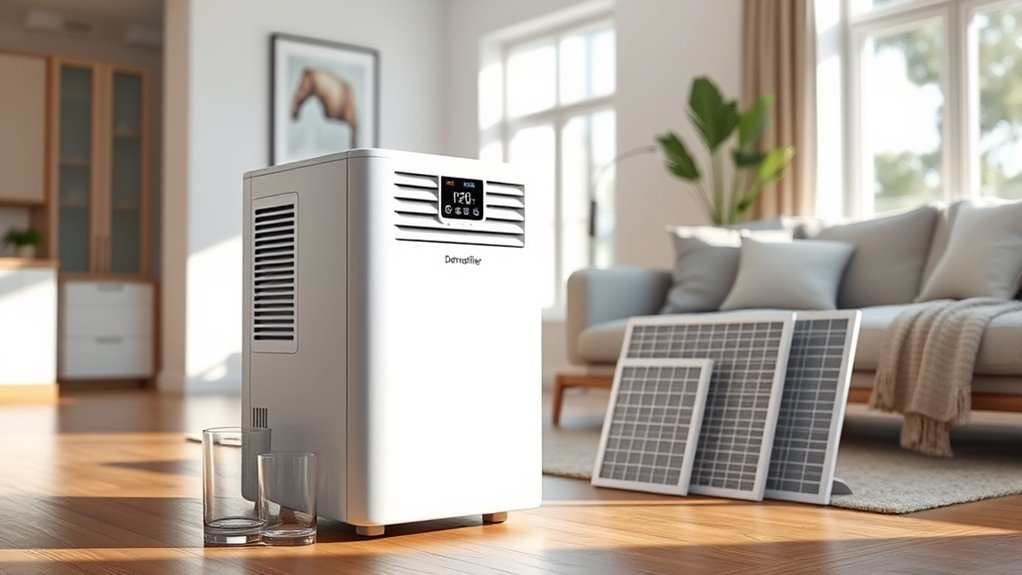
Yes, a dehumidifier works when the room is actually damp, the unit is sized correctly, and air can move freely through the machine. It removes water vapor from indoor air, collects that water in a bucket or drain line, and helps keep relative humidity in a safer range. ENERGY STAR generally considers 30% to 50% relative humidity the best range for buildings, while the EPA says indoor humidity should stay below 60% and ideally between 30% and 50% to reduce mold risk.
Quick answer: Use a dehumidifier when a room smells musty, shows condensation, feels damp, or stays above about 50% to 60% relative humidity. It can reduce moisture, musty odor, and mold-friendly conditions, but it will not fix leaks, remove existing mold, or replace ventilation.
How Much Water a Dehumidifier Can Remove
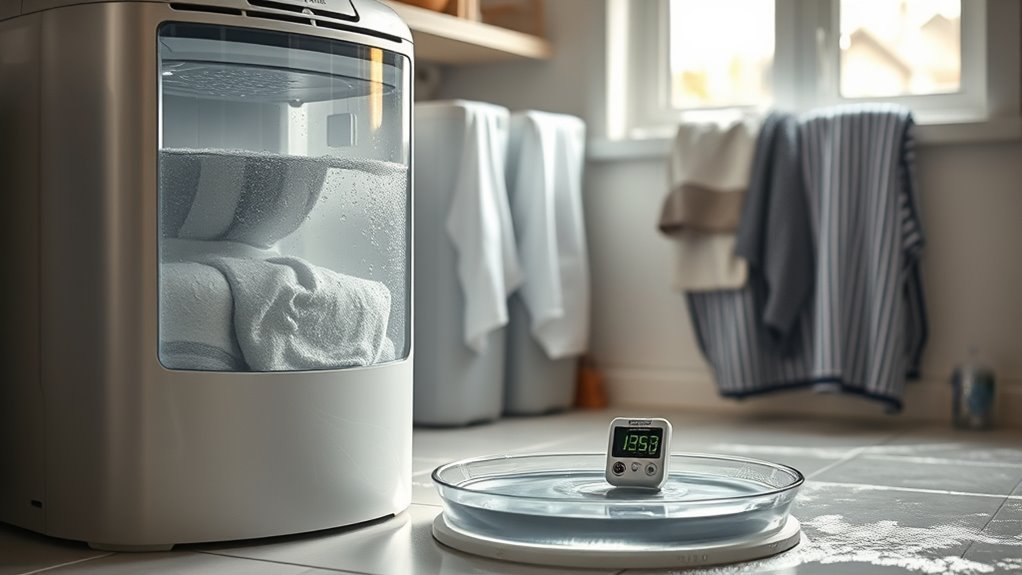
Most home dehumidifiers are rated by how many pints of water they can remove in 24 hours under test conditions. ENERGY STAR buying guidance lists 20 to 30 pint units for many small to medium damp rooms, 25 to 40 pint units for very damp small to medium rooms, and 30 to 50 pint units for wet small to medium rooms. Larger rooms or wetter spaces need more capacity.
Real output can be lower than the label rating. A machine removes more water when the air is warm and humid. It removes less when the room is cooler, the humidity load is lighter, the filter is dirty, or furniture blocks the intake or exhaust. Treat the water bucket as useful feedback: if it fills quickly, the room has a real moisture load. If it barely collects water while a separate hygrometer shows normal RH, the room may not need constant dehumidification.
| Room condition | Typical signs | Capacity direction |
|---|---|---|
| Slightly to moderately damp | Intermittent musty smell, about 50% to 75% RH | Often 20 to 30 pints/day for small to medium rooms |
| Very damp | Persistent damp smell, damp spots, about 75% to 90% RH | Often 25 to 40 pints/day for small to medium rooms |
| Wet | Sweating walls or floors, seepage, laundry drying indoors | Often 30 to 50 pints/day for small to medium rooms |
What Affects a Dehumidifier’s Output
A dehumidifier’s output depends on relative humidity, room temperature, capacity, airflow, and moisture sources. Warm, humid air gives the machine more water vapor to condense, so the bucket fills faster. Cooler rooms slow many compressor models, and ENERGY STAR notes that frost can form on condensing coils below 65°F, which can reduce moisture removal.
Airflow matters just as much as capacity. Keep the intake and exhaust clear, close doors and windows while the unit runs, and clean the filter on schedule. Also reduce the source of moisture. Vent dryers outdoors, use bath and kitchen exhaust fans, keep gutters clear, repair leaks, and slope soil away from the foundation. A dehumidifier can manage moisture load, but it should not become a cover-up for a water problem.
Recommended Products

True ENERGY STAR Most Efficient 2025 Compressor Dehumidifier (2600 Sq.Ft) - High-Efficiency Dehumidifier - Dr.Prepare dehumidifier features a high-performance and quiet compressor that removes up to 38 pints of moisture per day (at 95°F, 90% RH). Ideal for basements, living rooms, bathrooms, bedrooms, garages, or travel trailers. Being able to adjust humidity from 30%RH to 80%RH, and cut costs bills year-round. (You can verify Dr. Prepare models DDH12LA on the official ENERGY STAR Product Finder.)

【Compact Size, Big Efficiency】 The upgraded 2025 Waykar dehumidifier features cutting-edge rotary compressor technology. It’s more compact but still powerful, capable of removing up to 34 pints of moisture per day (at 95℉, 90% RH), ideal for spaces up to 2,000 sq. ft. such as living rooms, basements, bedrooms, and offices. The adjustable humidity range from 30% to 80% helps you easily maintain the ideal indoor humidity

【Ideal for Large Homes & Basements (Up to 5,000 Sq. Ft)】The Waykar 80 pint dehumidifier efficiently removes up to 80 pints of moisture per day in high-humidity conditions (95°F, 90% RH). In warmer, damp spaces like basements (86°F, 80% RH), it removes 62 pints/day. This dehumidifier for basement is perfect for large areas such as basements, bathrooms, bedrooms, and living rooms. Customize your space by adjusting the humidity level from 30% to 80%, creating a drier and healthier environment
Which Dehumidifier Type Works Best?
The best dehumidifier type depends on the room temperature and moisture problem. A compressor, also called refrigerant, dehumidifier is usually the best choice for warm basements, bedrooms, laundry rooms, and living areas because it can remove more water per day. It works by pulling damp air across cold coils, condensing water, then sending drier air back into the room.
- Compressor models: best for warm, damp rooms that need stronger daily water removal.
- Low-temperature compressor models: useful for cooler basements when the product is rated for those conditions.
- Desiccant models: helpful in smaller or cooler spaces, but many use more energy for the same moisture removal.
- Whole-home models: a better fit when humidity stays high across a sealed home with central ducts.
- Passive moisture absorbers: useful only for tiny closets or cabinets, not whole rooms.
Choose by the problem, not by the largest number on the box. For a damp basement, capacity and drainage matter most. For a bedroom, noise and automatic humidistat control matter more. For a cooler storage area, confirm the minimum operating temperature before buying.
Recommended Products

1600 Sq.Ft High Capacity Dehumidifier- The GoGuess basement dehumidifier is equipped with a quiet yet powerful compressor that efficiently extracts up to 21 pints of moisture per day (tested at 95°F and 90% RH). Perfect for use in basements, offices, bathrooms, bedrooms, kitchens, storage areas, living rooms, laundry spaces, garages, crawl spaces, and RVs. It helps maintain a healthy humidity level between 30% and 70%, promoting a more comfortable and healthier indoor environment

2500 Sq. Ft Dehumidifier - SEMKAP dehumidifier for basement features a quiet, high-performance compressor that removes up to 32 pints of moisture per day (at 95°F, 90% RH). Ideal for basements, offices, bathrooms, bedrooms, kitchens, stockrooms, living rooms, laundry rooms, garages, crawlspaces, or RVs. It helps maintain optimal humidity between 40%–60%RH for healthier, more comfortable living

2500 Sq.Ft High Capacity Dehumidifier- The GoGuess basement dehumidifier is equipped with a quiet yet powerful compressor that efficiently extracts up to 34 pints of moisture per day (tested at 95°F and 90% RH). Perfect for use in basements, offices, bathrooms, bedrooms, kitchens, storage areas, living rooms, laundry spaces, garages, crawl spaces, and RVs. It helps maintain a healthy humidity level between 30% and 70%, promoting a more comfortable and healthier indoor environment.
When You Actually Need a Dehumidifier
You probably need a dehumidifier if indoor humidity often stays above 50% to 60%, or if you notice condensation, musty odor, damp walls, sweating pipes, or mold-friendly conditions. CDC guidance says home humidity should be kept no higher than 50% all day to help prevent mold growth. EPA guidance says condensation on windows, walls, or pipes can signal high humidity and should be handled quickly.
Use a hygrometer before guessing. Check the problem room for several days, especially after rain, showers, cooking, laundry drying, or basement seepage. If readings stay high, a dehumidifier can help. If the room is wet because of an active leak, standing water, or foundation drainage issue, fix that source first and use the dehumidifier as a drying aid.
How to Choose the Right Dehumidifier
To choose the right dehumidifier, match capacity to room size, dampness level, temperature, drainage access, and how often you want to empty the bucket. ENERGY STAR says capacity depends on both the size of the space and the conditions in that space. Replacing an old unit? Use how much water you emptied each day as a practical sizing clue.
- For basements: prioritize capacity, continuous drainage, low-temperature operation, and a washable filter.
- For bedrooms: prioritize noise level, auto mode, display dimming, and easy bucket handling.
- For laundry rooms: prioritize fast moisture removal and a drain hose option.
- For whole-home dampness: consider a ducted whole-home model sized by an HVAC professional.
- For energy use: compare integrated energy factor, measured in liters removed per kilowatt-hour.
Do not buy only by square footage claims. Those claims assume certain humidity and temperature conditions. A smaller room with seepage can need more capacity than a larger dry room with only mild summer humidity.
Recommended Products

【The Undisputed Champion — Industry‑Leading Dehumidifier Brand】When you choose AEOCKY, you get double market validation. In 2025, AEOCKY was an industry‑leading dehumidifier brand on Amazon US. This means you’re not just choosing a flagship from a market leader, but the top choice proven by millions of real users—representing the ultimate combination of performance, quality, and trust.
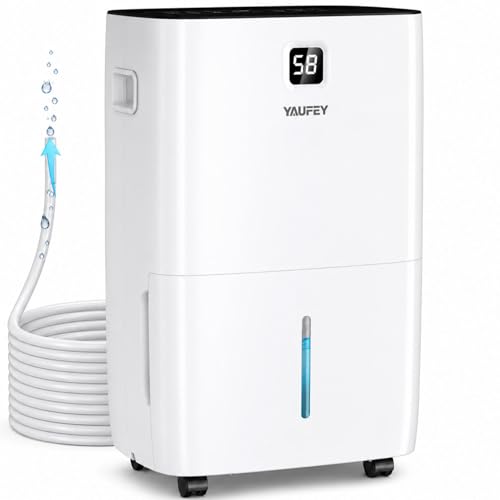
Dehumidifier for Basement: This dehumidifier for home removes up to 150 pints (95℉, 90% RH) of moisture per day and with a maximum dehumidification area of 8500 square feet. This dehumidifier with drain hose has a dehumidification range of 30% to 80%, increasing or decreasing by 5% at a time, which you can adjust to your preferred humidity level. In addition, this basement dehumidifier has 3 modes for you to choose from - Living Area (50% RH), Basement (45% RH) and Continuous (CO).

HIGH CAPACITY PERFORMANCE: Removes up to 90 pints of moisture per day with a high-efficiency compressor, covering large spaces up to 5000 sq. ft., including basements, garages, and living rooms.
How to Use a Dehumidifier More Effectively
You will get better performance when you place the dehumidifier where air can circulate, set a measured humidity target, and remove moisture sources. Aim for about 30% to 50% RH in most homes, or 30% to 40% during cold heating seasons if window condensation is a problem. Avoid over-drying the room because very dry air can feel uncomfortable.
Optimal Placement
Place the unit where the intake and discharge have open airflow. ENERGY STAR says many top-discharge portable units can sit near a wall, but units without top-mounted discharge should sit away from walls and furniture. Keep doors and windows closed while it runs so the machine dries the room instead of pulling in more humid air from outside.
- Keep the filter, grille, intake, and exhaust clear.
- Place the unit near the damp zone, not beside dust-heavy tools.
- Use a drain hose only when it can slope safely to a drain.
- Keep hoses and water away from electrical cords and outlets.
- Empty and clean the bucket so stagnant water does not build up.
Smart Humidity Settings
Set the humidistat to a realistic target instead of running the unit nonstop. For many rooms, 45% to 50% RH is a practical starting point. If the room smells musty or condensation returns, lower the target slightly. If the air feels dry, raise it. Use a separate hygrometer if the unit does not show RH clearly or if the built-in reading seems inaccurate.
Auto mode helps because the dehumidifier cycles on and off when the room reaches the selected RH. Continuous mode makes sense after a leak, heavy rain, or laundry drying, but it can waste energy if you leave it on after the room is already dry.
What a Dehumidifier Cannot Do
A dehumidifier can lower moisture in the air, but it cannot solve every damp-home problem. It will not repair a roof leak, stop groundwater seepage, clean mold from porous materials, or replace bathroom and kitchen ventilation. EPA guidance is clear: if mold is present, you need to clean up the mold and fix the water problem, or the mold problem will likely return.
It also does not purify air like a HEPA air cleaner. Lower humidity can make conditions less friendly for mold and dust mites, but it does not remove particles already floating in the room. If you have asthma, COPD, severe allergies, or chronic lung disease, use humidity control as one part of a broader plan and ask a qualified clinician what range is safest for you.
Frequently Asked Questions
Is It Worth Getting a Dehumidifier?
Yes, it is worth getting a dehumidifier if a room stays damp, smells musty, shows condensation, or regularly measures above the recommended RH range. It can improve comfort and reduce mold-friendly conditions, but you still need to fix leaks and ventilation problems.
Should You Use a Dehumidifier if You Have COPD?
You can use a dehumidifier with COPD if your home is too humid, but avoid extreme dryness and ask your healthcare provider for a personal target. High humidity can support mold, while overly dry air can irritate airways. A measured range near 30% to 50% RH is commonly recommended for homes.
How Much Does It Cost to Run a Dehumidifier 24 Hours a Day for a Month?
The cost depends on wattage, runtime, humidity load, and your electricity rate. Use this formula: watts ÷ 1,000 × hours used × electricity price per kWh. A 500-watt unit running 24 hours a day for 30 days uses about 360 kWh before cycling losses or auto-shutoff changes the total.
Will a Dehumidifier Help With Gnats?
It can help if gnats are tied to damp soil, standing water, or wet organic material, but it is not a complete pest-control plan. Dry the moisture source, avoid overwatering plants, clean drains, remove decaying material, and use traps if needed.
Can a Dehumidifier Remove Mold?
No. A dehumidifier can make the room less favorable for new mold growth, but it does not remove existing mold. Clean visible mold safely, discard materials that cannot be cleaned, and fix the moisture source so the problem does not return.
Sources
Conclusion
Dehumidifiers work best when you use them as part of a moisture-control plan. Measure RH with a hygrometer, choose capacity for the room’s dampness level, keep airflow open, and use continuous drainage for basements or laundry rooms. If you see condensation, smell mustiness, or measure persistent humidity above 50% to 60%, a properly sized dehumidifier can help you regain control. If water is entering the room, fix the source first.

[…] leaks, drainage problems, and poor ventilation first; dehumidifiers control moisture but do not remove the […]
[…] a dehumidifier can help when indoor air is too humid by keeping relative humidity around 30% to 50% and preferably below […]