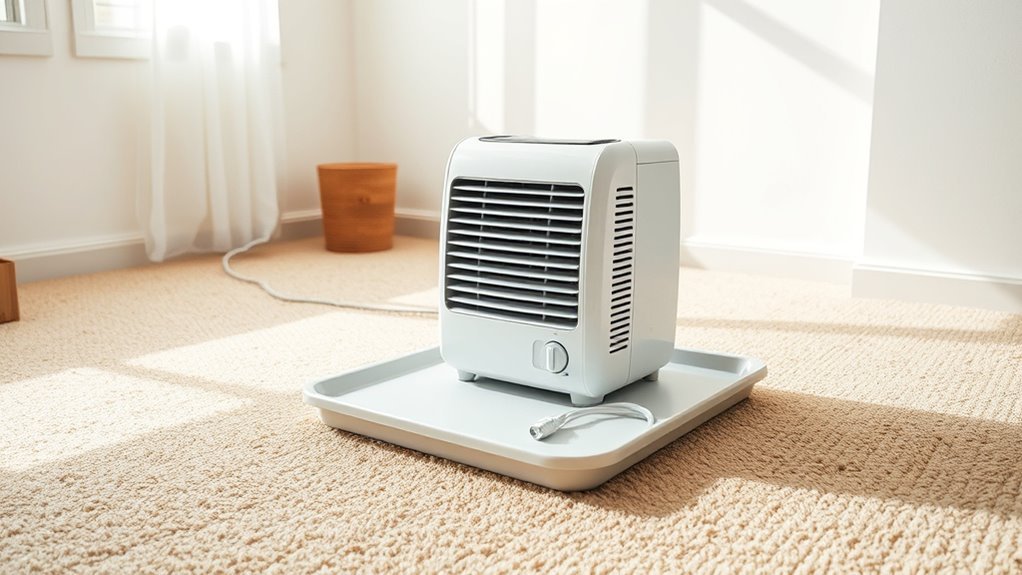
Are dehumidifiers a fire risk? Rarely, but yes: a dehumidifier can catch fire if it has a recalled defect, damaged wiring, a clogged filter, or is plugged into an extension cord or power strip. A maintained, non-recalled unit with clear airflow should not get dangerously hot. Warm exhaust air is normal; smoke, burning odors, hot plugs, melting plastic, or repeated breaker trips are urgent warning signs.
Last Updated: October 13, 2026
Key Takeaways
- Check Recalls First: Cross-reference your exact model number and date code against the live CPSC recall database.
- Direct Wall Power Only: Plug directly into a grounded outlet. Never use surge protectors, power strips, adapters, or extension cords.
- Maintain Airflow Clearance: Follow your specific manual’s clearance requirement (it varies by model) and clean air filters regularly.
- Know Normal vs. Abnormal Heat: Warm exhaust air is normal; a hot plug, burning smell, scorched plastic, or tripping breaker indicates a immediate safety risk.
- Never DIY Internal Repairs: Never open the cabinet or attempt internal electrical or refrigerant system repairs yourself.
At a Glance
| Time Required | About 5–10 minutes for a visual safety check |
| Difficulty | Easy; no disassembly required |
| Tools Needed | Flashlight, vacuum brush, damp cloth, model rating label info, optional hygrometer |
| Cost | Usually $0 for home inspection; professional repairs vary |
Warning: Do not connect a dehumidifier to a surge protector, power strip, multi-outlet adapter, or extension cord unless the manufacturer explicitly permits it. Manufacturers such as GE instruct owners to plug dehumidifiers directly into a properly grounded wall outlet.
Are Dehumidifiers a Fire Risk? What Can Go Wrong
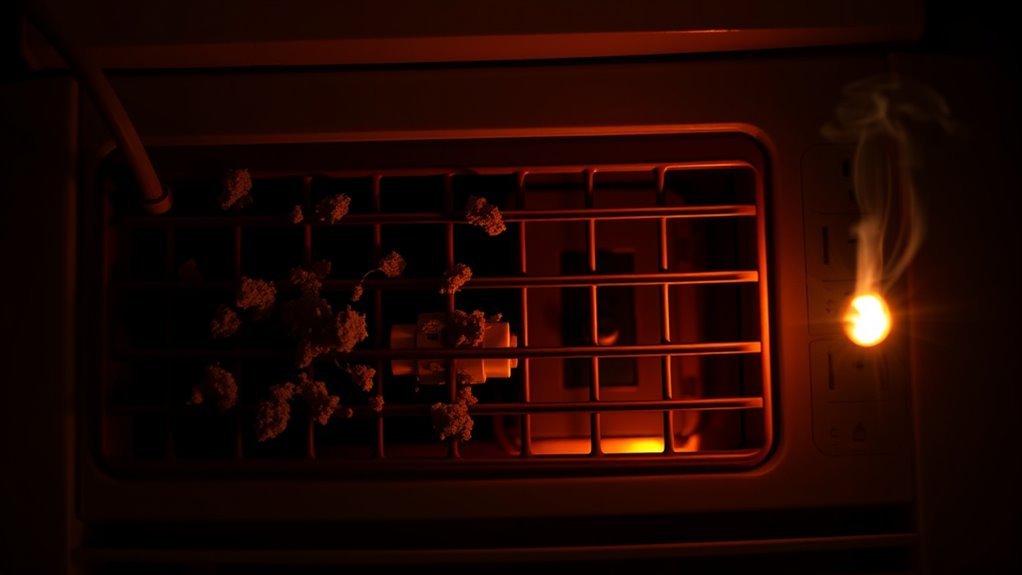
A dehumidifier can become a fire risk when a defective internal component, damaged electrical wiring, loose outlet, or restricted airflow causes abnormal overheating. According to the U.S. Consumer Product Safety Commission (CPSC), millions of portable dehumidifiers have been recalled in the U.S. because of overheating, fire, and burn hazards.
Preventable fire hazards include using a pinched or crushed power cord, plugging into a light-duty power strip, blocking intake or exhaust grilles, allowing heavy lint or dust buildup on the air filter, or continuing operation after detecting a burning plastic odor. Manufacturing defects represent a distinct threat, making recall verification mandatory even for clean, undamaged appliances.
Keep curtains, bedding, stored boxes, and paper goods well away from operating units. Always observe the precise clearance specified in your owner’s manual rather than relying on a universal rule of thumb, as internal fan designs and exhaust directions vary significantly.
Which Dehumidifier Components Are Most Likely to Overheat?
A standard compressor dehumidifier naturally generates heat during operation. Room air passes across a cold evaporator coil to drop moisture, then flows over a warm condenser coil before discharging back into the room. Because of this refrigeration cycle, warm exhaust air is expected and does not indicate a defect.
Abnormal heat generation is fundamentally different. A hot wall plug, scorching outlet faceplate, burnt plastic odor, visible smoke, repeated error codes, or a cabinet exterior that becomes uncomfortable to touch signal dangerous electrical or mechanical failure.
Normal Heat vs. Abnormal Overheating
| Component | What is normal | Safety action |
|---|---|---|
| Compressor and condenser | Warm exhaust air and mild cabinet warmth | Keep vents unobstructed; maintain model clearance |
| Fan motor | Steady airflow and uniform fan sound | Clean the filter on the schedule in your manual |
| Plug, cord, and outlet | Firm outlet connection without heat or buzzing | Stop use immediately if plug feels hot, loose, or discolored |
| Drain path | Unrestricted water flow without pooling | Clear hose kinks; keep water away from electrical housing |
Routine user maintenance ensures proper airflow and operational efficiency, but it cannot fix a recalled factory defect, shorted capacitor, or failing internal compressor motor.
How Do Airflow Blockages Cause Overheating?
A dust-clogged air filter or blocked intake grille starves the appliance of air. Reduced airflow severely impairs heat transfer across the coils, causing internal temperatures to climb rapidly. This forces the compressor to work harder, triggering thermal overload switches and accelerating electrical component degradation.
Never place a running unit directly against a wall, couch, heavy drape, or cardboard box. Clearance requirements vary by brand and model. Manufacturer guidance, such as GE Appliances support, gives model-specific figures, so check your own manual for the exact distance.
Use a vacuum brush attachment to gently remove dust from exterior grilles after disconnecting power. Do not insert tools into vent openings or remove housing panels.
What Electrical Issues Cause Dehumidifier Fires?
Inspect visible components: the power cable, plug prongs, wall outlet faceplate, and outer plastic casing. Check for cracks, crushed insulation, fraying, bent ground prongs, discoloration, or a loose connection in the wall socket. Never dismantle the cabinet to check internal wiring.
If electrical burning smells or internal clicking noises occur, shut down the unit immediately. If a wall outlet feels hot, hums, or exhibits arcing mark discoloration, discontinue using that outlet and consult a licensed electrician.
Danger Signs in Power Cords and Wall Wiring
A damaged or frayed electrical cord creates immediate arc-fault, shock, and fire hazards. Electrical tape must never be used as a permanent repair for an damaged appliance cord. Disconnect the plug by gripping the heavy plug head rather than yanking the flexible cord.
Route the power cord where it cannot be crushed by casters or furniture legs, pinched under doorway frames, submerged in basement dampness, or covered by rugs. Never modify or cut off the grounding prong to force a three-prong plug into an ungrounded outlet.
Why Outlets and Surge Protectors Overheat
Dehumidifiers draw continuous current (the amps are printed on the rating label). They must connect directly into a properly installed, grounded dedicated wall receptacle matching the unit’s voltage specifications. GE explicitly warns against surge protectors and power strips, because they are not meant for the continuous load of a compressor appliance. Many other manuals give the same direct-outlet instruction.
Cease operation immediately if the wall plug fits loosely, the receptacle hums, the faceplate is warm, or the breaker trips repeatedly. Do not repeatedly reset a tripped circuit breaker; recurring trips signal an active overload, short circuit, or failing motor. Our guide explains why a dehumidifier trips the breaker.
What Are the Warning Signs That Your Dehumidifier Is Failing?
Electrical problems often give warning signs before a fire starts. Immediately turn off and unplug the appliance if you observe:
- An odor of burnt rubber, scorching plastic, or warm electronics
- Visible smoke, sparks, electrical arcing, or scorched cabinet plastic
- A plug prong, power cord, or wall outlet faceplate that feels hot to the touch
- Repeated circuit breaker trips or GFCI outlet resets
- Grinding, harsh metallic scraping, or sudden loud motor hums
- A fan blade that stops spinning while the compressor continues attempting to run
- Persistent error codes indicating compressor overload or sensor fault
- Physical casing cracks or liquid pooling near the electrical control panel
- Exhaust airflow temperature that is noticeably hotter than historical operation
Never measure safety solely by whether the unit is still removing water. An appliance can pull moisture while an electrical terminal is actively smoldering internally.
How to Tell Normal Warmth From Dangerous Overheating
| Observation | Likely meaning | What to do |
|---|---|---|
| Warm air from exhaust grille | Normal byproduct of refrigeration condenser heat exchange | Maintain recommended clearance and clean filter |
| Plastic cabinet feels lukewarm | Expected during prolonged active compressor cycles | Ensure adequate room ventilation |
| Power plug or wall outlet feels hot | High resistance connection, loose socket contacts, or wiring fault | Unplug immediately; inspect outlet and replace if loose |
| Acrid odor, smoke, or melting sound | Active electrical failure or component combustion hazard | Disconnect power safely, evacuate, and call emergency services if needed |
Note: Warm exhaust air alone is not evidence of appliance failure. Manufacturer technical documentation clarifies that the compressor motor and condenser coil naturally add ambient warmth to processed air.
How Far Should a Dehumidifier Be From the Wall?
Safe physical placement ensures unobstructed cooling airflow, reliable drainage, and stable operation.
- Adhere to model clearance specifications: Leave surrounding intake and exhaust vents clear. Never assume one distance fits every design; check your specific manual.
- Position on a firm, level surface: Prevent tip-over risks and keep the unit away from combustible curtains, bedding, rugs, and stored cardboard boxes.
- Close exterior doors and windows: Closing room boundaries optimizes moisture extraction without creating closed closet environments with restricted air volume.
- Protect electrical connections from water: Keep the power cord and wall receptacle clear of floor puddles, plumbing leaks, or overflow buckets.
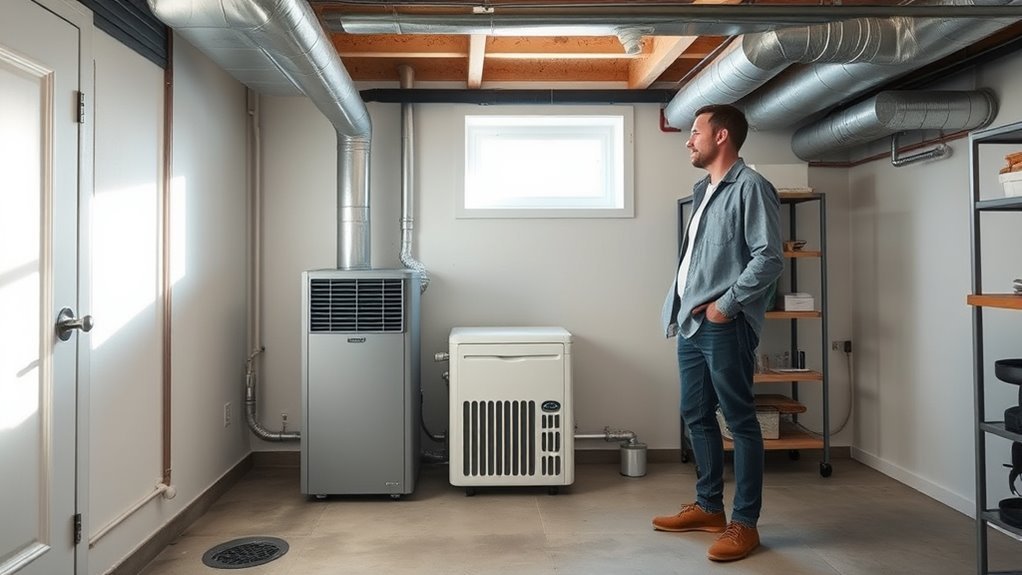
- Check the operating temperature range: ENERGY STAR notes that frost can form on the coils in spaces that typically fall below 65°F, so check the range on your model’s label. Some units are rated for cooler basements.
In low-temperature basements, ice can build up on evaporator coils. Modern units automatically pause the compressor to run defrost cycles, but this feature does not supersede the manufacturer’s stated ambient operating range.
How to Safely Run a Dehumidifier (5-Step Checklist)
Routine inspection before seasonal startup significantly lowers electrical hazards. Perform these five checks regularly:
| Step | Inspection Target | Pass Standard |
|---|---|---|
| 1. Recall Verification | Rating label model & date code | Zero match against live CPSC database listings |
| 2. Outlet Connection | Wall receptacle & plug prongs | Direct wall connection; tight fit; cool to touch after 30 min |
| 3. Airflow Clearance | Intake & exhaust grilles | Manual’s clearance kept open; filter washed or vacuumed |
| 4. Automatic Shutoff | Water bucket float switch | Unit stops automatically when float is manually lifted |
| 5. Power Cord Path | Cable insulation & placement | Uncompressed, dry, un-taped, and kept away from foot traffic |
Recommended Products

Semiconductor dehumidifiers use thermoelectric cooling to remove moisture from the air. They create a drier, more comfortable environment by reducing humidity and improving air quality.

Effective Moisture Control for Home Use: OWAAE dehumidifier is designed to reduce excess moisture and help maintain comfortable humidity levels in everyday living spaces. It works best in moderate-to-high humidity environments, improve overall air comfort at home

Upgrade High Efficient Dehumidification: Dehumidifier utilize semi conductor condensation technology, ensuring quiet operation while effectively extracting moisture from the air. This advanced feature helps keep humidity levels below 45%
Proper Placement Guidelines
- Ensure all intake and exhaust grilles remain unobstructed.
- Operate the appliance exclusively in an upright position on a firm surface.
- Maintain the exact perimeter clearance specified in your user manual.
- Keep combustible items outside the immediate exhaust airflow zone.
- Do not place the unit in standing water or where electrical controls can get wet.
- Never operate inside enclosed wall closets or tiny, unventilated cubbies.
Power Connection Safety
- Plug directly into a grounded, 3-prong wall outlet.
- Never use an extension cord, power strip, surge protector, or plug adapter.
- Never bypass or remove the grounding prong.
- Do not run the cord under carpeting, rugs, or door frames.
- Stop using any wall receptacle that feels loose, hot, or discolored.
- Have persistent circuit breaker trips investigated by a certified electrician.
Routine Maintenance Routine
Always turn off and unplug the appliance before undertaking any cleaning steps:
- Filter Maintenance: Clean the air filter on the schedule in your manual, and more often in dusty rooms. GE support documents give an example of model-specific cleaning intervals.
- Outer Grilles: Remove dust using a soft brush attachment on a vacuum cleaner.
- Bucket Care: Wash the bucket with mild detergent and water, ensuring the float mechanism moves freely before reinstalling.
- Drain Line: Confirm continuous drain hoses slope downward smoothly without kinks or internal algae blockages.
- Cabinet Wipe-down: Clean exterior plastic with a damp cloth; never allow liquid to enter the control panel.
- Sealed System Protection: Do not open outer housing panels, spray chemical cleaners on coils, or alter refrigerant lines.
Pro Tip: Take a clear photo of your unit’s rating label (showing brand, model, serial number, and date code) and store it on your phone for immediate recall checks.
How to Perform a Recall Check
Cross-reference your appliance details against the official live CPSC recall database. Never rely solely on brand names or general physical appearance.
- Turn off the appliance and locate the silver rating label on the back or side casing.
- Note the brand name, exact model number, serial number, manufacture date code, and pint capacity.
- Compare every alphanumeric character against published CPSC recall notices.
- If your model matches, immediately stop using it and disconnect power.
- Follow the exact remedy protocol outlined in that specific CPSC announcement (refund, replacement, or repair).
Overnight and Unattended Operation
While non-recalled dehumidifiers are designed for automatic cycling, overnight operation requires prior verification:
- Confirm your exact model is not subject to an open CPSC recall.
- Ensure power is supplied directly through a grounded wall outlet.
- Verify that the plug head and receptacle remain cool after extended operation.
- Set a target relative humidity (e.g., 45%) rather than continuous mode to allow compressor resting cycles.
- Verify the automatic bucket shutoff float switch functions reliably or that continuous drain lines are secure.
- Maintain clean air filters and clear intake grilles.
- Ensure functional smoke detectors are installed on the floor where the unit operates.
- Immediately shut off any unit that displays unusual humming, hot plugs, or burning odors.
Which Dehumidifier Brands and Models Have Been Recalled?
Dehumidifier recalls have involved millions of units across numerous well-known retail brand names. Because many brands contract third-party manufacturers, checking exact model numbers and date codes is vital.
Major recall announcements include:
- Gree recalls (2013 and 2014): About 2.2 million Gree dehumidifiers sold under 12 other brand names were recalled in September 2013, and about 350,000 GE-brand units were added in January 2014, according to the CPSC.
- Later Gree recall (No. 23-262): For units sold from January 2005 through January 2014, the CPSC reports more than 2,000 overheating incidents, about 450 fires, more than million in property damage, and four deaths potentially associated with house fires that may have been caused by recalled dehumidifiers.
- New Widetech recall (2021): About 2 million units in the U.S. sold under brands including Amana, Danby, De’Longhi, Friedrich, Haier, Honeywell, Whirlpool, and Whynter. The CPSC cites 107 incidents of overheating or fire and about million in property damage, with no injuries reported. Check the official CPSC New Widetech announcement.
- Gree recall (August 2023): About 1.56 million units across 42 models sold under GE, Kenmore, SoleusAir, Norpole, and Seabreeze (made January 2011 to February 2014). The CPSC cites at least 23 fires, 688 overheating reports, and 8,000 in property damage.
A familiar brand logo does not guarantee safety. Safety depends entirely on whether your exact model number and date code match CPSC recall notices.
What Should You Do If Your Dehumidifier Is Recalled?
If your model number and date code match an official CPSC recall notice, stop using the appliance immediately and disconnect the plug when safe.
- Take clear photos of the rating label, serial tag, and front of the appliance.
- Review the specific CPSC recall notice to understand the exact remedy offered (cash refund, prorated credit, or replacement).
- Submit your registration claim through the official recall portal specified in the notice.
- Retain confirmation numbers, emails, and purchase receipts for your records.
- Never sell, donate, or give away a recalled appliance.
- Report any overheating, smoking, or fire incidents to SaferProducts.gov.
Why Were Millions of Gree Dehumidifiers Recalled?
CPSC recall notices for Gree-manufactured units cite overheating that can lead to fire and burn hazards.
The September 2013 recall covered about 2.2 million Gree-made units, and the August 2023 recall covered another 1.56 million after 688 overheating reports and at least 23 fires. See the 2023 CPSC Gree recall for the model list.
| Checkpoint | Why It Matters |
|---|---|
| Brand Name | Identifies potential manufacturing groups but is insufficient alone |
| Model Number | Determines if the specific appliance design is included in a recall notice |
| Date Code / Serial Number | Distinguishes affected factory production runs from safe production runs |
| CPSC Recall Listing | Provides verified claim instructions, contact portals, and official remedies |
What Emergency Steps Should You Take If Your Dehumidifier Smokes?
If the unit exhibits a strange smell or feels unusually hot without smoke, flames, or arcing, turn off the switch and disconnect the wall plug if safe.
If you see smoke, open flames, plastic melting, or electrical arcing—or if the plug is too hot to reach safely—do not touch the appliance. Evacuate immediately, close interior doors behind you, and call 911 or local emergency services. Never pour water on an energized electrical appliance.
After any electrical smoking or fire event:
- Never re-plug or operate the damaged appliance.
- Have the electrical circuit and wall outlet inspected by a certified electrician.
- Dispose of the unit according to manufacturer or recall instructions.
- File an incident report on SaferProducts.gov.
According to U.S. Fire Administration appliance safety guidance, large appliances should be plugged directly into wall outlets and removed from service if cords or plugs are damaged.
What Are Safer Alternatives to Portable Dehumidifiers?
While portable units are effective, reducing home moisture at its source lowers electrical run times and overall energy consumption. For broader strategies, see our guides on reducing basement humidity without a dehumidifier and using an extension cord with a dehumidifier.
- Fix Moisture Intrusion: Repair roof leaks, leaky pipes, foundation seepage, clogged gutters, and window condensation.
- Utilize Exhaust Fans: Run bathroom and kitchen exhaust fans that vent directly outdoors.
- Improve Exterior Drainage: Slope soil away from foundation walls and maintain downspout extensions.
- Install Whole-Home Systems: Consider a professionally installed, HVAC-integrated dehumidifier for large residences.
- Monitor Relative Humidity: Use a standalone digital hygrometer to ensure indoor humidity stays within target ranges without running equipment endlessly.
The U.S. Environmental Protection Agency (EPA) recommends keeping indoor relative humidity between 30% and 50% to prevent mold growth without causing excessively dry air.
Recommended Products

Wellness Indicator: This humidity meter with humidity level icon indicates air conditions - DRY/COMFORT/WET, allowing this humidity sensor to ensure you’re always aware of changes to your home/household with just a quick glance
Related Guides
Frequently Asked Questions
Are dehumidifier fires common?
Most properly maintained, non-recalled dehumidifiers run without incident. However, defective models have caused thousands of overheating reports and hundreds of fires across several CPSC recalls, so check your model and watch for warning signs.
Is leaving a dehumidifier on a fire hazard?
Continuous operation is not inherently dangerous if the unit is non-recalled, undamaged, plugged directly into a grounded wall outlet, and has the clearance your manual requires. Stop using it if the plug feels hot, the filter is clogged, or you smell burning.
Are dehumidifiers safe to leave on overnight?
Yes, if the unit is not recalled, has clear filter airflow, is plugged directly into a wall outlet, and has a working bucket shutoff or a secure drain line. A humidistat setting lets it cycle off instead of running nonstop.
Why does a dehumidifier blow warm air?
Warm exhaust air is a normal result of the refrigeration process. Investigate only if the exhaust is scorching hot or comes with burning odors, electrical buzzing, or a hot plug.
Can you plug a dehumidifier into a surge protector?
No. Manufacturers such as GE tell owners to plug dehumidifiers directly into a grounded wall outlet. Surge protectors, power strips, and extension cords can overheat under a continuous appliance load.
Why does my dehumidifier keep tripping the breaker?
Repeated trips point to an overload, a shared circuit, a short, or a failing motor. Unplug the unit, stop resetting the breaker, and have a licensed electrician check the circuit if it keeps happening.
Conclusion
You can effectively prevent dehumidifier fire hazards by verifying CPSC recall status, connecting power directly to grounded wall outlets, maintaining clearance, washing air filters regularly, and reacting instantly to warning signs. While warm discharge air is a normal part of operation, smoking, plastic odors, hot wall plugs, or frequent breaker trips require immediate shutdown.
Never rely solely on brand names during recall checks, and never open outer housing cabinets to attempt DIY electrical repairs. A safe, properly functioning unit should cycle smoothly, drain reliably, and maintain cool electrical connections throughout its operating life.
Sources
- U.S. Consumer Product Safety Commission: Dehumidifier Recalls — Official database for model verification and safety recall notices.
- CPSC: 2023 Gree Dehumidifier Recall Announcement — Official report on 1.56 million recalled units and incident data.
- CPSC: 2021 New Widetech Dehumidifier Recall — Official recall notices covering two million multi-brand units.
- GE Appliances Support: Outlet & Cord Guidelines — Direct wall-outlet requirements and extension cord prohibitions.
- U.S. Environmental Protection Agency: Indoor Air Quality — Moisture management guidance and ideal 30–50% humidity range.
- U.S. Fire Administration: Electrical Safety Guide — Appliance cord and wall receptacle safety standards.